
Journalist

Lee Hugh
=
-
 Airbnb to Unveil CORTIS ‘Secret Seoul Space’ With Special Stay and Fan Experiences 글로벌 숙박 공유 플랫폼 에어비앤비가 K-팝 그룹 코르티스(CORTIS)와 손잡고 팬들을 위한 특별한 공간을 선보인다. 에어비앤비는 코르티스의 미니 2집 앨범 'GREENGREEN'의 타이틀곡 'REDRED' 발매를 기념해 '코르티스의 서울 비밀공간'을 단독 공개한다고 21일 밝혔다. 에어비앤비 자체 조사에 따르면 한국을 방문했거나 계획 중인 여행객의 94%가 K-컬처의 영향을 받은 것으로 나타났다. 에어비앤비는 글로벌 팬덤의 수요를 실제 여행과 경험으로 연결하기 위해 이번 프로젝트를 기획했다고 밝혔다. 코르티스는 “코어(COER·팬덤명)분들을 코르티스의 서울 비밀공간으로 초대하게 돼 매우 뜻깊게 생각한다”며 “미니 2집 타이틀곡 ‘REDRED’는 우리 자신을 발견하는 과정, 즉 무엇을 추구하고 경계하는지 탐색하는 과정을 보여주며 한층 또렷해진 우리의 음악적 취향도 담았다. 에어비앤비와 함께 준비한 이번 공간에서 팬들도 자신만의 색을 발견하고 그 순간을 우리와 직접 나눌 수 있기를 기대한다”고 말했다. 에어비앤비는 이번 체험을 세 가지 방식으로 운영한다고 밝혔다. 모든 프로그램은 선착순 무료 예약으로 진행되며, 각 신청 페이지를 통해 참여할 수 있다. 오는 28일 서울에서 열리는 오리지널 체험에서는 최대 30명이 코르티스 멤버들을 직접 만날 수 있다. 공간에는 블록 쌓기 게임, 페인트 존, UV 단서 찾기, 메일룸 빙고 등 참여형 활동이 마련되며, 한정판 키캡과 기념품도 제공된다. 단 한 팀(예약자 1명 및 동반인 1명)에게는 오는 29일부터 30일까지 해당 공간에서 1박 2일간 머물 수 있는 프라이빗 숙박 기회가 주어진다. 숙박 게스트는 체험에 포함된 모든 활동을 자유롭게 즐길 수 있으며, 숙박객 전용 인형과 기념품이 제공된다. 체험과 숙박에 참여하지 못한 팬들을 위해 5월 1일부터 7일까지는 팝업 공간이 운영된다.* This article has been translated by AI. 2026-04-21 18:03:41
 -
 Kim Dong-hwan Seeks Jury Trial in Killing of Airline Captain; First Hearing Set for May 19 Kim Dong-hwan, who has been indicted in custody on charges of trying to kill co-workers at an airline and fatally stabbing one of them, has applied for a jury trial, legal officials said. According to the legal community on the 21st, Kim’s attorney submitted a written request and an opinion statement to the Busan District Court’s Criminal Division 7, headed by Presiding Judge Lim Ju-hyeok. The panel is reviewing whether to hold the case as a jury trial or to exclude it as inappropriate. South Korea introduced the jury trial system in 2008. Citizens age 20 and older may serve as jurors in criminal cases, delivering a verdict and discussing an appropriate sentence. The system applies to cases under a district court panel when a defendant requests it, and the jury’s decision is advisory. Kim was indicted on charges that he stabbed to death an airline captain, identified as A, at about 5:30 a.m. on March 17 at an apartment in Busan’s Busanjin district. Investigators said Kim had gone the day before to the home of another colleague, identified as B, an airline captain living in Goyang, Gyeonggi province, intending to kill him, but failed and fled. After that attempt, authorities said, Kim went to Changwon, South Gyeongsang province, and tried to kill another former co-worker, identified as C, but that attack also failed. Kim, a former Air Force intelligence officer, is believed to have targeted the victims because he thought they — fellow graduates of the Korea Air Force Academy — had organized efforts at work to undermine him or cause him harm. When he was transferred to prosecutors, Kim told reporters, “Vicious vested interests” had shown “hubris” by thinking they could ruin a person’s life, and that “nemesis” had struck. His request for a jury trial is seen as an effort to appeal to jurors that he was wronged. Kim is reported to have been assigned a court-appointed lawyer. His first hearing is scheduled for May 19. * This article has been translated by AI. 2026-04-21 18:02:17
 -
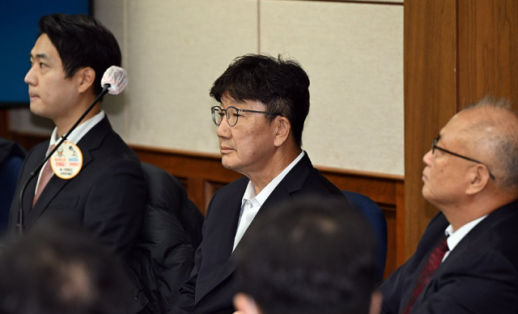 Special Counsel Seeks 4 Years for Rep. Kwon Seong-dong in Appeal Over Unification Church Funds Special prosecutors again sought a four-year prison term for People Power Party lawmaker Kwon Seong-dong in his appeal over allegations he took 100 million won (about $100,000) in political funds from the Unification Church. The case has focused on whether money and requests exchanged ahead of a presidential election reflected improper ties between politics and a religious group. At a closing hearing Monday at the Seoul High Court, the special counsel team investigating Kim Keon Hee, led by Special Counsel Min Jung-ki, asked the court to sentence Kwon to four years in prison and order forfeiture of 100 million won. The request matches what prosecutors sought at the first trial. The special counsel argued Kwon accepted illegal political funds through his relationship with the church. “The defendant colluded with a specific religious group and received a large sum of 100 million won in political funds,” the team said, adding that it undermined election fairness and violated a lawmaker’s duty of integrity. Prosecutors said the Unification Church made requests to Kwon, described as a so-called “Yoon core” figure, while supporting Yoon Suk Yeol during the 20th presidential election. They also cited Kwon’s conduct after the alleged offense, claiming he showed no remorse and tried to destroy evidence by contacting related figures and checking on the investigation’s status. “Given the circumstances and method of the crime and the amount received, the offense is extremely serious,” the special counsel said, urging the court to dismiss Kwon’s appeal and impose a heavier sentence. Kwon was indicted on allegations that in January 2022 he met Yoon Young-ho, a former Unification Church world headquarters chief, at a restaurant in Yeouido, Seoul, and received 100 million won along with requests for support for the church. Prosecutors say the church sought to have its pending issues advanced as government policy in exchange for organizational support and votes from members during the election. In January, the first trial court found Kwon guilty on all counts and sentenced him to two years in prison and forfeiture of 100 million won. The court said taking illegal political funds betrayed constitutional responsibilities and undermined the purpose of the Political Funds Act. If the ruling is finalized, Kwon would lose his parliamentary seat and face restrictions on running for office for the next 10 years. Both the special counsel and Kwon appealed the first ruling. Kwon’s lawyers again disputed the allegations, saying it was “hard to accept” that 100 million won in cash could have been exchanged in broad daylight. They said the Unification Church offered election funding but Kwon rejected it, and denied he accepted money or granted any favors. * This article has been translated by AI. 2026-04-21 18:01:16
 -
 Thailand’s PTT Oil and Retail Launches Self-Service Fueling With App Discounts Thailand’s PTT Oil and Retail (PTTOR), the retail arm of state-owned oil company PTT, said it has begun offering self-service fueling, combining the rollout with digital technology and discounts. Customers use an app to operate the service, which the company said is intended to cut wait times and improve the efficiency of fueling-bay operations. The discount for self-service is 0.40 baht per liter (about 1.98 yen), with no minimum purchase required. PTTOR said the self-service option has already started at some stations. Participating locations can be checked through the app or on Facebook. 2026-04-21 18:00:33
 -
 Japan’s Self-Defense Forces Join U.S.-Philippines Balikatan Drills in First Combat Training Role Japan’s Self-Defense Forces are taking part in U.S.-Philippines joint exercises in a full operational role for the first time, a move aimed at tightening allied coordination as concerns grow about a potential “power vacuum” in Asia while the United States concentrates military resources on the Middle East, the Nikkei business daily reported. According to Nikkei on the 21st, the United States and the Philippines began the large-scale Balikatan exercises on the 20th. This year, Japan is joining with a substantial troop presence for the first time, following the entry into force of a Reciprocal Access Agreement between Japan and the Philippines in September last year that facilitates troop movement between the two countries. Nikkei said the drills go beyond routine military cooperation and reflect a response to shifts in U.S. strategy. It cited concerns that deterrence in the Indo-Pacific could weaken after the Donald Trump administration moved naval forces previously deployed in Asia to the Middle East to respond to Iran. With key assets such as U.S. Navy amphibious assault ships redeployed, regional governments have become more alert to a possible capability gap, and the Philippines is using joint exercises to help keep the United States engaged in the region, Nikkei said. A senior U.S. military official said at the opening ceremony that “no matter what happens in other parts of the world, America’s engagement in the Indo-Pacific will not waver.” Nikkei also pointed to the Philippines’ experience after the U.S. military withdrawal in 1992, saying China has expanded its influence in the South China Sea since then, shaping Manila’s current security approach. The Philippines has recently broadened security cooperation not only with the United States but also with Japan, Australia, Canada, New Zealand and France as it builds a wider network of partners. Cooperation with Japan has deepened quickly. Japan became the third country after Australia and the United Kingdom to sign a Reciprocal Access Agreement with the Philippines, effectively elevating ties to a “quasi-alliance,” Nikkei said. The two sides also signed an Acquisition and Cross-Servicing Agreement in January to provide mutual support such as fuel and ammunition. Nikkei said Japan’s role in Balikatan is also changing. The Self-Defense Forces had previously participated as observers, but this time about 1,400 personnel will take part in operational training including maritime drills and missile defense exercises. Near the South China Sea, they are also set to join live-fire training using Type 88 surface-to-ship missiles. Philippine armed forces chief of staff Romeo Brawner was quoted by Nikkei as saying it was meaningful to welcome Japanese combat units for the first time since the end of the war. Nikkei said the Philippines sees limits to acting alone given the military gap with China and is seeking deterrence through cooperation with partners including Japan. Japan, for its part, is expanding its defense role and increasing its presence in the Indo-Pacific. Nikkei added that uncertainty remains. The Philippines relies on the Middle East for a significant share of its energy imports, and a prolonged period of instability there could constrain military activity. Overall, Nikkei said the exercises illustrate a shifting Indo-Pacific security landscape, as allies and partners seek to sustain deterrence through cooperation while U.S. forces are spread across regions. * This article has been translated by AI. 2026-04-21 17:59:33
 -
 KOSPI Hits Record High for First Time in Two Months on Chip Optimism, Foreign Buying South Korea’s benchmark KOSPI closed at a record high, lifted by expectations of a semiconductor upturn and renewed foreign inflows. The Korea Exchange said the KOSPI finished Monday at 6,388.47, setting new intraday and closing records for the first time since February. The previous closing high was 6,307.27 on Feb. 26. Market capitalization also hit an all-time high of 5,236 trillion won. The index had slid sharply in March amid heightened U.S.-Iran tensions, but has rebounded this month as optimism over chip earnings and improved foreign demand supported a steady rise. Analysts cited expectations for a recovery in the semiconductor cycle, driven by expanding global demand for artificial intelligence memory and stronger forecasts for first-quarter results, which helped improve investor sentiment. Foreign investors, who had been net sellers in February and March, turned net buyers this month. About 5.6 trillion won flowed into the electrical and electronics sector, highlighting purchases concentrated in large-cap shares. The KOSPI has gained 26.4% in April, the highest among Group of 20 markets despite geopolitical risks in the Middle East. Japan’s Nikkei 225 rose 15.2%, Turkey’s BIST 100 gained 13.2%, India’s BSE Sensex added 9.1% and the S&P 500 climbed 8.9%. Since the start of the year, the KOSPI is up 52%, also the strongest among major markets. Turkey followed at 29%, with Brazil up 22% and Japan up 17%. The exchange said continued government efforts to modernize capital markets, growth in the AI industry and improving chip earnings are supportive factors. It added that profit-taking after the recent run-up and uncertainty in the Middle East remain negative factors.* This article has been translated by AI. 2026-04-21 17:58:36
 -
 People Power Party Pledges Free City Buses for Seniors 70 and Older South Korea’s People Power Party said it will push to make city buses free in part for seniors ages 70 and older, and to introduce a locally tailored ride-sharing system dubbed “rural Uber” in areas with few or no taxis. The party also plans to expand transit rebates by raising K-Pass refund rates. Party leader Jang Dong-hyeok announced the mobility welfare package at the National Assembly on the 21st, describing mobility as a universal right and pledging to ensure seniors and young people are not left out. The party’s first priority is a city-bus free-fare policy for those 70 and older. Jang said pilot programs would begin next year in regions where People Power Party candidates win local executive posts in the upcoming local elections, with a later expansion nationwide. He said the central government would provide support “at a reasonable level” so local governments are not left to shoulder the costs alone. Based on population estimates, the party said nationwide adoption would require about 530 billion won. It said limiting free rides during commuting hours could ease fiscal pressure and crowding, while partial national funding would help keep the burden on local governments manageable. Policy chief Jeong Jeom-sik cited Daejeon, which has offered free city buses to residents 70 and older since September 2023. He said the city has spent an additional 13.3 billion won a year beyond its existing bus-deficit subsidies, an increase of about 11% that he described as within a local government’s capacity. The “rural Uber” plan would build a platform with participation from youth startups and local mobility firms, allowing qualified residents to use their private vehicles to provide ride-sharing services. The party said it would target areas with “transportation gaps” where bus or taxi service is lacking, aiming to improve mobility for people with limited transportation options, including older adults and pregnant women. Jang said the party would require a priority-call function for vulnerable riders and set rules covering safety, security and fares. He said it would seek revisions to the Passenger Transport Service Act and push to designate special regulatory zones for mobility services in transportation-gap areas. The party also said it will raise K-Pass refund rates, focusing on young people. It aims to lift the maximum refund rate from the current 20% (basic) and 30% (youth) to 30% and 50%, respectively. It also plans to expand refund rates to as high as 83% for low-income young people and 75% for households with multiple children, saying the changes would boost real income while helping cut greenhouse-gas emissions.* This article has been translated by AI. 2026-04-21 17:57:20
 -
 New Bank of Korea Gov. Shin Hyun-song Faces Inflation Risks and Growth Headwinds Shin Hyun-song officially took office as Bank of Korea governor on April 21, beginning a four-year term after a contentious confirmation hearing process. He assumes the post as concerns rise over stubborn inflation and weakening growth. In his inaugural address, Shin said he would pursue “price stability and financial stability through cautious and flexible monetary policy,” signaling a calibrated approach as external conditions shift rapidly. The central bank has said it expects this year’s economic growth to fall below 2.0%, while consumer inflation is likely to exceed its previous forecast of 2.2% by a significant margin. Geopolitical uncertainty in the Middle East has pushed up international oil prices, adding to cost pressures. Shin said supply shocks tied to the Middle East war have “further increased uncertainty” over the paths of inflation and growth, with upward pressure on prices and downward pressure on activity rising at the same time. Markets have often labeled Shin a “pragmatic hawk,” leaning toward the possibility of rate increases. Shin rejected a simple hawk-dove divide, saying it is better to read broader economic conditions, assess how the financial system and the real economy interact, and respond flexibly. Still, he suggested policy action could be needed if inflation risks intensify. At a National Assembly confirmation hearing on April 15, Shin said that if Middle East risks persist and spill over into core inflation or inflation expectations, producing second-round effects, “monetary policy must be used.” On financial stability, Shin called for a broader lens as boundaries blur between banks and nonbanks and between domestic and overseas markets. He said relying only on traditional soundness indicators makes it harder to detect risks, and urged greater use of market price indicators to strengthen early-warning functions, better access to information on the nonbank sector, and expanded analysis to include off-balance-sheet transactions and nontraditional financial products. Shin also outlined priorities for internationalizing the won and advancing digital finance. He cited 24-hour foreign exchange trading and building an offshore won settlement system as tasks to develop currency infrastructure in line with South Korea’s economic standing. He also said the second phase of “Project Hangang” will aim to expand the use of a central bank digital currency and deposit tokens. He indicated the bank will continue to speak out on structural issues highlighted by his predecessor, Lee Chang-yong. Shin said demographic change, widening inequality, and problems tied to real estate and household debt are key variables shaping the environment for monetary policy, adding that the central bank’s in-depth research and policy recommendations should help point the economy in a desirable direction.* This article has been translated by AI. 2026-04-21 17:56:27
 -
 Mercedes-Benz Unveils Updated S-Class in South Korea, Focuses on Gas Models Mercedes-Benz, marking the 140th anniversary of its brand, unveiled the updated “The New Mercedes-Benz S-Class” and “The New Mercedes-Maybach S-Class” in South Korea for the first time. The company said it plans to accelerate its push in the market with a broader rollout of new vehicles and changes to its sales system. Mercedes-Benz presented the models and its strategy at a media briefing on April 21 at the Maybach Brand Center Seoul in Seoul’s Gangnam district. The vehicles shown were the refreshed S-Class and Maybach S-Class that debuted globally in January and March, respectively. Both are facelift models and have begun sales in Germany and some other European countries. Mercedes-Benz plans to launch both in South Korea in the second half of this year, with specifications expected to differ slightly from global versions. While the global lineup includes both internal-combustion and plug-in hybrid (PHEV) variants, the company said it will focus on selling internal-combustion models in South Korea. Park Yang-won, an executive director in Mercedes-Benz Korea’s product strategy planning team, said the Maybach is “the first PHEV-applied model at the headquarters level,” but added, “Korean customers seem to want the pure performance of internal-combustion engines, so we are not considering the PHEV.” Vaitl said the new launches are the start of a faster product push in South Korea. “Over the next two years, we will launch more than 40 new models (including global models),” he said. “Not only the S-Class, but across various model lineups, we want to show innovation in every segment through these new product launches.” He also pointed to a revised sales system introduced this month. Mercedes-Benz Korea adopted a new vehicle sales method, “Retail of the Future (ROF),” starting April 13. Under ROF, Mercedes-Benz Korea centrally manages inventory and pricing structures that previously varied by dealer, aiming to let customers buy vehicles on the same terms at any store. Vaitl said the “newly digitized” ROF system allows customers to reserve and purchase online and was introduced to expand digital interaction with customers. He added that customers can also use Mercedes Pay as part of financial services, describing the move as a policy aimed at offering the best pricing. Mercedes-Benz also introduced its global 140th anniversary campaign, “140 Years of Innovation.” The campaign is a tour tied to the new S-Class that will visit six continents and 140 cities, and the Seoul event was held as part of that effort.* This article has been translated by AI. 2026-04-21 17:55:02
 -
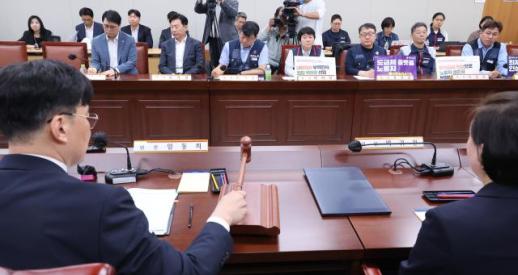 Minimum Wage Talks Begin in South Korea, With Debate Over Piecework and Differentiated Rates Deliberations have begun at South Korea’s Minimum Wage Commission on next year’s minimum wage. This year’s talks are expected to feature sharp labor-management clashes not only over the size of any increase but also over who is covered and how the system is applied. Key issues include whether to extend minimum-wage protections to piecework-based workers and whether to set different rates by industry or region. ◆Will platform and nonstandard workers be covered? Labor minister asks for review On the 21st, the Ministry of Employment and Labor said the commission held its first plenary meeting at the Government Complex Sejong. The 27 members representing labor, management and the public interest began full-scale discussions on the minimum wage’s coverage and level. An early flashpoint is the structure of the system itself, particularly whether the minimum wage should apply to piecework workers. The term refers to workers paid based on performance, such as delivery riders and parcel couriers. Labor groups raised the same issue at the commission in 2024, arguing that platform workers and other nonstandard workers should be included. No conclusion was reached then because of disagreements between labor and management and a lack of data. At the request of public-interest members, the government later conducted a fact-finding survey on items such as the target group, scale and income. The issue is expected to move forward this year. Employment and Labor Minister Kim Young-hoon, in a formal request for deliberation, asked the commission to consider “whether to set a separate minimum wage for piecework (or similar) workers for whom it may not be appropriate to set a minimum wage on an hourly, daily, weekly or monthly basis.” Labor argues that as work arrangements diversify, minimum-wage protections should expand. It says the issue can no longer be delayed, particularly because the government’s research was reflected in the minister’s request. Business groups are cautious about expanding coverage. They argue many piecework workers should be viewed as independent business operators rather than employees, and warn that broader coverage could sharply raise labor costs. They also say uniform standards are difficult given varied contract structures. ◆Labor-management fight intensifies over differentiated rates Whether to apply different minimum wages by industry is also emerging as a major issue. Industry-based differentiation was tried once in 1988, the first year the system was implemented, but a single nationwide minimum wage has been maintained since the following year. A vote was held last year as well, but the proposal failed amid strong opposition. Business groups say minimum wages should be differentiated for vulnerable sectors such as food and lodging and transportation, arguing many employers in those industries have limited ability to pay. In 2024, the share of workers paid below the minimum wage in sectors including food and lodging was found to exceed 30%. Labor counters that differentiated rates would undermine the purpose of the system and could lead to structural discrimination. It warns that wages in certain industries could become entrenched, effectively creating a “low-wage benchmark.” Labor also cites concerns about stigmatizing vulnerable sectors and the possibility that differentiation could expand to more industries. Debate is also continuing over regional differentiation. Business groups argue it is unreasonable to apply the same minimum wage nationwide given differences in prices and business conditions between Seoul and other areas. Labor says paying different wages by region is clear discrimination. Some countries, including Japan, apply regional minimum wages, setting higher rates in major cities with higher productivity and prices than in rural areas. Critics, however, say such systems can widen regional gaps and accelerate the decline of provincial areas.* This article has been translated by AI. 2026-04-21 17:53:51