
Journalist

Lee Hugh
=
-
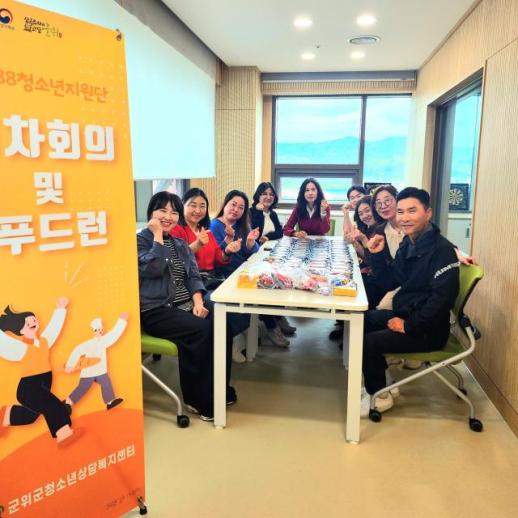 Gunwi youth volunteers launch Food Run to deliver homemade side dishes to at-risk teens Gunwi County’s 1388 Youth Support Volunteers, part of the Gunwi County Youth Counseling and Welfare Center, have begun the 2026 Food Run program to promote healthy eating and help stabilize daily life for local youth. Eight volunteers attended the first meeting on April 20 and pledged private-sector cooperation to protect at-risk teens. Food Run is a regular volunteer effort that will run through November, selecting 10 households with at-risk youth. Once a month, volunteers will cook side dishes and deliver them to each home while checking on the youths’ health and living conditions. The 1388 Youth Support Volunteers serve as a key private network in the youth safety net, helping identify and protect young people showing signs of crisis. Last year, the group carried out a range of activities, including school violence prevention campaigns, meal deliveries, promotion of the 1388 youth hotline and mentoring for vulnerable groups. Lee Kyung-sook, head of the Gunwi County Youth Counseling and Welfare Center and director of the county’s Resident Welfare Office, said, “I am grateful for the hard work of the volunteers who dedicate themselves to young people.” She added, “We will build a tighter, more practical support system so that youth can grow up healthy with the community’s 관심 and love.”* This article has been translated by AI. 2026-04-21 12:33:17
 -
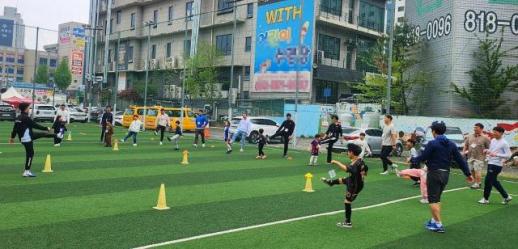 Gyeongsan Family Center Launches Soccer Program to Encourage Fathers’ Child Care GYEONGSAN, South Korea — The Gyeongsan Family Center in North Gyeongsang Province is running its 2026 neighborhood fathers class, “Goal-Kicking Kids and Dads,” to encourage fathers to take a more active role in child care and strengthen bonds with their children. The program targets fathers and their children ages 7 to 9. It began in April and will run through October for a total of 23 sessions. Along with play, it includes instruction to help fathers better understand child-rearing based on developmental stages. Soccer activities range from basic drills to mini-games, designed to help fathers and children cooperate and communicate through physical activity. The center said it expects the program to promote more active involvement by male caregivers at home and deepen emotional connections with children. Shin Yong-ik, head of the Gyeongsan Family Center, said the hands-on program will expand opportunities for family communication and help build a healthy family culture. The center said it plans to continue offering additional education programs for fathers.* This article has been translated by AI. 2026-04-21 12:27:15
 -
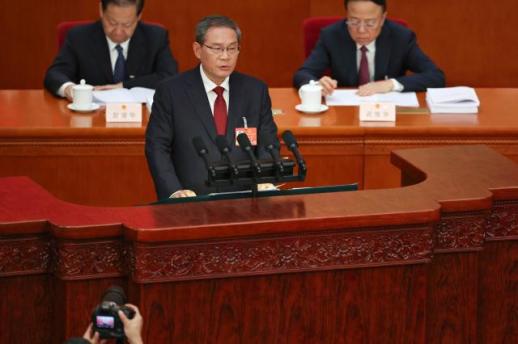 China Recasts Coal as Power-Grid Backstop Amid Energy Security Concerns China is again elevating coal in its energy policy as surging electricity demand, the intermittency of renewables and geopolitical uncertainty sharpen concerns about energy security. Analysts say Beijing, which has promoted a shift away from coal, is redefining it as a “safety valve” to help keep the power grid stable. The direction was underscored at a recent State Council meeting. China’s state-run Xinhua News Agency reported on April 21 that the State Council held its 19th group study session the previous day on “accelerating the building of a new energy system through coordinating energy security and the green, low-carbon transition.” Premier Li Qiang said strengthening energy security is a core foundation for building China into an energy power. Citing rapid changes in the international situation and rising energy consumption, he called for maintaining a sense of urgency and preparing for worst-case scenarios to improve the resilience and security of the energy system. Li said the key to stronger energy security is optimizing the energy mix. He urged greater innovation in energy technology, faster construction of a new energy system and a push for low-carbon shifts in energy production and consumption. He also called for expanding large clean-energy bases, including wind and solar in the northwest, hydropower in the southwest and offshore wind along the eastern coast, while developing distributed solar and wind and region-specific biomass, geothermal and ocean energy. At the same time, Li made clear that coal’s role is changing. He said China should raise the level of clean and efficient use of fossil energy, speed upgrades to improve efficiency at existing coal-fired plants and accelerate retrofits to cut carbon. He also said coal power should move beyond serving only as baseload supply and become a flexible source that can adjust output to match demand. China has promoted “de-coal” policies while pursuing goals of peaking carbon emissions by 2030 and achieving carbon neutrality by 2060, pushing a shift from coal to renewables. With expanded wind and solar installations, renewable capacity rose to about 2.334 billion kilowatts last year, accounting for about 60% of total power capacity. But electricity demand has been rising quickly, with some warning it is outpacing capacity growth. Driven by artificial intelligence, data centers and the spread of electric vehicles, power consumption last year exceeded 10.4 trillion kilowatt-hours, more than double the 2015 level and more than twice that of the United States. A key challenge is the nature of renewables. Solar and wind output can swing sharply with weather, making it difficult to respond reliably when demand peaks. With volatility in global energy markets rising amid the Russia-Ukraine war and the outbreak of the Iran war, arguments have gained traction for slowing the pace of coal cuts. Against that backdrop, coal is re-emerging as a central stabilizing element in China’s power system. Coal output has continued to rise, and the National Bureau of Statistics said production last year hit a record 4.85 billion tons. Some analysts say this does not signal a return to a coal-centered system, but an evolution in coal’s function. The U.S. foreign affairs magazine The Diplomat said that as renewables expand, China’s policy focus is shifting from increasing generation to ensuring grid stability, with coal being reshaped from a baseload source into flexible capacity that offsets renewable variability. Still, some warn that local governments may lean on coal generation because it is easier to build and cheaper in the name of short-term energy security, potentially adding pressure to long-term carbon-reduction goals. 2026-04-21 12:24:38
 -
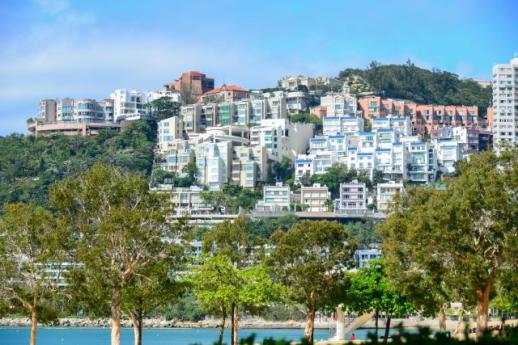 Hong Kong Luxury Home Sales Value Hits 18-Quarter High in Q1 Hong Kong real estate brokerage Centaline Property said luxury single-family home deals totaled 164 in the first quarter (January-March), with a combined contract value of HK$9.056 billion (about 184 billion yen). The number of deals fell 9.4% from the previous quarter, but total value rose 6.0% to the highest level in 18 quarters. New-home transactions rose 5.3% to 20 deals, and their value jumped 27.9% to HK$3.661 billion. Resale deals fell 11.1% to 144, and value slipped 5.0% to HK$5.395 billion. Centaline said resale activity has been weakening, but noted that deal volume has stayed above 100 for six straight quarters, indicating demand from buyers and investors remains solid. Ultra-luxury homes priced above HK$100 million accounted for 22 deals, up 4.8%, while their value increased 14.6% to HK$6.006 billion. Both measures rose for a fourth consecutive quarter. The priciest deal was a resale unit at Mount Nicholson on Hong Kong Island’s Victoria Peak, at HK$1.039 billion. A new unit at Plantation Blue Pearl, also on Victoria Peak, followed at HK$557.9 million. Yang Mingyi, senior associate director in Centaline’s research department, said improving market conditions and rising asking prices have continued to draw capital from wealthy buyers, signaling a recovery in the luxury single-family home segment. Yang also said second-quarter (April-June) activity could cool, citing the Hong Kong government’s February increase in stamp duty rates on home transactions above HK$100 million, Middle East turmoil and continued price gains in the resale market. 2026-04-21 12:03:17
 -
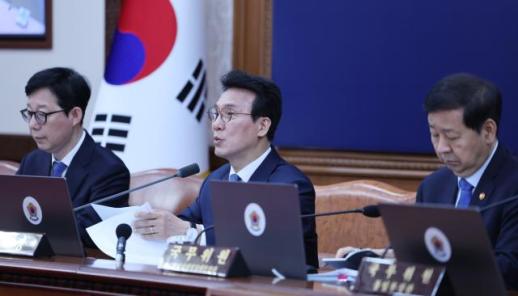 PM Kim Min-seok orders fast rollout of extra budget, including aid for high oil prices Prime Minister Kim Min-seok on April 21 ordered officials to closely check how 243 local governments are drafting supplementary budgets so that funding for 20 projects — including support for damage from high oil prices — can be executed quickly. In opening remarks at the 17th Cabinet meeting and the eighth emergency economy headquarters meeting at the Government Complex Seoul, Kim said “speed is the lifeblood” of what he called a “wartime supplementary budget.” He urged relevant ministries — including the Ministry of Economy and Finance, the Ministry of Trade, Industry and Energy, and the Ministry of Health and Welfare — to ensure additional supply-stabilization steps scheduled for this week, including releasing stockpiled urea for vehicles and setting a fourth maximum price for oil. With the deadline for a ceasefire between the United States and Iran approaching, Kim said uncertainty in the Middle East continues and stressed that the government will keep its current emergency economic response system firmly in place. Kim also called on ministries to follow through on steps tied to President Lee Jae-myung’s trip to India and Vietnam, saying the government must keep working under the president’s leadership to overcome difficulties from the Middle East war and strengthen energy and supply-chain stability. Kim said 217 of 341 key bills that should be handled in the first half — including the so-called materials, parts and equipment law and a bill to support victims of jeonse rental fraud — have yet to pass the National Assembly. He asked Cabinet members to keep meeting lawmakers in person to seek cooperation so the government does not miss what he called a legislative “golden time.” Kim said the government began intensive safety inspections the previous day at about 32,000 facilities nationwide considered at risk of accidents, citing concerns that oversight could weaken ahead of local elections. He instructed agencies to conduct thorough checks over the two-month inspection period and immediately carry out needed fixes, with special management for summer disaster-related sites such as underpasses, semi-basement homes and landslide-prone areas. * This article has been translated by AI. 2026-04-21 12:00:06
 -
 South Korea Elevates National Tourism Strategy Council to Presidential Level South Korea will move its top tourism policy body, the National Tourism Strategy Council, from the prime minister’s office to the president’s office, a step aimed at developing tourism as a national strategic industry. The Ministry of Culture, Sports and Tourism said April 21 that the Cabinet approved revisions to the Tourism Promotion Act reflecting the change. With the amendment, the council will be formally run under a president-led system, strengthening its standing. Its mandate will also expand beyond drafting tourism promotion plans to include evaluating implementation results and feeding those findings back into policy. The ministry said the goal is to review tourism performance across ministries and reinforce interagency coordination and policy effectiveness. In February, at the 11th National Tourism Strategy Council meeting, the president attended in person and stressed tourism as a key driver of the national economy and regional development. As the first follow-up step to the overhaul, the ministry and the Korea Tourism Organization will hold a public contest for tourism policy proposals from April 22 through May 12. The contest will collect ideas in eight areas centered on measures announced at the 11th council meeting under the theme, “A major shift in inbound tourism, a major leap in regional tourism.” Participants can submit proposals through the event page on the Korea Tourism Organization’s “VisitKorea” website. After reviews by experts and private-sector committee members, 20 proposals will be selected. One top prize winner will receive 1 million won, two excellence award winners will receive 500,000 won each, and 17 encouragement award winners will receive 100,000 won each. Results will be announced May 26, and selected proposals are to be reflected in tourism policy. Kang Jeong-won, director general for tourism policy, said the upgrade to a presidential body has strengthened the system’s execution and coordination functions. He urged broad public interest and participation in the contest so the government can identify policies needed in the field.* This article has been translated by AI. 2026-04-21 11:48:28
 -
 Samsung Bioepis Unveils Preclinical Data on First New Cancer Drug Candidate at AACR 2026 Samsung Bioepis said it has disclosed preclinical data for SBE303, a next-generation antibody-drug conjugate (ADC) cancer drug candidate, for the first time at the American Association for Cancer Research’s AACR 2026 annual meeting, as it moves beyond biosimilars to accelerate development of its own new medicines. The company said the data were presented at the meeting in San Diego, held April 17-22 (local time). SBE303 is a next-generation ADC designed to target nectin-4, a protein overexpressed in tumor cells. Samsung Bioepis said it is its first new-drug pipeline developed through joint research and licensing agreements under an open-innovation strategy with domestic and overseas partners Intocell (South Korea) and Frontline (China). According to preclinical results presented in an on-site poster session on April 20 (local time), SBE303 showed improved tumor-cell binding specificity and more efficient intracellular drug delivery compared with existing nectin-4-targeted therapies, the company said. In safety assessments, Samsung Bioepis said SBE303 produced improved results in tests for skin toxicity, a common adverse reaction associated with nectin-4-targeted therapies. It also said no interstitial lung disease (ILD), a serious side effect that can cause irreversible damage, was observed. The company said the highest non-severely toxic dose (HNSTD) was 40 mg/kg, adding that the finding supports the potential for clinical use by securing a wide therapeutic safety margin. Samsung Bioepis said it has begun global Phase 1 clinical trials of SBE303 in the United States and South Korea. It said it plans to evaluate drug safety and early efficacy in 149 patients with advanced refractory solid tumors from March this year through July 2030. 2026-04-21 11:42:20
 -
 Beijing Auto Show Opens April 24, Runs Through May 3 The Beijing International Automotive Exhibition, known as the Beijing Auto Show and billed as the world’s largest auto exhibition, will be held in Beijing from April 24 to May 3. This year marks its 19th edition. The show will use two venues — the China International Exhibition Center and the Capital International Convention Center — with a total exhibition area of about 380,000 square meters. Organizers expect more than 1,000 companies to take part, including automakers and auto-parts suppliers. April 24-25 are press days for media, followed by industry-only access on April 26-27. The show will be open to the public from April 28 through May 3. The Beijing Auto Show alternates annually with the Shanghai Auto Show. Organizers said 892,000 people visited the event in 2024. 2026-04-21 11:40:06
 -
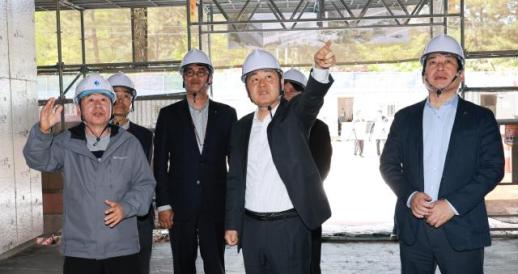 Jeonbuk Gov. Kim Kwan-young inspects Jeongeup biotech sites, children's 'Miracle Playground' Kim Kwan-young, governor of Jeonbuk Special Self-Governing Province, visited Jeongeup on the 21st to inspect advanced bio industry sites and a children’s play facility known as the “Miracle Playground,” the province said. The trip was aimed at reviewing on-the-ground preparations for workforce training and technology commercialization support in advanced bio, a sector where Jeonbuk says it has a competitive edge, and at checking local living conditions for children. Kim first toured the Pharmaceutical Industry Future Workforce Training Center at the Jeongeup Advanced Science Industrial Complex. He received a briefing on construction and future operations and then checked the site. The project, running through 2026, is designed to build a demand-tailored training base for key pharmaceutical manufacturing specialists. Education and hands-on training facilities equipped with GMP-grade process equipment are being built. The center aims to train about 1,200 people a year, including students, job seekers and workers. “The core of competitiveness in the pharmaceutical and bio industries ultimately comes down to people,” Kim said, calling for thorough preparations for operations and stronger training programs to produce job-ready talent. Kim then visited the Jeonbuk Advanced Bio Research Division of the Korea Institute of Toxicology to hear an update on the “Jeonbuk Advanced Bio Boost-Up Platform Construction Project.” He also held a meeting with heads of government-funded research institutes, including the Korea Institute of Toxicology, the Jeonbuk branch of the Korea Research Institute of Bioscience and Biotechnology, and the Advanced Radiation Technology Institute of the Korea Atomic Energy Research Institute. The boost-up platform project, set for 2025-2027, focuses on technology commercialization using foundational technologies, integrated nonclinical testing support, stage-by-stage support for advanced bio companies, and assistance with investment attraction and global expansion. Multiple government-funded institutes are participating, the province said. Kim later inspected the Miracle Playground built in the Naejangsan cultural tourism area, reviewing operations and safety management. The playground was designed to reflect children’s needs by age and includes seven themed areas: an infant zone, a spiderweb zone, a maple tree zone, a sand zone, an ecological pond zone, an alleyway zone and a forest play zone. The facility is intended to let children enjoy creative play and hands-on activities in a nature-friendly setting, the province said. “It is very meaningful that a space where children can safely run and build creativity has taken root in the community,” Kim said, pledging continued provincial attention to child-friendly environments and related policies. Namwon and Gimje selected for social solidarity economy innovation model program Jeonbuk Special Self-Governing Province said on the 21st that Namwon and Gimje were selected in a Ministry of the Interior and Safety competition for the “2026 Social Solidarity Economy Innovation Model Discovery and Expansion Project,” securing a total budget of 20 billion won, including 10 billion won in national funding. The ministry is launching the program this year with 8.5 billion won to encourage social solidarity economy organizations to work with local companies and groups to address community problems and build a sustainable economic ecosystem, the province said. Namwon was chosen in the “local circular economy” category for its “Wolmae Stay” project, while Gimje was selected in the “regional revitalization leading” category for its “Jjaemmaero Dadaitseon” project, the province said. Namwon’s Wolmae Stay will use idle space to build a Namwon-style complex hub for longer stays and self-reliance. The city plans to run programs for retirees from the Seoul metropolitan area to attract a “living population,” while involving vulnerable groups, including young people preparing for independent living, as facility staff to support both housing and self-reliance. Gimje’s Jjaemmaero Dadaitseon aims to link an old downtown commercial district with surrounding rural areas through a shared-growth, circular model. Centered on an area where traditional markets and historical and cultural sites coexist, the city plans to operate a night market, cultural and arts programs, and pop-up events in vacant stores to build a self-sustaining local ecosystem where young sellers and local merchants can grow together. Support may continue for up to three years, depending on annual evaluations, the province said. It expects the program to help counter population decline risks and boost the local economy.* This article has been translated by AI. 2026-04-21 11:39:14
 -
 KOSPI hits fresh record as chip rally lifts market ahead of looming US-Iran talks SEOUL, April 21 (AJP) - Asian markets mostly opened higher on Tuesday amid growing expectations ahead of looming talks between the United States and Iran to end the prolonged conflict in the Middle East. In Seoul, the benchmark KOSPI hit an all-time high of 6,355.39 during morning trading, breaking the previous intraday record set on Feb. 27, while the junior KOSDAQ edged down 0.03 percent to 1,174.52. Shareholder returns are gaining momentum. Total cash dividends by KOSPI-listed firms reached a record high of 35.1 trillion won ($24 billion) in 2025, up 15.5 percent from 2024, with payout ratios rising to a five-year high of 39.83 percent. Firms participating in the government's value-up program — an initiative aimed at enhancing corporate value and shareholder returns — accounted for 87.7 percent of total dividends, while companies that pay higher dividends made up nearly two-thirds of the total. Large-cap stocks mostly traded higher. Among semiconductor-related shares, Samsung Electronics rose 1.98 percent to 218,750 won, and SK hynix jumped 4.80 percent to 1,222,000 won, as brokerages raised target prices on expectations of stronger second-quarter earnings. Hyundai Motor climbed 1.90 percent to 537,000 won and Kia added 1.08 percent to 159,100 won. Battery and energy stocks posted strong gains, with LG Energy Solution surging 8.86 percent to 467,000 won, Samsung SDI advancing 9.12 percent to 742,000 won and Doosan Enerbility rising 2.61 percent to 113,900 won. However, Samsung Biologics fell 1.00 percent to 1,589,000 won and Hanwha Aerospace slipped 0.49 percent to 1,418,000 won. Financial shares were mixed, with KB Financial edging down 0.37 percent to 160,300 won, while Samsung Life Insurance rose 0.49 percent to 254,750 won and Samsung C&T added 1.17 percent to 303,500 won. Among the KOSDAQ stocks, EcoPro rose 3.98 percent to 161,800 won and EcoPro BM gained 3.81 percent to 218,000 won. Samchundang Pharm also edged up 0.52 percent to 480,000 won, and HLB added 1.27 percent to 64,000 won. On the downside, Alteogen slipped 0.27 percent to 370,500 won and Rainbow Robotics fell 1.15 percent to 601,000 won. L&F edged down 0.26 percent to 116,300 won, and ABELBIO declined 1.25 percent to 158,200 won. Cosmo Advanced Materials dropped 5.47 percent to 102,000 won, and Ligachem Biosciences lost 2.15 percent to 195,700 won. Elsewhere in Asia, Japan's Nikkei 225 rose 1.06 percent to 59,445.90, extending recent gains. The boost also came from expectations that the Bank of Japan may delay further rate hikes. The central bank is likely to pause additional tightening at its upcoming meeting in Tokyo next week. Hong Kong's Hang Seng Index also edged up 0.17 percent to 26,406.89, while China's Shanghai Composite Index the only major index to slip, edging down 0.25 percent to 4,071.95 in early trading. 2026-04-21 11:38:55