
Journalist

Lee Hugh
=
-
 Trump rules out further extension of Iran ceasefire as deadline approaches SEOUL, April 21 (AJP) - The U.S. is unlikely to extend its two-week ceasefire with Iran, which expires this week, U.S. President Donald Trump told Bloomberg on Monday, downplaying the chances of another extension. During a phone interview, Trump said the ceasefire would end "Wednesday evening Washington time" - a deadline extended by a day from an initially expected Tuesday expiry, after he announced the temporary truce on April 7 following threats to strike Iranian facilities. Trump added it is "highly unlikely" the deadline will be extended, as a U.S. negotiating team led by Vice President JD Vance, which also includes U.S. special envoy to the Middle East Steve Witkoff and Jared Kushner, the president's son-in-law, is traveling to Islamabad in Pakistan for talks with Iran. When asked about concerns that he would be "under pressure" to cut a deal with Iran, Trump brushed them off, saying he is "not going to be rushed into making a bad deal." In a post on his own platform Truth Social earlier in the day, Trump also expressed confidence he would secure a "far better" deal than the 2015 agreement reached with Iran under former President Barack Obama. "The DEAL that we are making with Iran will be FAR BETTER than the JCPOA, commonly referred to as 'The Iran Nuclear Deal,' penned by Barack Hussein Obama and Sleepy Joe Biden, one of the Worst Deals ever made having to do with the Security of our Country. It was a guaranteed Road to a Nuclear Weapon, which will not, and cannot, happen with the Deal we're working on," he wrote. But Trump's comments come as uncertainty remains over whether another round of talks between Washington and Tehran will take place, after the first round earlier this month ended without agreement, amid renewed tensions in the Middle East as Iran denied any plans to negotiate with the U.S. and instead vowed to retaliate over the U.S. seizure of an Iranian cargo ship last weekend. With looming talks between Washington and Tehran just hours ahead of Wednesday's deadline, it remains to be seen whether the two sides can make a last-minute breakthrough and reach a peace deal. 2026-04-21 10:32:32
 -
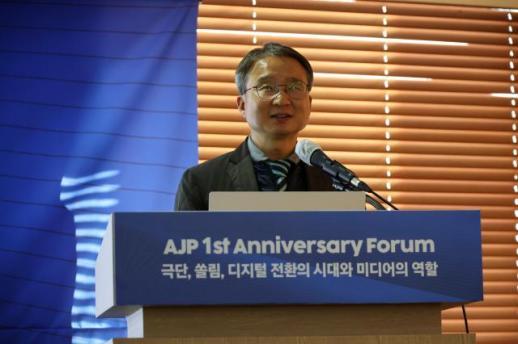 S. Korean scholar pitches trust operating system as algorithms absorb human workflows SEOUL, April 21 (AJP) - Artificial intelligence generated nearly 29 percent of new Python scripts in the United States by early 2025. That metric triggered a silent panic across enterprise software sectors, marking the onset of what industry insiders call the SaaS (software-as-a-service)-pocalypse. Software is no longer just a functional tool waiting for a human click. Machine intelligence is actively moving to absorb complete cognitive workflows, seizing the power of judgment from human operators and fundamentally transferring authority. Park Han-woo, a media and digital business professor at Yeungnam University in South Korea, argues that the global economy is entirely unprepared for this structural disruption. In his latest book, "Digital Assets and Trust Operating Systems in the Era of AI," published on Tuesday, the author outlines how generative algorithms are evolving from passive assistants into autonomous agents capable of making financial and governance decisions on behalf of humans. "Judgment is power," the professor told AJP, noting that delegating these decisions to AI poses severe risks if left unchecked by robust institutional frameworks. "AI can create information, but it cannot take responsibility," the academic added. "The usefulness of a tool is determined by humans. To a thief, a knife can be a weapon to threaten people, but to a chef, a knife is necessary equipment to make delicious food. Delegate, but verify. AI is fast. But it can be wrong." Data as a mirror of social fracture The delegation of authority to machines frequently exposes deep-seated societal flaws. In his book, he highlighted a specific incident where an image-generating algorithm was prompted to draw a street sock seller and a corporate stockbroker. The resulting image depicted the sock vendor as an overweight Black man and the stockbroker as a well-groomed, physically fit White man holding an elegant bag. Algorithms learn from historical data sets inherently laced with human prejudice. An unchecked AI will inevitably reproduce and amplify past inequalities, ultimately reinforcing social disparities rather than eliminating them. "AI is a mirror. It reflects us," the author said. To prevent these biases from manifesting into automated discriminatory actions, the scholar insists that human intervention remains mandatory. He proposes a multi-layered approach: refining data to correct prejudice before training, enforcing transparent judgment processes that explain how a conclusion was reached, and demanding human oversight for critical decisions. "Content is overflowing, and trust is lacking," he noted, referring to the infinite generation of long-tail media. "Content verification comes from structure." The algorithmic challenge to sovereignty To formalize this oversight structure, the Yeungnam University academic advocates for the implementation of an AI-enhanced Decentralized Autonomous Organization, or AIDAO. This theoretical model combines the flexible, probabilistic reasoning of AI with the immutable, cryptographic execution of blockchain technology. "To explain AIDAO in one sentence: An organization operated together by AI and humans, or a decentralized autonomous organization where AI can be the CEO," the professor said. In an AIDAO, an agent might propose a strategy, such as shifting 20 percent of a portfolio during volatile market conditions. That proposal is not executed instantly. Instead, it must pass through smart contracts, specifically Ethereum protocols like ERC-8004 for identity verification and ERC-8001 for execution consensus, and require human approval. "The reason this is important is because it separates judgment, execution, and responsibility," the scholar said. Washington and other Western powers are already grappling with the implications of algorithmic governance. Seoul must also pivot toward shared global architectures rather than relying on isolated corporate platforms. The ultimate safeguard against the SaaS-pocalypse is a Trust Operating System that demands verifiable proof over blind faith. "AI calculates based on rules," he said, emphasizing, "AI generates based on probabilities. AI infers based on data. But humans are incomplete beings accompanied by mistakes. An AI with errors is discarded. However, even if imperfect, humans are chosen. Because humans are noble beings in and of themselves." While algorithms excel at optimizing workflows, the author maintains that humanity will retain its monopoly on meaning and purpose. "AI is good at 'how,' but it cannot do 'why,'" the academic said. "AI gives answers. But humans ask questions." That philosophical boundary forms the foundation of his proposed trust operating system. As algorithms steadily absorb the functional tasks of daily commerce and governance, the defining challenge of the AI era is no longer technological capability, but the architectural design of trust. The authority to build that architecture, the scholar argues, must remain firmly in human hands. While theoretical frameworks like AIDAO are still being debated in academic and financial circles, initial regulatory steps are already materializing. The South Korean government mandated the use of watermarks on AI-generated content starting in January this year. 2026-04-21 10:30:04
 -
 Shinhan Bank to Back OCI Holdings Growth Plans With Malaysia Unit Dollar Loan Shinhan Bank said it will provide financial support for OCI Holdings’ future growth businesses, offering not only direct financing but also a range of solutions aimed at strengthening the company’s competitiveness in global markets. The bank said Tuesday it signed a business agreement with OCI Holdings on “productive finance support and joint cooperation for future growth.” Under the agreement, the two sides will expand financing and arrange funding for capital investment and working capital tied to future growth businesses, including semiconductors and advanced materials, as well as facilities linked to building a global solar value chain. They also plan to cooperate on green finance to advance environmental, social and governance management and support carbon-neutral efforts. As a first project, Shinhan Bank will support a $435 million plan by the Malaysia-based joint venture OTSM to build a new polysilicon plant for semiconductors, providing a standby letter of credit and a foreign-currency loan through its Singapore branch. The amount is about 640.2 billion won, the bank said. “This agreement is meaningful in that it supports, through finance, stronger competitiveness in the advanced materials industry and an expanded foundation for future growth,” a Shinhan Bank official said. “We will continue to broaden productive finance that supports corporate production and innovation-driven growth.”* This article has been translated by AI. 2026-04-21 10:27:00
 -
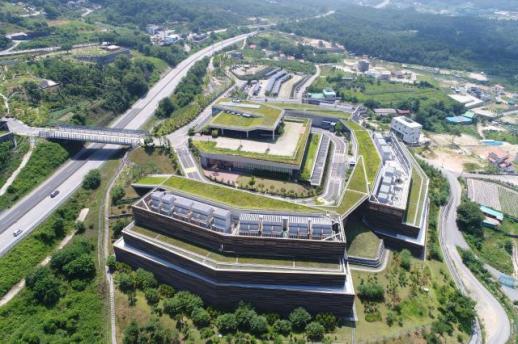 Naver takes stake in GS wind farm to power data centers SEOUL, April 21 (AJP) - South Korean tech giant Naver announced it will acquire a 30 percent stake in a GS-built wind power plant and sign a power purchase agreement (PPA) to secure renewable electricity for its data centers, marking the first time a RE100 member in the country has directly invested in a renewable energy generation entity. The wind farm, currently under construction in Yeongyang county in North Gyeongsang Province, is expected to produce about 180 gigawatt-hours of electricity per year. Commercial operations are set to begin in the first half of 2028, after which the facility will supply power to Naver's data centers in Sejong and Chuncheon. Naver said the deal would raise the share of renewable energy in its total power consumption to about 46 percent by 2029. The company declared a "2040 Carbon Negative" goal in 2020 and has since signed three separate PPAs covering solar and small-scale hydropower, the wind farm investment new to the portfolio. By taking an equity position in the generation entity rather than simply purchasing power, Naver said it has secured a long-term, stable supply of clean electricity in a domestic market where renewable energy output still falls short of demand. The arrangement also removes a key constraint on future investment that had been imposed by reliance on fossil fuel-based power procurement. "As power demand from data centers grows rapidly alongside the expansion of AI and cloud services, securing renewable energy is an essential task," said Lim Dong-ah, Naver PR and ESG policy leader. "Through this new model of direct investment in a power generation entity, we will strengthen energy supply stability and continue our efforts to achieve the 2040 Carbon Negative goal." The deal reflects a global trend in which technology companies are moving aggressively to lock in renewable power for their energy-hungry data centers. Meta was the largest corporate clean energy buyer in 2025, signing more than 10 gigawatts of PPAs, while Microsoft secured an agreement with Brookfield for over 10.5 gigawatts of new renewable capacity through 2030. Google, meanwhile, signed a 15-year PPA with TotalEnergies for 1 gigawatt of solar capacity in Texas earlier this year. In South Korea, LG Uplus signed a 20-year solar PPA with GS E&C to supply renewable power to its data centers and office buildings, while Kakao has incorporated renewable energy infrastructure into its purpose-built data center in Ansan. 2026-04-21 10:12:05
 -
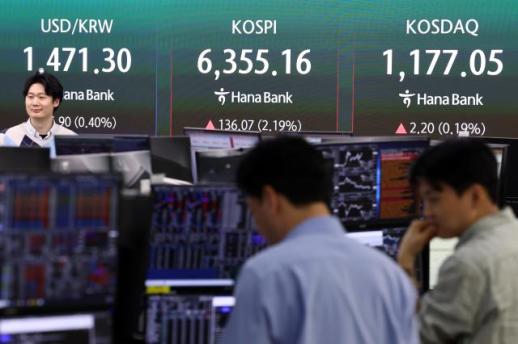 KOSPI sets fresh record, powered by chip stocks SEOUL, April 21 (AJP) - South Korea’s benchmark KOSPI touched new heights in early Tuesday session with its new bullish momentum undisturbed by the uncertainties in the Middle East ahead of the expiration of truce between the U.S. and Iran as it prices in record first-quarter reports from SK hynix scheduled for Thursday. As of 9:50 a.m., the main index stood at 6,341.94, up 1.94 percent, after topping 6,350 earlier in the session on heavy foreign buying from the open. The level marks the highest since a 6,307.27 close on Feb. 26, before the Gulf war erupted. The KOSDAQ slipped 0.11 percent to 1,173.55. Gains were led by semiconductor stocks. SK hynix jumped 4.7 percent to 1,221,000 won, while Samsung Electronics rose 1.98 percent to 218,750 won, as brokerages rushed to raise target prices on expectations that second-quarter earnings will outpace their already strong first-quarter performance. Automakers also edged higher ahead of earnings this week. Hyundai Motor gained 1.71 percent to 536,000 won, while Kia added 0.57 percent to 158,300 won. Battery and energy shares rallied, with LG Energy Solution surging 9.09 percent to 468,000 won, Doosan Enerbility climbing 3.24 percent to 114,600 won and SK Square rising 3 percent to 722,000 won. In industrials, HD Hyundai Heavy Industries advanced 2.67 percent to 538,000 won after signing a memorandum of understanding in India for a joint-venture shipyard project. Samsung Biologics fell 0.62 percent to 1,595,000 won, while Hanwha Aerospace slipped 0.21 percent to 1,422,000 won. The U.S. dollar gained 0.90 won from overnight to 1,473.20 won amid a renewed rise in oil prices. 2026-04-21 10:06:03
 -
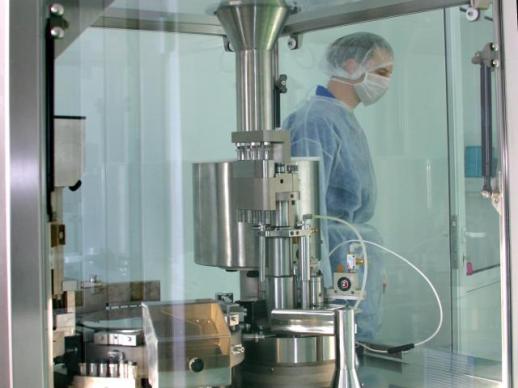 S.Korea bio clinical trials surge in Q1, half near commercialization SEOUL, April 21 (AJP) - South Korea approved more than 50 biopharmaceutical clinical trials in the first quarter of 2026, with late-stage candidates accounting for the majority of the pipeline, according to the Korea Biomedicine Industry Association. The association revealed Tuesday that 53 trials received approval between January and March, averaging about 17.7 approvals per month. Multinational trials dominated the period, comprising about 87 percent of the total, or 46 cases. Late-stage trials — including phase 3, phase 3b and phase 2/3 — numbered 28, accounting for about 53 percent of all approvals, pointing to a pipeline clustered around near-term commercialization. Antibody-based therapies led by modality, with monoclonal antibodies, bispecific and trispecific antibodies, polyclonal antibodies and antibody-drug conjugates (ADCs) making up more than 80 percent of approvals at 43 cases. Monoclonal antibodies and bispecific antibodies anchored the field, with 19 and 14 cases respectively, both concentrated in late-stage development. ADCs, with seven cases across seven products, spanned early- and late-stage trials, reflecting their emergence as a next-generation antibody-based therapeutic class. Oncology was the dominant indication, accounting for about 49 percent of approvals. However, domestic developers accounted for only about 19 percent of approvals, with foreign-led trials making up the remainder. BioNTech's bispecific antibody pumitamig led individual investigational drugs with five approvals, spanning indications including non-small cell lung cancer, triple-negative breast cancer, and gastroesophageal cancer. 2026-04-21 09:34:07
 -
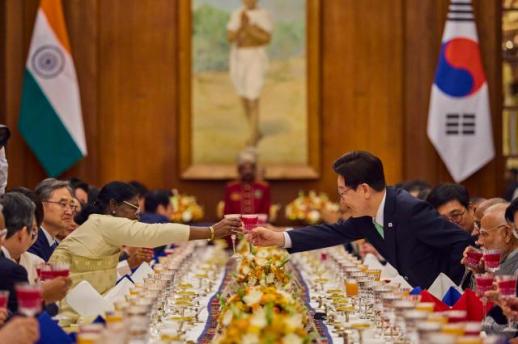 Korea Inc. doubles down on Global South push for energy and trade security SEOUL, April 21 (AJP) - South Korea has coupled state diplomacy with corporate investment in a Global South strategy anchored on India and Vietnam, aiming to secure new growth engines while hedging against rising protectionism in Western markets and energy shocks from the Gulf, underscored by the two-month conflict in the Middle East. The six-day trip by President Lee Jae Myung from April 19 to 24 was accompanied by a 200-strong business delegation including the owner-chairmen of Samsung, Hyundai Motor Group, SK and LG, marking a coordinated push to deepen ties with key emerging partners while reducing exposure to Middle Eastern energy disruptions. In New Delhi, Lee met Prime Minister Narendra Modi and attended a bilateral business forum attended by about 600 executives, where the two sides signed around 20 memorandums of understanding spanning steel, shipbuilding, energy and digital infrastructure. Steelmakers POSCO and JSW Group on Monday signed a final agreement to advance a long-delayed joint venture steel mill project in Odisha, targeting completion by 2031 with an annual crude steel capacity of 6 million tons, as India — the world’s most populous country — posts steel demand growth of around 10 percent. Seoul’s pivot comes as Asia’s heavy reliance on Middle Eastern oil and gas has been laid bare by disruptions to shipments through the Strait of Hormuz, a critical chokepoint that has been effectively crippled for nearly two months. “Seeking diversification of energy supply chains is also a shared task that our two countries must solve together,” Lee said in an interview with Indian media, framing energy security as a central pillar of the trip. Industry officials say the dual stop reflects a deliberate division of roles, with India positioned as a large-scale consumer market and potential energy partner, and Vietnam as a key manufacturing base as companies accelerate supply-chain diversification away from China. India, with a population of about 1.5 billion and annual growth near 7 percent, is increasingly viewed not only as a demand engine but also as a platform for industrial and energy cooperation, including refining capacity and next-generation energy technologies. Vietnam, meanwhile, has already emerged as a core production hub for Korean firms, with Samsung producing more than half of its global smartphone output there while expanding into higher-value areas such as semiconductor packaging. Major conglomerates are aligning closely with the government’s strategy. Samsung Electronics is exploring expanded cooperation with Reliance Group beyond telecommunications into semiconductors, artificial intelligence and potentially energy-linked projects. Hyundai Motor Group is seeking to make India its second-largest market after the United States by 2030, while stepping up investment in electric vehicle production and infrastructure. SK Group is reviewing partnerships in hydrogen and carbon capture, and LG Group is expanding manufacturing and consumer electronics operations across both countries. Companies are also pursuing projects tied to renewable energy, smart grids and next-generation technologies such as small modular reactors, reflecting a broader shift in which energy security is increasingly embedded in industrial strategy. Korean firms, however, face stiff competition from Japan, which has built a stronger and longer-standing investment presence in both India and Vietnam. While India and Vietnam cannot fully replace South Korea’s dependence on Middle Eastern energy in the near term, officials and industry executives see them as critical to building more resilient supply chains and securing future growth. The visit signals a broader shift in Korea’s economic approach, as the government and corporations move beyond cost-driven globalization toward a model that prioritizes diversification, resilience and strategic partnerships in an increasingly fragmented global economy. 2026-04-21 07:44:32
 -
 Mortgage Balances at South Korea’s Top Banks Hit 2026 High as Homebuyers Rush In Mortgage loan balances at South Korea’s five largest commercial banks rose by more than 5 billion won in about two weeks, as borrowers rushed to extend loans ahead of tighter rules and as spring moving demand picked up. According to the financial sector on the 21st, mortgage balances at KB Kookmin, Shinhan, Hana, Woori and NH NongHyup stood at 610.8792 trillion won as of April 16. That was up 5.453 billion won from the end of last month and the highest level this year. The five banks’ mortgage balances were 611.6081 trillion won at the end of December, then fell sharply to 610.1245 trillion won at the end of January. They then moved back and forth, reaching 610.7211 trillion won at the end of February and 610.3339 trillion won at the end of March. With mortgages rising, total household lending at the five banks also increased. As of April 16, the balance was 766.4928 trillion won, up 7.637 billion won from the end of last month. Analysts said the renewed increase in mortgages this month reflects heavy spring relocation demand and a rush tied to upcoming policy changes. With a ban on apartment-backed loans for multi-homeowners and the end of a temporary suspension of heavier capital gains taxes for multi-homeowners set for May 9, apartment prices have adjusted and buying interest has expanded again. In Seoul, price gains have become more pronounced in outlying areas with many mid- to lower-priced complexes. In the Korea Real Estate Board’s weekly apartment price survey for the second week of April (as of the 13th), Gangbuk-gu posted the biggest increase in Seoul, with the weekly rise widening to 0.27% from 0.16% a week earlier. Gangseo-gu (0.24%), Dongdaemun-gu (0.20%), Seongbuk-gu (0.20%), Seodaemun-gu (0.20%) and Guro-gu (0.17%) also continued to climb. Transaction activity has also picked up. Data from the real estate big-data platform Asil and the Transport Ministry’s transaction disclosure system showed that, among the 50 most-traded Seoul apartment complexes from Feb. 1 to April 20, 46 — or 92% — were in outlying districts such as Nowon, Dobong and Eunpyeong; Geumcheon, Gwanak and Guro; Gangseo; and Jungnang. Nowon had the most, with 22 complexes, followed by Gwanak, Gangbuk, Seongbuk and Dobong. A modest easing in mortgage rates this month also appears to have supported demand. The five banks said their average fixed mortgage rates stood at 4.14% to 6.74% as of the 21st, compared with 4.42% to 7.02% on March 31, with the upper end down 0.26 percentage points. The change reflected a drop in the five-year AAA unsecured financial bond yield — a key benchmark for fixed mortgage rates — to 3.865% as of April 17 from 4.051% at the end of last month. Last month, banks’ lending rates kept climbing, with the upper end topping 7%, as market rates jumped after international oil prices surged amid a U.S.-Iran clash. This month, rates have eased as expectations grew for an end to the war after U.S. President Donald Trump repeatedly mentioned the possibility of a ceasefire agreement with Iran. A bank official said that with rates slightly lower than last month and the housing market entering a period of adjustment ahead of new regulations, demand appears to be rising for buyers seeking bargain listings. The official added that while trends may differ by bank, overall mortgage balances are likely to keep increasing for the time being.* This article has been translated by AI. 2026-04-21 06:03:39
 -
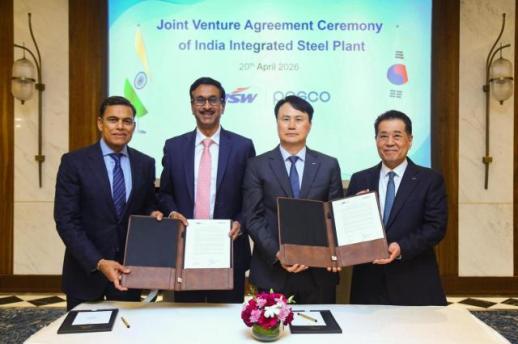 Korea's Posco and India's JSW to build $7.3 billion steel plant in Odisha SEOUL, April 20 (AJP) -South Korean steel giant Posco Group is launching a joint venture with India’s JSW Steel to build an integrated steel plant in eastern India at a combined cost of 10.7 trillion won ($7.3 billion), putting a long-delayed project in one of the world’s fastest-growing steel markets firmly on track. The South Korean steelmaker said Monday the two companies signed a final agreement in India under a 50:50 partnership structure, with Posco committing about 5.36 trillion won for its share of the project. The plant will be built in Odisha and is targeted for completion in 2031. The planned facility will be a full-process integrated steel mill with 6 million tons of annual crude steel capacity, equipped with ironmaking, steelmaking, hot-rolling, cold-rolling and galvanizing lines capable of producing high-value premium steel products. The partnership will be executed through Saffron Resources Private Limited, a wholly owned subsidiary of JSW Steel. Posco said the site was chosen for its proximity to iron ore resources and for access to logistics and power infrastructure. The deal marks a decisive step in Posco’s long pursuit of an upstream steelmaking foothold in India, a market it has eyed since 2004 but where repeated attempts were stalled by difficulties including partner selection and land acquisition. The company said the latest agreement moves the project into full execution after a memorandum of understanding signed in 2024 and a heads of agreement reached last year. Posco is betting that India’s rapid economic growth, urbanization and manufacturing expansion will continue to drive robust steel demand, particularly in higher-margin segments such as automotive and appliance steel. The company noted that steel consumption growth in India has exceeded 10 percent annually for several years, supporting rising demand for value-added products. The two companies are also reviewing ways to build a lower-carbon production system by combining Posco’s low-carbon steelmaking and smart factory technologies with JSW’s renewable energy infrastructure. Part of the electricity supply for the mill could come from renewable sources, in line with India’s green steel classification framework, POSCO said. The project fits into Posco’s broader strategy of building localized production networks to cope with rising protectionism and shifting global supply chains. Alongside the India investment, the group has also pursued equity participation in a steel plant in Louisiana and cooperation with Cleveland-Cliffs in the United States. At home, it said it is focusing on moving further up the value chain and on applying AI and robotics to intelligent factory operations, as well as developing Korean-style hydrogen-based steelmaking. “Through this joint investment, we will combine Posco’s innovative steel technology with JSW Group’s strong local competitiveness,” Posco CEO Lee Hee-geun said. “We will also strive to create future value, and contribute to the industrial development and economic growth of both countries.” JSW Steel CEO Jayant Acharya said the partnership would strengthen India’s steel ecosystem and reinforce the country’s industrial value chain. 2026-04-20 20:37:21
 -
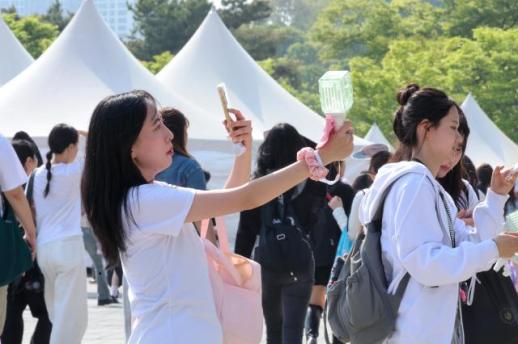 K-pop band NCT WISH heat up Seoul dome stadium with encore concert SEOUL, April 20 (AJP) - The courtyard of the KSPO Dome in southern Seoul was a sea of colorful outfits and posters on Sunday, buzzing in a state of suppressed excitement. Thousands of fans stood in long lines under a torching, late spring sun, clutching lightsticks and merchandise with the sternness of warriors before battle. They were there for the final stop of the first solo tour by the boy band NCT WISH, an event that has become a focal point for the latest phase of the expansion strategy of SM Entertainment. "Section H and I, please enter through Gate 2-1 in an orderly fashion." The long wait was occasionally broken by announcements ringing through the courtyard as fans were notified to enter the dome section by section. While masses rushed into the building, those on standby spent the remaining time trading photo cards or engaging in silent group choreography. Inside the arena, the atmosphere shifted. Fans did not hesitate to drop their composure, filling the space with noise in anticipation of rumors that the group would unveil unreleased songs during the Seoul finale. The three-night engagement drew 33,000 attendees, selling out every seat including those with restricted views. While the presence of photo zones and lottery events kept the crowd engaged, the venue itself provided the broader industrial context. The KSPO Dome, which has a capacity of approximately 15,000, is the definitive benchmark in the live music circuit of South Korea. Reaching this stage signals the transition of an artist into the top tier of the market. For NCT WISH, arriving here marked a compressed, high-velocity ascent from small live halls in early 2024 to the Handball Gymnasium and finally this benchmark arena. This trajectory framed the encore as a strategic checkpoint rather than a mere closing chapter. With their first full-length album, "Ode to Love," scheduled for release on Monday, the group utilized the stage as a live testing ground for new intellectual property. The title track and a second song, "Sticky," were performed for the first time to an immediate response from the crowd. The title track is built around a reworked humming motif from "Ode To My Family" by the Cranberries, blending a familiar melody with a New UK garage-inspired rhythm. The hook proved accessible enough for the audience to echo it back in unison during its debut performance. At a pre-concert press conference, the member Jae-hee described the track as instantly recognizable, noting a deliberate shift toward performance-led promotion by introducing the song visually ahead of its digital debut. The production of the concert leaned into the scale of the venue. A 68-meter-wide LED screen spanned the stage, while temple-inspired sets and kinetic butterfly lighting transformed the arena into a shifting visual landscape. During "We Go!," the members boarded moving stage carts to reach fans in the upper-level seats, physically collapsing the distance between the performers and the edge of the crowd. This emphasis on immersion continued through a series of choreographed sequences, including a winged entrance for the title track and a floating paper boat for the song "WICHU." Near the end of the show, the tone shifted as the members addressed the audience to reflect on a tour that spanned 18 cities and 30 shows across Asia. "You say we're your wish—but you are ours," the members told the fans. What began in Kaohsiung and traveled through Bangkok and Jakarta concluded in Seoul with a sense of acceleration. The forward trajectory outlined onstage was reinforced ahead of the show. During a pre-concert press conference, member Sakuya pointed to Japan as the group’s next strategic milestone, noting that while NCT WISH had already held its first arena-scale performances in the country, the long-term goal remains a Tokyo Dome debut. "We’ve only been active for about two years, but we were grateful to perform in arenas in Japan," adding "We haven’t stood on the Tokyo Dome stage yet that’s our next goal." NCT WISH releases its first full-length album "Ode to Love" at 6 p.m. on Monday across major streaming platforms. The album features 10 tracks, led by the title song and "Sticky," both of which were previewed during the sold-out encore engagement. 2026-04-20 19:15:44