
Journalist

Lee Hugh
=
-
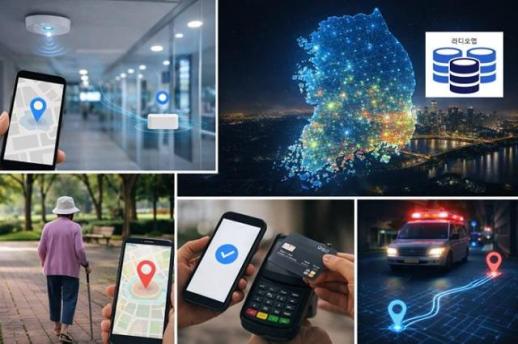 KAIST researchers develop automation technology for national Wi-Fi radio map SEOUL, April 02 (AJP) - Researchers at the Korea Advanced Institute of Science and Technology have developed a foundational technology to build a nationwide Wi-Fi radio map, the prominent research institute said Thursday. The development could lay a stepping stone for a move expected to secure South Korea's "location sovereignty" and reduce reliance on global tech giants. A radio map acts as a database linking Wi-Fi signals, which are wireless internet signals, to specific physical coordinates. By identifying unique signal patterns, mobile devices can pinpoint their location indoors or in dense urban areas where Global Positioning System (GPS) signals are often blocked by skyscrapers or thick walls. For South Korea, establishing an independent national radio map is a critical step toward ensuring that essential location data remains a domestic asset rather than depending on proprietary databases managed by foreign entities like Google or Apple. Korea Advanced Institute of Science and Technology (KAIST) said that a research team led by School of Computing Professor Han Dong-su has spent eight years perfecting this technology. The method automates the creation of these maps by pairing Wi-Fi signals collected by smartphones with existing address information. The core innovation lies in its efficiency. Traditional methods of building radio maps require manual data collection, which is often too expensive and time-consuming to execute at a national scale. The new technique utilizes signals gathered through everyday smartphone app usage—such as during online shopping or making payments—and links them to merchant or delivery addresses. This allows for the rapid construction of a comprehensive database at a low cost. This infrastructure has significant implications for public safety. During emergency calls to police or fire departments, the technology can drastically reduce the search radius for missing persons, such as elderly citizens with dementia, helping responders secure the "golden time" necessary to save lives. It can also prevent financial fraud by ensuring that digital payments only occur at verified physical locations, making remote hacking or identity theft much harder to execute. The technology was recently validated in Daejeon, where researchers used a gas meter reading app to test the system. The demonstration confirmed that an average of 30 Wi-Fi signals could be detected in a single apartment unit, proving that a city-wide radio map could be built quickly using existing mobile traffic. Beyond safety, the research team noted that precise location data is essential for the future of artificial intelligence (AI), including autonomous driving, robotics, and logistics. It also enables advanced services like GeoLLM, which integrates location data with large language models to provide contextual information about a user's environment and activities. "Building a national-scale radio map is a task too large for any single company," Professor Han Dong-su said. "It requires a public-private partnership involving the government, telecommunications companies, and platform providers. Location infrastructure is a core asset directly linked to national data sovereignty." 2026-04-02 08:41:52
 -
 PLAVE Releases Pre-Release Track 'Heung Heung Heung' After Fan Mission, Builds Comeback Buzz Virtual idol group PLAVE has released a pre-release song tied to a fan-completed mission, fueling anticipation for its comeback. The group recently ran a fan-participation event on its official promotional website. Fans joined as “secret agents,” played mini-games to collect “Star Shards,” and unlocked rewards once a target score was reached. The mission began at noon on March 28 and moved quickly with strong fan participation. The target score was reached at about 5:30 p.m. on April 1, prompting the reveal of “Heung Heung Heung (feat. SOLE),” a pre-release track from the group’s fourth mini-album, “Caligo Pt.2.” The video drew attention for its bright, lovable tone, distinct from previously released concepts, while incorporating PLAVE’s signature storyline. Fans responded strongly after the reveal. The track will be officially released at 6 p.m. on April 3 on major music platforms. The event also highlighted fans’ direct role in producing the outcome, strengthening ties between PLAVE’s narrative universe and its fandom. PLAVE has been building expectations by rolling out concept photos. With the pre-release now out, attention is turning to additional content as the comeback countdown begins in earnest. A pop-up store will also mark the album release. From April 8 to 19, PLAVE will hold “PLAVE 4th Mini Album ‘Caligo Pt.2’ Pop-up Store in The Hyundai Seoul” at Sounds Forest in The Hyundai Seoul in Seoul, featuring album-themed displays and various content. PLAVE previously underscored its digital strength with the release of its second single album, “PLBBUU,” in November. The group also sold out its Nov. 21-22 shows at Seoul’s Gocheok Sky Dome for the “2025 PLAVE Asia Tour ‘Dash: Quantum Leap Encore,’” wrapping up its first Asia tour. PLAVE’s new mini-album, “Caligo Pt.2,” will be released on April 13 on major music platforms.* This article has been translated by AI. 2026-04-02 08:33:17
 -
 OPINION: Drums in sync, strategy in step: why Seoul and Tokyo can't afford to drift apart SEOUL, April 02 (AJP) -President Lee Jae Myung’s drum duet with Japanese Prime Minister Sanae Takaichi during his January visit to Tokyo was more than a light cultural moment. It captured, in miniature, a broader shift: two uneasy neighbors moving — cautiously but unmistakably — back into rhythm. Lee himself framed the stakes with unusual clarity, warning that the global trade order is “unstable like never before” and calling deeper bilateral ties “an urgent task of our time.” That urgency is no exaggeration. The strategic environment surrounding the Korean Peninsula has deteriorated sharply. War in Ukraine has tightened alignment among North Korea, China and Russia. The widening confrontation involving the United States, Israel and Iran has added a new layer of global volatility. What once looked like isolated flashpoints is increasingly converging into a more systemic rivalry. Nowhere is that tension more concentrated than in the Indo-Pacific. China’s growing assertiveness — from its installation of structures in the Yellow Sea to its sweeping export controls on critical materials — is no longer an abstract concern. It is already reshaping supply chains, testing economic resilience and signaling how coercion can be deployed below the threshold of conflict. For economies like South Korea and Japan, deeply embedded in global manufacturing networks, the implications are immediate and material. The Taiwan Strait sits at the center of this strategic equation. Any disruption there would not simply be a regional security crisis; it would sever trade arteries that sustain both economies. That reality is driving Japan, backed by the United States, to expand deployments along its southwestern island chain — a move aimed at reinforcing deterrence before crisis becomes conflict. For Seoul, geography leaves little room for strategic ambiguity. It faces not only the Taiwan contingency but also a nuclear-armed North Korea. The logic of closer coordination with Tokyo — once politically fraught — is becoming operationally unavoidable. That shift is already visible. The real-time trilateral missile data-sharing system launched in late 2023, along with joint exercises such as Freedom Edge, marks a transition from symbolic cooperation to integrated defense readiness. Maintaining frameworks like GSOMIA is no longer a diplomatic choice but a functional necessity, combining South Korea’s proximity with Japan’s surveillance reach. What makes this moment notable is not just the scale of external threats, but the contrast with the recent past. Only a few years ago, historical disputes pushed Seoul–Tokyo ties to the brink, spilling into trade retaliation and security friction. Today, those same two countries are rebuilding cooperation under far less forgiving conditions. The broader strategic vision underpinning this rapprochement — the “Free and Open Indo-Pacific” — is often framed in abstract terms. But recent crises have made its stakes tangible. Disruptions in the Strait of Hormuz have already shown how quickly energy markets and global capital flows can be destabilized. In an interconnected system, security and economics are inseparable. Japan now openly acknowledges that it faces its most severe security environment since World War II. South Korea, confronting parallel pressures, is arriving at a similar conclusion. The drumbeat, then, is not just ceremonial. It reflects a deeper alignment driven less by sentiment than by necessity. History still matters. Domestic politics still constrains. But the strategic calculus is shifting faster than either. For Seoul and Tokyo, staying in step is no longer optional. It is the baseline for navigating an Indo-Pacific that is becoming more contested, more interconnected — and far less forgiving of hesitation. *The author is a professor in the Global Service Department at Sookmyung Women’s University About the author: Author’s background ▷Ph.D. in journalism and communication, Yonsei University ▷AP correspondent ▷Newsweek Korea bureau chief ▷President, Seoul Foreign Correspondents’ Club 2026-04-02 07:38:00
 -
 Korean Drugmakers Diversify Into New Businesses to Offset Price Cuts, Supply Risks South Korea’s pharmaceutical and biotech industry is accelerating diversification as a survival strategy amid drug price cuts and global supply-chain uncertainty tied to Middle East tensions. Companies are widening their portfolios beyond medicines, from health supplements and animal drugs to solar power and even car-wash operations. Industry officials said April 1 that several established drugmakers are adding new business purposes at shareholder meetings this season, positioning the moves as a way to find growth as price cuts make limits in the traditional drug business more apparent. Yuyu Pharma recently amended its articles of incorporation to add the manufacturing and sale of “animal quasi-drugs, quasi-drugs and health functional foods.” Animal medicines are seen as a potential steady earner as pet ownership rises and entry barriers are relatively low. The global pet market is projected to grow from $320 billion in 2022 to $493 billion in 2030, the report said. Health functional foods are also a key target. Despite intense competition, the domestic market reached 5.9626 trillion won last year, making it attractive for drugmakers seeking a stable cash generator outside direct drug-pricing regulation. Many companies have already entered with products such as probiotics and collagen, drawn by higher margins, the report said. Expansion into beauty and medical devices is also gaining attention. Anguk Pharm added “development and sales of plastic surgery-related formulations” and “development and sales of biomedical-related products” to its corporate purposes, aiming to strengthen its health care portfolio by tapping growing demand for cosmetic dermatology in an aging society. After acquiring health care company Dmedicorea, Anguk has broadened beyond prescription drugs into supplements, beauty and sleep-related businesses. A frequently cited success story is Dongkook Pharmaceutical’s cosmetics brand Centellian24, which built recognition by applying the concept of ingredients used in its wound treatment Madecassol to skincare products. Some forecasts say the company could join the ranks of firms with 1 trillion won in annual sales on the back of growth in its health care business. Some companies are moving into businesses far removed from their core. Daewoong Pharmaceutical added a “solar power generation business” through its annual shareholder meeting, a step the report linked to ESG management. The company is expected to pursue rooftop solar installations at factories to generate power and cut energy costs. With raw material prices rising amid Middle East instability, solar power is also expected to help reduce costs over the long term, the report said. Dong-A ST newly listed “car-wash operation” as a business, describing it as part of ESG efforts alongside employment for people with disabilities. JW Pharmaceutical added “investment, management advisory and consulting,” a move seen as aimed at strengthening investment and management support functions across affiliates. Still, some in the industry warn that new ventures could dilute drugmakers’ core capabilities in pharmaceutical research and development and sales. “The key question is whether these new businesses will connect to existing strengths and translate into real profitability, or whether they will reduce room for R&D investment,” one industry official said. 2026-04-01 19:33:24
 -
 Korean Pharma and Biotech Briefs: Dongkook, Dong-A, HK inno.N, Daewoong, Huons Dongkook Pharmaceutical marks 10th year of ‘Love Scaling’ volunteer dental program Dongkook Pharmaceutical said Wednesday it held a “Love Scaling” volunteer event with the Korean Academy of Periodontology on March 27 at Hanyang Women’s University. The program is a joint talent-donation initiative by the academy, the university and Dongkook Pharmaceutical. It provides oral checkups, scaling and other dental services to people who have difficulty visiting a dentist. A separate ceremony was held to mark the program’s 10th event. Rep. Jeon Hyeon-hui of the Democratic Party, whose constituency includes the area where the university is located, was appointed this year’s “Love Scaling” ambassador. At the ceremony, the Korean Academy of Periodontology presented recent research on periodontal disease at Seongbundo Welfare Center and proposed institutional adoption of panoramic imaging during health screenings for people with disabilities so all teeth can be checked at once. Dongkook Pharmaceutical presented on the ESG value of the volunteer program. Dong-A Pharmaceutical’s Fation launches after-sun gel lotion Dong-A Pharmaceutical said Wednesday its derma-cosmetics brand Fation has launched an “After Sun Gel Lotion” designed to care for sunburned skin after UV exposure. The product is intended to soothe irritated skin and provide moisture while addressing five sunburn-related symptoms: heat, irritation, dryness, flaking and hyperpigmentation, the company said. Combining features of gel and lotion, it can be used on the face and body in settings such as outdoor sports, camping and travel, it said. Dong-A said human application testing confirmed it helps lower skin temperature and calm the skin, and may help improve UV-related moisture loss, flaking and hyperpigmentation. The product contains 58% of the company’s proprietary ingredient, Azulene Repair™. Fation said it plans to expand into after-sun care, beyond a market centered on sunscreen products. HK inno.N holds 42nd anniversary ceremony and Compliance Day event HK inno.N said Wednesday it held a ceremony for its 42nd anniversary and an event marking “Compliance Day” on March 31 at HK inno.N Square. The event, attended by CEO Kwak Dal-won, executives and employees, reviewed the company’s 42-year history and aimed to strengthen communication. It was held both in person and online, the company said. Participants watched a commemorative video in which long-serving employees and new hires exchanged questions to promote intergenerational understanding. The company also presented long-service awards to five employee representatives, it said. After the ceremony, HK inno.N held its 11th Compliance Day event. Kwak and Executive Director Kim Ki-ho, who serve as co-compliance officers, joined employees in signing an anti-corruption and compliance pledge, the company said. Daewoong Pharmaceutical to launch low-dose combination drug for dyslipidemia Daewoong Pharmaceutical said it will launch Baroejet tablets (pitavastatin 1 mg and ezetimibe 10 mg) on April 1 as a treatment for dyslipidemia. The new low-dose combination is indicated for primary hypercholesterolemia, the company said. The company said statins are known to show diminishing gains in efficacy at higher doses, while concerns about side effects such as muscle pain increase. It said that when a statin dose is doubled, LDL cholesterol reduction increases by about 6%, while adding ezetimibe can be expected to provide an additional reduction of at least about 18%. Daewoong said demand for low-dose statin combination therapies is rising as treatment strategies change. It cited domestic prescription growth last year of 37% for low-dose combinations based on rosuvastatin and 157% for those based on atorvastatin. Baroejet was developed to address unmet needs, the company said, adding it offers a new 1/10 mg low-dose option among pitavastatin-based combinations and expands treatment choices. Daewoong said the product may also be useful for patients taking multiple medications because pitavastatin has low dependence on CYP enzymes, which could reduce the burden of drug interactions. Huons Group donates 100 million won to Choi Jae-hyung memorial foundation Huons Group said Wednesday it delivered a total of 100 million won in donations on March 31 to the Choi Jae-hyung Memorial Foundation, a nonprofit honoring the independence activist. The company said the funds will be used to highlight Choi’s achievements, expand education and commemorative projects, and support Koryo-saram and younger generations of ethnic Koreans. Choi, described as an entrepreneur and educator, led the Korean community in Russia’s Primorsky Krai. The company said he devoted himself to Korea’s independence by raising funds for the independence movement and supporting Ahn Jung-geun’s actions, and that he died after being arrested by Japanese forces in 1920. The foundation continues fundraising at home and abroad for historical recognition efforts and support programs for Koreans, it said. Huons Group Chairman Yoon Sung-tae attended the foundation’s supporters’ association launch ceremony on March 26 as a leading business figure and expressed support for fundraising and sponsorship, the company said. It said the association is co-chaired by Park Jong-beom, chairman of the World-OKTA, and Jung Seok-hyun, chairman of Susan Group, with Kim Hyung-oh, a former National Assembly speaker, serving as an adviser, among others.* This article has been translated by AI. 2026-04-01 19:30:00
 -
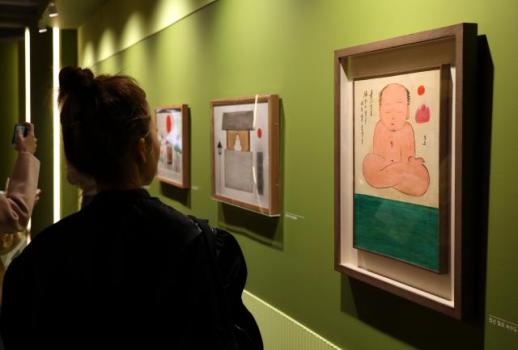 Exhibition in Seoul brings forgotten pioneer of etching and painting into spotlight SEOUL, March 31 (AJP) - A retrospective exhibition commemorating the 100th anniversary of South Korea's late artist Kim Sang-yu opened in Seoul on Wednesday. The exhibition, which runs at the Seoul Museum of Art until Aug. 17, features more than 150 works along with Kim's historical records including personal belongings such as his painting tools, offering a comprehensive overview of his five-decade career in chronological order with six-different themes. Known for his unique etchings and calligraphy-inspired paintings, the artist is regarded as a pioneer of copperplate printing in South Korea, credited with expanding the boundaries of modern art. Beginning with experiments in abstract work in the 1960s, he developed a distinctive visual language across multiple media including woodcuts and oil paintings. Unlike many exhibitions that focus on "star" artists, this exhibition takes a meaningful approach by featuring an artist who was once celebrated but has since faded from public attention. The exhibition comes after Kim has recently regained public interest after K-pop juggernaut BTS' member RM revealed in 2022 that he had purchased one of Kim's works, bringing renewed attention to the artist. 2026-04-01 18:09:41
 -
 Culture Minister Choi Hwi-young Sends Condolences on Death of North Korea’s Chang Ung Choi Hwi-young, South Korea’s minister of culture, sports and tourism, expressed condolences over the death of Chang Ung, a former honorary member of the International Olympic Committee. In a condolence message issued Tuesday, Choi said he was “deeply saddened” by the news and credited Chang with dedicating his life to advancing the Olympic movement and promoting sport, making “meaningful contributions” to international sports. Choi added that Chang’s efforts to build friendship and mutual understanding through sport — and to spread the value of peace on the Korean Peninsula — would be long remembered. The ministry said it plans to deliver the message to the North Korean Olympic Committee via the IOC. According to the IOC, Chang died March 29 at age 87. The IOC said it would fly the Olympic flag at half-staff for three days at Olympic House in Lausanne, Switzerland. Chang was elected an IOC member at the 1996 IOC session and for more than 20 years served as a key international sports diplomat representing North Korea. He also played a role in improving inter-Korean relations through sport. Chang took a leading role in inter-Korean sports talks in 1986, and at the 1991 World Table Tennis Championships in Chiba, Japan, he served as the North’s chair of the working-level committee that helped form a unified Korean team. He also played an important role in the joint North-South march at the opening ceremonies of the 2000 Sydney Summer Olympics and the 2018 PyeongChang Winter Olympics.* This article has been translated by AI. 2026-04-01 18:00:00
 -
 South Korea Expands ‘Culture Day’ to Weekly, but Movie Discounts Draw Backlash South Korea’s monthly “Culture Day,” previously held on the last Wednesday of each month, expanded in April to a weekly Wednesday program called “Culture Wednesday.” The change follows the Culture, Sports and Tourism Ministry’s approval on March 3 of a revision to the enforcement decree of the Framework Act on Culture. The ministry said the revision broadens benefits such as discounted movie tickets and free or discounted admission to national heritage sites and sports events. But online communities have questioned whether the movie-ticket benefit has effectively been reduced rather than expanded. Under the previous program, movie tickets cost 7,000 won on Culture Day. Under the revised decree, the discount applies twice a month, but ticket prices rise to 10,000 won for adults and 8,000 won for youths. While theaters may offer discounts more often, viewers who do not go at least twice a month would pay more per discounted visit — a 3,000-won increase for adults compared with the previous 7,000-won price. The article said theaters had borne the cost of the discount without government subsidies. It said theaters, after consultations with the ministry, agreed to join the expanded program by increasing discount days to twice a month while raising the discounted price. After the change became known, comments on portal news sites, online communities and social media largely argued that cultural benefits had been cut, saying it would be better to keep a once-a-month 7,000-won movie ticket. Because the previous Culture Day was credited with boosting attendance, some have voiced concern that higher discounted prices under Culture Wednesday could weaken the draw and ultimately reduce theatergoers. 2026-04-01 17:57:16
 -
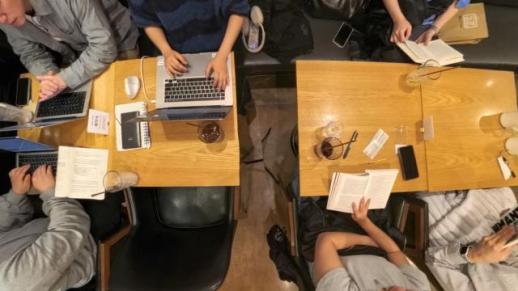 Alone but together: inside Korea's burgeoning "admin night" culture SEOUL, April 1 (AJP) — “Roasted sweet potato.” “Yes.” “Hamster Prince!” “Yes.” “Homebody.” “Yes.” It’s 8pm Tuesday and organizers in a café in the Gwanak district of southern Seoul have started a roll call of participants, using their nicknames. One by one, people share what they plan to accomplish that day. “I’ll finish the book I started last week.” “I’ll wrap up a blog post.” “I’ll revise my thesis.” Then comes the rule. “No talking for the next two hours,” says Choi Kyong-won, 28, one of the organizers. Within seconds, the room has fallen silent. The only sounds are keyboards tapping and pages turning. Some use laptops, others tablets. A few put on lectures, while others pull out journals. Choi says the habit of simply declaring a goal creates the pressure needed to follow through. “Once you say what you’ll do, you feel accountable. It helps you focus,” she says. The concept, also known in the United States and the United Kingdom as “Admin Night” and “Life Admin Party,” has gained traction as a practical way to tackle everyday responsibilities. Originally, the concept referred to setting aside time to complete routine administrative tasks, such as managing emails, organizing schedules, and handling paperwork. More recently, it has evolved into a broader format where participants work on self-development or personal projects. The approach is closely linked to the psychological concept of “body doubling,” a behavioral strategy in which the mere presence of others enhances focus and task execution. The subtle sense of being observed creates a form of accountability, discouraging distractions and encouraging sustained concentration. Kwak Keum-joo, a professor of psychology at Seoul National University, says this reflects a broader psychological mechanism similar to social facilitation, where the presence of others enhances performance, even among strangers. “Even unfamiliar others can motivate us,” she says. “It’s a form of voluntary solitude, being alone but not entirely disconnected.” For many in their 20s and 30s, Admin Night represents a shift in lifestyle. Instead of after-work social drinking, participants choose structured time to complete tasks. What began as early-morning “miracle routines” has extended into the evening, reflecting a broader “productive living” trend. At its core, the appeal lies in a balance: being together with other people but without interference. Participants in the café say they turned to Admin Night for its efficiency. Unlike traditional study groups or book clubs, the format minimizes personal interaction and is designed to keep individuals focused on their own tasks within a fixed time frame. The sessions operate on a nickname basis, with limited interaction aside from the brief sharing of goals at the start and equally brief post- mortem at the end. While some participants are regulars, the atmosphere remains centered on individual work rather than relationship-building. Co-organizer Cho Hyun-jun, 32, a YouTuber and freelancer, says the idea grew out of his own experience working alone after graduating during the pandemic. “Working independently, I often found myself in environments that weren’t conducive to focus,” he says. “I started gathering people in similar situations about four years ago, initially as a study group.” The shift to fully online interactions during COVID-19 reinforced the need for offline spaces, he says. Having spent most of his junior and senior years at university engaged in remote study, he says the lack of in-person interaction has shaped how his generation approaches relationships. Choi says young people tend to prefer clear boundaries between work and personal life. They favor purpose-driven interactions, and prioritizing individual goals over group dynamics. “In many groups, socializing can blur the original purpose,” she says. “As casual conversation grows, focus fades. We aimed to stay true to the group’s function.” The sessions are held on Tuesdays and Thursdays, and have run for more than eight rounds to date. Participants include office workers, students and freelancers in their 20s and 30s, with the community now exceeding 100 members. “A sense of being watched” drives productivity Participants often describe the experience in simple terms: a feeling of being “watched.” They bring tasks from travel planning and video editing to academic writing and job applications that share a common thread of work that is personal and has been out off for too long. Cho says the most notable moments are when participants stay fully focused throughout the session. “Seeing people remain focused for two straight hours without leaving their seats show we have tapped into a real need,” he says. “Not alone, but not about relationships” The appeal of the gathering extends beyond productivity to its emotional impact. “When I come here, I feel reassured seeing others living just as diligently,” says Cho, adding that many participants report a boost in self-esteem. Choi says many young people feel fatigued by relationships and instead find comfort in interactions that remain brief and low commitment. “There’s no need to impress anyone or expend emotional energy, which makes it less burdensome,” she says. Experts say the shift reflects broader changes in how younger generations approach relationships. Kwak says the tendency to avoid emotionally demanding interactions predates the pandemic but was significantly reinforced by it. “There was already a tendency to avoid emotionally draining relationships,” she says. “But COVID-19 strengthened it, as people had fewer chances to meet and became more used to limited, controlled interactions.” She notes that many students spent their university years almost entirely online, shaping a preference for more structured and less demanding forms of connection. At the same time, she says, young people are not rejecting relationships altogether, but redefining them. They seek connection, but without the burden of deep emotional investment. A global shift toward low-commitment connections The trend is not unique to South Korea. Similar formats, including coworking sessions, silent study clubs and “deep work” meetups, have been gaining traction in the United States and Europe, particularly as remote work reshapes daily routines and highlights the limits of working alone. According to the OECD, face-to-face interactions have declined since the COVID-19 pandemic, particularly among younger people. At the same time, the rise of remote work has intensified both flexibility and isolation. A 2025 report by Gallup found that about 25% of remote workers experience daily loneliness, significantly higher than those working on-site. This has coincided with rapid growth in shared work formats. Globally, there are now around 42,000 coworking spaces serving more than 5 million users, reflecting rising demand for flexible, low-commitment work environments. Digital alternatives have also emerged. Platforms such as Focusmate and Flow Club now offer “virtual body doubling,” where users keep their cameras on while working alongside others online to maintain focus. Global coworking reports suggest such spaces can help reduce isolation, providing a sense of community without requiring deep social ties. Kwak says that young South Koreans may be at the forefront of this shift. “They are practical and selective, maintaining boundaries while still seeking connection,” she says. “It’s a more efficient and, in many ways, a more mature and wise approach.” Two hours, loosely connected “It’s 9:50 p.m. The session is over. Let’s go around and share how it went.” As the alarm rings, participants briefly reflect. “I finished half the book I had planned to read over eight weeks,” says Lee Seung-hyun, 27. “Seeing others focus motivated me.” “I think I’ll keep going when I get home,” says Jang Hye-lee, 26. As the sharing ends, people quietly pack up their bags and step out into the night, heading off in different directions. 2026-04-01 17:55:04
 -
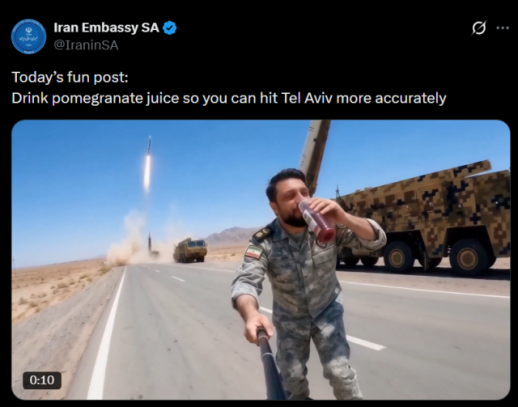 April Fools' jokes turn serious as U.S., Iran trade memes alongside war SEOUL, April 01 (AJP) -The joke on this year’s April Fools’ Day was no joke for the United States and Iran, as they wage a parallel war of memes and parodies online alongside the real conflict. What was once confined to humor and internet culture is increasingly emerging as a tool of influence, signaling a shift in how states communicate and compete in times of conflict. A meme circulating on X on April 1 depicted U.S. President Donald Trump in a cartoonish, childlike form, dressed in a stylized outfit and playing with toy aircraft and submarines inside a mock White House setting. Framed as a jab at his handling of the war, the post drew around 76,000 views, 1,900 likes and more than 800 reposts within hours. Another widely shared post, uploaded by an Iranian embassy-affiliated account, showed an AI-generated figure skateboarding past military vehicles while casually drinking pomegranate juice as missiles launched in the background. Captioned, “Drink pomegranate juice so you can hit Tel Aviv more accurately,” the content amassed more than 2.8 million views, 51,000 likes and 7,600 shares. Analysts say such content reflects the “gamification” of conflict, particularly in digital environments where visual simplicity and emotional resonance drive engagement. The examples align with a broader pattern seen in recent exchanges among Iran, the United States and Israel, where messaging increasingly incorporates satire, pop culture references and rhetorical mimicry — blurring the line between propaganda and entertainment. Iranian officials have echoed phrases associated with Trump, including his well-known “You’re fired” remark, while adopting his communication style to dismiss criticism as “fake news.” References to films and gaming imagery have similarly been used to frame opposing narratives in a more derisive light, suggesting a deliberate effort to communicate through culturally recognizable formats rather than conventional political language. Unlike past conflicts, where psychological operations were largely conducted through radio broadcasts, printed leaflets and tightly controlled media narratives, the rise of digital platforms has shifted influence from centralized messaging to decentralized, rapidly replicating content. “Short-form videos can now be generated within minutes and distributed automatically,” said Billy Choi, a collaboration professor at Korea University’s Human-Inspired AI Research Institute. Choi noted that large volumes of content can be produced with minimal human intervention and said algorithms further amplify this process by repeatedly surfacing similar content based on user behavior. This combination of automation and algorithmic amplification allows for what analysts describe as volume-driven dissemination, where repeated exposure becomes a more effective mechanism of influence than factual accuracy. Military analysts interpret the trend as part of an evolving information warfare landscape. “Mobilizing all available platforms to influence public sentiment is becoming a central feature of modern conflict,” said Choi Ki-il, a professor in Sangji University’s Department of Military Studies. Such tactics reflect a long-standing strategic principle. “Winning without fighting has long been considered the highest form of strategy, and these developments can be seen as its extension in the digital domain,” he said. As digital platforms continue to evolve, analysts expect such forms of communication to become more sophisticated, further blurring the boundary between satire, influence and strategy. 2026-04-01 17:44:39