
Journalist

Lee Hugh
=
-
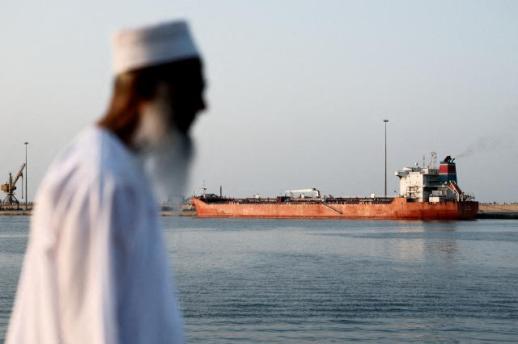 Iran's Hormuz toll push risks turning global chokepoint into a priced corridor SEOUL, March 31 (AJP) - Iran is moving to monetize control of the Strait of Hormuz, threatening to impose transit fees on one of the world’s most critical energy arteries — a step that could recast the waterway from a global commons into a contested, pay-to-pass corridor. The proposal, approved by Iran’s parliament, comes as Tehran tightens its grip on the chokepoint, through which roughly 20 percent of global oil supply normally flows. Since the outbreak of conflict, vessel traffic has plunged by as much as 90 percent, while access for Western-linked ships has been selectively restricted. Ships are increasingly required to submit detailed cargo and ownership data to intermediaries linked to the Islamic Revolutionary Guard Corps before being allowed safe passage, with some reportedly paying fees in Chinese yuan — underscoring how control is already being exercised in practice. The impact is rippling far beyond the Gulf. Oil prices have surged, while energy-importing economies in Asia — including South Korea and Japan — face renewed supply risks as one of their most vital maritime lifelines comes under strain. From legal norms to leverage Legal scholars say Iran’s proposed toll regime collides directly with established international law governing maritime passage. “Under current international law, a coastal state may not lawfully impose a general toll simply for ships’ passage through an international strait used for international navigation,” said Shahla Ali, a law professor at the University of Hong Kong. She noted that the United Nations Convention on the Law of the Sea guarantees “transit passage” — the right of continuous and unimpeded movement — and that any charges must be tied to specific services and must not “effectively deny or unreasonably burden” passage. Similarly, James D. Fry, also a law professor at the University of Hong Kong, said imposing unilateral transit fees would “go against freedom of navigation” protected under customary international law. “There is no precedent that might allow for an interpretation of UNCLOS to permit such a transit fee,” Fry said. But the issue is quickly moving beyond legal doctrine. Iran’s growing “de facto control” over the strait — screening vessels, dictating passage conditions and shaping traffic flows — is raising a more fundamental question: whether physical dominance over a chokepoint can begin to override long-standing legal norms. “If, in fact, Iran can exercise control over the Strait of Hormuz to the point that all others are excluded, it might be difficult to say that Iran lacks sovereignty,” Fry said, while cautioning that any such shift would depend on how the international community responds. War backdrop deepens uncertainty The toll push is unfolding against a backdrop of escalating military tensions involving Iran, the United States and Israel, further complicating the legal and strategic landscape. Washington has defended its strikes as necessary to counter threats from Iran’s missile and nuclear programs, while Tehran has accused the U.S. and Israel of committing “internationally wrongful acts,” including what it described as state-sponsored assassination attempts. The competing claims underscore a broader erosion of international norms, with legal arguments increasingly shaped by geopolitical leverage. For now, legal experts remain skeptical that Iran’s toll plan can be justified under existing frameworks. But they also acknowledge that international law is not static. “The law is not static,” Fry said. “But any evolution will depend on state practice — and on whether the international community accepts or resists what Iran is doing.” That leaves Hormuz emerging as more than a regional flashpoint. It is becoming a test case for whether global trade routes remain governed by law — or by control. If economic leverage and military presence can redefine access to strategic waterways, the implications will extend far beyond the Gulf, potentially reshaping the rules that underpin global commerce. For Asia’s energy-dependent economies, the stakes are immediate. What happens in Hormuz may determine not only the flow of oil, but whether the architecture of international maritime order can withstand an era increasingly defined by power over principle. 2026-03-31 16:27:39
 -
 Korea burned $22.5 bln defending won Q4, USD-KRW nears 1,530 SEOUL, March 31 (AJP) -South Korea spent a staggering $22.5 billion in the final quarter of 2025 to stabilize the won, as the currency hovered near crisis-era lows amid intensifying capital outflows and dollar demand, central bank data showed. Net dollar sales for “market stability” surged to $22.47 billion in the fourth quarter, the Bank of Korea said in its disclosure of its intervention balance sheet — a sharp escalation from $1.75 billion in the third quarter, $797 million in the second and $2.96 billion in the first. The October-December interventionist spending is the largest three-month record since disclosure started in 2019. The intervention brought total spending for the year to roughly $28 billion, the largest since 2022 when authorities struggled to tame the won amid Legoland debt crisis from rapid tightening in the U.S. The won averaged 1,450.71 per dollar in the first quarter, strengthening modestly to 1,399.13 in the second and 1,386.77 in the third, before weakening sharply to 1,448.87 in the fourth — when intervention intensified. “Supply-demand conditions were extremely skewed in the fourth quarter. Outflows by residents far exceeded the current account surplus,” Yoon Kyung-soo, director of the BOK's international department said in a briefing. “In October alone, overseas securities investment by residents was roughly three times the size of the current account surplus," he added. The won lifted partly by dollar retreat and intervention gave ground after the war in the Middle East broke out. The dollar briefly touched 1,530 won, revisiting the level of March 2009 amid global financial crisis in Tuesday trading. The won has lost more than 6 percent of its value against the dollar, double the gain in the dollar index over the same period. Authorities said they were "closely monitoring" if one-sided bias deepens and the won's depreciation is deemed too steep versus other currency movements. 2026-03-31 16:16:13
 -
 Asiana Airlines to cut int'l flights amid soaring oil prices SEOUL, March 31 (AJP) - Asiana Airlines will cut about a dozen flights on four international routes this spring amid rising oil prices caused by the prolonged conflict in the Middle East. The flagship carrier said on Tuesday it canceled seven flights from Incheon to Changchun, China; three flights to Harbin; and two flights each to Phnom Penh, Cambodia, and Yanji, China for the months of April and May, as jet fuel prices surged sharply. "We will minimize inconvenience for affected customers by offering alternative flights and waiving fees for changes to their trip schedules," Asiana Airlines said. Amid soaring oil prices, domestic airlines are trimming flights to reduce costs, with Asiana becoming the first full-service carrier to follow suit after low-cost carriers made similar cuts. Asiana became the first full-service carrier to follow suit after low-cost airlines made similar cuts, as soaring oil prices push domestic carriers to trim flights to reduce costs. Korean Air, the country's largest flagship carrier, which completed its acquisition of Asiana Airlines in December last year, will also enter emergency mode starting next month. 2026-03-31 15:58:00
 -
 Citi Korea Marks International Women’s Day With Talk by Inertia CEO Kim Hyoi Citibank Korea said March 31 that it held a special lecture for employees on March 30 featuring Kim Hyoi, CEO of startup Inertia, to mark International Women’s Day 2026. The session, titled “Startup leadership that challenges inertia,” was designed to prompt employees to examine organizational habits and consider change, the bank said. Citi marks International Women’s Day each year with programs involving employees worldwide, including lectures, panel discussions and networking events, it said. Inertia is a startup founded by women scientists from KAIST. It has recently expanded overseas through entry into the U.S. market and sales on Amazon. Kim decided to launch the company while researching quantum engineering and medical artificial intelligence at KAIST, aiming to use technology to address everyday inconveniences. In 2024, Forbes Korea named her to its “30 Under 30” list. In her talk, Kim described practical constraints startups face when entering the market and shared bias she experienced as a woman founder. “The law of inertia applies in our daily lives, too,” she said. “It’s not that it can’t be done — we just haven’t tried it yet. Change in an organization becomes possible when leaders first ask questions that break existing inertia.” Yoo said Kim’s story offered a chance to reflect on the leadership needed in a changing environment. She added she hoped the lecture would help employees seek new possibilities in their work. * This article has been translated by AI. 2026-03-31 15:46:07
 -
 NH NongHyup Financial Expands Senior Products, Weighs Elder Care Infrastructure NH NongHyup Financial Group is moving to aggressively expand senior-focused products and offline service spaces this year, aiming to convert community hub branches into senior-oriented locations and win market share with higher-value offerings tied to health management. A key variable is whether it can ease internal friction over potential overlap with local cooperatives. According to the financial industry on Monday, NH NongHyup Financial will step up its push into the so-called silver market under its senior brand, “NH All Wonderful,” launched in November. The group has positioned this year as the starting point for expanding the brand and plans to introduce specialized products such as savings and loans linked to health management. The strategy is to turn its comparatively strong base of older customers — reinforced by aging in rural areas — into a profit model and a competitive edge. NH NongHyup Financial has about 12 million customers age 50 and older, accounting for 55% of its total. By affiliate, customers 50 and older make up 54.6% at NH NongHyup Bank, 71.3% at NH NongHyup Life Insurance and 66.2% at NH NongHyup Property & Casualty Insurance. NH NongHyup Financial plans to roll out a total of 22 senior-only products in stages this year, focusing on health care-linked finance. It is considering products that offer preferential interest rates when customers can document improvements in certain health indicators. The group also plans to strengthen both online and offline touchpoints by designating and operating “senior-specialized branches and lounges” in the first half of the year and improving a senior-only space in its app in the second half. Building elder care facilities and senior housing remains an unresolved task. The broader NongHyup network includes many local agricultural cooperatives, and some already operate nursing homes. A move by the holding company or its life insurance unit into elder care could trigger internal pushback over perceived encroachment on existing business rights. Local NongHyup cooperative branches total 4,894 — more than four times the 1,065 locations operated by NH NongHyup Bank — making friction with local cooperative leaders difficult to avoid, from site selection onward. Some observers warn that because NH All Wonderful launched later than rival programs, further delays in entering elder care could mean missing a critical window. KB Financial Group has KB Golden Life Care, a specialized elder care subsidiary, and operates care facilities including Wirye, Seocho and Eunpyeong Villages; Pyeongchang County; and day care centers in Gangdong, Wirye and Eunpyeong. Shinhan Financial Group is expanding senior care services centered on Shinhan Life, and Hana Financial Group has been opening senior-specialized branches. “NH NongHyup Financial’s senior customer assets are a powerful weapon, but housing and care infrastructure will ultimately be needed to support it,” a financial industry official said. “It is important to quickly develop a model of coexistence with local cooperatives.” 2026-03-31 15:45:28
 -
 South Korea’s Three-Back Defense Faces Key Test vs. Austria After 4-0 Loss South Korea coach Hong Myung-bo’s three-back system unraveled in the team’s last friendly, raising fresh doubts about whether it can hold up on the World Cup stage. The upcoming match against Austria is widely seen as the final proving ground for keeping the setup for the 2026 FIFA World Cup. South Korea lost 4-0 to Ivory Coast on March 28 (Korea time) in a friendly at Stadium MK in Milton Keynes, England. The match was intended as a tune-up against a team modeled on South Africa, a group-stage opponent at the 2026 World Cup, but South Korea struggled throughout against intense pressure and quick transitions. The biggest concern was the collapse of the three-center-back line of Kim Tae-hyeon (Kashima Antlers), Kim Min-jae (Bayern Munich) and Cho Yu-min (Sharjah). Ivory Coast repeatedly attacked down the flanks. Even when wingbacks Seol Young-woo (Crvena Zvezda) and Kim Moon-hwan (Daejeon Hana Citizen) dropped to form a five-man back line, South Korea showed costly problems with spacing and covering. The team allowed nine shots from inside the penalty area and, with passing lanes into midfield cut off, often resorted to aimless long balls from the goalkeeper that quickly surrendered possession. Individual strengths were also blunted. Cho appeared burdened by wide defensive cover and made a series of mistakes, while Kim Min-jae — known for dominant one-on-one defending — was repeatedly forced into reactive cover after the flanks had already been breached. The performance echoed issues exposed in last October’s 5-0 loss to Brazil, when South Korea’s three-back struggled against speed and dribbling. After the match, captain Son Heung-min (Los Angeles FC) told reporters the team must improve its use of space and off-the-ball movement. “If I have to play uncomfortably, the opponent also becomes uncomfortable,” Son said. “I need to position myself in places where it’s difficult to receive the ball.” Hong pointed instead to shortcomings in individual duels. “We were lacking in one-on-one battles,” he said. “We’ll look for ways to grow further.” South Korea now must find answers to the defensive flaws and buildup problems exposed against Ivory Coast in its next test, a friendly against Austria scheduled for 3:45 a.m. April 1 in Vienna at Ernst Happel Stadium. It is the team’s final warmup before the World Cup final roster is announced in May. With the tournament approaching, a major tactical overhaul appears unlikely. South Korea used a three-back in five of six friendlies in the second half of last year, investing heavily in it as the team’s primary system. The broad framework is expected to remain in place against Austria. At an official news conference on March 30 (local time), Hong said there was little time to introduce something new. “We don’t have the room to prepare something new in two days,” he said. “The most important thing is where we lost the ball. We need to prepare a style of play that allows us to press immediately when we lose it.” Hong also called for a quick response, citing last year’s rebound after the heavy loss to Brazil. “After the big defeat to Brazil last year, the players handled it wisely and won the next match (against Paraguay),” he said. “Playing again after a short rest in a difficult situation will help us grow mentally as a team.”* This article has been translated by AI. 2026-03-31 15:36:00
 -
 Samsung Elec union crying foul over wage talks to press ahead with strikes SEOUL, March 31 (AJP) - Samsung Electronics claims it has put forward a compensation package more attractive than that of rival SK hynix, but its largest labor union is calling it a deception — and is pressing ahead with plans for a general strike in May. “The company lied to us,” Kim Jae-won, head of policy planning at the National Samsung Electronics Union (NSEU), told AJP on Tuesday. “There is no other way to describe what happened at that table.” Wage negotiations have collapsed, pushing South Korea’s largest tech firm toward what could become its most significant strike yet — at a time when chip prices are surging amid supply shortages, compounded by raw material and shipping disruptions tied to the widening conflict in the Middle East. The Samsung Electronics Labor Union (SELU), which represents more than 70,000 employees — over half of Samsung Electronics’ workforce — suspended talks on Friday. The union accuses management of presenting a proposal to institutionalize bonuses, only to later deny that such an offer was ever made. The union has warned it will proceed with a general strike in May unless executives issue a formal apology for what it calls a “deceptive approach to bargaining” and replace the current negotiation team. At the heart of the dispute is what transpired in the latest round of talks. According to Kim, management offered two options: a one-time bonus or the permanent institutionalization of the Overachievement Performance Incentive (OPI) system. “They told us they would persuade top management based on our choice,” Kim said. “We chose institutionalization. But later we were told it had been rejected — and now they claim it was never proposed at all.” Kim suggested either the negotiating team acted without senior approval or top management reversed course afterward. “Either way, they stabbed us in the back. This is something we cannot accept,” he said. Union leader Choi Seung-ho said the alternative proposal was equally unacceptable. “The company tried to push a one-time payout using treasury stock, which we rejected,” Choi said. “We are demanding a transparent, cash-based system. Management appears reluctant because it wants to preserve its corporate governance structure.” Samsung acknowledged the breakdown in talks but offered a different interpretation. “We sought a method to allocate additional resources more clearly to high-performing business units, while the union insisted on maintaining a uniform distribution approach,” a company official said. On the key issue of the OPI cap — currently set at 50 percent of annual salary — the company said it had not ruled out adjustments. “It’s not that we refused to lift the cap,” the official said. “Our proposal included similar conditions, but our focus was on how to distribute additional resources, whereas the union prioritized securing a fixed share of operating profit.” What is clear is that the standoff is deepening. Samsung’s attempt to offer a one-time payout — reportedly exceeding SK hynix’s package — while preserving the existing compensation structure appears to have backfired. The union has escalated its demands, calling for 15 percent of operating profit to be allocated as a bonus pool, above the 10 percent benchmark at domestic peers. It also proposes a “7-to-3” distribution split — 70 percent at the division level and 30 percent at the business unit level — aimed at narrowing pay gaps across divisions. “The company only justified our actions,” Kim said. “Members are angrier than ever and uniting faster. They’re spending money but still getting blamed because of their own actions.” As of Tuesday, SELU membership stood at 70,375, accounting for 54.5 percent of Samsung Electronics’ workforce. Unionization in the core chipmaking Device Solutions (DS) division has climbed to 72.2 percent. The union plans a mass rally of around 30,000 workers at the Pyeongtaek semiconductor complex on April 23, with 22,000 already committed to attend. A full-scale strike will proceed in May unless management changes course. Samsung said it will continue efforts to resolve the dispute and avoid a strike that could surpass the scale of its first walkout two years ago. “We don’t yet know how it will impact operations, but the best-case scenario is to resolve this before a strike,” an official said, requesting anonymity. 2026-03-31 15:33:25
 -
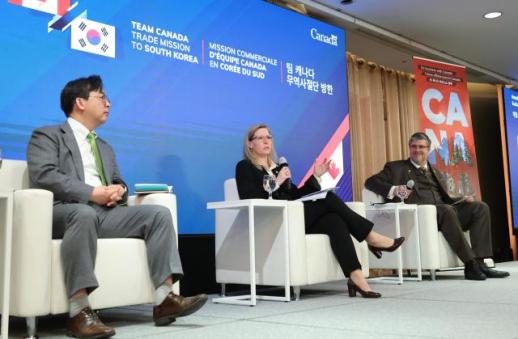 Submarine deal looms large over Canada's high-profile trade mission to Korea SEOUL, March 31 (AJP) - Canada’s trade delegation to South Korea this week has been heavily layered with the hot-button deal — Canada’s largest-ever defense procurement to replace its aging submarines, worth an estimated $40 billion, now being weighed between Korean and European bidders. The visit by the Team Canada Trade Mission, led by International Trade Minister Maninder Sidhu, comes as Ottawa moves to diversify trade and deepen ties with trusted partners, with defense and supply chains increasingly intertwined. Canadian officials are holding meetings with major Korean shipbuilders Hanwha Ocean and HD Hyundai Heavy Industries, alongside a visit to HD Hyundai’s Global R&D Center in Seongnam, industry sources said. Additional engagements are taking place around the Canada–Korea Business Forum in Seoul and events hosted by the Federation of Korean Industries. Officially, the delegation — comprising more than 180 participants from over 110 companies across sectors including ICT, aerospace and defense, and clean energy — is focused on expanding economic cooperation and strengthening supply chain resilience. The visit runs from March 30 to April 2. But the submarine program looms large. Korean bidders Hanwha Ocean and HD Hyundai Heavy Industries are competing against Germany’s thyssenkrupp Marine Systems (TKMS) for the contract, with final submissions made earlier this month. Industry observers say the race is evolving beyond technical specifications into a broader contest over industrial partnerships, technology transfer and long-term maintenance capabilities. Hanwha Ocean has stepped up its bid by signing agreements with five Canadian firms — OSI Maritime Systems, EMCS Industries, Techsol Marine, Jastram Technologies and Curtiss-Wright — spanning navigation, power systems, maintenance and sonar. The strategy underscores a push to offer full lifecycle support, including maintenance, repair and overhaul. The timing of the visit also reflects mounting concern over global supply chain disruptions tied to the tensions in the Middle East. “Supply chain stability can never be taken for granted,” said Park Jung-sung, South Korea’s deputy trade minister, pointing to complementarities between Canada’s resource base and Korea’s manufacturing strength. Sidhu echoed the need for closer coordination among “trusted middle powers,” as Canada accelerates efforts under Prime Minister Mark Carney to reduce reliance on traditional markets and expand trade routes. “We are moving very fast to improve trade flows,” said Sara Wilshaw, Canada’s chief trade commissioner. “We need to get across that divide,” she added, referring to Canada’s long-standing dependence on the United States. Germany, meanwhile, has sought to bolster its bid with broader industrial proposals, reportedly linking the submarine deal to investments in autos and batteries, though Volkswagen has distanced itself from such arrangements. Against this backdrop, Canada’s Seoul visit is widely seen as part of a broader assessment of industrial cooperation frameworks ahead of a final contractor decision — one that will carry implications not just for defense procurement, but for the next phase of global supply chain alignment. 2026-03-31 15:31:37
 -
 April Theaters Lean on Sequels and Re-Releases as Original Films Fade April’s release calendar offers a clear signal of what theaters fear most: the unknown. Familiar names — sequels, franchises and re-releases — are crowding out new titles. Megabox is set to open April 1 with a re-release of Quentin Tarantino’s extended edition, “Kill Bill: The Whole Bloody Affair.” The same day brings back “Farewell My Concubine: The Original.” Jang Hang-jun’s “Rebound,” which rode the “The King and the Man” phenomenon, returns April 3. Lotte Cinema plans 4K remastered screenings of “Roman Holiday” and “Breakfast at Tiffany’s” on April 8, followed by Jim Carrey’s “The Truman Show” on April 15. “The Last Emperor” is also on April’s re-release lineup. The strongest sales pitch, for now, is a proven past. Re-releases are not the problem by themselves. Many viewers welcome a chance to see classics on a big screen. The concern is that this programming is starting to look less like added choice and more like a default way to fill schedules. Theaters are increasingly acting as storefronts for safe brands and packaged nostalgia rather than places that introduce new worlds first. Prequels, sequels, spinoffs, reboots and biopics built on well-known figures are easier to explain — and easier to finance — than original stories. There are structural reasons behind the shift. South Korea’s film industry is enduring a prolonged slump. In a Korean Film Council report released last month, “A Study on Film Content Consumption Trends,” 45.8% of respondents said they went to theaters less often over the past year than in the previous year. The most cited reason was that ticket prices felt burdensome, at 25.1%. Another 21.5% said there were no movies worth seeing, and 17.4% pointed to plentiful film and series options on OTT platforms. The number of domestic commercial films released in 2026 also remains well below pre-pandemic levels. With fewer films available, programming becomes more conservative, and conservative lineups further weaken audience expectations — a cycle that reinforces the downturn. Saying only that “audiences have changed” captures just part of the picture. The industry, the article argues, has pulled back first, favoring intellectual property with built-in awareness over originals that carry higher risk. Known IP is simpler to market: a tagline can do the work, and a poster often signals genre and tone at a glance. That may feel safer for investors and easier for theaters, but it also reduces the chance of surprise. That is why the reasons people skip theaters cannot be reduced to price alone: if it is expensive and not new, there is less reason to leave home. The trend is not limited to South Korea. In the United States, the outlet KCRA, citing analysis based on the film data site The Numbers, reported that originals made up just 12% of the annual top 20 box office hits over the past five years, while about two-thirds were sequels. By the same measure, in the 1990s nearly half of top-ranked films were originals, and sequels accounted for 14.5%. Still, the article argues that claims that originals cannot succeed are often overstated. AP reported earlier this year that “Project Hail Mary” posted the biggest non-franchise opening since “Oppenheimer” and ranked among the biggest box office hits of the first quarter of 2026. The issue, it said, is less whether originals are possible than whether studios and financiers are willing to back them with scale, marketing and confidence. The article does not argue that re-released classics and franchise films are inherently bad. The risk comes when they become the mainstream. New names lose space, midbudget films disappear faster, and audiences learn the idea that “there’s nothing to see in theaters.” As that perception hardens, theaters drift from producing the present to replaying the past. A rebound, it argues, will not come from attendance figures alone. It will come when the cynicism — “it’s probably a story I’ve seen before” — is broken. What theaters need is not more nostalgia, but a willingness to take risks on new faces, even with the possibility of failure. More important than re-hanging yesterday’s classics, the article concludes, is making today’s films that people will want to revisit 10 years from now. A market that loses originals ultimately loses audiences, it said, because the reasons to go to a theater shrink when only the already-proven is offered. * This article has been translated by AI. 2026-03-31 15:18:22
 -
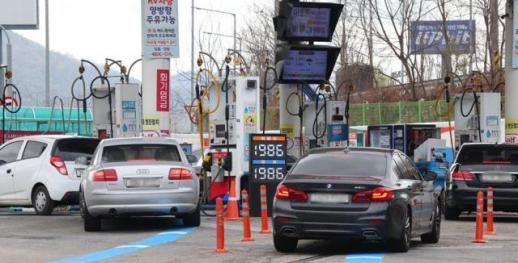 South Korea launches oil swap program for refiners amid Middle East supply disruptions SEOUL, March 31 (AJP) - South Korea is implementing an "oil swap" program that lends government-owned stockpiles to refiners to help them secure alternative oil supplies, the Ministry of Trade, Industry and Resources said Tuesday. At a daily briefing at the government complex in the administrative city of Sejong, Yang Gi-uk, a ministry official, said the government is "releasing stockpiles" for refiners. Yang said Middle Eastern crude makes up the largest share of the government's stockpiles, and that South Korea holds more than 20 million barrels, which he said should be sufficient. The program aims to ease supply disruptions by lending government oil reserves to refiners, who will be required to replenish them once they have secured their own supplies. Under the program, which runs for two months and could be extended if necessary with the ministry's approval, refiners, who have faced difficulties importing Middle Eastern crude due to the closure of the Strait of Hormuz, will be able to secure substitute supplies. Monthly settlements will be calculated based on price differences between government stockpiles and refiners' secured supplies. Amid supply disruptions from the Middle East, most refiners have turned to Africa, Australia, Central Asia, and the Americas for oil , with shipments taking 14 to 50 days. According to the ministry, the country's four major refiners have applied for the program, with a decision to be made after the Korea National Oil Corporation verifies their applications and assesses feasibility before releasing stockpiles. 2026-03-31 15:14:51