
Journalist

Lee Hugh
=
-
 Iran Proposes Hormuz Strait Controls, Fees; Would Bar Israeli Ships and Demand Reparations Iran is moving to place the Strait of Hormuz effectively under its control and impose transit fees. Iran International, a U.K.-based opposition outlet, reported that Ali Nikzad, the first deputy speaker of Iran’s parliament, said during a visit to Bandar Abbas that a 12-point plan on Hormuz controls and transit rules would ban Israeli vessels from passing through the strait under any circumstances. Nikzad added that ships belonging to “hostile” countries would not be allowed to transit unless they first pay compensation for war-related damage. He did not name specific countries. Iran International said the measure is being interpreted as aimed at the United States and some Middle Eastern Arab allies, which Iran has previously described as “hostile countries.” The plan would also restrict passage for ships from nonhostile countries. Under the proposal, all vessels would need prior Iranian permission before transiting the strait, and could be required to pay a fee. Mohammadreza Rezaei, chair of parliament’s construction committee, said Iran plans to use 30% of the fee revenue to expand military infrastructure and the remaining 70% for economic development and welfare. “Managing the Strait of Hormuz is more important than obtaining nuclear weapons,” he said. Since a Middle East war began after the United States and Israel struck Iran on Feb. 28, the strait has remained effectively blocked, according to the report. The waterway is a key maritime route through which about 20% of global oil and gas supplies pass. Iran is seeking to use the fee system to offset some of its war-related economic losses, but the United States has strongly objected. Washington has warned that companies or countries that pay Iran’s transit fees could face sanctions.* This article has been translated by AI. 2026-05-03 17:42:05
 -
 Takaichi Unveils Revised ‘Free and Open Indo-Pacific’ Plan in Hanoi, Puts Economic Security First Japan’s Prime Minister Sanae Takaichi, visiting Vietnam, used a foreign policy speech to lay out a new diplomatic line, revising the “Free and Open Indo-Pacific” (FOIP) concept first advanced in 2016 by former Prime Minister Shinzo Abe. The update shifts the emphasis decisively toward economic security, including stronger supply chains for critical goods, analysts said. Speaking at Vietnam National University in Hanoi to an audience of 270 students and experts, Takaichi said, “The environment around us has changed greatly, but the validity of FOIP remains unshaken,” adding that Japan would “play an even more proactive role than before.” She set out three priorities: building an economic ecosystem by strengthening energy and critical-material supply chains; jointly developing new economic fields and sharing rules through public-private cooperation; and expanding linkages in the security domain. Takaichi also said Japan would promote a “FOIP digital corridor” focused on information and communications infrastructure such as undersea cables and communications satellites. She said Japan would expand both the number of countries and the scale of its Official Security Assistance (OSA) program, which provides weapons and equipment free of charge to friendly militaries. She also pledged an early start to procedures to expand the Trans-Pacific Partnership (TPP). Japanese media offered differing readings of the revised plan. Nikkei said the update is aimed at responding to an era of “power” shaped by the United States and China, and at preserving a wavering “rule of law” by putting economic security at the center and prioritizing practical cooperation with partners. Nikkei highlighted what it called a key difference from 2016. When Abe first promoted FOIP, Japan and the United States held up shared values such as “freedom from coercion,” the “rule of law” and a “market economy.” A decade later, Nikkei wrote, “the United States, FOIP’s most important partner, has come to ‘coerce’ countries by using tariffs.” The newspaper also said the United States showed disregard for international law in a military clash with Iran and described the Strait of Hormuz as having been “reverse-blockaded.” In Nikkei’s framing, the United States shifted from a country that should not be a coercer to one acting as a coercer. Nikkei also pointed to China’s export controls on critical materials and Russia’s invasion of Ukraine as factors creating an environment in which countries “cannot help but follow power.” It said Takaichi’s call for “autonomy” and “resilience” across the economy, society and security fit that context. Yomiuri Shimbun said the revised FOIP is aimed at China, which it said is intensifying coercive moves on both the economic and military fronts. It reported that Takaichi warned low-cost Chinese artificial intelligence could be used for influence operations and stressed joint development of local-language AI with Southeast Asian countries. Yomiuri also said she signaled a response to market distortions, citing “unfairly low-priced supply,” in remarks it linked to China amid concerns about overproduction in sectors such as electric vehicles and steel. Yomiuri also cast a $10 billion financial support package announced by the Japanese government last month, dubbed “Power Asia,” as a core tool of Takaichi’s diplomacy. It said the package could be used urgently, including to support crude oil procurement for Southeast Asian countries during the Strait of Hormuz blockade situation. A senior Japanese government official described Power Asia as “live ammunition” to put FOIP into practice. Another Foreign Ministry official said Japan’s strength is providing tailored support for what partner countries need, since Japan cannot outspend China in scale. At the same time, Japanese newspapers voiced doubts about the plan’s effectiveness, pointing to the absence of the United States as a shared weakness. Yomiuri said the United States, pressed by Middle East developments, has little room to focus on the Indo-Pacific and warned that without U.S. cooperation the prime minister’s plan could become “a pie in the sky.” Asahi Shimbun said the second Trump administration has continued actions that deny freedom and the rule of law, including launching attacks on Iran while disregarding international law. Combined with Nikkei’s view that the United States has become a coercive actor, the three papers described different facets of the same vulnerability: physical absence, ideological departure and coercive behavior. A second weakness, Asahi said, is that even Vietnam — the venue for the announcement — may keep its distance. Citing Futaba Ishizuka, a researcher at the Institute of Developing Economies, Asahi reported that while Vietnam joined the Indo-Pacific Economic Framework (IPEF), it has avoided using the U.S.-promoted phrase “Indo-Pacific” in major domestic policy documents. The move was seen as reflecting sensitivity to China, a neighboring socialist country and Vietnam’s largest trading partner, and Asahi said Vietnam is expected to “carefully balance” its stance on the revised FOIP as well. A third weakness is the diverging positions among Southeast Asian countries. Yomiuri said there are differences in temperature on security cooperation: the Philippines is considering importing used Japanese weapons and equipment, while Cambodia and Indonesia have held successive “2+2” meetings of foreign and defense ministers with China since last year. The paper said the reality is not a unified ASEAN line but a region split in multiple directions. Takaichi’s revised FOIP has opened with a high-profile rollout, but Japanese media said Japan faces a heavy task in rallying partners without the United States. Vietnam’s cautious approach and Southeast Asia’s fragmentation have emerged as early variables. How Japan manages partner diplomacy amid U.S. absence remains a key test, with implications for South Korea’s Indo-Pacific strategy and its ASEAN diplomacy.* This article has been translated by AI. 2026-05-03 17:41:02
 -
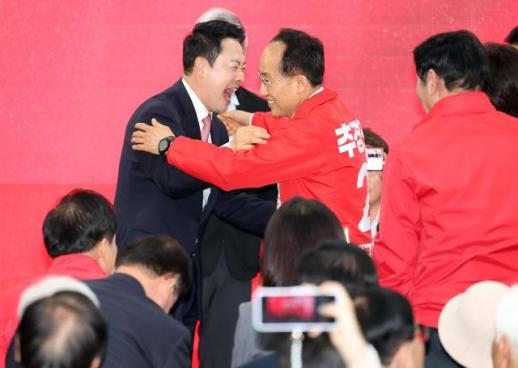 PPP leader Jang Dong-hyeok campaigns in Daegu for mayoral hopeful Choo Kyung-ho Jang Dong-hyeok, leader of the People Power Party, visited Daegu on Saturday to rally support for Choo Kyung-ho, the party’s candidate for Daegu mayor, saying the conservative stronghold should not be handed to Kim Boo-kyum. Jang’s appearance followed his attendance a day earlier at the opening of Busan mayoral candidate Park Hyung-joon’s campaign office, as the party seeks to consolidate its base. Speaking at Choo’s campaign office opening in Suseong District, Jang said he had checked what he described as Kim’s criminal record the previous day and criticized Kim as someone who received a one-year prison sentence with a two-year suspended term for violating the National Security Law. Jang also accused President Lee Jae-myung of trying to erase his own alleged wrongdoing, saying Lee had pursued what Jang called an unreasonable state investigation and was now pushing a special counsel probe aimed at canceling indictments tied to 12 allegations. Jang claimed such a move would lead to what he called a socialist constitution intended to extend Lee’s term. “This has to be stopped in Daegu,” Jang said, calling the local elections a contest to block dictatorship and socialism and to protect liberal democracy and future generations. He said supporters last winter chanted “We are Choo Kyung-ho” to defend Choo, and argued that Choo is now running for mayor to protect South Korea, liberal democracy and Daegu. “Economic mayor Choo Kyung-ho will change Daegu,” he said. Addressing controversy over the party’s nomination process for the Daegu mayoral race, Jang apologized to Daegu residents, saying as party leader he was responsible. He also expressed regret to National Assembly Deputy Speaker Joo Ho-young and candidate Lee Jin-sook, who were cut from the primary process. The event drew party leaders and nearly 40 sitting lawmakers, including honorary campaign chair Kim Moon-soo, a former labor minister; former Korea Communications Commission chair Lee Jin-sook; and lawmakers Joo Ho-young, Na Kyung-won and Yoon Jae-ok. Former President Lee Myung-bak also offered a video message of support, saying Daegu needs an “economic mayor, not a political mayor.” He cited the global financial crisis shortly after his inauguration, saying South Korea was the only country to post positive growth and that Choo served at the time as senior secretary for economic and financial affairs at Cheong Wa Dae and head of an emergency economic situation office.* This article has been translated by AI. 2026-05-03 17:40:05
 -
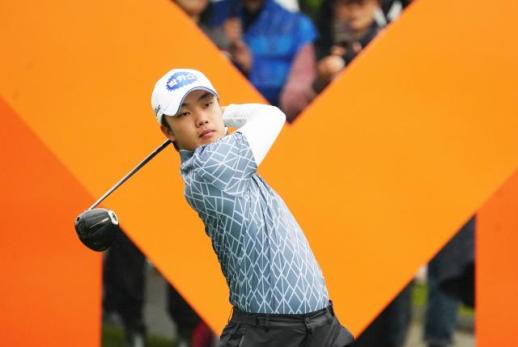 Song Min-hyeok wins GS Caltex Maekyung Open in playoff for first career title Song Min-hyeok won the 45th GS Caltex Maekyung Open, claiming his first career title after a playoff at Namseoul Country Club (par 71) in Seongnam, Gyeonggi Province. Song shot a 1-under 71 in Sunday’s final round with three birdies and two bogeys to finish at 11-under 273. He then beat Cho Min-kyu on the first extra hole at the par-4 18th, sealing the win with a par putt. The victory earned Song 300 million won in prize money. By winning the event, co-sanctioned with the Asian Tour, he also secured a five-year exemption on the Korea Professional Golfers’ Association (KPGA) Tour and a two-year exemption on the Asian Tour. Song was a national team member from 2021 to 2023 and debuted on the KPGA Tour the following year. In the 2024 season, he posted a tie for fourth at the Dong-A Membership Group Open and a tie for second at the KPGA Tour Championship, winning rookie of the year honors. His best finish before this week was second at the KPGA Tour Championship in November 2024. He also erased lingering disappointment from 2023, when he finished runner-up in this tournament as an amateur. Cho, meanwhile, settled for his fourth runner-up finish at the event, after also placing second in 2011, 2020 and 2022. Heo In-hoe, who closed with a 7-under 65 to finish tied for the lead, did not advance to the playoff after a scoring correction. Officials added two strokes for a provisional-ball situation on the par-4 seventh hole in the third round on May 2, changing his score there from par to double bogey. The adjustment dropped Heo to a tie for third at 9-under 275.* This article has been translated by AI. 2026-05-03 17:39:15
 -
 Hanwha Solutions’ Rights Offering Faces Second Regulator Revision Request Hanwha Solutions’ plan for a rights offering has been halted again after South Korea’s financial regulator demanded another revision, even after the company reduced the deal size. The latest move has sharpened scrutiny on investor protection and whether the company can justify how it plans to use the funds. Industry officials said Saturday that Hanwha Solutions disclosed it was asked by the Financial Supervisory Service on April 30 to submit a revised registration statement for the rights offering it filed April 17. It was the second such request, following an initial revision demand on April 9. The filing has not been accepted, and its effectiveness has been suspended. Hanwha Solutions previously announced a 2.4 trillion won rights offering aimed at repaying debt, saying it was a step to prevent a credit-rating downgrade amid worsening business conditions. The market response was negative, with criticism that the company moved ahead with a large share issuance without sufficient communication with shareholders and that it planned to use most of the proceeds to pay down debt. The company reapplied after cutting the offering to 1.8144 trillion won, but still failed to clear the regulator’s review. The FSS said the disclosure lacked sufficient detail. It reportedly took issue in particular with about 5 trillion won in noncore assets, including real estate and stakes in other companies, held by Hanwha Solutions. During the first review, the FSS was also said to have questioned why the company pursued a rights offering despite holding a sizable amount of such noncore assets. Some in the market say Hanwha Solutions needs to redesign the offering, providing more specific explanations of how the funds will be used and how the plan would improve its finances, while also presenting steps to limit damage to shareholder value. Industry observers have raised the possibility that Hanwha Solutions could further reduce the amount and add a third-party allotment, since debt repayment still accounts for nearly half of the use of proceeds even after the cut. However, a third-party deal may be difficult because demand from outside investors may be limited and only a small number of affiliates could participate, they said. Hanwha Solutions said it would accept the FSS request and work to supplement the filing. “We take the FSS request very seriously,” the company said, adding that it would “humbly reflect once again on the criticisms and opinions raised by shareholders and the media” and prepare a revised registration statement that meets the requirements.* This article has been translated by AI. 2026-05-03 17:34:13
 -
 Korea’s Imported Car Market Splits Between Ultra-Luxury and Budget Models Korea’s imported-car market is increasingly splitting between ultra-expensive models and bargain-priced vehicles, with fewer buyers in the middle. The same pattern is emerging in the fast-growing electric-vehicle segment, where attention is focused on high-performance EVs priced above 100 million won and entry-level models using LFP batteries that maximize government subsidies. According to the Korea Automobile Importers & Distributors Association on May 3, sales of imported cars priced at 100 million won or more totaled 17,375 in the first quarter, up 13.3% from 15,795 a year earlier. By price band, vehicles priced from 100 million won to under 150 million won jumped 22.7% to 9,258. Sales of models priced at 150 million won or more edged down 1.2% to 8,088 from 8,184. Among imported cars priced above 100 million won, BMW led with 6,540 vehicles sold, followed by Mercedes-Benz with 4,687 and Porsche with 2,105. Among brands classified as “luxury cars,” Bentley sold 99 vehicles in the first quarter, up 98% from 50 a year earlier. Land Rover sales rose 10.1% to 1,141 from 1,036, and Rolls-Royce increased 13.2% to 43 from 38. Budget-focused brands also gained ground. China’s BYD sold 2,252 vehicles in the first quarter, accounting for 84% of imported-car sales priced under 40 million won. With BYD’s surge, total sales in that under-40-million-won segment reached 2,038, up 581.6% from 299 a year earlier. The split is also evident in EVs. Sales of imported EVs priced at 100 million won or more rose 72.3% to 2,872 in the first quarter. At the same time, sales of mass-market EVs priced at 50 million won or less totaled 17,938, about 60% of the overall imported EV market of 31,498, driving growth. By contrast, sales in the 50 million to 70 million won range—often seen as the market’s average price band—rose 13.9% to 20,575. That increase lagged the overall imported-car growth rate of 35.5%. The disappearance of midrange demand is being attributed to widening gaps in household wealth. With some assets such as real estate and stocks rising sharply, higher-income consumers have gained purchasing power, while many households facing high prices and high interest rates are focusing more strictly on value, the association said. The trend has been reinforced as EV brands such as Tesla reduce midpriced offerings and emphasize a two-track approach centered on higher-margin luxury models and lower-priced vehicles. An industry official said the value segment is expanding as lower-priced EVs gain traction, while buyers seeking clear differentiation are moving into the ultra-premium market, reshaping demand toward the extremes. “Brands with an unclear position will find it increasingly difficult to survive,” the official said. The official added that as polarization by price is expected to become more pronounced, imported-car brands should refine strategies to meet layered consumer demand. 2026-05-03 17:33:16
 -
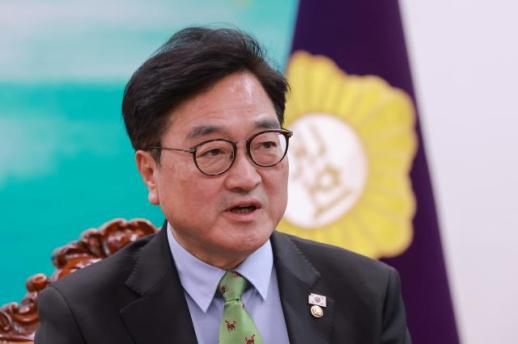 National Assembly Speaker Woo Won-shik urges People Power Party to back constitutional amendment vote Woo Won-shik, the speaker of South Korea's National Assembly, said Saturday that a plenary vote on a constitutional amendment bill jointly introduced by 187 lawmakers was expected within days, and urged the People Power Party to take part in the vote. In a Facebook post, Woo said the bill's passage remained uncertain because the People Power Party opposes it as a party line. He again asked the party to lift its opposition and participate in the vote. Addressing the party, Woo said it was "deeply regrettable" that it opposed an amendment meant to ensure that an illegal imposition of martial law could not even be contemplated, despite what he described as an apology over martial law and efforts to sever ties with Yoon Suk Yeol. He urged the party to join what he called his proposal to "cross the river of insurrection" together by backing the amendment. Woo also stressed that the core of the amendment was preventing a "second Yoon Suk Yeol." He said it could not be guaranteed that there would never again be a second or third Yoon with "extreme thinking," and called for changing the National Assembly's constitutional power to lift martial law into a power to approve it, and for immediately suspending the effect of martial law once the Assembly votes, to prevent any attempt at illegal martial law. On April 3, floor leaders of six parties, excluding the People Power Party, submitted the amendment bill to the National Assembly under the names of 187 lawmakers. The People Power Party has opposed it, calling it a rushed, election-driven amendment.* This article has been translated by AI. 2026-05-03 17:09:15
 -
 South Korea, China and Japan Finance Chiefs Pledge Closer Coordination, Boost Regional Safety Net South Korea, China and Japan brought their finance ministers together to coordinate responses to global uncertainty and other medium- to long-term challenges, including steps to strengthen the region’s financial safety net. South Korean Deputy Prime Minister and Minister of Economy and Finance Koo Yun-cheol chaired the 26th trilateral meeting of finance ministers and central bank governors on May 3 in Samarkand, Uzbekistan. The three countries hold the meeting annually to share economic and financial cooperation plans and to discuss key agenda items in advance of the ASEAN+3 finance ministers and central bank governors meeting. The chair rotates among the three finance ministries, and South Korea is this year’s chair. The countries shared views on the macroeconomic impact of the recent war in the Middle East and their respective policy responses. They said their economies remained steady despite external uncertainty last year, a trend that continued through the first quarter, but agreed that downside risks have increased due to the Middle East conflict. Koo said the three countries face common medium- and long-term structural challenges, including low birthrates and aging populations, weakening growth potential and the need to stabilize supply chains. He proposed that they share information and work together on solutions. On ASEAN+3 financial cooperation, Koo said, “To respond to heightened uncertainty, we need to improve the effectiveness of the CMIM, the regional financial safety net,” and urged joint efforts to strengthen the capacity of AMRO, the region’s surveillance body. The finance ministers and central bank governors agreed that close communication can help support regional financial stability. They also decided to hold their next meeting in Nagoya, Japan, where the 30th ASEAN+ finance ministers and central bank governors meeting is scheduled to be held in 2027. * This article has been translated by AI. 2026-05-03 17:07:26
 -
 Yu Hyeon-jo wins inaugural DB Women’s Championship for first 2026 KLPGA title Yu Hyeon-jo, last season’s Korea Ladies Professional Golf Association Tour grand prize winner, won her first title of the 2026 season Sunday at the newly created DB Women’s Championship, which has a total purse of 1.2 billion won. Yu shot an even-par 72 in the final round at Rainbow Hills Country Club (par 72) in Eumseong, North Chungcheong province, with two birdies and two bogeys. She finished at 7-under 281, edging a three-way tie for second — Go Ji-won, Kim Min-sol and Lee Da-yeon — by one stroke at 6-under 282. The winner’s prize was 216 million won. Yu, the 2024 KLPGA Tour rookie of the year who won last season’s grand prize and low-scoring title, earned her third career tour victory — her first in eight months since winning the KB Financial Star Championship last September. She also became the inaugural champion of the new event. In a televised interview after the round, Yu said, “I’m so happy the season’s win came quickly,” adding, “I was disappointed with the number of wins last year. This year, I’ll do my best so I can aim to win multiple titles.” Go, who led outright through the first three rounds, was seeking her first multiple-win season but slipped to a share of second after dropping two shots Sunday. Park Ju-young, described as a “mom golfer,” posted the day’s best score by cutting five strokes. She finished tied for fifth at 5-under 283 with Kim Soo-ji and Han Jin-seon. * This article has been translated by AI. 2026-05-03 17:06:16
 -
 Japan Imports Russian Crude for First Time Since Hormuz Strait Closure Japan will import Russian crude oil for the first time since the Strait of Hormuz was closed. Kyodo News reported May 2, citing a Japanese Ministry of Economy, Trade and Industry official, that refiner Taiyo Oil procured crude produced by the Sakhalin-2 oil and gas development project in Russia’s Far East through a spot deal. The crude was reported to have left Sakhalin aboard a tanker in late April. The tanker carrying the Russian crude is expected to arrive as early as the night of May 3 at Ehime Prefecture, where Taiyo Oil has refining facilities. It is Japan’s first import of Russian crude since the Hormuz closure. Kyodo said the purchase is not believed to fall under Western sanctions imposed over Russia’s invasion of Ukraine. Sakhalin-2 is led by Russia’s state energy company Gazprom, with Japan’s Mitsubishi Corp. and Mitsui & Co. participating. It produces liquefied natural gas and crude from offshore gas fields northeast of Russia’s Sakhalin region. The project began year-round crude production in 2008 and has exported LNG since 2009. Japan also holds a stake in the Sakhalin-1 development. The import is seen as part of Japan’s effort to diversify procurement as disruptions to Middle East crude shipments persist. Kyodo reported that a large tanker managed by a unit of Idemitsu Kosan was confirmed to have passed through the Strait of Hormuz in late April, but it remains unclear whether Middle East crude transport will return to normal.* This article has been translated by AI. 2026-05-03 17:04:08