
Journalist

Lee Hugh
=
-
 Hanwha Solutions’ Rights Offering Faces Second Regulator Revision Request Hanwha Solutions’ plan for a rights offering has been halted again after South Korea’s financial regulator demanded another revision, even after the company reduced the deal size. The latest move has sharpened scrutiny on investor protection and whether the company can justify how it plans to use the funds. Industry officials said Saturday that Hanwha Solutions disclosed it was asked by the Financial Supervisory Service on April 30 to submit a revised registration statement for the rights offering it filed April 17. It was the second such request, following an initial revision demand on April 9. The filing has not been accepted, and its effectiveness has been suspended. Hanwha Solutions previously announced a 2.4 trillion won rights offering aimed at repaying debt, saying it was a step to prevent a credit-rating downgrade amid worsening business conditions. The market response was negative, with criticism that the company moved ahead with a large share issuance without sufficient communication with shareholders and that it planned to use most of the proceeds to pay down debt. The company reapplied after cutting the offering to 1.8144 trillion won, but still failed to clear the regulator’s review. The FSS said the disclosure lacked sufficient detail. It reportedly took issue in particular with about 5 trillion won in noncore assets, including real estate and stakes in other companies, held by Hanwha Solutions. During the first review, the FSS was also said to have questioned why the company pursued a rights offering despite holding a sizable amount of such noncore assets. Some in the market say Hanwha Solutions needs to redesign the offering, providing more specific explanations of how the funds will be used and how the plan would improve its finances, while also presenting steps to limit damage to shareholder value. Industry observers have raised the possibility that Hanwha Solutions could further reduce the amount and add a third-party allotment, since debt repayment still accounts for nearly half of the use of proceeds even after the cut. However, a third-party deal may be difficult because demand from outside investors may be limited and only a small number of affiliates could participate, they said. Hanwha Solutions said it would accept the FSS request and work to supplement the filing. “We take the FSS request very seriously,” the company said, adding that it would “humbly reflect once again on the criticisms and opinions raised by shareholders and the media” and prepare a revised registration statement that meets the requirements.* This article has been translated by AI. 2026-05-03 17:34:13
 -
 Korea’s Imported Car Market Splits Between Ultra-Luxury and Budget Models Korea’s imported-car market is increasingly splitting between ultra-expensive models and bargain-priced vehicles, with fewer buyers in the middle. The same pattern is emerging in the fast-growing electric-vehicle segment, where attention is focused on high-performance EVs priced above 100 million won and entry-level models using LFP batteries that maximize government subsidies. According to the Korea Automobile Importers & Distributors Association on May 3, sales of imported cars priced at 100 million won or more totaled 17,375 in the first quarter, up 13.3% from 15,795 a year earlier. By price band, vehicles priced from 100 million won to under 150 million won jumped 22.7% to 9,258. Sales of models priced at 150 million won or more edged down 1.2% to 8,088 from 8,184. Among imported cars priced above 100 million won, BMW led with 6,540 vehicles sold, followed by Mercedes-Benz with 4,687 and Porsche with 2,105. Among brands classified as “luxury cars,” Bentley sold 99 vehicles in the first quarter, up 98% from 50 a year earlier. Land Rover sales rose 10.1% to 1,141 from 1,036, and Rolls-Royce increased 13.2% to 43 from 38. Budget-focused brands also gained ground. China’s BYD sold 2,252 vehicles in the first quarter, accounting for 84% of imported-car sales priced under 40 million won. With BYD’s surge, total sales in that under-40-million-won segment reached 2,038, up 581.6% from 299 a year earlier. The split is also evident in EVs. Sales of imported EVs priced at 100 million won or more rose 72.3% to 2,872 in the first quarter. At the same time, sales of mass-market EVs priced at 50 million won or less totaled 17,938, about 60% of the overall imported EV market of 31,498, driving growth. By contrast, sales in the 50 million to 70 million won range—often seen as the market’s average price band—rose 13.9% to 20,575. That increase lagged the overall imported-car growth rate of 35.5%. The disappearance of midrange demand is being attributed to widening gaps in household wealth. With some assets such as real estate and stocks rising sharply, higher-income consumers have gained purchasing power, while many households facing high prices and high interest rates are focusing more strictly on value, the association said. The trend has been reinforced as EV brands such as Tesla reduce midpriced offerings and emphasize a two-track approach centered on higher-margin luxury models and lower-priced vehicles. An industry official said the value segment is expanding as lower-priced EVs gain traction, while buyers seeking clear differentiation are moving into the ultra-premium market, reshaping demand toward the extremes. “Brands with an unclear position will find it increasingly difficult to survive,” the official said. The official added that as polarization by price is expected to become more pronounced, imported-car brands should refine strategies to meet layered consumer demand. 2026-05-03 17:33:16
 -
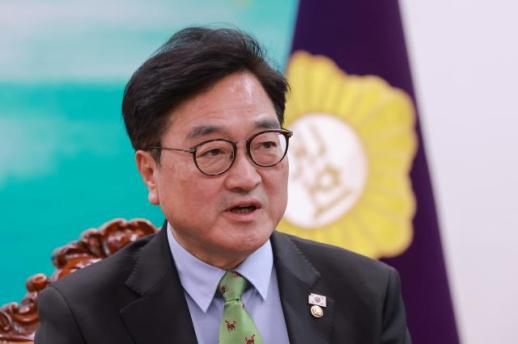 National Assembly Speaker Woo Won-shik urges People Power Party to back constitutional amendment vote Woo Won-shik, the speaker of South Korea's National Assembly, said Saturday that a plenary vote on a constitutional amendment bill jointly introduced by 187 lawmakers was expected within days, and urged the People Power Party to take part in the vote. In a Facebook post, Woo said the bill's passage remained uncertain because the People Power Party opposes it as a party line. He again asked the party to lift its opposition and participate in the vote. Addressing the party, Woo said it was "deeply regrettable" that it opposed an amendment meant to ensure that an illegal imposition of martial law could not even be contemplated, despite what he described as an apology over martial law and efforts to sever ties with Yoon Suk Yeol. He urged the party to join what he called his proposal to "cross the river of insurrection" together by backing the amendment. Woo also stressed that the core of the amendment was preventing a "second Yoon Suk Yeol." He said it could not be guaranteed that there would never again be a second or third Yoon with "extreme thinking," and called for changing the National Assembly's constitutional power to lift martial law into a power to approve it, and for immediately suspending the effect of martial law once the Assembly votes, to prevent any attempt at illegal martial law. On April 3, floor leaders of six parties, excluding the People Power Party, submitted the amendment bill to the National Assembly under the names of 187 lawmakers. The People Power Party has opposed it, calling it a rushed, election-driven amendment.* This article has been translated by AI. 2026-05-03 17:09:15
 -
 South Korea, China and Japan Finance Chiefs Pledge Closer Coordination, Boost Regional Safety Net South Korea, China and Japan brought their finance ministers together to coordinate responses to global uncertainty and other medium- to long-term challenges, including steps to strengthen the region’s financial safety net. South Korean Deputy Prime Minister and Minister of Economy and Finance Koo Yun-cheol chaired the 26th trilateral meeting of finance ministers and central bank governors on May 3 in Samarkand, Uzbekistan. The three countries hold the meeting annually to share economic and financial cooperation plans and to discuss key agenda items in advance of the ASEAN+3 finance ministers and central bank governors meeting. The chair rotates among the three finance ministries, and South Korea is this year’s chair. The countries shared views on the macroeconomic impact of the recent war in the Middle East and their respective policy responses. They said their economies remained steady despite external uncertainty last year, a trend that continued through the first quarter, but agreed that downside risks have increased due to the Middle East conflict. Koo said the three countries face common medium- and long-term structural challenges, including low birthrates and aging populations, weakening growth potential and the need to stabilize supply chains. He proposed that they share information and work together on solutions. On ASEAN+3 financial cooperation, Koo said, “To respond to heightened uncertainty, we need to improve the effectiveness of the CMIM, the regional financial safety net,” and urged joint efforts to strengthen the capacity of AMRO, the region’s surveillance body. The finance ministers and central bank governors agreed that close communication can help support regional financial stability. They also decided to hold their next meeting in Nagoya, Japan, where the 30th ASEAN+ finance ministers and central bank governors meeting is scheduled to be held in 2027. * This article has been translated by AI. 2026-05-03 17:07:26
 -
 Yu Hyeon-jo wins inaugural DB Women’s Championship for first 2026 KLPGA title Yu Hyeon-jo, last season’s Korea Ladies Professional Golf Association Tour grand prize winner, won her first title of the 2026 season Sunday at the newly created DB Women’s Championship, which has a total purse of 1.2 billion won. Yu shot an even-par 72 in the final round at Rainbow Hills Country Club (par 72) in Eumseong, North Chungcheong province, with two birdies and two bogeys. She finished at 7-under 281, edging a three-way tie for second — Go Ji-won, Kim Min-sol and Lee Da-yeon — by one stroke at 6-under 282. The winner’s prize was 216 million won. Yu, the 2024 KLPGA Tour rookie of the year who won last season’s grand prize and low-scoring title, earned her third career tour victory — her first in eight months since winning the KB Financial Star Championship last September. She also became the inaugural champion of the new event. In a televised interview after the round, Yu said, “I’m so happy the season’s win came quickly,” adding, “I was disappointed with the number of wins last year. This year, I’ll do my best so I can aim to win multiple titles.” Go, who led outright through the first three rounds, was seeking her first multiple-win season but slipped to a share of second after dropping two shots Sunday. Park Ju-young, described as a “mom golfer,” posted the day’s best score by cutting five strokes. She finished tied for fifth at 5-under 283 with Kim Soo-ji and Han Jin-seon. * This article has been translated by AI. 2026-05-03 17:06:16
 -
 Japan Imports Russian Crude for First Time Since Hormuz Strait Closure Japan will import Russian crude oil for the first time since the Strait of Hormuz was closed. Kyodo News reported May 2, citing a Japanese Ministry of Economy, Trade and Industry official, that refiner Taiyo Oil procured crude produced by the Sakhalin-2 oil and gas development project in Russia’s Far East through a spot deal. The crude was reported to have left Sakhalin aboard a tanker in late April. The tanker carrying the Russian crude is expected to arrive as early as the night of May 3 at Ehime Prefecture, where Taiyo Oil has refining facilities. It is Japan’s first import of Russian crude since the Hormuz closure. Kyodo said the purchase is not believed to fall under Western sanctions imposed over Russia’s invasion of Ukraine. Sakhalin-2 is led by Russia’s state energy company Gazprom, with Japan’s Mitsubishi Corp. and Mitsui & Co. participating. It produces liquefied natural gas and crude from offshore gas fields northeast of Russia’s Sakhalin region. The project began year-round crude production in 2008 and has exported LNG since 2009. Japan also holds a stake in the Sakhalin-1 development. The import is seen as part of Japan’s effort to diversify procurement as disruptions to Middle East crude shipments persist. Kyodo reported that a large tanker managed by a unit of Idemitsu Kosan was confirmed to have passed through the Strait of Hormuz in late April, but it remains unclear whether Middle East crude transport will return to normal.* This article has been translated by AI. 2026-05-03 17:04:08
 -
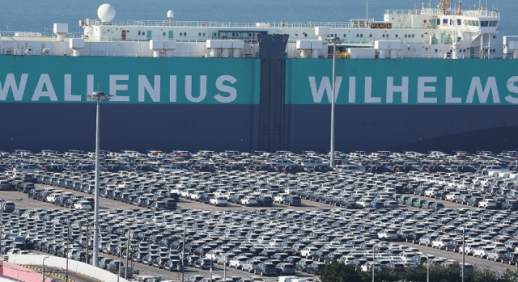 Auto Installment Loan Rates Top 10% at Some Firms as Funding Costs Rise Auto installment loan rates are climbing sharply as funding conditions worsen for card issuers and capital companies. Some capital firms have pushed rates above 10%, and the rise in card bond yields suggests rates could climb further. According to the Credit Finance Association on Saturday, the average installment rate for new cars at six dedicated card issuers last month — based on a 30% cash down payment and a 36-month term — ranged from 4.60% to 6.63%. That is more than a 2 percentage-point increase in four months, compared with the low-3% to low-4% range in the fourth quarter of last year. Major capital companies posted higher rates than card issuers, at 5.12% to 8.80%. Meritz Capital’s top rate reached 10.8%. Hana Capital’s average rate rose 1.58 percentage points, from 5.52% in the previous quarter to 7.1% in April. The increases reflect higher funding costs for card issuers and capital companies. Unlike banks, specialized credit finance companies do not take deposits and largely fund lending by issuing specialized financial company bonds and commercial paper. Amid instability in the Middle East, yields on three-year AA+ card bonds have stayed in the 4% range, hitting 4.167% on March 23. With a typical two- to three-month lag before higher funding costs feed into loan pricing, installment rates are expected to face additional upward pressure. Still, rates may vary by model and automaker marketing strategy. Automakers sometimes work with financial firms to offer ultra-low-rate financing or cashback on key models to boost sales, which can keep rates low despite higher funding costs. Some Chinese-made electric vehicles are being offered with financing starting in the 0% range. An industry official said higher funding costs leave room for additional rate increases, but added that a dual-track market — with ultra-low rates for low-priced Chinese EVs regardless of broader rate moves — is likely to persist for the time being. * This article has been translated by AI. 2026-05-03 17:03:17
 -
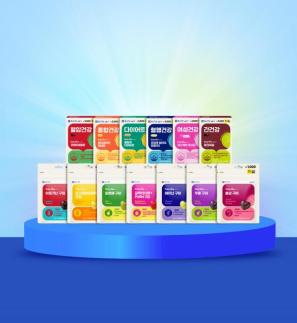 Drugmakers Expand Small-Pack Supplements Beyond Pharmacies to Daiso Drugmakers are expanding sales of health functional foods and other products to Daiso, a fixed-price household goods chain, as they move beyond pharmacy-centered distribution. With consumers seeking ultra-low prices and value during a downturn, companies are aiming to lower the cost burden and broaden customer touchpoints. The shift is also spreading to quick-commerce delivery channels. According to the industry on May 3, Chong Kun Dang launched six small-portion, small-pack “Dailywise” health functional foods and seven gummy products at Daiso. The lineup includes basics such as multivitamins and minerals and omega-3, as well as “Women’s Health Respecta Probiotics.” Dongwha Pharm has also released nine Daiso-only daily health products, including “Pyeonan Hwal,” “Quick&Sure,” “by. Ssanghwa-won” and “by. Maglab.” The company said Pyeonan Hwal and other items ranked No. 1 in the food category after launch, and initial online-mall inventory sold out quickly, leading to temporary shortages. By. Ssanghwa-won and by. Maglab are sub-brands of Ssanghwa-won and Maglab, planned as Daiso-exclusive products tailored to the channel. The broader retail push is translating into earnings. Chong Kun Dang Health returned to profitability last year, posting operating profit of 37.3 billion won, helped by expanded supplement sales. Daewoong Pharmaceutical also reported that its OTC sales rose 27% from a year earlier to 43.7 billion won as sales of supplements launched through Daiso increased. Both companies moved early to offer ultra-low-priced supplements at Daiso, pricing key items at a fixed 3,000 to 5,000 won. Jeong Dong-hee, an analyst at Samsung Securities, said Daewoong’s core products such as Ursa are expected to grow through pharmacies, while new health functional foods should expand through general retail channels. He projected the company’s OTC division revenue will rise from 160.6 billion won in 2025 to 184.7 billion won this year. As low-price, small-portion strategies centered on Daiso lift sales, the approach is spreading to other channels. Dong-A Pharmaceutical has placed four items from its health functional food brand Selparex on Baemin’s B Mart delivery platform. All are sold as one-month supplies at a fixed price of 5,000 won. Dongkook Pharmaceutical and Kwangdong Pharmaceutical are also already supplying products to quick-commerce channels. Industry officials say the model is taking shape: use small packs to improve accessibility and draw new demand, then expand distribution based on that base. A pharmaceutical company official said small-pack products are a sales strategy designed around consumer accessibility, and are meaningful because they can introduce products to more customers. With online and offline distribution channels diversifying, the official said, expanding points of sale is a natural trend.* This article has been translated by AI. 2026-05-03 16:55:23
 -
 High Exchange Rates Cut Korean Duty-Free Sales as Retailers Target Foreign Tourists A sustained run of high exchange rates has weakened the price appeal of duty-free shopping, and the number of Korean customers has fallen for three straight months, industry data show. Major duty-free operators are trying to offset the drop by expanding K-content and experience-focused spaces aimed at foreign visitors. According to the Korea Duty Free Shops Association, the number of Korean duty-free shoppers declined to 1.63 million in January, 1.45 million in February and 1.36 million in March. Sales to Korean customers also fell month by month, from 284.2 billion won in January to 257.6 billion won in February and 231.2 billion won in March. Foreign customer traffic moved the other way. The number of foreign duty-free shoppers was 940,000 in January and 910,000 in February, then rose to 1.09 million in March, topping 1 million. Foreign-customer sales slipped from 786.6 billion won in January to 704.7 billion won in February, then jumped to 851.3 billion won in March. With high exchange rates eroding the attractiveness of duty-free prices, Korean demand has cooled, while rising inbound tourism has partly offset the decline, the association said. Foreign visits are expected to increase further as Japan's Golden Week (April 29-May 6) overlaps with China's Labor Day holiday (May 1-5). Duty-free retailers are responding by rolling out specialized spaces that emphasize experiences tied to K-content. Shinsegae Duty Free expanded its K-food and wellness curation zone, "Taste of Shinsegae," from its Myeongdong store to its Incheon Airport store on April 24. After launching the zone in Myeongdong, the company said that within six months the number of food buyers quadrupled and sales rose 30-fold, and it expects similar results at the airport, where last-minute purchases are common before departure. Its 11th-floor K-wave zone in Myeongdong is also growing: March sales rose 90% from the previous month, and sales of BTS goods surged 200% over the same period. Lotte Duty Free has launched a new campaign, "Trip Lotte Duty Free," featuring the girl group aespa. The campaign positions duty-free stores as "a travel destination" rather than just a shopping venue. Aespa members appear as category-by-category shopping guides, and offline stores have added concept "episode" zones and life-size standees to deepen fan engagement. Hyundai Duty Free recently opened an "AI Beauty Trip" space at its Trade Center store, where artificial intelligence diagnoses customers' skin condition and personal color and recommends cosmetics. The company also signed a memorandum of understanding with Hwaseong Special City to develop travel products using West Coast tourism resources, part of a strategy linked to tourism infrastructure. Shilla Duty Free is running a Jeju local dessert showcase, "Sweet Jeju," at its Jeju store, bringing together signature items from well-known bakeries and cafes across the island. "With exchange rates weakening price competitiveness, content and experiences have emerged as the key differentiators," an industry official said. "Going forward, complex, experience-based spaces that combine K-content, traditional culture and AI technology will be an important factor in drawing foreign demand."* This article has been translated by AI. 2026-05-03 16:51:16
 -
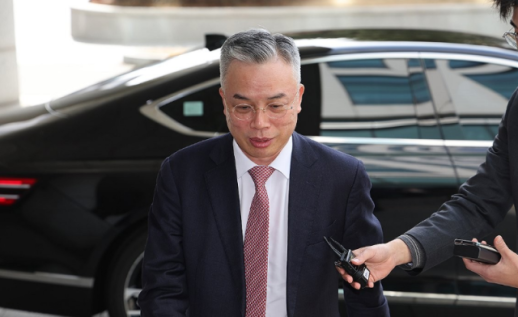 Special Counsel Nears First Deadline With No Arrest Warrants or Indictments The second comprehensive special counsel team, led by Special Counsel Kwon Chang-young and tasked with allegations not resolved by the three earlier special counsels, is nearing the end of its initial investigation period without clear results. The probe has increasingly focused on identifying the military command chain behind the deployment of martial law troops, but observers say the structure of the case has slowed progress. According to legal officials on Saturday, the team marked its 68th day since launch. Including a 20-day preparation period, it has used most of its 90-day overall activity window and has passed the midpoint of the maximum 170-day investigation period. The team is reportedly considering seeking a first 30-day extension ahead of the basic deadline of May 25. The special counsel has broadened the scope of its investigation, including booking Yoon Suk Yeol and former Defense Minister Kim Yong-hyun, but it has not produced visible outcomes such as arrest-warrant requests or indictments. So far, the first phase has been defined by narrowing targets while expanding fronts. Of 17 allegations left by the three earlier special counsels, the team is investigating about seven or eight, including the Deutsche Motors stock manipulation case, the relocation of the presidential residence and alleged favoritism tied to the Yangpyeong expressway project. It has also added lines of inquiry not covered in earlier probes, including allegations of presidential office involvement in the Ssangbangwool remittances-to-North-Korea case. A central track is tracing the chain of orders for the martial law troop deployment, including Joint Chiefs of Staff Chairman Kim Myung-soo. Investigators view the command-chain issue as a structural case rather than a single, discrete offense. They must establish who ordered troop movements and through what channels, as well as whether reports and approvals were made, the purpose of the operation and its legal basis. Because it requires confirming the broader command system, the probe is considered time-consuming and difficult. The investigation has also been complicated by friction with the Supreme Prosecutors' Office. The special counsel demanded internal audit materials related to the Dec. 3 emergency martial law, but the Supreme Prosecutors' Office effectively refused, saying the team should obtain them through a search-and-seizure warrant. The special counsel viewed the refusal as obstruction and asked the Justice Ministry to begin disciplinary proceedings against acting Prosecutor General Koo Ja-hyeon and former Inspection Bureau chief Kim Seong-dong. The requested materials are described as the full set of internal audit and inquiry records produced as the prosecutors' inspection unit reviewed allegations tied to the emergency martial law, including statements from those questioned, review reports and the basis for any "no suspicion" conclusions. The special counsel says it needs the records to recheck the validity of prosecutorial judgments, while the Supreme Prosecutors' Office argues confidential audit materials are not subject to voluntary submission. The Kim Keon-hee special counsel team, led by Special Counsel Min Joong-ki, previously sought similar records, was refused and later obtained them through a search warrant, according to the report. With the two sides in open conflict, critics say a lack of interagency cooperation has emerged as a variable from the early stage of the probe. The special counsel expanded its scope again on April 27, naming a case transferred from the Seoul High Prosecutors Office human rights violation review task force as the "presidential office intervention in the Suwon District Prosecutors Office investigation" case. In addition, the team booked Kim Yong-hyun on charges of rebellion under the Military Criminal Act in connection with the Dec. 3 emergency martial law and began questioning. It is also reviewing whether to apply the same charge to Yoon. Even so, questioning of key suspects has not moved quickly. Yoon did not appear for a first summons on April 30, citing trial schedules, and the special counsel is coordinating another date. Kim also failed to appear, citing a scheduling conflict, and was told to report again. The team is also conducting follow-up investigations into unresolved allegations. In connection with the "Noh Sang-won notebook," it applied a charge of organizing a criminal group and has summoned related figures in succession. The special counsel faces internal controversy and staffing constraints. Concerns about a conflict of interest involving Special Counsel Assistant Kwon Young-bin, who handled the Ssangbangwool case, led to a change in assignment, raising worries about delays. Special Counsel Assistant Kim Ji-mi also drew criticism over political neutrality after appearing on YouTube. Staffing remains tight. Although the comprehensive special counsel has the broadest mandate, its quota for seconded prosecutors is 15, and only 13 have joined so far. If indictments are filed, some prosecutors would have to be assigned to maintain prosecutions in court, further reducing investigative capacity. Analysts say that reality may make the team cautious about coercive steps such as seeking arrest warrants. Meanwhile, North Jeolla Gov. Kim Kwan-young, who was accused in a complaint of aiding an insurrection, denied the allegations after being questioned by the special counsel, saying, "There was no closure of the government complex, and I never aided an insurrection."* This article has been translated by AI. 2026-05-03 16:48:29