
Journalist

Lee Hugh
=
-
 One-Third of KOSPI Firms Beat Q1 Forecasts by 10% or More; Q2 Estimates Rise As first-quarter earnings season passed its midpoint, about one in three companies on South Korea’s main KOSPI board that have reported results posted operating profit at least 10% above market forecasts, data showed. With second-quarter estimates also being revised higher for major firms, expectations are growing that the earnings uptrend will continue. Yonhap News Agency’s review of Yonhap Infomax data on Saturday showed that, among 197 KOSPI-listed companies covered by forecasts from at least three brokerages over the past three months, 90 had released consolidated results as of April 30. More than half of those companies — 49, or 55.5% — reported first-quarter operating profit above the average market estimate, or narrowed their losses. Twenty-nine companies delivered an “earnings surprise,” beating forecasts by at least 10%. By contrast, 41 companies missed estimates, swung to a loss or widened losses. Nineteen of them posted an “earnings shock,” falling short by at least 10%. Aggregate results also exceeded expectations. Total first-quarter consolidated operating profit for the companies tracked came to 122.4245 trillion won, topping the market estimate of 106.2273 trillion won by more than 16 trillion won. Semiconductors led the gains. Samsung Electronics posted operating profit of 57.2328 trillion won, 35% above the consensus estimate, helped by rising memory prices and a shift toward higher value-added products. SK hynix reported 37.6103 trillion won, only 2% above consensus. Construction firms also turned in stronger-than-expected results. Daewoo Engineering & Construction posted operating profit of 255.6 billion won, more than double the market forecast (114%), aided by improved cost ratios and one-off gains. DL E&C reported operating profit of 157.4 billion won, well above the FnGuide consensus, as housing profitability improved. Analysts cited better housing cost ratios and a shift in business mix that pushed gross margin above 20%. IT components held up as well. Samsung Electro-Mechanics reported operating profit of 280.6 billion won, beating expectations despite reflecting costs that weighed on earnings. The company benefited from stronger demand tied to artificial intelligence, with a higher share of value-added products such as multilayer ceramic capacitors and high-density package substrates (FC-BGA). Analysts said the earnings-surprise trend could extend into the second quarter as estimates for major companies continue to rise. Kim Rok-ho, an analyst at Hana Securities, said Samsung Electronics’ second-quarter operating profit could reach about 89 trillion won, citing continued gains in memory prices and steady demand for AI servers and mobile devices. He said most of the profit improvement is expected to come from the memory business. Samsung Electro-Mechanics is forecast to post second-quarter operating profit of 376.5 billion won, up about 76.8% from a year earlier. Yang Seung-su, an analyst at Meritz Securities, said the company should benefit from higher MLCC shipments, rising utilization rates and continued product-mix improvement driven by AI-related demand. In construction, analysts said profits may moderate in the second quarter due to a high base in the first quarter, but the broader profitability improvement is expected to hold. Kim Seung-jun, an analyst at Hana Securities, said DL E&C’s second-quarter operating profit is estimated at about 115.5 billion won, but added that stabilizing cost ratios and expanding orders should support improving full-year results. Refining and chemicals are also drawing attention. Analysts said higher crude prices and product price increases could lift results with a lag, potentially widening the improvement ahead. Noh Woo-ho, an analyst at Meritz Securities, said attempts to raise prices across product lines amid geopolitical risks should not be seen as one-off moves. He said the rebound in product prices is likely to last longer and spread to other items, with refining and petrochemical companies expected to feel the benefit over time.* This article has been translated by AI. 2026-05-03 14:21:32
 -
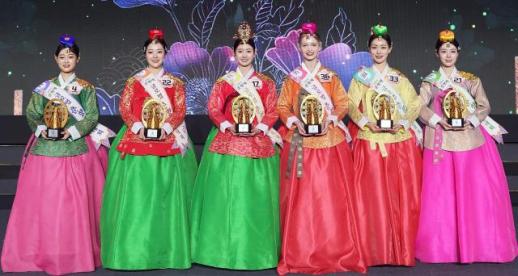 Ukrainian Student Wins Chunhyang Pageant Title, Stirring Debate in South Korea A Ukrainian international student named Lina was selected as “Chunhyang Mi” at the 96th Chunhyang Pageant held at Gwanghallu Garden in Namwon, North Jeolla Province. The news quickly drew mixed reactions, from “Chunhyang has gone global” to discomfort such as, “Chunhyang is a foreigner?” The moment may seem easy to brush off, but it points to a larger question. Chunhyang is not simply a label for choosing someone attractive. She is a figure from a Joseon-era story, defined by standards of her own: a person who protects love across social barriers and does not yield to power. Put simply, she is someone who keeps a promise to the end. For that reason, Chunhyang has long been understood as a distinctly Korean symbol. Now a foreigner has stepped into that role. The scene feels unfamiliar largely because it does not match the “face of Chunhyang” many people have carried in their minds. Looking closer, the question shifts: Does Chunhyang’s appearance matter most, or does her meaning? In today’s South Korea, the issue is no longer abstract. The number of foreign residents has surpassed 2.7 million, and seeing foreigners on the street is no longer unusual. People live side by side at schools, workplaces and cafes. South Korea is no longer a country where only Koreans live. In that setting, tradition is bound to change. The issue is not change itself, but how it happens. Opening everything without limits can be risky, while shutting it out completely is unrealistic. The core question is what to change and what to preserve. This foreign winner is less a sign that tradition has collapsed than a sign that tradition is beginning to meet new interpretations. Even with the same Chunhyang, perspectives can differ. Koreans may think of “chastity” and “loyalty,” while foreigners may see “the courage to keep a promise” or “someone who stands by her own choice.” It is difficult to call that interpretation wrong. Tradition is not fixed once and for all; it is read differently over time. Still, discomfort is understandable because Chunhyang is not just a character but a symbol built from history and culture. Some people worry: “Are we changing this too easily?” A possible answer is simple: open the surface, protect the core. Allowing foreign participation reflects the times. But the meaning carried by the name Chunhyang should not be diluted. The stage can become more global, but the standards should not be treated lightly. Another challenge follows. Many people say the key is to see “how well someone understands the Chunhyang spirit.” Yet it is not easy for a foreigner to grasp the deeper meaning of a Korean classic in a short time. That suggests a shift in emphasis: not who memorized better, but who interpreted better. People can respond differently to the same Chunhyang, and recognizing that difference may be more natural today. Tradition tends to last longer when it allows varied readings rather than forcing a single answer. There is also a risk. As foreign participation grows and the pageant becomes a global event, it can turn into spectacle. Performances may become flashier and production more provocative, raising the possibility that tradition will be consumed lightly. Completely avoiding that may be impossible, because globalization and commercial appeal often move together. The task is not to block the trend but to manage it. One approach would be to globalize staging and promotion while making evaluation standards and meaning more rigorous — widening the outside while clarifying the center. Ultimately, the episode underscores one point: Chunhyang has not changed as much as South Korea has. That change is likely to accelerate. Foreign inflows may continue to rise, and cultures may mix more. Scenes where tradition and reality collide may appear more often. What matters, the column argues, is not repeatedly judging “right or wrong,” but resetting standards each time — asking how far society can open and what it must protect to the end. This “Ukrainian Chunhyang,” it concludes, is not a simple event but a sign that South Korean society is moving into a new stage — and that the shift has already begun. One question remains: How much change are we prepared for, and what will we preserve no matter what? * This article has been translated by AI. 2026-05-03 14:20:16
 -
 Korea Market Cap Tops 6,000 Trillion Won as 405 Firms Join 1 Trillion Won Club South Korean stocks have repeatedly set record highs, pushing total market capitalization above 6,000 trillion won and lifting the number of listed companies worth at least 1 trillion won past 400. According to the Korea Exchange on Saturday, total market capitalization across the KOSPI, KOSDAQ and KONEX stood at 6,167 trillion won as of April 29. The number of listed firms with market caps of 1 trillion won or more, including preferred shares, totaled 405: 267 on the KOSPI, 137 on the KOSDAQ and one on KONEX. As of the same date, 79 companies were valued at 10 trillion won or more. The combined market value of listed companies in South Korea’s 10 largest business groups accounted for more than half of the total. As of April 30, their combined market cap was 3,832.6471 trillion won, up 1,517.4573 trillion won from the end of last year, when it stood at 2,315.1898 trillion won. The gains came as the market rally continued, including the KOSPI’s first intraday move above 6,700, the report said. SK Group posted the biggest increase. As of April 30, the combined market cap of its listed companies was 1,139.7587 trillion won, up 89.6% from 601.0122 trillion won at the end of last year. Samsung Group’s combined market cap rose 68%, to 1,684.1052 trillion won in April from 1,002.4979 trillion won at the end of last year. Hanwha Group’s total climbed about 50% to 173.7212 trillion won from 115.6744 trillion won, ranking third by growth rate. Other increases were reported for POSCO Group (46.5%), Hyundai Motor Group (46.0%), HD Hyundai Group (44.6%), Shinsegae Group (42.9%), Lotte Group (42.3%), GS Group (39.3%) and LG Group (26.9%). Kim Jong-min, an analyst at Samsung Securities, said strong earnings led by U.S. big tech and South Korean semiconductor companies have offset macroeconomic headwinds. He added that signs of improving global liquidity and a Korea-specific “money move” have helped support the market’s downside. Lee Kyung-min, an analyst at Daishin Securities, said the KOSPI’s uptrend is “entirely based on earnings,” and he expects the rise to continue until forward earnings per share begin to turn down. Still, Lee said that as first-quarter earnings season highlights gaps between expectations and results, the market is likely to see a short-term cooling period and profit-taking. He said that even if the broader uptrend remains intact, investors should be prepared for near-term swings as sentiment retreats. 2026-05-03 14:19:03
 -
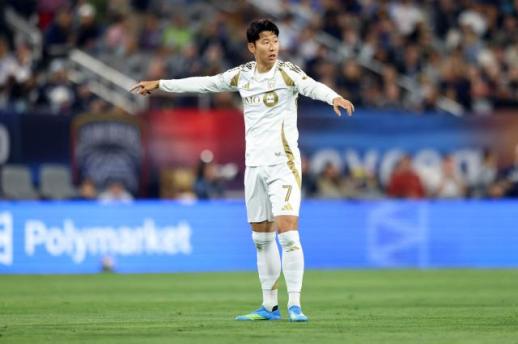 Son Heung-min records 15th assist of season as LAFC draws San Diego FC 2-2 Son Heung-min recorded his 15th assist of the season for Los Angeles FC in Major League Soccer. LAFC drew San Diego FC 2-2 on the road in a 2026 MLS Round 11 match at Snapdragon Stadium in San Diego, California, on May 3 (Korean time). Son came on in the 60th minute with LAFC down 2-0 and set up Denis Bouanga’s goal in the 82nd minute to start the comeback. It was Son’s eighth assist in league play, moving him into sole possession of the MLS assist lead. Across all official competitions, including the CONCACAF Champions Cup, it was his 15th assist of the season. Son still has not scored his first MLS goal. He has two goals in the Champions Cup but has yet to find the net in league play. LAFC equalized in the 90th minute of stoppage time. On a corner kick, Mathieu Choiniere headed the ball down and Ryan Hollingshead finished from close range to make it 2-2. With the draw, LAFC stayed third in the Western Conference at 6-3-2 with 21 points. * This article has been translated by AI. 2026-05-03 14:18:15
 -
 LPG Carrier Bound for India Transits Strait of Hormuz for First Time Since U.S. Blockade About 20 days after the United States began enforcing a blockade in the Strait of Hormuz, an LPG carrier bound for India has transited the waterway for the first time. Bloomberg News and Indian media outlet The Indian Express reported on the 3rd (local time) that MarineTraffic vessel-tracking data showed the Marshall Islands-flagged very large gas carrier Sarv Shakti exited the Strait of Hormuz the previous day and entered the Gulf of Oman. The ship was carrying about 45,000 tons of LPG. Its automatic identification system (AIS) listed it as India-bound with Indian crew members aboard, and the cargo owner was reported to be state-run Indian Oil Corp. (IOC). It was the first India-related energy carrier to pass through the strait since the United States moved to impose a maritime blockade on April 13 after talks with Iran collapsed. The Sarv Shakti was reported to have departed the UAE’s Gantoot port on March 3 and transited the strait along the Iran-side route. It was not confirmed whether the vessel paid Iran a “toll” during the passage. On May 1, the U.S. Treasury Department’s Office of Foreign Assets Control warned the global shipping industry that paying Iran for safe passage or asking it to refrain from attacks could expose parties to sanctions. The LPG shipment is equivalent to about half a day of India’s consumption under prewar benchmarks. The Indian Express said expectations are growing that the transit could slightly ease energy supply strains in India. India typically depends on the Strait of Hormuz for about 40% of its crude oil imports, more than 50% of its liquefied natural gas (LNG), and about 90% of its LPG. The war and blockade have severely disrupted supplies. In response, India has moved to address shortages, including raising domestic LPG output to about 54,000 tons a day. Separately, after the war began and before the U.S. blockade took effect, eight Indian-flagged LPG carriers and one oil tanker transited the strait, a process reported to have been arranged through talks between India and Iran. Fourteen Indian vessels remain stuck in the Persian Gulf, and foreign ships bound for India are also facing operational disruptions.* This article has been translated by AI. 2026-05-03 14:09:53
 -
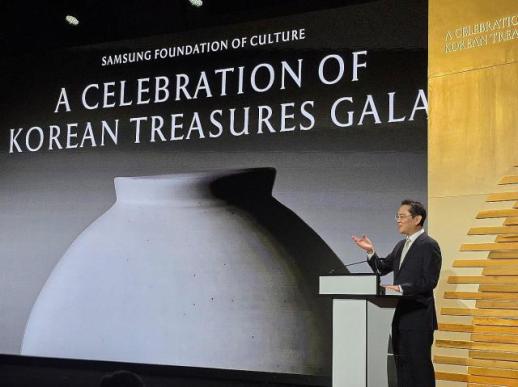 Samsung Family Completes $12 Trillion Won Inheritance Tax Payment, Expands Public Giving Samsung has finished paying 12 trillion won (about $12 trillion won) in inheritance taxes tied to the estate of late former chairman Lee Kun-hee, completing the payments over five years. The company and the bereaved family have also pursued public initiatives including support for infectious-disease response, pediatric cancer care and major art donations. According to the business community on Saturday, Lee Jae-yong, Samsung Electronics chairman; Hong Ra-hee, honorary director of the Leeum Museum of Art; Lee Boo-jin, president of Hotel Shilla; and Lee Seo-hyun, president of Samsung C&T, reported the inheritance tax to the National Tax Service in April 2021. They used an installment-payment program to pay the tax in six installments over five years. The 12 trillion won levy, assessed on the full estate including stakes in Samsung Electronics and other affiliates as well as real estate, is the largest inheritance tax bill since South Korea’s founding. It is about 50% more than the country’s total inheritance-tax revenue in 2024, which was 8.2 trillion won, and is described as rare globally for a single taxpayer case. When filing the tax report, the family said, “Paying taxes is a natural duty of citizens,” and pledged to follow the process faithfully. Separate from the tax payments, Samsung’s medical support projects are moving ahead. In 2021, Samsung donated 700 billion won to the National Medical Center to expand infectious-disease response infrastructure. Of that, 500 billion won was allocated to build the Central Infectious Disease Hospital, described as South Korea’s first specialized infectious-disease hospital. It is expected to open in 2030 and is to serve as a national hub for treatment of new and high-risk infectious diseases, training and clinical research. A 300 billion won fund donated to Seoul National University Hospital, reflecting Lee Kun-hee’s interest in child care and welfare, is being used for children with cancer and rare diseases. Of the donation, 150 billion won was used for pediatric cancer diagnosis and treatment, 60 billion won for rare-disease treatment and 90 billion won for research infrastructure. More than 23,000 artworks donated to the cultural sector expanded public access to art, the report said. Traditional works including 40 national treasures and 127 treasures were sent to the National Museum of Korea, while works by modern and contemporary artists such as Kim Whanki and Park Sookeun went to the National Museum of Modern and Contemporary Art. At the time, the art community estimated the value of the donated works could reach up to 10 trillion won, calling it an unprecedented collection in both cultural and artistic terms. From 2021 to 2024, the National Museum of Korea, the National Museum of Modern and Contemporary Art and others held 35 traveling exhibitions of the “Lee Kun-hee Collection,” drawing a cumulative 3.5 million visitors, the highest attendance recorded for an art exhibition series in South Korea. Samsung has also used global touring exhibitions as a form of private cultural outreach. The first overseas stop, held at the Smithsonian’s National Museum of Asian Art in Washington in November last year, concluded successfully, the report said. A second exhibition is underway at the Art Institute of Chicago, and another is scheduled to open at the British Museum in October. At a gala dinner in Washington in January, Lee Jae-yong said, “Even amid hardships such as the Korean War, founder Lee Byung-chul and former chairman Lee Kun-hee had a firm will to preserve Korea’s cultural heritage.” He added, “I believe this exhibition will help bring the people of the United States and Korea closer together.” * This article has been translated by AI. 2026-05-03 14:03:18
 -
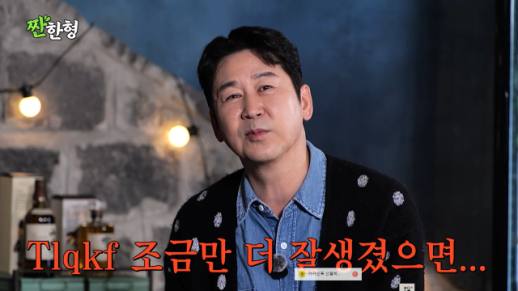 Shin Dong-yeop YouTube Talk Show Controversy Highlights Platform Accountability Debate Controversy is again spreading around comedian Shin Dong-yeop’s YouTube talk show, “Jjanhanhyeong.” A portion of a teaser that drew allegations of sexual harassment has been deleted, but public backlash has not quickly subsided. Critics say removing only the disputed clip does not address the underlying problem. The program has repeatedly faced criticism over heavy drinking scenes, provocative remarks and jokes about people’s bodies. The latest dispute is widely seen not as a one-off mistake but as the result of a pattern built into the format. At the center of the debate is how YouTube has changed. Channels with millions of subscribers no longer fit the category of purely personal creations. Their influence now rivals that of terrestrial broadcasters. And because the platform naturally draws in teenagers, its social impact can be even broader. Yet the framework for regulation and accountability still treats such content as “personal media.” That gap is a key reason similar controversies keep recurring. Even so, regulating YouTubers the same way as public broadcasters is not realistic. YouTubers do not receive state-assigned frequencies or public funding. They are private actors competing in the market. Applying public-broadcast-style rules simply because a channel is influential can upset the balance between rights and obligations. What is needed is not identical regulation, but responsibility proportional to influence. The problem is that the current system does not properly design that responsibility. In the YouTube ecosystem, revenue is driven by views and exposure. The more sensational the content, the faster it spreads — and the more money it can generate. In that structure, appeals for creators to show restraint have clear limits. Telling producers to “stay within the lines” while algorithms reward provocation does not match reality. A more workable approach is to redesign incentives rather than rely on blunt regulation. First, channels with a certain level of influence should face minimum accountability standards. That should not mean pre-screening or censorship, but basic measures such as age ratings, warnings for risky content and obligations to issue corrections after the fact. The aim is to protect choice without undermining free expression. Second, any standards should be based not on subscriber counts alone but on actual reach. On YouTube, algorithm-driven exposure can matter more than subscriptions. Even a small channel can reach millions with a single Shorts video. Rules built only around channel size fail to reflect that reality. New benchmarks should consider exposure levels, youth reach and the nature of the content. Third, the platform’s role should be strengthened. Global platforms such as YouTube have limited incentives to tighten controls on their own. A “co-regulation” model combining government, platforms and the market is presented as a practical alternative. Measures such as brand-safety standards that steer advertisers away from sensitive content, limits on exposure for repeatedly controversial channels and age-based filtering are already used in global markets. The goal is not to block speech, but to prevent risky content from being amplified excessively by distribution systems. Fourth, creators also need to adapt — not as a moral lecture, but as a question of sustainable strategy. Content that depends on shock value may work in the short term, but repeated reliance can erode trust and damage brand value. As influence grows, content becomes more than personal expression and carries broader social impact. Creators who fail to adjust may ultimately be rejected by audiences. YouTube has already become a central medium in society, but the ways responsibility and regulation are handled remain stuck in older frameworks. The debate cannot be reduced to a simple choice between autonomy and regulation. The task is to build a more precise system that respects free expression while ensuring accountability matches influence. The “Jjanhanhyeong” controversy is not only about one program. It raises a structural question for the YouTube era: In a time when the key issue is not who is speaking but how many people are affected, what standards of responsibility should apply? The answer, the article argues, lies less in regulation than in design.* This article has been translated by AI. 2026-05-03 14:00:20
 -
 China-Taiwan Diplomatic Rivalry Intensifies in Africa and South America China and Taiwan are stepping up diplomatic competition in Africa and South America, vying for the last remaining Taiwan allies in each region. On May 2 (local time), Taiwan President Lai Ching-te arrived in Eswatini, according to the BBC and other outlets. The small monarchy in southeastern Africa, formerly known as Swaziland, gained independence from Britain in 1968. Eswatini has been Taiwan’s only diplomatic ally in Africa since Burkina Faso cut ties with Taiwan and established relations with China in 2018. The relationship is close: Prince Bulebenkosi Dlamini, a son of King Mswati III, completed undergraduate and master’s studies at Shih Chien University in Taiwan. Lai’s trip had originally been planned for last month to mark the king’s 40th anniversary on the throne and his 58th birthday. Taiwan’s presidential office said the visit was canceled then after Seychelles, Mauritius and Madagascar denied overflight clearance to Lai’s delegation. Bloomberg reported that after the overflight denials, Taiwan urgently asked Germany and the Czech Republic to allow a stopover, but was turned down. Eswatini rolled out a red carpet on the runway and Prime Minister Russell Mmiso Dlamini greeted Lai. In a meeting with the king, Lai said, “Taiwan is a sovereign country and belongs to the world.” Chinese authorities criticized the visit as “despicable behavior like a rat,” the report said. China has also recently introduced tariff exemptions for all African countries except Eswatini. Taiwan is pursuing an oil storage facility and an industrial park project in Eswatini. Taiwan Deputy Foreign Minister Chen Ming-chi previously said Taiwan would show “how Taiwan will support Eswatini’s economy” during Lai’s visit. A similar contest is playing out over Paraguay, Taiwan’s only diplomatic ally in South America. The New York Times reported May 2 that the relationship dates to 1957, when Chiang Kai-shek, Taiwan’s first president, and then-Paraguayan President Alfredo Stroessner aligned under an anti-communist banner. The paper said Paraguay is among the most strongly anti-China countries in Latin America, drawing praise from U.S. President Donald Trump’s administration. Secretary of State Marco Rubio has called conservative Paraguayan President Santiago Pena “a strong ally of the United States.” The report said Taiwan has backed Paraguay with a range of support, including a presidential aircraft, helicopters, electric buses and trips to Taipei for Paraguayan politicians. Taiwan also helped fund construction of Paraguay’s National Congress building. As China pressed Paraguay to “quickly make the right decision,” Taiwan increased support, providing a $200 million loan for housing for low-income residents and a $20 million grant for a hospital. Taiwan currently has 12 diplomatic allies, including the Vatican and Haiti. 2026-05-03 13:46:23
 -
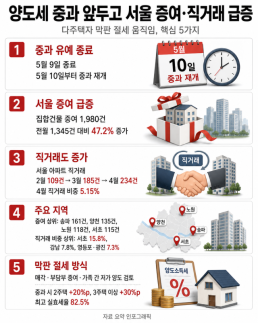 Seoul Gifts and Direct Home Sales Rise Ahead of End to Capital Gains Tax Break for Multi-Homeowners As a temporary suspension of heavier capital gains taxes for multi-homeowners nears its end, both gift transfers and direct, broker-free apartment deals are rising in Seoul. With higher tax rates set to return, some owners are moving beyond straightforward sales, turning to options such as debt-assumption gifts and discounted transfers within families to cut tax bills. According to the Supreme Court’s registry information system, Seoul recorded 1,980 gift-transfer registrations for “collective buildings” last month, up 47.2% from 1,345 the previous month. It was the highest monthly total since December 2022, when there were 2,384. The category includes apartments, multi-family housing and officetels. Nationwide, gift-transfer registrations totaled 5,560, the highest since December 2022, when 9,342 were recorded ahead of a change in the tax base for gift acquisition taxes. The latest increase is widely seen as an effort to reduce taxes before the end of the capital gains tax break for multi-homeowners. With sales of homes with tenants allowed through May 9, more owners appear to be transferring homes to children through debt-assumption gifts. By district in Seoul, Songpa led with 161 cases, followed by Yangcheon with 135, Nowon with 118, Seocho with 115, Yongsan with 106, and Gangnam and Dongjak with 104 each. Yongsan nearly doubled from 54 the previous month, up 95.3%. The rise in both high-priced areas such as Gangnam and Yongsan and in districts such as Yangcheon and Nowon suggests tax-driven demand is spreading across the city. Direct apartment transactions in Seoul have also increased, according to the Ministry of Land, Infrastructure and Transport’s real transaction disclosure system. Such deals rose from 109 in February to 185 in March and 234 in April. Direct transactions accounted for 5.15% of 4,544 reported apartment deals in April. These transactions bypass licensed brokers and often involve family members or other related parties. In April, Seocho had the highest share of direct transactions at 15.8%. Gangnam posted 7.8%, while Yeongdeungpo and Gwangjin each recorded 7.3%. Market watchers say some of the activity reflects demand to transfer homes to relatives at below-market prices before heavier capital gains taxes resume. Under the inheritance and gift tax law, even transactions between related parties are treated as normal sales — and not subject to gift tax — if the reported price is within the smaller of 30% below the most recent three-month transaction price or 300 million won. Some multi-homeowners appear to be using direct transactions to reduce holdings before the higher tax rates take effect. The suspension of heavier capital gains taxes for multi-homeowners ends May 9. Starting May 10, multi-homeowners selling homes in regulated areas will face surcharges on top of the basic tax rate: 20 percentage points for two-home owners and 30 percentage points for those with three or more. Including local income tax, the effective top rate can rise to 82.5%. The government has announced supplemental steps to reduce confusion as the break ends. If a land-transaction permit is filed by May 9 and the sale process — including final payment and registration — is completed within a set period, sellers can avoid the heavier tax. For the three Gangnam districts and Yongsan, the process must be completed by Sept. 9; for Seoul’s other 21 districts and 12 areas in Gyeonggi Province, the deadline is Nov. 9. An exception also applies to homes with tenants. If a lease existed as of Feb. 12 and a land-transaction permit is filed by May 9, the requirement for the buyer to live in the home is deferred until the lease ends, but only when the buyer is a first-time homeowner. An industry official said “last-minute tax-saving moves by multi-homeowners are likely to continue” and that when a simple sale is difficult, more owners may consider gifts, debt-assumption gifts or direct transactions with related parties. The official also warned that discounted transfers and debt-assumption gifts could later face scrutiny by tax authorities, making it important to carefully assess pricing and the requirements for taking over debt. 2026-05-03 13:45:17
 -
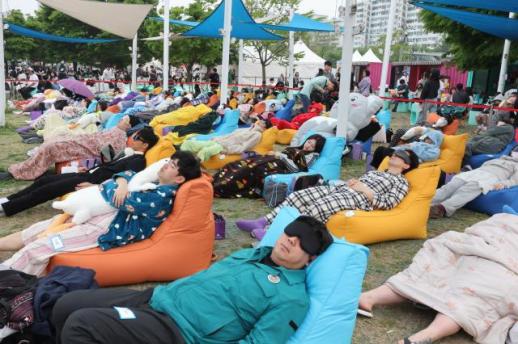 Even sound sleep becomes a competition — and fashion show — in Korea SEOUL, May 03 (AJP) -The ability to fall sound asleep — and stay that way no matter what — has quietly become a modern superpower in a world vibrating nonstop with alarms, scrolling feeds, office chats and late-night anxiety. So when a giant banner reading “Don’t wake me unless you’re a prince” fluttered above rows of sleeping bags along the Han River on Saturday afternoon, few in Seoul found it strange. At exactly 3 p.m., 170 contestants gathered at Mulbit Plaza in Yeouido Hangang Park for the third annual “2026 Han River Napping Championship,” a competition where the goal was neither speed nor strength, but the rarest luxury of all: deep, uninterrupted sleep. Some arrived in pajamas. Others came armed with plush toys, neck pillows and blankets. One contestant wore a full Winnie the Pooh costume. Another drifted toward the starting line dressed as Snow White. By the time the opening announcements ended, the riverside looked less like a competition venue than a giant outdoor bedroom assembled by an exhausted civilization. Hosted by the Seoul Metropolitan Government, the championship has grown into one of the city’s quirkiest and most unexpectedly relatable events since debuting in 2024, tapping into a national epidemic of fatigue in one of the world’s most sleep-deprived societies. This year’s applicants included a nurse surviving on fragmented sleep after high-stress shifts, a man in his 30s worn down from helping his insomnia-stricken wife sleep each night, and an engaged couple whose wedding preparations had apparently become a form of endurance training. But sleeping peacefully beside the Han River was only the beginning. Contestants were judged on “sleep concentration” — the ability to remain in deep sleep despite increasingly annoying disruptions engineered by organizers. Officials crept among the sleepers armed with feathers, delicately tickling exposed hands and faces. Mosquito buzzing sounds echoed across the venue like a humid summer nightmare. Hosts wandered through the rows deliberately talking loudly, attempting to provoke reactions from competitors pretending to be asleep. Some twitched. Others rolled over defensively. A few appeared so deeply unconscious they seemed to transcend earthly concerns altogether. Heart-rate monitors tracked sleep quality and deep-sleep duration in real time, turning naps into biometric competition. Before the event began, contestants stretched through pre-sleep yoga sessions aimed at releasing tension from overworked shoulders and stiff office backs. Nearby, spectators quietly watched the bizarre serenity unfold, occasionally applauding particularly committed sleepers. The championship also doubled as an impromptu fashion show for the chronically tired. A “Best Dresser” contest rewarded the most creative pajama styling, with citizens voting for favorites among contestants dressed in cartoon onesies, fairy-tale outfits and elaborate sleepwear ensembles that looked more prepared for a costume parade than a nap. Yet beneath the humor and absurdity, the event carried an unmistakably modern undertone. In a hyperconnected country where people routinely sacrifice rest to work, commute, study and endlessly remain online, the act of truly switching off — phone silenced, eyes closed, mind blank — has become both rebellion and aspiration. For a few hours beside the Han River, at least, exhaustion itself became a shared performance. And perhaps the only competition where losing consciousness was the ultimate sign of victory. 2026-05-03 13:23:22