
Journalist

Kim yoon seop
angks678@ajunews.com
-
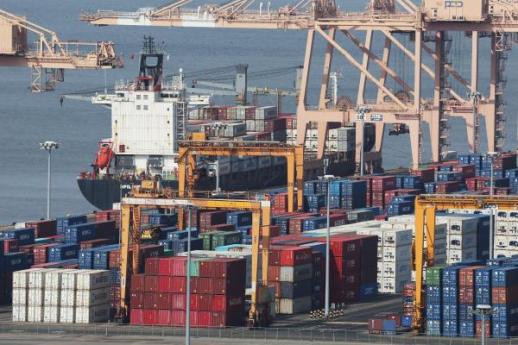 Top 5 South Korean Banks’ Corporate Loans Jump Over 5 Trillion Won for Second Month Corporate loan balances at major commercial banks rose by more than 6 trillion won in April, marking a second straight month of increases exceeding 5 trillion won. The rise suggests companies are leaning more on bank borrowing as higher government bond yields spill over into the corporate bond market. As of the end of last month, corporate loans at the country’s five largest banks — KB, Shinhan, Hana, Woori and NH NongHyup — totaled 866.0646 trillion won, up 6.2909 trillion won from a month earlier, according to the banking industry on Monday. The increase followed a 5.4449 trillion won gain in March. Market watchers attributed the jump to a sharp cooling in corporate bond issuance after the war in the Middle East. With rates rising and funding costs climbing, companies have increasingly turned to bank loans, they said. Data from the Korea Financial Investment Association showed domestic companies repaid 13.1125 trillion won in corporate bonds in April while issuing 10.6248 trillion won, resulting in net repayments of 2.4877 trillion won. With market volatility rising and interest rates climbing steeply, more firms are seeking funding through loans, analysts said. Loan demand is expected to keep growing. In the Bank of Korea’s survey on financial institutions’ lending practices released on April 21, both large companies (11→14) and small and midsize firms (22→28) were projected to increase loan demand to secure liquidity amid greater domestic and external uncertainty. Concerns are rising that the high-rate environment could persist. Bank of Korea Deputy Gov. Yoo Sang-dae said at a recent briefing that “prices are rising more than expected, so we could move into a tightening cycle,” signaling the possibility of rate hikes. Small and midsize firms and so-called marginal companies are particularly vulnerable because they rely more on bank loans and have weaker credit. If funding costs such as interest rates surge, the risk of corporate distress is likely to grow. Higher oil prices and increased costs for imported raw materials tied to the Middle East situation are already adding to the burden, the report said. The strain is also showing up in indicators. The average corporate delinquency rate at the five banks in the first quarter rose to 0.46% from 0.37% the previous quarter, up 0.09 percentage points. Delinquencies among large companies increased to 0.13% from 0.03%, while the rate for small and midsize firms rose to 0.57% from 0.49%. A financial industry official said that if rates keep rising as lending expands, companies’ funding burdens could grow and credit problems could spread. The official warned that corporate distress could weigh on the broader economy and called for preemptive steps to respond. * This article has been translated by AI. 2026-05-05 15:04:32
 -
 KB Financial Sees Housing Market Stabilizing; Tax Policy a Key Variable Tighter household lending, expanded supply plans, designation of regulated zones and heavier tax burdens are beginning to show effects, and could cool this year’s rise in home prices, KB Financial Group’s research arm said. It cited tax issues — including heavier capital gains taxes on multi-homeowners and higher property holding taxes — as the biggest variable for the housing market this year. The KB Financial Group Management Research Institute released its “2026 KB Real Estate Report” on May 5. The report reflects survey results and field feedback from about 700 people, including real estate experts, licensed brokers and private bankers, based on two rounds of polling conducted in January and April. The report said last year’s sharp price gains centered on Seoul and parts of the greater capital area have begun to ease this year. As government measures are more fully reflected in the market, listings are increasing and the number of areas seeing price declines could expand, it said. As of April 10, apartment listings in Seoul were up 33% from the end of last year, more than triple the national average increase of 9%, the report said. In Seoul’s Gangnam District, apartment sale prices have fallen for six straight weeks since March. Apartment prices in Gwacheon, Gyeonggi Province — which posted large gains last year — have also turned down. In Seoul’s Songpa, Seongdong and Gwangjin districts, price changes from January through April slowed sharply to 4%, 6% and 4.1%, respectively. Market views are also shifting quickly. In the January survey, 81% of experts and 76% of brokers expected home prices to rise. In April, experts still leaned toward gains at 56%, but brokers were more likely to forecast declines, at 54%, showing a widening gap that the institute said reflects stronger regulatory effects in the field. The report pointed to government policy as the key driver this year, saying buyer sentiment and price trends could swing depending on supply measures in the capital region, financial regulations and tax changes. Asked which policy would most affect the housing market in the second half, 27% of experts and 33% of brokers ranked the implementation of heavier capital gains taxes on multi-homeowners as the top factor, the institute said. For would-be buyers, the report said interest rates are likely to be the critical variable, noting that mortgage rates have continued to rise even as the benchmark rate has been held steady. As of last month, five-year fixed mortgage rates at the five major banks — KB Kookmin, Shinhan, Hana, Woori and NH Nonghyup — ranged from 4.2% to 6.8% annually, with the upper end nearing the 7% range. Kang Min-seok, a researcher at the KB Management Research Institute, said regional polarization remains while risks such as supply shortages and rising construction costs still linger. “Government policy will be the major variable that determines the market’s direction going forward,” he said. 2026-05-05 11:06:15
 -
 NH NongHyup Bank Waives ATM Withdrawal and Transfer Fees Nationwide Through June NH NongHyup Bank said April 30 it will waive fees on automated teller machine transactions nationwide through June 30 to ease customers’ burden amid elevated oil prices. The waiver applies to ATMs operated by NH NongHyup Bank and local agricultural and livestock cooperatives across the country. Customers will not be charged fees for cash withdrawals and interbank transfers made through NH NongHyup Bank and cooperative accounts. A bank official said customers are facing higher costs due to domestic and external factors, including instability in the Middle East, and the start of the peak farming season. The official added the bank will continue to strengthen practical support for financially vulnerable people, as well as working families and small business owners, to sustain “win-win” finance. Separately, the bank said it is carrying out other shared-growth finance efforts, including free enrollment support for “voice phishing compensation insurance” for customers age 60 and older, and a cashback service to help working families and small business owners reduce fuel expenses.* This article has been translated by AI. 2026-04-30 17:19:36
 -
 South Korea’s Top 5 Financial Groups to Invest 1 Trillion Won in Venture, Startup Support KB Financial Group, Shinhan Financial Group, Hana Financial Group, Woori Financial Group and NH NongHyup Financial Group will invest 1 trillion won to support venture companies and startups. The Financial Services Commission said the government and the five financial groups (KB, Shinhan, Hana, Woori and NH) signed a business agreement on Wednesday to boost venture investment and 추진 the “Startup for All Project.” Attendees included Minister of SMEs and Startups Han Seong-sook, Financial Services Commission Chairman Lee Eok-won, the chairmen of the five financial groups, and the heads of six related organizations including Korea Venture Investment Corp. and the Korea Technology Finance Corp. The agreement is aimed at linking the capital and capabilities of the five financial groups with the venture and startup ecosystem to accelerate a shift toward “productive finance” and expand private-sector-led venture investment. Under the plan, the five groups will create an 800 billion won private venture fund-of-funds by 2029, starting with 400 billion won this year. Hana Financial Group will contribute 100 billion won a year beginning this year, for a total of 400 billion won. Hana, KB, Shinhan and Woori will also create a 100 billion won LP (limited partner) growth fund, while Hana and NH will participate in a 20 billion won contribution to a regional growth fund. With the combined fund-of-funds totaling 920 billion won, and typical leverage from follow-on sub-funds running about seven to 10 times, officials said total assets under management are expected to expand to several trillion won. The five groups also plan to use their overseas networks to help companies backed by the government’s fund-of-funds grow into unicorns — firms valued at 1 trillion won or more — by linking support for investor relations, follow-on investment, initial public offerings and overseas expansion. The groups will jointly participate in the Ministry of SMEs and Startups’ “Startup for All Project.” The five groups will contribute 20 billion won, and the Korea Technology Finance Corp. will use the funds to launch a 150 billion won agreement-based guarantee program. Part of the contribution will be used to reduce guarantee fees for prospective entrepreneurs, fully waiving the fees and raising the guarantee coverage ratio to about 100% from 85%. “Productive finance means ensuring entrepreneurs and venture companies can secure funding when they need it,” Lee said, adding he hopes the agreement will further energize the startup and venture ecosystem. Han said the agreement was not merely a declaration of cooperation but “a starting point” for connecting the expertise and resources of the five financial groups with the startup and venture ecosystem to meet the challenges of the times. * This article has been translated by AI. 2026-04-30 17:05:41
 -
 Shinhan Financial to Launch $100 Million Venture Fund, Targeting $1 Billion in Startup Investment Shinhan Financial Group said it will launch a private venture fund-of-funds and provide investment support totaling 1 trillion won for youth-led and regional startups. Shinhan said it signed a memorandum of understanding on Thursday with the Financial Services Commission and the Ministry of SMEs and Startups to boost venture investment and will launch a 100 billion won fund-of-funds. The fund is the first project to be carried out under a public-private cooperation framework built with the FSC and the SMEs ministry to expand venture investment. Shinhan said the aim is to help close early-stage funding gaps for youth and regional startups and increase the supply of private risk capital. The Shinhan Venture Innovation Fund of Funds, which is targeting formation in June, will be managed by Shinhan Venture Investment. Key affiliates including Shinhan Bank, Shinhan Card, Shinhan Investment Corp. and Shinhan Capital will participate as investors. Shinhan said it will use 100 billion won of its own money as seed capital to draw private participation and expects leverage from forming sub-funds to expand total assets under management to about 1 trillion won. Investment targets include promising startups and growth-stage companies in advanced industries such as artificial intelligence and semiconductors. Shinhan said it will also invest in early-stage youth startups by participating in Korea Venture Investment Corp.'s LP Growth Fund program. Jin Ok-dong, chairman of Shinhan Financial Group, said the fund is "a starting point for the entire group to help remove the early funding hurdle, the biggest barrier for young founders." He said Shinhan will be "a reliable partner at every stage, from the start to global growth."* This article has been translated by AI. 2026-04-30 16:52:23
 -
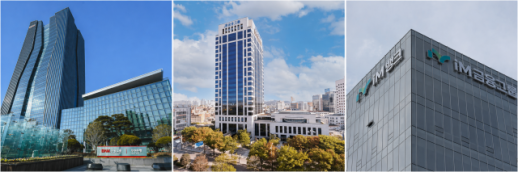 BNK and JB Post Solid Q1 Profit Gains as iM Stalls; Nonbank Units Lift Results Results diverged among South Korea’s three major regional financial holding companies in the first quarter. BNK Financial Group and JB Financial Group posted steady net profit growth, while iM Financial Group’s net profit was essentially flat despite expansion in scale. According to the financial sector on Wednesday, combined first-quarter net profit for BNK, JB and iM totaled 532 billion won, up 9.9% from 483.7 billion won a year earlier. By group, BNK reported 211.4 billion won in net profit for the quarter, a 26.9% increase from a year earlier. JB posted 166.1 billion won, up 2.1%, and iM recorded 154.5 billion won, up 0.1%. Nonbank businesses drove the three groups’ results. Even as earnings at their core banking units lagged, a larger share of profit came from nonbank units, led by capital businesses, supporting overall growth. At BNK, net profit from the banking segment rose 20.6 billion won from a year earlier to 175.6 billion won. BNK Busan Bank increased profit by 22.5 billion won, while BNK Kyongnam Bank fell 1.9 billion won. The nonbank segment posted 59.6 billion won in net profit, up 25.3 billion won, with all major affiliates contributing, including capital (10.7 billion won), investment securities (3.6 billion won), savings bank (1.0 billion won) and asset management (7.5 billion won). At JB, nonbank affiliates offset weaker bank earnings. Jeonbuk Bank and Gwangju Bank posted net profit of 39.9 billion won and 61.1 billion won, down 22.5% and 8.7%, respectively, from a year earlier. JB Woori Capital reported 72.7 billion won in net profit, up 24.3%, leading the group’s performance. Cambodia’s Phnom Penh Commercial Bank (PPCBank) posted 12.4 billion won, up 21%. iM also leaned on nonbank units. iM Bank’s first-quarter net profit fell 3.6% from a year earlier to 120.6 billion won. Nonbank affiliates iM Life and iM Capital posted net profit of 16.5 billion won (up 63.4%) and 19.3 billion won (up 31.3%), respectively. The share of group profit from nonbank affiliates rose to 34% from 30.3% in the first quarter of last year. The three groups also outlined shareholder return policies alongside their first-quarter earnings releases. BNK said its board approved a quarterly cash dividend of 150 won per share, up 25% from last year. It also decided to buy back and cancel 60 billion won worth of treasury shares in the first half of the year. JB said its board on April 23 approved a quarterly dividend of 311 won per share, about double the 160 won paid in the first quarter of last year. It also set a goal of raising its shareholder return ratio to 50% by the end of this year. iM said it plans to buy back and cancel 150 billion won worth of treasury shares by 2027, after announcing a 40 billion won buyback-and-cancellation plan in February. It also said it aims by 2027 to reach a return on equity of 9%, a common equity tier 1 (CET1) ratio of 12.3% and total shareholder return (TSR) of 40% to strengthen the foundation for shareholder returns.* This article has been translated by AI. 2026-04-30 16:19:32
 -
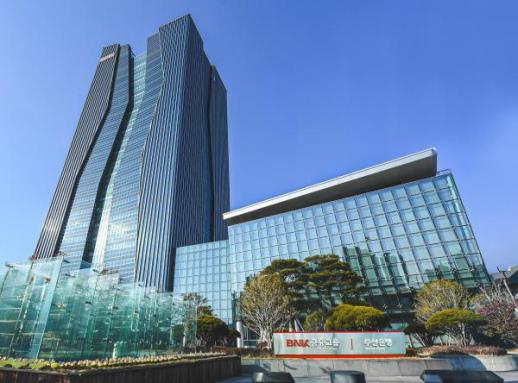 BNK Financial Posts 211.4 Billion Won Q1 Net Profit, Up 26.9% on Year BNK Financial Group said Thursday in an earnings disclosure that its consolidated net profit for the first quarter of 2026 totaled 211.4 billion won. The result was up 26.9%, or 44.8 billion won, from a year earlier. The group said higher selling and administrative expenses and weaker noninterest income were offset by steady net interest income and lower credit-loss provisions. By segment, banking net profit came to 175.6 billion won, up 20.6 billion won from a year earlier. BNK Busan Bank posted a 22.5 billion won increase, while BNK Kyongnam Bank slipped 1.9 billion won. Nonbank units reported net profit of 59.6 billion won, up 25.3 billion won, as results improved across affiliates. BNK Capital rose 10.7 billion won and BNK Asset Management gained 7.5 billion won, the group said. Asset quality indicators weakened. The group’s nonperforming loan ratio was 1.57% and its delinquency rate was 1.42%, up 15 basis points and 28 basis points, respectively, from the previous quarter, which it attributed to an increase in bad loans amid a slowing economy. The group’s common equity Tier 1 ratio stood at 12.30%, up 5 basis points from a year earlier. BNK Financial said its board approved a quarterly cash dividend of 150 won per share, a 25% increase from last year. It also plans to buy back and cancel 60 billion won worth of its own shares in the first half. Park Seong-uk, the group’s chief financial officer, said BNK Financial will work to raise shareholder value by increasing the share of buybacks and cancellations while steadily expanding cash dividends to meet requirements for high-dividend companies under separate taxation of dividend income. * This article has been translated by AI. 2026-04-30 15:43:46
 -
 Hana Bank to Provide Up to 85 Billion Won in Support for HD Construction Equipment Suppliers Hana Bank said April 30 it signed a business agreement with HD Construction Equipment and the Korea Credit Guarantee Fund to support shared growth in the construction equipment industry. The agreement aims to help promising small and midsize companies in the sector grow, while building a public-private cooperation framework to support next-generation technology development and expand exports. Under the deal, Hana Bank and HD Construction Equipment will set up a special contribution fund of up to 5 billion won — 4 billion won from Hana Bank and 1 billion won from HD Construction Equipment — and use it to pursue financial support totaling up to 85 billion won. The partners plan to contribute 1 billion won first and then increase the amount in stages depending on how quickly the fund is used. Support will be offered to partner companies recommended by HD Construction Equipment. Benefits include preferential guarantee coverage from the Korea Credit Guarantee Fund of up to 100%, reduced guarantee fees, and lower financial costs through loan-rate cuts and preferential exchange rates. Lee Ho-seong, president of Hana Bank, said the agreement was designed to provide practical financial benefits to small and midsize construction equipment companies struggling with high oil prices and rising raw material costs. He said the bank will continue expanding support to strengthen the stability and competitiveness of export-oriented small and midsize firms. * This article has been translated by AI. 2026-04-30 13:18:45
 -
 KB Kookmin Bank, SSG.com Launch ‘Ssg KB Bank’ Financial Services in Shopping App KB Kookmin Bank and SSG.com are expanding cooperation by rolling out a “bank in platform” service that lets users access banking within the shopping app. KB Kookmin Bank said on the 30th it launched “Ssg KB Bank,” a comprehensive financial service designed for everyday use. In April last year, the Financial Services Commission designated SSG.com as an innovative financial service, allowing the nonfinancial platform to advertise and broker financial products. With the launch, customers can use KB Kookmin Bank services through SSG.com’s “Bank in Platform” financial section without switching to a separate app. The partners also introduced products tailored to shoppers. The “Ssg Money KB Account” offers an interest rate of up to 4.0% a year on balances up to 2 million won. When registered with SSGPAY, it automatically links as a “Ssg KB Money” payment method. Users can pay without separate top-ups and receive an additional 2% SSG Money accrual benefit. The “Ssg KB Shopping Savings” plan applies preferential rates based on shopping performance, offering rates from 2.0% to 5.0% a year before tax. Separate services were prepared for merchants on the platform. In a “merchant-only financial section,” the bank offers the “KB Boss Parking Account,” a demand deposit product, and a savings product. The parking account applies an interest rate of up to 2.5% a year before tax on balances up to 10 million won, while the savings product offers up to 6.0% a year before tax. Consulting services for small business owners are also provided. A KB Kookmin Bank official said the service was designed so customers can use shopping and financial services conveniently on a single platform, adding that the bank will continue expanding financial services that fit naturally into customers’ daily lives.* This article has been translated by AI. 2026-04-30 09:44:57
 -
 NH NongHyup Bank Issues 4 Trillion Won in Hybrid Capital Securities to Bolster Growth NH NongHyup Bank said it successfully issued hybrid capital securities, or perpetual bonds, despite heightened market volatility tied to the Middle East situation. The bank said April 30 it completed a 4 trillion won issuance. The deal came as uncertainty grew at home and abroad, including geopolitical risks in the Middle East and a sharp rise in interest rates following a surprise in South Korea’s first-quarter gross domestic product. Through investor relations efforts, the bank set the spread at 65 basis points, down 11 basis points from the 76 basis points on last year’s issuance. One basis point equals 0.01 percentage point. Demand was strong. The bank initially sought 3 trillion won, but increased the size to 4 trillion won as institutional orders surged. The final yield was set at 4.33%. The securities are structured as perpetual bonds with a five-year call option, allowing early redemption at a specified time. “Even in a market environment with significant rate volatility, we achieved meaningful issuance results through proactive investor relations and an expanded investor base,” Lee Sang-seon, the bank’s executive vice president for the financial markets division, said. “Based on the strengthened capital, we will enhance our stable growth foundation through preemptive capital ratio management.”* This article has been translated by AI. 2026-04-30 09:04:39