

Journalist

Ahn Seon-young and Seo Hye Seung
asy728@ajunews.com
-
 10 Million Fans: A Comprehensive Guide to Benefits for KBO Baseball Fans Despite the early heat exceeding 30 degrees Celsius, the excitement for professional baseball remains high. After surpassing 10 million spectators in both 2024 and 2025, the league continues to thrive this year, with attendance exceeding 5 million in the fewest games ever played. As more fans flock to the ballparks, interest in team-affiliated credit cards that ease the burden of ticket and food costs is growing. According to Card Gorilla, a credit card platform, Shinhan Bank has introduced partnership cards with the LG Twins and Hanwha Eagles. The 'LG Twins Shinhan Card' offers a 3,000 won discount for home game tickets purchased at the venue or online, available once per day with no limit during the regular season. The 'Hanwha Eagles Shinhan Card' provides a 5,000 won discount on home game tickets up to three times a month, depending on the previous month's spending. Samsung Card's 'Samsung Lions Card' offers a 50% discount on tickets for Samsung Lions home games and a 50% discount at the team store. Fans can also enjoy a 10% discount at food and beverage outlets in Daegu Samsung Lions Park, making it easier to enjoy 'Yafu' (baseball food) at the game. Additionally, the card includes a 5% discount on train fares (KTX and SRT), catering to traveling fans. NH Nonghyup Card's 'NC Dinos Card' provides a 2,000 won discount on one ticket for NC Dinos games, with the same benefit available for one accompanying person, without any spending requirements. The same benefits apply to the debit card. IBK Industrial Bank's 'Cham! Good kt wiz Card' offers a 3,000 won discount on one ticket per day for admission to Suwon KT Wiz Park, with no monthly limit. Gwangju Bank's 'Kia Champions Card' provides a 2,500 won discount on-site for home game tickets without prior spending requirements, along with a 2,500 won cashback, totaling a 5,000 won discount. Discounts at the team store require a minimum purchase of 50,000 won for a 10% cashback. KB Kookmin Card's 'Doosan Bears KB Card' offers specialized discounts for Doosan Bears fans, including 50% off home game tickets and merchandise, and 20% off food and beverages at the home stadium. Lotte Card's 'LOCA in MEGACITY' provides discounts for Lotte Giants fans and is tailored for the Busan, Ulsan, and Gyeongnam regions, offering benefits for tickets, offline shopping, and online shopping. While SSG Landers and Kiwoom Heroes do not have official partnership cards, fans can still receive benefits through ticketing platforms like PLCC. SSG Landers has changed its ticketing platform to SSG.COM this year, where using the 'SSG.COM Samsung Card' after meeting spending requirements can earn fans up to 10% in SSG Money on ticket purchases. Kiwoom Heroes' official ticketing platform is NOL Ticket, where using the Hyundai Card 'NOL Card' earns 10% in points on the purchase amount. Go Seung-hoon, CEO of Card Gorilla, stated, "As the popularity of professional baseball continues, official partnership cards from all 10 teams are being launched. With benefits ranging from ticket discounts to merchandise and food, these cards are ideal for frequent attendees of baseball games."* This article has been translated by AI. 2026-06-06 07:03:00
 -
 Post-Election Focus Shifts to Financial Markets and Investment Trends As the June 3 local elections conclude, the financial markets are refocusing on interest rates, stock prices, and real estate fundamentals. With market variables that were overshadowed by the political calendar now coming to the forefront, attention is turning to the direction of idle funds in the market. According to Hana Financial Research Institute, funds flowing into asset management in the first quarter of this year reached 114.4 trillion won, significantly outpacing the 21.1 trillion won that entered bank deposits by a factor of 5.4. The net inflow of funds surrounding the stock market, including investor deposits and comprehensive asset management accounts (CMA), also totaled 31.8 trillion won, exceeding the net inflow into bank deposits. This surge in investment sentiment was driven by an unprecedented rise in the KOSPI index. If this trend continues throughout the year, the gap between net inflows into asset management and bank deposits could reach 360 trillion won. Typically, during election periods, investors tend to adopt a wait-and-see approach, favoring safe assets like deposits. However, with the stock market consistently reaching new highs in the first half of the year, there is potential for the increased liquidity in the market post-election to be absorbed by the investment sector in the latter half of the year. Experts believe that considering corporate earnings and fundamental strengths, a KOSPI index of 10,000 is achievable. Korea Investment & Securities raised its forecast for the KOSPI's upper limit in the second half of the year from 9,250 to 11,000, citing improved profit outlooks for semiconductor companies as a key factor. The real estate market is also expected to be another destination for incoming funds in the second half of the year. Signs of recovery in transactions, particularly in certain areas of Seoul, suggest that idle funds may flow into the real estate sector. Observers note that investors looking to realize profits from the stock market or those with cash reserves may begin purchasing real estate. However, the financial sector believes that the direction of fund flows in the second half will ultimately depend on interest rates. The Bank of Korea is expected to raise the benchmark interest rate at least twice in the latter half of the year, which could enhance the appeal of deposits. Rising interest rates may weaken investors' appetite for riskier assets and keep market funds tied to safer investments. As interest rates rise, the repayment burden for those engaged in leveraged investments will increase, and their capacity for new borrowing will inevitably diminish. The fixed interest rates for five-year mortgage loans from the five major banks—KB Kookmin, Shinhan, Woori, Hana, and NH Nonghyup—have risen to between 4.34% and 7.32%, up from 4.26% to 7.10% at the end of last month. The market anticipates that loan rates could soon surpass 8%. A financial sector official stated, "Typically, investor sentiment revives after elections, but in a rising interest rate environment, the pace of fund movement may be slower than expected. Ultimately, yields will determine the flow of liquidity." 2026-06-04 16:27:00
 -
 KB Kookmin Bank Successfully Co-Leads $26.7 Billion U.S. Delfin LNG Infrastructure Project KB Kookmin Bank is expanding its presence in the global project finance market by participating in the funding of U.S. energy infrastructure projects. It is the only domestic financial institution to serve as a lead arranger, demonstrating its capabilities in overseas infrastructure investment. On June 4, KB Kookmin Bank announced the successful co-arrangement of financing for the Delfin floating LNG (FLNG) development project in the United States. Global banks such as MUFG and CITI also participated as co-arrangers. Among domestic financial institutions, KB Kookmin Bank was the sole lead arranger. The total syndication amounts to approximately 4 trillion won (about $26.76 billion), with KB Kookmin Bank contributing around 240 billion won (approximately $160 million). The Delfin FLNG project marks the first commercial floating liquefied natural gas facility being developed offshore in the United States. It is gaining attention as next-generation energy infrastructure due to its shorter construction period and lower investment risks compared to traditional land-based LNG terminals. The project involves key participation from the South Korean shipbuilding industry. Samsung Heavy Industries has secured a contract for the construction of the FLNG facility at Delfin Midstream in the U.S. This collaboration between South Korean shipbuilding and finance in the development of strategic energy infrastructure in the U.S. symbolizes the strengthening of South Korea-U.S. industrial cooperation and support for investment in the U.S. Lee Won-jong, Deputy Head of the CIB Sales Group at KB Kookmin Bank, stated, "The Delfin project is a symbolic transaction that elevates trade, energy, and shipbuilding cooperation between South Korea and the United States. We will continue to actively support the global expansion of Korean industries based on our expertise in local market assessments and collaboration with global financial institutions." 2026-06-04 09:09:00
 -
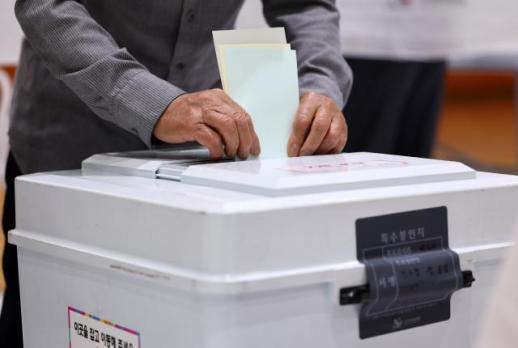 Legislative Agenda to Resume After Local Elections as Financial Bills Await Action With the conclusion of the June 3 local elections, attention is turning to the fate of key financial bills that have been sidelined by political schedules. A number of bills related to the restructuring of the financial industry, including the institutionalization of digital assets, expansion of policy-based financial resources for low-income households, and the introduction of banking agency services, are pending in the National Assembly. The pace of legislation in the second half of the year is expected to influence the momentum of policy initiatives by financial authorities. According to sources in the financial sector and the National Assembly on June 3, financial-related bills that were proposed or under discussion prior to the local elections are expected to emerge as major issues in the upcoming legislative session. The most attention is focused on legislation concerning digital assets. The Digital Asset Basic Law, aimed at facilitating the introduction of stablecoins in the financial sector, has been pursued by the Political Affairs Committee since last year. This was also a campaign promise made by President Lee Jae-myung during his presidential bid, prompting the financial sector to expedite preparations. However, the legislative process has been delayed due to the elections. The bill requires clarification on several contentious issues, including the entities authorized to issue won-denominated stablecoins, reserve accumulation methods, redemption obligations, and restrictions on the ownership stakes of major shareholders in virtual asset exchanges. Both ruling and opposition parties acknowledge the need to refine the basic law, and discussions are expected to gain momentum once they resume. Legislation aimed at strengthening the support system for low-income households is also pending. Notably, a proposed amendment to the Low-Income Financial Law, which seeks to establish a stable funding system for expanding policy-based financial support, has yet to pass through the National Assembly. There have been ongoing concerns about the limitations in securing funding, especially as demand for financial assistance from vulnerable borrowers has increased amid economic slowdown and prolonged high interest rates. Another proposed amendment to establish a Low-Income Financial Stability Fund is also awaiting action. This fund would be set up within the Korea Financial Services Agency to ensure stable funding for supporting vulnerable groups. With rising delinquency rates and an increase in business closures, there is a growing need for a permanent safety net rather than one-time assistance. The Telecommunications Fraud Compensation Law, which includes a no-fault liability system for voice phishing, is expected to be discussed in earnest during the second half of the National Assembly session. Following President Lee's directive in June of last year to develop measures against voice phishing, a government-wide task force was established. However, strong opposition from the opposition parties has hindered progress. Financial authorities believe that the responsibility for compensating victims should be strengthened if financial companies fail to fulfill their accident prevention obligations. However, the financial sector has raised concerns that this could lead to virtually unlimited liability. Finding a balance between consumer protection and the burden on financial companies is likely to be a key issue in future discussions. Nonetheless, some analysts caution that optimism regarding the passage of these bills may be premature. If political schedules and national issues continue to dominate the agenda after the local elections, the review of financial legislation may be pushed down the priority list once again. In particular, the composition of the National Assembly and the distribution of committee chair positions, as well as the operational direction of the Political Affairs Committee, could significantly impact the speed of bill processing. A source in the financial sector stated, "The institutionalization of digital assets, expansion of resources for low-income finance, and introduction of banking agency services are all core tasks being pursued by financial authorities. The speed of legislation in the National Assembly will greatly influence the momentum of financial policy initiatives."* This article has been translated by AI. 2026-06-03 15:03:00
 -
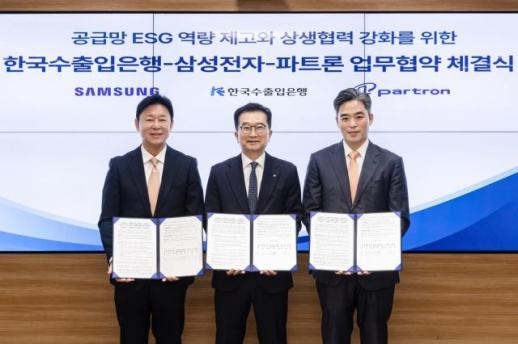 Korea Export-Import Bank Supports Samsung Partners' Transition to Renewable Energy The Korea Export-Import Bank has partnered with Samsung Electronics to support the transition of its overseas partners to renewable energy. This initiative is seen as a new collaborative model for large corporations, their partners, and policy finance institutions to establish a foundation for carbon reduction. On June 3, the Export-Import Bank announced that it has signed a memorandum of understanding with Samsung Electronics and Partron, a key partner of Samsung, to enhance supply chain environmental, social, and governance (ESG) capabilities and promote cooperative growth. The agreement includes provisions for the Export-Import Bank to support consulting costs related to joint purchasing of renewable energy power purchase agreements (PPAs) for small and medium-sized partners of Samsung Electronics operating in Vietnam. Eleven small and medium-sized partners will work together to negotiate contracts for renewable energy purchases, with an energy consulting firm assisting throughout the process. Samsung Electronics will identify and recommend partners to participate in the consulting initiative and will support their ESG management activities. Partron, representing Samsung's partners with a production subsidiary in Vietnam, has committed to ensuring the active participation and compliance of its partners in this initiative. As global ESG regulations tighten, including the European Union's Carbon Border Adjustment Mechanism (CBAM) and Corporate Sustainability Reporting Directive (CSRD), the burden of securing renewable energy for small and medium-sized enterprises expanding overseas has increased. In response, Samsung Electronics is sharing its expertise in renewable energy procurement, and the partners in Vietnam have formed a joint purchasing consortium. The Export-Import Bank is providing support for related consulting costs, establishing a collaborative model for carbon reduction among large corporations, partners, and policy finance institutions. Ahn Jong-hyuk, Executive Director of the Export-Import Bank, stated, "The ability of small and medium-sized partners to transition to eco-friendly practices is now a core prerequisite for our companies' global competitiveness. We will actively support the ESG transition of small and medium-sized enterprises." 2026-06-03 09:36:00
 -
 Korean Financial Group Leaders Engage in Global Investor Relations Efforts Leaders of major financial groups in South Korea are set to meet with overseas investors this month as part of their global sales initiatives. This effort aligns with the government's policies aimed at enhancing corporate value, expanding shareholder returns, and improving capital management, all intended to boost the perceived value of undervalued financial stocks. According to the financial sector on June 1, Yoon Jong-hee, Chairman of KB Financial Group, plans to visit Singapore this month to meet with institutional investors in Asia. KB Financial has been recognized as a leading company in shareholder returns among domestic financial groups, thanks to its aggressive stock buyback and dividend expansion policies in recent years. Typically, the heads of the four major financial groups conduct overseas investor relations (IR) once each in the first and second halves of the year. Chairman Yoon recently held meetings with overseas investors in New York last month and is now demonstrating his commitment to responsible management by participating in another IR this month. Ham Young-joo, Chairman of Hana Financial Group, is reportedly planning IR activities in North America, including the United States, Canada, and Mexico. He is expected to communicate with investors about Hana Financial's shareholder return policies, profitability improvements, and long-term growth strategies. Im Jong-ryong, Chairman of Woori Financial Group, is also considering an overseas IR targeting institutional investors in Asia later this month. Woori Financial is continuing its strategy to strengthen its non-banking sectors, including re-entering the securities industry and pursuing insurance acquisitions, and is expected to expand its engagement with overseas investors regarding its business portfolio and capital policy direction. Earlier in May, Jin Ok-dong, Chairman of Shinhan Financial Group, visited North America on a 12-day schedule to explain the group's management strategy and value enhancement efforts to key institutional investors. Shinhan Financial is consistently working to improve its return on equity (ROE) and expand shareholder returns based on its corporate value enhancement plan announced last year. Industry insiders point to the undervaluation of domestic financial stocks as a key reason for the active participation of major financial group leaders in overseas IR. Despite their stable profit generation capabilities and high dividend yields, domestic financial groups still have price-to-book ratios (PBR) below 1. As a result, management's direct engagement with overseas investors to explain plans for enhancing corporate value and capital policies is emerging as a crucial means for stock price reevaluation. A financial industry official stated, "Recently, overseas institutional investors are evaluating not only the scale of dividends but also stock buybacks, capital ratio management, and long-term profitability strategies comprehensively. The participation of chairmen in overseas IR reflects the commitment of Korean financial groups to enhance their value while also aiming to secure long-term investors." 2026-06-01 15:42:00
 -
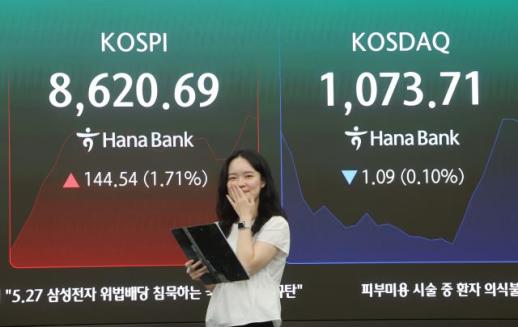 Young Investors Face Risks as Savings Become Insufficient for Financial Goals A 32-year-old man, known as A, invested his savings in stocks and virtual assets after completing his military service, achieving significant profits initially. He turned 600,000 won into 100 million won and later grew 400,000 won to 140 million won. However, in pursuit of even greater returns, he increased his investment scale and ultimately lost all his assets. In a recent television appearance, he expressed regret, stating, "I have been focused solely on coins for the past six years." As the perception grows that saving alone is insufficient for purchasing homes or funding weddings, the asset formation strategies among young people are rapidly changing. While traditional savings accounts were once the starting point for building wealth, there is now a strong trend toward investing in riskier assets like stocks and virtual currencies for quick returns. According to Mirae Asset Securities, the return rates for customer accounts holding over 1 million won from January 2 to May 7 this year showed that investors in their 50s had the highest return rate at 36.77%, followed closely by those aged 60 and above at 36.35%. In contrast, investors in their 20s and 30s reported much lower returns of 25.08% and 24.06%, respectively. This disparity is attributed to the investment tendencies of younger generations. Investors aged 50 and above tend to focus on high-quality domestic stocks, while those in their 20s and 30s are more inclined to invest in volatile thematic stocks, small-cap stocks, and leveraged ETFs, aiming for a significant payoff. Young investors are also actively participating in the highly volatile virtual asset market. According to the Financial Intelligence Unit's survey on virtual asset businesses, over half of the users trading virtual assets at the end of last year were in their 30s and 40s, with those under 20 accounting for 19%. The primary reason young people are turning to riskier assets is the belief that saving alone will not allow them to achieve their life goals. Housing prices in Seoul and the surrounding metropolitan area remain high, and the financial burden of marriage and child-rearing is increasing. As the perception grows that saving a salary is insufficient to keep pace with rising asset prices, funds are shifting toward investment markets that promise higher returns. The issue is that when risky asset investments combine with the fragile cash flow of young people, the impact can be significantly greater. Without sufficient assets or a stable income base, investment losses can lead to a lack of buffers to absorb the shock. Consequently, there is a heightened likelihood of relying on overdraft accounts, credit card loans, or small personal loans to cover losses or living expenses. Experts emphasize the need for a financial safety net to reduce excessive risk-taking while expanding asset formation opportunities for young people. In a situation where the starting point for asset formation is unstable, relying solely on short-term high-return investments is unlikely to secure financial stability. Im Na-yeon, a researcher at the Capital Market Research Institute, stated, "As capital markets become a key means of asset accumulation, the gap in financial asset size and management methods formed during youth could lead to more severe asset inequality in the future. It is crucial to implement policy efforts that support the practical financial asset formation of low- to middle-income young people to prevent this gap from widening."* This article has been translated by AI. 2026-06-01 15:12:00
 -
 Hana Bank Relaunches 'BEST 11 Savings' with Up to 11% Interest for World Cup Hana Bank announced on June 1 that it has relaunched its 'BEST 11 Savings' product, offering an interest rate of up to 11.0% based on the performance of the national team in the upcoming 2026 FIFA World Cup in North and Central America. The product will be available for 30,000 accounts until June 24. Customers can invest between 10,000 and 200,000 won per month, with a contract period of six months. The base interest rate is 2.0%, with an additional preferential rate of up to 0.2% and a special preferential rate of up to 8.8%, totaling a maximum of 11.0%. Preferential rates include 0.1% for automatic transfers and another 0.1% for marketing consent. The special preferential rates are contingent on the team's performance: 1.5% for reaching the Round of 32, 2.0% for the Round of 16, 5.5% for the quarterfinals, and 8.8% for the semifinals, applied at the time of maturity. A representative from Hana Bank's Inclusive Finance Product Division stated, "We are reintroducing the 'BEST 11 Savings' in response to continuous requests for its return after it sold out quickly upon its initial launch in November 2022. We will continue to offer various products and services that football fans in South Korea can enjoy together." 2026-06-01 10:30:00
 -
 Korea Credit Guarantee Fund Launches Crisis Response Insurance with Up to 90% Compensation The Korea Credit Guarantee Fund has introduced a tailored insurance program to support businesses facing operational difficulties due to unexpected domestic and international crises, such as the Middle East conflict and natural disasters. On June 1, the fund announced the launch of its "Crisis Response Special Insurance," which offers differentiated premium discounts and compensation rates based on the level of crisis. This special insurance categorizes crises into two levels: "emergency level" for global and industrial crises, and "general level" for disasters and population decline crises, adjusting the support accordingly. For businesses classified under the emergency level due to global and industrial crises, the program significantly enhances benefits, providing a compensation rate of up to 90% and discounts of up to 30% on calculated premiums. For those in the general level affected by disasters and population decline, the program offers a fixed premium product with a compensation rate of up to 90% and a 0.2 percentage point reduction in premium rates. A representative from the fund stated, "We hope this special insurance will provide substantial assistance to businesses in crisis. Moving forward, we will closely monitor economic crises and continue to expand effective support for business stability."* This article has been translated by AI. 2026-06-01 08:30:00
 -
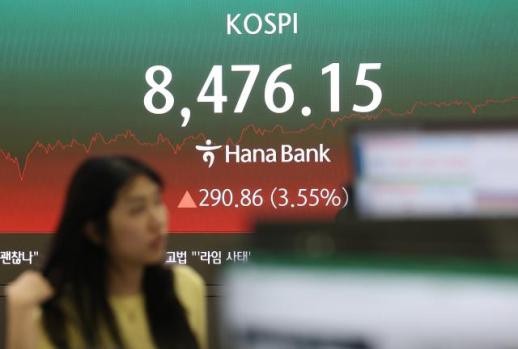 Shift from Home Loans to Credit Loans as Stock Investments Surge The focus of household lending is shifting from mortgage loans to credit loans. As expectations for a stock market rally grow, demand for investment funds has surged, with credit loans from the five major banks increasing by more than 100 times the amount of mortgage loans in May. As of May 28, the total balance of personal credit loans at KB Kookmin, Shinhan, Hana, Woori, and NH Nonghyup banks reached 106.99 trillion won, an increase of 2.65 trillion won from the end of April, when it stood at 104.34 trillion won. This monthly increase is the largest since April 2021, when the KOSPI first surpassed the 3,200 mark. The current balance of credit loans is also the highest since November 2023, when it was 107.72 trillion won, marking a 2.5-year peak. In contrast, mortgage loans have remained stagnant under the government's strict lending regulations. The balance of mortgage loans at the five major banks was 612.27 trillion won in May, increasing by only 250 billion won compared to the previous month. This is a significant slowdown from the previous month, when mortgage loans increased by 1.91 trillion won. Consequently, the increase in credit loans in May exceeded that of mortgage loans by more than 100 times. The expansion of credit loans has been primarily driven by overdraft loans. The balance of personal overdraft loans at the five major banks rose from 39.79 trillion won at the end of April to 41.93 trillion won by May 28, an increase of 2.14 trillion won. This marks the first time since April 2021 that the balance of overdraft loans has increased by over 2 trillion won in a month. The current balance is also the highest since December 2022. Typically, overdraft balances decrease around the 25th of each month when salaries are paid, but this month saw the opposite trend. The balance, which was 41.28 trillion won on May 21, increased by about 650 billion won within a week. Market analysts believe that borrowers are opting to draw additional funds for stock investments rather than repaying their loans with their salaries. The recent surge in the KOSPI, which has been hitting record highs, is also cited as a factor behind the increase in credit loans. However, the concern is that loan interest rates are hovering around 6%. As of May 29, the interest rates for credit loans at the five major banks ranged from 4.16% to 5.85% (for top credit ratings and one-year terms). This is higher than the rates at the end of last year (3.84% to 5.36%) and also above the rates from March this year (3.85% to 5.53%), when geopolitical tensions in the Middle East caused market rates to spike. Market analysts anticipate that the Bank of Korea may raise interest rates at least twice this year. Such increases could not only heighten the burden of interest payments for borrowers but also act as a downward pressure on the stock market, creating a dual challenge for investors engaged in debt-funded investments. A banking industry official stated, "The recent increase in credit loans is largely driven by demand for investment purposes. We cannot rule out the possibility of rising delinquency risks centered around credit loans."* This article has been translated by AI. 2026-05-31 14:33:00