
Journalist

AJP
baeinsun@ajunews.com
-
 China’s DeepSeek Cuts Prices Up to 75% After Launching V4 AI Models China’s AI startup DeepSeek is moving quickly to win customers, rolling out steep price cuts immediately after unveiling its latest model, “DeepSeek V4.” DeepSeek introduced two preview versions on April 24: the high-performance, higher-priced “V4 Pro” and the lighter, lower-cost “V4 Flash.” According to China’s National Business Daily and other outlets, the company said April 25 it would offer V4 Pro at a 75% discount through May 5. On April 26, it also said it would cut the cost of “input cache hits” — when the same input is reused — across its product lineup to about one-tenth of the previous level. After the change, V4 Pro’s input cache-hit fee fell to 0.025 yuan per 1 million tokens (about 5.39 won), about one-fortieth of the earlier price. Even before the discount, the pricing was lower than OpenAI’s ChatGPT 5.5 and Anthropic’s Claude Opus 4.7, the report said. The cuts had an immediate impact. Traffic surged after launch, and on April 25 alone, calls to V4 Pro totaled 13.6 billion tokens, about four times the previous day. V4 Flash reached 50.2 billion tokens, up about 86%. It remains unclear whether the momentum will last. V4 has not yet appeared in the weekly rankings of OpenRouter, a global AI model platform. Still, DeepSeek’s ultra-low pricing is widely seen as putting pressure on rivals. After news of the V4 discounts, shares of Chinese AI firm MiniMax fell as much as 10% intraday in Hong Kong on April 27 local time, while Zhipu AI dropped more than 3.5%. Hu Yanping, a professor at Shanghai University of Finance and Economics, told National Business Daily that the sharp reduction in token fees was aimed at attracting large numbers of corporate and developer customers. He said it would likely pull down price expectations for competing China-based models such as Kimi, MiniMax and Qwen. DeepSeek also upgraded performance. Both V4 Pro and V4 Flash support context windows of up to 1 million tokens, with improvements in code generation, reasoning and long-form processing. Some benchmarks have rated them as competitive with top global models. The models are described as well-suited for AI agent tasks beyond simple chatbots, though they are also known to require substantial computing resources. Unlike earlier DeepSeek models that relied on U.S. chipmaker Nvidia, V4 was designed to run on infrastructure based on Huawei’s in-house Ascend chips. Hong Kong’s South China Morning Post reported that the model’s release was delayed more than expected due to the shift to Huawei semiconductors, reflecting China’s push to strengthen AI self-reliance. On April 26, the social media account “Yuyuantantian,” affiliated with China Central Television, said “domestic computing power supported V4,” highlighting cooperation between DeepSeek and Huawei’s Ascend chip systems.* This article has been translated by AI. 2026-04-27 16:49:55
 -
 Beijing to Ban Consumer Drones in May, Forcing DJI to Pull Products From Stores Beijing will impose an unprecedented ban on consumer drones starting in May, a move expected to hit the commercial drone industry hard. Local media outlets including IT Zhijia reported that the measure will require DJI, China’s leading drone maker, to remove all drone products from its Beijing stores beginning next month. Beijing consumers will no longer be able to buy drones either in physical shops or through e-commerce platforms. After-sales service for drones already owned will also become difficult. DJI said Beijing customers seeking repairs must ship products by courier to the company’s headquarters, then have the repaired items delivered to an address outside Beijing and bring them back themselves. With new demand dropping sharply, drone sales at some DJI stores have fallen by nearly 50% over the past two months, according to reports. As consumers also move to sell drones they already own amid worries about tighter flight restrictions, listings on secondhand platforms have surged and used prices have been falling. Beijing introduced the tougher rules in late March through its “Regulations on the Administration of Unmanned Aircraft,” effectively banning the sale, transport, entry and flight of consumer drones. The city designated all areas as controlled airspace and made prior approval mandatory for all outdoor flights. It also banned the entry and transport of drones and key components. An exception is allowed only for drones already owned, after real-name registration and information verification, when they are taken out of the city and later brought back in. Some observers have raised the possibility that similar restrictions could expand to major cities such as Shanghai and Guangzhou. There are differing interpretations of the rationale. Lianhe Zaobao reported that as drones have taken on a larger military role in the Russia-Ukraine war and conflicts in the Middle East, China views the issue as directly tied to national security. Another view is that the move is preparatory work to develop the “low-altitude economy,” a strategic emerging industry promoted by the Chinese government that includes drone taxis, drone deliveries and urban air mobility. In an interview with The New York Times, Remo, head of a research center at the Hong Kong University of Science and Technology, said it was like “tidying the living room before welcoming guests,” describing it as a process of organizing airspace first for the low-altitude economy. China is considered the world’s largest commercial drone market. The China Industry Research Institute said last year’s market was about 50.2 billion yuan, about 50% growth from 2020. Registered commercial drones topped 3 million, up 50% from a year earlier. But rapid growth has been accompanied by worsening problems with unlicensed flights. Near the Shanghai World Financial Center, about 66 drone crash incidents occurred over the past three years, and in August last year two drones collided at an altitude of 400 meters. China has continued tightening enforcement against unauthorized drone flights. Starting in January, illegal flights were defined as violations of public security, allowing criminal penalties including up to 15 days’ detention. China’s Ministry of State Security has also warned that if a flight threatens public safety and causes serious consequences, punishment could include more than 10 years in prison, life imprisonment or the death penalty. * This article has been translated by AI. 2026-04-27 12:33:19
 -
 China’s ‘Soul Ferry’ Returns as 100% AI-Generated Film, Drawing Backlash A thriller series that drew huge audiences in China in 2014 is returning to theaters about a decade later — this time as a film made entirely with artificial intelligence. The movie, titled ‘Soul Ferry·Floating Life Dream’ (靈魂擺渡·浮生夢), is scheduled for release this summer, according to China News Network and other local outlets. It is co-produced by the online video platform iQiyi and Chuangxin Media. ‘Soul Ferry’ began as a web drama in 2014 and surpassed 5 billion cumulative views. Fans welcomed news of a film adaptation, but the project has also stirred controversy after being billed as a “100% AI-generated film.” AI has been used in film and TV production before, but local media described this as effectively the first case of a well-known intellectual property being produced end-to-end with AI. The original drama follows a young man who can see ghosts. Seemingly ordinary and barely noticed by others, Xia Dongqing (played by Liu Zhiyang) is born with the ability to see “souls from another world.” Struggling to make a living through part-time jobs, he takes work at the “Convenience Store No. 444,” a place where ghosts appear after midnight and a boundary linking different dimensions. A civil servant from the underworld, Zhao Li (Yu Yi), runs the store and calls himself a “guide for souls,” while Dongqing and the bold young woman Wang Xiaoya (Xiao Yin) encounter a series of strange cases. The producers said AI was used from planning through completion, including modeling characters based on the original cast and editing music. They said deep-learning technology was used to reproduce subtle facial expressions and even muscle movement. The trailer has intensified debate over whether AI can replace human actors. Some viewers called it a technical breakthrough for East Asian thrillers, while others criticized it, saying, “Even an actor’s soul is exploited by an algorithm.” Online reaction has been sharply divided. Viewers said the AI performers’ emotional cues — frightened eyes, sly expressions and cutesy speech — looked more awkward than real acting. On China’s Baidu portal, the hashtag “Soul Ferry has no soul” rose among top trending searches. One film critic panned it, saying it was “like serving pre-made food at a Michelin restaurant.” The trailer also drew attention for apparent technical flaws. Some scenes show what viewers described as an “uncanny valley” effect, including a hand that appears to have six fingers and hair that seems to pass through a doorframe. Comments by Guo Jingyu, who oversaw the film’s production, added to the controversy. Critics pointed to his earlier remarks at a forum, where he criticized AI virtual humans and said, “AI cannot express a character’s soul,” calling his move to make a fully AI film contradictory. The dispute reflects broader anxiety in the film industry as AI grows rapidly. Some worry that wider use of AI across production could shrink roles for actors and crew and force a restructuring of the industry. According to Chinese market research firm Tonghuashun, AI short dramas can be produced for about one-tenth the cost of traditional dramas, and a three-person team can finish production in 48 hours. The AI-based short-drama market in China is projected to reach about 24 billion yuan this year, with works featuring AI virtual actors expected to account for about 40% of the total.* This article has been translated by AI. 2026-04-25 06:04:38
 -
 Xi Calls Yiwu Growth Model a Benchmark for ‘Correct View of Political Achievements’ Chinese President Xi Jinping has urged officials to treat the development model of Yiwu in Zhejiang province — home to what China calls the world’s largest small-commodities wholesale market — as a benchmark for a “correct view of political achievements.” The concept, which Xi has repeatedly stressed in public, calls for evaluating officials by sustainable, practical results rather than short-term gains or showpiece projects. According to China’s state-run Xinhua News Agency on Wednesday, Xi said in recent instructions that Yiwu’s small-commodities sector “opened up a huge market” and grew into a major industry, forming what he called the “Yiwu development experience.” He praised it as a successful example of developing a county-level economy in line with local conditions. Xi said the “Yiwu development experience” should be summarized more systematically and used effectively in connection with study and education programs aimed at establishing and practicing the “correct view of political achievements.” He said regions should build on their own resource advantages, respect grassroots and public creativity, and pursue reform, innovation and concrete implementation. He also called for sustained effort to find high-quality development paths suited to local conditions, and for better alignment with national development strategies. Xi has shown long-standing interest in Yiwu’s economy, visiting the city 12 times while serving as a party chief in Zhejiang and Shanghai. Xinhua said he personally compiled Yiwu’s development experience at the time and directed that it be studied and promoted among officials, and he has repeatedly cited Yiwu in public remarks. Yiwu, described as the world’s largest export base for small commodities, is often called a barometer of China’s foreign trade and the global economy because orders and production there are seen as reflecting broader trends. The Yiwu market covers 6.4 million square meters — about the size of 900 soccer fields — and contains about 1.26 million shops, with trade involving more than 230 countries and regions. The report said many goods tied to the World Cup, U.S. elections and Christmas are produced and exported from Yiwu. It added that the term “Yiwu index” is used because export orders there are sometimes cited to predict outcomes of major international events, such as U.S. election dynamics and World Cup winners. While Yiwu was held up as a model, the cities of Yichun in Jiangxi province and Nanning in the Guangxi Zhuang autonomous region were cited as examples of a “wrong view of political achievements” for wasteful investment, the report said. China Central Television said Tuesday that Hozon New Energy Automobile, the parent company of Chinese electric vehicle maker Neta, posted losses of 18.3 billion yuan over three years and went bankrupt last year. CCTV said Yichun and Nanning poured tens of billions of yuan into attracting a Neta auto plant, including special policies offering subsidies, but the effort ultimately worsened local finances and led to industrial homogenization. CCTV criticized some local governments for fixating on political achievements, ignoring fiscal realities and relying on borrowing and subsidy competition, while focusing on large short-term projects aimed at visible results.* This article has been translated by AI. 2026-04-23 16:51:17
 -
 China Sees Surge in New-Car Launch Events Ahead of Beijing Auto Show M6 and All-New M9, Shangjie Z7, and Zhijie V9. Those were among the models Huawei’s smart-driving ecosystem alliance, Hongmeng Zhixing, unveiled at a product event on April 22. That same day also brought debuts or launches of about 10 models, including Avatr’s 06T, Shanghai GM Buick’s Zhijing E7, Cadillac’s VISTIQ and BMW’s iX3 long-wheelbase model. In the four days leading up to the Beijing Auto Show’s opening on the 24th, from April 20 to 23, there were 30 new-car-related events alone. Chinese market research firm Gasgoo called it “inflation” in new-car launch events. Reports said more than 100 new-car events were held or scheduled this month, with about three to four news conferences a day. More than 80 such events were held in March. The industry expects more than 170 new models to be launched in China this year — roughly one new model every two days. As launch cycles shorten, the number of events for a single model has grown. A rollout can now span five to six stages, from technology briefings to exterior and interior reveals, pre-sales promotions, official launches, delivery ceremonies and livestreamed driving tests. Companies are trying to keep a model from being quickly overshadowed by the next debut. A South Korean industry official said about 180 models will make their world debut at this year’s Beijing Auto Show. “With so many models coming out at once, each brand is trying to draw attention through separate events,” the official said. The rapid spread of electric vehicles is also cited as a driver. As EV lineups diversify, companies feel more pressure to make each model stand out. As of the end of March, China had 19,977 EV models registered as eligible for purchase-tax reductions, with 391 new models added in March alone. If the replacement cycle for internal-combustion vehicles was typically five years, the EV era has made one year a new benchmark, the report said. Development cycles have shortened to 12 to 15 months, and companies are trying to keep interest alive even after launch. Pricing tactics are shifting, too. Amid intense price competition, more automakers are using pre-sales to gauge demand, then adjusting prices and revealing final pricing at the official launch. Newer EV brands such as Xiaomi, which have yet to fully establish market trust, are also staging events such as long-distance driving tests or livestreamed vehicle teardowns to win over consumers. Marketing competition has intensified. Automakers are increasingly hiring celebrities as brand ambassadors. Under Hongmeng Zhixing, the Shangjie brand tapped actor Xiao Zhan. Zeekr hired He Rundong, and Chery hired actor Yu Shi. Other brands cited include Zhijie (Liu Yifei), Denza (Daniel Craig), and Li Auto (Yi Yangqianxi). The pace has fueled criticism of “overheated competition” in China’s EV market, with frequent launches adding to consumer fatigue while raising companies’ marketing burdens. A single new-car launch event typically costs from 2 million yuan to 10 million yuan (about 2.17 billion won), the report said. Gasgoo said average automaker marketing costs rose 18% a year from 2023 to 2025, while the potential-customer conversion rate fell from 8.2% to 4.7%. The cost to acquire each potential customer jumped from 200 yuan to 580 yuan. Xiaomi’s auto sales and promotion costs rose 30% to 33.2 billion yuan last year from 25.4 billion yuan in 2024, the report said. Great Wall Motor’s selling expenses also rose 44% last year from the previous year, it said. 2026-04-23 11:50:04
 -
 Taiwan President Lai’s Eswatini Trip Canceled After African States Revoke Overflight Permits Taiwan President Lai Ching-te’s planned trip to Eswatini, the island’s only diplomatic ally in Africa, was canceled a day before departure after three countries withdrew overflight permission for his charter flight. Taiwan said China’s economic pressure was behind the move and condemned it. According to Hong Kong’s Ming Pao and other outlets on April 22, Pan Meng-an, secretary-general of Taiwan’s Presidential Office, said at a news conference the previous evening that Seychelles, Mauritius and Madagascar canceled the overflight permits without prior notice. Lai had planned a state visit to Eswatini from April 22 to 27. Pan said the “real reason” was that Chinese authorities applied heavy pressure, including economic coercion, on the three countries. He said attempts to use coercive means to change a third country’s sovereign decision undermine aviation safety, violate international norms and practices, and amount to “blatant interference” in other countries’ internal affairs. He added that the move disrupts regional order and hurts the feelings of the Taiwanese people. A Taiwanese security official, speaking on condition of anonymity, told AFP that China pressured the countries by raising the possibility of reversing debt relief, cutting off funding and imposing economic sanctions. Wu Chih-chung, Taiwan’s deputy foreign minister, said he understood the countries’ heavy economic dependence on China but said he hoped the incident would make the international community clearly recognize that China is intervening in other countries’ internal affairs through various means. It was the first time a Taiwanese president’s overseas trip was derailed by a revoked overflight permit. Lai said on Facebook that he accepted his national security team’s recommendation to postpone the visit, adding, “The schedule has been postponed, but our respect and friendship for Eswatini remain unchanged.” Taiwan plans to send a special envoy instead to events marking the 40th anniversary of the Eswatini king’s accession. Lai, who took office in early 2024 and is from the Democratic Progressive Party, has made only one overseas trip that year: a December tour of three South Pacific diplomatic allies that included a stop in Hawaii. In July last year, he also sought to travel to Central and South America via the United States, but the trip fell through after the U.S., then preparing for tariff talks with China, did not allow the transit. Bloomberg said it was the longest gap in overseas travel by a Taiwanese president since 2012, excluding the COVID-19 pandemic period. The episode comes as China expands its influence in Africa. China has been Africa’s largest trading partner for 16 consecutive years, wielding significant economic leverage. A “2025 China Belt and Road Investment Report” released early this year by Australia’s Griffith University and China’s Fudan University said Chinese investment and construction project contracts in Africa totaled $61.2 billion last year, up 283% from the previous year. Africa has overtaken the Middle East as the biggest beneficiary region of China’s Belt and Road projects. The Center for Strategic and International Studies said countries in the Global South within China’s sphere of influence support the “one China” principle, which it said is a key factor in Taiwan’s international isolation. On the same day Lai’s trip was called off, China’s state-run Xinhua News Agency reported that Chinese President Xi Jinping met in Beijing with Mozambique President Daniel Chapo, who was on a state visit, and agreed to elevate ties to a “China-Mozambique community with a shared future in the new era.” The two leaders also signed a joint statement with 28 provisions, including support for China’s unification. Chapo said, “China is Mozambique’s true friend,” adding that Mozambique firmly supports the one China principle and supports national unification.* This article has been translated by AI. 2026-04-22 16:43:47
 -
 CATL Unveils Semi-Solid Battery With 1,500 km Range and 6-Minute Fast Charge Up to 1,500 km on a single charge, full charge in 6 minutes 30 seconds, sodium battery mass production within the year... CATL (Ningde Shidai), China’s top battery maker by global market share, on the 21st unveiled new battery technologies and a product roadmap as competition in electric-vehicle batteries intensifies. The company’s announcements were widely seen as an effort to widen its lead. According to Chinese media including 21st Century Business Herald, CATL held a “Super Tech Day” event on the 21st. The main highlight was a “condensed-state” version of its flagship Qilin battery. CATL described the technology as a high-performance semi-solid battery — widely viewed as a step just short of an all-solid-state battery. CATL said it applied its own semi-solid electrolyte technology, combining an ultra-high-concentration nickel cathode with a silicon-based anode. The company put the energy density at 350 Wh/kg, among the highest levels for mass-produced batteries. Gao Huan, CATL’s chief technology officer, said the company upgraded from a liquid electrolyte to a condensed-state electrolyte to address safety issues “at the root.” Using a condensed-state electrolyte instead of a liquid reduces leakage risk and can significantly lower the chance of fire, he said. In driving tests, CATL said a premium sedan equipped with the battery traveled up to 1,500 km on a single charge. CATL also said the battery pack weighs less than 650 kg and has a volume of 309 liters — about 400 kg lighter and 225 liters smaller than a lithium iron phosphate, or LFP, battery capable of about 1,500 km under the same conditions. The company said the battery retains more than 85% of its capacity at minus 20 degrees Celsius and supports ultra-fast charging at 10C output, allowing a charge to 80% in about 10 minutes. CATL said the condensed-state battery is slated for premium models such as the Nio ET9 and Huawei M9, with mass production planned from the third quarter of this year. It also said the pilot production line has achieved a yield of more than 95%. Industry observers described the announcement as a potential turning point as power-battery technology moves from liquid electrolytes toward solid electrolytes. They said higher energy density and longer range could accelerate adoption of premium EVs and broaden potential uses in emerging markets such as low-altitude aircraft and ultra-long-haul commercial vehicles. CATL also unveiled its third-generation Shenxing ultra-fast-charging battery. The company said it achieved a full charge in just six minutes at room temperature, setting a new benchmark for charging speed. That would be faster than the roughly nine-minute full charge claimed last month by rival Chinese automaker BYD for its second-generation Blade battery. CATL also announced plans to begin mass production of sodium-ion batteries within the year. Sodium batteries are seen as a next-generation technology that could reduce reliance on lithium, cobalt and nickel, drawing attention for cost stability and supply-chain considerations. CATL also said it will accelerate expansion of battery swapping and charging infrastructure. Working with Chinese automakers, it plans to build 100,000 charging and battery-swap stations by the end of 2028. CATL attributed its technology push to heavy research and development spending. Chairman Zeng Yuqun said the company invested more than 100 billion yuan in R&D over the past decade, including 20 billion yuan last year. He said CATL holds more than 60,000 patents and has ranked No. 1 for six consecutive years in patent application growth. 2026-04-22 12:27:19
 -
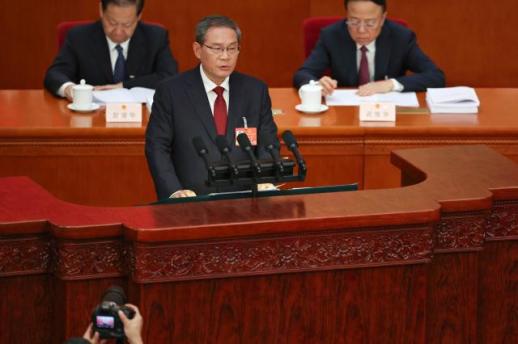 China Recasts Coal as Power-Grid Backstop Amid Energy Security Concerns China is again elevating coal in its energy policy as surging electricity demand, the intermittency of renewables and geopolitical uncertainty sharpen concerns about energy security. Analysts say Beijing, which has promoted a shift away from coal, is redefining it as a “safety valve” to help keep the power grid stable. The direction was underscored at a recent State Council meeting. China’s state-run Xinhua News Agency reported on April 21 that the State Council held its 19th group study session the previous day on “accelerating the building of a new energy system through coordinating energy security and the green, low-carbon transition.” Premier Li Qiang said strengthening energy security is a core foundation for building China into an energy power. Citing rapid changes in the international situation and rising energy consumption, he called for maintaining a sense of urgency and preparing for worst-case scenarios to improve the resilience and security of the energy system. Li said the key to stronger energy security is optimizing the energy mix. He urged greater innovation in energy technology, faster construction of a new energy system and a push for low-carbon shifts in energy production and consumption. He also called for expanding large clean-energy bases, including wind and solar in the northwest, hydropower in the southwest and offshore wind along the eastern coast, while developing distributed solar and wind and region-specific biomass, geothermal and ocean energy. At the same time, Li made clear that coal’s role is changing. He said China should raise the level of clean and efficient use of fossil energy, speed upgrades to improve efficiency at existing coal-fired plants and accelerate retrofits to cut carbon. He also said coal power should move beyond serving only as baseload supply and become a flexible source that can adjust output to match demand. China has promoted “de-coal” policies while pursuing goals of peaking carbon emissions by 2030 and achieving carbon neutrality by 2060, pushing a shift from coal to renewables. With expanded wind and solar installations, renewable capacity rose to about 2.334 billion kilowatts last year, accounting for about 60% of total power capacity. But electricity demand has been rising quickly, with some warning it is outpacing capacity growth. Driven by artificial intelligence, data centers and the spread of electric vehicles, power consumption last year exceeded 10.4 trillion kilowatt-hours, more than double the 2015 level and more than twice that of the United States. A key challenge is the nature of renewables. Solar and wind output can swing sharply with weather, making it difficult to respond reliably when demand peaks. With volatility in global energy markets rising amid the Russia-Ukraine war and the outbreak of the Iran war, arguments have gained traction for slowing the pace of coal cuts. Against that backdrop, coal is re-emerging as a central stabilizing element in China’s power system. Coal output has continued to rise, and the National Bureau of Statistics said production last year hit a record 4.85 billion tons. Some analysts say this does not signal a return to a coal-centered system, but an evolution in coal’s function. The U.S. foreign affairs magazine The Diplomat said that as renewables expand, China’s policy focus is shifting from increasing generation to ensuring grid stability, with coal being reshaped from a baseload source into flexible capacity that offsets renewable variability. Still, some warn that local governments may lean on coal generation because it is easier to build and cheaper in the name of short-term energy security, potentially adding pressure to long-term carbon-reduction goals. 2026-04-21 12:24:38
 -
 China resumes direct flights to Pyongyang after six-year halt SEOUL, March 30 (AJP) - Chinese flagship carrier Air China has resumed direct flights to Pyongyang after a six-year hiatus, state media reported on Monday. According to state-run Xinhua News Agency, Air China has begun operating a weekly round-trip flight between Beijing Capital International Airport and Pyongyang Sunan International Airport. The resumption comes for the first time since the airline halted all flights to North Korea in January 2020, when the coronavirus pandemic began to spread, and follows the restart of passenger train service between the two countries earlier this month. At a regular briefing, Foreign Ministry spokesperson Mao Ning said the resumption of passenger flights between Beijing and Pyongyang would help promote exchanges between the "friendly neighboring countries." North Korea's Air Koryo has resumed its route from Pyongyang to Beijing since 2023, flying twice a week, but Chinese airlines had not operated regular flights to Pyongyang. Chinese Ambassador to North Korea Wang Yajun reportedly greeted the first passengers arriving from Beijing and said that friendly exchanges between the two countries will be "further boosted," with road, rail, and air services now fully resumed. 2026-03-30 17:48:53
 -
 Friendship Week returns to Shandong, boosting relations between South Korea and China SEOUL, November 21 (AJP) - A special weeklong event is taking place this week in the Chinese city of Jinan, Shandong Province, the South Korean Embassy in China said on Friday. Under the banner of "Friendship Week," which was first launched in 2003, the event had served as a key platform for local cooperation between the two countries, promoting economic and cultural exchanges. This year's event marks both the first since the coronavirus pandemic and the first held in Shandong since 2012. The event follows the momentum generated by last month's summit between South Korean President Lee Jae-myung and Chinese President Xi Jinping on the sidelines of the Asia-Pacific Economic Cooperation (APEC) meeting in the southeastern city of Gyeongju. Around 160 participants including embassy officials and business representatives, are taking part, with 106 Chinese and 69 South Korean companies in attendance. At the opening ceremony on Thursday, South Korean Ambassador to China Noh Jae-heon expressed hope that the event would usher in a new era of practical cooperation with Shandong. He highlighted the province's population, industrial base, and geographical advantages, emphasizing the need to expand cooperation in supply chains and emerging industries like biotech. Lin Wu, Shandong's Party Secretary, thanked Noh for his first visit to Shandong since taking up his post and highlighted the significant growth in trade since diplomatic ties were established, pledging a fair investment and business environment for South Korean companies in China. Shandong Governor Zhou Naixiang also expressed a commitment to expanding cooperation in artificial intelligence (AI), biotech, and pharmaceuticals, requesting support for Shandong companies investing in South Korea. Among the participants were representatives from the Korea Chamber of Commerce in China, as well as around 20 small and medium-sized enterprises from Gyeonggi Province. South Korean companies held one-on-one meetings to discuss projects for bilateral cooperation. Until Saturday, Qingdao's largest mall, Vientiane City, also hosts a promotional event featuring South Korean pavilion in collaboration with the Korea Trade-Investment Promotion Agency (KOTRA), Korea Agro-Fisheries & Food Trade Corporation, and the Korea Tourism Organization (KTO). * This article, published by Aju Business Daily, was translated by AI and edited by AJP. 2025-11-21 16:55:48