
Journalist

Bae In-sun
baeinsun@ajunews.com
-
 Trump and Xi Meet in Beijing to Discuss Future of U.S.-China Relations "Can we create a bright future for our two countries together?" "I can say that U.S.-China relations are the best they have ever been." On May 14, Donald Trump, President of the United States, met with Xi Jinping, President of China, for a summit at the Great Hall of the People in Beijing, marking the second day of Trump's visit to China. The two leaders began their opening remarks in a cordial atmosphere, exchanging pleasantries. According to China's state broadcaster CCTV, Xi Jinping posed three questions during his opening statement: "Can the U.S. and China overcome the 'Thucydides Trap' and establish a new paradigm for great power relations? Can we cooperate to address global challenges and bring greater stability to the world? Can we focus on the welfare of our peoples and the future of humanity to create a bright future for our two countries together?" The term 'Thucydides Trap' refers to the potential conflict between a rising power and an established one, emphasizing the need for the U.S. and China to avoid a clash over hegemony. Xi emphasized that the common interests of the U.S. and China outweigh their differences, stating, "The success of both countries presents opportunities for each other, and a stable U.S.-China relationship benefits the world." He urged that the two nations should maintain a partnership rather than view each other as rivals, achieving mutual success and shared prosperity while paving the right path for great power relations in the new era. He expressed hope that he and Trump could exchange views on major issues affecting both countries and the world, aiming to make 2026 a historic and groundbreaking year for U.S.-China relations. In response, Trump praised Xi as a "great leader," noting their long-standing personal relationship, which he claimed is the longest of any leaders in U.S.-China history. He expressed his honor in being able to meet again and become friends. "Our relationship is very good. Even when problems arise, we can quickly find solutions through phone calls," Trump said, adding, "We have a beautiful future ahead of us. I can say that U.S.-China relations are the best they have ever been." Trump also emphasized the importance of the summit, stating, "This U.S.-China summit is the most significant." He mentioned that his delegation consists of some of the world's greatest entrepreneurs, all of whom respect China and Xi, and he hopes for continued business cooperation. During the summit, Xi was accompanied by key officials, including Wang Yi, a member of the Central Political Bureau and Foreign Minister, and He Lifeng, Vice Premier of the State Council. On the U.S. side, Trump was flanked by Secretary of State Marco Rubio and U.S. Ambassador to China David Perdue, among others. At 10 a.m. local time, Xi and Trump reviewed the honor guard at the East Gate Square of the Great Hall of the People, before proceeding to the meeting venue, where they were greeted by children waving flowers and flags. CCTV footage captured the summit table adorned with blooming pink and white azaleas. The Singaporean newspaper Lianhe Zaobao noted that the blooming azaleas symbolize luck, happiness, prosperity, resilience, and optimism, interpreting the red and white flowers as a wish for the two countries to create a bright future together in perfect harmony.* This article has been translated by AI. 2026-05-14 13:33:19
 -
 Trump Visits China with Defense Secretary for First Time Since Nixon President Donald Trump's visit to China is notable for the unusual presence of Secretary of Defense Pete Hegseth, marking the first time a U.S. defense secretary has accompanied a president to China since Richard Nixon's historic trip in 1972, according to the South China Morning Post (SCMP) on May 14. The last visit by a U.S. defense secretary to China occurred nearly eight years ago, when then-Secretary James Mattis traveled there in June 2018 during Trump's first term. SCMP reported that Hegseth's attendance signals a commitment from both nations to enhance military communication as a means of easing tensions and managing crises. The summit is expected to address issues such as nuclear weapons, U.S. arms sales to Taiwan, and the restoration and expansion of military-to-military communication channels. Hegseth's participation also indicates that Chinese Defense Minister Li Shangfu will be present at the summit. During Trump's previous visit to China in 2017, only Li Zuocheng, then head of the Joint Staff Department of the Central Military Commission, represented the People's Liberation Army. As U.S.-China competition extends beyond trade into technology and national security, analysts suggest that the relationship has entered a phase of 'technological security competition.' The lines between commercial and military applications of technologies such as semiconductors, artificial intelligence, quantum computing, and satellite technology are increasingly blurred, highlighting the need for closer military communication. Jupeng, a professor at Nanjing University, emphasized in the Singapore United Daily that U.S.-China relations are not limited to trade and economics. He noted that the resumption of institutionalized high-level communication between the two militaries is crucial for stabilizing relations and preventing conflict escalation. He added that as AI is increasingly applied to military equipment and operations, regular consultations and exchanges between the two militaries could present significant opportunities for both sides, especially given the lack of established international security norms and governance rules. There are also interpretations that Trump is mindful of domestic political messaging, with the Nordic-based Chinese media outlet, Nordic Times, suggesting that he aims to project a tough image on security issues to U.S. voters. In addition to Hegseth, Trump's delegation includes key figures from diplomatic, security, and economic sectors, such as Secretary of State Marco Rubio, Treasury Secretary Scott Vessen, and USTR Representative Jamieson Greer. The United Daily noted that this meeting is designed as a high-level strategic communication session that clearly demands practical cooperation. Wang Dong, a professor at Peking University's School of International Relations, remarked that the U.S. perceives this visit as a comprehensive high-level strategic communication encompassing political, security, and economic issues. He indicated that economic and trade cooperation, along with market and industry matters, will be central topics, with the visit aimed at achieving tangible cooperation outcomes. 2026-05-14 11:48:37
 -
 Trump's Visit to China: Tian Tan Park Instead of Forbidden City As President Donald Trump prepares for his visit to China, one of the highlights of his itinerary is a visit to Tian Tan Park in Beijing, a site specially arranged by Chinese President Xi Jinping. Unlike Trump's first visit to China nine years ago, when the Forbidden City was entirely cleared for a grand reception, this time the invitation to Tian Tan carries multiple significances. Located about 7 kilometers south of the Forbidden City, Tian Tan is a sacred site where emperors of the Ming and Qing dynasties offered sacrifices to the heavens. Each year, these emperors would travel from the Forbidden City to Tian Tan to pray for a bountiful harvest and the well-being of the nation, thereby asserting their legitimacy as rulers connecting the heavens and the human world. For China, the visit to Tian Tan is not merely a display of ancient imperial grandeur; it serves as a symbolic stage to convey the depth of China's long history and culture to President Trump. The significance of the Tian Tan visit is further underscored by the agenda of agricultural cooperation, which is a key topic during this trip. Given its historical role as a site for prayers for abundant harvests, it is expected that Trump will naturally discuss the expansion of purchases of U.S. agricultural products, including soybeans, grains, and meats, during his visit. Analysts interpret the visit as carrying a symbolic message that China wishes to convey to Trump. The architectural style of Tian Tan reflects ancient China's worldview, emphasizing the importance of heavenly order, the concept of 'heaven is round and earth is square,' and the harmony between humanity and nature. In contrast to the Forbidden City, which symbolizes imperial authority and power, Tian Tan is seen as a space that highlights harmony, order, and coexistence. Jeon Byeong-seo, director of the China Economic and Financial Research Institute, noted, "China may be indirectly conveying the message that Trump's America First policy and unilateralism are at odds with heavenly order." Tian Tan also holds special significance in U.S.-China relations. According to Singapore's Lianhe Zaobao, former President Richard Nixon visited Tian Tan Park during his historic trip to China in 1972, becoming the first sitting U.S. president to do so. Former Secretary of State Henry Kissinger, often referred to as a 'longtime friend of the Chinese people,' has visited the site more than ten times, demonstrating his affection for it. Some observers suggest that the shift from the Forbidden City to Tian Tan as the main venue for Trump's visit indicates a change in the level of respect afforded to him. Jeon remarked, "Tian Tan is a symbolic space where the emperor's power is 'embodied' in the heavens, and this could metaphorically illustrate the relative change in America's status within the new world order that China is constructing."* This article has been translated by AI. 2026-05-13 18:13:58
 -
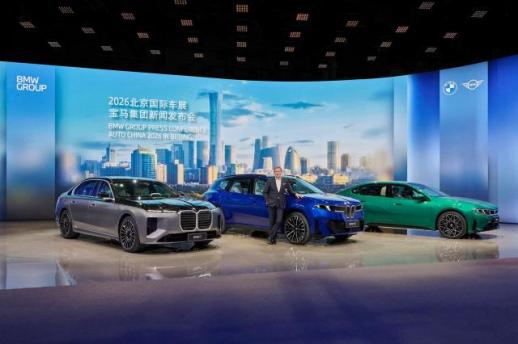 Global Automakers Intensify Localization Efforts in China As Chinese automotive companies expand into overseas markets, global automakers are intensifying their efforts to penetrate the Chinese market. With China emerging as the world's largest automotive market and a key testing ground for the global auto industry, international companies are focusing on models tailored specifically for Chinese consumers and applying local technologies. Notably, the average age of new car buyers in China is decreasing, leading to a growing preference for vehicles with sleek designs and advanced digital features. According to the "2025 Automotive Industry White Paper" released by Chinese video platform Bilibili in collaboration with market research firm CTR, the average age of new car buyers in China is 30.5 years, significantly younger than the average of about 50 years in Europe and the United States. François Roudié, Secretary General of the International Organization of Motor Vehicle Manufacturers (IOM), stated to Reuters, "The younger average age of car buyers in China has a significant impact on vehicle design and option selection compared to Europe and the U.S." Alfonso Albaisa, Senior Vice President of Global Design at Nissan, noted, "The Chinese market is quite experimental in terms of color and material expression." Last year, Nissan launched the China-exclusive electric vehicle 'N7,' which became popular, particularly for its interior options in shades of pink and lavender that are less favored in other regions. The emphasis on advanced technology and in-car software experiences among Chinese consumers is also influencing global companies' strategic shifts. Features such as Chinese voice AI assistants, advanced driver-assistance systems (ADAS), and in-car karaoke have become essential specifications. This trend was evident at this year's Beijing Motor Show, where BMW unveiled 16 new models, many of which were designed specifically for the Chinese market. Mercedes-Benz announced plans to enhance local technology development and collaboration with major Chinese tech companies from its Shanghai research and development center. Volkswagen, promoting its 'In China, For China' strategy, showcased models built on a China-exclusive electric vehicle platform with local driving assistance systems. The company plans to launch over 20 new energy vehicles in China by 2026 and expand that number to about 50 by 2030. South Korea's Hyundai also officially announced its entry into the Chinese market with its electric vehicle brand Ioniq, unveiling two electric concept cars for the first time globally, signaling its commitment to the Chinese electric vehicle market.* This article has been translated by AI. 2026-05-12 05:28:06
 -
![[ASIA BIZ] Geely and BYD Target Global Aging Car Factories for Acquisition](https://image.ajunews.com//content/image/2026/05/08/20260508165458222208_518_323.png) [[ASIA BIZ]] Geely and BYD Target Global Aging Car Factories for Acquisition Chinese automaker Geely is reportedly in talks to acquire the third body assembly line at Ford's Valencia plant in Spain, according to local media. This line previously produced models such as the Ford Mondeo and S-Max but has been inactive since those models were discontinued. Geely plans to renovate the line for the production of small electric vehicles (EVs) and hybrids specifically for the European market. Recent reports from Chinese economic media outlet, The Economic Observer, indicate that Chinese automakers are expanding their global production bases by acquiring aging overseas factories at low prices. As traditional automakers streamline production in response to the shift toward electric vehicles, they are selling off internal combustion engine production facilities, creating opportunities for Chinese companies to accelerate their localization strategies. Chinese Capital Acquires Ford, Mercedes-Benz, and Nissan Factories Chinese investments are rapidly filling the void left by Western and Japanese automakers in regions such as South America, Africa, and Southeast Asia. A notable example is Chery Automobile's push to acquire Nissan's factory in South Africa. The company has reportedly agreed to purchase the Nissan plant located in the Rosslyn area, which has been a key production site in South Africa for over 60 years, producing 45,000 pickup trucks annually. In Brazil, the largest automotive market in South America, Chinese companies continue to make inroads. Great Wall Motors (GWM) acquired a former Mercedes-Benz factory and began production of 30,000 vehicles annually in August of last year. BYD also acquired a closed Ford factory in Bahia, Brazil, in March 2024 and started electric vehicle assembly in October. These moves come as intense price competition and oversupply in the Chinese automotive market have led to declining profitability, prompting companies to look abroad. BYD, a leader in the electric vehicle sector, reported a 50% drop in net profit for the first quarter compared to the same period last year, indicating a prolonged slowdown. In response, BYD is aggressively targeting international markets, with overseas sales accounting for 46% of its total sales. The company has set an ambitious overseas sales target of 1.5 million units this year, a 40% increase from the previous year. Chinese Automakers Shift Focus from Exports to Local Production Chinese automakers are increasingly recognizing the necessity of establishing local production systems abroad rather than relying solely on exports. With the European Union, the United States, Canada, and Brazil imposing higher tariffs to limit the influx of Chinese electric vehicles, companies are moving to circumvent these barriers through local production. According to the Rhodium Group, a U.S. market research firm, the scale of overseas investments by Chinese electric vehicle manufacturers surpassed domestic investments for the first time last year. Acquiring existing idle factories is viewed as a more efficient approach in terms of time and cost compared to building new plants. While new factory construction typically takes 3 to 5 years, existing factories can be renovated and operational within about a year after acquisition. Chui Dongxu, secretary-general of the China Passenger Car Association (CPCA), noted, "The global strategies of Chinese automakers show a similar trend to the globalization process of the Japanese automotive industry in the past." Initially focused on exporting vehicles for the domestic market, the strategy has evolved to include sending parts for local assembly (KD production) and ultimately establishing local production systems. Aiming for a 'Yaris Moment' in the European Hatchback Market To penetrate global markets, Chinese automakers are accelerating the development of models tailored to regional consumer preferences. This strategy recalls Toyota's successful approach in Europe with its small hatchback, the Yaris, which capitalized on local tastes. Pedro Pacheco, an analyst at Gartner, stated through Reuters, "Chinese automakers are striving to replicate the 'Yaris Moment.'" Hongqi, a brand under the state-owned automaker FAW Group and known for its ceremonial vehicles for President Xi Jinping, unveiled a small global SUV aimed at the European market at the recent Beijing Motor Show. Additionally, companies like BYD, Chery, Great Wall, SAIC, and Hongqi are developing models ranging from small hatchbacks for Europe to pickup trucks for markets in Australia and Mexico. While hatchbacks are in low demand in China, they are highly sought after in Europe, where practicality and narrow road conditions drive their popularity. In some regions of Southern Europe, hatchbacks account for over 40% of new car sales, showing robust growth. BYD plans to launch its specially designed 'Dolphin G' hatchback model for the European market in June. Chery's new global brand, Rephas, is also developing a hatchback model aimed at Europe, while SAIC's brand MG is expected to release the MG2 hatchback model in Europe. 2026-05-12 05:25:28
[[ASIA BIZ]] Geely and BYD Target Global Aging Car Factories for Acquisition Chinese automaker Geely is reportedly in talks to acquire the third body assembly line at Ford's Valencia plant in Spain, according to local media. This line previously produced models such as the Ford Mondeo and S-Max but has been inactive since those models were discontinued. Geely plans to renovate the line for the production of small electric vehicles (EVs) and hybrids specifically for the European market. Recent reports from Chinese economic media outlet, The Economic Observer, indicate that Chinese automakers are expanding their global production bases by acquiring aging overseas factories at low prices. As traditional automakers streamline production in response to the shift toward electric vehicles, they are selling off internal combustion engine production facilities, creating opportunities for Chinese companies to accelerate their localization strategies. Chinese Capital Acquires Ford, Mercedes-Benz, and Nissan Factories Chinese investments are rapidly filling the void left by Western and Japanese automakers in regions such as South America, Africa, and Southeast Asia. A notable example is Chery Automobile's push to acquire Nissan's factory in South Africa. The company has reportedly agreed to purchase the Nissan plant located in the Rosslyn area, which has been a key production site in South Africa for over 60 years, producing 45,000 pickup trucks annually. In Brazil, the largest automotive market in South America, Chinese companies continue to make inroads. Great Wall Motors (GWM) acquired a former Mercedes-Benz factory and began production of 30,000 vehicles annually in August of last year. BYD also acquired a closed Ford factory in Bahia, Brazil, in March 2024 and started electric vehicle assembly in October. These moves come as intense price competition and oversupply in the Chinese automotive market have led to declining profitability, prompting companies to look abroad. BYD, a leader in the electric vehicle sector, reported a 50% drop in net profit for the first quarter compared to the same period last year, indicating a prolonged slowdown. In response, BYD is aggressively targeting international markets, with overseas sales accounting for 46% of its total sales. The company has set an ambitious overseas sales target of 1.5 million units this year, a 40% increase from the previous year. Chinese Automakers Shift Focus from Exports to Local Production Chinese automakers are increasingly recognizing the necessity of establishing local production systems abroad rather than relying solely on exports. With the European Union, the United States, Canada, and Brazil imposing higher tariffs to limit the influx of Chinese electric vehicles, companies are moving to circumvent these barriers through local production. According to the Rhodium Group, a U.S. market research firm, the scale of overseas investments by Chinese electric vehicle manufacturers surpassed domestic investments for the first time last year. Acquiring existing idle factories is viewed as a more efficient approach in terms of time and cost compared to building new plants. While new factory construction typically takes 3 to 5 years, existing factories can be renovated and operational within about a year after acquisition. Chui Dongxu, secretary-general of the China Passenger Car Association (CPCA), noted, "The global strategies of Chinese automakers show a similar trend to the globalization process of the Japanese automotive industry in the past." Initially focused on exporting vehicles for the domestic market, the strategy has evolved to include sending parts for local assembly (KD production) and ultimately establishing local production systems. Aiming for a 'Yaris Moment' in the European Hatchback Market To penetrate global markets, Chinese automakers are accelerating the development of models tailored to regional consumer preferences. This strategy recalls Toyota's successful approach in Europe with its small hatchback, the Yaris, which capitalized on local tastes. Pedro Pacheco, an analyst at Gartner, stated through Reuters, "Chinese automakers are striving to replicate the 'Yaris Moment.'" Hongqi, a brand under the state-owned automaker FAW Group and known for its ceremonial vehicles for President Xi Jinping, unveiled a small global SUV aimed at the European market at the recent Beijing Motor Show. Additionally, companies like BYD, Chery, Great Wall, SAIC, and Hongqi are developing models ranging from small hatchbacks for Europe to pickup trucks for markets in Australia and Mexico. While hatchbacks are in low demand in China, they are highly sought after in Europe, where practicality and narrow road conditions drive their popularity. In some regions of Southern Europe, hatchbacks account for over 40% of new car sales, showing robust growth. BYD plans to launch its specially designed 'Dolphin G' hatchback model for the European market in June. Chery's new global brand, Rephas, is also developing a hatchback model aimed at Europe, while SAIC's brand MG is expected to release the MG2 hatchback model in Europe. 2026-05-12 05:25:28 -
 Chinese Thriller 'The Disappeared' Captivates Audiences During Labor Day Weekend A suspense thriller has taken Chinese theaters by storm during this year's Labor Day holiday. Leading the box office with over 200 million yuan (approximately $30 million) is 'The Disappeared' (original title: 消失的人). The film addresses dark societal issues such as the safety of single women, child-rearing, and gambling addiction, as a series of disappearances, murders, and sexual assaults unfold among neighbors in an aging urban apartment complex. Critics have praised its gripping portrayal of how modern silence and indifference can lead to tragedy. The film unfolds through four interwoven episodes. The son of Tang Yu (played by Zheng Kai) mysteriously vanishes from the apartment stairs on his way to school, while Lin Yutong (played by Liu Haochun), who lives alone in the same building, is assaulted by an unidentified intruder at night. Yan Wu (played by Chu Zhe), burdened by gambling debts, hides his father's body in a fish tank after he dies from a stroke following a night of heavy drinking. Meanwhile, the seemingly tranquil family of construction contractor Xu Zhijie begins to show signs of strain. Initially appearing unrelated, the incidents involving the four households gradually intertwine through subtle foreshadowing. Notably, the film keeps the identities of the child abductor and rapist shrouded in mystery until the end, leading the audience to constantly suspect all characters. In the confined space of the densely populated apartment complex, no one is free from suspicion. Based on the 2022 novel 'Sea Anemone' (original title: 海葵) by Chinese crime novelist Beikebang, the film uses the sea anemone—a carnivorous marine creature that appears gentle but harbors venomous stingers—as a metaphor for the complex duality of human nature, where seemingly ordinary and kind individuals hide dark secrets. Director Qing Weihua shared in an interview with local media that the inspiration for the film came from a moment of reflection while observing the closed doors of apartments in his building. He aimed to illustrate that unimaginable events can occur just beyond the doors of familiar spaces we traverse daily. Filmed in Chongqing, known for its mountainous terrain and intricate stairway structures, the city is often referred to as a 'six-dimensional city' or 'mountain city.' Its unique, labyrinthine atmosphere has made it a popular backdrop for suspense films. The use of local dialect mixed with standard Mandarin enhances the film's authenticity. Additionally, the film employs Hitchcockian suspense techniques, such as shadow play, amplified breathing sounds, and bloodstains on door frames, to heighten tension and serve as clues to the plot twists. Despite a relatively modest production budget of 30 million yuan, projections suggest that the final box office earnings will exceed 500 million yuan. According to China's Sina Finance, 'The Disappeared' has outperformed blockbuster films with budgets over 100 million yuan, demonstrating that low-budget films can achieve success with a solid storyline and high-quality content.* This article has been translated by AI. 2026-05-09 06:28:13
 -
 Trump's Upcoming Visit to China Highlights AI Crisis Management Talks As the competition for artificial intelligence (AI) supremacy intensifies between the U.S. and China, the upcoming U.S.-China summit is expected to focus on AI issues. The Wall Street Journal reported that both nations are considering establishing official communication channels to prevent the AI rivalry from escalating into an uncontrollable crisis.According to the report, discussions are underway to include AI topics in the agenda for the summit during President Donald Trump's visit to China on May 14-15. Currently, U.S. Treasury Secretary Scott Vessen is overseeing the AI negotiations, while China has yet to confirm its official counterpart. However, Deputy Finance Minister Liao Min is reportedly involved in the discussions.With the intensifying AI competition, both countries are exploring ways to manage risks associated with unexpected AI malfunctions, autonomous military systems, and the misuse of open-source AI by non-state actors. There are even talks about the long-term possibility of establishing an AI hotline.If an official dialogue channel on AI is launched, it would mark the first U.S.-China AI discussions since the Trump administration began. The WSJ noted that both nations recognize that a fierce competition in AI development could lead to a crisis neither can handle.On May 4, President Trump emphasized the importance of leading in AI, stating, "AI is an enormous industry, and we want to stay ahead of China."However, Time magazine reported on May 7 that the Trump administration has viewed AI more as a strategic advantage than a risk, suggesting that substantial cooperation on risk management may be challenging.AI discussions between the U.S. and China began during the Biden administration. At a summit in November 2024, former President Biden and Chinese President Xi Jinping agreed that the decision-making authority for nuclear weapons should remain with humans, not AI. Nonetheless, the WSJ pointed out that progress has been limited as China has led these discussions through its foreign ministry rather than specialized agencies like the Ministry of Science and Technology.As Trump's visit approaches, China has not officially announced the schedule but maintains that it is in communication with the U.S. On May 7, Chinese Foreign Ministry spokesperson Lin Jian stated during a regular briefing that both sides are keeping in touch regarding the visit.Ahead of the trip, photos of Trump's armored vehicle and accompanying security equipment have surfaced online, with reports indicating sightings near Beijing's airport and highways. According to the Hong Kong Ming Pao, vehicles identified as the "Beast," Trump's armored limousine, and large SUVs expected to be used for security were spotted, reportedly brought in via a U.S. Air Force C-17 transport plane.* This article has been translated by AI. 2026-05-07 21:33:57
 -
 China Probes Hefei Party Chief Fei Gaoyun for Serious Discipline Violations A Chinese official born in the 1970s and once discussed as a potential next-generation leader has come under investigation, the latest in a string of falls among so-called “post-70s” cadres. The official is Fei Gaoyun, the Communist Party secretary of Hefei, the capital of Anhui province, which has recently emerged as a high-tech hub. China’s Central Commission for Discipline Inspection said on its website on the 6th that Fei is being investigated on suspicion of “serious discipline violations.” Fei has not appeared in public since April 19, when he presided over a Hefei party committee meeting. After the announcement, the Anhui provincial party committee and the Hefei party committee each held meetings to express support for the party center’s decision. The Hefei party committee said it would “strengthen management of family members, close associates and staff” and build “a clean and healthy relationship between government and businesses.” Fei, born in August 1971 and a native of Huai’an in Jiangsu province, spent about 30 years in public service in Jiangsu. He served as head of the organization department in Nantong, mayor and party secretary of Changzhou, and executive vice governor of Jiangsu. He moved to Anhui in 2023, served as executive vice governor there, and became Hefei party secretary in April last year. The article said Fei was known to have built ties in Jiangsu with senior leaders including Premier Li Qiang, United Front Work Department head Shi Taifeng and State Councilor Wu Zhenglong. It said Fei was promoted to Changzhou party secretary in 2017 when Li and Shi were serving as Jiangsu party secretary and governor, respectively, and later worked as a vice governor during Wu’s tenure as Jiangsu governor. Fei drew attention after being elected an alternate member of the Central Committee at the Communist Party’s 20th National Congress. Expectations had been high that he would enter the Central Committee and be tapped for a key central post at next year’s 21st Party Congress, joining a group of rising “post-70s” officials. He ultimately did not avoid the party’s disciplinary crackdown. On April 30, another “post-70s” official seen as a future leadership contender, Li Yunze, head of the National Financial Regulatory Administration at ministerial rank, was demoted over discipline violations, the report said. With the 21st Party Congress and a leadership reshuffle ahead next year, China’s anti-graft drive appears to be intensifying. The discipline commission said that, in addition to Fei, two other senior officials were also being investigated on suspicion of discipline violations: Zhandui, a vice mayor of Lhasa in the Tibet Autonomous Region, and Hu Chaowen, party secretary of Enshi Tujia and Miao Autonomous Prefecture in Hubei province.* This article has been translated by AI. 2026-05-07 11:19:04
 -
 China-Iran Foreign Ministers Discuss Talks, Hint Hormuz Strait Could Reopen Soon China and Iran’s top diplomats met Tuesday in Beijing and stressed a peaceful resolution of the Iran issue through diplomacy. Iran signaled the Strait of Hormuz could reopen soon and said it expects China to play a mediating role. The talks came about a week before a planned summit between U.S. President Donald Trump and Chinese President Xi Jinping, and the Iran war is expected to be a key agenda item. According to China’s state-run Xinhua News Agency, Chinese Foreign Minister Wang Yi told Iranian Foreign Minister Abbas Araghchi that the Middle East is at “an important moment” to shift “from war to peace.” Wang said a comprehensive ceasefire is essential, a return to fighting is unacceptable, and continuing negotiations is most important. Wang reaffirmed China’s support for Iran in safeguarding its national sovereignty and security, and praised Tehran’s stated willingness to seek a political solution through diplomatic channels. On the Strait of Hormuz, Wang said the international community shares an interest in restoring normal and safe passage and urged the parties involved to respond quickly to those demands. Araghchi said Iran will firmly defend its sovereignty and dignity while pursuing a “comprehensive and permanent” solution through peaceful negotiations. He said the issue of reopening the Strait of Hormuz “can be resolved soon,” and thanked China for efforts to prevent escalation and a breakdown. He added that Iran trusts China and hopes it will continue to play a positive role in promoting peace and ending the war. It was Araghchi’s first visit to China since the Iran war began. The two foreign ministers have stayed in close contact since the war started, including at least three phone calls to discuss easing tensions in the region. The meeting was held at China’s invitation and was widely seen as strategically significant because it came about a week before Trump’s visit to China. Amir Handani, a director at the U.S. think tank Quincy Institute, told CNBC that Iran and China are coordinating interests ahead of the U.S.-China summit and that the timing was intentional. He said China wants stability in the Middle East to keep trade and energy supplies flowing and would not want inflation shocks and the risk of recession from a prolonged closure of the Strait of Hormuz. Li Mingjiang, a professor at Nanyang Technological University in Singapore, told Singapore’s Lianhe Zaobao that Araghchi’s trip could give China an opportunity to play a role in easing the conflict. He said China would try to apply more indirect pressure on Iran through diplomacy, while Iran would seek to confirm China’s positions on certain issues and its willingness to support Iran. The Iran war has also emerged as a central issue for the upcoming U.S.-China summit. On Monday, Trump said he would discuss Iran with Xi and said Xi had been favorable on the issue. Trump also said China showed the United States “a very respectful attitude” during the war. Bloomberg interpreted Trump’s remarks as an effort to ease U.S.-China tensions over the Iran war ahead of the summit. With negotiations to end the war recently stalled, the United States has publicly raised the idea of a larger Chinese role, citing China’s position as Iran’s biggest trading partner and a major buyer of its crude oil, as well as Beijing’s close ties with key Middle East countries. Some foreign media have reported that China’s influence was also a factor behind a two-week Iran-U.S. ceasefire mediated by Pakistan last month. On May 4, U.S. Treasury Secretary Scott Bessent urged China in a Fox News interview to play a constructive role regarding the risk of an Iranian blockade of the Strait of Hormuz. The United States has also increased economic pressure on China. On April 24, it sanctioned China’s Hengli Group, a major refiner, for importing Iranian oil. China responded by issuing its first “sanctions blocking order,” instructing Chinese companies not to comply with U.S. sanctions. The move was seen as signaling that China would take part in efforts to resolve the Iran issue while drawing a line against unilateral U.S. pressure.* This article has been translated by AI. 2026-05-06 17:19:03
 -
 Xi Urges Chinese Youth to Contribute to Development as ‘Lying Flat’ Trend Spreads Chinese President Xi Jinping urged the country’s young people to play a bigger role in national development, saying it is an ideal time for them to contribute. The remarks were widely seen as a warning amid the spread of the so-called “tangping,” or “lying flat,” attitude among youth as the economy slows and job prospects weaken. According to the Communist Party newspaper People’s Daily, Xi said on May 3, a day ahead of China’s May 4 Youth Day, that this year marks the start of the 15th five-year plan and is “an important time” for young people to contribute to the country’s development. He called on youth to “hold lofty ideals,” work diligently, inspire one another and align personal goals with national development, seeking “new achievements” in their respective fields, the report said. Xi delivered the message in a reply to a letter from recipients of the “China Youth May 4 Medal” and the “New Era Youth Vanguard Award.” He praised the awardees for not forgetting their responsibilities to the Communist Party and for dedicating themselves on the front lines of grassroots work, including scientific and technological innovation, rural revitalization, social service and border defense. Xi said their efforts showed the confidence, self-reliance and positive spirit of Chinese youth in the new era. The message drew attention as “lying flat” has gained traction among young Chinese. The term, which spread on Chinese social media around 2021 during the COVID-19 period, refers to young people worn down by intense competition and employment difficulties who lose motivation, do only minimal work and adopt a passive lifestyle. China’s Ministry of State Security said on April 28 on its official WeChat account that the spread of “lying flat” was fueled by agitation from some influencers allegedly backed by anti-China overseas forces, and urged young people to “keep a clear mind.” * This article has been translated by AI. 2026-05-04 15:42:47