
Journalist

Kim Seong-se
biblekim@ajunews.com
-
 U.S. Court Ruling Limits Impact of Global Tariffs on South Korea The recent ruling by a U.S. court against President Donald Trump's global tariffs suggests a potential shift in U.S. trade policy. However, experts believe the direct impact on South Korea, particularly regarding completed U.S.-South Korea tariff negotiations and investments, will be limited. According to relevant authorities, the U.S. Federal International Trade Court ruled on May 7 (local time) in favor of plaintiffs, including Washington state and some importers, against the 10% global tariff imposed on all trading partners under Section 122 of the Trade Act. The court did not expand the ruling's scope to include other states or all companies. Previously, the Trump administration had imposed the global tariff in February after the U.S. Supreme Court ruled that reciprocal tariffs based on the International Emergency Economic Powers Act (IEEPA) were invalid. The global tariff was enacted under Section 122, which grants the president the authority to impose tariffs for up to 150 days to address severe trade deficits. With the court's intervention on both reciprocal tariffs and global tariffs, speculation arises about changes in U.S. trade policy. However, the prevailing view is that the framework of the tariff negotiations with South Korea and related investments will remain largely unchanged. Section 122 of U.S. trade law originally allowed the president to impose emergency tariffs, but its application period is limited and set to expire in July, raising questions about the sustainability of such policies. It is seen as a temporary measure in the process of restoring the tariff system. In response, the Trump administration has sought to restore the tariff system using Sections 301 and 232 of the Trade Act. The U.S. is already conducting investigations under Section 301 against South Korea and others, citing unfair trade practices related to overproduction in the manufacturing sector and goods produced through forced labor. While the tariff imposition system is changing, it is likely that the overall framework of negotiations between South Korea and the U.S. will not be significantly affected. Therefore, current government investment projects in the U.S. are expected to remain largely unaffected. The ongoing negotiations led by Minister of Trade, Industry and Energy Kim Jung-kwan during his visit to the U.S. may also experience limited impact. The government has stated it will monitor the situation closely. A spokesperson from the Blue House noted, "The ruling's effect appears to be limited to some plaintiffs, and the government plans to respond calmly while continuing to ensure a balance of benefits under our existing tariff agreements." 2026-05-08 12:32:42
 -
 Government Strengthens Supply Chain for Solar Inverters Amid High Foreign Dependency 정부가 업계와 외산 비중이 높은 태양광 인버터에 대한 공급망을 보호하기 위한 논의를 본격화한다. 기후에너지환경부는 8일 서울 양재 엘타워에서 한국전력공사 등 공공기관 및 OCI파워 등 국내 인버터 제조업계와 함께 '태양광 인버터산업 발전협의체'를 공식 발족했다. The South Korean government is taking steps to protect the supply chain for solar inverters, which are heavily reliant on foreign imports. On May 8, the Ministry of Climate, Energy, and Environment officially launched the 'Solar Inverter Industry Development Council' in Seoul, collaborating with public institutions like Korea Electric Power Corporation and domestic manufacturers such as OCI Power. Solar inverters are essential for converting direct current (DC) electricity generated from solar power into alternating current (AC). Their importance is growing due to their impact on generation efficiency, system safety, and power quality. However, the majority of solar inverters in South Korea are imported, raising concerns about supply chain stability. Notably, Chinese products account for over 70% of global solar inverter shipments, contributing to this dependency. The council aims to reduce reliance on foreign sources and strengthen domestic manufacturing capabilities in line with the expansion of renewable energy. It will pursue joint research projects for future technology development and gather industry feedback to protect the solar inverter ecosystem. The ministry plans to enhance the inverter industry ecosystem through public demand expansion, improvements in certification systems, and support for AI-driven inverter technology development. Korea Electric Power Corporation will outline investment plans focused on developing secure next-generation solar inverters. The council will operate through specialized divisions: one for promoting localization of key technologies, another for discussing technology standards and testing facilities, and a third for strengthening the domestic supply chain and creating markets. Plans include technology transfer in the energy sector, R&D support, and opening testing facilities to reshape the industry ecosystem. Lee Ho-hyun, the second vice minister of climate, stated, "With the launch of this council, we will continue to provide policy support to enhance the technological competitiveness of domestic companies and create a stable industrial ecosystem." 2026-05-08 11:45:50
 -
 South Korea Freezes Oil Price Cap for Third Time Amid Economic Concerns The South Korean government has decided to freeze the fifth oil price cap, marking the third freeze since the second increase. Despite rising international oil prices and accumulated factors for further increases, the government is prioritizing inflation concerns. However, the ongoing freeze amid rising price pressures suggests that future fiscal burdens may increase. Concerns about the prolonged situation are also growing as the government lacks a clear exit strategy. The Ministry of Trade, Industry and Energy announced on May 7 that the fifth oil price cap, effective from midnight on May 8, will maintain regular gasoline at 1,934 won per liter, diesel at 1,923 won, and kerosene at 1,530 won. The price cap system was implemented on March 13 due to rising international oil prices exceeding $100 per barrel, which has increased inflationary pressures. The initial price cap set regular gasoline at 1,724 won, diesel at 1,713 won, and kerosene at 1,320 won. The second price cap, effective March 27, set the same prices as the current freeze. Subsequent price caps were also frozen every two weeks, continuing this trend. Moon Sin-hak, Deputy Minister of Industry, noted that while international oil prices fluctuate around $100 per barrel, recent peace talks between the U.S. and Iran have led to a decline. He emphasized that uncertainty remains, and the cumulative factors for price increases have not been fully addressed. He added that consumer price inflation, which had stabilized earlier this year, has risen since the outbreak of conflict in the Middle East, with oil product prices increasing by 22% compared to the previous year. Given the overall inflationary environment, the government decided to freeze the price cap to prioritize public welfare. Without the price cap, gasoline prices would be around 2,200 won, and diesel would be about 2,500 won. Yang Gi-wook, head of the Ministry's Resource Security Office, indicated that gasoline prices have remained stable compared to April, with cumulative price increase factors estimated at 200 won for gasoline and 400 won for diesel. However, diesel drivers may face a greater burden due to higher remaining price increase factors. Deputy Minister Moon explained that diesel is linked to public welfare, while gasoline is tied to inflation concerns. Although there were discussions about adjusting cumulative increase factors, the decision was made to maintain the freeze after extensive deliberation. The government acknowledges the growing fiscal burden but lacks a clear exit strategy for the price cap. An additional budget of 4.2 trillion won has been allocated for the price cap, but increasing fiscal pressures may necessitate further budget adjustments. The government stated that both physical and price factors must stabilize. Deputy Minister Moon remarked that the free passage through the Strait of Hormuz and price volatility must be monitored, emphasizing the need to consider both factors alongside public welfare and inflation. Meanwhile, the government anticipates oil supply exceeding 210 million barrels from May to July, with May's supply expected to be 7.5 million barrels, June's at 6 million barrels, and July's at 7 million barrels, representing over 80% of normal import levels. The naphtha secured in May is expected to stabilize at around 90% of normal levels, with Deputy Minister Moon confirming that May's oil quantities are mostly finalized, while June and July figures are considered minimum estimates.* This article has been translated by AI. 2026-05-07 23:43:15
 -
 Deputy Minister Moon Warns of Concerns Over Samsung Strikes Amid AI Transition Deputy Minister of Trade, Industry and Energy Moon Shin-hak stated on May 7 that the transition to artificial intelligence (AI) in manufacturing, known as M.AX, is being pursued out of a sense of urgency to remain competitive globally. He emphasized the need for both labor and management to share a common understanding during negotiations. Speaking to reporters at the government complex in Sejong, Moon addressed the ongoing strikes by the Samsung Biologics union and the impending strike by the Samsung Electronics union. He noted, "While it is not appropriate to comment on specific companies, there are significant concerns for the domestic industry. It is necessary to observe the negotiation process as discussions unfold." The Samsung Biologics union conducted a full strike from May 1 to 5 before resuming operations on May 6. Their demands include a 30 million won bonus per member, a 14% wage increase, a 20% profit-sharing bonus, and the establishment of fair personnel standards. They particularly insist on obtaining union consent for the introduction of dark factories. Meanwhile, the Samsung Electronics union is demanding the elimination of the performance bonus cap, currently set at 50% of annual salary, and a distribution of 15% of total operating profit as bonuses. They have threatened a total strike from June 21 to July 7 if no agreement is reached. Moon asserted that M.AX is not merely an option but a necessary industrial policy to maintain the competitiveness of the sector and the potential growth rate of the economy. Regarding a recent audit by the Board of Audit and Inspection on Korea Electric Power Corporation and Korea Hydro & Nuclear Power's nuclear export, he explained that responsibilities are divided between the Ministry of Trade and the Ministry of Climate, Energy and Environment. He acknowledged the concerns raised by the audit and stated that the ministry is considering the issues pointed out. He added, "Our intended direction aligns with the audit's findings, and we are preparing to make an announcement soon." On the topic of the U.S. investment project, he remarked, "It is too early to make any predictions or statements." He also mentioned that the audit concerning the Korea National Oil Corporation's export of 900,000 barrels from a total of 2 million barrels of strategic oil reserves is in its final stages, promising to provide explanations once the audit is complete.* This article has been translated by AI. 2026-05-07 23:41:18
 -
 Labor Minister Pledges Stronger Support for New Labor Inspectors, Worker Rights The government is pushing a plan to expand the number of labor inspectors to 8,000 by 2028, and Employment and Labor Minister Kim Young-hoon said Wednesday he will significantly improve training, personnel systems and working conditions so new inspectors can take pride in their work and focus on their duties. Kim delivered a special lecture to 210 prospective labor inspectors training at Seoul National University’s Siheung campus. The recruits have been in job training since May 4 and will be assigned to frontline posts after about three months of instruction. The government is seeking to increase central and local labor inspector staffing to 8,000 from 3,000 by 2028. The newly hired inspectors joined through rolling recruitment for Grade 7 civil service positions as part of the staffing expansion. “Labor inspectors’ passion and effort, communicating directly with the public at the front lines of workplaces, are the heartbeat of our ministry,” Kim said. He urged them to do their best to protect workers’ basic rights and safeguard workers’ lives and safety through fair and swift enforcement of the law, while respecting the value of people’s labor. Kim also pledged stronger support to build inspection capabilities. The ministry has overhauled its training program through a task force of veteran inspectors, and is moving ahead with steps including expanding special promotions based on performance and competence rather than seniority, a project to cut unnecessary work, and a broad revamp of its awards system. After the lecture, Kim held a question-and-answer session with the trainees in a “new hires ask, the minister answers” format. Kim is scheduled to hold an additional meeting Thursday with 280 prospective inspectors in the industrial safety field at the Cheonan Jaeneung Education Training Institute.* This article has been translated by AI. 2026-05-07 11:06:43
 -
 South Korea Pushes to Fold IFDA Into WTO Rules, Warns of Steel TRQ Protectionism The South Korean government is again moving to incorporate the Investment Facilitation for Development Agreement, or IFDA, which it has led, into the World Trade Organization’s legal framework. The Ministry of Trade, Industry and Energy said a delegation led by Kwon Hye-jin, the ministry’s chief trade negotiator, attended the WTO General Council meeting held May 6-7 (local time) in Geneva, Switzerland. The session was the first high-level multilateral meeting since the 14th WTO Ministerial Conference, or MC-14, held in Cameroon in March. South Korea’s senior delegation, led by Trade Minister Yeo Han-koo, took part in MC-14 from March 26-30. Yeo was appointed coordinator of the WTO reform session — the first time a South Korean chief delegate held that role — and helped steer broad agreement on reform talks. However, an extension of the long-standing practice of not imposing customs duties on electronic transmissions, known as the moratorium, failed due to opposition from some members and was not adopted as a final agreement. South Korea also helped lay groundwork for implementing IFDA but did not secure a final deal. At the General Council, Kwon stressed the urgency of restoring confidence in the multilateral trading system, saying reform discussions should move quickly based on the WTO reform work plan prepared at MC-14. She said she regretted that the moratorium — maintained for about 30 years — was not extended, and argued it should be renewed to ensure stability and predictability in digital trade. On IFDA, she proposed launching detailed talks on entry into force and implementation so the agreement can make a tangible contribution to improving investment conditions in developing countries. Kwon also raised concerns that the spread of trade-restrictive measures, including import curbs on steel and other products, could undermine trade liberalization. “Relying on short-term tariff hikes can create a vicious cycle of retaliatory measures,” she said, adding that structural issues such as overcapacity and subsidies should be addressed by tackling root causes. In bilateral talks with major economies including the United Kingdom, Japan and Turkiye, the delegation voiced concerns about protectionist steps such as the steel safeguard tariff-rate quotas, or TRQs, introduced by the European Union and the U.K. The sides also exchanged views on broader trade issues. Kwon said South Korea had actively raised the TRQ issue facing its steel industry through multilateral and bilateral channels, and pledged to strengthen trade diplomacy to help restore the WTO system and protect the rights and interests of South Korean companies.* This article has been translated by AI. 2026-05-07 11:04:30
 -
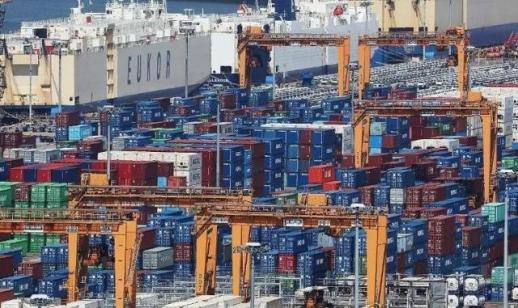 Korea to streamline customs for critical imports, expand FTA use to diversify supply chains As supply-chain disruptions from the Middle East war become more visible, South Korea’s customs authorities will simplify import clearance and unloading procedures for items deemed necessary for supply-demand management to speed deliveries of raw materials and intermediate goods. The Korea Customs Service also said it will pursue regulatory changes and identify additional support targets to help diversify supply chains. The agency announced the steps on the 7th at a ministerial task force meeting on special management of consumer prices, releasing an “inspection and improvement plan for import clearance of items affected by the Middle East war.” According to the Korea Customs Service, total crude oil imports in March and April fell to 130 million barrels this year from 150 million barrels a year earlier, down 8.5 percentage points. Imports from the Middle East dropped by 25.29 million barrels, while non-Middle East imports fell by 4.30 million barrels. The average unit price rose to $92 a barrel from $79 a year earlier, up 16.2%. Imports of Middle East-sourced liquefied natural gas and liquefied petroleum gas butane also plunged, down 12.7% and 47.8%, respectively. Key industrial inputs beyond energy also showed shifts. Total naphtha imports fell 25.2%, while sourcing diversified to the United States, Greece and India. Helium imports from Qatar dropped 45.5%, while shipments from the United States increased 49.9%. With energy and raw-material supply chains under strain, the customs service said it is operating an emergency response task force tied to the Middle East war to stabilize supplies and provide urgent tariff and logistics support. To ease bottlenecks at the import stage, it said it is helping rush-demand items clear customs before unloading so they can be deployed to industrial sites immediately upon arrival. The agency also said it is supporting supply measures by banning hoarding, designating certain emergency supply-demand adjustment items for penalties on delayed import declarations, and tightening customs screening for export-restricted goods. It is also analyzing import unit prices weekly for seven items, including crude oil and naphtha, and sharing detailed information with relevant ministries. To limit damage to companies trading with the Middle East, the customs service said it will minimize administrative fines, actively approve extensions of storage periods for unshipped cargo, and waive error points for corrections or withdrawals of export declarations. For companies using detours around the Strait of Hormuz or alternative transport, it said higher freight costs will be excluded from the customs value used for duties. It also said it will support Middle East importers with delivery extensions and installment payments. Until the Middle East war ends, the customs service said it will temporarily simplify import clearance and unloading procedures for supply-demand management items. For raw materials procured overseas, it will work with relevant ministries to allow required import documents to be submitted after customs clearance. To prevent supply delays caused by late arrivals or unloading of crude oil and LNG carriers, it will exclude them from vessel search designation and waive reporting requirements for moving to anchorage or mooring locations within ports. To diversify supply chains, the agency said it will identify additional systems and items eligible for special support under free trade agreements and work to resolve difficulties in import procedures. It said it will seek to shorten the time required to issue certificates of origin for Malaysian crude oil, which it said takes longer than in other countries. It also said it will review import support measures for some Australian condensate that can be used as a substitute feedstock for naphtha.* This article has been translated by AI. 2026-05-07 09:04:28
 -
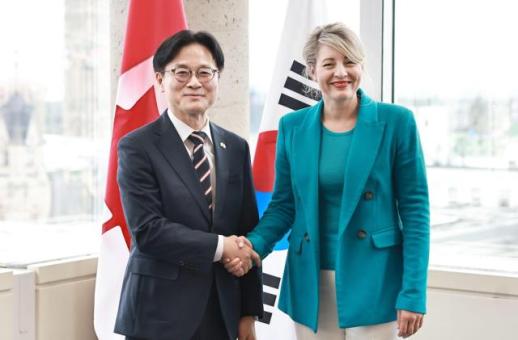 South Korea’s industry minister presses Canada submarine bid, calls it partnership turning point South Korean Industry Minister Kim Jeong-gwan, visiting Canada, has stepped up efforts to support defense exports, including a bid tied to Canada’s submarine program. The Ministry of Trade, Industry and Energy said May 7 that Kim met with Canadian Industry Minister Melanie Joly in Ottawa on May 5 (local time) and shared updates on industrial cooperation related to the submarine bid, including a memorandum of understanding between companies from the two countries. Kim and Joly also discussed expanding cooperation in other sectors such as hydrogen and coordinating in multilateral frameworks. Kim asked for Canadian government support for South Korean companies investing in Canada, the ministry said. The next day, Kim met with Energy and Natural Resources Minister Tim Hodgson and agreed to deepen cooperation on critical minerals, citing the need to diversify supply chains. Kim also met with Sen. Hassan Youssef, described as a former chair of the Senate defense committee, to discuss strategic cooperation between South Korea and Canada related to the submarine project. In talks with Flavio Volpe, president of the Automotive Parts Manufacturers’ Association, Kim exchanged views on defense industry cooperation and thanked the group for declaring its support for South Korea in connection with the submarine program. After finishing his Canada schedule, Kim is to travel to Washington, D.C., for preliminary talks on strategic investment with key U.S. officials, including U.S. Commerce Secretary Howard Lutnick. He also plans outreach to the U.S. Congress on investment and trade issues, the ministry said. “Winning Canada’s submarine project would go beyond a simple defense procurement and become an important turning point in building a long-term partnership between our two countries,” Kim said. “We will marshal public and private capabilities and respond with full force.”* This article has been translated by AI. 2026-05-07 08:52:09
 -
 South Korea’s Q1 Exports Hit Record as DRAM and NAND Shipments Surge AI server chip exports surged in the first quarter, pushing South Korea’s DRAM exports up 249.1% and NAND flash exports up 377.5%, according to newly compiled government data. With exports reaching a record high for the period, officials and analysts said South Korea could rise to fifth in the global export rankings, ahead of Japan and Italy. The Ministry of Trade, Industry and Energy said Tuesday it revised its MTI product codes for export-import analysis and released an assessment of 2026 first-quarter trade using the updated system. The MTI codes reclassify the globally used HS codes to better reflect South Korea’s industrial structure. It was the first revision since 2020. The ministry expanded its list of major export items to 20 from 15, adding five categories including electrical equipment, nonferrous metals, agricultural and fisheries foods, cosmetics and household goods, to provide more consistent statistics and make trends easier to track. It also refined subcategories for key sectors including semiconductors, autos and biohealth. Semiconductor data now separate memory and system chips, with memory broken down into DRAM and NAND. Autos are classified by vehicle type, such as passenger and cargo vehicles. A separate MTI code was created for biohealth, with subcategories for pharmaceuticals and medical devices. Based on the revised statistics, first-quarter exports totaled $219.9 billion, up 37.8% from a year earlier, the highest on record for the period. Exports rose in 13 of the 20 major categories. Semiconductor exports jumped 139% to $78.5 billion. With memory prices rising, DRAM exports climbed to $35.79 billion and NAND flash to $5.39 billion. System semiconductors increased 13.5% to $12.11 billion. Auto exports slipped 0.3% to $17.2 billion. Cargo vehicle exports rose 63.9% to $710 million, but passenger car exports fell 2.2% to $16.3 billion and vans dropped 31.7% to $70 million. Biohealth exports rose 0.6% to $4.2 billion, and electrical equipment exports increased 2.5% to $4.05 billion. South Korea’s global export ranking could also improve. Under World Trade Organization data, South Korea ranked fifth in exports in January and February, behind China, the United States, Germany and the Netherlands. With Japan, the sixth-ranked exporter for the two-month period, trailing South Korea by about $12.9 billion, the ministry said South Korea’s chances of holding fifth place for the full first quarter improved once March results are included. A ministry official said Japan’s Ministry of Economy, Trade and Industry reported March exports in yen that, when converted to dollars, were estimated at about $189.5 billion, roughly $30 billion less than South Korea. The official said it would be the first time South Korea ranks fifth in quarterly global exports if confirmed. The ministry cited risks including the war in the Middle East. It said a negative scenario in which the conflict affects conditions through the second half of the year and influences oil prices into next year would make export trends difficult to predict. It also noted that a strike issue involving Samsung Electronics’ labor union remains unresolved. Trade Minister Kim Jeong-gwan said export conditions ahead would not be easy, citing higher oil prices from the Middle East war, global supply-chain instability and uncertainty over U.S. tariffs. He said the government would expand trade finance and export insurance to ease companies’ funding burdens and continue measures to stabilize transport and supply chains to guard against logistics disruptions and support the first-quarter export momentum.* This article has been translated by AI. 2026-05-06 17:04:42
 -
 Korea’s Q1 DRAM Exports Jump 249% as NAND Surges 378% After Trade Code Revamp AI server-related chip shipments drove a sharp rise in South Korea’s first-quarter memory semiconductor exports, with DRAM exports up 249.1% and NAND flash up 377.5%, the government said. System semiconductors rose 13.5%, lagging far behind memory chips. Overall exports in the first quarter climbed 37.8% to $219.9 billion, the highest first-quarter total on record. The surge has fueled expectations South Korea could rank fifth globally in exports. The Ministry of Trade, Industry and Energy said Tuesday it revised its MTI product codes used for trade analysis and released first-quarter 2026 export and import trends based on the updated system. MTI codes are the ministry’s reclassification of the globally used HS codes to better reflect Korea’s industrial structure. The revision was the first since 2020. The ministry expanded its list of “top export items” from 15 to 20, adding five categories that have recently shown growth: electrical equipment, nonferrous metals, agricultural and fisheries products, cosmetics and household goods. Officials said the change is intended to provide more consistent statistics and make trends easier to track. An industry ministry official said the 2020 overhaul expanded the list to 15 items by adding biohealth and secondary batteries, and the latest revision will allow more detailed monthly explanations of fast-growing categories, including consumer goods. The ministry also adjusted subcategories for major exports such as semiconductors, autos and biohealth. Semiconductors had previously combined memory and system chips under a single integrated-circuit code; the revised statistics separate them, and further break memory chips into DRAM and NAND memory. Autos were reorganized into four upper-level categories by vehicle type, such as passenger and cargo vehicles, and six lower-level categories by powertrain, and the statistics now distinguish new and used vehicles. Biohealth received a new MTI code, with subcategories split into pharmaceuticals and medical devices. For steel, items previously included under steel materials, such as other steel products and parts and materials, were moved into a new category for other steel and metal products. For batteries, the ministry created a separate code for lithium-ion batteries, reflecting recent export growth. Natural materials and items such as bags, shoes and belts were moved into textiles. General machinery subcategories were aligned with actual industry classifications. To maintain consistency, the government will apply the revised system retroactively to statistics from 2022 onward. The ministry said the global HS code standard changed in 2022, and the retroactive application is intended to prevent statistical mismatches within Korea’s MTI-based system. Based on the revised statistics, exports rose in 14 of the 20 major categories in the first quarter. Semiconductor exports jumped 139% to $78.5 billion. With memory prices rising, DRAM exports climbed 249.1% to $35.79 billion and NAND flash surged 377.5% to $5.39 billion. System semiconductors increased 13.5% to $12.11 billion. Auto exports fell 0.3% to $17.2 billion. Cargo vehicle exports rose to $710 million, up 63.9%, but passenger car exports slipped 2.2% to $16.3 billion and vans dropped 31.7% to $70 million. Biohealth exports rose 9.6% to $4.2 billion, driven largely by pharmaceuticals, which increased 11.9% to $2.73 billion. Electrical equipment exports rose 2.5% to $4.05 billion, which the ministry attributed to sustained demand for transformers and power cables amid expanded global investment in power grids. Nonferrous metal exports rose 28.9% to $4.09 billion, reflecting higher prices for minerals such as copper and aluminum. Textile exports slipped 0.6% to $2.52 billion. However, textile product exports rose 7.1% to $1.0 billion, which the ministry linked to stronger demand for K-fashion. Cosmetics exports increased 21.5% to $3.13 billion amid rising preference for K-beauty. Agricultural and fisheries product exports rose 7.4% to $3.11 billion, and household goods increased 3.9% to $2.1 billion. The ministry expects the semiconductor upturn to continue for now. “Semiconductors typically show a weaker first half and stronger second half, so the first quarter is usually the off-season,” an official said. “This year, demand for AI server-related products has pushed exports above $30 billion for two consecutive months, and with DRAM contract prices high, the likelihood of continued strength is very high.” South Korea’s global export ranking is also in focus. Under World Trade Organization data, Korea ranked fifth in exports in January and February, behind China, the United States, Germany and the Netherlands. That marked a rise from about seventh last year, surpassing Japan and Italy. An industry ministry official said converting Japan’s March export figure, released by Japan’s Ministry of Economy, Trade and Industry in yen, into dollars suggests Japan’s exports were about $30 billion lower than South Korea’s. The official said this was the first time Korea ranked fifth in quarterly global exports. Risks include the war in the Middle East. Officials said if a negative scenario persists — with the conflict affecting the second half of the year and pushing oil prices into next year — export trends could become difficult to predict. The possibility of a strike by Samsung Electronics’ labor union also remains. Trade Minister Kim Jung-kwan said export conditions remain challenging due to higher oil prices tied to the Middle East war, global supply chain instability and uncertainty over U.S. tariffs. He said the government will expand trade finance and export insurance to ease companies’ funding burdens and continue measures to stabilize transport and supply chains to prepare for logistics disruptions, aiming to sustain the first-quarter export momentum.* This article has been translated by AI. 2026-05-06 14:03:16