
Journalist

Kim Seong-se
biblekim@ajunews.com
-
 KEPCO Names Kim Jae-gun as Executive Director, Power Grid Division Chief Korea Electric Power Corp. said it held an extraordinary shareholders meeting on the 27th at its headquarters in Naju, South Jeolla Province, and appointed Kim Jae-gun, former head of KEPCO’s Busan-Ulsan headquarters, as an executive director and head of its Power Grid Division, a vice president-level post. Kim graduated from Sudoteonki Technical High School and the electrical engineering department at Kyungil University, and joined KEPCO in 1986. He later served as head of the Daegu-Gyeongbuk Construction Branch, director of the power management office at the Daegu headquarters, head of the New Transmission Projects Office, and head of the Busan-Ulsan headquarters. KEPCO said Kim successfully completed the country’s first voltage-source high-voltage direct current (HVDC) transmission construction project linking the mainland and Jeju Island. The company said it expects him to help deliver timely construction of the future power grid, drawing on his expertise in new transmission and his field experience across power network construction and operations.* This article has been translated by AI. 2026-04-27 13:18:15
 -
 South Korea names 187 habitual wage violators, imposes credit curbs on 298 The Ministry of Employment and Labor said on 27일 it will publicly disclose the names of 187 employers found to have repeatedly withheld large amounts of wages and will impose credit sanctions on 298 employers. The employers named are classified as high-amount, habitual wage violators: as of Aug. 31, 2022, they had at least two final guilty verdicts for wage arrears within the previous three years and owed a total of at least 30 million won in unpaid wages within a one-year period. Credit sanctions apply to employers with total arrears of at least 20 million won. In one case, an employer identified as A, who ran a travel business in Gumi and regularly employed about 10 workers, failed over three years to pay about 120 million won in wages and severance to nine workers. The employer received two guilty verdicts, including a sentence of 1 year and 4 months in prison, suspended for three years. In another case, an employer identified as B, who operated a construction business in Cheonan, did not pay about 210 million won in wages to 88 workers over three years and received four guilty verdicts, including a two-year prison sentence. The ministry said the names of such high-amount, habitual violators will be posted on its website and other outlets. For those subject to public disclosure, information including name, age, business name and address, and the amount of unpaid wages over three years will be made public from 27일 through April 26, 2029. For corporations, the disclosure will include the representative director’s name, age and address, along with the corporate name and address. The employers will face disadvantages including limits on government subsidies, restrictions on competitive bidding under the National Contract Act, and limits on recruiting under the Employment Security Act. For employers subject to credit sanctions, personal details and arrears data will be provided to the Korea Credit Information Services, a centralized credit information agency. Under the agency’s rules, they will be listed for seven years as credit management targets and may face restrictions such as limits on loans. The ministry said employers newly placed on the public disclosure list will also be subject to travel bans under the amended Labor Standards Act that took effect last year. If they again fail to pay wages during the three-year disclosure period, the law’s provision requiring a victim’s wish not to punish will not apply, making them subject to criminal punishment regardless of the affected workers’ intent. Vice Minister Kwon Chang-jun said workers’ wages are compensation for labor and a means of livelihood, and that habitual, high-amount wage arrears are not a simple debt default but a serious illegal act that undermines the value of work. He said the ministry will ensure strengthened measures, including higher statutory penalties, are implemented to uproot the practice of treating wage arrears lightly.* This article has been translated by AI. 2026-04-27 12:08:34
 -
 Labor Ministry Official: Migrant Workers Must Not Face Discrimination or Safety Gaps Ryu Hyeon-cheol , head of the Occupational Safety and Health Headquarters at the Ministry of Employment and Labor, said on the 27th that migrant workers play key roles across shipbuilding, manufacturing, construction, and farming and livestock, but cases of human rights abuses and discrimination continue to recur. “No one should be discriminated against at work or face gaps in safety and health simply because of a different nationality,” Ryu said. Ryu made the remarks in Ulsan during a “Respect for Migrant Workers” campaign held with four labor rights foundations: the Public Mutual Growth Solidarity Fund, the Financial Industry Public Interest Foundation, the Office Finance Ubuntu Foundation, and the Jeon Tae-il Foundation. He said everyone should be recognized as a member of the workplace and be able to work safely and return home in good health. At the event, the ministry and the four foundations gave about 100 migrant workers at Ulsan-area workplaces safety helmets engraved with their names. It was the first campaign since the ministry and the foundations signed a memorandum of understanding on the 17th to improve migrant workers’ labor rights. Organizers said the effort is meant to encourage everyday practice of calling workers by their names instead of customary terms such as “hey” or “you,” and to stress the importance of wearing helmets to raise awareness of preventing industrial accidents. The ministry and the foundations plan to take the campaign nationwide, starting with Ulsan. Ryu called it meaningful to launch the campaign around Labor Day, which he said regained its name after 63 years, and said he hopes the practice spreads across industrial sites nationwide and helps build a society that respects labor.* This article has been translated by AI. 2026-04-27 11:36:00
 -
 Industry Minister Kim Jung-kwan vows overhaul to spur companies’ return to South Korea Kim Jung-kwan, minister of trade, industry and energy, said on the 27th that the need for South Korean companies operating overseas to return home is growing, but current reshoring policy has not kept pace, leading to stalled returns and repeated calls for change. He said the government will “overhaul” the policy so reshoring investment can energize regional economies and help build up core capabilities at home. Kim made the remarks during a visit to cosmetics manufacturer Kolmar Korea, selected as this year’s first reshoring company, where he held a meeting with returning firms. Kolmar Korea plans to close its overseas sites and invest 187 billion won in Sejong City after returning to South Korea. Since the enactment of the Act on Assistance to Returning Companies, reshoring policy from 2014 to 2025 generated 7 trillion won in investment and created 8,000 jobs. But new reshoring has stagnated as rapidly changing investment conditions — including stronger global protectionism and supply-chain restructuring — have not been sufficiently reflected in the policy. The ministry noted that major countries are competing to attract investment to keep advanced industries and key supply chains within their borders. It said policy needs to be redesigned not only to support relocating overseas operations back home, but also to secure core industrial capabilities. Companies at the meeting asked for stronger government support for investment amid uncertain global supply chains and accelerating artificial intelligence-driven transformation. They said eligibility for reshoring support is too narrow, citing a requirement that products and services made at overseas sites and at the returning domestic site must be the same or similar — making it difficult to qualify when switching production to different items or investing in research facilities in South Korea. They also said an obligation to maintain existing sites for the three-year implementation period, rather than the returning site, limits flexible operations. They urged more flexible employment standards as automation expands. The ministry said it will prepare improvements focused on expanding eligibility and refining detailed requirements, diversifying subsidy support based on the type of reshoring, and strengthening strategic attraction and close support for investment implementation. Kim thanked reshoring companies and said Kolmar Korea’s investment would be a leading example of productivity innovation through process automation. He said the government will strengthen the strategic approach to reshoring support, back investment implementation through completion, and assign a dedicated project manager to provide close, end-to-end assistance. “Corporate and national competitiveness has become an era determined by ‘how stable a supply chain you can secure,’” Kim said, adding that the government will actively support companies so returning home and investing in regional areas can be the most reasonable and attractive choice.* This article has been translated by AI. 2026-04-27 09:33:15
 -
 South Korea, Bolivia Sign MOU on International Greenhouse Gas Cuts Under Paris Agreement The Ministry of Climate, Energy and Environment said it will sign a memorandum of understanding with Bolivia’s Ministry of Planning, Development and Environment on Friday at The Plaza Hotel in Seoul to cooperate on international greenhouse gas reduction projects. The agreement is intended to build an institutional framework for bilateral emissions-reduction projects based on Article 6 of the Paris Agreement. It covers joint project implementation; measurement, reporting and verification of reductions; and the issuance, transfer and corresponding adjustment of reduction outcomes, among other elements of international mitigation projects. A separate MOU on joint development by public and private consortia was also signed. The Sudokwon Landfill Site Management Corp. is pursuing an international mitigation project in Bolivia that would incinerate landfill gas at two landfill sites and link it to power generation. The ministry said the effort is expected to help with on-the-ground implementation of such projects. The ministry said it plans to form a joint committee with Bolivia and draw up detailed rules for carrying out the projects. Second Vice Minister Lee Ho-hyeon said the climate crisis is “a shared task for humanity that cannot be solved by the efforts of one country alone,” adding that the Bolivia project would be “a key policy tool” for both countries to meet their national greenhouse gas reduction targets, known as NDCs.* This article has been translated by AI. 2026-04-24 17:05:55
 -
 South Korea, Japan Customs Chiefs Hold First Talks Under New Governments, Discuss RCEP The Korea Customs Service said April 24 that Commissioner Lee Myeong-gu met in Seoul on April 23 with Mitsuhiro Teraoka, director-general of the Customs and Tariff Bureau at Japan’s Ministry of Finance, for the 34th South Korea-Japan customs chiefs meeting. It was the first such meeting since new governments took office in both countries. With trade and exchanges expected to expand, the two sides discussed key issues and explored forward-looking cooperation, the agency said. They shared the view that joint efforts are needed to facilitate bilateral trade and respond to economic security threats as uncertainty grows in the global trade environment, including the spread of protectionism and rising supply-chain instability. The two sides discussed the smooth implementation of the Regional Comprehensive Economic Partnership, boosting cross-border e-commerce, strengthening cooperation to protect intellectual property rights, expanding economic security cooperation and promoting exchanges among regional customs offices. They agreed to begin technical talks on developing a system to exchange certificates of origin electronically for applying RCEP. To address a surge in e-commerce shipments, they also decided to hold regular meetings to discuss logistics facilitation and blocking illegal or harmful goods. They agreed to actively support the formal rollout of Japan’s maritime simplified customs clearance system, which has been piloted since October last year, and to expand information sharing between customs authorities to strengthen enforcement against goods that infringe intellectual property rights. “It is meaningful that we can resume discussions with Japan, one of Korea’s major trading partners, on customs and border management,” Lee said. “We will do our utmost to swiftly implement the agreed measures.”* This article has been translated by AI. 2026-04-24 17:00:19
 -
 South Korea, Poland Discuss Stronger Economic Ties and Supply Chain Cooperation South Korea’s Ministry of Trade, Industry and Energy said Trade Vice Minister Park Jeong-seong met Thursday in Seoul with Michal Jaros, a deputy minister at Poland’s Ministry of Economic Development and Technology, to discuss ways to strengthen bilateral economic cooperation and expand collaboration in supply chains and advanced industries. The ministry said the talks followed a recent summit between the two countries’ leaders and were intended to sustain momentum from that meeting through high-level exchanges. The two sides shared the view that Poland is one of South Korea’s key trading partners in the European Union and the largest destination for South Korean investment among the Visegrad Group countries — Poland, Hungary, the Czech Republic and Slovakia. They agreed to further develop industrial cooperation built around large-scale South Korean corporate investment in batteries, while working to expand trade and improve balance in the trade structure. Citing energy storage systems as a core area tied directly to energy security, the ministry said it asked Poland to increase the use of batteries made by South Korean companies producing locally for Polish ESS projects. It also requested Polish government attention so the battery industry can be included among sectors eligible for support under Poland’s “Energy-Intensive Industry Support Act.” The ministry also asked for Poland’s cooperation so South Korea’s position is sufficiently reflected in EU legislative discussions related to the Industrial Acceleration Act, known as the IAA. With economic and security issues increasingly intertwined amid global supply chain restructuring, intensifying strategic competition among major countries and an accelerating energy transition, the two sides agreed to pursue supply chain stability in strategic industries, technology cooperation and policy coordination, the ministry said. The ministry said it plans to deepen cooperation with Poland to produce concrete results in key areas including supply chains, the energy transition and advanced industries. “South Korea and Poland have built a stable foundation for cooperation based on mutual trust,” Park said. “We hope to continue expanding tangible outcomes not only in strategic industries such as batteries, but also in supply chain stability and advanced technology.”* This article has been translated by AI. 2026-04-24 16:23:03
 -
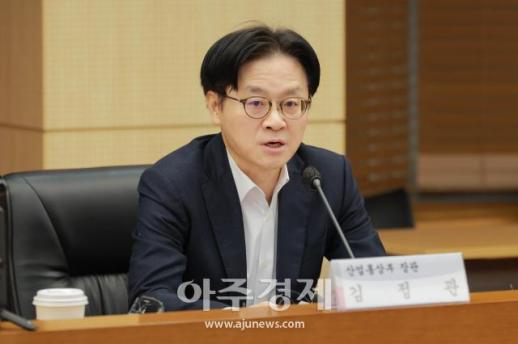 South Korea Industry Ministry Says Culture Improved After 5 Months Cutting 'Fake Work' The Ministry of Trade, Industry and Energy said more than half of its employees believe the agency’s workplace culture has improved since it launched a drive to cut what it calls “fake work.” The ministry said it held its second town hall meeting on Thursday at the Government Complex Sejong, with about 500 employees from headquarters and affiliated agencies attending. The meeting, chaired by Minister Kim Jeong-gwan, reviewed progress and next steps for the “fake work reduction” project launched after the first town hall meeting in November, and recognized employees for what the ministry described as “real results.” In an all-staff survey, 53% said workplace culture and work practices improved after the project was introduced, compared with 18% who responded negatively, the ministry said. Employees cited gains including more efficient public relations work such as providing summarized press clippings and distributing a checklist for drafting news releases (65%); fewer late-night hours spent waiting at the office (61%); fewer unnecessary business trips due to expanded use of video reporting (58%); and greater acceptance of simplifying events and reporting requirements led by bureau and division chiefs (58%). The ministry also shared results of an organizational diagnosis conducted in February with the Korea Productivity Center. The review found that, due to structural factors typical of an economy-focused ministry — including urgency, uncertainty and coordination with other agencies — working-level staff spend 41.6% of total working hours on “issue response and external cooperation.” The ministry said it will identify additional follow-up tasks tailored to these findings and work to improve them. During a question-and-answer session with the minister, employees raised broader concerns about working conditions, including personnel policies, attendance rules and welfare. Suggestions included establishing a promotion culture based on performance rather than seniority, expanding support for skills development, and eliminating tangible and intangible disadvantages for employees who take parental leave. A first special performance bonus ceremony was held alongside the meeting. The ministry said it awarded 68 million won in bonuses to 46 employees across eight selections. In the group category, a U.S.-focused team working on tariff negotiations and MASGA received 40 million won. In the individual category, four people were selected, including an assistant director who received 5 million won for leading work to build the policy foundation and implementation for the M.AX project, aimed at shifting manufacturing to artificial intelligence. “Seeing the changes achieved in half a year confirmed in numbers is meaningful,” Kim said. He said the ministry would return time lost to “formalities and old practices” to employees and connect that energy to results the public can feel. He added that employees’ feedback would be actively reflected in institutional improvements, calling it the starting point for the next round of innovation.* This article has been translated by AI. 2026-04-24 14:54:52
 -
 Korea Climate Ministry Renews UNFCCC Deal for Greenhouse Gas Expert Training The Ministry of Climate, Energy and Environment said it will renew a memorandum of understanding with the U.N. Framework Convention on Climate Change secretariat to cooperate on an international greenhouse gas expert training program. UNFCCC Deputy Executive Secretary Noura Hamladji and Vice Minister Lee Ho-hyeon will sign the renewal. The agreement was first signed in 2017, renewed once in 2021 and will be renewed again this year. The extension will continue the education partnership through December 2031, adding five years. Korea’s Greenhouse Gas Inventory and Research Center has operated the International Greenhouse Gas Expert Training Program since 2011 to help officials and experts from developing countries strengthen their ability to compile greenhouse gas statistics. After establishing a joint planning and operating system with the UNFCCC secretariat in 2017, the program produced a total of 498 graduates through 2025. The center designs the curriculum, with training focused on reporting tools used in practice, including Intergovernmental Panel on Climate Change software and tools for reporting under the Enhanced Transparency Framework. Instructors include experts from international organizations such as the UNFCCC secretariat, the IPCC and the U.N. Food and Agriculture Organization. About 30 participants are selected each year, and demand has continued to rise. Last year, the program drew 18 applicants for each slot. This year’s course will be held in person at Sejong University in Seoul from Aug. 31 to Sept. 18. Choi Min-ji, head of the center, said the renewal reflects international recognition of 15 years of cooperation on greenhouse gas training for developing countries. “Greenhouse gas estimation is the starting point for responding to the climate crisis, so we will actively support the program so it can provide practical help to developing countries,” Choi said.* This article has been translated by AI. 2026-04-24 11:33:16
 -
 South Korea Industry Ministry Hosts Lecture on Industrial Park AI Shift, Calls for Proof to Cut Costs The Ministry of Trade, Industry and Energy on the 24th held a special lecture for ministry staff, inviting Park Min-won, president of Changwon National University and head of the industrial complex AX subcommittee under the Manufacturing AI Transformation (M.AX) Alliance. The industrial complex AX subcommittee was launched on the 26th as the 11th subcommittee of the M.AX Alliance. On the 17th of this month, it held its first meeting after the chairs of 10 mini-alliances — the subcommittee’s implementation bodies — joined as members. The ministry said it planned the lecture after concluding that the industrial complex AX effort needs to move into full operation. The session, aimed at strengthening field-oriented policy capacity, was held under the theme, “Manufacturing, the heart of South Korea, opening the future with M.AX.” Park briefed staff on the historical context of M.AX, the urgency of the initiative and specific implementation plans. “As the global industrial order shifts, technology competition has intensified, and proof-of-concept demonstrations are needed so companies can reduce the investment burden when applying AI technologies,” Park said. He also called for sharing company interviews on demand for AX. Industry Minister Kim Jung-kwan said the lecture would help narrow the gap between policy and the field and renew a sense of urgency in pushing M.AX policy, strengthening internal capabilities. He said the ministry would expand opportunities for policy officials to directly grasp the pace and needs on the ground through continued communication with field experts.* This article has been translated by AI. 2026-04-24 11:03:17