

Journalist

Kim SeongSeo
biblekim@ajunews.com
-
 Government Revenue from Public Charges Decreased by 3.3% Last Year Last year, a decrease in tobacco export volume led to a reduction in the National Health Promotion Charge, while a rate cut also lowered the burden from the Power Industry Fund. As a result, the total public charges collected by the government fell by 3.3% compared to the previous year. On May 29, Vice Minister Lim Gi-geun chaired the third meeting of the Public Charge Management Committee, where the "2025 Comprehensive Report on Public Charge Management" was finalized. This report will be submitted to the National Assembly by the end of this month. Public charges are imposed in addition to taxes based on the principle of beneficiary and cause for the execution of specific public interest projects. Notable examples include the National Health Promotion Charge levied on tobacco consumers, the development charge that recovers a portion of profits from land development projects, and the traffic impact charge imposed on owners of large facilities in urban traffic management areas. Currently, 82 public charges are managed by 19 ministries, including the Ministry of Climate, Energy and Environment (21 charges), the Ministry of Land, Infrastructure and Transport (15 charges), and the Financial Services Commission (8 charges). The Comprehensive Report on Public Charge Management provides overall information related to public charges and serves as a financial statement for the national budget. The total amount collected from public charges last year was 23.4 trillion won, a decrease of 800 billion won (3.3%) from the previous year’s 24.2 trillion won. This marks the first decline in five years since 2020. By ministry, the Ministry of Climate collected the most at 6.47 trillion won, followed by the Financial Services Commission at 5.77 trillion won and the Ministry of Health and Welfare at 2.88 trillion won. The significant drop in the National Health Promotion Charge, which decreased by 279.5 billion won due to reduced tobacco export volume, contributed greatly to this decline. Additionally, the rate for the Agricultural Land Preservation Charge was adjusted from 30% to 20%, and the rate for the Power Industry Fund was reduced from 3.7% to 2.7%, resulting in decreases of 112.4 billion won and 311.2 billion won, respectively. In total, 44 public charges saw a reduction in collection, amounting to 1.4 trillion won. Conversely, efforts to secure funding for financial support for low-income households led to an increase of 136.8 billion won in contributions to the Korea Financial Services Agency, while contributions to regional credit guarantee foundations and the Central Credit Guarantee Foundation rose by 95.5 billion won. Additionally, the collection from 37 public charges, including the School Site Charge (340 billion won), increased by 600 billion won. The majority of the collected funds, totaling 19.8 trillion won (84.4%), were allocated to central government funds and special accounts. In terms of expenditure, 7.1 trillion won (30.1%) was directed towards financial support for small businesses and low-income households, the largest share. The industrial and energy sectors received 5.1 trillion won (21.8%), while the health and medical sectors, including National Health Promotion, accounted for 2.9 trillion won (12.3%), primarily utilized for public interest projects. Vice Minister Lim Gi-geun stated, "The public charge system, as a pillar of national finance, will be carefully managed to contribute to mitigating social externalities and applied transparently and equitably to the public and businesses. We will ensure that the funds are efficiently returned to essential public interest projects, such as supporting low-income finance and building industrial foundations."* This article has been translated by AI. 2026-05-29 11:38:00
 -
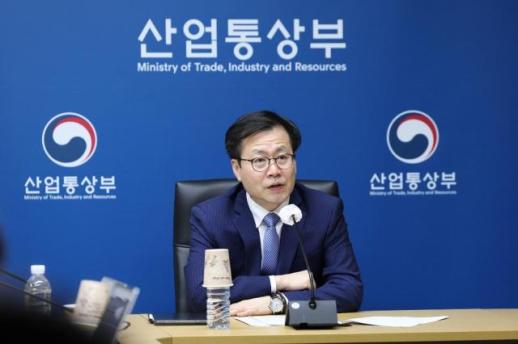 Korea's Electric Equipment Sector Positioned as Key Export Industry Yeo Han-goo, the head of the Trade Negotiation Bureau at the Ministry of Trade, Industry and Energy, stated on May 29 that despite increasing volatility in exports due to factors like the Middle East conflict and U.S. tariff policies, South Korea is turning these challenges into opportunities. He emphasized that electric equipment has established itself as a key export industry for South Korea, and the government will provide comprehensive support to ensure continued growth in exports. Yeo made these remarks during a meeting with the electric equipment industry at HD Hyundai Electric. In the months of March and April, exports exceeded $80 billion for two consecutive months, with electric equipment exports, including transformers, circuit breakers, cables, and motors, also showing an upward trend. Last year, electric equipment exports reached $16.7 billion, marking a 7.2% increase from the previous year and setting a record. From January to April this year, exports continued to grow by 3.8%. This growth is significantly influenced by the global expansion of artificial intelligence (AI) infrastructure and ongoing policies for transitioning to eco-friendly energy. Additionally, the replacement of aging power grids in the U.S. is driving global demand, suggesting that this year could also see record performance in the sector. To support the continued growth of electric equipment exports, the Ministry of Industry held this meeting to mark the first anniversary of the Lee Jae-myung administration. Companies attending the meeting requested assistance in stabilizing supply chains for raw materials and other resources to maintain stable business operations and exports amid global uncertainties. The ministry plans to provide extensive support to ensure that the electric equipment sector and other industries can sustain their export momentum. This includes expanding trade insurance to a record 275 trillion won this year, with 114 trillion won allocated for small and medium-sized enterprises. Furthermore, financial support for large-scale projects in nuclear power, defense, and electric equipment will be increased to 127 trillion won over the next five years. Regarding the electric equipment industry, the ministry aims to support the entire process from identifying global energy infrastructure projects to matching companies and providing proactive financial assistance in response to the growing demand from global AI data centers. Yeo stated, "Despite the instability in international circumstances, our electric equipment industry is leading the global market with its exceptional technological capabilities. The government will do its utmost to expand the operational scope of our companies through trade channels with major countries to maintain our leadership in the global market." 2026-05-29 11:02:00
 -
 April Tax Revenue Reaches 55.2 Trillion Won Amid Rising Corporate and Income Taxes Tax revenue in South Korea has shown an upward trend, coinciding with a strong performance in semiconductor exports. According to the Ministry of Finance and Economy, corporate tax revenue has increased due to improved corporate performance, while income tax has also risen due to higher performance bonuses. Additionally, the securities transaction tax has surged due to a booming stock market. In its report released on May 29, the ministry stated that tax revenue for April reached 55.2 trillion won, marking an increase of 6.3 trillion won (12.9%) compared to the same month last year. Corporate tax revenue rose significantly by 2.2 trillion won to 12.8 trillion won, largely due to improved corporate performance. A ministry official noted, "The increase includes amounts reported by semiconductor companies in March that were paid in installments, as well as figures from financial institutions' consolidated tax filings." The official added, "The rise in operating profits for semiconductor companies will likely have a more significant impact on the mid-term tax payments due in August and September rather than this reporting period." Income tax also saw an increase of 1.3 trillion won, totaling 9.7 trillion won. This rise was driven by higher performance bonuses and an increase in capital gains tax from rising stock prices. The securities transaction tax surged by 1.1 trillion won to 1.3 trillion won, more than five times higher than last year. The official explained, "The increase in securities transactions in March led to a rise in transaction taxes submitted in April, while the special rural tax also increased by 1.3 trillion won due to higher trading volumes on the KOSPI." Value-added tax increased by 300 billion won to 21.2 trillion won, and inheritance and gift taxes rose by 200 billion won to 3.5 trillion won, attributed to an increase in real estate gifts. The individual consumption tax and transportation, energy, and environmental taxes each rose by 100 billion won. As a result of the increase in April tax revenue, the cumulative tax revenue for the year reached 164.1 trillion won, up 21.9 trillion won from the previous year. The revenue progress rate stands at 39.5%, surpassing last year's rate of 38.0% and the average of 38.6% over the past five years. With the increase in tax revenue, the government anticipates a larger surplus for the year. Earlier, the government projected an excess tax revenue of 25.2 trillion won while preparing the first supplementary budget for the year. A ministry official stated, "To align with last year's performance of 373.9 trillion won, we need an increase of 41.5 trillion won this year. We have already secured about half of that, so there should be no major issues in meeting the supplementary budget amount." However, the official cautioned, "With first-half results still pending, there is currently no data indicating a large surplus will occur, so we will need to monitor corporate tax revenue in the second half." 2026-05-29 11:02:00
 -
 Finance Ministry: Major Countries Expanding Oil Price Support Policies Amid rising oil product prices due to the ongoing war in the Middle East, major countries are implementing measures to alleviate the burden of increasing energy costs. On May 29, the Ministry of Finance reported that Moon Ji-sung, Director of International Economic Management, chaired a video conference with finance officials from 14 countries at the Government Complex in Seoul on May 28. The finance officials are stationed in 16 embassies, supporting cooperation in finance and economic sectors with host governments and international organizations, as well as gathering information on major policy trends. The meeting was convened to reassess the responses of major countries to the protracted Middle East conflict and to share trends in economic cooperation related to the region. Currently, international oil prices have stabilized somewhat compared to the early days of the Middle East war, when prices exceeded $100 per barrel. Notably, as negotiations for a ceasefire between Iran and the United States progress, the ICE Futures Exchange reported that the July futures price for Brent crude closed at $93.71 per barrel, down 0.6% from the previous session. However, the transmission of international oil prices to oil product prices takes time, and international oil product prices remain elevated. In response, finance officials explained that major countries are continuing to pursue policies aimed at stabilizing prices, ensuring supply stability, and fostering international cooperation. They also noted a trend of expanding policies to alleviate the burden on citizens and vulnerable sectors due to rising energy costs. Specifically, Singapore is providing early vouchers of around $500 to all households and increasing special living expense support to $200 for individuals with taxable income below $100,000. Thailand is implementing a matching subsidy policy that supports 60% of consumer spending, up to a maximum of 1,000 baht per month, targeting 13 million welfare cardholders and 30 million citizens over 18 who do not hold welfare cards. France has extended fuel subsidies for transportation, agriculture, fisheries, and construction from May to August and increased mileage allowances for visiting caregivers. Additionally, the tax exemption for employer fuel subsidies has been raised from €300 to €600 annually. The government plans to closely monitor policies and market trends from various countries while maintaining close communication with finance officials. Moon Ji-sung emphasized, "The information that finance officials provide quickly from the field is very helpful for government responses," adding, "Given the high level of uncertainty in the current situation in the Middle East, continuous monitoring will be necessary."* This article has been translated by AI. 2026-05-29 10:02:00
 -
 South Korea to Issue 200 Billion Won in Retail Bonds in June The South Korean government plans to issue a total of 200 billion won in retail bonds next month. The additional interest rates will be flexibly adjusted based on market conditions. The Ministry of Finance and Economy announced on May 29 that it will issue 30 billion won in three-year fixed-rate bonds and 70 billion won in three-year compound interest bonds, along with 600 billion won in five-year bonds, 1 trillion won in ten-year bonds, and 300 billion won in twenty-year bonds, totaling 200 billion won. The coupon rates will be based on the auction rates of similar government bonds issued in May: 3.565% for three-year bonds, 3.940% for five-year bonds, 4.295% for ten-year bonds, and 4.145% for twenty-year bonds. The additional interest rates will be adjusted flexibly in response to recent sharp increases in the coupon rates of government bonds and overall market conditions. Consequently, an additional 0.1% will be added to the five-year bonds, 0.5% to the ten-year bonds, and 0.8% to the twenty-year bonds. No additional interest will be applied to the three-year bonds, considering the yields of financial market products. If held to maturity, the pre-tax yields for the June-issued retail bonds will be approximately 10.7% for three-year fixed-rate bonds, 11.1% for three-year compound interest bonds, 21.9% for five-year bonds, 59.7% for ten-year bonds, and 162.6% for twenty-year bonds. The subscription period will be from June 10 to June 16, during business hours from 9 a.m. to 4 p.m. Individual investors can apply by visiting the sales agency Mirae Asset Securities or online during this period. The minimum subscription amount is 100,000 won, with an annual purchase limit of 200 million won per person. Additionally, retail bonds issued between June 2024 and May 2025 can be redeemed early during June. However, in this case, investors will only receive the principal and interest based on the coupon rate at the time of purchase, without benefits such as compound interest or separate taxation on interest income. The government has been issuing retail bonds since June 2024. Each month, it announces the issuance plan for the following month, with subscriptions typically taking place during the five business days leading up to the issuance date. The Ministry of Finance and Economy issued a total of 200 billion won in retail bonds last month as well.* This article has been translated by AI. 2026-05-29 10:02:00
 -
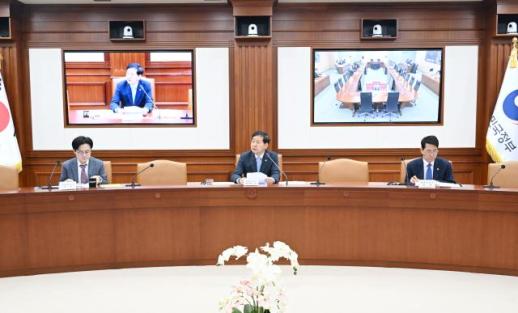 Deputy Prime Minister Koo Yoon-cheol: April Industrial Production Adjusted, Improvement Expected Koo Yoon-cheol, Deputy Prime Minister and Minister of Economy and Finance, stated on May 29 that "April's industrial production experienced a temporary adjustment due to high growth rates in previous months." He added, "In May, both consumer sentiment and business confidence have risen significantly, and the positive trend in exports is expected to continue, leading to a resumption of improvement." Koo made these remarks while presiding over a meeting of the Emergency Economic Headquarters and the Economic and Industrial Competitiveness Enhancement Ministerial Meeting at the Government Seoul Building. He noted that as the Middle East conflict persists, major institutions are revising their growth forecasts for South Korea upward. The Bank of Korea recently adjusted its GDP growth forecast for this year to 2.6%, an increase of 0.6 percentage points from the previous estimate of 2.0% made in February. The Korea Development Institute (KDI) also raised its growth forecast to 2.5%, up by 0.6 percentage points from its prior projection. However, the impact of the Middle East conflict has begun to manifest, with declines in industrial production, retail sales, and investment reported last month. According to the National Data Agency's "April Industrial Activity Trends" report, overall industrial production, retail sales, and facility investment fell by 0.6%, 3.6%, and 3.6%, respectively. In light of these developments, Koo interpreted the situation as a temporary adjustment phase, given the signs of economic recovery. He emphasized, "The government will do its utmost to minimize the burden on the public caused by high oil prices while injecting new vitality into the economy. We will also extend the current ban on hoarding urea and urea water until July to stabilize supply and demand." During the meeting, discussions included the response to the Middle East conflict, strategies for re-establishing and promoting return investments, measures to expand fuel costs for farmers and fishermen, innovations in marine safety culture, and support plans for medium-sized shipbuilders. Koo announced, "Starting today, we will increase the subsidy limit for fuel tax-exempt oil for agricultural and fisheries vehicles, following adjustments made for freight and passenger vehicles. The subsidy will rise from 12.9% to 16.4%, increasing by 36 to 42 won per liter compared to the base price." He also stated, "We will flexibly assess the similarity of products and services produced overseas to domestic production, considering core technologies and supply chains. We will improve support methods to attract large-scale investments, particularly in regional areas." Regarding innovations in marine safety culture, Koo mentioned that high-risk vessels will be required to disclose their safety investment records, and a 'Safety Rating System for Shipping Companies' will be introduced for tailored management. He expressed a commitment to expanding opportunities for the public to experience marine safety in their daily lives. As the global shipbuilding industry experiences a boom, discussions also focused on supporting the issuance of refund guarantees (RG) for medium-sized shipbuilders. Koo concluded, "Based on today's discussions, we will swiftly establish measures for the leap forward of K-shipbuilding and the creation of a healthy industrial ecosystem."* This article has been translated by AI. 2026-05-29 09:00:00
 -
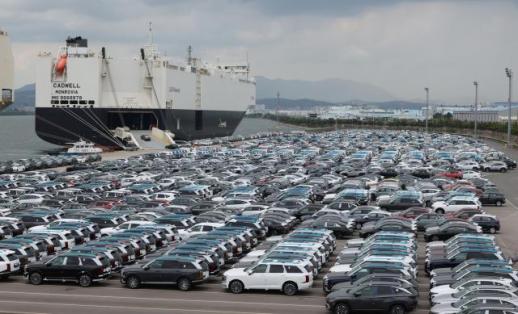 Impact of Middle East War Intensifies as Production, Consumption, and Investment Decline in April Last month, South Korea experienced simultaneous declines in production, consumption, and investment. This marks the first time all three indicators have decreased since August of last year. The impact of the ongoing Middle East war, which began at the end of February, appears to be significantly affecting the economy. According to the National Data Agency's report on April 2025 industrial activity trends released on the 29th, the index for total industrial production (seasonally adjusted, excluding agriculture and fisheries) fell to 117.8 (2020=100), a decrease of 0.6% from the previous month. This is the first decline in total industrial production since January, when it dropped by 0.8%. The decrease in production is largely attributed to declines in the service, mining, and construction sectors. While semiconductor production increased by 3.1%, mining production overall fell by 0.7%, driven down by significant drops in automotive production (-10.0%) and petroleum refining (-19.4%). Automotive production saw its largest decline since September of last year, when it fell by 15.3%. A representative from the data agency noted, "The decline in March was influenced by supply chain disruptions caused by fires at some parts manufacturers. However, we should also consider the pent-up demand due to new model launches starting in May." Petroleum refining experienced its steepest drop since May 1988, when it fell by 22.1%. Analysts interpret this as a result of supply difficulties caused by the blockade of the Strait of Hormuz due to the Middle East war, compounded by scheduled maintenance at some refineries. In the service sector, while production in information and communication increased by 4.3%, declines in finance and insurance (-7.7%) and retail (-1.5%) led to an overall decrease of 1.0% from the previous month. This is the largest drop since February 2022, when it fell by 1.7%. Domestic indicators also showed weakness. The retail sales index decreased by 3.6% compared to the previous month, marking the largest decline since February 2024, when it fell by 3.7%. While semi-durable goods remained stable, sales of durable goods, including communication devices, computers, and automobiles (-11.1%), as well as non-durable goods like vehicle fuel (-1.1%), significantly contributed to the decline. The representative added, "The sales of communication devices and computers may have been affected by a base effect from last month's 40.0% increase, while the drop in automobile sales is related to the surge in electric vehicle shipments earlier this year due to government subsidies." Investment also faced a downturn, with facility investment decreasing by 3.6% from the previous month. Although investment in machinery for semiconductor manufacturing rose by 0.5%, investment in transportation equipment, including other transport vehicles, fell by 11.5%. The data agency identified a significant reduction in aircraft imports as a key factor. Construction output declined by 1.4% compared to March, with both building (-1.5%) and civil engineering (-1.1%) projects seeing reduced activity. The coincident composite index, which reflects the current economic situation, rose by 0.2 points to 100.2, remaining above the baseline of 100 for the second consecutive month. The leading composite index, which forecasts future economic conditions, increased by 0.6 points to 104.1.* This article has been translated by AI. 2026-05-29 08:24:00
 -
 South Korea Eases Requirements for Companies Returning from Overseas 정부가 해외로 나간 기업들의 국내 복귀를 촉진하기 위해 '유턴기업'의 인정 요청을 대폭 개선한다. 동일성 요건을 완화하고 해외 사업장 구조조정 요건에 대한 면제 범위도 확대하는 것이 핵심이다. 보조금 지원체계도 국내 투자 확대에 더 직접적을 연동되도록 개편한다. The South Korean government is significantly improving the recognition process for companies returning from overseas, known as "returning companies." Key changes include relaxing the requirements for product similarity and expanding exemptions for restructuring overseas operations. The subsidy support system will also be restructured to more directly encourage domestic investment. On May 29, the Ministry of Trade, Industry and Energy presented these plans during an economic ministers' meeting, outlining a strategy for promoting domestic returns. Previously, to be recognized as a returning company, firms had to liquidate or transfer their overseas operations and reduce their overseas production by a certain level before making new investments in South Korea. However, there have been ongoing criticisms that the existing policies do not align with the realities faced by businesses. Companies wishing to maintain their global production networks while also investing domestically found themselves outside the support framework, as they were required to completely reduce or restructure their overseas operations. This was particularly challenging for advanced industries, where maintaining overseas bases is crucial for responding to local markets and managing supply chains. Thus, using overseas production reduction as the sole criterion for determining domestic return was seen as inadequate. The Korea Development Institute (KDI) raised concerns about the effectiveness of reshoring policies in a report published in 2023. The report noted that reshoring companies in South Korea tend to be smaller, labor-intensive, and less productive compared to multinational corporations. Additionally, the employment effects of their domestic investments were found to be lower than those of purely domestic firms, despite receiving more government support. In response, the government plans to focus on several key areas through this new initiative: redesigning the recognition criteria for returning companies, restructuring the subsidy support system, enhancing evaluation and management, and providing close support for strategic attraction and investment implementation. The government will broaden the narrow definition of returning companies. Major countries like the United States and Japan are prioritizing investment support based on securing production capabilities in advanced strategic sectors rather than merely formal requirements. The government aims to revise relevant laws related to returning companies this year and implement them starting next year. The requirement for product and service similarity between overseas operations and domestic return projects will be relaxed. The government will adopt a more flexible approach to similarity assessments to support investments aimed at entering new industries and enhancing business structures. An official from the Ministry of Trade, Industry and Energy explained, "If a traditional auto parts company transitions to producing electric vehicle parts, it previously could not be recognized for returning. We will now acknowledge such companies transitioning to new industries as returning companies, although sudden shifts in industry will still be challenging." Additionally, the scope of exemptions for restructuring overseas operations will be expanded. Exemptions will apply to investments recognized as core production facilities in advanced industries and supply chain sectors. This aims to actively promote the domestic acquisition of advanced manufacturing and innovation capabilities beyond mere formal requirements. The subsidy support system for returning companies will also be restructured. The previous system applied uniform subsidy rates based on a set criteria, which limited the attraction of excellent returning companies, particularly in regional areas. To promote local investment and encourage returning in advanced strategic sectors, the government will overhaul the subsidy system to a negotiation-based approach. This negotiation method will draw on cash support policies for foreign investment companies, determining the scale of support through discussions between the government and companies based on economic impact or strategic sectors. Factors such as non-capital area investments, youth employment creation, advanced strategic technologies, and mother factory status will be comprehensively considered. To actively encourage local investment and the introduction of advanced strategic technologies, the criteria will shift from fixed limits to focusing on subsidy rate ceilings. While general sectors and small-scale investments will continue under the current system, the basic subsidy rate will be adjusted to align with local investment promotion levels. To strengthen investment implementation, the evaluation of domestic investment plans and implementation capabilities will be enhanced from the selection stage of returning companies. A new Domestic Return Practical Committee will be established through amendments to the enforcement decree to systematically manage the selection evaluation and subsidy review processes. Detailed procedures supporting the negotiation-based subsidy system will also be developed. To ensure closer monitoring of investment implementation by returning companies receiving subsidies, the implementation period will be extended from the current three years based on the scale of support. The requirements for implementation will also be improved to reflect trends in manufacturing automation and changes in industrial structure. Potential returning companies with core capabilities in advanced industries, manufacturing AI transitions, and supply chain sectors will be proactively identified and attracted. Dedicated project managers will be assigned to provide close support throughout the investment review and implementation process. Kim Jeong-kwan, Minister of Trade, Industry and Energy, stated, "Returning is becoming a strategic choice about where to center technology development, production, and supply chains, beyond just relocating factories. We will redefine the concept of returning based on feedback from the field and boldly restructure and expand our support methods."* This article has been translated by AI. 2026-05-29 08:04:00
 -
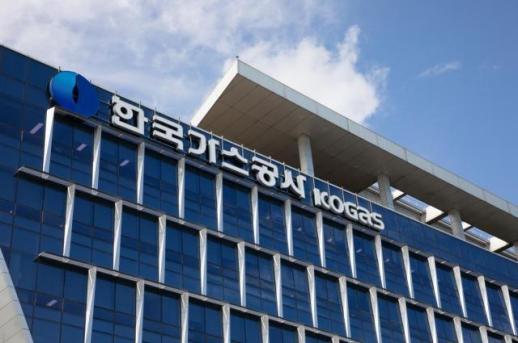 Korea Gas Corporation to Disclose Environmental Impact of Natural Gas As the importance of ESG (Environmental, Social, and Governance) management grows, there is an increasing demand for the disclosure of environmental product declarations related to energy sources like liquefied natural gas (LNG). The environmental impact from carbon emissions and the entire production-to-consumption process is directly linked to a company's ESG performance, prompting energy public enterprises to consider releasing environmental data at the product level. According to industry sources on May 27, an environmental product declaration quantifies and publicly discloses the environmental impacts occurring throughout the entire process of a product, from raw material extraction to production, transportation, distribution, usage, and disposal. There is a growing demand for energy companies, which inevitably produce carbon emissions, to disclose such environmental product declarations. In response, Korea Gas Corporation is pursuing certification for natural gas products, becoming the first in the country to do so. While the company has previously released environmental information at the corporate level through global evaluation agencies, it recognized the limitations in providing specific environmental data at the product level. Korea Gas Corporation has initially targeted certification for LNG truck supply products, as the boundaries of the process are clearer compared to pipeline supply, making data collection easier. However, due to the complex process from natural gas import to supply, a large-scale collaborative project involving 10 internal departments and 33 domestic and international suppliers has been launched. During this process, the company collected and standardized 16,752 data points across all stages, including raw material extraction, maritime transport, storage and distribution, and truck dispatch. As a result, it quantitatively assessed environmental impacts across seven categories, including carbon footprint, water footprint, and ozone layer impact. This effort has established a foundation for systematically managing environmental data across the entire supply chain, beyond just a simple certification process. Particularly, a comprehensive assessment of the production and transportation processes of LNG is deemed essential. Industry experts view Korea Gas Corporation's objective data acquisition as a means to not only sell energy but also provide carbon information and environmental data simultaneously. Given the need to manage carbon emissions during the production process, the provision of environmental data by energy suppliers is likely to become a significant purchasing criterion. Starting with this initiative, Korea Gas Corporation plans to gradually expand the scope of certification to include pipeline-supplied natural gas and hydrogen. This is because it can objectively demonstrate that LNG has lower carbon emissions compared to fossil fuels. The collected data will be provided to 119 truck supply demand points. Additionally, the general public will be able to intuitively perceive the eco-friendliness of natural gas through the environmental product declaration certification mark attached to truck vehicles they encounter in their daily lives. A representative from Korea Gas Corporation stated, "This certification initiative is the first step toward providing consumer-centered environmental information. Through transparent information disclosure and ongoing environmental improvement efforts, we aim to establish ourselves as a trusted eco-friendly energy company among the public."* This article has been translated by AI. 2026-05-28 18:28:00
 -
 Labor Minister Kim Young-hoon Addresses Controversy Over Excess Profit Distribution Kim Young-hoon, the Minister of Employment and Labor, stated on May 28 that there are misconceptions suggesting the government intends to seize and redistribute profits from large corporations. He emphasized, "The government has neither the authority nor the intention to forcibly intervene in legitimate corporate profits." In a post on his social media, Minister Kim addressed the ongoing debate regarding the distribution of excess profits by large companies, asserting that it misinterprets the government's concerns and the essence of social dialogue. Earlier, during a meeting with reporters, Kim mentioned the need for social discussions on how to redistribute excess profits from large corporations. He announced plans for an urgent discussion hosted by the ministry next week, aiming to explore a 'Korean-style social solidarity wage' for the redistribution of excess profits. He added, "The success of Samsung Electronics today is the result of the dedicated efforts of labor and management, combined with support from the state and local communities. If we agree that this redistribution should also occur socially, then the solution must come through social dialogue." However, some critics argue that this approach represents excessive government intervention. The ruling People Power Party expressed concerns through a statement by Choi Bo-yun, head of the party's central election committee, describing it as a "dangerous state intervention that undermines the foundations of a free market economy." They noted that no other country has a government defining what constitutes 'normal profit' versus 'excess profit' for social distribution. Minister Kim acknowledged that while the wage agreement between Samsung Electronics and its labor union has been finalized, significant challenges remain for society. He pointed out that in the era of artificial intelligence (AI), various voices have emerged regarding the fairness of performance-based pay distribution, conflicts among labor, management, and shareholders, and risks in the capital market. This indicates a high level of public interest in these issues. He remarked, "The essence of this is a pressing question about 'how to live well together' in our society. I believe the solution lies in social dialogue, where we listen to diverse voices from the public, empathize with their concerns, and collaboratively seek alternatives and solutions. This is why I proposed the urgent discussion." Kim stressed that the widening gap among workers cannot be ignored, reflecting the will of the sovereign people. He called for labor, management, and the government to unite in wisdom to create a society where all can grow together through cooperation between primary and subcontractors. "We must listen and engage in dialogue with unwavering passion," he concluded. He further stated, "There are no companies without workers, and no unions created for companies to fail. Ultimately, we must live together."* This article has been translated by AI. 2026-05-28 12:33:00