

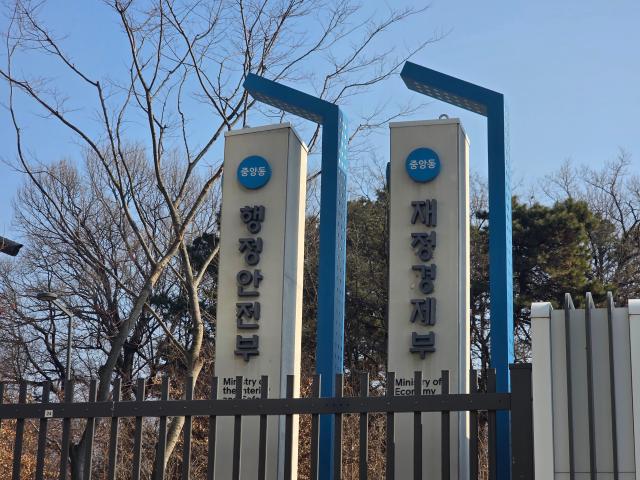
On May 29, the Ministry of Finance reported that Moon Ji-sung, Director of International Economic Management, chaired a video conference with finance officials from 14 countries at the Government Complex in Seoul on May 28. The finance officials are stationed in 16 embassies, supporting cooperation in finance and economic sectors with host governments and international organizations, as well as gathering information on major policy trends.
The meeting was convened to reassess the responses of major countries to the protracted Middle East conflict and to share trends in economic cooperation related to the region.
Currently, international oil prices have stabilized somewhat compared to the early days of the Middle East war, when prices exceeded $100 per barrel. Notably, as negotiations for a ceasefire between Iran and the United States progress, the ICE Futures Exchange reported that the July futures price for Brent crude closed at $93.71 per barrel, down 0.6% from the previous session.
However, the transmission of international oil prices to oil product prices takes time, and international oil product prices remain elevated. In response, finance officials explained that major countries are continuing to pursue policies aimed at stabilizing prices, ensuring supply stability, and fostering international cooperation. They also noted a trend of expanding policies to alleviate the burden on citizens and vulnerable sectors due to rising energy costs.
Specifically, Singapore is providing early vouchers of around $500 to all households and increasing special living expense support to $200 for individuals with taxable income below $100,000. Thailand is implementing a matching subsidy policy that supports 60% of consumer spending, up to a maximum of 1,000 baht per month, targeting 13 million welfare cardholders and 30 million citizens over 18 who do not hold welfare cards.
France has extended fuel subsidies for transportation, agriculture, fisheries, and construction from May to August and increased mileage allowances for visiting caregivers. Additionally, the tax exemption for employer fuel subsidies has been raised from €300 to €600 annually.
The government plans to closely monitor policies and market trends from various countries while maintaining close communication with finance officials. Moon Ji-sung emphasized, "The information that finance officials provide quickly from the field is very helpful for government responses," adding, "Given the high level of uncertainty in the current situation in the Middle East, continuous monitoring will be necessary."
* This article has been translated by AI.

Copyright ⓒ Aju Press All rights reserved.