SEOUL, May 29 (AJP) - South Korea's memory-chip giants climbed to fresh records Friday as investors turned euphoric ahead of next week's visit by their biggest customer, Nvidia Chief Executive Officer Jensen Huang, fueling hopes of deeper AI partnerships and new orders for next-generation memory chips.
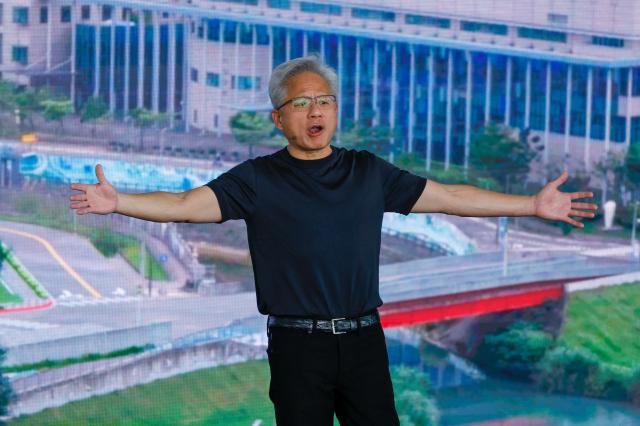
The world's most valuable company's CEO Jensen Huang is set to visit South Korea next week, a trip expected to transform his high-profile camaraderie with the country's conglomerate chiefs into broader business alliances that could reshape parts of the domestic technology sector.
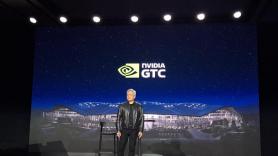
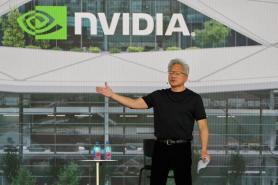
According to industry sources, Huang will travel to Seoul following his keynote address at the GTC Taipei 2026 AI conference, which runs from June 1 to 4.
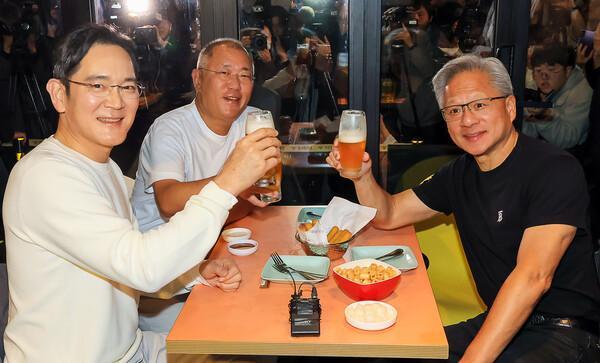
The upcoming visit, occurring just seven months after his widely publicized "Gganbu" gathering with South Korean business leaders, signals Nvidia's intent to expand its footprint beyond its existing semiconductor supply chain into broader industrial ecosystems spanning physical AI, cloud infrastructure and industrial automation.
Investors wasted little time positioning for that possibility.
Samsung Electronics rose 5.5 percent to a record closing high of 316,000 won, lifting its market capitalization to 1,853.3 trillion won ($1.35 trillion), while SK hynix climbed 2.23 percent to an all-time high of 2.34 million won, bringing its market value to 1,662.7 trillion won.
Together, the two memory giants were worth more than 3,500 trillion won, accounting for nearly half of the KOSPI's total market capitalization and underscoring how deeply South Korea's stock market has become tied to the global artificial intelligence boom.
Market watchers expect Huang to hold a series of strategic meetings with major South Korean business leaders, including LG Group Chairman Koo Kwang-mo and executives from internet giant Naver.
Discussions with LG are expected to center on physical AI collaboration, potentially involving affiliates such as LG AI Research, LG Innotek and LG Uplus, combining hardware sensing technologies with AI software capabilities for next-generation industrial applications.
The visit also coincides with a critical moment in the race for high-bandwidth memory, a key component powering Nvidia's AI accelerators.
Earlier Friday, Samsung Electronics announced shipments of the industry's first 12-layer HBM4E memory samples. Huang is reportedly coordinating a meeting with Jun Young-hyun, head of Samsung's Device Solutions division, a discussion that could directly influence the qualification process and supply timeline for Samsung's next-generation HBM products.
Any sign of progress would be closely watched by investors seeking evidence that Samsung is narrowing the gap with SK hynix, Nvidia's primary supplier of HBM chips and one of the biggest beneficiaries of the AI spending frenzy.
The industry is also betting on the possibility of a second "Gganbu Meeting" involving Samsung Electronics Chairman Lee Jae-yong, Hyundai Motor Group Executive Chair Chung Euisun and SK Group Chairman Chey Tae-won.
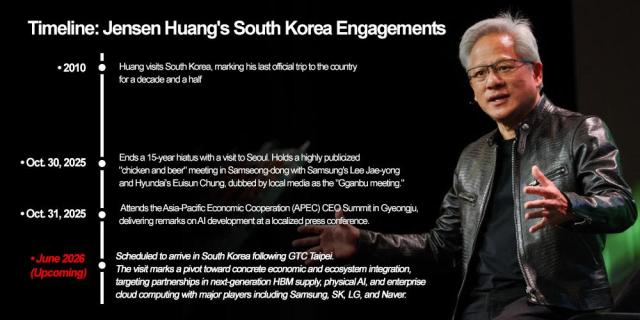
Chey is scheduled to meet Huang separately at Computex 2026 in Taiwan before the Nvidia chief's arrival in Seoul, marking their fourth encounter in seven months and highlighting the increasingly strategic relationship between Nvidia and South Korea's corporate elite.
Analysts say such high-level networking carries growing economic significance in a technology industry where supply chains, product development and market access increasingly depend on close cooperation among a handful of global leaders.
"In a global supply chain where mutual cooperation is essential rather than a single company's monopoly, building closer relationships naturally leads to increased exchanges and stronger partnerships," said Kang Sung-jin, a professor of economics at Korea University.
"It gives a positive signal to investors that these companies will cooperate and support one another," Kang added. "These meetings go beyond simple socializing and help reinforce confidence in future business opportunities."

Copyright ⓒ Aju Press All rights reserved.