
Journalist

Candice Kim
candicekim1121@ajupress.com
-
 SK hynix best-yet Q4 and 2025 income, beating consensus and Samsung Elec SEOUL, January 28 (AJP) -SK hynix, leveraging its dominant lead in high-bandwidth memory (HBM) powering hyperscalers and AI accelerators, delivered its strongest-yet quarterly and annual results and expects further gains this year as global memory revenue approaches $1 trillion. According to a regulatory filing Tuesday, operating income for the quarter ended December surged to 19.17 trillion won ($13.5 billion), up 68 percent from the previous quarter and 137 percent from a year earlier, marking the company’s best quarterly performance on record. Quarterly revenue climbed to a historic high of 32.83 trillion won. The results comfortably beat market expectations. A FnGuide consensus had projected operating profit of 16.4 trillion won on sales of 30.83 trillion won. SK hynix shares closed 5.13 percent higher at 841,000 won, although the earnings were released after market close and earlier than scheduled Thursday, coinciding with Samsung Electronics’ earnings call. For the full year, operating profit more than doubled to 47.2 trillion won from 23.47 trillion won in 2024, surpassing Samsung Electronics’ preliminary consolidated operating profit of 43.5 trillion won for 2025. Annual revenue jumped 47 percent year on year to 97.15 trillion won. An operating margin of 49 percent underscored the pricing power of the pure-play chipmaker, meaning nearly half of every won in chip sales translated into operating profit. “Our results demonstrate the outcome of strategic execution that secured both profitability and growth by reinforcing technology leadership and expanding the share of premium products,” SK hynix said in a statement, adding that 2025 marked “a year in which the company once again proved its world-class technological competitiveness.” SK hynix has been enjoying a clear heyday, overtaking long-time industry leader Samsung Electronics in global memory market share in the first half of the year, largely on the back of its leadership in HBM — widely described as the core memory architecture behind Nvidia’s AI accelerators. Despite market speculation over Samsung Electronics’ rapid progress in sixth-generation HBM4, SK hynix is widely believed to have secured nearly 70 percent of supply allocations for Nvidia’s next-generation Rubin platform, scheduled for release this year. Counterpoint Research estimates SK hynix will command around 54 percent of global HBM4 sales this year, compared with 28 percent for Samsung Electronics and 18 percent for Micron. In HBM3, the company accounted for 62 percent of shipments as of June 2025 and 57 percent of revenue as of September. Goldman Sachs expects SK hynix to maintain a comfortable lead in HBM3 through at least 2026, while UBS forecasts the company will capture around 70 percent of the next AI-standard memory market, HBM4. Bank of America, meanwhile, recently described 2026 as a “supercycle comparable to the memory boom of the 1990s,” projecting year-on-year growth of 51 percent in DRAM sales and 45 percent in NAND, with SK hynix positioned as the primary beneficiary of the industry-wide upswing. 2026-01-28 17:11:48
 -
 AI servers shift toward memory as Samsung moves first with HBM4 rollout SEOUL, January 26 (AJP) - Samsung Electronics has bolted out in the high-bandwidth memory (HBM) race as it readies to roll out sixth-generation high-bandwidth memory, HBM4, next month bound for U.S.-based fabless chip leaders Nvidia and AMD. The Korean tech giant has completed final qualification processes with major AI accelerator customers, clearing the transition from sampling to mass production ahead of next-generation chip launches expected later this year. Industry sources said all major memory makers, including SK hynix and Micron, recently resubmitted HBM4 samples in response to Nvidia’s tightened specifications for its upcoming Rubin platform. Samsung is understood to be the first supplier approved for an HBM4 prototype fabricated using its 1c-nanometer DRAM process. An official familiar with the matter said the current stage has moved beyond initial sampling, noting that sample shipments had already been provided to customers toward the end of last year. “Because this involves customer-specific products, it is difficult to confirm detailed internal processes,” the official said. “However, it is accurate to view the current phase as the step following sample shipments.” The official added that mass supply timing is closely linked to customers’ product readiness and launch schedules, and said shipments would proceed in line with those timelines. According to TrendForce, HBM4 is expected to cost at least 30 percent more than current HBM3E products due to the complexity of its new architecture and packaging requirements. Despite the higher price, demand is accelerating. The global HBM market is estimated at around $35 billion in 2025 and is projected to expand to between $52 billion and $61 billion in 2026. Some industry forecasts point to annual sales exceeding $85 billion by 2027 as AI workloads scale rapidly across data centers. The expansion is being driven by surging memory demand from advanced AI accelerators. Nvidia’s Rubin platform is expected to integrate eight stacks of HBM4, delivering total memory capacity of about 288 gigabytes — more than triple that of earlier-generation products. AMD’s next-generation Instinct MI450 accelerator is also expected to adopt HBM4, with memory capacity projected to reach up to 432 gigabytes. Analysts expect the trend to accelerate further, with higher-end Rubin variants likely to adopt 16-high stacking, pushing total memory capacity per processor toward the one-terabyte range. The technological leap from HBM3E to HBM4 represents more than incremental performance gains. HBM4 doubles the input-output interface from 1,024 bits to 2,048 bits, significantly widening the data pathway between processors and memory and addressing what the industry describes as the “memory wall.” While GPU compute performance has continued to scale rapidly, memory bandwidth constraints have increasingly reduced effective utilization rates, particularly during large-scale AI training and inference tasks. Kim Deok-gi, a professor of electronic engineering at Sejong University, said this bottleneck has become more pronounced as AI models require the handling of increasingly large and diverse data sets. “Even though GPU and CPU performance has improved significantly, the time required to move data back and forth has emerged as a limiting factor,” Kim said. “High-bandwidth memory effectively widens the data highway, allowing large volumes of information to be transferred simultaneously.” As AI applications expand toward agent-based systems and physical AI such as autonomous driving, the role of memory has become more central, he added. “In AI systems, computation remains important, but data must first be stored, retrieved and delivered at high speed,” Kim said. “That is why HBM has become a critical component in modern AI servers.” HBM4 also introduces architectural changes at the base-die level. Unlike earlier generations produced largely with memory processes, the logic die at the bottom of HBM stacks is increasingly manufactured using advanced foundry nodes, enabling improved power management, error correction and internal data handling. Industry observers say the shift reinforces a broader transition toward memory-centric AI systems, in which data movement between GPUs and high-bandwidth memory plays a more decisive role than traditional server CPUs. Samsung’s early HBM4 rollout is underpinned by its vertically integrated manufacturing structure as an integrated device manufacturer (IDM). The company controls DRAM production, logic-die manufacturing through its foundry operations, and advanced packaging technologies within a single supply chain. Such integration allows tighter performance optimization and shorter development cycles, particularly as AI chipmakers increasingly request customized memory specifications aligned with their accelerator roadmaps. Competition in the HBM market is expected to intensify as rivals prepare their own next-generation products. SK hynix said it is already operating HBM4 production in line with customer schedules. “With regard to HBM4, you may consider that we are already in mass production,” the company said, adding that specific shipment timing ultimately depends on customer roadmaps. Industry officials note that early commercial availability is becoming a critical differentiator as AI accelerator launch schedules grow more tightly synchronized with memory supply. The HBM4 timeline is expected to be closely watched during earnings conference calls by Samsung Electronics and SK hynix, scheduled an hour apart Thursday following their fourth-quarter and full-year 2025 results. 2026-01-26 15:59:44
 -
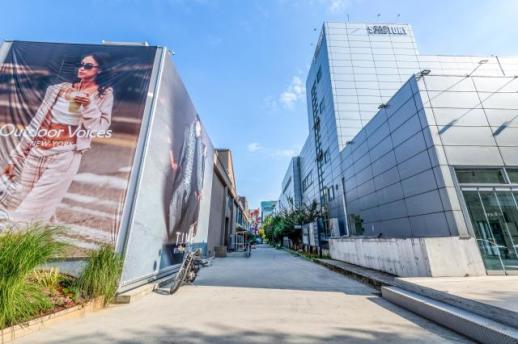 How Seongsu turned industrial grit into Seoul's coolest address Editor’s Note: This is the first installment in AJP’s Seongsu series, which examines how Seoul’s former factory district transformed into a global hub for pop-ups, brand experiences and new forms of urban consumption. SEOUL, January 23 (AJP) - On a Saturday in Seongsu-dong, a former factory district in eastern Seoul, the first thing you notice is not the clothes. It is the choreography. Pedestrians move in coordinated waves down Yeonmujang-gil, inching past café terraces that have colonized the curb and lines that wrap around buildings that once made things you wore for work — shoes, belts, leather uppers — not things you wore to be seen. Security guards stand where factory foremen once did, but the job has changed: no one is protecting a celebrity. They are managing crowd flow. This is Seongsu-dong, the former industrial quarter that has become Korea’s most influential neighborhood for pop-ups, brand “experiences” and the kind of offline marketing that treats a street like a stage set. It is not the first place in the world to turn warehouses into retail. But it may be among the fastest to do it — and certainly among the most relentless. From making shoes to making a scene Seongsu’s origin story is unromantic by design. Built during Seoul’s industrial expansion of the 1970s and 1980s, the area filled with low-rise factories, leather workshops and auto repair shops. For decades, it was the kind of neighborhood you visited because you needed something fixed. Then Seoul’s trend cycle caught up with it. In the mid-2010s, soaring rents in Garosu-gil and Hongdae pushed young brands and creatives eastward in search of space — real space — and fewer aesthetic expectations. Seongsu offered both. Its buildings were worn and weathered, but they came with high ceilings, wide floor plates and minimal zoning friction. In other words, they were imperfect in exactly the right way. Concrete walls don’t argue with your concept. Brick warehouses photograph well. A former factory can become almost anything with the right lighting — and the right story. After 2020, as the pandemic rewired consumer behavior and e-commerce became frictionless, brands rediscovered physical space not as a point of sale but as a platform for narrative. Shopping became secondary. Presence became the product. The hype, quantified By the end of 2025, Seongsu’s popularity was no longer anecdotal. According to data from the Seoul Metropolitan Government and Seoul Metro, daily passenger traffic at Seongsu Station rose from about 66,500 in 2021 to nearly 100,000 in 2025 — an increase of more than 50 percent in just four years. What had once been an unremarkable stop climbed into the top tier of Seoul’s busiest subway stations. Visitor numbers across the broader Seongsu area tell an even sharper story. Annual visits rose from roughly 18 million in 2022 to nearly 29 million in 2024, with projections exceeding 35 million in 2025, based on Seoul tourism data and mobile-based location analysis. The most consequential shift has been who is visiting. Foreign tourists surpassed 3 million in 2024 and are projected to reach 5 million by the end of 2025, drawn by global demand for Korean fashion, beauty and the promise of being physically present where trends appear to be made. Seongsu did not just become popular. It became legible — a recognizable node on the global map of consumption districts. Weekends at capacity On weekdays, Seongsu can still pass for a neighborhood. Office workers from technology, mobility and fashion firms give the streets a utilitarian rhythm. On weekends, the area becomes something else entirely: a living queue. Foot traffic runs 1.5 to 1.8 times higher than weekday levels, with Yeonmujang-gil now one of Seoul’s most congested pedestrian corridors. At peak hours, pedestrian density has reached as high as 7,500 people per hectare — a level officially classified by local authorities as “critically overcrowded.” In response, Seoul and Seongdong District are reviewing safety measures, including redesigned exits and temporary pedestrian-only zones. Inevitably, these interventions risk making Seongsu feel less like an accidental discovery and more like a managed attraction. Still, for many young visitors, the crowds are part of the appeal. “Honestly, Seongsu really took off after COVID,” said Kim Ha-young, 28, a Seoul resident. “Before that, people our age used to go to Itaewon. Now if we make weekend plans, we almost automatically choose Seongsu. It’s hip, and there’s always a pop-up or something new. The chance of a boring outing feels very low.” The pop-up machine To visitors, Seongsu’s pop-up culture can seem spontaneous, as if new stores simply appear and vanish overnight. In reality, it operates more like a touring production. Most brands rely on short-term space rentals that allow them to move in, activate and move out within days. The model depends on rapid installation, high turnover and the understanding that novelty has an expiration date. This structure — not any single brand — is Seongsu’s true engine. It allows dozens of companies to cycle through the same streets each month, continually resetting the neighborhood’s sense of what is new. For global brands, the appeal is obvious. A pop-up in Seongsu is not merely a Korean marketing exercise; it is a content generator with international reach, capable of making a brand feel current without requiring long-term local commitment. Inside the warehouses Few people have witnessed Seongsu’s transformation more closely than Lee Ho Kyu, founder and chief executive of the space platform S Factory. Operating large-scale venues converted from former industrial buildings, S Factory has become one of the district’s most visible anchors. “It didn’t happen overnight,” Lee said. “But it accelerated the moment people started using space differently.” Lee, whose background spans architecture, urban design and real estate consulting, argues that Seongsu’s growth reflects a deeper shift in consumer behavior. “People don’t visit spaces just to buy products anymore,” he said. “They come to understand a story — and to feel part of something, even briefly.” That change, he added, reshaped how brands approached offline marketing. “Pop-ups are no longer temporary shops,” Lee said. “They’re communication tools.” At S Factory, spaces are designed to reset quickly — sometimes within days — allowing brands to operate in extremely short cycles. In recent months, the venue has hosted a wide range of fashion, beauty and lifestyle activations targeting younger consumers. Long queues outside its brick warehouses have become one of Seongsu’s most familiar weekend images. The sustainability question beneath the cool Success, however, has consequences. Seongsu’s rise has brought higher rents, heavier congestion and a growing question about sustainability — not only environmental sustainability, but civic sustainability. How many pop-ups can a neighborhood absorb before it becomes a mall without walls? How long can an “experimental” district remain experimental once it requires crowd management plans? There is an irony at the heart of Seongsu’s appeal. Its industrial past made its reinvention possible. Buildings built to last were reused rather than demolished, their structural bones carrying a new form of commerce. Adaptive reuse, in this sense, is a kind of urban recycling. But the pop-up economy also produces its own waste: disposable sets, packaging debris, installations designed to last just long enough for a weekend of photographs. Low-commitment retail, by nature, leaves things behind. For now, Seongsu remains Seoul’s most experimental shopping district precisely because it is still unfinished — fluid rather than polished, provisional rather than resolved. Brands continue to come not because it is perfect, but because it feels alive. And as long as consumers keep seeking places where commerce can pass for culture — and where a purchase can masquerade as a memory — the lines on Yeonmujang-gil are unlikely to thin anytime soon. Seongsu, after all, is no longer just a place to shop. It is a place to be seen waiting. 2026-01-23 10:03:57
 -
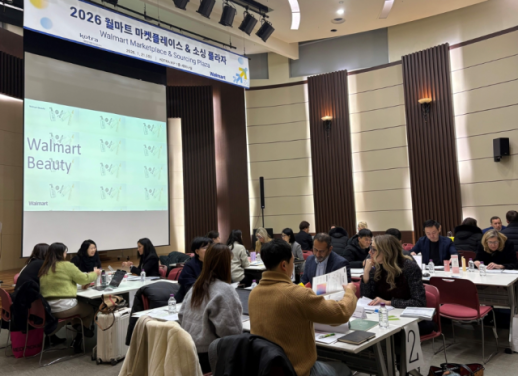 Walmart sends senior delegation to Seoul to expand shelf presence of K-beauty as U.S. demand rises SEOUL, January 22 (AJP) - As Korean beauty products climb U.S. sales rankings, retail giant Walmart is moving to expand their shelf presence, dispatching senior buying executives to Seoul to scout new K-beauty brands. According to the Korea Trade-Investment Promotion Agency (KOTRA) on Thursday, a twelve-member Walmart buying delegation — including six vice presidents and senior purchasing executives — visited Seoul this week to hold one-on-one business consultations with local cosmetics companies. The visit reflects surging demand in the U.S. market. South Korea’s beauty exports rose 12.3 percent last year to a record $11.4 billion, with shipments to the United States accounting for the largest share at nearly 20 percent, or $2.19 billion. For the first time, exports to the U.S. surpassed those to China. The shift is prompting offline retailers to step more aggressively into the U.S. beauty market, traditionally dominated by established specialty chains such as Sephora. CJ Group’s beauty retailer Olive Young is set to open its first U.S. brick-and-mortar store in Pasadena, California, in May 2026, marking its formal entry into the world’s largest beauty market. The company has said the U.S. launch will focus primarily on skincare products, reflecting global demand trends and long-standing consumer perceptions of K-beauty. Walmart has identified K-beauty as a potential growth driver for its beauty division, prompting the retailer to send key decision-makers to assess product competitiveness and market fit, KOTRA said. A total of 57 Korean cosmetics companies, pre-screened and handpicked by KOTRA, participated in the consultations, presenting skincare and functional beauty products tailored to U.S. consumer demand. At Walmart’s request, the list of participating firms was not disclosed due to confidentiality concerns. “This was an exceptional case,” a KOTRA official said. “It was the first time such a large number of senior decision-makers participated in a single program, and we hope to make this a regular initiative and further strengthen it.” The official added that discussions with Walmart began during last year’s Korean Wave Expo in New York. “We previously held talks with Walmart at the New York expo,” the official said. “Given the retailer’s strong interest in K-beauty and consumer products, the needs of both sides aligned particularly well this time.” Walmart plans to first test consumer response through its online platform before considering expansion into physical stores across the U.S. according to KOTRA. Several participating companies said the consultations offered rare access to U.S. retail decision-makers at a time of shifting global trade conditions. Walmart officials, meanwhile, said Korean beauty brands demonstrated strong product quality and competitiveness during the meetings. KOTRA said it aims to build a longer-term cooperation framework with Walmart, supporting Korean firms’ entry into the retailer’s online marketplace and, eventually, its nationwide brick-and-mortar network. 2026-01-22 11:44:04
 -
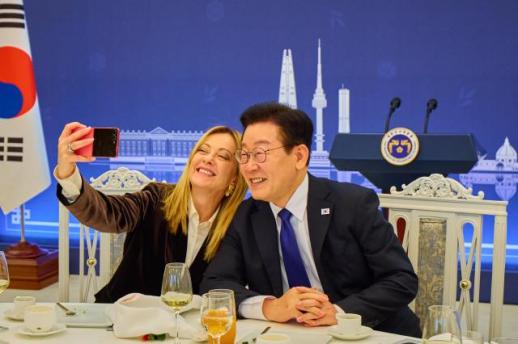 Samsung's foldable lead holds as Apple's entry nears SEOUL, January 21 (AJP) - Selfies taken by South Korean President Lee Jae Myung have served diplomatic and branding purposes alongside their social media role. During a state visit to Beijing, selfies were taken on a Xiaomi smartphone gifted by Chinese President Xi Jinping. More recently, photos during Italian Prime Minister Giorgia Meloni’s visit to Seoul were taken on a Samsung Electronics device. President Lee gifted Meloni a pink Galaxy Z Flip 7, matching the prime minister’s well-known preference for the color. While the idea of gifting a smartphone may echo Xi’s earlier gesture, it also underscored Seoul’s confidence in Samsung’s foldable leadership — a category the company pioneered and continues to dominate. Foldable smartphones have moved beyond novelty into the ultra-premium segment as durability, performance and software optimization have improved. The appeal now extends beyond design and status to functionality, particularly larger, tablet-like displays that enable multitasking and productivity. Market research firm Counterpoint Research forecasts global foldable smartphone panel shipments will rise 46 percent in 2026, signaling renewed expansion after several years of uneven demand. Foldable smartphone shipments are expected to grow about 14 percent in 2025 before accelerating to roughly 38 percent in 2026. Grand View Research estimates the global foldable smartphone market at $27.79 billion in 2024 and projects it will more than double to $74 billion by 2030, growing at an average annual rate of 13.5 percent. Much of the renewed traction is expected to come from Apple’s entry into the segment. “Apple’s entry into the foldable market will act as a key growth driver,” said Guillaume Chansin, research director at Counterpoint Research. “The launch of a foldable iPhone is expected to reinvigorate the foldable smartphone segment and significantly boost panel shipments in 2026.” Despite the looming competition, Samsung Display is expected to remain the dominant supplier of foldable OLED panels, with its global market share projected to exceed 50 percent. The growing adoption of book-style foldables is also expected to lift average selling prices, Counterpoint said. The market is also shifting in form factor. While clamshell-style models such as the Galaxy Z Flip series continue to attract attention for their compact design and fashion appeal, book-style foldables are gaining a larger share of value and profitability, driven by demand for bigger screens and productivity-oriented use cases. Multi-fold devices, including tri-fold models, are expected to account for only a low single-digit share of the market in 2026. Samsung strengthened its position in 2025 after regaining momentum in the premium foldable segment. The company held about 64 percent of the global foldable smartphone market in the third quarter of 2025, up from 56 percent a year earlier, according to Counterpoint Research. Analysts say 2026 could mark a turning point as foldables transition from niche products to a more established premium category amid intensifying competition. “Brand loyalty between Apple and Samsung remains strong, but younger consumers are becoming less defined by legacy preferences,” said Park Jung-eun, a professor of business administration at Ewha Womans University. “Among Gen Z users, there is growing interest in differentiation and design-driven devices rather than simply following long-standing brand norms.” Samsung Electronics said it was unable to confirm whether the device had been provided as part of any sponsorship arrangement. Whether heightened visibility and renewed momentum translate into sustained growth will depend on pricing, software optimization and competition — particularly as Apple prepares to enter the foldable arena. 2026-01-21 15:33:32
 -
 AI memory becomes security concern in Korea as HBM leaks to China rise SEOUL, January 20 (AJP) - High-bandwidth memory (HBM), a critical component powering artificial intelligence chips, is emerging as a national security concern in South Korea as technology leaks involving advanced semiconductors increasingly flow to China amid intensifying global competition in AI. The National Police Agency said industrial espionage investigations last year led to the arrest of 378 suspects, including six detentions, in cases involving advanced technologies such as AI-related semiconductors. According to data released by the National Office of Investigation, authorities detected 179 technology-leakage cases in 2025, including 33 involving overseas transfers. More than half of those overseas cases — 18 incidents, or 54.5 percent — were linked to China, followed by Vietnam, Indonesia and the United States. Among overseas leakage cases, semiconductors accounted for the largest share of strategically sensitive technologies, alongside displays and secondary batteries. Several incidents involved memory-related technologies designated as “national core technologies” under South Korean law. HBM, which stacks multiple DRAM chips to sharply boost data-processing speed, has become indispensable for AI accelerators used in data centers operated by global technology firms such as Nvidia, Amazon, Microsoft and Google. Unlike conventional memory used in smartphones and personal computers, HBM is tightly integrated with graphics processing units (GPUs) through advanced packaging processes, making it difficult to substitute and leaving production highly concentrated among a small group of suppliers. South Korea is home to the world’s two dominant HBM producers — Samsung Electronics and SK hynix — positioning the country at the center of the global AI memory supply chain while also exposing it to heightened security risks. “The scale and frequency of recent technology leaks have raised serious concerns within the industry,” said a Samsung Electronics industry official. “HBM is no longer just a memory product but a core infrastructure technology that determines the performance of AI systems,” said Kim Ki-duk, a professor of semiconductor engineering at Sejong University. Kim said China has made sustained efforts to narrow the technology gap by recruiting experienced engineers with long careers in memory development, adding that accumulated know-how is difficult to contain once engineers cross borders. “Even without physically transferring documents, engineers inevitably carry knowledge acquired through years of work,” he said. Industry officials said the strategic value of HBM has risen sharply as artificial intelligence becomes embedded not only in corporate systems but also in consumer-facing services, driving rapid growth in GPU-based computing. As a result, memory chips are increasingly viewed not merely as electronic components but as infrastructure assets critical to national competitiveness and security. Police data showed that small and mid-sized firms accounted for nearly 87 percent of technology-leakage victims, underscoring vulnerabilities in supply-chain security as advanced semiconductor ecosystems expand. Kim cautioned that while stricter regulations and tougher penalties may slow technology leakage, they are unlikely to halt China’s catch-up efforts entirely. “China’s progress can be delayed, but it will continue,” he said, adding that sustained investment in next-generation memory technologies would be essential for South Korea to maintain its lead. The issue is adding pressure on policymakers and chipmakers as South Korea navigates tightening U.S. export controls, intensifying U.S.-China technology rivalry and growing demands to protect core technologies underpinning its AI-era growth. “Rather than focusing solely on punitive measures, companies and policymakers need to address the root causes driving skilled engineers to leave, including incentives and research environments,” said Lee Soo-jun, a professor of business administration at Sejong University. 2026-01-20 16:53:00
 -
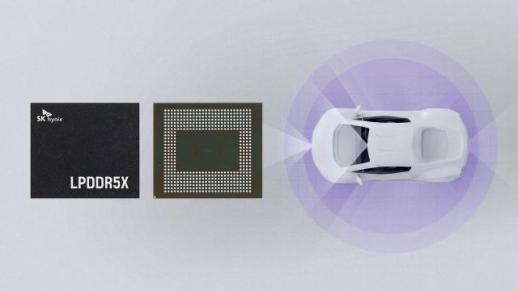 SK hynix secures top vehicle safety certification for LPDDR5X memory SEOUL, January 19 (AJP) - SK hynix said Monday it has obtained the highest functional safety certification for its LPDDR5X automotive memory, as demand grows for reliable semiconductors used in advanced driver-assistance and autonomous-driving systems. The South Korean chipmaker said its LPDDR5X DRAM has been certified at ASIL-D, the highest safety level under the ISO 26262 international automotive functional safety standard. ASIL-D applies to systems directly linked to passenger safety, including autonomous-driving control and advanced driver-assistance systems (ADAS). Certification was conducted by global safety testing body TÜV SÜD, which assessed the company’s development, design, verification and quality-management processes. SK hynix said the certified memory is designed for use in ADAS, autonomous driving and in-vehicle infotainment systems, where stable processing of large volumes of data is required. As vehicles increasingly rely on software-based architectures, known as software-defined vehicles (SDVs), functional safety has become a key requirement for automotive semiconductors, alongside performance and power efficiency. Under ISO 26262, automotive components are evaluated based on severity, exposure and controllability of potential failures, with ASIL-D representing the strictest criteria. SK hynix said its LPDDR5X automotive memory incorporates safety mechanisms including error detection and correction, fault-diagnosis functions and redundancy designs to reduce the risk of random hardware failures. The company said the certification supports its strategy to expand its presence in the automotive memory market, where safety validation is becoming a prerequisite for supplier selection by global automakers. SK hynix did not disclose shipment volumes or customer details. 2026-01-19 17:48:47
 -
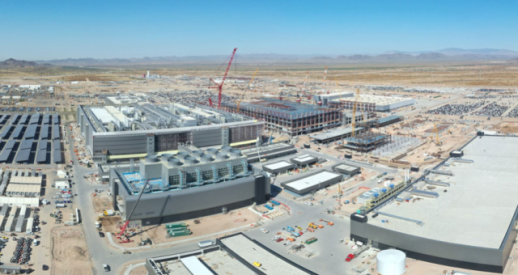 With tariffs looming, Korea chipmakers run out of room to maneuver in the U.S. SEOUL, January 19 (AJP) - To match the tariff concessions Taiwan has secured in the United States, South Korean chipmakers may be pressed to outline additional U.S. capacity expansion plans. Their options are however constrained as the foundry market faces oversupply risks while large-scale memory fabs pose significant economic and strategic hurdles. U.S. officials have adopted a more hardline tone in recent weeks, openly tying tariff relief to domestic semiconductor investment. Yet experts and chipmakers caution that further U.S. manufacturing commitments are far more difficult for Korean firms than for their Taiwanese counterparts. Following a groundbreaking ceremony for a new Micron Technology plant near Syracuse, New York, U.S. Commerce Secretary Howard Lutnick warned that tariff measures outlined in Washington’s recent trade accord with Taiwan could also affect chipmakers from South Korea. “Everyone who wants to build memory has two choices: They can pay a 100% tariff, or they can build in America,” Lutnick said Friday. Under the Taiwan deal unveiled Thursday, companies expanding U.S. operations will be allowed to import semiconductors tariff-free up to 2.5 times their existing capacity during construction, with reduced tariffs applied above that threshold. Once new facilities are completed, the cap will be lowered to 1.5 times current capacity. The agreement also sets a 15 percent tariff on goods from Taiwan and commits the island’s technology sector to at least $250 billion in direct investment in the U.S. Taiwan Semiconductor Manufacturing Co. (TSMC) is expected to build at least four additional chipmaking plants on top of six already planned, requiring roughly $100 billion in new capital. The Taiwanese government has said it will provide $250 billion in credit guarantees to support the investment. South Korea’s accord with the United States revealed last October, sets a 15 percent tariff on most goods while exempting semiconductor imports for now. The agreement includes a $350 billion South Korean fund for U.S. investments, but $150 billion of that is earmarked for shipbuilding, and the remaining $200 billion is government-led and not limited to semiconductors. Private-sector commitments are far smaller. Samsung Electronics has expanded its planned investment in Taylor, Texas, to $37 billion through 2030, up from an initial $17 billion. SK hynix has announced a $3.87 billion investment in Indiana to build an advanced packaging facility for artificial intelligence memory. How much tariff relief Washington will grant in exchange for those investments is emerging as a central negotiating issue. While tariffs will be imposed only after country-by-country talks are completed, pressure is already building. Washington has increasingly blurred the line between trade and industrial policy, explicitly using tariffs to steer semiconductor supply chains toward domestic production. “In practice, the two are closely intertwined,” said Ahn Ki-hyun, secretary general of the Korea Semiconductor Industry Association. “When the U.S. talks about tariffs, what it really wants is investment. And investment naturally connects to supply chains.” The fundamental difference, industry officials say, lies in industrial structure. “Korea and Taiwan are different in what they make,” Ahn said. “Taiwan is centered on system semiconductors and foundries, while Korea is focused on memory. From the U.S. perspective, the logic is simple — if chips are made in America, the problem is solved.” TSMC has already begun production at its first U.S. fab and is preparing additional facilities. Korea, however, currently has no memory wafer production operating in the United States, a gap that analysts say lies at the core of the challenge. Building memory fabs overseas is technically feasible but significantly more complex. DRAM and high-bandwidth memory production requires large-scale infrastructure, long stabilization periods and extremely high yield control. “Memory fabs are not fundamentally different from system semiconductor plants in terms of construction,” Ahn said. “But unlike foundries, there is currently no memory production running in the U.S., which means the timeline is much longer.” Analysts warn that if Washington benchmarks Korea against Taiwan’s investment framework, Korean chipmakers would face a wide gap between existing commitments and the level of spending needed to secure comparable tariff treatment. New memory fabs would require tens of billions of dollars and several years before meaningful output could be achieved. Samsung Electronics said it is closely monitoring developments. “We are reviewing all news and policy changes related to tariffs,” the company said. “Internal discussions are ongoing, but at this stage, there is no official comment we can provide.” Kim Yang-paeng, a senior research fellow at the Korea Institute for Industrial Economics and Trade (KIET), said that estimating the scale of additional investment required under a Taiwan-style framework would be extremely difficult. “If the United States were to demand a similar investment model from Korea, it is not a matter of tens or even hundreds of trillions of won,” Kim said. “The scale would be virtually impossible to quantify in meaningful terms.” 2026-01-19 16:56:30
 -
 Korean memory makers share boom year with employees in cash and stock rewards SEOUL, January 16 (AJP) -South Korea’s two largest memory chipmakers, Samsung Electronics and SK hynix are rolling out handsome cash and stock rewards for their employees amid red-hot earnings and extended stock rally. Samsung Electronics said its Device Solutions (DS) division, which oversees the company’s semiconductor operations, has set its excess profit incentive (OPI) at 47 percent of annual salary, according to an internal notice circulated this week. The rate applies across memory, System LSI and foundry businesses. Based on Samsung’s average employee compensation of 130 million won as of March last year, the average bonus payout is projected at roughly 61 million won per employee. OPI is paid once a year when a business unit exceeds performance targets set at the beginning of the year. The incentive can reach up to 50 percent of annual salary, within a cap of 20 percent of excess profit, and together with the target achievement incentive (TAI) forms the backbone of Samsung’s performance-based compensation system. The DS division’s payout reflects a sharp turnaround in semiconductor profitability. After entering recovery in the second half of last year, shipments rose rapidly across memory products, including high-bandwidth memory (HBM) and commodity DRAM. In the fourth quarter, Samsung Electronics posted best-ever three-month operating profit of 20 trillion won. The chip division is projected to have contributed 80 percent of the profit. The contrast with recent years is pronounced. The DS division’s OPI was set at 14 percent last year amid weak chip conditions and zero in 2023. Within Samsung’s Device Experience (DX) division, the Mobile Experience (MX) business set its OPI rate at 50 percent, translating into an average payout of about 65 million won per employee. The higher rate reflects strong sales of the Galaxy S25 series and Galaxy Z Fold/Flip7, up from 44 percent in 2024. OPI rates for the Visual Display (VD), Digital Appliances (DA), network and medical device businesses were set at 12 percent. Management support, Harman, the win-win cooperation center and the global CS center received 39 percent, while the production technology research institute was assigned 36 percent. SK hynix will again operate a “shareholder participation program” this year, allowing employees to receive part of their annual profit-sharing (PS) bonus in company shares, following the program’s initial rollout last year. According to industry officials on Thursday, the company announced the plan in an internal notice the previous day, with applications open through Jan. 22. Under the program, employees can elect to receive between 10 percent and 50 percent of their PS in SK hynix shares, in 10-percentage-point increments. PS is paid once a year based on annual performance, with a ceiling of 50 percent of annual salary, equivalent to 1,000 percent of base pay. For example, an employee earning 100 million won who opts to receive 50 percent of PS in shares would receive stock worth 50 million won. If the shares are held for one year, the employee receives an additional cash payment equal to 15 percent of the stock value, or 7.5 million won. Unlike last year — when shares could be distributed in four installments in the fourth quarter based on prevailing stock prices — participants this year must receive all elected shares at once at the start of the year. PS payments are expected as early as late January or early February. Under a revised labor-management framework, SK hynix scrapped its previous PS cap and now funds bonuses using the full 10 percent of the prior year’s operating profit. Of the calculated PS, 80 percent is paid in the current year, with the remaining 20 percent deferred over two years in 10-percent installments. Future operation of the stock-based program could be influenced by a proposed third revision of the Commercial Act, which would require companies to retire treasury shares. The bill is scheduled for review at a National Assembly subcommittee meeting on Jan. 21, raising the possibility of legislative action later this month or in March. Industry estimates widely put SK hynix’s operating profit for last year at nearly 45 trillion won. On a simple calculation, that level of profitability would translate into profit-sharing bonuses of roughly 136 million won per employee. SK hynix releases fourth-quarter and 2025 results on Jan. 29. Samsung Electronics shares closed Friday 3.5 percent up at fresh record high of 148,900 won and SK hynix also revisited the peak of 756,000 won. 2026-01-16 15:45:28
 -
 Memory chips take center stage in AI-driven semiconductor boom SEOUL, January 15 (AJP) - The rapid expansion of artificial intelligence (AI) is reshaping the global semiconductor market, propelling memory chips, once considered a cyclical commodity, to the forefront of the industry's future growth engine. Amid a heated race for data centers to build AI servers and inference systems, demand for high-bandwidth memory (HBM), server-grade DRAM, and storage has surged, creating what analysts describe as a rare "triple supercycle" in the market. U.S.-based Bank of America forecast the global HBM market to grow 58 percent this year to $54.6 billion, while global investment bank Nomura Securities expected the broader memory sector to nearly double to $445 billion in 2026, which illustrates how AI is reshaping the industry. Unlike previous upcycles driven mainly by smartphones and PCs, the current boom is being powered by investment in long-term infrastructure. Goldman Sachs estimates that custom AI accelerators will account for roughly one-third of total HBM demand this year, reflecting a shift from training-led growth to inference-driven expansion. On the supply side, manufacturers are struggling to keep pace. Market researcher IDC projected global DRAM bit supply growth of just 16 percent this year, well below the historical average of around 20 percent as chipmakers divert wafer capacity toward higher-margin HBM products. Another researcher Counterpoint Research projected that prices for high-capacity enterprise-grade 64GB RDIMM modules could jump from about $255 in late 2025 to as high as $700 by Marth this year. The imbalance is accelerating a broader realignment in the industry, long dominated by foundries and logic chips. As AI workloads intensify, the industry's center of gravity is shifting toward memory and advanced packaging — a transition that is bolstering the strategic position of South Korea's Samsung Electronics and SK hynix. As AI accelerates, the industry's focus is shifting toward memory and advanced packaging, bolstering South Korean chipmakers Samsung Electronics and SK hynix. "AI processors such as GPUs require ultra-fast memory to avoid performance bottlenecks," said Ahn Ki-hyun, secretary-general of the Korea Semiconductor Industry Association. "To support large language models, the memory attached to GPUs must deliver the highest possible bandwidth, and at the moment HBM is effectively the only option that meets those requirements." SK hynix, which accounts for about 60 percent of the global HBM market, is set to begin commercial production at its new M15X fab in Cheongju, North Chungcheong Province, starting in February, supplying HBM4 for Nvidia's next-generation Rubin platform. Rival Samsung Electronics is aso expanding sixth-generation (1c) DRAM output at its Pyeongtaek campus, aiming to raise advanced-node DRAM to about one-third of total production by the end of 2026. Industry insiders say competition in HBM is driven less by fundamental technology gaps than by speed. "SK hynix gained a competitive edge by being first to commercialize HBM3E," Ahn said. The current upcycle is also being recognized by the financial community. NICE Ratings said in a recent outlook that the rally in memory chips should be seen as a structural shift rather than a temporary rebound, as sustained AI demand collides with limited near-term capacity expansion, a combination likely to support pricing power and profitability through 2026. But risks remain as rising memory prices are expected to lift smartphone and PC prices by 15 percent to 20 percent this year, according to IDC, while power constraints at data centers could slow the pace of expansion. In China, ChangXin Memory Technologies (CXMT) has expanded its share of the DRAM market to about 6 percent and is stepping up efforts in advanced memory development. But Ahn sees its impact as minimal, likely to be felt more in the mid-to-long term than immediately. "CXMT is unlikely to affect the market in the short term," he said. "But if it eventually reaches comparable levels, price competition will become inevitable." For now, the momentum, however, appears firmly on the side of memory chip makers. What began as an AI-driven surge in processors is rapidly evolving into a broader transformation of the semiconductor value chain, in which memory and packaging are no longer supporting players but have become core growth engines. 2026-01-15 17:50:15