

Journalist

Lee Jung-woo, Kim Yeon-jae
cannes2030@ajupress.com, duswogmlwo77@ajupress.com
-
 Starbucks Korea promotion sparks police probe, government boycott SEOUL, May 22 (AJP) - Starbucks Korea is facing a widening political and legal backlash after a marketing campaign tied to the anniversary of the 1980 Gwangju uprising triggered accusations of mocking South Korea’s democratic trauma, drawing police investigations, boycott calls and government sanctions. Chung Yong-jin and former Starbucks Korea chief executive Sohn Jung-hyun are now under police investigation following complaints accusing them of insulting victims of the May 18 Democratic Uprising and their families. The Seoul Metropolitan Police Agency said Thursday it reassigned the case from the Seoul Gangnam Police Station to a public crime investigation unit under its metropolitan investigation squad. Authorities are also expected to merge a similar complaint filed in Gwangju, the southwestern city at the center of the 1980 uprising, into the Seoul investigation. The controversy erupted after Starbucks Korea launched a “Tank Day” promotion on Sunday, the 46th anniversary of the May 18 Democratic Uprising, also known as the Gwangju Uprising. The campaign advertised a “Tank” tumbler series alongside phrases such as “Tank Day” and “Tak! on the desk,” prompting criticism that the company had trivialized two of the country’s most painful moments in modern political history. The May 18 Democratic Uprising began in Gwangju in 1980, when citizens and students protested against the military junta led by Chun Doo-hwan. Troops violently suppressed the demonstrations over 10 days, using batons, bayonets and live ammunition against civilians. The uprising later became a defining symbol of South Korea’s democratization movement. The phrase “Tak! on the desk” drew separate outrage because it echoed the notorious explanation authorities gave after the 1987 torture death of student activist Park Jong-chul. Police initially claimed an officer had struck a desk with a loud “tak,” causing Park to collapse — a cover story that later unraveled and fueled nationwide protests demanding direct presidential elections. The civic group Citizens’ Coalition for Economic Justice and People’s Livelihood accused Chung and Sohn of defaming victims of the Gwangju uprising, bereaved families and Gwangju citizens. Chung removed Sohn from his post Monday as criticism intensified and issued a public apology Tuesday in his capacity as chairman of Shinsegae Group. But boycott calls targeting Starbucks Korea have continued to spread online and among civic groups. The backlash has also expanded into government circles. Interior and Safety Minister Yun Ho-jung said Thursday on X that he expressed “deep regret over Starbucks Korea’s anti-historical behavior” and that his ministry and other state agencies would stop using products from companies that “take lightly the history and value of democracy” as prizes or promotional giveaways at public events. A ministry official told AJP that some government event prizes had already been switched from Starbucks mobile vouchers to vouchers from rival coffee chains after Yun’s remarks. Another official said the minister’s comments signaled that government events should avoid products from companies embroiled in major social controversy when alternatives are available. Some officials said the ministry’s stance could trigger a broader informal boycott across the civil service, given its role in overseeing public administration and workplace culture within government institutions. President Lee Jae Myung also condemned the campaign, saying on X that he was “outraged” and that those responsible should be held accountable. The controversy has renewed scrutiny of Chung, who previously faced criticism over social media posts using anti-communist slogans. Such rhetoric remains highly sensitive in South Korea because far-right groups have long promoted discredited claims portraying Gwangju protesters as North Korean sympathizers. 2026-05-22 11:30:29
 -
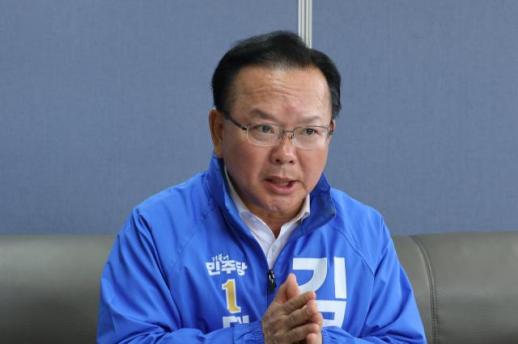 Kim Boo-kyum Aims to Transform Daegu into Southern Korea's Tech Hub Kim Boo-kyum, the Democratic Party's candidate for mayor of Daegu, stated that to revive the city's economy, a fundamental change in its industrial structure is necessary. He plans to integrate artificial intelligence (AI) into Daegu's traditional manufacturing sectors, including machinery, metals, automotive parts, and textiles, while positioning AI robotics, future mobility, healthcare, and quantum technology as new growth engines. In an interview with Aju Economy, Kim described his top campaign promise, 'Industrial Transformation,' asserting, "I will make Daegu the southern region's version of Pangyo," a reference to the tech hub near Seoul. On April 19, Kim held his first campaign promise announcement at his election office in Daegu's Dalseo District, where he outlined 'Industrial Transformation and Job Creation' as his core pledge. He aims to double Daegu's Gross Regional Domestic Product (GRDP) to 150 trillion won by 2035 and create 100,000 quality jobs. The starting point for Kim's industrial transformation is the advancement of existing manufacturing. He stated, "We will innovate design, processes, quality, and logistics by integrating AI into Daegu's robust manufacturing base." He envisions connecting the Su-seong Alpha City, Technopolis, DGIST, local universities, research institutions, and businesses to create an environment where young people can learn, work, and grow in Daegu. Kim also emphasized the importance of fostering youth entrepreneurship and cultural industries. He plans to establish an Asian Global Youth Entrepreneurship and Cultural Convergence Special Zone and create a 100 billion won youth entrepreneurship fund to help turn ideas into businesses and facilitate global expansion. He stressed, "We will create a city where young people can learn about future industries and challenge themselves to start businesses without leaving for the metropolitan area." "GRDP 150 trillion is not just a numerical promise" Kim has committed to achieving a GRDP of 150 trillion won and creating 100,000 quality jobs by 2035. He emphasized, "This is not just a numerical promise; it is a goal to change the industrial structure of Daegu and attract corporate investment." As part of his plan, he proposed a 'Five-Year Industrial Transformation Plan' that will be established immediately upon taking office, with annual goals that the mayor will personally oversee. Kim stated, "I will form a large company attraction team to directly engage with key firms in AI semiconductors, robotics, future mobility, and healthcare." He also revealed plans to expand investment cooperation with major companies in future industries, such as Samsung Electronics, SK Hynix, and Hyundai Motor. His aim is to create an ecosystem that connects not only production facilities but also partner companies, research and development functions, and local mid-sized enterprises. To achieve this, he plans to create a 'Daegu Support Package' that integrates industrial land, talent, finance, and regulatory improvements. Recent economic conditions in the region underscore Kim's concerns. According to data released by the National Statistical Office on June 26 last year, Daegu's GRDP decreased by 3.9%, the largest decline among cities and provinces nationwide. Kim stated, "I will personally meet with CEOs of companies and actively engage with them. We need to make Daegu an attractive destination for businesses," adding that he would shift from an administrative approach that waits for investment to one that actively attracts it. "Daegu's strength lies in directly applying advanced technology to manufacturing" As regions like the metropolitan area, Chungcheong, and Busan-Ulsan-Gyeongnam compete to attract advanced industries, Kim identified Daegu's comparative advantage. He said, "Daegu's strength is its ability to directly connect advanced technology with actual manufacturing sites." He believes that by combining the digital capabilities of Su-seong Alpha City with the manufacturing base in Seongseo and West Daegu, practical applications of AI in design, processes, quality control, and logistics can be achieved. In the robotics sector, he highlighted the strengths of the Korea Robot Industry Promotion Agency, the National Robot Test Field, and the Outdoor Mobile Robot Performance Evaluation Center. Regarding the quantum industry, he mentioned DGIST and the Daegu Digital Innovation Promotion Agency. Kim stated, "We will focus on quantum sensing, devices, equipment, optoelectronics, and sensors first," indicating a phased approach to developing Daegu as a hub for all advanced industries, starting with areas that can be connected to manufacturing. Kim also plans to adopt a different approach to attracting anchor companies. He noted, "Relying solely on demands for headquarters relocation has its limits," and proposed a package approach that combines testing, certification, talent, demand companies, funds, land, and tax incentives. He added, "We will create a structure where companies can validate and commercialize their products more quickly by coming to Daegu." "The key to youth outflow is jobs and wages" Addressing the issue of youth outflow from Daegu, Kim diagnosed it as fundamentally a matter of jobs and wages. He reported that young people he met expressed concerns that "the starting salary for new IT employees in Daegu is only 70% of that in Pangyo," and that they feel compelled to leave despite not wanting to be away from their families. Kim believes that supporting entrepreneurship alone will not solve the youth issue. His strategy includes opening opportunities for aspiring young entrepreneurs through a 100 billion won youth entrepreneurship fund and a youth entrepreneurship and cultural convergence special zone, while also creating stable jobs through corporate attraction and industrial advancement for those seeking employment. Nationally, the employment conditions for youth are challenging. According to the employment trends released by the National Data Portal last month, the number of employed youth decreased by 147,000 compared to the previous year, marking a continuous decline for 41 months since November 2022. The youth employment rate fell to 43.6%, down 0.9 percentage points, while the unemployment rate rose to 7.6%, up 0.1 percentage points. Kim asserted, "Youth outflow cannot be resolved with short-term support alone. We need to create a structure that allows for good jobs and better wages within the region through industrial transformation, attracting large companies, and nurturing future industries." He also proposed asset formation support measures, stating, "We will support asset formation of up to 30 million won for a maximum of five years through the 'Youth Dan-di-Chaeum Fund,'" adding, "We want our sons and daughters to be able to work and prepare for their futures in their hometowns." "Results matter more than the title of Deputy Prime Minister of Economy" In response to rival candidate Choo Kyung-ho's emphasis on his experience as a former Deputy Prime Minister of Economy, Kim directly countered, saying, "The title of Deputy Prime Minister is just a title, not an achievement in itself." He claimed that during his tenure as Prime Minister, Daegu's national funding growth rate was 10.94% in 2021 and 15.47% in 2022. In contrast, he noted that during Choo's time as Deputy Prime Minister, the growth rates were only 0.59% in 2023 and 0.94% in 2024. Kim also raised concerns about revenue shortfalls, stating, "In 2023, there was a revenue shortfall of about 56 trillion won, and in 2024, about 30 trillion won, which were passed on to local governments through cuts in local allocation taxes." Regarding the dynamics of the Daegu mayoral election, he emphasized the importance of cooperation with the central government and the National Assembly. Kim stated, "The new mayor will work on the same timeline as the remaining four years of the president's term, and the success of key issues like the TK New Airport will depend on who can better attract support and cooperation from the ruling party in the central government and the National Assembly." He concluded, "My strength lies in the political power and execution ability to turn Daegu's demands into reality. What Daegu needs now is a mayor who can deliver results, not just talk." * This article has been translated by AI. 2026-05-21 21:06:44
 -
 America-first policy to outlast Trump, says his former chief of staff SEOUL, May 21 (AJP) - Former White House chief of staff Mick Mulvaney said the “America First” brand of economic nationalism and a more restrained U.S. approach to overseas engagement are likely to remain defining features of Washington’s policy landscape long after Donald Trump leaves office. Speaking at a luncheon hosted by the American Chamber of Commerce in Korea at the Grand Hyatt Seoul, Mulvaney said protectionism and economic nationalism reflect broader structural shifts that will shape U.S. policy for years to come. Mulvaney, who briefly served as acting White House chief of staff during Trump’s first term, offered a wide-ranging assessment of the second Trump administration, U.S. foreign policy, trade tensions and the future of the U.S.-Korea economic partnership before more than 120 executives and business leaders. The fireside chat was moderated by AMCHAM Chairman and CEO James Kim. Drawing on his experience in the first Trump administration, Mulvaney said he sees four long-term trends emerging from Washington that are likely to outlast Trump himself: entrenched protectionism and economic nationalism, growing reluctance among Americans to support prolonged overseas engagement, persistently elevated inflationary pressures and a greater willingness by Washington to intervene in strategic industries and private-sector markets. “These are not temporary developments,” Mulvaney said. The discussion also focused on the future of the U.S.-Korea economic partnership amid record bilateral investment and expanding cooperation in semiconductors, shipbuilding, energy, artificial intelligence and advanced manufacturing. Mulvaney highlighted Korea’s growing role as a strategic economic partner and regional innovation hub within the evolving U.S. policy landscape. Asked how Trump views Korea, Mulvaney joked that Trump “doesn't really trust anybody,” adding that the president tends to see even close allies as benefiting from U.S. security commitments. Mulvaney said Trump evaluates foreign countries largely through two lenses: defense spending as a share of gross domestic product and trade deficits with the United States. In that context, he said Korea was “not in the really really bad club,” noting that Trump had been more frustrated during his first term with some European countries that he believed spent too little on defense. At the same time, Mulvaney said Trump understands the geopolitical importance of countries such as Korea, Japan and Australia. Describing the U.S. presidency as “the most isolated job” in the world apart from perhaps the pope, Mulvaney said the version of Trump portrayed on NBC’s “The Apprentice” closely resembles the real person. Unlike many politicians, he added, Trump is not particularly pretentious. Asked how business leaders and foreign officials should deal with Trump, Mulvaney advised them to be direct and straightforward. “His bullshit-meter is really really sensitive,” he said after briefly apologizing to the audience for swearing. Mulvaney also said Trump prefers doing business with people he personally enjoys being around. He cited Shinzo Abe as one of the foreign leaders who managed Trump most effectively during his first term, saying Abe understood the importance of personal rapport and even played golf with Trump despite being “one of the worst golfers in my lifetime.” Mulvaney added that Trump had been “really upset” by Abe’s assassination. He contrasted Trump’s first and second presidential transitions, saying Trump did little preparation before his unexpected 2016 victory but spent four years planning personnel and Cabinet appointments ahead of his 2024 return. Looking ahead to the Nov. 3 midterm elections, Mulvaney said he does not expect the administration’s policy direction to shift significantly even if Democrats regain control of the House or Senate. He also warned that ongoing wars and geopolitical instability are unlikely to ease anytime soon, factors he said will continue shaping the global business environment. Mulvaney also dismissed claims that Trump’s tendency to leave sentences unfinished reflects mental decline, saying the president has “always spoken that way.” 2026-05-21 17:42:12
 -
 Mick Mulvaney Discusses Protectionism as Key U.S. Policy at AMCHAM Event SEOUL, May 21 (AJP) - Mick Mulvaney, the former acting White House Chief of Staff, stated that many of the changes occurring in Washington today are not limited to President Trump but represent structural trends that will shape the U.S. political and economic order in the long term. He also noted that protectionism and a domestic-focused economic policy are likely to remain central to U.S. policy regardless of which party is in power. The American Chamber of Commerce in Korea (AMCHAM) hosted a special luncheon on May 21 at the Grand Hyatt Hotel in Yongsan, Seoul, featuring Mulvaney as a guest speaker. The event, titled 'The Return of America First: Global Business and Geopolitics in the Trump 2.0 Era,' included a one-on-one discussion between AMCHAM Chairman and CEO James Kim and Mulvaney, attended by over 120 members and representatives from major domestic and international companies. Participants discussed the policy direction of a potential second Trump administration, changes in U.S. trade and industrial policy, tariff policies, reshoring strategies, geopolitical risks concerning the Middle East and North Korea, and the restructuring of global supply chains focused on economic security. They also explored ways to enhance U.S.-Korea cooperation in strategic industries such as semiconductors, shipbuilding, energy, artificial intelligence (AI), and advanced manufacturing. Mulvaney served in various roles during the Trump administration, including acting White House Chief of Staff, Director of the Office of Management and Budget (OMB), and acting Director of the Consumer Financial Protection Bureau (CFPB). He elaborated on the decision-making processes and leadership style of the Trump administration, as well as the impact of the 'America First' policy on U.S. domestic politics, foreign policy, and the global economic order. He remarked that there is a growing fatigue regarding long-term foreign interventions in American society, and inflationary pressures are expected to persist for some time. He added that government intervention in strategic industries and the private market is likely to increase, emphasizing that these trends represent structural changes that will affect U.S. economic, industrial, and trade policies for years to come. Having reported daily to President Trump and met with him nearly 20 times a day, he described Trump as someone who “trusts no one.” He explained that Trump perceives allies as taking advantage of the United States. When asked by James Kim about Trump’s leadership style, Mulvaney referenced the TV show 'The Apprentice,' stating, “That’s President Trump.” Mulvaney also noted that Trump enjoyed watching intelligent people debate and preferred negotiating with those he liked. He identified two key criteria that Trump considers when evaluating foreign countries: defense spending relative to GDP and trade balances with the U.S. He stated, “By this standard, South Korea is not a bad country.” He further mentioned that Trump understands the geopolitics concerning South Korea, Japan, and Australia. James Kim remarked, “Mulvaney is one of the few individuals who has experienced the Trump administration up close in Washington. It is meaningful to have this timely and candid discussion here in Seoul.” Kim added that the conversation provided important insights into the changes in the America First policy, U.S. policy direction, and the implications of these changes for Korea, the U.S.-Korea alliance, and the global business community. * This article has been translated by AI. 2026-05-21 16:43:26
 -
 S. Korea tanker exits Strait of Hormuz after talks with Iran amid regional conflict SEOUL, May 20 (AJP) - The first South Korean-operated oil tanker stranded inside the Strait of Hormuz since the outbreak of war between the United States and Iran in late February safely exited the strategic waterway Wednesday following negotiations between Seoul and Tehran, the foreign ministry said. The vessel, operated by HMM, was passing through the Strait of Hormuz on Wednesday afternoon under coordination with Iranian authorities, according to the ministry. Foreign Minister Cho Hyun also confirmed the passage during a parliamentary session earlier in the day. “At this very moment, our tanker is leaving the Strait of Hormuz through consultations with the Iranian side,” Cho told the National Assembly’s Foreign Affairs and Unification Committee. Cho said the ship began sailing Tuesday after discussions with Iranian authorities and was proceeding “very cautiously” through the route. He also referred to “2 million barrels,” apparently indicating the volume of crude oil loaded on the tanker. Ship-tracking data from MarineTraffic and reports from Bloomberg identified the vessel as the Universal Winner, an HMM-operated crude oil tanker owned by the same company as the Namoo, which was recently struck in the region. The tanker, which had remained in waters near Qatar, began moving on June 19 along a route designated by Iranian authorities. The foreign ministry said neither the South Korean government nor the shipping company had paid tolls or compensation to Iran in exchange for the vessel’s passage. Seoul also maintained that Iran’s decision to allow the tanker through the strait was unrelated to the recent attack on the Namoo. The government said the transit became possible after Seoul repeatedly requested safe passage for South Korean-linked vessels while maintaining diplomatic coordination with Tehran through four phone conversations between the two countries’ foreign ministers and the dispatch of a special envoy. Iran informed the South Korean Embassy in Tehran late Monday that passage through the strait would be permitted, the ministry said. The notification came a day after Cho held talks with Iranian Foreign Minister Seyed Abbas Araghchi and requested clarification regarding the attack on the Namoo. The South Korean government is continuing negotiations with Tehran to secure the passage of 25 remaining South Korean-linked vessels still inside the Strait of Hormuz. Officials are reportedly prioritizing ships carrying large numbers of South Korean crew members or cargo considered strategically important to South Korea. Iran has requested that vessels use routes designated by Iranian authorities, though some shipping companies remain concerned over potential security risks and possible U.S. sanctions. The United States Department of the Treasury previously issued an advisory warning that shipping firms and vessels engaging in transactions with Iran related to safe passage through the strait could face sanctions. South Korea’s foreign ministry, however, said it believes the U.S. advisory does not apply to government-level negotiations and does not expect the tanker that exited the strait to become subject to sanctions. 2026-05-20 17:35:40
 -
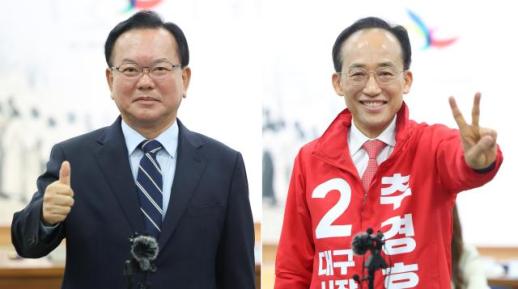 AJP Election Watch: Heavyweight match in Daegu, Kim Boo-kyum vs Choo Kyung-ho SEOUL, May 20 (AJP) -Daegu, a traditional conservative stronghold, remains one of the rare constituencies on South Korea’s electoral map still firmly painted red — the color of the main opposition People Power Party (PPP). In the 2022 presidential election, former President Yoon Suk Yeol captured 75.14 percent of the vote in the southeastern city. A decade earlier, former conservative President Park Geun-hye had also dominated the region. The city did not abandon conservatives even after Yoon’s impeachment following his December 2024 martial law debacle. In last year’s snap presidential election, PPP candidate Kim Moon-soo defeated President Lee Jae Myung by 67.6 percent to 23.2 percent in Daegu. Whether Lee’s approval rating hovering around 60 percent, combined with a divided conservative front, can crack that decades-old political tradition in the June 3 local elections is now one of the country’s most closely watched political questions. The matchup itself is heavyweight politics. Representing the ruling Democratic Party (DP) is former Prime Minister Kim Boo-kyum, a four-term lawmaker under the administration of former liberal President Moon Jae-in. Facing him is PPP Rep. Choo Kyung-ho, a three-term lawmaker who last served as deputy prime minister for economy and finance minister under Yoon. Daegu has never elected a liberal mayor since local elections were institutionalized in 1995. Kim nevertheless has entered the race emboldened by his breakthrough victory in Daegu’s Suseong A district in 2016, when he became the only Democratic Party lawmaker elected from the city. This time, his chances may not be as slim. A Metavoice-Research Lab survey commissioned by JTBC and conducted May 5–6 showed Choo at 41 percent and Kim at 40 percent — a one-point gap within the margin of error. Daegu has effectively become a political testbed for both parties. For the DP, a victory would mark a historic breach into the conservatives’ last fortress. For conservatives, holding the city would reinforce a regional base crucial for any future political revival. At the center of the race is the economy. According to latest government data on Korea’s regional GDP, Daegu posted a 3.9 percent contraction — the steepest decline among all metropolitan cities and provinces nationwide in the first quarter of 2025. Both candidates are framing themselves as crisis managers with the bureaucratic credentials to revive the city’s stagnant economy. Kim is pitching a vision to transform Daegu into “the Pangyo of the South,” referencing the technology hub often dubbed Korea’s Silicon Valley. “To revive Daegu’s economy, we have to change the industrial structure itself,” Kim told AJP in written interview. He argued that Daegu should combine its traditional industrial base — machinery, metals, auto parts and textiles — with artificial intelligence technologies to modernize “design, manufacturing processes, quality control and logistics.” Kim’s blueprint centers on linking Suseong Alpha City, Technopolis, DGIST, local universities, research institutes and private companies into a unified regional innovation ecosystem. “We will create a structure in which young people can learn, find jobs and grow in Daegu,” Kim said. He also pledged to establish an “Asian global youth startup and culture convergence special zone” along with a 100 billion won ($66.3 million) youth startup fund aimed at helping young entrepreneurs commercialize ideas and expand globally. Choo is also pitching economic restructuring — but from the perspective of a veteran economic technocrat. “The biggest reason Daegu’s economy is struggling is that it has not sufficiently responded to changes in the industrial structure,” Choo told AJP separately in his election office in Daegu. “Daegu once led Korea’s industrialization with textiles and manufacturing, but it failed to secure enough growth engines as the industrial paradigm shifted toward AI, semiconductors and digital industries.” Choo proposes fostering five future industries — AI, robotics, future mobility, bio and semiconductors — while simultaneously upgrading traditional sectors such as machinery and textiles. He is also emphasizing service industries favored by younger workers, including medical services, culture, tourism, gaming and digital content. A defining feature of Choo’s campaign is his focus on execution. Rather than offering “mere slogans,” he says he is proposing “actual implementation structures,” including emergency economic task force meetings, a supplementary livelihood budget, a foreign investment attraction team, an AI transformation committee, a startup growth fund and “Daegu-style” university-industry contract departments. The political logic behind Kim’s campaign is straightforward: leverage the power of the ruling party. The next four-year mayoral term will overlap almost entirely with the remaining four years of Lee’s presidency and the DP-controlled National Assembly. “At this time, the success or failure of key issues such as the TK new airport depends on who can better draw support and cooperation from the central government and the ruling party, which holds a majority in the National Assembly,” Kim said. “My strength is the political power and execution ability to turn Daegu’s demands into reality.” Kim also directly challenged Choo’s claim to economic expertise. He pointed out that Daegu’s national budget allocations increased by 10.94 percent in 2021 and 15.47 percent in 2022 during his premiership, while increases slowed sharply to just 0.59 percent in 2023 and 0.94 percent in 2024 when Choo served as finance minister. “‘Finance minister’ is a title, not performance itself,” Kim said. “What Daegu needs now is not a mayor who talks, but a mayor who produces results.” Choo rejects the notion that a PPP mayor would be disadvantaged under a Democratic administration. “The Daegu mayor is an administrator responsible for citizens’ lives,” Choo said. “I have no intention of becoming a mayor who clashes with the central government just because our parties are different.” He argued that his 35 years as an economic bureaucrat, along with his experience as deputy prime minister and finance minister, provide practical leverage. “I know very well how budgets are made,” Choo said. “I have networks across all areas of government ministries. I can communicate directly with working-level officials who design policies and managers who make decisions.” On youth policy, both candidates agree the city’s core problem is not simply population decline, but the lack of quality jobs and competitive wages. Kim said many young residents have told him: “Starting salaries in Daegu’s IT industry are about 70 percent of those in Pangyo,” and “I don’t want to leave my family, but I have no choice.” “This problem cannot be solved with short-term support alone,” Kim said. “Through industrial transformation, major company attraction and future industry development, we will create a structure in which good jobs and better wages are possible within the region.” He is also proposing a “Youth Dandi Chaeum” savings program that would help young workers accumulate up to 30 million won in assets over five years. Choo’s youth strategy focuses on attracting young people back through industrial growth, startup support and stronger university-industry ties. He has proposed “youth reshoring,” Daegu-style contract departments and a 1 trillion won startup fund to cultivate unicorn companies. “We will make Daegu a city where young people return,” Choo said, arguing that future industries and high-value service sectors can reverse the city’s demographic decline. The next mayor will also inherit several major regional development projects, most notably the relocation of Daegu’s military airport and construction of the new TK airport. The project is viewed not merely as an aviation issue, but as a broader test of Daegu’s ability to integrate economically with North Gyeongsang Province, expand logistics networks and attract new industries. Kim frames the airport initiative as an issue requiring political leverage at the national level. Choo frames it as an administrative and fiscal challenge demanding deep experience within the central government bureaucracy. “Cooperation is not achieved through vague requests or begging,” Choo said. “I have learned over decades how work actually gets done.” He added that projects such as the TK new airport and Daegu–North Gyeongsang administrative integration “must be pursued beyond party lines.” Kim, meanwhile, insists Daegu needs a mayor capable of extracting concrete support from the current national power structure. “The new mayor will work on the same timetable as the remaining four years of the president’s term,” Kim said. “Who can better bring in support from the central government and the ruling party will decide the fate of key pending issues.” For decades, Daegu mayoral elections were viewed as predictable contests in conservative territory. This year, however, the race has evolved into a direct showdown between two nationally recognized political heavyweights who agree Daegu must reinvent itself, but disagree sharply on who is best equipped to deliver that transformation. Kim is asking voters to break with Daegu’s political history and use the ruling party’s national power to bring investment, budgets and jobs into the city. Choo is asking voters to trust a veteran conservative economic bureaucrat who says he can rebuild Daegu’s economy “from day one.” “This election is ultimately about who can revive Daegu’s economy,” Choo said. “Choo Kyung-ho will become a professional economic mayor who works skillfully from the first day.” Kim’s closing message is equally blunt. “Daegu now needs a mayor who can produce results, not just words,” he said. 2026-05-20 15:52:57
 -
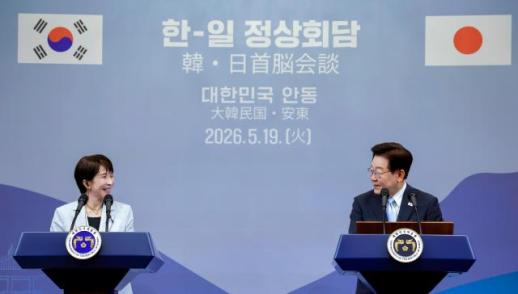 Lee, Takaichi agree to deepen energy, supply chain cooperation SEOUL, May 19 (AJP) - South Korean President Lee Jae Myung and Japanese Prime Minister Sanae Takaichi agreed on Tuesday to expand cooperation on energy security and supply chains amid the prolonged conflict in the Middle East. After a summit at Lee's hometown of Andong, a historic city in southern South Korea, the two leaders shared the view that Seoul and Tokyo need to work more closely together as global supply chains and energy markets face growing uncertainty. "We agreed to further expand cooperation on supply chains," Lee said at a joint press conference following the summit. Lee said Takaichi also proposed cooperation with other Asian countries facing supply disruptions. Japan has announced plans to push for "Power Asia," a program designed to provide about US$10 billion in financial support to Southeast Asian countries and others struggling to secure crude oil and petroleum products. Lee said South Korea and Japan also agreed to strengthen cooperation in liquefied natural gas and crude oil, calling them key energy sources for both countries. "We agreed to further strengthen cooperation in LNG and crude oil," Lee said. "We also agreed to deepen information sharing and communication channels regarding crude oil supply, demand and reserves." Both sides did not clearly say in their joint press remarks whether they would lend each other surplus crude oil in the event of a supply shortage. Tuesday's summit came as Seoul and Tokyo have been trying to maintain momentum in improving relations through the so-called shuttle diplomacy between the neighboring countries. Calling it his fourth summit with Takaichi since she took office in October, Lee said, "This truly shows the essence of shuttle diplomacy between South Korea and Japan." The meeting was especially symbolic, coming just months after Lee visited Takaichi’s hometown of Nara in January. "After visiting your hometown of Nara in January and receiving such warm hospitality, I am deeply honored and pleased to welcome you today here in Andong, where I was born and raised," Lee told Takaichi at the start of the talks. Lee said the two countries have continued to expand cooperation in recent months, citing a bilateral supply chain partnership signed in March and a memorandum of cooperation between the two countries' police agencies aimed at strengthening joint responses to scam crimes. "Our relations are moving forward toward the future without a day's pause," Lee said. He also pointed to working-level talks on DNA testing related to victims of the Chosei coal mine and a consultative body on shared social issues as examples of new areas of cooperation. Lee said the worsening international environment has made cooperation among friendly countries more urgent. "The international situation is now in the midst of a storm," Lee said. "Cooperation and communication among friendly countries are needed more than ever." He said South Korea and Japan had both joined international efforts related to the Strait of Hormuz including initiatives led by France and the U.K., to help ensure maritime safety and freedom of navigation. He also said the two countries helped each other secure seats on flights for citizens stranded in the Middle East. On regional security, Lee said he and Takaichi reaffirmed the importance of South Korea-U.S. cooperation and trilateral cooperation among South Korea, the U.S. and Japan. Lee also said he emphasized the need for South Korea, Japan and China to respect one another, cooperate and seek common interests to promote regional peace and stability. On North Korea, Lee said he explained his government's goal of building "a peaceful Korean Peninsula where there is no need to fight," allowing the two Koreas to coexist peacefully and grow together. The wording contrasted with Lee's remarks after his January summit with Takaichi in Nara, when he said the two sides reaffirmed their commitment to the complete denuclearization of the Korean Peninsula and lasting peace. Lee's statement Tuesday did not include the phrase "denuclearization of the Korean Peninsula." Takaichi thanked Lee and South Korea for the welcome and said she was pleased to continue shuttle diplomacy in Andong. "I am very pleased that we are able to practice shuttle diplomacy here in Andong, President Lee's hometown," Takaichi said. She said the international community is facing "an extremely difficult time" including the situation in the Middle East, and called for South Korea and Japan to play a greater role in regional stability. "Through the leadership of President Lee and myself, it is very important to steadily develop the positive momentum in Japan-South Korea relations," Takaichi said. "It is also important for our two countries to play a central role in stabilizing the Indo-Pacific region." Takaichi said she hoped to have a candid exchange of views "for the interests of both sides and for peace and stability in the region and the international community." South Korean officials attending the talks included Foreign Minister Cho Hyun, national security adviser Wi Sung-lac, policy chief Kim Yong-beom and presidential chief of staff Kang Hoon-sik. The Japanese side included Chief Cabinet Secretary Masanao Ozaki, National Security Secretariat Secretary General Keiichi Ichikawa and Japanese Ambassador to South Korea Koichi Mizushima. 2026-05-19 18:00:58
 -
 Korea, Japan leaders to talk serious at Andong summit amid Gulf risks SEOUL, May 19 (AJP) - South Korean President Lee Jae Myung and Japanese Prime Minister Sanae Takaichi are expected to move quickly beyond ceremonial diplomacy when they meet Tuesday in Andong, focusing instead on a growing list of shared strategic anxieties ranging from Middle East energy disruptions to regional security and AI-driven industrial competition. The summit, held in Lee’s hometown in North Gyeongsang Province, marks the leaders’ third bilateral meeting in just seven months — an unusually rapid pace for Seoul-Tokyo diplomacy given the historical baggage that has long complicated ties between the two U.S. allies. Takaichi departed Tokyo’s Haneda Airport earlier Tuesday for the two-day visit, which is expected to center heavily on energy security as instability in the Middle East threatens oil shipping lanes and adds fresh pressure to Asian economies heavily dependent on imported crude. At the top of the agenda is a proposed “industrial and trade policy dialogue,” which Japanese media reported the two governments are expected to formally launch after the summit. The framework would aim to coordinate responses to disruptions in crude oil and refined petroleum supplies, including possible emergency lending of fuel such as jet oil during shortages. The two countries are also expected to discuss joint crude procurement, transport coordination and ways to avoid export restrictions during supply crises — a sign that Seoul and Tokyo increasingly view energy security as a shared strategic vulnerability rather than a purely commercial issue. The urgency has intensified as the prolonged Middle East conflict threatens one of Northeast Asia’s most critical economic chokepoints. Both South Korea and Japan remain overwhelmingly dependent on imported energy transported through the Strait of Hormuz. The leaders are also expected to expand discussions into broader economic security issues tied to artificial intelligence, semiconductors and supply chains, areas both governments have increasingly framed as part of national security policy. Lee and Takaichi first met on the sidelines of the APEC summit in Gyeongju in October last year shortly after Takaichi took office as Japan’s first female prime minister. They met again in January in Nara, Takaichi’s political hometown, where discussions focused on AI, economic resilience, defense and transnational crime. Tuesday’s talks are expected to build on that momentum, with Southeast Asia emerging as another key area of cooperation. Seoul is reportedly considering participation in Japan’s Asia Zero Emission Community (AZEC) initiative, while both countries may discuss joint financial and technical support for Southeast Asian states seeking to strengthen petroleum stockpiling and procurement systems. Defense cooperation is also expected to re-emerge as a major theme. Lee and Takaichi are likely to agree on resuming humanitarian search-and-rescue exercises between the South Korean Navy and Japan’s Maritime Self-Defense Force next month. The drills, known as SAREX, were conducted regularly between 1999 and 2017 before being suspended following a diplomatic dispute in 2018 involving a Japanese patrol aircraft and a South Korean naval vessel. If the exercises resume, they would mark the first bilateral naval drills between the two countries in nearly a decade and underscore the broader thaw in practical security cooperation as North Korea accelerates its weapons programs and China expands its regional military influence. The two leaders are also expected to exchange views on the recent U.S.-China summit after U.S. President Donald Trump reportedly briefed both governments following his May 14-15 talks with Chinese President Xi Jinping. The Andong meeting also carries symbolic weight. Takaichi hosted Lee in Nara earlier this year, and Lee is now returning the gesture in his own hometown — a deliberate effort to normalize leader-level exchanges after years of diplomatic volatility. Despite unresolved historical disputes rooted in Japan’s 1910-45 colonial rule of the Korean Peninsula, both governments have increasingly prioritized pragmatic cooperation as geopolitical and economic risks intensify across the region. 2026-05-19 13:14:36
 -
 Andong flavors to headline Lee-Takaichi summit dinner SEOUL, May 18 (AJP) - Traditional cuisine and symbolic Korean-Japanese pairings will take center stage Tuesday when South Korean President Lee Jae Myung hosts Japanese Prime Minister Takaichi Sanae for a summit dinner in Andong, the country's iconic southeastern city of loyalty and tradition. According to the presidential Blue House on Sunday, the dinner will feature fusion Korean dishes inspired by “Suunjapbang,” a treasured ancient cookbook from an Andong head family. The menu will include Andong-style braised chicken, known as Andong Jjimdak, as well as “Jeongyea,” a chicken dish regarded as the origin of Andong Jjimdak. Japanese travel information site Konest describes Andong Jjimdak as “gaining recognition in Japan,” while Japanese restaurant review platform Tabelog lists around 40 restaurants nationwide that appear in searches for “chimutaku,” the Japanese rendering of Jjimdak. Jeongyea, which appears in Suunjapbang, is made by pan-frying chicken in sesame oil and braising it with soy sauce, Korean rice wine (Cheongju), and honey. It was traditionally served to welcome honored guests. Other dishes include grilled Hanwoo (Korean beef) ribs, rice, and Sinseollo, a royal-style hot pot. Andong is famous for its vast fields, which produce the country's top-class rice, as well as its Hanwoo. For the dinner drinks, traditional liquors Taesaju and Andong Soju will be served alongside Japanese Sake from Nara Prefecture, Takaichi’s hometown, in a gesture symbolizing friendship and harmony between the two countries. Dessert will combine Jeonyak, a traditional Korean seasonal dessert, and Mochi, a type of chewy Japanese rice cake, on a single plate. The summit, scheduled for Tuesday, will mark the sixth summit of the Lee administration and the second round of shuttle diplomacy between Lee and Takaichi this year. It comes about four months after the two leaders met in Nara Prefecture in January. Takaichi is expected to arrive at Daegu International Airport on Tuesday afternoon before traveling to a hotel in Andong. Lee plans to greet the Japanese prime minister in person at the hotel entrance. A traditional honor guard of 43 members and a 29-member military band will escort Takaichi’s vehicle, while 12 flag bearers will be stationed on both sides of the hotel entrance to stage a formal welcome ceremony. After the summit, the two leaders are scheduled to issue a joint press statement, followed by the dinner and other events aimed at strengthening personal ties. Following the dinner, Lee and Takaichi are scheduled to watch the Hahoe Seonyu Julbul Nori, a traditional fireworks event in Hahoe Village. The performance combines “Julbul,” in which bags containing burning embers are hung on handwoven ropes and lit so sparks fall toward the river, with “Seonyu,” a boat ride traditionally enjoyed by aristocrats. At Takaichi’s accommodation, welcome gifts will be prepared, including Wolyeong Yakgwa, a traditional sweet and chewy snack, as well as Taesaju. 2026-05-18 17:48:28
 -
 France honors South Korean director Park Chan-wook with top cultural order SEOUL, May 18 (AJP) - France has awarded South Korean film director Park Chan-wook the Commandeur in the Order of Arts and Letters, the highest rank of its cultural merit. French Culture Minister Catherine Pégard presented the medal Sunday in Cannes. The ceremony took place during the 79th Cannes Film Festival, where the 62-year-old is currently serving as the first South Korean filmmaker to preside over the festival jury. Established in 1957 by the French Ministry of Culture, the order recognizes significant contributions to the arts and literature. The Commandeur grade is the highest of its three ranks, positioned above the Officier and Chevalier grades. Park has previously won three major awards at Cannes. He received the Grand Prix in 2004 for "Oldboy," the Jury Prize in 2009 for "Thirst," and the directing prize in 2022 for "Decision to Leave." He is the fourth South Korean to receive the Commandeur rank. Previous recipients include former Korean Culture and Arts Foundation president Kim Jung-ok in 2002, conductor Chung Myung-whun in 2011, and soprano Jo Su-mi in May of last year. The French government has decorated several other South Korean film industry figures with lower grades of the order. Directors Bong Joon-ho and Kim Jee-woon received the Officier grade in 2016 and 2018, respectively. Late actress Yoon Jeong-hee received the Officier honor in 2011, while her husband, pianist Paik Kun-woo, received the Chevalier in 2001, making them the first South Korean couple decorated by the order. Actress Jeon Do-yeon, who won best actress at Cannes in 2007, was awarded the Chevalier rank in 2009. 2026-05-18 15:36:19