

Journalist

Lee Jung-woo, Kim Yeon-jae
cannes2030@ajupress.com, duswogmlwo77@ajupress.com
-
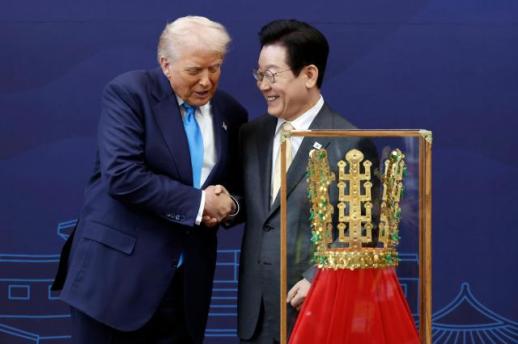 Lee scores high on US ties in first-year diplomacy review SEOUL, May 15 (AJP) - South Korean President Lee Jae Myung may appear domestically focused — his cabinet meetings are live-streamed and his social-media presence is constant — but his first year was defined by foreign affairs. He traveled to 15 countries and held 45 summit meetings, according to his vice foreign minister, a pace that far outstrips his recent predecessors: both Moon Jae-in and Yoon Suk Yeol visited nine countries in their respective first years. Much of that effort went toward restoring national dignity after Yoon Suk Yeol's brief martial-law declaration and subsequent impeachment, said Second Vice Foreign Minister Kim Jina at a Sejong Institute forum Thursday. "Over the past year, we have managed crises and expanded opportunities amid an unstable international environment," Kim said. The sixth Sejong Special Policy Forum, held Thursday afternoon at the institute's conference room, brought together specialists on the United States, Japan, China and North Korea to assess the first year of President Lee's diplomacy and security policy ahead of the administration's first anniversary next month. Panelists broadly agreed that Lee's "pragmatic diplomacy" had stabilized South Korea's external relations after a turbulent period, but warned that Seoul must now move from crisis management to a more durable strategy. Lee Chan-song, a research fellow at the Sejong Institute, gave the administration a favorable evaluation on relations with Washington, citing progress on the transfer of wartime operational control (OPCON) as one of the clearest achievements in alliance management. Crisis management also held up surprisingly well under Donald Trump's second presidency, which unleashed a barrage of tariffs on allies and adversaries alike on Liberation Day in April 2025. During his campaign, Lee had pledged a diplomacy "grounded in national interests," describing the alliance with Washington as the foundation of his foreign policy and calling for trilateral cooperation with the United States and Japan. Lee Seung-joo, a professor of political science and international relations at Chung-Ang University, described Lee's first year as dominated by tariff negotiations and argued that Seoul had developed what could be called a "Korean model" of tariff bargaining. The Trump administration's strategy of pressing multiple trading partners simultaneously created a dynamic in which early deals became benchmarks for later negotiations. Seoul, which entered talks later than some competitors due to a domestic leadership vacuum, had to move quickly while managing uncertainty, he pointed out. South Korea also leveraged its role as host of the Asia-Pacific Economic Cooperation summit in Gyeongju, where Lee chaired the leaders' meeting and presided over a session on artificial intelligence and demographic change. The two sides reached a trade deal in late July that lowered U.S. duties on Korean goods from 25 percent to 15 percent in exchange for a US$350 billion investment package and US$100 billion in U.S. energy purchases, centered on shipbuilding, semiconductors, batteries and other strategic industries. Still, Lee Chan-song warned that alliance modernization is beginning to expose differences. He urged the government to choose its language carefully in Washington, saying terms such as "strategic coordination" or "strategic alignment" would be preferable to "strategic autonomy." He also called on Seoul to prepare for the post-Trump era. His remarks came after Gen. Xavier Brunson, commander of U.S. Forces Korea, told a U.S. House Armed Services Committee hearing that Seoul and Washington aim to meet the conditions for OPCON transfer no later than the first quarter of 2029. South Korea handed wartime operational control to the U.S.-led U.N. Command during the 1950–53 Korean War, retook peacetime OPCON in 1994 and has since pursued a conditions-based transfer of wartime command. Japan Lee Ki-tae, a research fellow at the Sejong Institute, said the administration had chosen a careful but effective path — managing historical disputes without allowing them to block cooperation on security, supply chains and advanced technologies. "The Lee Jae Myung government is doing well in South Korea-Japan relations," Lee Ki-tae said, though he cautioned that "the current South Korea-Japan relationship is closer to a conditional expansion of cooperation than to full reconciliation." He described the relationship as a "managed" phase: Seoul remains mindful of domestic sentiment on history-related issues, while Tokyo has adopted a practical approach that emphasizes trust-building over quick symbolic breakthroughs. A January summit between Lee and Japanese Prime Minister Sanae Takaichi in Nara was a key milestone. Takaichi, just three months in office, performed "Golden" and "Dynamite" at the gathering. A few months later, she is due to visit Lee's hometown of Andong — also an ancient city, coincidentally — next week, continuing the shuttle diplomacy. Both summits face shared challenges, including energy security risks from Strait of Hormuz tensions and U.S. pressure to join operations against an Iranian blockade of the corridor, alongside shared opportunities in AI. Lee Ki-tae said the future of South Korea-Japan ties will depend less on dramatic gestures and more on policy continuity and crisis management. He identified intelligence sharing, supply chain resilience, technology security, disaster relief and nontraditional security as areas where both sides can produce results without excessive political risk. He also warned that the two countries do not fully share the same priorities on North Korea. Seoul's preferred approach combines exchanges, normalization and denuclearization, while Japan places stronger emphasis on denuclearization and the abduction issue. Any restart of diplomacy involving Pyongyang, he said, would require close advance coordination between Seoul and Tokyo. China Kang Jun-young, a professor at Hankuk University of Foreign Studies, said Beijing had expected a liberal South Korean government to tilt toward China after years of stronger Seoul-Washington alignment under the previous conservative administration. That it has not, he argued, should itself be read as a mark of success. "If Beijing thinks the Lee Jae Myung government did not come as close to China as it expected, that means the Lee government did well," Kang said. Lee's first summit with Chinese President Xi Jinping, on the sidelines of the APEC summit in Gyeongju in November, set a constructive tone as the two leaders agreed on the need to cooperate for peace on the Korean Peninsula. Xi's visit was his first to South Korea in 11 years. The two met again in Beijing in January, with denuclearization, economic ties and cultural exchanges on the agenda. Lee later said the summits helped put bilateral relations "back on track." Kang stressed that the economic relationship between South Korea and China is shifting from complementarity to competition. China's technological advancement and growing self-sufficiency are eroding the foundation of South Korea's exports, while Seoul remains heavily dependent on Beijing for key minerals, processed raw materials and advanced materials. He called for a model of economic-security cooperation that balances engagement with risk reduction. Kang also flagged growing Chinese naval activity in the Yellow Sea as a serious security concern given its proximity to South Korea's capital region, calling for clearer red lines on high-risk security issues and more active cooperation in lower-risk areas such as culture, tourism, climate, local government exchanges and academic cooperation. North Korea Little progress has been made on the North Korean front. Park Won Gon, a professor of North Korean studies at Ewha Womans University, said North Korea's shift is not merely rhetorical but constitutional, military and nuclear in nature. "The Lee Jae Myung government's North Korea policy must go beyond the short-term goal of resuming dialogue and expand into a long-term national strategy responding to North Korea's structural strategic shift," Park said. In the first half of 2026, North Korea institutionalized its hostile state-to-state relationship with the South. A revised constitution added a territorial clause and dropped all references to unification, reinforcing Pyongyang's break from the idea of inter-Korean relations as a temporary division within one nation. In March, state media reported that Kim Jong-un formally designated South Korea the "most hostile state" and reaffirmed the North's nuclear status. Park said the implications are profound. By redefining the South as an enemy state rather than a partner in national reconciliation, Pyongyang is constructing political and ideological justification for the potential use of nuclear weapons. The North's doctrine now combines conventional military modernization, nuclear force development and a legal framework that has discarded the old language of peaceful unification. Seoul's response, Park argued, should begin with a strategic redefinition of inter-Korean relations. South Korea may continue to uphold unification as a constitutional and national goal, but daily policy management must treat North Korea as a de facto hostile state for the purposes of crisis prevention and deterrence. That would require stronger extended deterrence with the United States, improved operational capability in South Korea's three-axis defense system and new mechanisms to prevent accidental clashes. With past inter-Korean military agreements effectively rendered void, Park said Seoul should explore indirect communication channels through the U.N. Command or third-party intermediaries — not as political concessions, but as minimum safety devices against escalation. The Lee government has nonetheless kept the door to dialogue open. National Security Adviser Wi Sung-lac has described Lee's "END" initiative — exchange, normalization and denuclearization — as a mutually reinforcing structure in which progress in one area helps advance the others, with the overarching goal of ending confrontation and hostility on the Korean Peninsula through an integrated approach. 2026-05-15 16:49:18
 -
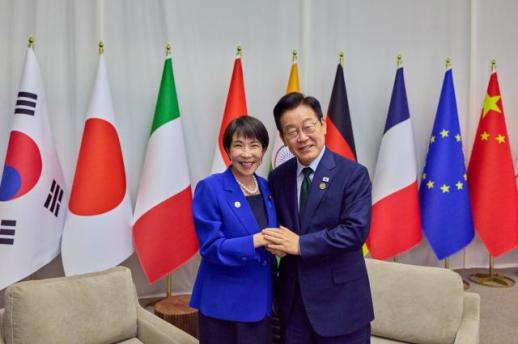 Japanese Prime Minister Takaichi to visit President Lee's hometown of Andong SEOUL, May 15 (AJP) - Japanese Prime Minister Sanae Takaichi will visit Andong, North Gyeongsang Province, the hometown of President Lee Jae Myung, for a summit with the South Korean leader on May 19, the presidential office said Friday. Presidential spokesperson Kang Yu-jung said Takaichi will make a two-day visit to Andong from May 19 to 20 to meet Lee. The two leaders are scheduled to hold both a small-group summit and an expanded summit, followed by a joint press announcement, a dinner and other informal events aimed at strengthening personal ties. The visit is seen as a reciprocal gesture after Lee traveled to Nara Prefecture, Takaichi’s hometown, in January. That meeting marked the first summit between the two leaders earlier this year. Lee was born in Andong in 1964. He graduated from elementary school there in 1976 before moving to Seongnam, Gyeonggi Province. The upcoming summit will bring the two leaders together about four months after Lee’s January visit to Nara. Nara is where Takaichi was born and raised, and it is also her current constituency in Japan’s House of Representatives. Takaichi first won a seat there as an independent candidate in the 1993 general election and has since been elected 10 times. Holding a summit in a leader’s political or personal hometown, rather than in the capital, is not without precedent in international diplomacy. Ten years ago, in 2016, then-Japanese Prime Minister Shinzo Abe hosted Russian President Vladimir Putin for a summit in Nagato, Yamaguchi Prefecture, Abe’s electoral district. Chinese President Xi Jinping also invited Indian Prime Minister Narendra Modi to Xi’an, his political base, instead of Beijing in 2015. In his memoir published in 2023, Abe wrote that inviting a counterpart to one’s home rather than to a restaurant can make the other side feel that they have “won your heart.” He said this was why he invited Putin to Nagato, his family’s registered domicile and the place where his father’s grave is located. U.S. President Donald Trump was also known for holding meetings with foreign leaders, including Abe, Xi and Israeli Prime Minister Benjamin Netanyahu, at his Mar-a-Lago resort in Florida instead of the White House. The Andong meeting will be the third summit between Lee and Takaichi, following their first encounter at the APEC summit in Gyeongju last October and Lee’s visit to Nara in January. 2026-05-15 16:30:38
 -
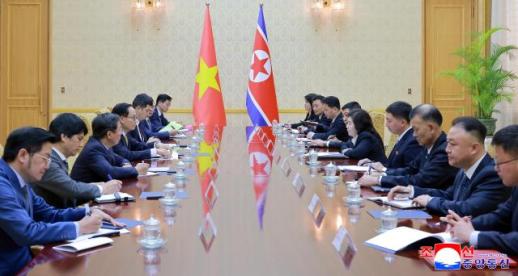 N. Korea, Viet Nam agree to deepen exchanges, strategic communication at foreign ministers' talks SEOUL, May 14 (AJP) - North Korea and Vietnam have agreed to deepen bilateral exchanges and cooperation across various fields during talks between their foreign ministers in Pyongyang, the North's state media reported Thursday. According to the Korean Central News Agency (KCNA), the country's Foreign Minister Choe Son-hui held talks Wednesday at the Mansudae Assembly Hall with Vietnamese Foreign Minister Lê Hoài Trung, who visited Pyongyang as a special envoy of Tô Lâm, general secretary of the Communist Party of Vietnam and the country's president. During the meeting, Choe recalled the summit held in Pyongyang in October last year and reaffirmed Pyongyang's commitment to "developing the traditional -Vietnam friendship and cooperative relations in line with the aspirations and wishes of the peoples of the two countries," KCNA said. Trung responded that Vietnam has consistently attached importance to strengthening friendly and cooperative ties with North Korea and has paid "deep attention" to advancing bilateral relations. The two sides agreed to further expand exchanges and cooperation in multiple sectors and strengthen strategic communication and mutual support between their foreign policy institutions, the report said. They also exchanged views on regional and international issues. Kim Song-nam, director of the international department of the ruling Workers' Party of Korea, also met with Trung the same day to discuss ways to strengthen party-to-party ties. Kim said the Workers' Party would further enhance exchanges and cooperation with the Communist Party of Vietnam, while Trung reaffirmed Hanoi's "steadfast position" to elevate the firmly established Vietnam-North Korea friendship. The two sides discussed strengthening political ties between the two ruling parties and reached a consensus on issues of mutual concern, KCNA said. North Korea's foreign ministry hosted a reception banquet for the Vietnamese delegation later in the evening. The visit by the Vietnamese envoy comes as bilateral relations have gained momentum since Lâm visited Pyongyang in October last year and held talks with North Korean leader Kim Jong-un, marking the first visit to the North by a Vietnamese top leader in 18 years. The trip also comes after South Korean President Lee Jae Myung paid a state visit to Vietnam from April 21-24, raising attention over the possibility that Viet Nam could play a mediating role between the two Koreas. Lâm visited South Korea in August last year as the first state guest of the Lee administration, while Lee became the first foreign leader to make a state visit to Viet Nam following his inauguration in June last year. 2026-05-14 11:32:51
 -
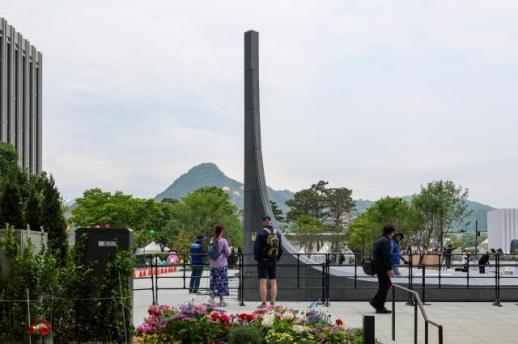 'Garden of Gratitude' memorial sparks political sparring ahead of Seoul elections SEOUL, May 14 (AJP) - Gwanghwamun Square, which gained international attention after hosting a Netflix-streamed BTS concert in March, has now added a new multinational landmark to its symbolic landscape. The Seoul Metropolitan Government on Tuesday officially opened the “Garden of Gratitude” at Gwanghwamun Square, a memorial space dedicated to the 22 United Nations member states that fought alongside South Korea during the 1950-53 Korean War, unveiling a politically charged landmark that has already sparked debate over symbolism, history and the use of public space. What city officials had hoped would become a signature international memorial tied to Seoul Mayor Oh Se-hoon’s reelection campaign ahead of next month’s local elections has instead evolved into another political flashpoint, with ruling party lawmakers accusing the conservative mayor of distorting the historical identity of Gwanghwamun Square amid lingering political tensions following former President Yoon Suk Yeol’s impeachment. Located west of the King Sejong statue in central Seoul, the memorial consists of 23 stone pillars — representing South Korea and the 22 nations that participated in the U.N. Command during the war — arranged from north to south in the order each country arrived on the Korean Peninsula. The United States, the first nation to deploy troops, stands at the southernmost end. Each pillar rises 6.25 meters high, symbolizing June 25, the date the Korean War began in 1950. National flags are attached to the structures, while lighting installations atop the pillars illuminate the night sky after dark. The memorial complex also includes an underground exhibition space called “Freedom Hall,” featuring multimedia displays on the Korean War, the sacrifices of foreign veterans and South Korea’s postwar transformation. Around 170 people attended Tuesday’s completion ceremony, including ambassadors from participating nations, Korean War veterans and veterans’ organization officials. Acting Seoul Mayor Kim Sung-bo presided over the event alongside representatives from the allied countries. The project has been one of Oh’s signature initiatives since 2024, when he first proposed installing a national symbolic structure at Gwanghwamun Square. Oh initially sought to erect a 100-meter national flagpole, but the proposal faced heavy public criticism and was later revised through citizen consultations and design competitions into the current memorial garden. Several pillars were produced using stones donated by participating nations including the Netherlands, Greece, Belgium and Germany. Seoul officials said additional donated stones from countries such as Australia and Türkiye will be incorporated later this year. QR codes attached to each pillar provide visitors with information about each country’s wartime contribution. Beginning at 8 p.m. each evening, beams of light projected from the top of the structures illuminate the sky for 10 minutes every half hour until 11 p.m. Inside Freedom Hall, visitors can explore AI-restored wartime photographs, interactive exhibits and a live video connection to Times Square. Yet despite the city’s emphasis on remembrance and international solidarity, the project has become entangled in political controversy, particularly over the design and symbolism of the above-ground pillars. Critics argue the structures resemble rifles used during military honor guard ceremonies, making them incompatible with Gwanghwamun Square’s long-standing identity as a site associated with democratic protests and civic movements. Oh strongly rejected the criticism. “It is not a sculpture symbolizing guns,” he told AJP. “It represents an honor guard ceremony commemorating the memory and sacrifice of 22 countries that voluntarily came to defend South Korea and liberal democracy at a time when the country’s per capita income was below $100,” he said. The mayor also denied accusations that the opening timing was politically motivated ahead of the June 3 local elections. “The completion schedule had already been set months ago,” Oh said, explaining that construction had briefly paused after additional government review requests before ultimately being completed on May 12. Oh expressed confidence the site would evolve into both a memorial space and a tourist destination for visitors from allied nations. “Many citizens will visit this place and remember the Korean War,” Oh said. “Tourists from the United States, Australia, Britain, Germany and other participating countries will also come to the Garden of Gratitude.” Rep. Koh Dong-jin of the People Power Party also dismissed accusations that the opening was politically motivated. “It does not make sense to conclude this was an election-driven move when an incumbent mayor would have little reason to deliberately invite unnecessary controversy just before an election,” Koh said. “This has become a largely unproductive political dispute,” he added. Opposition politicians, however, voiced far harsher criticism. Rep. Kim Won-i of the ruling Democratic Party of Korea (DPK), who previously served as Seoul’s vice mayor for political affairs, argued the installation fundamentally misunderstands the historical identity of Gwanghwamun Square. “This is something that should never have been done,” Kim said. “The current Seoul Metropolitan Council building served as the National Assembly during the April 19 Revolution, and this entire area is historically associated with democracy and civic resistance.” “Gwanghwamun Square symbolizes freedom, democracy and peace,” he continued. Rep. Park Joo-min of the DPK also attacked the project, calling it an example of what he described as Mayor Oh’s disregard for public opinion. “Despite public opposition, he pushed the project forward. There is already a similar monument with a comparable purpose at the War Memorial of Korea in Yongsan.” 2026-05-14 09:20:51
 -
 Complaints involving online platforms surge, with Coupang most frequent SEOUL, May 13 (AJP) - A record number of disputes and similar cases were handled last year, driven largely by a sharp increase in online platform-related complaints, with Coupang accounting for the largest among platform operators, the Korea Fair Trade Mediation Agency (KFTMA) said on Wednesday. According to the agency, the number of such cases stood at 4,726 in 2024, up 17 percent from 4,041 a year earlier, the highest level since relevant statistics began being compiled in 2008. Among them, some 1,709 cases, or about 39 percent, were resolved successfully, up 18 percent from the previous year. The total amount of direct and indirect financial relief provided through mediation reached 122 billion won ($818.3 million). Fair trade-related disputes accounted for the largest proportion at 2,424 cases, seeing the sharpest increase of 35 percent from a year earlier, followed by those involving subcontractors with 1,040, franchise businesses with 691, and contract terms and conditions with 451. Notably, disputes involving online platforms rose 32 percent to 440 cases during the same period. The number has continued to grow steadily, quadrupling from 111 cases in 2022. Among online platform operators, Coupang-related disputes were the most frequent, with 203 cases. Franchise business disputes also rose 18 percent to 584 cases. Disputes between convenience store franchisees and franchisors accounted for the largest share at 242 cases. By contrast, cases involving subcontractors fell 6 percent from 1,105 cases. The decline was largely attributed to a drop in construction-sector disputes, which decreased 10 percent from 660 to 593 cases. The agency said the overall slowdown in the housing construction sector appeared to have reduced related disputes. Complaints involving contract terms remained largely unchanged, edging down from 457 to 451. Among them, disputes over penalties for early termination of rental contracts were the most common at 124 cases. The KFTMA is a state-run agency that helps resolve business disputes involving unfair trade practices through deliberations by a group of experts. Any complaints or cases can be brought directly by businesses and individuals or referred by the Fair Trade Commission (FTC). 2026-05-13 16:35:48
 -
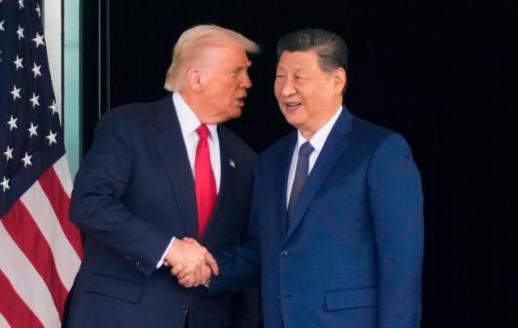 Iran war likely to sideline North Korea at Trump-Xi summit of reduced ambitions SEOUL, May 13 (AJP) - North Korea is expected to take a back seat at this week’s summit between U.S. President Donald Trump and Chinese President Xi Jinping as the Iran war, disruption in the Strait of Hormuz and intensifying superpower rivalry overshadow Pyongyang in what increasingly appears to be a crisis-management meeting rather than a breakthrough summit. Iran looms large over the two superpowers even as both sides seek to avoid openly framing the summit around the conflict. Broader issues including trade tensions, Taiwan, rare earths, semiconductors and energy security are expected to dominate the two-day talks, leaving limited room for North Korea to emerge as a central agenda item. Trump departed for China aboard Air Force One on Tuesday, leaving Joint Base Andrews in Maryland at 2:36 p.m. local time. He is expected to arrive in Beijing late Wednesday afternoon ahead of a two-day official visit beginning Thursday. Trump is making the first U.S. presidential state visit to China in nearly a decade after the trip was delayed by the Iran war. The meeting is also the first of several planned face-to-face encounters between the two leaders this year. The summit comes after Washington and Beijing lowered tensions in their trade war, but the two sides remain divided over tariffs, rare earth minerals, advanced semiconductors, electric vehicles and sanctions linked to Iranian oil shipments. Trump said last week, “We’re doing a lot of business with China.” He also said the United States was “making a lot of money” from trade with China. But the meeting arrives under the shadow of the unresolved Iran conflict that delayed Trump’s Beijing trip and sharply reduced expectations for major diplomatic breakthroughs. Instead of projecting decisive strength after the U.S. strikes on Iran, Washington now faces mounting pressure over the continued closure of the Strait of Hormuz, a critical chokepoint for global energy flows. The Strait of Hormuz, through which roughly a fifth of the world’s oil traditionally flows, remains closed with no clear pathway toward reopening. The disruption poses a direct threat to China’s economy and its Gulf relationships because Beijing relies heavily on energy imports transiting the route. U.S. Treasury Secretary Scott Bessent called on China this week to “step up with some diplomacy,” as Washington looked to Beijing for help in easing the crisis. Rather than pursuing sweeping diplomatic breakthroughs, the summit is increasingly shaping into an exercise in managing instability across trade, Taiwan, energy security and supply chains amid mounting uncertainty over the Iran war. Taiwan is also expected to be among the most sensitive agenda items. Beijing claims the self-ruled island as part of its territory and has vowed to take control of it, using force if necessary. Washington does not formally recognize Taiwan but continues to provide defensive weapons to Taipei. An $11 billion U.S. arms package for Taiwan has reportedly been stalled ahead of the summit. Beijing is also expected to press Washington to change its official wording on Taiwan from saying it “does not support” Taiwanese independence to explicitly “opposing” it. Against that backdrop, North Korea appears likely to remain a secondary issue despite historically serving as an occasional diplomatic icebreaker between Trump and Xi as the two share a degree of personal rapport with reclusive ruler Kim Jong-un. Political scientists and regional experts broadly predicted that the summit would focus overwhelmingly on Iran and economic security rather than the Korean Peninsula. Dov Levin, a professor in the Department of Politics and Public Administration at the University of Hong Kong, predicted that there will be no significant discussion on North Korea at the summit. Levin said the Iran war and maintaining the truce in the U.S.-China trade war would be the two major topics. He said Trump may ask Xi for help on Iran to get Tehran to “make more concessions to the U.S. regarding the nuclear issue” and reopen the Strait of Hormuz. “I do not expect North Korea to emerge as a key issue during the summit,” Christopher Fariss, a professor in the Department of Political Science at the University of Michigan agreed. Fariss said he expects the meeting to focus on trade and tariff issues, noting chief executives of major U.S. Big Tech and Wall Street firms are accompanying Trump to China. He added that South Korea and Taiwan could emerge as talking points within broader economic discussions. Elon Musk, Apple CEO Tim Cook and Boeing CEO Kelly Ortberg are reportedly included in Trump’s delegation to China. Greg Albo, a professor in the Department of Political Science at York University, also argued that North Korea would not be treated as a major agenda item. “The main items will be on several economic matters,” Albo said, citing as examples “the tariff war, e-vehicles and rare earths, the chip war and international monetary issues.” Iran war and the Strait of Hormuz instead would be treated as important agenda items. He added that “the Gulf states bending away from the U.S. adds to the east-east trade linkages between the GCC and China.” James Morrow, a professor of world politics at the University of Michigan, said other issues are likely to overshadow North Korea during the visit. He pointed first to U.S.-China trade and broader global trade tensions, followed by Taiwan, which he said Xi is expected to raise, and the U.S.-Israel war against Iran. Compared with those issues, Morrow said North Korea appears less urgent in Washington, noting that Kim Jong-un has not pushed the country back onto the international agenda as he did in 2017, when Pyongyang conducted a series of missile and nuclear demonstrations. While South Koreans may view the situation differently, Morrow said North Korea’s tests this year are not seen as a central concern in the United States. Watchers in South Korea are in general agreement. “I expect that North Korean issues will not be addressed, as this U.S.-China summit is focused on economic security,” said Rep. Kim Young-bae of the Democratic Party of Korea, vice chair of the National Assembly’s Foreign Affairs and Unification Committee. “I think North Korean issues may be addressed sometime next year after the Iran issue is settled following the U.S. midterm elections in November,” Kim added. Rep. Yoon Hu-duk of the Democratic Party of Korea, also a member of the Foreign Affairs and Unification Committee, similarly predicted that North Korean issues would not be addressed at the summit. “Ahead of last year's U.S.-China summit in Busan, President Trump continued to send love calls to Kim Jong-un, raising the possibility of a North Korea-U.S. summit, but currently President Trump is not sending any love calls to Kim Jong-un at all,” Yoon said. “North Korean issues appear to be outside President Trump's current area of interest,” he added. “The Iran issue and economic issues such as rare earths will make up most of the discussions, and North Korean issues may be addressed formally but will not become a major agenda item,” said Rep. Kim Ki-woong of the People Power Party, a former vice unification minister. Kim said that for Trump, North Korean issues are not urgent and remain merely a diplomatic card that could be used later as a political achievement before the U.S. midterm elections. He added that with Trump currently needing Xi’s cooperation because of the Iran war, there is little reason for Washington to specifically press Beijing on North Korea. “There are many other issues, and North Korea is not responding to the United States, so the possibility of a North Korea-U.S. summit is slim,” said Rep. Kim Joon-hyung of the minor Rebuilding Korea Party and former chancellor of the Korea National Diplomatic Academy. “However, as six meetings are scheduled between President Trump and Chinese President Xi Jinping, I expect the U.S. side will bring up a discussion on North Korea at least once,” Kim added. Dong Wang, a professor at the School of International Studies at Peking University, maintained that the two leaders would still treat North Korea as an important agenda item. He said regional security in Northeast Asia is a “critical matter for peace and stability,” and therefore the two leaders will address it as a major issue. 2026-05-13 11:40:53
 -
 Google says it blocked AI-assisted cyberattack plot, warns of North Korean hacking activity SEOUL, May 12 (AJP) - Google claimed it had preemptively blocked hackers who were preparing large-scale cyberattacks using artificial intelligence and identified North Korean state-linked hacking activities leveraging AI to refine cyber operations. According to its report published on the Cloud Security blog, Google’s Threat Intelligence Group (GTIG) uncovered a threat actor believed to have used AI in preparations for a “zero-day” attack campaign. Google said the actor appeared to be planning broad operations, but the company’s early intervention likely prevented the attacks from being executed. A zero-day attack exploits previously unknown software vulnerabilities before developers can issue security patches, making such intrusions especially difficult to defend against. The disclosure adds to mounting concerns in the cybersecurity industry that rapid advances in AI-assisted vulnerability detection could accelerate the discovery and weaponization of software flaws. According to the report, the attackers sought to exploit vulnerabilities to bypass two-factor authentication systems. Google stressed there was no evidence its own AI model, Gemini, had been used in the operation. While Google did not identify the actor behind the attempted attacks, it separately warned that state-backed hacking groups linked to China and North Korea are showing “particular interest” in applying AI to cyber operations. The company said such groups are adopting increasingly sophisticated AI-assisted techniques for vulnerability discovery and exploitation, including integrating specialized, high-quality security datasets into their workflows. Google specifically highlighted North Korean hacking group APT45, saying there were indications the group had conducted automated research by repeatedly submitting thousands of prompts to analyze vulnerabilities and validate exploit code. “Attackers are not hesitating to experiment and innovate, and neither are we,” Google said in the report, adding that it is sharing research findings and defensive measures across the cybersecurity and AI communities to stay ahead of evolving threats. The warning comes amid broader concerns over AI-powered cyber threats following Anthropic’s recent announcement of “Claude Mitos,” an AI model reportedly capable of expert-level vulnerability discovery. Anthropic said access to the model would initially be restricted to selected companies and institutions because of security concerns. Security experts have also warned that threat actors may be able to assemble comparable cyber capabilities by combining already publicly available AI models. Meanwhile, OpenAI recently introduced “GPT-5.5-Cyber,” a cybersecurity-focused AI model reportedly accessible only to a limited group of researchers and organizations. 2026-05-12 13:55:35
 -
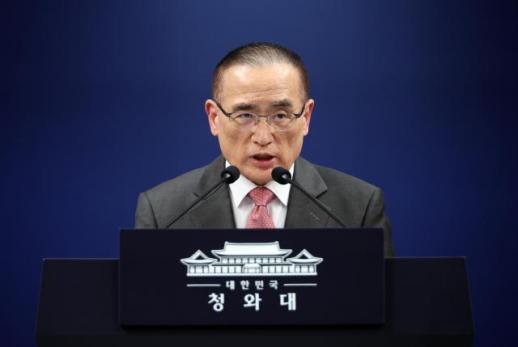 Seoul condemns attack on HMM vessel in Strait of Hormuz SEOUL, May 11 (AJP) - South Korea on Monday formally condemned a kinetic strike on a specialized cargo vessel in the Strait of Hormuz after a joint investigation concluded that two airborne projectiles hit the ship. The confirmation follows a week of uncertainty regarding the Panama-flagged HMM Namu, which was left with a massive hull rupture and an engine room fire after the May 4 strike. The vessel was carrying 24 crew members, including six South Korean nationals. The foreign ministry said on Sunday that its investigation confirmed the ship was hit on its port side ballast tank by two objects arriving approximately one minute apart. The strike created a rupture five meters wide and seven meters deep about 1.5 meters above the waterline. "Our government maintains that attacks on privately operated vessels, including the HMM Namu, can neither be justified nor tolerated, and we strongly condemn them," National Security Advisor Wi Sung-lac said during a press briefing held at the presidential Blue House in central Seoul. Wi noted that the pattern of damage and the presence of hemispherical penetration shapes made it unlikely that sea mines or torpedoes were used. One crew member was reported injured in the attack, while the remaining 23 were unharmed. The 182-meter general cargo ship is operated by HMM Co. and specializes in transporting ultra-heavy loads. Launched in September 2025 at the HPWS shipyard in Guangzhou, China, the vessel operates on non-scheduled routes for heavy-lift cargo rather than standard shipping lanes. The attribution of the attack has emerged as a point of diplomatic friction as Iranian entities issued conflicting statements. Iran's state-run Press TV has reported that the Revolutionary Guard targeted the vessel, while the Iranian embassy in Seoul denied any involvement in an attack against South Korea. The Iranian state news agency IRNA published an analysis titled 'Failed Liberation Operation' on May 7. The report claimed that at least two vessels from South Korea and France were struck while attempting to transit the strait under the protection of the United States military. South Korea's main opposition People Power Party criticized the administration for what it described as a hesitant response. The party accused the government of downplaying the incident and failing to explicitly name Iran as the aggressor despite the claims made by Iranian state media. Investigators have faced difficulties accessing the engine room to determine the internal cause of the fire due to high concentrations of carbon dioxide. The vessel was towed to a port in Dubai on May 8 for repairs and further forensic analysis of debris recovered from the hull. 2026-05-11 17:57:53
 -
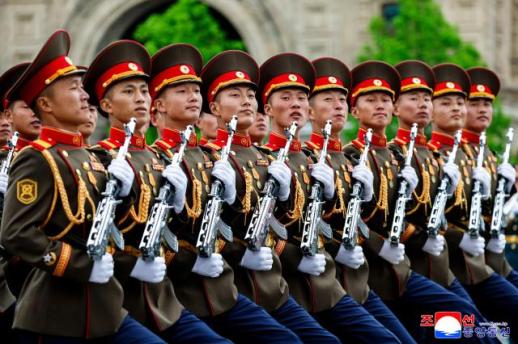 North Korean march in Russia's Victory Day parade sends message on new alliance SEOUL, May 11 (AJP) - Missing were the regular VIPs from China and Iran at this year's Victory Day in Russia, while the military hardware usually showcased along Red Square was notably scaled back amid the ongoing wars in Ukraine and the Middle East. What stood out instead during the 45-minute spectacle was the march of North Korean servicemen fighting alongside Russian troops in Ukraine. The message came across clear. The spectacle was intended to “show off the military alliance relationship between North Korea and Russia at home and abroad,” said Yoon Min Ho, spokesman for Seoul’s Unification Ministry. The parade, commemorating the Soviet Union’s victory over Nazi Germany in World War II, was held under heavy security amid concerns over possible Ukrainian attacks. Russian President Vladimir Putin used the occasion to draw parallels between the sacrifices of the 1940s and Russia’s current war in Ukraine. The legacy of the wartime generation inspired Russian soldiers in the “special military operation,” he said. “They stand against an aggressive force armed and supported by the entire NATO bloc,” Putin said. “And despite this, our heroes move forward. Victory has always been and will always be ours.” This year’s event was notably more restrained than previous years. Instead of the customary display of missiles and armored vehicles, spectators were shown video presentations highlighting Russia’s drone capabilities and nuclear arsenal. A column of North Korean soldiers marched across Red Square as Pyongyang and Moscow deepen military cooperation. North Korean troops have reportedly been deployed alongside Russian forces, particularly in Russia’s Kursk region. The ceremony lasted about 45 minutes, roughly half the length of past Victory Day events. Russian authorities acknowledged tightened security measures were intended to protect Putin amid fears of possible Ukrainian strikes on Moscow. In a congratulatory message to Putin, North Korean leader Kim Jong-un emphasized the countries’ “comprehensive strategic partnership.” An estimated 14,000 North Koreans have been dispatched to the frontlines of Russia since October 2024, with 2,251 presumed to be killed. North Korea’s state-run Rodong Sinmun prominently featured the parade on its front pages. According to the newspaper, a combined column of the Korean People’s Army’s ground, naval and air forces was led by Army Col. Choe Yong-hun. “It was a display to the world of the closeness of North Korea-Russia relations at a time when North Korean troops are participating in the Ukraine war and fighting Ukrainian forces in Kursk,” said Kim Yong-hyun, professor of North Korean studies at Dongguk University. Kim said deepening ties between Pyongyang and Moscow could also encourage China to move closer to North Korea. He added that relations between Pyongyang and Moscow were likely to remain close for a considerable period because a quick end to the war appeared unlikely. 2026-05-11 16:31:08
 -
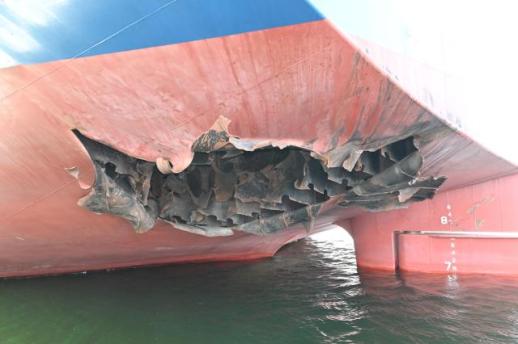 Seoul stays cautious on blaming Iran over HMM Hormuz attack SEOUL, May 11 (AJP) - South Korean Foreign Minister Cho Hyun maintained a cautious stance Monday, stopping short of directly blaming Iran for the attack on a Korean-operated cargo ship near the Strait of Hormuz despite the government’s initial conclusion that the vessel had come under an external strike. “There are still things that need to be studied before making a judgment,” Cho told reporters, signaling Seoul’s reluctance to escalate tensions before the investigation is fully completed. His remarks came a day after the foreign ministry disclosed that two “unidentified airborne objects” struck the stern of the Panama-flagged cargo ship HMM Namu last week, triggering an explosion and fire aboard the vessel. The ship, operated by HMM, was carrying 24 crew members, including six South Koreans. No casualties were reported. Additional analysis is underway on engine fragments recovered from debris found at the scene. Seoul’s calibrated response reflects the delicate diplomatic balancing act facing South Korea as tensions surrounding the Strait of Hormuz intensify. South Korea remains heavily dependent on Middle Eastern crude imports and has sought to avoid being drawn directly into confrontation between Washington and Tehran despite its alliance with the United States. The foreign ministry summoned Iranian Ambassador to South Korea Saeed Koozechi on Sunday to explain the findings, Cho said, adding that the investigation results had also been shared with Washington. Koozechi did not speak publicly upon arriving at the ministry. According to Seoul officials, First Vice Foreign Minister Park Yoon-joo briefed the Iranian envoy on the preliminary investigation outcome. U.S. President Donald Trump earlier claimed that Iran had “taken some shots” at the HMM vessel and other targets in the region. The Iranian Embassy in Seoul strongly denied any involvement, saying Tehran “firmly and categorically” rejects allegations linking its military to the incident. The attack came just hours after Washington launched — and later suspended — “Project Freedom,” a U.S.-led operation aimed at assisting commercial ships stranded around the strategic waterway. Tehran condemned the operation as a violation of the ceasefire framework that has nominally remained in place since early April. The incident is expected to surface during talks between South Korean Defense Minister Ahn Gyu-back and U.S. Defense Secretary Pete Hegseth in Washington on Monday local time. The trip marks Ahn’s first visit to the United States since taking office. 2026-05-11 14:14:09