

Journalist

Lee Jung-woo, Kim Yeon-jae
cannes2030@ajupress.com, duswogmlwo77@ajupress.com
-
 S. Korea to distribute 2.25 million movie discount coupons to boost film industry SEOUL, May 8 (AJP) - In an effort to boost the local film industry, South Korea will begin distributing 2.25 million movie discount coupons next week, the Ministry of Culture, Sports and Tourism and the Korean Film Council said Friday. The coupons will allow moviegoers to watch films for about 8,000 won to 9,000 won, a significant discount from the regular 14,000 won to 15,000 won ticket price. The coupon program is part of a 461.4 billion won ($314 million) supplementary budget for the ministry approved by the National Assembly in April, as the government seeks to cushion the culture, sports and tourism sectors from weak consumption, high oil prices and inflation. In all, 65.6 billion won has been earmarked for the film sector to help revive private consumption and support the local cinema ecosystem. Of that amount, 27.1 billion won was allocated to fund 4.5 million movie discount coupons worth 6,000 won each. The remaining 2.25 million coupons are scheduled to be distributed in July. The support package for Korean film production includes an additional 26 billion won for mid-budget films, 4.5 billion won for independent and art films and 8 billion won for a newly created program supporting films that use advanced production technologies. The expanded support will cover live-action feature films with net production costs of 10 billion won to less than 15 billion won, as well as independent and art films with net production costs of 1 billion won to less than 2 billion won. The measures come as the film industry continues to struggle in the aftermath of the COVID-19 pandemic. From 2023 to 2025, locally produced commercial films posted an average return of minus 27 percent, with only 18 percent of titles surpassing their break-even points. By comparison, commercial films released between 2016 and 2019 recorded an average return of 10 percent, while 40 percent exceeded their break-even points. Beginning May 13, each person will be able to receive two coupons through the websites and mobile apps of major multiplex chains CGV, Lotte Cinema, Megabox and Cine Q. The coupons will be automatically issued to each theater member’s online coupon box. Once the allocated supply at each theater runs out, unused coupons will expire automatically. For independent and art film theaters, small cinemas and senior-friendly theaters, the coupons will be available through their websites. Theaters unable to issue the coupons online because of system limitations will distribute them on-site on a first-come, first-served basis. A list of participating theaters will be available on the Korean Film Council’s website. The discount can be combined with other benefits. Moviegoers who visit CGV, Lotte Cinema or Megabox on Culture Day, held on the second and last Wednesday of every month, can use the 6,000-won coupon on top of the 10,000-won Culture Day ticket price, lowering the final price to 4,000 won. The coupon can also be combined with discounts for people with disabilities, seniors, teenagers and early-morning screenings. If the final discounted price falls below 1,000 won, however, the ticket price will be adjusted to 1,000 won. Discounts offered by telecommunications companies cannot be combined with the coupon. A report released by NICE Investors Service on April 28 showed that Korean commercial films, excluding independent and art films, recorded a return of minus 33.1 percent in 2025 among films with net production costs of at least 3 billion won. The sharp downturn has been blamed on rising production costs, higher break-even points and a shrinking supply of high-quality theatrical releases. Industry concerns have also grown over a weakening production pipeline. The culture ministry said last year that fewer than 20 films with production budgets of more than 3 billion won were expected to be produced in the country, compared with around 100 in a typical year, as investment slowed and theater attendance remained weak. Korea's box office in 2025 underscored the difficult market environment. No film reached the 10 million admissions milestone, and only one Korean title ranked among the year's five most-watched films, reflecting the industry's struggle to regain its pre-pandemic momentum. 2026-05-08 17:30:32
 -
 South Korea's first constitutional reform push in decades fails amid boycott SEOUL, May 08 (AJP) - South Korea's National Assembly came close this week to passing its first constitutional amendment in nearly four decades aimed at preventing presidential abuses of power such as martial law declarations, but the effort collapsed after a boycott by the opposition People Power Party. National Assembly Speaker Woo Won-shik withdrew plans to resubmit the amendment shortly after Thursday's plenary session opened after the People Power Party warned it would launch a filibuster if the proposal returned to the floor. The move effectively ended efforts by the ruling Democratic Party of Korea and five smaller parties to hold a national referendum alongside the June 3 local elections. The amendment, narrower than many past reform proposals, focused primarily on democratic safeguards rather than broader changes to presidential power or the electoral system. Its key provisions included stronger National Assembly control over emergency martial law, elevating parliament's authority to terminate martial law, adding the spirit of the 1979 Bu-Ma Democratic Protests and the 1980 May 18 Gwangju Democratic Movement to the Constitution's preamble, and making balanced regional development an explicit constitutional obligation. The Bu-Ma protests in Busan and Masan against the Yushin dictatorship of President Park Chung-hee are widely seen as a prelude to the collapse of authoritarian rule. The May 18 Gwangju Democratic Movement, violently suppressed by military forces after the expansion of martial law in 1980, later became a defining symbol of South Korea's democratization. The bill was introduced on April 3 with backing from 187 lawmakers from the Democratic Party of Korea, Rebuilding Korea Party, Progressive Party, Reform Party, Basic Income Party, Social Democratic Party and six independents. But constitutional amendments require approval from at least two-thirds of the 300-member National Assembly before proceeding to a referendum. The proposal failed to secure a valid vote the previous day after lawmakers from the People Power Party boycotted proceedings, leaving the chamber without quorum. Because the vote was deemed invalid rather than defeated, the ruling bloc argued the bill could legally return for another attempt. But the plan unraveled after the People Power Party made clear it would block any renewed vote through an unlimited debate, or filibuster — an unprecedented move against a constitutional amendment bill. The boycott also made the numbers impossible, as at least 12 party lawmakers would have needed to participate and support the measure for it to clear the constitutional threshold. The most urgent part of the amendment concerned martial law powers. Supporters argued that requiring parliamentary approval for emergency martial law, or otherwise strengthening legislative oversight at the outset, would reduce the risk of abuse before democratic order could be threatened. The proposal also sought to strengthen parliament's authority after martial law is imposed. Under the current Constitution, the president must lift martial law when the National Assembly demands it by majority vote. The revision would have transformed that into a more direct constitutional power for the legislature to terminate emergency rule. Legal scholars, however, warned that stricter controls could weaken the government’s ability to respond during wartime or national emergencies. Seung Lee-Do, a former rapporteur judge at the Constitutional Court and now a professor at Konkuk University Law School, said he agreed with the purpose of preventing abuse of martial law powers, but warned that prior parliamentary approval could delay urgent responses. "While I agree with the purpose of preventing the possible abuse of martial law authority, martial law is a system designed to respond urgently to emergency situations such as war or similar national crises," Seung said. "If prior approval by the National Assembly is required, there is a risk that the government may be unable to respond in time to a national emergency." The ruling Democratic Party of Korea criticized the People Power Party for refusing to participate, arguing the amendment could prevent future illegal martial law declarations and reduce administrative costs. Rep. Park Kyun-taek said, "This is a highly meaningful constitutional amendment in symbolic, practical, and regional-development terms. If the amendment is put to a vote during the local elections, there would be no need to designate an additional public holiday, nor would there be separate election costs. I am deeply disappointed in the People Power Party for rejecting the amendment." Responding to criticism that the amendment could politically hurt the opposition in the June 3 elections, Park said, "I find it difficult to understand why a party that was brought down by illegal emergency martial law would consider it electorally disadvantageous to take part in an amendment designed to prevent that from happening again." He added that if the Constitution were revised to require National Assembly approval for martial law declarations, "illegal emergency martial law will not be able to happen in the future," adding that the amendment "will be highly practical and will be able to prevent abuse of executive power in the form of illegal emergency martial law." PPP criticized the amendment as being pushed through hastily and unilaterally. Party lawmakers said constitutional reform should proceed through broader bipartisan and public deliberation. Rep. Yoon Sang-hyun emphasized, "The People Power Party is not opposed to constitutional amendment itself." He argued that public consensus should come first and warned that the ruling party's approach — "pushing it through unilaterally, tied to the election schedule, while excluding the main opposition party as it is doing now" — risked prioritizing politics over national unity. He added, "The Constitution should be a document of national unity, not a political document for the winners." Cho Eung-cheon, the Reform Party's candidate for Gyeonggi governor, also stressed the need for bipartisan agreement, saying, "There can be no constitutional amendment without agreement," and adding, "A constitution is created through broad consensus, and forcing through an amendment by sheer numbers is not procedurally right." 2026-05-08 17:29:58
 -
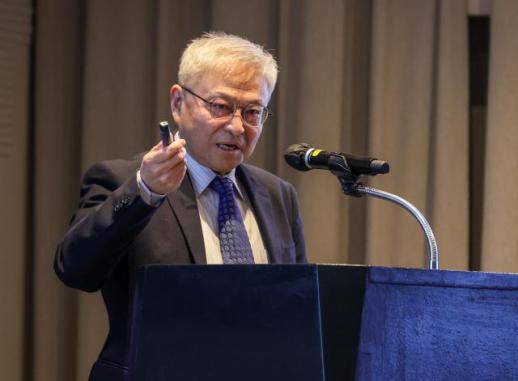 Trump-Xi summit likely sideline Iran and security issues: Yan Xuetong SEOUL, May 06 (AJP) - Iran will likely dominate the backdrop of next week’s summit between U.S. President Donald Trump and Chinese President Xi Jinping, but the two leaders are unlikely to produce any coordinated strategy on the Strait of Hormuz crisis as the world drifts deeper into a fragmented “G0 order,” according to prominent Chinese international relations scholar Yan Xuetong. Yan, speaking Wednesday at a seminar titled “Changes and Prospects in U.S.-China Relations” hosted by the Gyeonggi Research Institute in Seongnam, argued that Trump and Xi are more likely to focus on trade and economic tensions than on resolving security flashpoints in the Middle East. “As the Trump administration abandons global leadership, the world is entering a G0 order in which no country is willing or able to exercise clear global leadership,” Yan said. The scholar said the center of global rivalry has fundamentally shifted away from ideology and territorial disputes toward technology, data and artificial intelligence. Rather than a revival of the Cold War, he described current U.S.-China tensions as a strategic competition over semiconductors, AI infrastructure, cloud computing and digital ecosystems. “Cyberspace is becoming more important than natural space in both economic and security terms,” Yan said, pointing to the war in Ukraine as evidence that digital infrastructure and technological superiority can outweigh traditional geopolitical advantages. He said the escalating Hormuz crisis reflects how military power, energy security, satellite navigation systems and digital targeting technologies have become increasingly intertwined. According to Yan, many of the technologies used by Iran in recent military operations are linked more closely to Chinese systems than to U.S. infrastructure. Yan argued that AI is rapidly becoming a core strategic asset tied to economic productivity, industrial policy, military operations and national security. Both Washington and Beijing, he said, are increasingly moving toward self-contained technology ecosystems and domestic data governance structures, deepening fragmentation across global supply chains. He identified electricity, rare earth minerals and skilled engineers as the three critical foundations for AI competitiveness. Europe, he said, has struggled to keep pace partly because of insufficient power generation capacity, while the United States is already facing rising electricity demand and localized supply pressures linked to AI data centers. China, by contrast, is preparing 33 nuclear power plants to support future AI-driven electricity demand. For South Korea, Yan warned that the geopolitical balancing act will become increasingly difficult. While Seoul’s security structure remains anchored to the United States, its economy remains deeply intertwined with China. As semiconductors, batteries, AI and strategic technologies become more politicized, he said, South Korea will face growing pressure to make choices that blur the traditional divide between security and economics. Yan also suggested that Trump’s “America First” approach could accelerate strategic uncertainty across East Asia if U.S. allies begin questioning Washington’s long-term reliability. At the same time, he argued that the region is unlikely to split cleanly into rival blocs, as many countries continue pursuing a hedging strategy that combines U.S. security ties, Chinese economic links and flexible diplomacy. Taiwan is expected to remain another sensitive issue at the summit. Yan said both Washington and Beijing understand that destabilization across the Taiwan Strait or the broader Indo-Pacific would sharply raise risks for both sides, even as tensions continue to rise following recent U.S. arms sales to Taiwan. Yan concluded that the coming decade will likely be defined by uncertainty, fragmented markets and increasingly politicized technology systems. Supply chains, technology standards and cross-border data flows, he said, will be shaped less by economic efficiency and more by national security calculations. He also warned that while AI will intensify competition between the United States and China, it will simultaneously create shared global risks involving unemployment, overproduction, trade disputes, military misuse of AI and the absence of internationally coordinated governance standards. 2026-05-06 18:05:32
 -
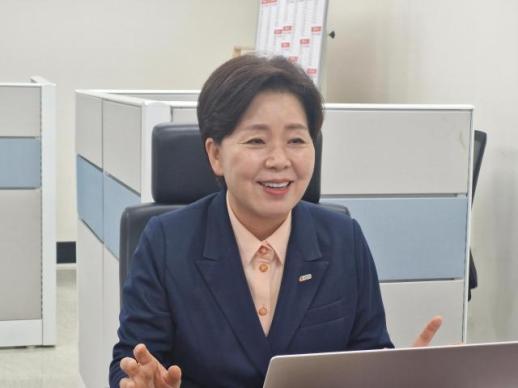 INTERVIEW: Chip czar rides AI chip boom to challenge political Goliath for Gyeonggi governorship SEOUL, May 05 (AJP) - Bidding for the gubernatorial post that birthed the current president — whose approval rating is nearing 60 percent — while facing a ruling-party heavyweight known for colliding head-on with disgraced former president Yoon Suk Yeol would not be an easy race for most politicians. But for Yang Hyang-ja, the determination appears rooted in something deeper than party politics: an almost singular devotion to semiconductors, the industry responsible for roughly a quarter of South Korea’s exports and much of the country’s AI-driven market boom. That commitment to chips also shaped her political realignment. Yang was effectively disowned by the Democratic Party of Korea following a sexual harassment scandal involving her aide, a political rupture that deepened her frustration over what she viewed as the party’s reluctance to aggressively back the semiconductor industry through measures similar to the U.S. CHIPS Act. She later joined the conservative bloc and spearheaded the so-called “K-Chips Act,” aimed at expanding tax credits for facility investments in semiconductors and other national strategic industries. The bill passed the National Assembly in March 2023. “People in semiconductors prepare a future that arrives first,” Yang said in an interview with AJP. “We make things that do not exist in the world. We make possible what others say is impossible.” That obsession has become both her greatest political strength and a potential limitation. Yang, the People Power Party candidate for Gyeonggi governor, built her reputation not through elite legal or activist circles but inside the clean rooms and research culture of Samsung Electronics. Rising from a teenage research assistant who cleaned desks and copied technical papers to become Samsung’s first female executive from a commercial high school background, her life story carries an unusual degree of industrial credibility in South Korean politics. “Gyeonggi Province is the heart of South Korea’s semiconductor industry,” Yang said. “The person who understands semiconductors should be the one to lead Gyeonggi.” Her rise inside Samsung has long bordered on corporate legend. After repeatedly being rejected from Samsung’s internal semiconductor engineering college because there was “no precedent” for a female commercial high school graduate entering the program, Yang reportedly challenged the company’s own rules and insisted she would become the precedent herself. “I have created roads where none existed,” Yang said. “There is no such thing as no road. There is only no will.” The phrase captures the core of Yang’s political identity: relentless self-construction through technical mastery and persistence. Her early years inside Samsung reflected the rigid hierarchies of industrial Korea at the time. She recalled being treated as a replaceable assistant whose role was limited to copying documents and running errands. “At that time, I was like a stone mixed into rice,” Yang said. “I could not even dream of a future. I felt a sense of inferiority.” The turning point came while copying Japanese semiconductor papers. Having studied Japanese at Gwangju Girls’ Commercial High School, Yang began annotating technical documents for engineers who could not read them. The researchers who had once called her “Miss Yang” began addressing her respectfully as “Yang Hyang-ja ssi.” “That was the moment I found my name,” she said. “I learned what it means to be recognized.” Yang later graduated with honors from Samsung’s semiconductor engineering program, accumulated dozens of semiconductor-related patents and climbed through SRAM, DRAM and flash memory divisions over three decades. When Samsung promoted her to executive director in 2013, Yang said the announcement coincided with the anniversary of her father’s death. “It felt as if every condensed part of my life burst open like popcorn,” she said. “I felt that the world’s standard for looking at me had changed.” That persistence — combined with firsthand experience in one of the world’s most strategically important industries — gives Yang a profile rare among South Korean politicians. She speaks less like a conventional campaigner than like a semiconductor executive explaining long-cycle investment logic. That industrial mindset is central to her pitch for Gyeonggi Province, home to the country’s largest semiconductor clusters including Samsung Electronics and SK hynix. Yang argues that the province should be governed not merely as an administrative region but as the command center of South Korea’s next industrial leap. Her strengths are obvious. Few politicians possess comparable understanding of semiconductors, AI infrastructure and manufacturing ecosystems at a time when technological supremacy increasingly overlaps with national security. Her life story also resonates in a country where younger generations often feel trapped by rigid educational and class hierarchies. Yet the same qualities that make Yang distinctive also raise questions about the breadth of her political vision. Nearly every major policy proposal in her campaign eventually returns to semiconductors. Her blueprint for economic growth, AI competitiveness, foreign investment and geopolitical leverage places chips at the center. “Taiwan can stand freely amid U.S.-China rivalry because TSMC influences the whole world,” Yang said. “South Korea has become a hegemonic power in memory semiconductors through Samsung Electronics and SK hynix.” That focus reflects economic reality. But critics may question whether Gyeonggi — a province of more than 14 million residents grappling with housing shortages, transportation congestion, welfare demands and regional inequality — can be governed primarily through the prism of semiconductor expansion. There is also the issue of Samsung’s overwhelming presence in her political identity. Although Yang references broader industrial ecosystems and repeatedly mentions SK hynix, Samsung remains the emotional and symbolic anchor of her worldview. Her personal narrative, political language and conception of national competitiveness are deeply intertwined with the company that shaped her life. Supporters see proof of execution and industrial realism. Critics may see over-identification with chaebol-centered growth at a moment when South Korea is debating economic concentration and overdependence on a handful of conglomerates. Yang rejects the idea that ideology or party affiliation should define provincial governance. “The central value of moderates is the courage to set aside faction, party and ideology for the country and the people,” Yang said. “Gyeonggi has collective intelligence. I trust that collective intelligence.” Her political path itself has been unusually fluid. Recruited into politics by former president Moon Jae-in, later estranged from the Democratic Party, founder of a third party and now standard-bearer for conservatives, Yang has repeatedly crossed ideological boundaries while insisting she belongs above factional politics. Still, Yang’s candidacy reflects a broader shift underway in Korean politics itself. As AI, semiconductors and supply-chain rivalry increasingly define economic survival and geopolitical power, industrial technocrats are beginning to acquire political weight once reserved for prosecutors, activists and career lawmakers. Few embody that transformation more sharply than Yang Hyang-ja. 2026-05-05 10:47:54
 -
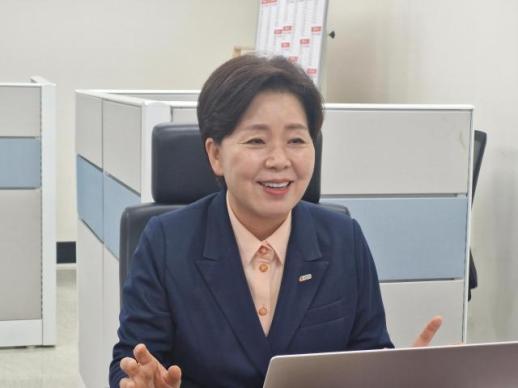 PPP’s Yang Hyang-ja Pledges Semiconductor-Led Growth in Gyeonggi Governor’s Race “Samsung Electronics’ market capitalization is expected to grow fivefold from last year, so why do you think a 100 million won era in per-capita GRDP for Gyeonggi is impossible?” People Power Party candidate Yang Hyang-ja, laying out her vision for Gyeonggi Province, put semiconductors ahead of politics. “In the end, it’s about who can do it,” she said, arguing that industrial competitiveness drives regional and national strength. In the Gyeonggi governor’s race, Yang has described herself less as a “politician” than as an “industry expert.” She also framed her matchup with Democratic Party candidate Choo Mi-ae not as a contest between female politicians, but as “a showdown between an advanced-industry expert and a legal professional.” Yang, a former semiconductor engineer who joined Samsung Electronics as a research assistant and rose to executive director, served as a 21st National Assembly lawmaker. She is currently a People Power Party supreme council member and chair of the party’s special committee on advanced industries, including semiconductors and artificial intelligence. In an interview with Ajou Economy, Yang pledged to raise Gyeonggi’s per-capita gross regional domestic product, now about 46 million won, to 100 million won. She said about 80% of the province’s GRDP is generated in the south and vowed to promote industries tailored to the characteristics of each of its 31 cities and counties to achieve more balanced north-south development. Yang called Gyeonggi the heart of South Korea’s advanced industries. “Even amid U.S.-China rivalry, Taiwan prospers because a global semiconductor company called TSMC shapes the world’s industrial order,” she said. “Gyeonggi’s memory semiconductors serve as the heart that can make South Korea a leading power.” Yang said her mission is to build “a science-and-technology powerhouse” and “a prosperous, strong nation that leads the world,” adding that such a goal “can ultimately be achieved through semiconductors.” She said the province needs a governor with expertise and a vision for advanced industries and that the election would prove that point. She repeatedly stressed that Gyeonggi is the core base of the country’s semiconductor industry. “Eighty-four-point-six percent of the value added and 76% of sales in our semiconductor industry come from Gyeonggi,” she said, arguing that an advanced-industry expert should lead the province. Targeting her rival, Yang said Choo, “a legal technician,” knows “nothing at all” about advanced industries. “Gyeonggi needs an industry expert, not a legal technician,” she said. On the issue of relocating the Suwon military airfield, Yang said it should be approached at the national level. Yang said she has experience handling and resolving the Gwangju military airfield issue first. Because military airfields are national infrastructure managed by the Defense Ministry, she said, the central government should take responsibility for relocation decisions. She said a governor’s role is to mediate and resolve conflicts among cities and counties, adding that she is best suited to do that. She said it would be difficult for Choo, whom she called a “conflict maker.” Yang said that because South Korea remains in an armistice situation, officials should first consider where a military airfield should be located to protect security most efficiently. “The situation is complex, but the essence is simple,” she said. “All issues must be approached from the essence.” Yang also emphasized the role of local government as a check on what she called the ruling party and government’s “runaway” power. “Candidate Choo will move relying only on the president’s power, and that is extremely dangerous,” Yang said. She added that her work as head of the National Human Resources Development Institute gave her a deep understanding of the civil service and government systems. “Trust and choose Yang Hyang-ja, who understands industry and administration,” she said, adding, “Collective intelligence is alive in Gyeonggi. I will move forward trusting only the collective intelligence of the residents.” 2026-05-05 09:24:05
 -
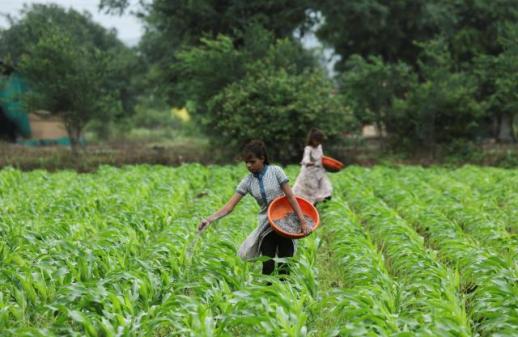 How the Iran conflict is building into Asia's economic crisis SEOUL, May 02 (AJP) - The U.S. congressional deadline to end an unauthorized combat operation has closed in, but President Donald Trump remains unmoved. In letters sent Friday to House Speaker Mike Johnson and Senate president pro tempore Chuck Grassley, Trump reiterated his administration's position that a cease-fire declared on April 7 had stopped the clock on the war — and that "Operation Economic Fury" is still squeezing Iran toward implosion through a naval blockade that has turned the Strait of Hormuz into a chokepoint for Iran's only meaningful export. Iran has not blinked. Brent crude is hovering near $120 a barrel — double its price at the end of December. Under the 1973 War Powers Resolution, presidents must end unauthorized combat operations after 60 days without congressional authorization, with a single 30-day extension permitted only to withdraw troops safely, not to extend fighting. The Trump administration's cease-fire argument remains legally contested. But for Asia's factories, central banks and households, the debate in Washington is almost beside the point. The economic war is already spreading. The toll falls hardest on a region structurally dependent on energy it does not produce. South Korea, Japan, China, India and most of Southeast Asia are not merely consumers of Middle Eastern oil and gas — they are processors. Energy becomes semiconductors, ships, steel, chemicals, pharmaceuticals, fertilizers, electricity and the logistics infrastructure that binds global supply chains together. When prices rise, the effect moves far beyond the pump. The Asian Development Bank has cut its Asia-Pacific growth forecast for this year from 5.1% to 4.7% and raised its 2026 inflation forecast from 3.6% to 5.2%. The World Bank projects energy prices will surge 24% this year — the highest since Russia's invasion of Ukraine. The United Nations Development Programme estimates the escalation could cost the region between $97 billion and $299 billion in lost output and push 8.8 million people into poverty. The inflation trajectory is the most immediately dangerous variable. A jump of that magnitude narrows central banks' room to support growth, raises debt-servicing burdens and forces governments to choose between protecting households and protecting public finances — a choice that, made badly, converts a price shock into a fiscal crisis. The region has absorbed energy shocks before. The oil crises of the 1970s reshaped industrial policy across Asia. The Gulf War jolted prices. Russia's invasion of Ukraine accelerated the renegotiation of liquefied natural gas contracts and strategic reserves. But each of those shocks arrived when the underlying conditions were more forgiving. This one has landed when Asia is already carrying high debt, elevated interest rates, post-pandemic fiscal pressure and slowing trade. What makes the current disruption structurally distinct is where it hits. Asian production networks are optimized for efficiency, not redundancy. More than half of the naphtha entering Asia by sea passes through the Middle East, feeding the petrochemical plants that supply plastics, fertilizers and pharmaceutical inputs across the region. Disruption at the Strait of Hormuz does not merely raise prices — it introduces uncertainty into systems built on precision timing. Uncertainty, in turn, is poison for capital expenditure and procurement planning. The Gulf is also a fertilizer artery, not just an energy one. Natural gas underpins the production of nitrogen fertilizer, and the region is a significant exporter of both. The United Nations has warned that as much as 45% of the world's seeds and fertilizers depend on Strait of Hormuz access. A prolonged disruption threatens not only current food prices but next year's harvests — a lagged catastrophe that will register in malnutrition and agricultural output long after the guns stop. The UNDP's most alarming scenario — six weeks of major supply disruption followed by eight months of elevated costs — would push 32.5 million people globally below the poverty line. In development economics, that is a projection. In human terms, it means children eating less, farmers planting less, clinics rationing power and households liquidating assets to survive a shock they had no hand in creating. G. Kent Fellows, an economist at the University of Calgary, notes that global crude inventories are "running down quickly" and that prices are likely to keep rising until supply and demand rebalance. Even if the Strait reopens, he cautions, prices will remain elevated while production capacity is rebuilt and inventories restocked. The short-term pressure has already begun reshaping trade relationships: Canada recently eliminated its 3% crude tariff on exports to South Korea, an early signal of the supply diversification that importing economies will pursue regardless of how the conflict ends. Aidan Hollis, also of Calgary, sees a longer-term demand reversal in the making. "While oil prices are elevated today," he says, "the long-term impact on oil prices is clearly negative: there will be massive destruction of demand for oil and natural gas as consumers and industry look for alternative sources of energy, including especially solar and wind.” Higher petrol prices, Fellows adds, will accelerate electric vehicle adoption — a structural shift that was already underway. For Zhiyuan Li, an economist at Fudan University, the deepest consequence of the war may be perceptual rather than material. "Trade, finance, energy, technology and logistics are no longer viewed simply as channels of efficiency and growth," he says. "They are increasingly viewed through the lens of security, vulnerability and strategic leverage." The danger, Li argues, is that governments draw the wrong lesson — that interdependence itself is the problem. His research suggests the opposite: greater bilateral trade raises the cost of military confrontation and can reduce both the likelihood and severity of interstate conflict. "Trade can be weaponized, but trade can also pacify," he says. "The task is not to abandon globalization, but to rebuild a global trade system that protects countries from coercion while preserving the peace-enhancing effects of economic exchange." The fiscal reckoning for governments is already taking shape. Policymakers face three basic choices: let prices pass through to consumers and absorb the political cost; subsidize broadly, cushioning households while straining budgets; or provide targeted, temporary support — economically superior but administratively demanding. The UNDP estimates that protecting the most vulnerable households across developing countries would cost roughly $6 billion, modest against the scale of potential output loss, but requiring coordination that stretched aid systems may struggle to deliver. The more durable fiscal risk is that governments repeat the errors of past shocks: universal fuel subsidies that create constituencies too politically entrenched to dismantle, emergency measures that become permanent, health and education spending quietly cut to fund price support. For high-debt developing economies, that path transforms a short-term energy crisis into a long-term development setback. The Iran war is a demonstration that modern conflict does not respect the boundaries of the battlefield. Missiles fall in the Middle East; the economic blast radius reaches South Korean petrochemical plants, Indian fertilizer importers, Thai factories and Myanmar fuel queues — and a poverty projection that will show up in educational attainment and labor productivity a decade from now. Asia-Pacific's integration into global energy and trade networks made it the engine of world growth. That same integration now makes it acutely vulnerable to a war on the other side of the world. The Trump administration may yet claim the clock has stopped. But the economic consequences are still moving. 2026-05-03 07:32:29
 -
 Asian stocks fall across the board as oil prices surge SEOUL, April 30 (AJP) - South Korea's benchmark KOSPI fell 1.38 percent to close at 6,598.87 on Thursday as rising oil prices dragged Asian markets lower. Brent crude futures jumped more than 5 percent in Asian trading, pushing regional stocks down over 1 percent. The junior KOSDAQ also dropped, closing at 1,192.35, down 2.29 percent. The main index rose to as high as 6,750.27 during the intraday session, setting a new intraday record. However, it later fluctuated and declined, falling below the 6,600 level. It ended lower for the first time in four days. The index briefly hit a new intraday high of 6,750.27 before falling back to close below 6,600, ending its upward streak for the first time in four days. Most major stocks fell. Samsung Electronics closed at 220,500 won (about $149.60), down 2.43 percent, while SK Hynix ended at 1,286,000 won, down 0.54 percent. Hyundai Motor fell 4.5 percent to 531,000 won, LG Energy Solution dropped 2.64 percent to 460,500 won, and Doosan Enerbility declined 1.63 percent to 127,100 won. Among entertainment stocks, HYBE rose more than 4 percent, while other companies declined. HYBE closed at 263,000 won, up 4.16 percent. JYP fell 2.48 percent to 62,900 won, SM dropped 0.92 percent to 96,600 won, and YG declined 1.82 percent to 54,000 won. Japan's Nikkei 225 stood at 59,111.55 as of 3:40 p.m., down 1.35 percent. Hong Kong's Hang Seng fell 1.19 percent to 25,800.75. 2026-04-30 17:46:09
 -
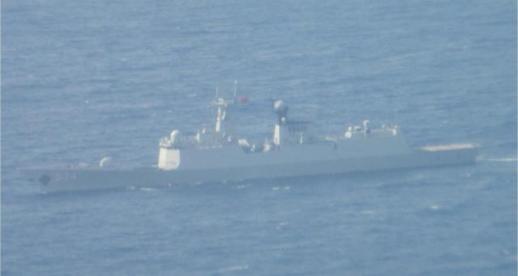 China's maritime push emboldens, raising strategic stakes in Korean waters SEOUL, April 29 (AJP) - China’s naval activity across Asian waters — including areas off the Korean Peninsula — has surged markedly, according to data obtained by a South Korean lawmaker, raising questions over the intent behind the sudden uptick. Chinese aircraft carriers entered waters under South Korean jurisdiction eight times in 2025, the highest annual figure since the Joint Chiefs of Staff began compiling such data in 2020, the office of People Power Party Rep. Yu Yong-weon said Wednesday. Warship movements showed a similar trajectory. Chinese naval vessels entered South Korean jurisdiction roughly 350 times in 2025, up from about 330 the previous year. Military aircraft also increased their presence, entering South Korea’s air defense identification zone more than 100 times, compared with over 90 in 2024. Carrier activity has steadily built over time: two entries in 2020, seven in 2022, five in 2023, six in 2024 and eight in 2025. The momentum has carried into this year. In the first quarter alone, a Chinese naval vessel approached within about 50 kilometers of South Korea’s territorial waters off the Taean Peninsula — roughly 140 kilometers from Seosan Air Base and about 180 kilometers from U.S. installations at Osan Air Base and Camp Humphreys. While remaining outside territorial waters, such proximity allows Chinese vessels to potentially collect radar, communications and other electronic signals linked to South Korean and U.S. military operations. The area sits near key approaches to Seoul, major air bases and critical U.S. facilities central to any contingency involving North Korea or Taiwan. Officials across South Korea, Japan and Southeast Asia say the pattern is forcing closer surveillance of Chinese ships and aircraft, even when encounters stop short of direct violations. In Seoul, concerns are growing that Beijing is seeking to normalize its presence in nearby waters while extending its naval reach deeper into the Pacific. The buildup coincides with China’s expansion of its carrier fleet, enhanced amphibious capabilities and more assertive claims in contested seas. China, for its part, maintains that its maritime operations are lawful and defensive, frequently accusing the United States and its allies of heightening tensions through increased military cooperation near its coastline. To governments from Seoul to Tokyo to Manila, however, the pattern increasingly resembles not routine patrols but the emergence of a new maritime order in Asia. South Korea defines “jurisdictional waters” as areas where it exercises sovereignty or sovereign rights, including territorial waters, the exclusive economic zone and the continental shelf. While international law permits foreign warships to transit EEZs, the South Korean military tracks such movements closely and deploys patrol assets when vessels approach sensitive zones. The Yellow Sea has long been strategically sensitive, given Chinese naval and missile facilities positioned along its coastline facing the Korean Peninsula. Han Ki-ho, a member of the National Defense Committee and a former army lieutenant general, said the growing activity should be viewed within a broader strategic context. China’s effort to expand its control in the Yellow Sea “should not be viewed narrowly as targeting South Korea alone,” Han said. “We must be firm in protecting our maritime sovereignty in the West Sea,” he added. Ksenia Kirkham, a scholar at King’s College London, offered a more cautious interpretation. "China’s increased naval activities in the South China Sea and in the West Sea, near the borders of South Korea, although perceived by South Korea as ‘aggressive’ and as being contrary to international law, should not be understood as aggression against Seoul itself, but rather as a response to what China interprets as provocative US military build-up in the region," she said. She added that Seoul should handle any breaches of airspace or territorial waters through diplomatic channels while maintaining stable relations with Beijing and avoiding entanglement in escalating great-power rivalry. Her assessment underscores a deeper dilemma for South Korea. China remains a key trading partner, creating strong incentives to avoid escalation. At the same time, Seoul’s alliance with the United States leaves little room to ignore repeated Chinese military activity near its coast, airspace and critical infrastructure. For policymakers, the immediate challenge lies in distinguishing lawful passage from strategic signaling. A single carrier transit through an EEZ may be legal, but repeated operations — combined with rising warship entries and air incursions — carry broader military and political implications. Experts broadly agree that the trend should not be viewed as a series of isolated incidents but as part of a wider maritime strategy. Sarah Tzinieris of King’s College London said “China’s naval expansion is about shifting from coastal defense to sustained power projection in the Indo-Pacific,” noting that the Chinese military is “designed not just to defend its shores, but rather to shape the strategic environment beyond them.” Central to this effort is control over maritime approaches and sea lanes, reinforced by what she described as an “expansionist dimension,” including land reclamation that has turned reefs into fortified outposts equipped with runways and radar systems. The use of maritime militia and fishing fleets further enables China to operate at scale while maintaining plausible deniability. “China’s naval build-up is not just about capability; it is about changing the rules of the game at sea,” Tzinieris said, with incremental actions — often described as “salami-slicing” — gradually normalizing its presence in contested waters. 2026-04-29 18:02:52
 -
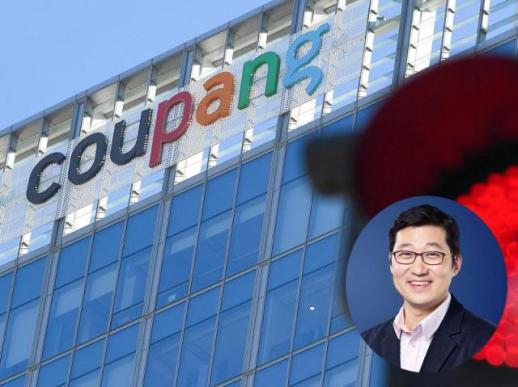 FTC recasts Coupang under founder control, testing Korea-US fault lines SEOUL, April 29 (AJP) -South Korea’s antitrust watchdog on Wednesday designated Bom Kim as the legal head of Coupang, placing the U.S.-listed e-commerce giant under the country’s full conglomerate regulatory regime after a data breach scandal and despite U.S. pressure. The decision by the Korea Fair Trade Commission (FTC) reclassifies the group’s “same person” — a legal term denoting ultimate control — from the corporate entity Coupang Inc. to Kim himself. The shift expands disclosure obligations, broadens the scope of affiliates and tightens oversight of intra-group transactions under Korea’s antitrust framework. It marks the first time in nearly four decades that a head of a U.S.-incorporated company is treated as a controlling individual behind a business entity in operation in Korea. “Under current law, a corporate entity can be designated as the ‘same person’ only when there is no risk of private interest, including where relatives of the controlling individual do not participate in the management of domestic affiliates. The government determined that this condition has been breached," observed Kim Hong-yu, a business professor of Kyung Hee University. "Kim’s brother, Kim Yoo-seok, served at a vice president level and exercised influence over key business decisions through involvement in logistics and delivery policy. This was judged to constitute managerial participation rather than passive employment, invalidating the basis for corporate designation,” he added. The company thus far had operated as a regulatory outlier since being classified as a large business group in 2021 after surpassing the 5 trillion won ($3.4 billion) asset threshold, maintaining that its governance — a single ownership chain with no family stakes in domestic affiliates — did not fit the traditional chaebol model. The FTC’s decision effectively rejects that distinction, applying a framework designed for family-controlled conglomerates to a platform company with dispersed global ownership. The FTC said Coupang no longer met the conditions for corporate designation, citing findings that Kim’s younger brother, a senior executive, exercised substantive influence over key operations, including logistics and delivery policy — effectively participating in management. Under Korean law, once a natural person is designated as the same person, regulatory oversight extends beyond formal ownership to include relatives and related entities. Kim must now submit annual filings detailing family shareholdings and governance structures, while transactions involving related parties will face closer scrutiny under rules aimed at preventing private benefit and unfair intra-group support. For Coupang, the compliance could have structural ramifications, which explains why it is legally challenging the Seoul move. Lee Seong-yeob, a professor at Korea University’s Graduate School of Management of Technology, said the change could be a turning point. “Coupang’s move from a large business group without a designated controlling person to a regular conglomerate group led by Bom Kim means it will now face chaebol-style regulations, including disclosure obligations and restrictions on self-dealing,” he pointed out. “It is significant because it enhances management transparency at a platform company and imposes direct legal responsibilities and obligations on the controlling individual.” Coupang said it will file an administrative suit, arguing the designation amounts to duplicative oversight for a firm already subject to strict disclosure rules as a U.S.-listed company. “As a U.S.-listed company, we are under stringent oversight obligations,” the company said, adding that neither Kim nor his relatives hold equity in Korean affiliates and that its structure leaves “no concern about improper private interest.” The legal dispute is expected to hinge on whether operational influence — absent ownership — constitutes control under Korean law. The latest FTC ruling comes against a backdrop of intensifying scrutiny of Coupang’s business practices and political reach. A major personal data breach last year triggered regulatory investigations and public backlash in South Korea, sharpening concerns over platform accountability as the company has become embedded in daily life for millions of users. Coupang, incorporated in Delaware and listed on the New York Stock Exchange, occupies a hybrid position: legally American, financially global, but operationally Korean, with more than 90 percent of its revenue generated in South Korea. Coupang reported revenue of about 45.5 trillion won last year, with operating profit rising to 2.28 trillion won and net profit to 1.58 trillion won. It also transferred roughly 1.46 trillion won to its U.S. parent, a move the company described as capital allocation rather than profit extraction, but which drew criticism in South Korea as most earnings are generated domestically. The Coupang issue has loomed largely over Korea-U.S. relations, partly as the result of aggressive lobbying. Coupang significantly expanded its lobbying efforts in Washington. Disclosures show the company nearly doubled its U.S. lobbying spending in early 2026 to about $1.8 million, widening engagement beyond trade agencies to include senior government offices such as the White House and National Security Council as regulatory pressure mounted in Korea. U.S. policymakers have already raised concerns over Seoul’s treatment of the company, viewing investigations — including those tied to the data breach — as potentially unfavorable to American firms. In recent weeks, U.S. lawmakers have urged the Korean government to avoid what they described as discriminatory regulatory actions. 2026-04-29 14:05:06
 -
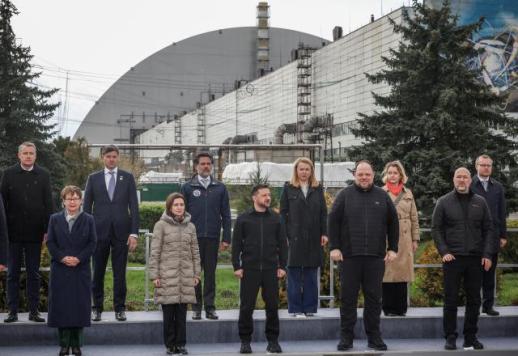 Chernobyl at 40: Nuclear Power Recast as a Strategic Asset Amid Energy and AI Demand On April 26, 1986, the explosion of Unit 4 at the Soviet-era Chernobyl nuclear plant was more than an environmental disaster. The radioactive cloud darkened not only Europe’s soil but also public trust in nuclear power for a generation. In 2026, as the disaster reaches its 40th anniversary, the world is paradoxically turning back toward nuclear energy. Geopolitical instability in the Middle East continues to rattle energy markets, and Russia’s invasion of Ukraine has exposed Europe’s energy-security vulnerabilities. At the same time, surging electricity demand tied to the artificial intelligence boom and the urgency of the climate crisis are driving a reassessment of nuclear power — from a symbol of fear to a strategic asset. “Chernobyl was an outlier” — engineers weigh what has changed For decades, Chernobyl served as the ultimate warning for opponents of nuclear power. More recently, expert debate has shifted from broad claims that “nuclear is dangerous” to closer analysis of which reactor designs are risky and under what conditions. Jacopo Buongiorno, a professor of nuclear engineering at MIT, described Chernobyl as “an outlier” caused by a flawed RBMK design without a containment structure and reckless actions. Sarah A. Pozzi, a University of Michigan professor and president of the IEEE Nuclear and Plasma Sciences Society, said no modern reactor approved under Western regulatory systems includes all of the defects present at the time. Some experts also point to changes in reactor physics. Steven Lyman, a University of Michigan professor, cited the Soviet graphite-moderated RBMK design as central to the Chernobyl disaster. He said modern water-moderated reactors cannot experience a Chernobyl-style meltdown, describing a physical safety mechanism in which overheating causes water coolant to boil off and naturally slows the nuclear reaction. Lyman added that, as the Fukushima accident showed, the principle does not eliminate risk but can reduce the severity of an accident. He said nuclear power matters as “scalable clean baseload power,” but high upfront costs remain the biggest obstacle. If small modular reactors, or SMRs, can bring initial costs down to a manageable level, he said, that barrier could be overcome. Nuclear’s return in numbers: “An answer for energy security” Nuclear power currently supplies about 10% of global electricity and about 25% of low-carbon power. More than 400 reactors are operating in 31 countries, and about 70 more are under construction. The United States, the world’s largest nuclear-power nation, operates 94 reactors and plans to quadruple capacity by 2050. Thomas DiNanno, a U.S. State Department deputy assistant secretary, recently said, “The world cannot power industry, meet AI demand, or secure its energy future without nuclear power.” China is building about 40 reactors, signaling it could surpass the United States. Even Germany, long a symbol of anti-nuclear sentiment, is showing signs of reconsideration. European Commission President Ursula von der Leyen, referring to the past rise in reliance on fossil fuels, acknowledged that turning away from nuclear power was a “strategic mistake.” Warnings remain: “System complexity and human error” Not all experts share the optimism. R. Scott Kemp, director of MIT’s Nuclear Security and Policy Program, urged caution, noting that nuclear safety is based in large part on simulation models. “In a complex system like a reactor, it is difficult to fully predict every interaction,” he said. Kemp emphasized that human misjudgment has played a role in major accidents and warned that “a Chernobyl-type accident is absolutely possible even today.” Even if modern plants are safer, he said, unexpected accidents cannot be ruled out if human understanding of the system is incomplete. A new front: SMRs and South Korea’s challenge The next battleground in the nuclear market is SMRs. The factory-built, on-site “plug-and-play” approach promises lower costs and faster deployment. But the BBC and other foreign media have cautioned that SMRs’ commercial viability has not yet been fully proven. That is where South Korea is drawing attention. The country has a top-tier supply chain capable of building standardized reactors such as the APR-1400 on budget and on schedule. But domestic conditions are complicated, with lingering fears after Fukushima, local opposition known as NIMBY sentiment, and policy uncertainty still weighing on the sector. Experts including Lee Jeong-ik, a professor at KAIST, have said South Korea’s 12th Basic Plan for Long-term Electricity Supply and Demand still falls short of delivering a full revival of the nuclear industry. Forty years after Chernobyl, the international order around nuclear power has shifted. Nuclear energy is increasingly framed not as an automatic object of fear, but as a practical option tied to survival. With climate pressures, energy security and AI-driven electricity demand converging in 2026, the question being asked is no longer whether societies can afford to live with nuclear power, but whether they can afford to live without it. 2026-04-29 11:37:29