
Journalist

SEONGJUN JO
critic@ajunews.com
-
 Samsung’s ‘Coral in Focus’ wins international awards for reef restoration using Galaxy cameras Samsung Electronics said its coral-reef restoration project, 'Coral in Focus,' which uses Galaxy smartphone camera technology, has received a series of international awards in global social contribution and marine-related categories. Samsung said April 26 that the project won a gold award in the sustainability and environmental conservation category at the 2026 Halo Awards, a global corporate social responsibility awards program. A documentary on the project also received the Coastal and Island Culture Award at the 23rd International Ocean Film Festival, a North American marine-focused film festival, Samsung said. Samsung has been running the reef restoration project since 2024, using a Galaxy camera feature called Ocean Mode. The mode is designed to reduce excessive blue tones in underwater shots and better reproduce the natural colors of coral reefs. It also aims to minimize camera shake and motion blur underwater through optimized shutter speed and multi-frame processing, the company said. Coral-reef images captured by local activists using Galaxy AI phones are sent to research institutions, where they are used to build 3D reef restoration models and support marine research. Samsung said more than 80 3D coral-reef models have been created so far, helping restore more than 20,000 corals. Samsung said it plans to make Ocean Mode available to general users through its Expert RAW app starting with the Galaxy S26 series, and to expand the feature to some additional products later.* This article has been translated by AI. 2026-04-26 10:09:16
 -
 Academics warn Samsung strike could drive customers away and disrupt supply chain With a Samsung Electronics union warning it may strike next month, an academic has cautioned that the bigger risk may be not the immediate production hit but the possibility that global customers shift orders and reshape supply chains. According to industry officials on the 26th, Song Heon-jae, a professor in the economics department at the University of Seoul, presented the analysis in a recent seminar held by the Anmin Policy Forum under the topic “The ripple effects of a Samsung Electronics union strike.” The Anmin Policy Forum is a private policy research forum chaired by Yoo Il-ho. Song estimated that if semiconductor fabs stop running, losses could reach tens of billions of won per minute, or about 1 trillion won per day. If a strike drags on, he said, the decline in operating profit in the semiconductor business could widen to as much as 10 trillion won. He said the more serious issue is weakened customer confidence and the risk of losing clients. Global big tech companies could diversify supply to competitors such as TSMC to reduce supply-chain risk, he said. “The semiconductor industry is structured so that process qualification requires enormous time and cost,” Song said. “Once a customer leaves the supply chain, it is not easy to bring them back.” Major global companies, he said, treat supply stability as a core evaluation standard. AMD reflects supply-chain resilience in ESG assessments, and NVIDIA is known to use supplier evaluation results when allocating volumes. Song divided strike-related costs into “visible costs,” such as halted production and lost sales, and “invisible costs,” such as eroded trust, delayed investment and shocks to the industrial ecosystem. He said the latter could weaken market standing and undermine industrial competitiveness. He listed key risks as weakened customer trust, permanent loss of market share, delays in AI semiconductor competition, an outflow of key talent and a deepening “Korea discount.” He also said a strike could ripple through suppliers and local economies. About 1,700 materials, parts and equipment suppliers that do business with Samsung Electronics could be affected directly or indirectly, and a production halt at the Pyeongtaek campus could add pressure on jobs and nearby businesses. Song pointed to opaque performance-bonus criteria and information asymmetry as factors behind the dispute. He recommended overhauling compensation based on objective management indicators, adding external verification mechanisms and institutionalizing pre-strike mediation procedures. “With competition in AI semiconductors intensifying, a prolonged internal conflict itself can be a significant opportunity cost,” he said. 2026-04-26 09:39:19
 -
 Why Central Asia Should Be a Strategic Market for Korea’s Export Diversification Last November, the leaders of Central Asia’s five countries met with President Donald Trump in Washington to discuss securing critical minerals, the Trump Peace Route (TRIPP) and cooperation on artificial intelligence. A platform that began as a ministerial meeting in 2015 was elevated to a leaders’ summit within 10 years, signaling the start of supply-chain and trade shifts in a region long dominated by Russian and Chinese influence. The United States is not alone. China and Japan are also strengthening C5+1 (Central Asia 5+1) cooperation with the five countries. The United States, in particular, is using the B5+1 (Business 5+1) forum to explore cooperation in agriculture, banking and finance, critical minerals, e-commerce and IT, telecommunications and logistics, and tourism. For South Korea, which is seeking both supply-chain stability and export diversification, the trend carries clear implications. Central Asia has historically served as a conduit for technology and culture among major powers such as China, Russia, Britain and Turkey. With about 130 ethnic groups maintaining distinct identities, the region also shows diverse consumer demand. Exports to Central Asia rose about 42% last year, far outpacing South Korea’s overall export growth rate of 3.8% and exceeding gains seen in many other Global South markets, including Southeast Asia, the Middle East and Latin America. While competition is intensifying in those markets, Central Asia is seeing new supply chains form due to the Russia-Ukraine situation. The region also has strong awareness of Korean consumer goods, steady economic growth and a high average birthrate close to three children, factors that point to significant growth potential. Central Asia should be viewed not as a stopgap market but as a strategic buffer as Korean companies adapt to a changing trade order. The more dependence rises on any single market, the more vulnerable firms become to external shocks. Building an early foothold in emerging markets where competition is less overheated can help spread medium- and long-term trade risks. That requires a shift in mindset from seeking a short-term export outlet to making a proactive investment in resilience. Three keywords can serve as a practical map for using Central Asia as a strategic market for export diversification: Market Test, Area Expansion and Pilot Sandbox. First, Market Test: Central Asia can be used to test export suitability across a range of products. As supply chains are reshaped, companies should use access to major local distribution channels while accounting for clearly segmented demand by income level in industries such as autos, cosmetics, food, and medical and biotech products. In Uzbekistan, the IT Park has set up overseas offices in South Korea, the United States and China to expand startup cooperation and is pursuing projects such as building green data centers. Second, Area Expansion: The region can be linked to entry into nearby large markets. In Kazakhstan, CU convenience stores and Artbox have entered for the first time in the former Soviet bloc, and BBQ Chicken is expected to enter soon. Companies should use a start in Central Asia as a bridge to Russia, where language and business conditions are similar and many Western firms have withdrawn. Kaspi, Central Asia’s largest e-commerce company, is expanding into Azerbaijan and Ukraine. Freedom Holding, a U.S.-based fintech company, is also expanding beyond Kazakhstan into Uzbekistan and Kyrgyzstan. Third, Pilot Sandbox: Central Asia has strong interest in advanced-industry cooperation, offering Korean companies opportunities to build technical data in areas such as sovereign AI, cryptocurrency, autonomous driving and drones (UAM). Kazakhstan’s Alatau new city, now under construction, is promoting regulatory sandboxes in fields including blockchain, AI and drones to attract foreign companies. Uzbekistan has also moved to improve the business environment by deciding to pilot stablecoin payments. In a fast-changing global market, Korean companies should aim to use Central Asia to succeed in diversifying exports. 2026-04-24 05:04:11
 -
 SK hynix posts record Q1 operating profit as Hyundai Motor margin slides SK hynix posted its best quarterly results on record on surging demand for artificial intelligence chips, while Hyundai Motor saw profitability weaken despite higher sales, raising fresh concerns about Korea’s growing reliance on semiconductors. On the 23rd, SK hynix said first-quarter revenue rose to 52.5763 trillion won and operating profit to 37.6103 trillion won. That was up 198.1% and 405.5% from a year earlier, respectively, and marked a record for any quarter. Its operating margin reached 72%, the company said. The results were unusual for a seasonally slow period, helped by expanding AI infrastructure investment and a shift toward higher-value products. The boom could continue as AI demand broadens from training to real-time inference, strengthening the base for memory demand. Some in the securities industry have forecast SK hynix’s annual operating profit could exceed 200 trillion won, which would place it fourth globally. Hyundai Motor and Kia, however, showed weaker profitability even as sales grew. Hyundai Motor’s first-quarter revenue rose 3.4% from a year earlier to 45.9389 trillion won, but operating profit fell 30.8% to 2.5147 trillion won. Kia, which is set to report on the 24th, is expected to post operating profit of 2.2986 trillion won, down about 24%, according to the consensus estimate cited in the report. The two automakers posted record sales in the U.S. market, but tariff costs weighed heavily on earnings, the report said. Hyundai Motor said it spent 860 billion won on tariff costs in the first quarter. Kia’s tariff costs are estimated at 500 billion to 700 billion won. Other headwinds included higher oil prices tied to the Middle East war, rising raw material prices and a weaker currency. The report said a fire at a parts supplier in Daejeon caused production disruptions of about 30,000 vehicles, while Middle East risks added pressure to both logistics costs and the sales environment. With autos, a key export industry, also hit by worsening external conditions, the profit structure of Korean industry is becoming more concentrated in semiconductors, the report said. In an AI-driven industrial reshuffle, semiconductors have moved into an outsized-profit phase, while autos remain highly exposed to policy and cost variables, it added. Kim Pil-su, a professor in the Department of Future Automotive Engineering at Daelim University, said reliance on Samsung Electronics and SK hynix for AI semiconductors such as high-bandwidth memory, or HBM, means the semiconductor tilt is likely to persist for now. He added that uncertainty over auto tariffs continues and geopolitical risks in the Middle East are growing. 2026-04-23 18:04:17
 -
 SK hynix sees strong AI-driven memory demand; targets HBM4E mass production in 2027 SK hynix said it expects the memory upcycle to remain strong as demand tied to artificial intelligence expands, and it outlined plans to strengthen its lead in high-bandwidth memory by applying its 1c-nanometer process to next-generation HBM4E. In a first-quarter 2026 earnings conference call on Wednesday, the company reported revenue of 12.4296 trillion won and operating profit of 5.2886 trillion won. SK hynix said some demand has softened in PCs and mobile devices due to rising prices, but server memory demand remains strong and is driving the broader market. It added that as AI spreads, demand for high-performance memory is rising quickly and customers are increasingly prioritizing securing supply over price. The company forecast higher shipments in the second quarter. It said DRAM shipments are expected to rise by a high single-digit percentage from the previous quarter, supported by high-capacity server modules and mobile demand. NAND shipments are expected to increase in the mid-teens, driven by 321-layer products and expanded enterprise SSD sales, it said. SK hynix again highlighted its HBM competitiveness, saying the business depends on overall strength that includes yield and supply stability as well as performance. It said it is preparing to supply HBM4 in line with customers’ mass-production schedules and that demand over the next three years will far exceed current capacity. Still, it said it will maintain a balanced supply strategy between HBM and conventional DRAM within limited production capacity. On HBM4E, the company said it plans to apply its 1c-nanometer process to the core die to meet customer performance requirements. It said it aims to provide samples in the second half of the year and pursue mass production in 2027, adding that the 1c-nanometer process has already reached a stable stage in manufacturability and yield. SK hynix also projected a prolonged supply shortage. It said spot-price swings are not representative of the overall market, and that demand is rising for HBM, server DRAM and enterprise SSDs while supply growth remains limited. If the imbalance persists, the memory price upcycle could last longer than in the past, it said. The company said changes in AI technology are also supporting demand. It said memory-efficiency technologies are evolving to maximize information processing per unit of memory, creating a virtuous cycle that expands the AI services market and increases memory demand. On investment and supply strategy, SK hynix said it sees limited risk of oversupply and will proceed as planned with mid- to long-term investments to secure production capacity, centered on its Yongin cluster. It said long-term supply agreements can improve demand visibility, but current supply constraints make it difficult to meet all customer requests. SK hynix also outlined financial and shareholder-return plans. It said securing financial soundness with net cash of more than 100 trillion won and expanding dividends are goals that can be pursued at the same time. It added that it plans to prepare additional shareholder-return measures, including share buybacks and cancellations, within the year. The company said it is also pursuing access to U.S. capital markets. It said it has submitted a registration statement for an ADR listing and is aiming to list within the year, with details to be decided based on market conditions and other factors.* This article has been translated by AI. 2026-04-23 10:46:15
 -
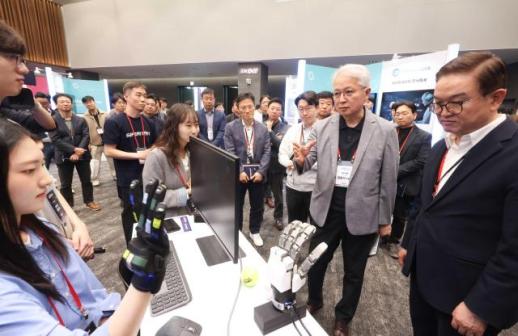 LG Launches Platform to Develop University Startup Teams, Aiming for ‘Baby Unicorns’ LG has introduced a new platform to identify and develop university startup teams, aiming to broaden South Korea’s youth startup ecosystem. LG said it held its startup scouting event, 'Superstart Day 2026,' on Wednesday at LG Sciencepark in Seoul’s Magok district, where it unveiled its new 'Rookie Program' for university-founded teams. The program is designed to find promising campus-born ideas early and connect them to commercialization. Launched in 2018, Superstart Day has become a venue where startups seek collaboration with LG affiliates as well as investors and institutions. LG said the event has drawn a cumulative 30,000 visitors from 30 countries. This year’s event was attended by Kwon Bong-seok, COO of LG Corp., and about 30 technology executives, including chief technology officers from major affiliates. Venture capital firms, accelerators, public institutions and universities also took part to assess commercialization potential. At the event, 41 deep-tech startups presented their technologies. In robotics, solutions that convert hand movements into data for robot learning and technologies for manipulating irregularly shaped objects drew attention. LG also showcased technologies in what it calls the ABC areas — artificial intelligence, bio and cleantech — which it has identified as future businesses. LG said about 120 investment and partnership meetings were held on site. The new Rookie Program targets university startup teams. Teams selected through recommendations from major universities and research institutions, including Seoul National University, POSTECH and Hanyang University, delivered pitches aimed at raising investment and securing business cooperation. Three teams — Pinta AI, Motomind and Forbody — were chosen as final winners and received prize money, a document-review exemption for the Ministry of SMEs and Startups’ Early-Stage Startup Package, and opportunities to work with LG affiliates. They will also receive benefits from the 'Superstart Incubator,' including office space, support for demonstration costs and welfare services. LG said it will provide all participating teams with technology mentoring and on-site tours regardless of selection, and plans to expand the program. The company said it aims to build a support system that links early-stage startups to growth. Jeong Su-heon, CEO of LG Sciencepark, said, “Through the Rookie Program, we will discover young innovative startups early and build LG’s differentiated innovation ecosystem.” The government is also expanding startup support. It has declared this year the start of a “National Startup Era” and set a budget of about 1.9 trillion won to support youth startups and jobs. The Ministry of SMEs and Startups allocated 150 billion won of that total to support startups less than three years old.* This article has been translated by AI. 2026-04-23 10:34:19
 -
 LG Unveils Europe-Only Built-In Appliance Package to Target 40% Share of Global Market LG Electronics is rolling out a built-in appliance package designed specifically for Europe as it steps up efforts to compete in the world’s largest built-in market. LG said Thursday it unveiled the “LG Built-in Package” for the first time at EuroCucina, the kitchen appliances and furniture exhibition held as part of Milan Design Week 2026 in Milan, Italy, running from local time April 20-26. Europe has been a hub for built-in kitchens since the concept spread from Frankfurt, Germany, in the 1920s. Market researcher Euromonitor estimates the global built-in appliance market at about $64.5 billion last year, with Europe accounting for roughly 40%. The new package combines an oven, induction cooktop, refrigerator and dishwasher into an integrated kitchen solution. LG said customers can maintain a consistent look tailored to their kitchen layout and preferences, and can also replace units in stages when moving or remodeling. The lineup was designed for European housing conditions. LG said it expanded its range of products in the 20-inch class for smaller kitchens and strengthened hinge and heat-dissipation technologies. It also applied a “seamless design” that minimizes gaps between appliances and cabinetry and reduces protruding parts. LG also highlighted energy efficiency and smart features. The dishwasher includes an “AI SenseClean” function that analyzes soil levels and adjusts wash settings. The refrigerator uses “AI Fresh” to adjust temperature based on usage patterns. LG said the dishwasher and refrigerator deliver energy efficiency 30% and 10% higher, respectively, than Europe’s top A rating. LG said it will pursue a “dual-track” strategy in Europe by offering both its ultra-premium built-in brand SKS and the new package. The company plans to expand its 30-inch-and-larger SKS lineup in Europe to broaden premium options. LG also said it will strengthen its business-to-business push targeting luxury home builders and multi-family housing developers. During the exhibition, it plans cooking shows and wine-tasting programs and will also take part in Fuorisalone events across Milan to raise brand awareness. “By offering built-in solutions optimized for European living spaces and lifestyles, we will further strengthen our position in the premium market,” said Baek Seung-tae, vice president and head of LG’s HS Business Division.* This article has been translated by AI. 2026-04-23 10:28:28
 -
 SK hynix to Use 1c-Nanometer Process for HBM4E, Targets 2027 Mass Production SK hynix said it will apply its 1c-nanometer process to next-generation high-bandwidth memory, HBM4E, to strengthen performance competitiveness. In a conference call held after its first-quarter earnings release on the 23rd, the company said HBM4E is being developed in close consultation with customers, with sample shipments targeted for the second half of the year and mass production aimed for 2027. It added that it plans to apply the 1c-nanometer process to the core die to meet customer performance requirements. SK hynix also underscored the maturity of the process. The company said the 1c-nanometer node entered mass production in late 2025 and has already proven its performance in the market, with yields and production capability reaching stable levels. It said it will continue its technology leadership by ensuring on-time development, stable mass production and high quality through additional in-house technology work and customer validation.* This article has been translated by AI. 2026-04-23 10:17:49
 -
 SK hynix says memory oversupply fears are overblown; Yongin fab on track SK hynix said Thursday it sees limited risk of a repeat of past memory oversupply, citing a shared focus by customers and suppliers on improving long-term visibility for demand and supply. In a question-and-answer session during its first-quarter earnings conference call, the company said memory demand remains solid and that it expects this year’s investment to rise sharply from last year to prepare future infrastructure and secure key equipment to meet demand. “Specifically, construction of the Yongin cluster fab to secure mid- to long-term production capacity is moving quickly,” the company said. It added that after Phase 1, which is scheduled to be completed early next year, it plans to invest in stages to finish through Phase 6.* This article has been translated by AI. 2026-04-23 10:03:25
 -
 SK hynix: HBM4 to Ship on Customer Timelines as Demand Outstrips Capacity SK hynix said Thursday that high-bandwidth memory, or HBM, is a business where overall competitiveness depends not only on performance such as speed and power efficiency, but also on quality, yield and supply stability. In a question-and-answer session during its first-quarter earnings conference call, the company said it has worked closely with major customers from the early stages on HBM4, building development and supply systems in advance. It said it is preparing to supply products that meet performance requirements in time for each customer’s mass-production schedule. SK hynix said it aims to extend its lead into the next generation, citing competitiveness and customer trust it has maintained since HBM2 in cost, yield and performance. The company said it is strengthening its technology leadership in next-generation products including HBM4. On demand, SK hynix said customer demand over the next three years already far exceeds its supply capacity. The company said it is supplying as much as possible within limited capacity, but both HBM and conventional DRAM supplies remain tight. It said it is continuing to optimize allocation across products, considering balanced growth of the AI industry ecosystem rather than short-term revenue expansion. It added it will keep strengthening market leadership centered on HBM3E and HBM4.* This article has been translated by AI. 2026-04-23 09:57:58