
Journalist

Ji Da-hye
dahyeji@economidaily.com
-
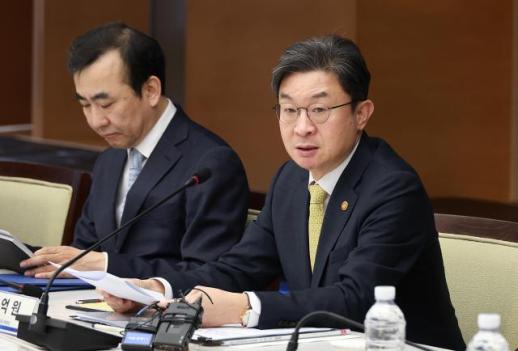 South Korea to offer support program for exporters hit by Middle East conflict SEOUL, March 3 (AJP) - The government will come up with support for small and mid‑sized exporters hit by the Middle East conflict following the U.S.‑led military action against Tehran dubbed "Operation Epic Fury" last week. According to the Financial Services Commission (FSC), a financial support program worth approximately 13.3 trillion won (around US$9.2 billion) will be provided to exporters affected by the conflict. The decision was made at a meeting chaired by FSC Chief Lee Eok‑won on Tuesday at the government complex in Seoul, held to discuss support measures with other financial authorities and agencies including the Ministry of Economy and Finance, the Bank of Korea, the Financial Supervisory Service, Korea Development Bank, and Industrial Bank of Korea. Under the program run by the Korea Development Bank (8 trillion won), Industrial Bank of Korea (2.3 trillion won), and the Korea Credit Guarantee Fund (3 trillion won), financial authorities plan to quickly provide funding and interest-rate reductions to affected firms, while also operating a counseling center to support them. The FSS said South Korea's overall exports to the region are not large, but some vulnerable SMEs that rely heavily on the Middle Eastern market will require tailored assistance. Participants forecast that volatility in stock and foreign exchange markets could increase depending on how the situation develops, with possible spillovers to the real economy. They agreed to closely coordinate across agencies to monitor markets and respond as needed. Lee said South Korea's economy and financial markets have solid fundamentals and sufficient capacity to weather the situation, but he urged the implementation of pre-arranged measures to shore up stability if necessary. He also said authorities will strictly punish unfair trading that takes advantage of market uncertainty, including the spread of fake news and price manipulation, and vowed to inspect suspicious activities. Global markets on the previous day reflected the heightened risk from the Middle East, with international oil prices jumping early before giving back some gains. Major stock markets mostly fell or remained flat, while gold prices and the U.S. dollar rose. West Texas Intermediate (WTI) crude increased 6.3 percent from the prior session. The FSS said a joint financial market task force will maintain a 24-hour monitoring system until markets stabilize and will closely share developments with relevant agencies. 2026-03-03 10:19:18
 -
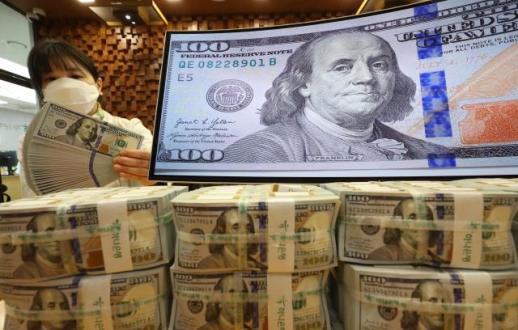 South Korea sees sharp rise in FX deposits on equity, trade flows SEOUL, January 26 (AJP) - Foreign-currency deposits by residents in South Korea surged by nearly $16 billion in December, marking the largest monthly increase on record, driven by inflows linked to foreigners’ equity purchases, trade-related payments and rising client deposits at securities firms amid robust overseas investment. Data released by the Bank of Korea on Monday showed resident foreign-currency deposits at domestic banks totaled $119.43 billion at the end of December, up $15.88 billion from the end of November. The increase followed a $1.72 billion rise in November and was the biggest monthly gain since the data series began in June 2012. Resident foreign-currency deposits include accounts held in South Korea by citizens, local companies, foreigners who have lived in the country for at least six months, and foreign companies operating domestically. By holder, corporate deposits climbed $14.07 billion to $102.5 billion, while individual deposits rose $1.82 billion to $16.93 billion, the central bank said. By currency, U.S. dollar-denominated deposits increased $8.34 billion to $95.93 billion. Euro deposits rose $6.35 billion to $11.75 billion, while yen deposits gained $870 million to reach $9 billion. By bank type, deposits at domestic banks rose $12.76 billion to $101.6 billion, and deposits at branches of foreign banks increased $3.13 billion to $17.83 billion. The BOK said the rise in dollar deposits reflected funds placed for foreigners’ purchases of stakes in South Korean companies, estimated at about $2 billion, as well as trade-related payments by exporters and importers and higher client deposits at securities firms. * This article, published by Aju Business Daily, was translated by AI and edited by AJP. 2026-01-26 15:37:07
 -
 South Korea fines 5 foreign financial firms for illegal short selling SEOUL, January 19 (AJP) - South Korean financial authorities have imposed a combined 3.97 billion won ($2.9 million) in administrative fines on six firms, including five foreign financial companies, for illegal short selling, officials said Monday. The Securities and Futures Commission under the Financial Services Commission decided on Oct. 15 to fine Shinhan Asset Management 370.6 million won for violating short-selling rules. Details of the decision were disclosed on the FSC website on Dec. 12. Shinhan Asset Management was found to have placed a sell order on March 14, 2023, for 5,000 shares of EcoPro that it did not own, with a transaction value of about 1.85 billion won. Among overseas institutions, Norway-based Pareto Securities received the largest penalty of 2.26 billion won. The firm violated short-selling rules after placing a sell order on Nov. 23, 2022, for 178,879 shares of Samsung Electronics it did not hold, valued at about 10.91 billion won. Canada’s Alberta Investment Management was fined 546.9 million won, while U.S.-based asset manager Invesco Capital Management was ordered to pay 532.3 million won. Northern Trust Hong Kong was fined 141.7 million won, and Singapore’s sovereign wealth fund GIC Private Limited was fined 120.6 million won. Authorities said many of the cases stemmed from a sweeping inspection of illegal short selling by global investment banks conducted between November 2023 and March 2025, ahead of the resumption of short selling. Since short selling fully resumed in March, authorities have operated a real-time monitoring system for short selling. Short-selling rules have also been a key issue as South Korea seeks inclusion in the Morgan Stanley Capital International developed markets index. After short selling resumed, MSCI upgraded its assessment of short-selling accessibility in South Korea from “minus,” indicating a need for improvement, to “plus.” * This article, published by Aju Business Daily, was translated by AI and edited by AJP. 2026-01-19 13:51:08
 -
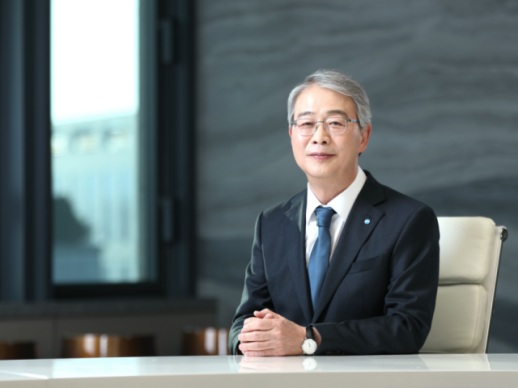 Woori Financial Group Chairman Lim Jong-ryong tapped for second term SEOUL, December 29 (AJP) - Woori Financial Group’s executive candidate recommendation committee has nominated incumbent Chairman Lim Jong-ryong as the group’s next chairman. Committee Chair Lee Kang-haeng said at a media briefing on Monday that Lim was credited with completing the group’s full-service financial portfolio by entering the securities business and acquiring an insurance company during his tenure. Lee said Lim also strengthened Woori’s financial stability and boosted shareholder return policies that more than doubled the group’s market capitalization. “Chairman Lim’s three years in office were highly rated by committee members,” Lee said. Since taking office as Woori chairman in 2023, Lim has expanded the group’s nonbank operations, relaunched its securities and insurance units, and strengthened internal controls in line with government financial policy, while promoting so-called productive finance. In November, he also led the integration of alumni associations for retired employees of Commercial Bank and Hanil Bank, predecessors of Woori Bank, eliminating a source of internal factional conflict for the first time in 26 years. If approved at Woori Financial’s regular shareholders meeting in March, Lim would begin a new three-year term as chairman. According to the committee, Woori’s key challenges include strengthening its securities and insurance subsidiaries to establish itself as a top-tier comprehensive financial group and preparing systematically for the artificial intelligence and stablecoin era to secure a market-leading position. Lim, born in 1959, began his career at the former Ministry of Finance and Economy, later serving as director of financial policy, director-general of economic policy and head of the planning and coordination office at the Ministry of Strategy and Finance. During the 2009 global financial crisis, he served as senior secretary for economic and financial affairs at Cheong Wa Dae. 2025-12-29 16:04:49
 -
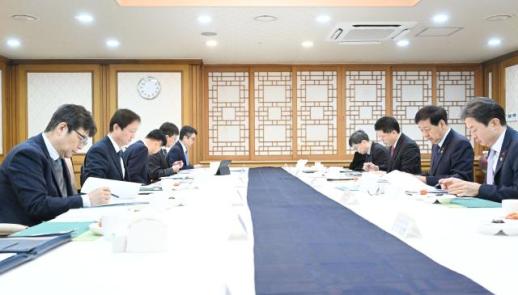 Seoul eases a set of FX liquidity rules to prop up the won SEOUL, December 18 (AJP) -The South Korean government has decided to broadly ease foreign-exchange stability rules for banks, exporters and foreign investors to improve FX supply and demand conditions in latest efforts to prop up the won hovering stubbornly at crisis-era levels without direct market intervention. The move was decided during another emergency meeting among the heads of the finance ministry, financial regulator, and the central bank Thursday morning after the U.S. dollar tested 1,480 won on the previous day. As of 1:30 p.m., the dollar has retreated to 1,477.70 won. Under the plan, supervisory actions tied to enhanced FX liquidity stress tests for financial institutions will be suspended through the end of June next year. The enhanced test evaluates banks’ ability to withstand foreign-exchange funding stress by measuring daily inflows against outflows. Institutions that fail to meet a required “survival period” — when inflows exceed outflows — had to submit liquidity-boosting plans to regulators. Authorities said the supervisory burden has led some institutions to hold more FX liquidity than needed for normal operations through the effect of relaxing forward FX position limits for local subsidiaries of foreign banks. Forward FX transactions involve agreements to buy or sell foreign currency at a predetermined exchange rate on a future date. Korea’s forward FX position system, introduced in 2010, caps banks’ net forward positions relative to equity to prevent excessive capital inflows and a buildup of external debt. Until now, local units of foreign banks — including SC First Bank Korea and Citibank Korea — have been subject to the same 75% limit as domestic lenders, despite operating with business models similar to foreign bank branches that rely heavily on funding from overseas headquarters. Authorities said this discrepancy has acted as a constraint on FX inflows. Under the new plan, the forward FX position limit for these local subsidiaries will be eased to 200%. Domestic banks will continue to face a 75% cap, while foreign bank branches will remain subject to a higher limit of 375%. The government will also further relax restrictions on FX loans for won-denominated uses by exporters. Won-use FX loans refer to cases in which companies borrow in foreign currency — such as U.S. dollars — but convert the funds into won for domestic use rather than for imports. An increase in such loans can boost dollar selling in the FX market, helping to ease upward pressure on the exchange rate. Previously, FX banks were allowed to extend such loans only for exporters’ domestic facility investment. Under the revised framework, exporters will also be able to use FX loans for domestic working capital. In addition, authorities said they will promote “integrated foreign investor stock accounts,” which would allow overseas retail investors to trade South Korean equities directly through foreign brokerages without opening separate accounts at local securities firms. Officials said broader overseas participation could attract new investment funds and support FX inflows. Regulators also plan to clarify guidance that foreign companies listed on overseas exchanges qualify as professional investors, easing procedural hurdles in FX derivatives trading. Despite their status, unclear interpretations have required advance documentation and verification, discouraging FX transactions and capital inflows. The government said follow-up measures under the plan will be completed by year’s end. * This article, published by Economic Daily, was translated by AI and edited by AJP. 2025-12-18 13:27:47
 -
 KakaoBank's collaboration with Indonesia's Superbank gains momentum with 'Lucky Card' rollout SEOUL, December 12 (AJP) - KakaoBank is deepening its partnership with Indonesian digital lender Superbank, its first overseas equity investment, as the South Korean internet-only bank steps up efforts to expand abroad. KakaoBank said on Friday it advised Superbank on the launch of a new financial product, following a financial consulting agreement signed between the two companies in November last year. Under the deal, KakaoBank has been sharing its mobile banking expertise and service-planning know-how to help Superbank introduce new digital services in Indonesia. Superbank, backed by Grab and in which KakaoBank acquired a 10 percent stake in 2023, represents the Korean bank’s first major push into international markets. Since its investment, KakaoBank has supported Superbank’s product design, app interface development and service rollout, using the collaboration to build its own overseas capabilities. The new product, “Kartu Untung (Lucky Card)," was developed over roughly a year based on an idea proposed by KakaoBank. The Korean lender participated in product planning and mobile design throughout the development process. The savings feature allows customers who deposit 50,000 rupiah (about 5,000 won) to draw a daily lottery-style cashback reward via the Superbank app. Kartu Untung incorporates KakaoBank’s experience in revamping savings offerings — such as its 26-week installment savings and group account products — and adds gamified elements designed to boost engagement. The product gained traction quickly, signing up more than 100,000 customers within two weeks of launch. Superbank has been growing rapidly, supported by access to the ecosystems of its major shareholders. The lender now has around 5 million users, with about 60% coming through Grab and digital wallet service OVO, underscoring the synergy among stakeholders. Its expansion is expected to improve KakaoBank’s investment returns. Superbank became profitable on a quarterly basis just nine months after launch and, on the back of its performance and growth momentum, plans to list on the Indonesia Stock Exchange this month. A KakaoBank official said the partnership has helped raise the company’s visibility in Southeast Asia and demonstrated the technological capabilities of South Korea’s digital finance sector. The bank plans to form consortiums with major international partners to pursue new business opportunities and extend its global footprint. * This article, published by Aju Business Daily, was translated by AI and edited by AJP. 2025-12-12 10:14:42
 -
 Hana Financial expands India network with new Mumbai, Devanahalli branches SEOUL, December 08 (AJP) - Hana Financial Group said Monday it has opened new branches in Devanahalli and Mumbai in India. The branches opened on Dec. 3 and Dec. 5, completing the group's “One India” network, which already includes operations in Chennai and Gurugram, launched in 2015 and 2019, respectively. India’s young population, large domestic market and rapid digital transformation have helped sustain annual economic growth of six to seven percent in recent years, boosting demand for cross-border financial services from South Korean companies investing in manufacturing, information technology, energy and infrastructure, the group said. Hana said the new branches are designed to provide faster, customized services for corporate clients and improved digital retail offerings. The Devanahalli branch, located near Bengaluru, often referred to as India’s technology hub, will focus on supporting advanced manufacturing and research and development companies. The Mumbai branch will concentrate on investment banking, trade finance and capital markets services. * This article, published by Aju Business Daily, was translated by AI and edited by AJP. 2025-12-08 15:44:02
 -
 South Korean banks post record earnings on FX gains SEOUL, November 20 (AJP) - South Korea’s banking sector logged record profits in the first nine months of the year, buoyed by a sharp rise in non-interest income as a weakening dollar lifted foreign-exchange and derivatives gains, according to preliminary figures released Thursday by the Financial Supervisory Service (FSS). Banks reported a combined net profit of 21.1 trillion won, up 12 percent — or 2.3 trillion won — from a year earlier. The FSS warned that a portion of this year’s gains was temporary, citing volatility in exchange rates and the removal of last year’s exceptional costs. The regulator urged banks to bolster their buffers as global economic risks, including uncertainty surrounding U.S. tariff policy, continue to cloud the outlook. “There is a possibility of a significant increase in loan-loss provisions due to domestic and international uncertainties,” an FSS spokesperson said. “We will encourage banks to enhance their risk management.” * This article, published by Economic Daily, was translated by AI and edited by AJP. 2025-11-20 14:41:34
 -
 IBK opens Silicon Valley center to support Korean startups SEOUL, November 18 (AJP) - The Industrial Bank of Korea (IBK) said Tuesday it has opened a center in Palo Alto, Calif., to help South Korean startups establish a foothold overseas. The IBK Silicon Valley Center replaces a smaller office the bank launched in 2023 and marks its first full-scale overseas startup hub. The new facility includes space for investor presentations, meetings with local partners and networking events aimed at early-stage companies. IBK has operated a network of startup support centers in South Korea and overseas since 2017, backing more than 200 startups annually through financing, mentoring and global expansion programs. “Launching our first center in Silicon Valley, the hub of the startup ecosystem, will help South Korean startups reach international markets,” Kim Sung-tae, the bank’s president, said in a statement. * This article, published by Aju Business Daily, was translated by AI and edited by AJP. 2025-11-18 16:14:02
 -
 Swiss banking delegation visits Toss Bank to explore digital banking in South Korea SEOUL, November 06 (AJP) - A group of senior Swiss banking executives visited Toss Bank’s headquarters in Seoul on Wednesday to study South Korea’s rapidly evolving digital finance ecosystem, the company said Thursday. The 18-member delegation, organized by the Swiss Embassy in Seoul and telecommunications company Swisscom, was welcomed by Toss Bank’s chief executive, Lee Eun-mi, and other senior executives. During the meeting, Toss Bank shared its experience in digital innovation and financial inclusion since its founding in 2021. Executives highlighted the company’s customer-first approach, technology-driven risk management, and efforts to expand access to financial services for underserved communities — factors that have fueled the online bank’s rapid growth and early profitability. The Swiss representatives, including executives from several cantonal banks — regional institutions that form a cornerstone of Switzerland’s financial system — sought insights into South Korea’s competitive banking landscape, the rise of fintech, and the country’s digital payment infrastructure. They also discussed the challenges of balancing regulatory oversight with financial innovation, according to Toss Bank. “Toss Bank’s achievement of breaking even in just 21 months is impressive, driven by its deeply embedded agile culture,” said Christian Dicke, a corporate representative at Swisscom. Lee said the visit reflected growing global interest in South Korea’s digital finance model. “Toss Bank’s continuous innovation and expanded customer access are not just declarations but evidenced by real changes in the Korean financial market,” she said. “We aim to share our digital finance experience with the Swiss financial sector and contribute to a sustainable global financial ecosystem.” Founded as one of South Korea’s first internet-only banks, Toss Bank has quickly emerged as a major player in the country’s fintech landscape, challenging traditional lenders with its focus on user experience and inclusive banking. * This article, published by Economic Daily, was translated by AI and edited by AJP. 2025-11-06 10:28:23