
Journalist

Arthur I. Cyr
davekim0807@ajupress.com
-
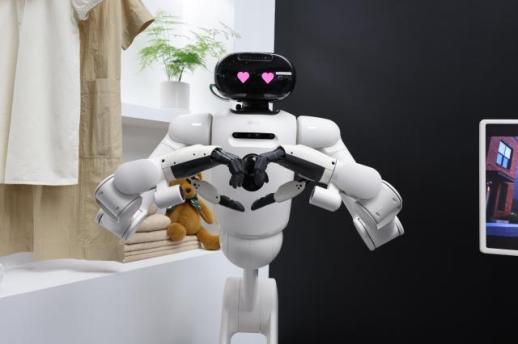 K-battery makers bet on premium to fight EV slump and China dominance SEOUL, March 12 (AJP) - South Korea's battery industry is doubling down on premium technologies — from high-nickel chemistries to all-solid-state prototypes and advanced cell engineering — as it seeks to outpace Chinese rivals and move beyond the slowing electric-vehicle market. The strategic pivot was on full display at the InterBattery 2026, the three-day exhibition that opened Wednesday at COEX in southern Seoul. The 14th edition of the show drew 667 companies from 14 countries across 2,382 booths, marking the largest turnout in the exhibition's history and underscoring how battery technology is rapidly expanding beyond automobiles into robotics, artificial intelligence and energy storage. National pavilions from Sweden, the United Kingdom, the United States, Australia, Canada and the Netherlands highlighted growing international demand for partnerships with Korean battery firms. China fielded 79 exhibitors, the largest single-country contingent. "Batteries are the heart of advanced industries," said Moon Shin-hak, vice minister of trade, industry and energy, at the opening ceremony, pledging continued government backing to help domestic manufacturers maintain their technological edge amid a slowdown in EV demand and an increasingly volatile global trade environment. On the exhibition floor, one theme was unmistakable: premium technology over low-cost chemistry. Discussion of lithium iron phosphate (LFP) — the inexpensive battery chemistry that has underpinned China's dominance in entry-level EVs and energy storage — was relatively muted. Instead, booth after booth highlighted high-nickel cathodes, all-solid-state batteries and sophisticated packaging technologies, signaling that Korean manufacturers are staking their future on the high-performance end of the market. SK On made perhaps the most vivid statement of that strategy by placing a Genesis GV60 Magma electric SUV at the center of its booth. The performance-focused vehicle carries an 84-kilowatt-hour battery pack built with SK On's high-nickel NCM pouch cells and offers a driving range of about 346 kilometers on a single charge. The company also unveiled a "Hyper Fast" battery capable of charging from 10 percent to 80 percent in just seven minutes, alongside its cell-to-pack architecture and immersion-cooling battery system. SK On further showcased its first sulfide-based all-solid-state battery, targeting mass production by 2029. Across the hall, LG Energy Solution occupied the largest exhibition space at 540 square meters. Its centerpiece was the JF2 DC LINK 5.0, a grid-scale energy storage system that won the InterBattery Awards 2026 and represents the company's first use of LFP chemistry in an ESS product. A Renault Scenic fitted with LG's mid-nickel battery — containing about 70 percent nickel — illustrated a different strategic approach. The configuration aims to balance the performance of high-nickel batteries with a cost profile that sits between premium cells and low-cost LFP alternatives. Robotics also made an appearance on the show floor, though demonstrations were limited. LG Electronics displayed its home robot CLOiD, first introduced at CES 2026, which greeted visitors with a heart-hand gesture while remaining largely static. Meanwhile, Samsung SDI drew heavy crowds with the first public unveiling of a pouch-type all-solid-state battery sample designed for robotics and other "physical AI" applications. The company aims to begin mass production in the second half of 2027. Samsung selected the pouch format for its lighter weight — a crucial advantage for robots that require high energy density and burst power in compact spaces. While the company declined to identify potential humanoid-robot clients, its booth slogan — "AI thinks, Battery enables" — left little doubt about its intended market. Samsung SDI also displayed a high-energy prismatic cell with a volumetric energy density of 700 watt-hours per liter, capable of powering an EV for roughly 800 kilometers on a single charge. Among cathode material suppliers, the emphasis on performance over cost was equally clear. POSCO Future M presented ultra-high-nickel cathodes with nickel content above 95 percent, along with newly developed steel battery cans. Rival suppliers L&F and EcoPro also attracted steady traffic. The premium-focused posture reflects a broader strategic calculation. With Chinese competitors dominating much of the mid-tier battery market, Korean manufacturers are betting that advanced chemistries, all-solid-state technology and sophisticated cell engineering will secure territory where margins remain higher and technological barriers harder to replicate. "The robot battery market is expanding very rapidly, with different technical requirements depending on the type of robot," said Jung Ji-sub, team leader at LG Energy Solution's small-size battery division on the sidelines of the exhibition. "While many robots rely on GPUs or CPUs for intelligence, their actuators and operating time create very different battery demands." Safety, however, remains the overriding concern. "One client at the vice-president level told us directly that they lose sleep over the prospect of a robot catching fire near people," Jung said. "Energy density and battery life are important, but for robots to coexist safely with humans, safety is the most critical requirement." 2026-03-12 17:02:36
 -
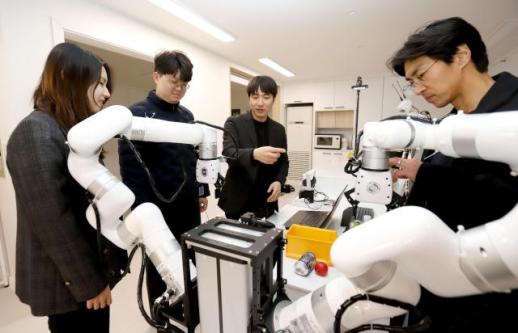 South Korean researchers develop task AI enabling robots to learn, execute everyday chores SEOUL, March 12 (AJP) - South Korean researchers have developed a robotic task artificial intelligence system capable of learning and carrying out routine household and workplace chores by observing human demonstrations, the state-run Korea Institute of Machinery & Materials (KIMM) said Thursday. The AI system, built by a team led by Kim Jeong-jung at KIMM's Department of AI Machinery, allows robots to acquire task skills from human demonstrations, replicate them in a virtual environment for training and verification, and then execute them in real-world settings through a hierarchical task-execution framework. Unlike conventional robotic task technologies that have largely been confined to single-task datasets and simulation-only validation, the new system integrates the entire pipeline — from multi-task dataset construction and real-space virtualization to hierarchical task AI and physical robot deployment, according to KIMM. The research team said it achieved a success rate exceeding 90 percent across a range of tasks by employing a layered execution structure that breaks down complex operations into sequential steps. The system was validated on an actual robotic platform operating in real-world conditions, confirming its viability for field deployment. Potential applications span household and office service tasks, retail shelf arrangement and logistics operations such as picking and sorting — areas where labor-intensive, repetitive work has long been a bottleneck for automation. "This robotic task AI learns from demonstrations and reasons hierarchically, much like a human worker," Kim said. "We have secured generalized task capabilities applicable across a wide spectrum of everyday operations." Kim added that the team verified the system's reliability by building a diverse task dataset, securing a real-world testing environment and running validation on an actual robot, confirming that robots can reliably assist with repetitive daily tasks. The team plans to broaden the range of tasks robots can perform and strengthen their adaptability to shifting environments and unfamiliar objects, with the aim of accelerating deployment in commercial service settings. 2026-03-12 09:58:12
 -
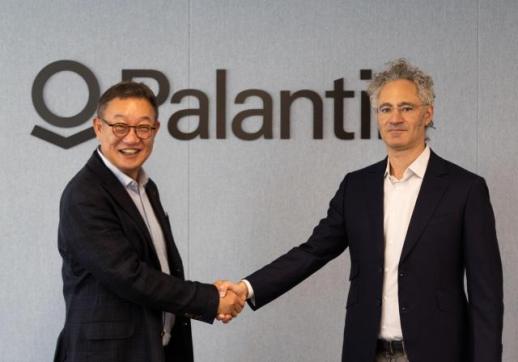 LG CNS strikes strategic partnership with Palantir to accelerate AI transformation push SEOUL, March 12 (AJP) - LG CNS, the IT services arm of South Korea's LG Group, signed a strategic partnership with U.S. artificial intelligence software firm Palantir Technologies, as the company moves to broaden its enterprise AI platform business. The agreement was signed ahead of Palantir's AIPCon event in the United States. LG CNS President and CEO Hyun Shin-gyoon and Palantir co-founder and CEO Alex Karp were among senior executives present at the signing ceremony on Wednesday (local time). Under the deal, LG CNS will offer Palantir's enterprise platforms — Foundry, which consolidates and refines fragmented corporate data, and AIP (Artificial Intelligence Platform), which integrates generative AI into that data environment to support real-time decision-making — tailored to each client's operations. To drive the initiative, LG CNS will establish a dedicated unit called FDE (Forward Deployed Engineering), which will work closely with Palantir to identify and execute high-value AI transformation projects across manufacturing, energy, electronics, and logistics. The company plans to begin its commercial expansion with LG Group affiliates before targeting broader clients. LG CNS said it has already completed a proof-of-concept deployment of Foundry and AIP in the quality management division of one LG affiliate, and has since secured a full commercial contract. The company has also validated the platforms internally, building out risk-forecasting and decision-support capabilities using its own operational data. "This partnership marks a critical turning point in expanding LG CNS's AI transformation business to a global level," Hyun said, adding that the company aims to lead enterprise innovation by combining its industry expertise with Palantir's AI platform capabilities. 2026-03-12 09:25:54
 -
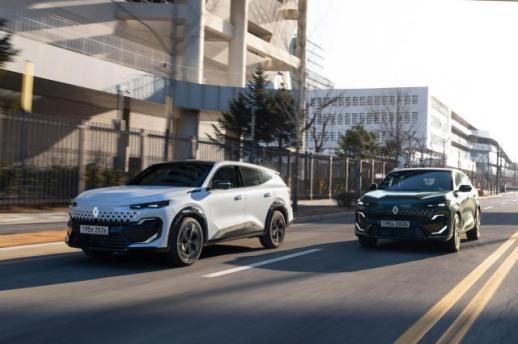 Renault unveils 'futuREady' strategy, plans 36 new models by 2030 SEOUL, March 11 (AJP) - Renault Group unveiled its new mid-to-long-term strategic plan dubbed "futuREady," charting an aggressive course to roll out 36 new models by 2030 as the French automaker seeks to cement its position as Europe's benchmark carmaker amid intensifying global competition. The plan revealed Tuesday (local time), succeeding the Renaulution turnaround strategy launched in 2021, sets a target of more than 2 million annual vehicle sales by 2030, with half generated outside Europe. The group also aims to maintain an operating margin of 5 to 7 percent of revenue and sustain annual free cash flow of about 1.5 billion euros ($1.74 billion). The Renault brand will spearhead the offensive with 12 new models in Europe and 14 for international markets, while pursuing 100 percent electrified sales across the continent and a 50 percent electrified mix outside Europe by the end of the decade. The company also confirmed that its full hybrid E-Tech powertrain would remain in the European lineup beyond 2030. At the heart of the electrification push is the new RGEV medium 2.0 platform, a modular 800-volt architecture spanning the B+ to D segments. The platform promises up to 750 kilometers of range for battery-electric models and 1,400 kilometers with a range extender, underscoring Renault's bid to close the gap with Chinese rivals on cost and technology. "At Renault Group, we know where we come from. Today, we know where we want to go, how and who with. And all of this in pursuit of one goal: to better serve our customers, ultimately delivering clean, affordable mobility tailored to their needs, based on the strength of our brands and vehicles," said Francois Provost, CEO of Renault Group. The company will lean on five international hubs — South Korea, Morocco, Turkiye, Latin America, and India — to fuel its overseas expansion. 2026-03-11 16:13:18
 -
 Korean games earn billions abroad but lose spotlight to K-pop SEOUL, March 11 (AJP) - South Korea's video game industry is quietly generating billions of dollars overseas, yet publishers say it remains overshadowed by the global success of K-pop and film while facing heavier regulatory and financial burdens at home. Once the flagship sector of the country's "K-content" boom, game developers complain they struggle to gain global attention or policy support despite remaining the largest content export industry. Games accounted for 60.4 percent of South Korea's total content exports in 2024, generating about $8.5 billion, exceeding the combined overseas sales of music, film, television and advertising, according to industry data. The 2025 export data are yet to be published. Domestic revenue reached roughly 23.8 trillion won ($16.2 billion). Yet the industry says it receives little institutional backing. Game production is notably absent from South Korea's content production tax credit framework, a gap lawmakers and trade groups have increasingly criticized. At a National Assembly forum Tuesday hosted by the Korea Association of Game Industry (K-GAMES), developers and policymakers pointed to the widening disparity with other cultural sectors. Film and television productions receive tax credits of up to 30 percent, while webtoon creators qualify for 10 to 15 percent incentives. Game developers receive no comparable support, even though 86.4 percent of Korean game companies employ fewer than 10 people, leaving most unable to meet the threshold for existing R&D tax credits. "Triple-A titles now routinely cost more than 1 trillion won to produce," said Culture Minister Chae Hwi-young. "National-level institutional support is more urgent than ever." The contrast is even sharper overseas. Britain offers a 34 percent tax credit on core game production costs, Canada reimburses up to 37.5 percent of labor expenses, and Japan allows companies to deduct 30 percent of qualifying intellectual-property income under its tax regime. Regulatory pressures are also rising. South Korea's Framework Act on Artificial Intelligence, which took effect in January, requires AI-generated content to carry disclosure labels. The game industry has opposed a proposed amendment that would introduce additional disclosure rules, warning the overlap could create regulatory confusion. Platform economics remain another sticking point. Google announced on March 4 it would lower its Google Play commission from 30 percent to a maximum of 20 percent, but the change will not take effect in Korea until December — six months after implementation in the United States and Europe. Apple continues to charge commissions of up to 30 percent through the App Store. According to K-GAMES, Korean developers paid an estimated 9 trillion won in platform commissions to the two companies between 2020 and 2023. Industry concerns come as financial pressures mount across major publishers. NCSoft reported revenue falling 5 percent last year despite launching Aion 2, while Kakao Games posted its first annual operating loss since listing. Pearl Abyss recorded a 14.8 billion won loss amid a prolonged content drought, and Krafton saw operating profit fall 10.8 percent despite record sales. Meanwhile Nexon logged roughly 4.5 trillion won in annual revenue, but operating income barely increased. A wave of project shutdowns has compounded the industry's difficulties. Extraction shooter Dungeon Stalkers will close on June 9 just seven months after launch, while NCSoft ended service for Blade & Soul Heroes in February and plans to shut down global services for Blade & Soul 2 in June. Critics say the industry's own strategy has also contributed to the slowdown. "Many game executives come to us saying 'this type of game makes money' rather than asking what makes a good game," said Im Chung-jae, professor of game software at Keimyung University. "For years the industry has focused on a narrow business model built around a small group of heavy-spending users." Despite the setbacks, major titles scheduled for release in 2026 are raising hopes for a revival. Pearl Abyss is preparing to launch the open-world blockbuster Crimson Desert, while Nexon's Arc Raiders and the globally acclaimed indie hit Dave the Diver have already demonstrated the international potential of Korean studios. Other successes — including Shift Up's Stellar Blade and Neowiz's Lies of P — suggest Korean developers can compete globally when they move beyond established formulas. Im said the industry ultimately needs broader recognition and greater creative diversity. “If companies adopt a longer-term philosophy and expand their genres, solutions will emerge,” he said. “The industry must be structured so it can ride whatever cycle comes — and right now, with such a narrow spectrum, it cannot.” 2026-03-11 15:04:56
 -
 Hyundai Motor Group overtakes Volkswagen in profitability, claims global No. 2 spot SEOUL, March 11 (AJP) - Hyundai Motor Group surpassed Volkswagen Group in annual operating profit for the first time last year, securing the No. 2 position among global automakers in a milestone that underscores the South Korean conglomerate's rising dominance in an increasingly competitive industry. The group, which encompasses Hyundai Motor Company, Kia and premium line Genesis, posted a combined operating profit of 20.55 trillion won ($13.99 billion) in 2025, comfortably eclipsing Volkswagen's 8.9 billion euros (15.19 trillion won). Toyota Group retained the top spot with an operating profit of 4.31 trillion yen (39.97 trillion won). Hyundai Motor Group sold 7.27 million vehicles worldwide last year, ranking third in global sales behind Toyota at 11.32 million units and Volkswagen at 8.98 million units. General Motors trailed in fourth with 6.18 million units, followed by Stellantis at 5.48 million. The group's operating profit margin stood at 6.8 percent, more than double Volkswagen's 2.8 percent, and second only to Toyota's 8.6 percent. Despite shouldering about 7.2 trillion won in U.S. tariff-related costs — split between Hyundai Motor at 4.1 trillion won and Kia at 3.1 trillion won — the group's tariff burden was lighter than that of Toyota, which paid about 1.2 trillion yen. Hyundai Motor Group offset tariff headwinds through local production adjustments, market diversification and swift inventory drawdowns. Industry analysts attributed the group's outperformance to its agility in balancing electrified and internal combustion lineups while tightening cost controls across its global operations. Revenue for the group totaled 300.4 trillion won last year, dwarfed by Volkswagen's 321.9 billion euros but supported by margins that have steadily widened over the past several years. 2026-03-11 10:59:35
 -
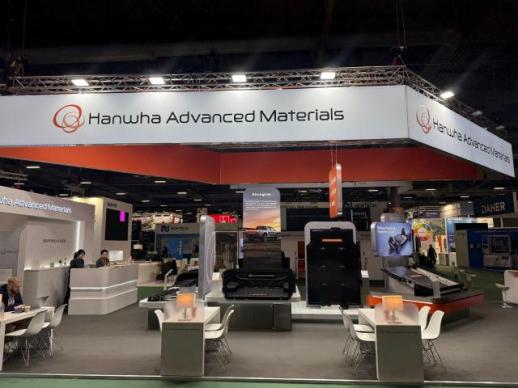 Hanwha Advanced Materials showcases lightweight composite solutions for EVs at global convention SEOUL, March 11 (AJP) - Hanwha Advanced Materials is presenting a suite of lightweight composite solutions for electric vehicles at JEC World 2026, the world's largest composites exhibition running from Tuesday to Thursday in Paris, as the South Korean materials maker ramps up its push into the global mobility market. The company is exhibiting products designed to address two pivotal challenges in EV development — weight reduction and safety — including a lightweight seat cushion frame that trims mass compared with conventional metal components while retaining the strength and rigidity required for mass-produced vehicles. The proprietary frame, built on Hanwha's in-house composite design and processing technology, is engineered to boost fuel efficiency and extend driving range through structurally optimized design that cuts both thickness and weight without compromising crash safety or passenger protection. Hanwha is also unveiling EV-specific parts already in serial production, such as a front trunk, or frunk, and a composite truck bed for electric commercial vehicles. The parts leverage the moldability, impact resistance and corrosion resistance of composite materials to expand cargo space, enhance design flexibility and reduce overall vehicle weight. Among the flagship exhibits is a next-generation battery protection system comprising an underfloor structure and upper case, both currently under development. The integrated design reduces part count and achieves about 20 percent weight savings while incorporating materials technology capable of slowing thermal runaway propagation during battery fires, along with electromagnetic shielding. "This exhibition will serve as a venue to explore technical synergies with our global automaker partners in advancing the lightweight performance and safety of electric vehicles," a Hanwha Advanced Materials spokesperson said. "We will continue to propose practical composite-based solutions in step with the evolving mobility market and strengthen cooperation on the global stage." 2026-03-11 10:25:13
 -
 Celltrion launches Remsima liquid formulation in Europe, wins Nordic tenders SEOUL, March 11 (AJP) - South Korean biosimilar giant Celltrion announced Wednesday it has launched a liquid formulation of its flagship infliximab treatment Remsima IV in Europe, securing government tender contracts in Denmark and Norway in an early push to tighten its grip on the continent's infliximab market. The new formulation, which received European Commission approval in November, is the world's only liquid version of intravenous infliximab. Available in 100 mg and 350 mg vials, it eliminates the reconstitution step required for conventional freeze-dried preparations, cutting drug preparation time by about 50 percent and reducing associated labor and supply costs by about 20 percent. Celltrion's Nordic subsidiary kicked off sales in Norway immediately after winning the national tender and will supply the product through January 2028. The company said it expects to capture about 35 percent of Norway's intravenous infliximab market through the contract. Storage space requirements for the liquid formulation are also up to 70 percent smaller than those for the powder version, an advantage that Celltrion said resonated with European hospital procurement officials. The rollout marks the latest step in Celltrion's drive to build what it calls a full lineup of infliximab delivery options spanning intravenous powder, intravenous liquid and subcutaneous formulations. The company has filed patents on the liquid formulation and completed registrations in major European markets including Britain, Germany and France. Remsima's combined IV and subcutaneous product lines held a 68 percent share of European infliximab prescriptions as of the third quarter of 2025, according to data firm IQVIA. Celltrion said it plans to extend the liquid formulation's commercial reach to France, the Netherlands and the Czech Republic later this year. "The liquid formulation has proved its competitiveness by winning tenders immediately after launch," said Baek Seung-du, regional manager of Celltrion's Nordic affiliate. "We will continue field-driven sales and marketing efforts to broaden prescriptions and offer better options to European patients and clinicians." 2026-03-11 09:50:10
 -
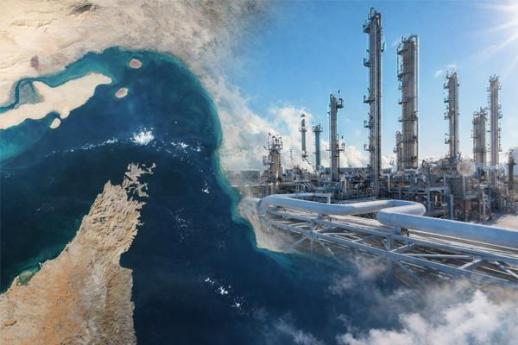 Hormuz halt deepens crisis for Korea's petrochemical makers SEOUL, March 10 (AJP) - South Korea's petroleum refining and petrochemical industries are bracing for a deepening "compound crisis" as the Middle East war sends crude oil, naphtha and liquefied natural gas prices surging while new labor regulations threaten to complicate urgently needed restructuring. The prolonged conflict between the United States, Israel and Iran has sharply disrupted energy supply chains across Asia, with tanker traffic through the Strait of Hormuz grinding to a halt after Iran shut down the strategic waterway following joint U.S.–Israeli strikes on Feb. 28. For South Korea — one of the world's largest importers of energy and petrochemical feedstock — the shock is hitting an industry already weakened by Chinese overcapacity and falling margins. About 54 percent of the country's naphtha imports and roughly 70 percent of its crude oil typically pass through the strait, leaving domestic refiners and petrochemical producers acutely exposed to a prolonged blockade. Naphtha prices have surged about 55 percent since the conflict escalated, jumping to $883.4 per metric ton on March 9 from $568.55 on Feb. 23, according to the Naphtha FOB Fujairah Cargo Assessment compiled by S&P Global Platts. Oil markets have also experienced extreme volatility. U.S. benchmark West Texas Intermediate traded around $89.96 per barrel after swinging within a roughly $28 range, while global benchmark Brent crude stood at $88.87, sharply below an intraday peak of $119.50 reached earlier in the conflict. The disruption has pushed the East-West naphtha spread above $50 per ton for April contracts, more than $30 higher since the start of the year, reflecting mounting concerns over reduced Middle Eastern supply into Asia, which normally receives roughly 40 percent of global naphtha exports from the Gulf region. Forward structures have tightened sharply as well, with April–May timespreads widening by about $20 per ton in both Asian and European benchmarks, approaching levels last seen at the start of the Russia-Ukraine war in 2022. The market is increasingly pricing in shortages as buyers scramble to secure replacement cargoes from Europe and the United States. The supply shock is already forcing petrochemical producers to cut operating rates. Lotte Chemical plans to reduce utilization at its Daesan naphtha cracking center from about 80 percent to 70 percent, while also moving forward scheduled maintenance at its Yeosu plant by two weeks. LG Chem is lowering operating rates at its Daesan facility from 69 percent to about 54 percent and trimming output at its Yeosu complex. Korea Petrochemical is reviewing a reduction from 80 percent to roughly 75 percent at its Onsan plant. Yeochun NCC — a joint venture between Hanwha Solutions and DL Chemical and one of South Korea's largest ethylene producers — declared force majeure on March 4, warning customers that naphtha deliveries for March would be significantly delayed. Industry executives warn that the next month could prove decisive. Petrochemical companies typically maintain around one month of naphtha reserves, meaning prolonged disruptions could force deeper production cuts or temporary plant shutdowns. The squeeze is intensified by a structural pricing trap: surging feedstock costs cannot easily be passed on to buyers because persistent Chinese oversupply continues to depress prices for ethylene and downstream petrochemical products. Analysts say the pattern echoes the early phase of the Russia-Ukraine war, but the impact could prove more severe given Asia's heavier reliance on Middle Eastern feedstock. "If the war is not resolved within the next week, further price spikes are inevitable as inventories deplete and panic buying intensifies," said Yoon Jae-sung, an analyst at Hana Securities. "Should the disruption extend beyond two weeks, we could see a wave of plant shutdowns globally. Companies with lower dependence on Middle Eastern feedstock will be in a stronger position." LNG shock adds further energy pressure Energy costs are rising across the broader industrial system. Qatar, which accounts for about 20 percent of global LNG supply, halted production at its Ras Laffan facility after Iranian drone and missile strikes on March 2 and declared force majeure on exports two days later. Spot LNG prices surged 46 percent following the disruption. South Korea imports roughly 20 percent of its LNG from the Middle East, largely under long-term contracts, but replacement volumes on the spot market are now significantly more expensive. "It is the global supply-demand balance that determines LNG prices," said Roh Nam-jin, senior researcher at the Korea Energy Economics Institute. "Even though South Korea relies relatively less on Middle Eastern LNG compared with oil, a broad increase in LNG prices will inevitably affect the domestic energy market." About half of South Korea's imported LNG is used for electricity generation, which accounts for roughly 30 percent of national power output, meaning higher LNG costs could eventually push up industrial electricity prices. Restructuring gains momentum but faces new obstacles The crisis comes as the petrochemical sector is already undergoing a painful restructuring. Hanwha Solutions and DL Chemical recently agreed to shut down two of Yeochun NCC's three plants, reducing ethylene capacity from 2.3 million tons annually to about 900,000 tons. The remaining operations will later merge with Lotte Chemical's Yeosu complex, which has annual capacity of 1.23 million tons, to form a new joint venture expected this year. Hanwha Solutions, DL Chemical and Lotte Chemical are negotiating an equal 33 percent ownership structure, while Hanwha and DL have pledged 500 billion won to cover Yeochun NCC's outstanding borrowings. The restructuring follows the government-backed "Daesan No.1 Project," which merged operations between Lotte Chemical and HD Hyundai Chemical with a 2.1 trillion won ($1.42 billion) support package. Yeochun NCC's financial position had deteriorated rapidly even before the war. Its operating losses widened from 150.3 billion won in 2024 to 198.9 billion won in the first nine months of 2025, leaving the company close to default last year. The government approved financial support for the Daesan restructuring on Feb. 25 and is expected to extend similar backing for the Yeosu plan. Labor law adds uncertainty to industry overhaul But the restructuring process now faces a new complication. South Korea's revised labor union law — widely known as the Yellow Envelope Law — takes effect Tuesday, expanding the scope of legally permissible labor disputes to include corporate restructuring and business reorganization. The law also allows subcontractor unions to demand collective bargaining directly with parent companies, a provision that could complicate plant closures or workforce reductions at petrochemical complexes that rely heavily on subcontracted labor. Industry officials warn that the convergence of war-driven feedstock shocks, structural overcapacity and regulatory uncertainty leaves the sector with limited room to maneuver. If the Hormuz blockade persists and feedstock inventories run out, utilization rates at domestic naphtha cracking centers could fall below 60 percent, with ripple effects spreading across downstream industries including electronics, automotive manufacturing, construction materials and consumer goods. 2026-03-10 15:46:15
 -
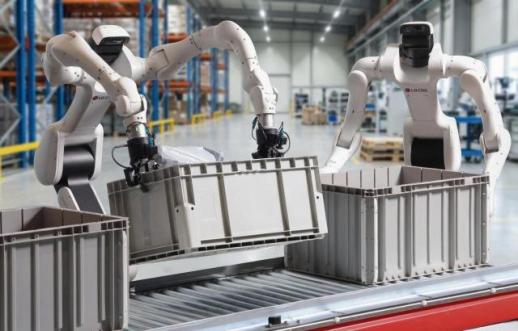 LG CNS invests in U.S. robotics firm Dexmate, broadening humanoid hardware lineup SEOUL, March 10 (AJP) - South Korean IT solutions provider LG CNS said it has made a strategic investment in Dexmate, a Silicon Valley-based robotics startup, marking the first such deal by a Korean company with the U.S. firm. The investment, announced Tuesday, was channeled through LG Technology Ventures, the conglomerate's corporate venture capital arm. Dexmate, founded by PhDs from MIT, UC San Diego and Carnegie Mellon University, manufactures humanoid robots whose hardware has been adopted as a standard research platform by global robotics AI developers. Its flagship model, Vega, forgoes bipedal legs in favor of an omnidirectional wheeled base, a design choice that prioritizes stability and endurance over human-like locomotion for industrial use. The robot features 36 degrees of freedom and dual arms capable of carrying a combined payload of about 15 kilograms, with a single charge sustaining more than 20 hours of continuous operation. Its wheeled lower body offers a more stable platform than bipedal counterparts, making it well-suited for deployment in logistics centers and manufacturing plants. The deal expands LG CNS' robot hardware portfolio to include wheeled humanoids alongside bipedal and quadruped models it had already secured. The company said it plans to bundle the hardware with a robot foundation model and its proprietary operation and training platform to offer what it calls a "full-stack RX service" for industrial clients. "This investment is a strategic move to organically combine robot hardware, foundation models and our platform to enable large-scale robot operations and accelerate deployment across industrial sites," said Lee Jun-ho, head of LG CNS' smart logistics & city business division. 2026-03-10 10:05:12