
Journalist

Arthur I. Cyr
davekim0807@ajupress.com
-
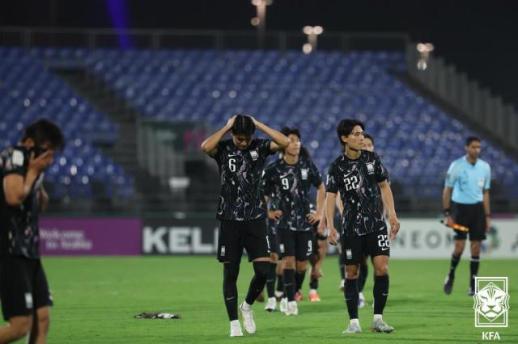 South Korea finish fourth at AFC U-23 Asian Cup after shock penalty loss to Vietnam SEOUL, January 24 (AJP) - South Korea's under-23 football team finished fourth at the Asian Football Confederation U-23 Asian Cup on Saturday after suffering a stunning penalty shootout defeat to Vietnam in the third-place playoff, capping a deeply disappointing campaign for the former champions. The match at King Abdullah Sports City Hall Stadium ended 2-2 after 120 minutes before Vietnam prevailed 7-6 in the shootout, handing South Korea their first-ever loss to Vietnam in the tournament's history after six wins and three draws. South Korea dominated possession throughout the match 65 to 35 percent, recording 32 shots to Vietnam's five and attempting 61 crosses compared to their opponents' four, but struggled to break down a resolute Vietnamese defense. Vietnam struck first through Nguyen Quoc Viet's powerful left-footed finish in the 30th minute after Nguyen Dinh Bac carved open the Korean defense down the left flank. Kim Tae-won equalized with a spectacular turning shot from outside the penalty area in the 69th minute, only for Dinh Bac to restore Vietnam's lead two minutes later. South Korea's fortunes shifted when Dinh Bac received a straight red card in the 86th minute. Shin Min-ha capitalized on the numerical advantage, drilling home a left-footed equalizer deep into stoppage time to force extra time. Despite their sustained pressure in extra time, South Korea failed to find a winner and succumbed in the shootout when Bae Hyun-seo's seventh kick was saved, allowing Nguyen Thanh Nhan to seal victory for Vietnam. The result marks South Korea's worst finish since returning to the semi-finals for the first time in six years since their 2020 triumph in Thailand. Vietnam, coached by Kim Sang-sik, secured third place, their best result since finishing runners-up in 2018 under Park Hang-seo. "We are not a complete team yet. We are a team that should continue to improve," said coach Lee Min-sung of the South Korean squad during the postmatch press conference. "If we can get sharper in attacking the half-space and the final third, we will be a much better team." The team is scheduled to return home through Incheon International Airport on Sunday. 2026-01-24 10:26:10
 -
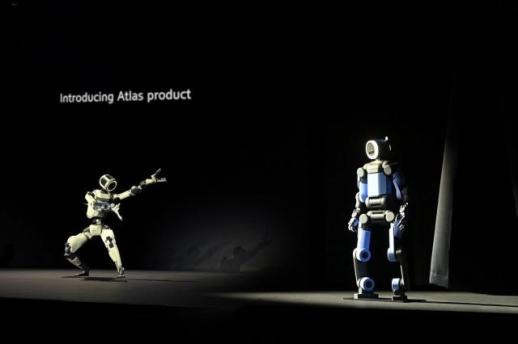 Hyundai union clashes with management over humanoid robot deployment SEOUL, January 24 (AJP) - Hyundai Motor Company's labor union has warned it will block the deployment of humanoid robots on production lines without prior agreement, escalating tensions over the automaker's plan to introduce Boston Dynamics' Atlas robots to its manufacturing operations. "Not a single robot can enter the production floor without labor-management agreement," the National Metal Workers' Union Hyundai Motor Company branch said in a newsletter on Thursday. "If robots are deployed on production lines, significant employment shocks are expected." The union raised alarms over potential job losses, citing cost comparisons between human workers and machines. "With an average annual salary of 100 million won ($69,141), operating three shifts around the clock costs about 300 million won per year, while robots only incur maintenance costs after the initial purchase," the union said. Hyundai Motor Group unveiled a production-ready version of the Atlas humanoid robot at CES 2026 earlier this month, outlining a roadmap to deploy the machines at its Metaplant facility in Georgia before expanding to factories worldwide. The group plans to assign Atlas robots to basic tasks such as parts picking and sequencing starting in 2028, then expand their use to more complex operations including assembly, heavy-load handling and quality inspection by 2030. A dedicated robot factory is being built with annual production capacity of about 30,000 units. The union fears that concentrating electric vehicle and robotics investments at U.S. production hubs could accelerate the transfer of high-value manufacturing processes overseas, leaving domestic plants with diminished roles and reduced workforce requirements. Delays in robot deployment could also carry costs for Hyundai, potentially pushing back expected gains in productivity, quality control and workplace safety, while slowing the company's return on investment amid intensifying competition in the electric vehicle market. Global rivals are already moving toward commercialization. Tesla has begun testing its Optimus humanoid at its own facilities and has signaled plans to sell the robots by late next year, while BMW is running pilot programs at its Spartanburg plant. 2026-01-24 09:34:41
 -
 South Korea enforces world's first comprehensive AI law as industry braces for compliance SEOUL, January 22 (AJP) - South Korea on Thursday became the first country to enforce a comprehensive artificial intelligence law, a landmark move that establishes sweeping transparency and safety obligations while industry players scramble to navigate its sprawling requirements. The Basic Act on the Development of Artificial Intelligence and the Establishment of a Foundation for Trustworthiness, or the AI Basic Act, which took effect a year after its promulgation, governs everything from deepfake labeling to high-impact AI oversight. South Korea is the second jurisdiction after the European Union to enact a comprehensive AI statute, but its approach diverges sharply from Brussels. South Korea's AI Basic Act takes a hybrid approach—more autonomous than the EU but stricter than the U.S. federal government. While all three have mandated identification watermarks for AI-generated content, the U.S. runs on dual tracks—the federal government emphasizing self-regulation while state governments pursuing detailed regulations. On the contrary, the EU categorized AI into four risk levels and banned high-threat AI usages, including those applying to social scoring systems and real-time biometric surveillance in public spaces. The Ministry of Science and ICT said the legislation fills regulatory gaps left by existing telecommunications and information network laws, which were not designed to address AI-generated content or algorithmic discrimination. The ministry pledged a "soft landing" for businesses by deferring its investigative powers and penalty enforcement for at least one year. Under the law, operators of high-impact AI systems in sectors such as healthcare, energy, hiring and loan assessments must implement human oversight and safety measures. The government said only fully autonomous vehicles at Level 4 or above currently meet the high-impact threshold, though industry observers expect the category to expand rapidly as AI capabilities advance. The law also enshrines a right to explanation, requiring AI operators to provide clear and meaningful information about the criteria and principles behind algorithmic decisions. Industry groups have characterized the provision as largely symbolic, noting that only a handful of companies worldwide possess the technical capability to interpret complex AI reasoning processes. Enforcement mechanisms include on-site inspections and fines of up to 30 million won ($20,459) for violations such as failing to notify users of AI deployment or neglecting to appoint a domestic representative for foreign operators. The ministry has pledged to hold off on exercising these powers during the grace period. The creative sector has mounted broader resistance. Sixteen organizations representing writers, artists and other content creators issued a joint statement on Jan. 13 demanding the government withdraw and overhaul its national AI action plan. "The government's AI action plan is an attempt to fundamentally violate copyright as private property rights, and amounts to a declaration that it will abandon the sustainability of Korea's cultural industries," the groups said. They added that the government is "taking the lead in removing legal barriers so AI companies can use copyrighted works without permission and at virtually no cost." The gaming industry has raised similar complaints, citing ambiguity over how AI disclosure rules apply to interactive entertainment classified as artistic expression. Regulators have said games may use labeling methods that do not disrupt the viewing experience, but have not specified concrete standards. 2026-01-22 13:38:09
 -
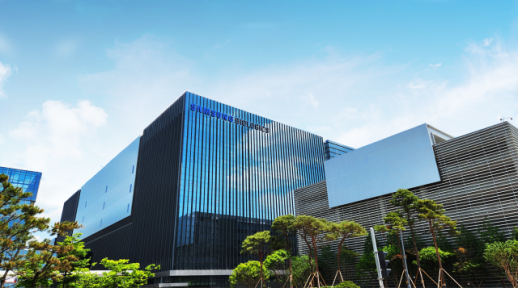 Samsung Biologics becomes first Korean drugmaker to join 2 trillion won income club SEOUL, January 21 (AJP) - Samsung Biologics on Wednesday posted record annual operating profit for 2025, becoming the first pharmaceutical and biotechnology company in South Korea to surpass the 2 trillion won threshold. The contract drug manufacturing giant posted an operating profit of 2.07 trillion won ($1.4 billion) for 2025, soaring 56.6 percent from a year earlier, according to a regulatory filing released Wednesday. Revenue climbed 30.3 percent to 4.55 trillion won, while net profit jumped 55.2 percent to 1.61 trillion won. Fourth-quarter operating profit reached 528.3 billion won, up 67.8 percent year-on-year, driven by full-capacity operations across all four manufacturing plants in Incheon. Quarterly revenue stood at 1.29 trillion won. The company attributed its robust performance to the ramp-up of Plant 4 operations, stable utilization of Plants 1 through 3, and favorable foreign exchange effects. Samsung Biologics has served over 110 clients, including 17 of the world's top 20 pharmaceutical companies. "2025 has been a year of steady progress for Samsung Biologics as we expanded collaboration with both pharma and biotech companies, supported by our focus on operational and quality excellence," said John Rim, CEO of Samsung Biologics. The Incheon-based firm made strategic moves throughout 2025 to bolster its global footprint, including acquiring a manufacturing facility in Rockville, Maryland, securing land for a third bio campus, and completing the construction of Plant 5. Cumulative contract value has exceeded $21.2 billion since its founding in 2011. Samsung Biologics forecast revenue growth of 15 to 20 percent for 2026, excluding contributions from the Rockville facility acquisition, which remains pending regulatory approval. The company maintained a solid financial position with total assets of 11.06 trillion won and a debt-to-equity ratio of 48.4 percent at year-end. It achieved the 2 trillion won operating profit milestone just two years after becoming the first Korean drugmaker to post annual operating profit exceeding 1 trillion won in 2023. Shares of Samsung Biologics closed Wednesday 1.35 percent lower at 1,894,000 won per stock. The regulatory filing came after market closure. 2026-01-21 17:19:50
 -
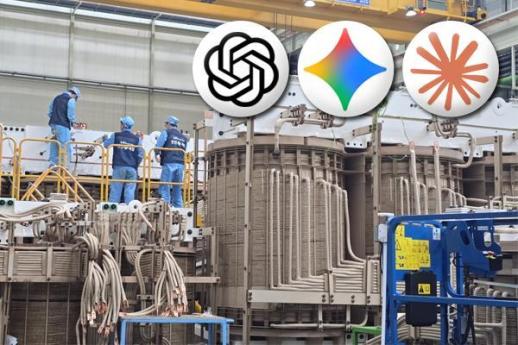 Korean transformer exports, stocks hit record highs on global AI power demand SEOUL, January 21 (AJP) - South Korea's gains from the accelerating global shift toward artificial intelligence are extending beyond semiconductors. Exports of ultra-high-voltage transformers surged to a record high last year, driven by aggressive investment in power infrastructure for data center expansion worldwide. Exports of transformers rated at 10,000 kilovolt-ampere (kVA) or higher reached $1.3 billion last year, according to the Korea International Trade Association. It marked the first time shipments topped the $1 billion mark since 2010 and the highest level since records began in 1977. The United States accounted for the largest share, importing about $738 million worth of Korean transformers. Shipments to the U.S. jumped nearly sevenfold over the past three years, fueled by the dual need to replace aging grid infrastructure and connect newly built AI data centers to power networks. "Large-scale AI data centers have extremely high GPU server density, which causes electricity demand to surge," said Lee Sang-heon, an analyst at iM Securities. "High-capacity, high-efficiency transformers are essential, and switchboards that distribute, disconnect and protect the power flowing from these transformers are also key equipment." According to the International Energy Agency, global electricity demand from data centers is projected to more than double to about 945 terawatt-hours by 2030, roughly equivalent to Japan's current total power consumption. AI-optimized data centers are expected to be the main driver, with their electricity demand forecast to quadruple by the end of the decade. In the United States, data centers are on track to account for nearly half of total electricity demand growth through 2030. By then, the country is expected to consume more power processing data than manufacturing aluminum, steel, cement and chemicals combined. This surge in power demand has triggered a global scramble for transformers. Lead times for large power transformers have stretched beyond 200 weeks, and equipment shortages are increasingly cited as a major bottleneck for data center development. Companies such as Amazon have reported project delays due to limited transformer availability. South Korea's major power-equipment makers — HD Hyundai Electric, Hyosung Heavy Industries and LS Electric — have secured order backlogs stretching five to six years ahead, with some contracts already booked through 2031. To meet demand, the firms are ramping up production. HD Hyundai Electric is expanding its transformer plant in Alabama, aiming to boost capacity by 30 percent by early 2026. Hyosung Heavy Industries plans to nearly double annual output at its Memphis facility to more than 250 units by 2027 and recently announced a $225 million investment in a new high-voltage direct current (HVDC) transformer plant in Changwon. LS Electric said in its third-quarter report that it plans to invest in facilities in Texas and Utah to expand production. Korean manufacturers currently hold about 25 percent of the U.S. transformer market, benefiting from differentiated technology, competitive pricing and the ability to deliver customized products faster than many rivals. Exports are also diversifying beyond the U.S. Shipments to the United Kingdom rose to 126 billion won through November last year, up from 50 billion won in 2023, as Britain accelerates grid modernization. HD Hyundai Electric secured a 220 billion won contract from UK National Grid, while Hyosung Heavy Industries signed a 120 billion won deal with Scottish Power Energy Networks. Korean power-equipment firms are also developing next-generation grid-stabilization technologies. Hyosung Heavy Industries said Tuesday it partnered with Germany's Skeleton Technologies and Japan's Marubeni to develop e-STATCOM, a power compensation system designed to maintain grid stability amid fluctuating demand from AI-driven industries and renewable energy sources. Industry analysts expect the boom to continue. The North American transformer market is projected to grow to $41.62 billion by 2030, up from $30.28 billion last year, according to Markets and Markets, driven by infrastructure replacement and AI-related power demand. "The North American market is maintaining solid demand, centered on 765-kV ultra-high-voltage transformers," said Lee Han-gyeol, an analyst at Kiwoom Securities. "As data centers expand, on-site power generation is increasing because grid connections take time. However, grid connections are essential in the long term for system stability, so demand for ultra-high-voltage transformers should remain strong." The surge in demand has been mirrored in the stock market. HD Hyundai Electric traded at 897,000 won on Wednesday, up 132.99 percent from a year earlier, while LS Electric rose 144.44 percent to 504,000 won. Hyosung Heavy Industries posted the biggest gain among the three, soaring 398.5 percent to 2,324,000 won. 2026-01-21 15:29:53
 -
 Hyundai Mobis to develop 5G telematics system for autonomous, software-defined vehicles SEOUL, January 21 (AJP) - Hyundai Mobis said Wednesday it is developing an integrated 5G wireless telematics system aimed at next-generation connected vehicles, as automakers worldwide race to upgrade in-car communication technologies. The South Korean auto parts supplier plans to complete development of its multi-function telematics control unit by the first half of this year. The technology enables high-definition map services, remote autonomous driving control and ultra-HD streaming — capabilities that current 4G-based systems cannot support. "We will complete product development by the first half of this year to ensure a swift market entry in the next-generation connected car service sector and secure market leadership globally," said Jeong Su-kyung, executive vice president of Hyundai Mobis' electrification business unit. The new system features an antenna integrated directly into the control unit, eliminating the need for externally protruding antennas and allowing for sleeker vehicle designs. Hyundai Mobis is collaborating with domestic communication modem specialists including AM Telecom to accelerate development. The global telematics control unit market is projected to grow from about 64 million units this year to 77 million units by 2030, driven by rising consumer demand for smartphone-like vehicle connectivity and differentiated mobility experiences. While 5G telematics technology is considered essential for software-defined vehicles, a company spokesperson told AJP that its application to robotics — such as parent group Hyundai Motor Group's Atlas humanoid — remains a future possibility rather than an immediate priority. Hyundai Mobis currently supplies 4G-based telematics products and aims to leverage its existing mass production capabilities and system development expertise to strengthen its competitive position in global markets. 2026-01-21 11:03:29
 -
 LG CNS expands AI transformation into pharma, bio sectors with government and private contracts SEOUL, January 21 (AJP) - South Korean IT services firm LG CNS is accelerating its push into the pharmaceutical and biotechnology sectors, securing a major government contract and completing an AI-powered automation system for drugmaker Chong Kun Dang Pharmaceutical. The company will participate in the Ministry of Health and Welfare's R&D project for clinical and preclinical drug development, a four-year, three-month initiative backed by about 37.1 billion won ($25 million) in government funding. LG CNS will lead the development of an AI-based clinical trial design and support platform, integrating various drug development AI models through agentic AI technology. The platform will employ federated learning, allowing hospitals and research institutes to jointly train AI models without sharing sensitive medical data externally. Industry sources note that drug development typically takes 10 to 15 years and carries a 90 percent failure rate at the clinical trial stage, with fragmented trial structures and limited data access long cited as structural barriers. In the private sector, LG CNS has completed an agentic AI-powered system for Chong Kun Dang that automates the creation of Annual Product Quality Review reports. The solution deploys about 30 AI agents that autonomously collect, analyze and verify data from quality management and laboratory information systems, slashing document generation time by more than 90 percent. "We are delivering tangible results after gaining recognition for our pharma and bio AI transformation capabilities from both the government and pharmaceutical companies," said Kim Tae-hoon, senior vice president of LG CNS' AI & Cloud Business Division. 2026-01-21 10:07:55
 -
 The birth of humanoid robots (1) Robo Sapiens: EVs with brains Editor's Note: This is the first installment in AJP's series on humanoid robotics, examining the anatomy, technologies and economic logic behind one of the most hyped industries of the decade. SEOUL, January 20 (AJP) - Humanoid robots have become a buzzword at CES and beyond, captivating both technology and stock markets as artificial intelligence converges with China's formidable manufacturing power. This emerging breed of "robo sapiens" joining humanity — at least in its first generation — is, in essence, a two-legged electric vehicle with a brain. That reframing is not rhetorical. As humanoids move from laboratories toward commercialization, engineers, investors and policymakers are increasingly abandoning the idea of robots as walking computers and instead treating them as mechanical systems: complex assemblies of motors, joints and power units governed by AI. This shift helps explain why automakers have emerged as the industry's most promising producers — and why Hyundai Motor Group's humanoid robot Atlas captured the Best Robot title at CES 2026. "When you break down a humanoid by hardware, you have the head and neck, the torso, the upper body including the arm system, and then the hands at the end," said Park Dong-il, director of the Advanced Robotics Research Center at the Korea Institute of Machinery and Materials. "It's essentially the same anatomy as a human, and each part requires its own actuators, sensors and control mechanisms." The EV connection The overlap between humanoid robots and electric vehicles is not merely conceptual. It is physical, financial and increasingly strategic. Both industries depend on high-density lithium-ion batteries, precision actuators and advanced motor technology. Both face supply-chain constraints around rare-earth elements required for permanent magnets. And both are racing to reduce costs through economies of scale. Hyundai Motor Group, which acquired Boston Dynamics for $880 million in 2021, plans to have affiliate Hyundai Mobis supply actuators for the Atlas humanoid robot. The group aims to produce 30,000 robots annually by 2028, leveraging the same manufacturing infrastructure and supplier networks that underpin its vehicle business. Tesla, meanwhile, has promised to unveil the third generation of its Optimus humanoid robot early this year. Elon Musk has suggested the bipedal robot could even become "an incredible surgeon." "Imagine if everyone had access to an incredible surgeon," Musk said. "Of course, we need to make sure Optimus is safe and everything. But I do think we're headed for a world of sustainable abundance." Industry experts identify Hyundai, Tesla and China's XPeng Motors as the current frontrunners among automakers entering robotics. While Xiaomi, BYD and Li Auto have also announced humanoid ambitions — often using autonomous driving data to train AI models — the top three are seen as the only players capable of near-complete in-house robot production. "Google and Nvidia chose Boston Dynamics as a partner for a reason," said Yim Eun-young, an analyst at Samsung Securities. "Hyundai's factories generate real-world behavioral data, continuous datasets that adapt to changing environments, and actual production and logistics sites where robots can be deployed and validated." "Most other robotics firms are startups," she added, "and they lack the infrastructure to accumulate large-scale behavioral data or test machines in real-world conditions." A definition still in flux Despite more than half a century of development, no international standard defines what constitutes a humanoid robot. Nvidia, whose processors power the vast majority of humanoids currently under development, offers a working definition: "Humanoids are general-purpose, bipedal robots modeled after the human form factor and designed to work alongside humans to augment productivity." Yet in practice, the term encompasses machines with widely divergent designs — from full bipedal bodies to human-like torsos mounted on wheeled bases — many of which do not neatly fit Nvidia's description. "The definition of 'humanoid' itself is still unclear," Park said. "There's no ISO standard. We call robots with only an upper body humanoids, and we also call robots with both upper and lower bodies humanoids." The ambiguity extends further. Must a humanoid have five-fingered hands? Boston Dynamics' production Atlas uses a three-fingered gripper. Must it walk on two legs? Several robots showcased at CES 2026, including LG Electronics' CLOiD, used wheeled bases. And what about the face? From Unitree's G1 to UnixAI's Wanda series, most humanoids opt to remain faceless. Yet companies such as Realbotix and Engineered Arts argue that facial expressions are essential for natural human-robot interaction. According to discussions at the 2025 Humanoids Summit in London, industry groups are now debating whether the term "humanoid" should be replaced altogether with classifications based on capability rather than appearance. Two ways to map the machine Korean engineers and social scientists have proposed different frameworks for understanding humanoid technology. The mechanical approach breaks humanoids into physical subsystems — head and neck, torso, arms, hands, waist, legs and feet — each requiring dedicated actuators, sensors and control systems. The logic mirrors how an EV is analyzed through its battery pack, motor, inverter and chassis. Lee Jun-yong, a senior researcher at the Korea Planning & Evaluation Institute of Industrial Technology (KEIT), adopted a different perspective when authoring a government report on humanoid R&D in February 2025. His team consulted futurists, economists and social scientists to envision how humanoids might integrate into society by 2040, then worked backward to identify the technologies required to make those scenarios viable. The framework identified 10 core technologies across four domains: motion control, sensing, human-robot interaction and drive/control systems. "We started by envisioning future society and then identified the technologies needed to reach it," Lee said. "Deciding whether the government should directly lead humanoid development or support private-sector R&D is complicated, because robotics spans so many industries. Household robots that truly help people are still far off, which is why we felt a top-down approach was essential." The market acceleration Goldman Sachs Research projected in 2024 that the global humanoid robot market could reach $38 billion by 2035 — more than six times its previous estimate of $6 billion. Manufacturing costs have already fallen by about 40 percent in a single year. Elon Musk offered a far bolder forecast at the Future Investment Initiative conference in Saudi Arabia in October 2024, predicting 10 billion humanoid robots by 2040 at prices between $20,000 and $25,000 each. Many robotics researchers remain skeptical, noting that a single universally capable robot is unlikely within that time frame. Cost remains a major constraint. Investment banks including J.P. Morgan estimate that Boston Dynamics' Atlas will cost at least $130,000 per unit when mass production begins around 2030. The prototype currently costs about $300,000 to build, with the commercial target set at less than half that figure. That remains five to six times higher than Tesla's stated goal of producing Optimus robots at $20,000 to $30,000 each. Still, the industrial logic is taking hold. If humanoid robots are indeed EVs with brains, then the automotive playbook — mass production, supply-chain integration and incremental cost reduction — applies directly. Park cautioned that the field is evolving too rapidly for fixed definitions or confident forecasts. "Research produced a year ago may already be outdated," he said. "The technology changes almost daily. What counts as state-of-the-art depends entirely on who you ask." For now, the working definition remains broad: machines with human-like form designed to operate in environments built for people. Whether that form requires legs, fingers or a recognizable face may ultimately be decided not by standards committees, but by the factories — automotive and otherwise — that build them. Lee's KEIT report ends with a provocative question: will humanoids one day demand labor rights as they replace human workers with tireless, uninterrupted productivity? "Our futurists raised the possibility that robots could eventually replace low-cost labor entirely," Lee said. "If overworked, they might malfunction — or even terminate their own digital existence. Who knows what the future holds?" 2026-01-20 15:48:01
 -
 Celltrion's Zymfentra gains preferred drug status on major U.S. healthcare formulary SEOUL, January 19 (AJP) - Celltrion's Zymfentra, the world's only subcutaneous infliximab treatment, has secured preferred drug status on the formulary of Evernorth Health Services, a subsidiary of U.S. healthcare giant Cigna Group. The listing marks a significant milestone for the South Korean biopharmaceutical company as it seeks to accelerate sales of the autoimmune disease treatment in the world's largest pharmaceutical market. Cigna operates Express Scripts, one of the three largest pharmacy benefit managers in the United States, and Cigna Healthcare, a top-10 U.S. insurer. Celltrion's U.S. unit had previously secured a contract with Express Scripts to list Zymfentra as a preferred medication. The Evernorth listing builds on that foundation, allowing Cigna-affiliated insurance subscribers to access Zymfentra without the complex administrative procedures typically required for prescription medications. Since its U.S. launch in 2024, Zymfentra has recorded an average monthly prescription growth rate of 31 percent. Institutional prescriptions, including those from hospitals, surged nearly fivefold in December compared with the same month a year earlier. "With both Zymfentra and Inflectra now listed on major U.S. insurer formularies, we expect sales growth to accelerate sharply based on our product competitiveness and prescriber preference," a Celltrion official said. Celltrion plans to leverage its expanding autoimmune disease portfolio, including recently launched biosimilars Steqeyma and Avtozma, to capture greater market share in the United States through intensified marketing efforts. 2026-01-19 10:29:36
 -
 LG, SK, Upstage shortlisted for Korea's sovereign AI model SEOUL, January 15 (AJP) - LG AI Research, SK Telecom and Upstage have passed the first evaluation round of South Korea’s competition-style national project to select two homogeneous artificial intelligence foundation models by the end of the year. According to results announced Thursday by the Ministry of Science and ICT, three of the five contenders — Naver Cloud, NC AI, Upstage, SK Telecom and LG AI Research — advanced directly based on aggregate scores, while one additional bidder will be reinstated through a secondary evaluation. The rematch will be held between Naver Cloud and NC AI. The ministry disclosed the results at a briefing at the Government Complex Seoul, chaired by Second Vice Minister Ryu Je-myung. The government-led project was launched under the banner of “leaping into the world’s top three AI powers,” positioning it as a flagship pillar of South Korea’s sovereign AI strategy. The program provides state support for GPU resources, data access and engineering costs, with the goal of developing domestically controlled foundation models capable of achieving at least 95 percent of leading global AI benchmark performance. Under the project guidelines, eligible models are defined as those designed and pre-trained domestically, excluding derivative systems fine-tuned from foreign base models. The ministry explained that the first-round evaluation combined AI benchmark tests — quantitative measures of technical performance — with expert and user assessments to comprehensively evaluate model performance, real-world applicability, cost efficiency relative to model size, and potential spillover effects on the domestic and global AI ecosystem. In the benchmark evaluation, LG AI Research recorded the highest score with 33.6 out of 40 points. The company also topped the expert review with 31.6 out of 35 points and achieved a perfect score of 25 out of 25 in the user evaluation. Based on the combined results, LG AI Research, Naver Cloud, SK Telecom and Upstage initially ranked within the top four teams. Naver Cloud ranked within the top four in combined scoring, it was judged not to meet the requirements for designation as an independent AI foundation model. The ministry said the first-round evaluation combined AI benchmark testing, expert assessment and user evaluation, examining model performance, real-world applicability, cost efficiency relative to model size, and spillover effects on the domestic and global AI ecosystem. 2026-01-15 15:25:54