
Journalist

Arthur I. Cyr
davekim0807@ajupress.com
-
 UPDATE: U.S.-Iran talks collapse in Islamabad over nuclear, Hormuz disputes SEOUL, April 12 (AJP) - The United States and Iran failed to reach an agreement after 21 hours of grueling negotiations in the Pakistani capital, plunging the fragile two-week ceasefire into uncertainty with its April 21 expiration now looming. The marathon session, mediated by Pakistan, stretched across multiple rounds from Saturday evening through Sunday morning but ultimately foundered over deep divisions on Iran's nuclear program and the reopening of the Strait of Hormuz. U.S. Vice President JD Vance, who led the American delegation, told reporters after the talks that Washington had yet to see a fundamental commitment from Tehran. "We leave here with a very simple proposal: a method of understanding that is our final and best offer," Vance said. "We'll see if the Iranians accept it." Iran's semi-official Tasnim news agency struck a defiant tone, reporting that the Iranian delegation had rebuffed what it characterized as Washington's attempt to extract through negotiation concessions it could not win on the battlefield, including the dismantling of Iran's uranium enrichment program and the immediate opening of the strait. The United States sought not only the surrender of Iran's existing stockpile of highly enriched uranium but also curbs on its enrichment capabilities — an effort to eliminate both Tehran's present nuclear capacity and its future weapons potential. Iran, for its part, refused to relinquish what it called its right to peaceful nuclear energy. The Strait of Hormuz emerged as an equally intractable flashpoint. Washington demanded the immediate reopening of the vital waterway, whose blockade has driven up global oil prices and rattled international markets. Tehran, however, views the strait as its most powerful bargaining chip and insisted it would lift the blockade only after a comprehensive deal is sealed, senior Iranian officials cited. Tensions along the waterway underscored the stakes. U.S. Central Command said it had begun preparations for mine clearance in the strait, with two Navy guided-missile destroyers transiting the passage. Iran's Islamic Revolutionary Guard Corps warned that any warships attempting to pass would face a forceful response. The breakdown of the first face-to-face encounter between the two adversaries casts a shadow over the ceasefire brokered on April 8. With the truce set to expire in nine days, concerns are mounting that Israel could intensify its military operations against Hezbollah in Lebanon, further complicating any return to the negotiating table. Experts note that Iran appears to believe time is on its side, calculating that the economic pain inflicted by the Hormuz blockade gives Washington greater incentive to make concessions. The United States and Israel, meanwhile, have signaled they reserve the right to strike Iran's nuclear facilities at any time. 2026-04-12 09:33:28
 -
 PlayStation's March pick Crimson Desert storms past 4 million sales SEOUL, April 10 (AJP) - Action-adventure game Crimson Desert has surpassed 4 million copies sold in just 12 days, turning its turbulent launch by Pearl Abyss into one of the most dramatic comeback stories in recent gaming history and cementing the South Korean studio's first single-player title as a global commercial juggernaut. The open-world game, built on Pearl Abyss' proprietary BlackSpace Engine, logged 2 million sales on its first day on March 20 across PlayStation 5, Xbox Series X,S and PC. It crossed 3 million within four days and breached the 4-million mark by March 31, generating an estimated $200 million in revenue, according to Alinea Analytics. PlayStation Blog on April 1 named the new game the "Players' Choice Winner" for March 2026, with the title outpolling major releases including Marathon, MLB The Show 26 and Scott Pilgrim EX in a monthly user vote. From 'mixed' to 'very positive' The recognition adds to a growing list of accolades for a game that initially stumbled out of the gate. Crimson Desert's launch was anything but smooth. Critics flagged clunky controls and a convoluted narrative, dragging the game's Steam rating down to "mixed" within hours of release. But the studio moved fast. Pearl Abyss rolled out a series of rapid patches, overhauling the control scheme, expanding storage systems, adding fast travel points, and tuning boss difficulty, all of which steadily reversed the tide. The Steam rating climbed to "very positive," with about 82 percent of more than 121,000 user reviews now positive. Industry watchers estimate the game's break-even point at about 2.5 million copies. With sales already well past that threshold, the revenue flowing in from here feeds directly into Pearl Abyss' bottom line. When Pearl Abyss disclosed that Crimson Desert had crossed 3 million copies sold in just four days, the stock surged 23.34 percent on March 25 and extended its rally over three consecutive trading sessions, closing at 58,800 won on March 27. Shares later touched 72,000 won, their highest level since April 2022, before settling at 55,600 won as of Friday. Seven years and $133 million in the making Crimson Desert's journey to release was as sprawling as its open world. First announced in November 2019 as a prequel to the studio's flagship MMORPG Black Desert Online, the project underwent a fundamental identity shift during development as Pearl Abyss pivoted from an MMO format to a standalone single-player action-adventure — a bold gamble for a studio that had built its reputation on persistent online worlds. The seven-year development cycle, carried out by a team of fewer than 200 developers, carried an estimated price tag of about 200 billion won ($135 million). The result is a sprawling fantasy continent called Pywel, rendered seamlessly with no loading screens, where players control three characters through faction warfare, dragon riding, mech combat and an ecosystem of side activities that have kept players exploring well past the main storyline. Players find their own fun The game's community has wasted no time making Crimson Desert their own playground. One popular meme on Reddit's r/CrimsonDesert forum captures the prevailing mood: a "distracted boyfriend" template showing a helmeted Kliff turning away from the main story to ogle side activities — tackling goats, assembling a cat army, dyeing clothes, fighting stone worms, and chasing waterfalls. Others have shared clips of players accidentally blowing themselves up with their own explosive arrows or ragdolling the first boss off a cliff. Kwon Min-gu, a 28-year-old AI instructor who has logged more than 50 hours in the game, said Crimson Desert was his first experience with a single-player open-world RPG. While the early story left him reaching for explanations — "the protagonist's resurrection goes completely unexplained," he noted — the combat system won him over once he began experimenting with the skill tree. "Every time you unlock a new branch, the combat style changes completely," Kwon said. "I ditched the shield for dual blades, slotted in an attack-speed rune, and started clearing camps like a blender. But you have to be careful. If you accidentally slash an explosive barrel, it kills you too." Kwon said he learned to shoot explosive barrels with arrows from a distance before engaging enemies, and later picked up an electric element ability to fill out his area-of-effect toolkit. "You go from fist fighting to fanning out electric arcs with a combat fan," he said. "The variety is real." He added that he has largely ignored the main storyline in favor of challenge objectives and side quests, a playstyle that appears increasingly common among the game's most devoted users. DLC, co-op and the road ahead Pearl Abyss has signaled that Crimson Desert's story is far from over. "We will upgrade the game based on user feedback and strive to make Crimson Desert a title that is loved for a long time," Pearl Abyss CEO Heo Jin-young said at a shareholders meeting. On the question of future downloadable content, Heo struck a strategic tone. "We believe we should focus DLC on the areas where we excel most," Heo said. "Our priority is to continuously provide satisfaction to users. While an expansion pack sales model is also a good approach, we intend to make the strategic choice that drives more sales of the original Crimson Desert." Speculation about cooperative multiplayer content has swirled since before launch, fueled by early-stage development materials that once referenced large-scale battles and co-op mechanics. Pearl Abyss has not confirmed a multiplayer expansion but has not ruled one out either, with Heo's emphasis on "user feedback" leaving the door open. A roller coaster on the KOSDAQ Pearl Abyss shares have traced a trajectory almost as dramatic as Crimson Desert's storyline. The stock rallied from about 49,450 won in late February to an intraday high of 71,500 won on March 16 as pre-launch hype peaked, only to crater 29.88 percent in a single session on March 19 — the day review embargoes lifted and Metacritic scores landed below investor expectations — hitting the daily limit down at 46,000 won. The freefall proved short-lived. When Pearl Abyss disclosed that Crimson Desert had crossed 3 million copies sold in just four days, the stock surged 23.34 percent on March 25 and extended its rally over three consecutive trading sessions, closing at 58,800 won on March 27. Shares later touched 72,000 won, their highest level since April 2022, before settling at 55,600 won as of Friday. A record year within reach Pearl Abyss, founded in 2010 by Kim Dae-il and Youn Jae-min, has long been synonymous with Black Desert Online, the technically ambitious MMORPG that put the studio on the global map. Crimson Desert now represents a second pillar, and analysts say the title could propel the company to record revenues this year. With a Nintendo Switch 2 port reportedly in the research-and-development phase and the potential for DLC and cooperative content on the horizon, the story of Crimson Desert, much like its open world, appears to have plenty of territory left to explore. 2026-04-10 16:33:59
 -
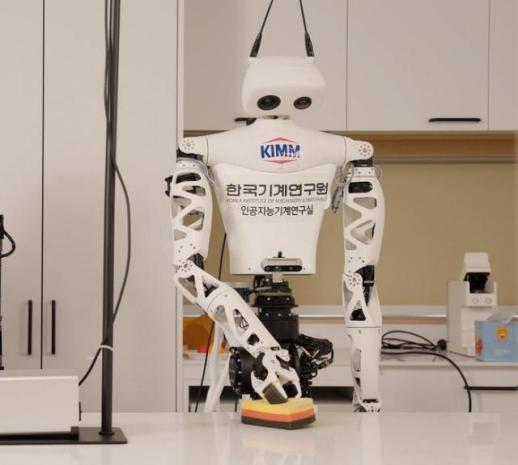 S. Korea's KIMM urges rapid pivot as humanoid era dawns SEOUL, April 08 (AJP) - South Korea's Korea Institute of Machinery & Materials (KIMM) said that 2026 marks the year humanoid robots cross into commercial viability, urging the nation to exploit its manufacturing prowess within a five-year window before the global pecking order hardens. In its 122nd policy report uploaded Wednesday, KIMM said the industry has entered a "commercial tipping point" — the moment where humanoids shed their laboratory origins and begin generating revenue on factory floors and in service settings. The pivot is underpinned by a sharp decline in manufacturing costs. Per-unit expenses currently hover at about $35,000 but are expected to fall to between $13,000 and $17,000 within five years as mass production scales up and component designs mature. China's Unitree Robotics has led the price collapse, driving its flagship model from $90,000 for the H1 in 2024 down to $5,900 for the R1 in 2025 — a trajectory KIMM attributes to Wright's Law, under which unit costs drop 15 to 20 percent each time cumulative output doubles. Shipment volumes are poised to follow a similar exponential curve. Bank of America projects global humanoid deliveries will surge from a cumulative 18,000 units in 2025 to about one million annually by 2030 to 2035. Goldman Sachs forecasts sales climbing from roughly 8,000 units in 2025 to 136,000 in 2030 and 2.1 million in 2035, entering what the bank calls a J-shaped acceleration phase. The United States leads the race with big-tech-driven AI foundation models and semiconductor design advantages spearheaded by Tesla, Nvidia and Figure AI. China, meanwhile, has mobilized more than 140 companies into mass-production competition, with Chinese firms accounting for about 70 percent of newly unveiled humanoid models in 2025 and rapidly consolidating market share through vertically integrated supply chains and state subsidies. South Korea possesses world-class semiconductor, battery and telecommunications infrastructure but remains hobbled by a shortage of indigenous AI foundation models and a fragile supply chain for humanoid-specific components such as actuators and reducers, the report said. To close the gap, KIMM prescribed a "two-track" strategy: the first track calls for localizing core hardware — precision actuators, control systems and dedicated batteries — by leveraging the country's existing manufacturing base. The second track urges swift partnerships with global AI leaders such as OpenAI and Google to bridge the foundation-model deficit rather than attempting to build one from scratch. KIMM itself is spearheading a 220.8 billion won ($149.8 million) national project to develop a mass-production-ready humanoid platform, a self-learning AI brain and an open data factory where industry and academia can jointly train robot models. The institute plans to unveil the first version of its own humanoid, KAIROS, by April 2027. "The era of flashy tech demos is over — what matters now is how quickly a robot can earn its keep on a real factory floor," said Kim Hee-tae, a senior researcher at KIMM's center of R&D policy. "The window through 2030 is the golden time that will determine who commands this market, and Korea must convert its manufacturing edge into robotics leadership before that door closes." 2026-04-08 15:02:09
 -
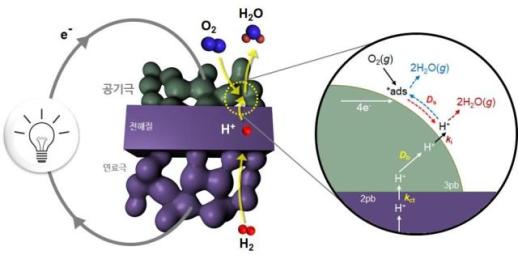 KIST cracks long-elusive reaction mechanism in next-gen hydrogen fuel cells SEOUL, April 08 (AJP) - South Korean researchers have unraveled a reaction mechanism at the heart of next-generation hydrogen fuel cells that had eluded scientists for years, a breakthrough that could accelerate the development of cleaner and cheaper energy systems. A team led by Ji Ho-il at the Korea Institute of Science and Technology (KIST) devised a new analytical protocol that pinpointed for the first time how oxygen reduction reactions unfold inside the cathodes of protonic ceramic fuel cells (PCFCs), the institute said on Wednesday. PCFCs operate at temperatures below 500 degrees Celsius, well under the threshold required by conventional solid oxide fuel cells, which translates into lower manufacturing costs and significantly longer lifespans. The technology has drawn growing attention as a pillar of the global shift toward hydrogen-based energy, yet progress has been hampered by the sheer complexity of the electrochemical reactions occurring at the cathode, where oxygen, electrons and protons collide simultaneously. Previous studies relied on researchers selecting one assumed reaction pathway from hundreds of possibilities — a method prone to decisive bias. Ji's team upended that convention by developing a protocol that identifies the rate-determining step through precision experiments first, then traces the reaction pathway backward without any prior assumptions. When the protocol was applied to two widely studied cathode materials — PBSCF and BCFZY — the team confirmed for the first time that the two materials follow entirely distinct reaction pathways. One material showed a sharp drop in resistance as water vapor increased, while the other remained virtually unchanged, offering direct experimental proof of the divergence. "This study fundamentally reveals why hydrogen fuel cells suffer from low efficiency," Ji said. "We expect it to serve as an important foundation for developing the high-performance fuel cells essential to realizing a clean hydrogen economy." Beyond fuel cells, the researchers said the analytical framework could be applied broadly to other electrochemical devices, including systems that produce green hydrogen by running the cells in reverse to harness solar, wind and nuclear energy. 2026-04-08 14:05:53
 -
 LG Energy Solution sinks deeper into red with second straight quarterly loss SEOUL, April 07 (AJP) - LG Energy Solution posted a widening operating loss for the first quarter of 2026, marking its second consecutive quarterly deficit as a prolonged slump in global electric vehicle demand and a sharp drop in U.S. tax credits eroded profitability at the world's No. 2 battery maker. The company said in a preliminary regulatory filing on Tuesday that it logged a consolidated operating loss of 207.8 billion won ($138.7 million) for the January to March period, swinging from a 374.7 billion won profit a year earlier and deepening from a 122 billion won loss in the preceding quarter. Revenue slipped 2.5 percent on-year to 6.555 trillion won, dragged down by sluggish North American EV sales and production halts at Ultium Cells, the company's joint-venture plants with General Motors, whose first two facilities suspended operations in early January. ‘ A shift in accounting treatment compounded the decline. LG Energy Solution said it began sharing a portion of the Advanced Manufacturing Production Credit proceeds with customers at standalone and formerly joint-venture plants this year, booking only the net figure as other revenue — a change that effectively reduced the recognized subsidy relative to actual production volumes. Rising costs tied to the ramp-up of five North American energy storage system production sites and elevated expenses stemming from the U.S.-Iran conflict also weighed on results. Industry analysts nonetheless expect the first half to mark the trough. Surging demand for grid-scale and data center-linked ESS batteries, fueled by the global build-out of artificial intelligence infrastructure and power grids, is widely seen as the catalyst for a second-half turnaround. LG Energy Solution has been channeling resources toward the segment, aiming to more than triple ESS-related revenue and to expand global ESS battery production capacity to over 60 gigawatt-hours by the end of 2026. "We plan to raise the combined share of ESS and new businesses from about 20 percent today to the mid-40 percent range, building a more stable and balanced portfolio," CEO Kim Dong-myung said at the company's annual shareholders' meeting in late March. Shares of LG Energy Solution closed at 408,500 won, 0.97 percent lower than the day before. 2026-04-07 17:54:06
 -
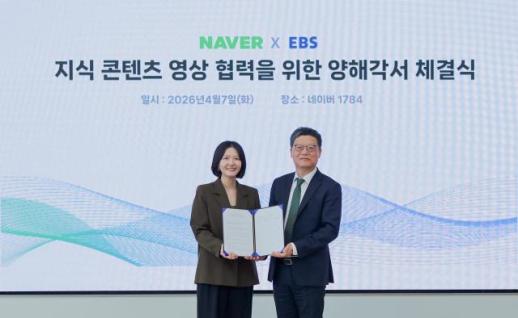 Naver partners with EBS to build trusted knowledge video content SEOUL, April 07 (AJP) - Naver and the Korea Educational Broadcasting System (EBS) signed a memorandum of understanding to jointly produce large-scale knowledge and educational video content, the companies said. Under the agreement, inked at Naver's headquarters on Tuesday in Seongnam, Gyeonggi Province, the two sides will co-produce content spanning health, finance and economics as well as material aligned with South Korea's elementary, middle and high school curricula. The partners plan to steadily expand a knowledge video archive by tapping into a broader range of topics. EBS is South Korea's public educational broadcaster, operating under guidance of the Ministry of Education with a mandate to provide nationwide learning resources across television, radio and digital platforms. The content will be distributed across Naver's search engine, home feed and online encyclopedia services, aiming to help users access more accurate and in-depth information throughout the portal's ecosystem. "High-quality data has emerged as a core competitive edge in the AI era, and the combination of Naver's AI technology and platform capabilities with EBS's proven content production expertise will drive the expansion of a trustworthy knowledge content ecosystem," Naver CEO Choi Soo-yeon said. EBS President Kim Yu-yeol called the agreement "a starting point for innovation that merges EBS's production know-how with Naver's AI technology." He added that, at a time of growing vigilance over AI hallucinations, the broadcaster would work to ensure its credible video content is properly utilized through Naver's AI services, contributing to a more reliable digital environment. 2026-04-07 16:09:54
 -
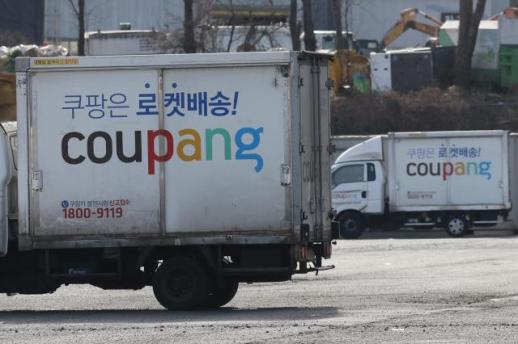 Coupang reclaims e-commerce dominance in South Korea as Chinese rivals gain ground SEOUL, April 07 (AJP) - Coupang, South Korea's largest online retailer, has effectively shaken off the fallout from a massive data breach that exposed the personal information of about 33.7 million users late last year, with its monthly active user base and estimated transaction volume rebounding to pre-crisis levels in March. Data from IGAWorks MobileIndex on Monday showed Coupang's monthly active users (MAU) reaching 35.03 million in March, up from 33.64 million in February and 34.01 million in January. The figure marks a decisive rebound from a three-month slide that began after the New York-listed company disclosed the breach in late November 2025. Coupang's estimated monthly payment volume also recovered. The platform's transaction value climbed to about 4.62 trillion won ($3.06 billion) in March, a 12.22 percent increase year-on-year, accumulative transaction value for the whole of the first quarter also rising 11.26 percent to 13 trillion won. Even with the info leak crisis, the gap between Coupang and its domestic competitors still remained vast. The nearest Korean rivals in March were 11st with 8.15 million monthly users, Naver Plus Store with 7.77 million and Gmarket with 6.81 million, according to MobileIndex. Among domestic platforms, Naver Plus Store posted the sharpest gains behind Coupang, with its March MAU hitting a record 7.77 million — a 9 percent jump from 7.1 million the previous month, the shopping app's momentum reported to be bolstered by an AI-powered counterfeit monitoring system and a one-strike seller removal policy. "This is a leading case in which platform self-regulation has simultaneously achieved consumer protection and merchant growth," Naver's user protection committee chairman Kwon Hun-yeong said. Chinese-backed platforms continued to tighten their grip on the market. Temu, operated by PDD Holdings, drew 7.42 million monthly users in March, while Alibaba Group's AliExpress recorded 7.12 million. Their combined user base of about 14.54 million outstripped every individual domestic rival except Coupang. Temu also topped all shopping apps in new installations for a second consecutive month, logging about 749,000 fresh downloads in March, followed by Naver Plus Store at about 674,000. Coupang trailed with 461,000 new installations, a sign that its commanding market share rests more on the loyalty of its existing user base than on fresh customer acquisition. Industry observers said the data underscored an increasingly bifurcated market: Coupang's entrenched logistics network and same-day delivery infrastructure continue to lock in existing users, while Chinese platforms are leveraging ultra-low prices and aggressive marketing to capture price-sensitive newcomers at a pace domestic rivals have struggled to match. 2026-04-07 15:17:01
 -
 Seoul sends envoy to Kazakhstan, Oman, and Saudi on energy mission SEOUL, April 07 (AJP) - South Korea is dispatching a government delegation led by a senior presidential envoy to key energy partners in Central Asia and the Middle East to secure crude oil and naphtha supplies as the country braces for fallout from prolonged disruptions of the Strait of Hormuz. Kang Hoon-sik, chief of staff to President Lee Jae Myung, will depart Tuesday for Kazakhstan, Oman and Saudi Arabia in his capacity as special envoy for strategic economic cooperation, the presidential office said. Speaking at a briefing, Kang said the delegation — which includes officials from the Ministry of Trade, Industry and Energy and representatives from domestic energy firms — will focus on securing additional supplies of crude and feedstock. “The most urgent priority at this point is to ensure stable supply of essential goods for daily life,” Kang said, noting Korea’s heavy reliance on Middle Eastern energy imports. The trip follows a recent agreement with the United Arab Emirates to prioritize shipments of 24 million barrels of crude, with cargoes already arriving at Korean ports. However, Kang stressed that further diversification is needed until the regional conflict stabilizes. “To ensure that high-level talks do not end as empty words, we will work closely with companies and provide all necessary support until shipments safely reach Korean ports,” he said. Seoul is also working to secure safe passage for 26 Korean-flagged vessels currently in or near the Strait of Hormuz, prioritizing crew safety while coordinating with shipping firms and international partners. 2026-04-07 11:58:02
 -
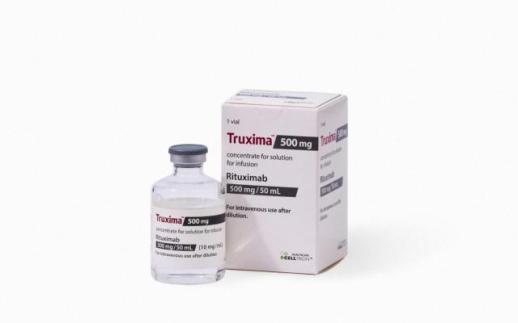 Celltrion's Truxima becomes first South Korean biosimilar to claim top U.S. prescription share SEOUL, April 07 (AJP) - Celltrion's blood cancer treatment Truxima has become the first South Korean biosimilar to capture the largest prescription share in the United States, marking a milestone for the country's biopharmaceutical industry at a time when Washington is actively championing lower-cost alternatives to branded drugs. Truxima, a biosimilar of Roche's blockbuster Rituxan, secured a 35.8 percent share of U.S. prescriptions by volume in February, according to data from market research firm IQVIA. The achievement comes about six years and three months after the drug's U.S. launch in November 2019, overtaking both the original medicine and rival products to become the most-prescribed rituximab treatment in the country. The milestone lands in a favorable policy climate. President Donald Trump signed an executive order in April 2025 calling on the FDA to recommend ways to accelerate approval of biosimilars, and his administration's Section 232 pharmaceutical tariffs announced on April 2 this year explicitly exempted biosimilar products and their ingredients, while imposing levies of up to 100 percent on patented drugs. South Korea is among the countries whose patented drug exports face a reduced 15 percent tariff under existing trade deals, but the full exemption for biosimilars gives companies like Celltrion a distinct competitive edge. The prescription gains have translated directly into revenue. Truxima generated more than 300 billion won ($198.8 million) in sales across North America last year, a year-on-year increase exceeding 40 percent. Celltrion's flagship autoimmune treatment Inflectra, the U.S. brand name for infliximab biosimilar Remsima, also held the highest biosimilar prescription share in its category at 30.5 percent, while prescriptions for subcutaneous formulation Zymfentra more than tripled in January from a year earlier. Newer high-margin products are also gaining traction. Steqeyma, a biosimilar of Stelara launched in March last year, has already captured 10.2 percent of prescriptions after securing preferred formulary status with major pharmacy benefit managers. Avtozma (tocilizumab) and Stoboclo-Osenvelt (denosumab), both launched in the second half of last year, are steadily expanding their reimbursement coverage through PBM contracts. "As both our legacy and newly launched products continue to deliver strong results across global markets, including the United States, we are confident of meeting our full-year earnings targets," said a Celltrion spokesperson. 2026-04-07 09:03:49
 -
 GM Korea signals full turnaround as it pays out first regular dividend SEOUL, April 06 (AJP) - General Motors Korea said it will pay its first regular dividend to shareholders, marking the clearest sign yet that the once-ailing Korean unit of the U.S. automaker has completed a turnaround eight years after its Gunsan plant was shuttered and billions of dollars in public and private capital were mobilized to prevent its collapse. The automaker's board approved an interim dividend on April 3, though the company did not disclose the payout's size in its public filing on Sunday. Industry observers estimate the distribution could run into trillions of won, given that GM Korea's unappropriated retained earnings exceeded 4 trillion won ($2.64 billion) after the company converted capital surplus reserves into distributable earnings. The dividend caps a rescue that began in 2018 when General Motors' Korean unit was on the brink of bankruptcy, weighed down by complete capital erosion and mounting losses. The closure of its Gunsan factory in North Jeolla Province sent shockwaves through the domestic auto supply chain and raised fears that the Detroit parent would abandon the Korean market altogether. Under a bailout agreement finalized that year, GM converted about $2.8 billion in loans to equity and committed fresh capital, while the state-run Korea Development Bank injected $750 million in preferred shares. In return, GM pledged to maintain its stake and allocate two new vehicle models to its remaining plants in Bupyeong, west of Seoul, and Changwon in the southeast. Those models — the Trailblazer and the Trax Crossover — proved pivotal. By concentrating production on compact SUVs aimed at North American buyers, GM Korea swung to a profit in 2022 and posted operating income exceeding 1 trillion won in both 2023 and 2024, according to the company's press release. The Korean unit sold about 462,000 finished vehicles last year, with 96.8 percent shipped overseas. Ahead of the dividend, GM moved to preempt any revival of speculation that it might be laying the groundwork for an exit. The company announced in March that it would invest $600 million in its Korean plants to upgrade press machinery and modernize production lines, building on an earlier commitment made in late 2025. GM Korea President and CEO Hector Villarreal said the investment reflects the company's confidence in its local workforce and operations. "We have a strong foundation, and this investment is a sign of confidence in our operations," he said. The capital restructuring that paved the way for the dividend — shifting reserves from a capital surplus account to retained earnings — is a well-established practice under Korea's Commercial Act and has been employed by other major Korean firms to expand shareholder returns. The move is not legally contentious, as the law permits companies to reduce capital reserves through a shareholder resolution and redirect the funds toward dividends. The government and KDB are unlikely to publicly oppose the payout as restricting a foreign-invested company from distributing profits could invite accusations of discriminatory treatment a 2026-04-06 11:02:45