

Journalist

Seo Hye-seung
davekim0807@ajupress.com
-
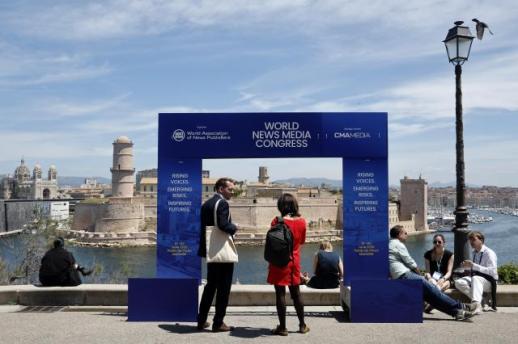 WNMC 26: Publishers bet on loyalty as Google reign fades MARSEILLE, June 02 (AJP) - If there was one subject dominating side-stage conversations at the World News Media Congress, it was the future of discovery. Across sessions on search, advertising, content management and audience development, publishers and technology providers wrestled with the same question: what happens if Google can no longer deliver the traffic publishers have relied on for two decades? The answer, according to many speakers, is not simply to replace SEO with the latest acronym. AEO (Answer Engine Optimization) and GEO (Generative Engine Optimization) are rapidly becoming part of publishers' vocabulary, but industry leaders repeatedly warned that AI-driven discovery remains too small to compensate for declining search traffic. Instead, the industry's most urgent priority may be far simpler: build direct relationships with audiences before platform-driven traffic becomes even less reliable. The Great Search Transition During the session "Discovery: How to Rethink Search in the AI Era," media consultants Clara Soteras, Barry Adams and David Buttle outlined how search is evolving from a link-based ecosystem into an answer-based one. Google's AI Overviews and AI Mode, alongside ChatGPT Search and other AI assistants, are changing how people discover information. Rather than directing users to websites, these systems increasingly synthesize information directly into answers. The shift is forcing publishers to rethink long-established audience acquisition strategies. Publishers are experimenting with GEO and AEO techniques to improve visibility inside AI-generated responses. Yet speakers acknowledged that referrals from large language models remain tiny compared with traditional search traffic. Even publishers actively optimizing for ChatGPT visibility reported that LLM-driven traffic still accounts for less than one percent of overall audience acquisition. That reality creates a difficult transition period. Google's influence appears to be weakening, but AI platforms have not yet become meaningful traffic generators. As Barry Adams observed, the entire industry is effectively playing catch-up while the landscape continues to evolve. Loyalty Matters More Than Traffic The strongest consensus across multiple sessions was that traffic itself is becoming a less useful measure of success. Barry Adams argued that publishers should focus less on traffic acquisition and more on audience loyalty. Building habits, encouraging repeat visits and strengthening direct relationships are becoming more valuable than maximizing pageviews. The message resonated beyond the search session. At a panel hosted by Sparteo titled "The Augmented Publisher: How AI Is Redrawing Programmatic," speakers from Le Parisien and Reworld Media echoed similar concerns. Sophie Cassam Chenaï of Le Parisien noted that publishers can no longer depend on external platforms in the same way they once did. Search traffic is under pressure. Social referrals are declining. The only audience publishers can truly control is their direct audience. For publishers, this means investing in subscriptions, newsletters, apps, podcasts and products that encourage users to return voluntarily. The Web Is Under Pressure The panel highlighted a growing sense that the open web itself is facing structural challenges. Publishers are confronting declining audiences, unpredictable algorithms and increasing competition for attention. Several speakers stressed that traffic has become fluid and unreliable. Instead of chasing every platform shift, publishers increasingly want to capture users inside their own ecosystems. This explains why engagement has become a central metric. Success is no longer measured solely by reach. Increasingly, it is measured by frequency, loyalty and depth of interaction. One example discussed during the conference was Argentine publisher El Cronista's educational board game designed to teach families about personal finance. While far removed from traditional SEO, the project reflected a broader shift toward creating products and experiences that strengthen audience relationships. As one participant suggested, publishers must move from creating content merely to rank toward creating content and products that connect. AI Inside the Newsroom While AI is disrupting discovery, it is also helping publishers improve their own operations. Content management platform Melody showcased how publishers are integrating AI into editorial workflows while maintaining control over their content and data. One case study demonstrated how AI-powered content management can automatically classify articles, extract key information and suggest related content. Journalists remain responsible for editorial decisions, but repetitive tasks become significantly faster. Features include AI-generated headline suggestions, standfirst recommendations, automated tagging and content organization. Perhaps most interesting was the use of conversational search built directly into publisher archives. Rather than relying on traditional site navigation, readers can ask questions and explore years of content through a natural-language interface. The system is designed to avoid hallucinations by acknowledging when information cannot be found within the archive. According to the case study presented, improved navigation and content discovery helped increase pageviews significantly by surfacing more relevant content to readers. AI Will Not Save Weak Audience Strategies The conference's broader lesson was that AI alone will not solve publishers' business challenges. Whether discussing advertising, subscriptions, search or editorial operations, speakers repeatedly returned to fundamentals: good contents, strong brands, and audience relationship. AI may improve workflows, enhance discoverability and create new opportunities for engagement. But publishers that remain dependent on external platforms face the same strategic vulnerability they faced before generative AI arrived. The future may belong to GEO and AI-assisted discovery. But for now, the publishers making the most progress are focusing on something far less fashionable: earning loyalty. Because regardless of whether audiences arrive through Google, ChatGPT, social media or a newsletter, sustainable publishing businesses depend on readers choosing to come back. 2026-06-02 09:45:05
 -
 AI dominates day one as annual World News Media Congress opens in Marseille SEOUL, June 1 (AJP) - The annual gathering of the World Association of Newspapers and News Publishers (WAN-IFRA) opened at the Palais du Pharo in Marseille, southern France, with artificial intelligence (AI) shaping every major session on the first day of the three-day event. About 1,000 publishers, editors and chief executives from more than 60 countries packed the venue at the global news media association's 77th congress on Monday. The program moved through pre-Congress Deep Dives, partner showcases, a press freedom prize ceremony and the formal Congress opening, capped by an evening welcome reception. The day's most urgent strand was the disruption of search. A Deep Dive titled "Discovery: How to Rethink Search in the AI Era" examined the impact of Google's AI Overviews, AI Mode and chatbot-driven discovery on publisher traffic and audience behavior. Recent announcements from Google I/O 2026 were also dissected. Speakers said publisher business models built on search were now in structural transition, not merely facing another search-engine optimization tweak. The crisis is backed by hard numbers. A Pew Research Center study tracked 68,879 searches by 900 US adults. When an AI Overview appeared, the click-through rate on regular search results dropped to 8 percent, half the 15 percent recorded without one. Clicks on the source links inside the AI summary itself ran at just 1 percent. Chartbeat data covering more than 2,500 global news sites also showed Google search referrals down 33 percent last year. In September, US media group Penske Media filed an antitrust lawsuit against Google, arguing that AI Search has broken the reciprocal relationship between publishers and the search engine. Equally pressing is the wave of disinformation generated by AI itself. According to a European Parliamentary Research Service briefing, deepfake videos shared online surged from about 500,000 in 2023 to about 8 million in 2025 — a 16-fold rise. Europol estimates that up to 90 percent of online content could be synthetically generated by 2026. Running in parallel was a session on the emerging market for licensing news content to AI companies. "What Publishers Must Do to Take Advantage of the AI Content Market" walked publishers through bot management, content enhancement and monetization, drawing on WAN-IFRA's own market guidance. The association brought together vendors active in each area, framing the AI content market as both threat and opportunity for newsrooms trying to protect content and capture new revenue at the same time. The newsroom's own response took center stage in "AI: What the Latest Developments Mean for Publishers and Newsrooms", a 90-minute session that worked through technical developments, accelerator lessons, governance and practical tools. Florent Daudens, co-founder of Mizal AI and a former press lead at Hugging Face, opened the slot alongside OK Lab founder Christophe Israël with a survey of the latest AI technical developments. The session closed with a demonstration of Sourcebase.ai, the US AI investigations and reporting platform led by CEO Ron Suskind, a Pulitzer Prize-winning journalist. Three back-to-back Partner Showcase sessions translated those themes into concrete tools. DeeperDive opened the slot, demonstrating a generative AI answer engine for the open web designed to convert trusted publisher content into personalized conversations and lift user retention. A subsequent session showcased how French newsrooms are deploying AI-driven semantic analysis combined with dynamic templates and auto-layout tools, with concrete return-on-investment data on both productivity and subscriber retention. Google closed the slot with a session on NotebookLM, led by Google News Initiative trainer Luisa Fernau. The tone then shifted with the Reporters Without Borders Press Freedom Prize ceremony, held in English. Awarded annually since 1992, the prize this year recognized 24 journalists and outlets across five categories. These were the Courage, Impact and Independence prizes, alongside the Mohamed Maïga Prize for African Investigative Journalism and the Lucas Dolega-SAIF Photo Prize. The international jury included Washington Post columnist Rana Ayyub, Pakistani editor-in-chief Hamid Mir and Syrian Center for Media and Freedom of Expression president Mazen Darwish, among others. Closing remarks came from Henna Virkkunen, the European Commission's Executive Vice-President for Tech Sovereignty, Security and Democracy. Virkkunen oversees the bloc's AI policy and the enforcement of the Digital Services Act and Digital Markets Act. Her appearance pulled the morning's threads — search disruption, content licensing and platform power — onto regulatory ground. The Congress formally opened with welcome remarks from Ros Atkins, BBC News Analysis Editor and Presenter; Catherine Pégard, France's Minister of Culture; and Ladina Heimgartner, President of WAN-IFRA. The opening leaned into the symbolism of France's first WNMC host turn in about three decades, since Paris in 1995. The first Congress Keynote was titled "AI, Journalism and the Uncertain Future of the Public Square." It was delivered by The New York Times Chairman and Publisher A.G. Sulzberger. The substance of his remarks will be covered in a separate article. The "Plenary: In Conversation" that followed was hosted by Atkins and revisited the day's main threads in interview format. The Golden Pen of Freedom Awarding Ceremony then took the stage, preceded by a keynote from Mariya Gabriel, UNESCO Assistant Director-General. Established in 1961, the Golden Pen has on several occasions been credited with securing the release of imprisoned journalists, and remains WAN-IFRA's highest press freedom honor. The formal day-one program closed with a Welcome Reception at R2:Reverso, a venue overlooking Marseille's Old Port. The setting framed the first evening of informal networking against the Mediterranean. 2026-06-01 17:16:06
 -
 Korea, China ease food trade rules, opening wider door for K-food exports SEOUL, June 01 (AJP) - South Korea and China have agreed to streamline registration procedures for Korean food exporters and to permit shipments of meat-based instant noodles, widening the export channel for the country's increasingly popular K-food, Seoul's food safety regulator said. The Ministry of Food and Drug Safety said Monday it held its 16th Korea-China food safety cooperation meeting in Qingdao, China, and the 17th Korea-China Food Standards Expert Council in Jeju, both on May 28. Under the new arrangement, Korean firms seeking to ship food to China had previously been required to file registrations with Chinese authorities themselves, but the ministry will now handle bulk registration for all categories except livestock products. The change is expected to slash the registration period to about 10 days from roughly three months, the ministry said, with the revised rules likely to take effect in August. The National Food Safety Information Service plans to publish a report dissecting the detailed amendments to China's General Administration of Customs notice issued in March. The talks also cleared meat-based instant noodles for export, a category long barred from the Chinese market. Such products may now enter China provided they use meat from approved countries and undergo proper heat treatment. The agreement comes as K-food rides record momentum, with the country's food exports reaching $10.41 billion in 2025 and ramen alone topping $1.5 billion for the first time, up 21.9 percent on the year, the agriculture ministry said. Shipments to China, K-food's second-largest market, rose 5.1 percent to about $1.59 billion as spicy Korean varieties win shelf space. 2026-06-01 15:48:45
 -
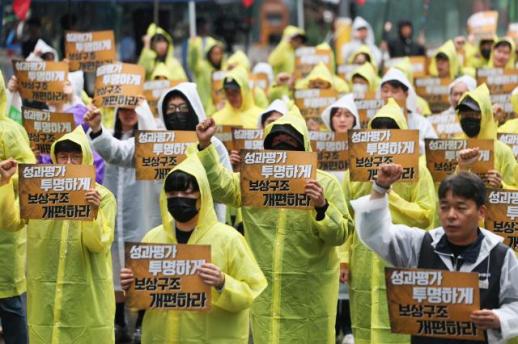 Kakao union sets June 10 partial strike as labor standoff sharpens SEOUL, June 01 (AJP) - Kakao's union announced it would stage a four-hour partial strike on June 10, escalating a deepening standoff with management over job security and the company's executive pay structure. The Kakao branch of the Korean Chemical, Textile & Food Workers’ Union laid out its demands and walkout schedule in a statement on Monday, marking the latest step toward the messaging giant's first-ever headquarters strike. The union said its core demand was to halt the sales, spin-offs and restructuring it blames on years of management missteps, and to secure stable employment. It also called for an overhaul of a pay system it said rewards executives lavishly even as their decisions fuel worker insecurity. "We are well aware of deep concern over possible disruptions or problems with KakaoTalk and other services so closely woven into daily life," the union said, adding it would hold the four-hour stoppage and a rally in Pangyo on Wednesday, June 10. The union signaled it could sharpen its action, saying it had opted for a limited walkout rather than an immediate all-out strike and would ratchet up pressure depending on the course of further talks. The move follows the collapse of a second mediation session at the Gyeonggi National Labor Relations Commission on May 27, which handed the union the legal right to strike. Industry officials see little chance of an extreme outage such as a KakaoTalk blackout even if the union escalates, noting that most platform systems are automated and that non-union and standby staff can keep maintenance and operations running. The standoff comes amid a swell of labor unrest across South Korea's tech and chip sectors, where workers are pressing for a bigger share of profits. Samsung Electronics' union has sought 15 percent of chip-division operating profit, while Hyundai Motor's union has demanded 30 percent of net profit in its 2026 wage talks. 2026-06-01 10:36:41
 -
 Samyang Foods wraps up THAIFEX-ANUGA 2026 with record booth traffic SEOUL, June 01 (AJP) - South Korean instant noodle maker Samyang Foods drew about 48,000 visitors to its booth at THAIFEX-ANUGA 2026, Asia's largest food trade fair, as the company pressed its push into Southeast Asian markets. The five-day event ran from May 26 to 30 in Bangkok, where Samyang staged an experiential showcase under the "Samyang Crave Lab" concept, dividing its booth into dedicated zones — or "brand labs" — for its three key labels: Buldak, MEP, and Tangle. Visitors sampled flagship products including Buldak and Carbonara Buldak, alongside locally tailored offerings from the MEP and Tangle lines. Southeast Asia currently accounts for about 20 percent of Samyang's total export revenue, with Thailand, Indonesia and Vietnam serving as the primary growth markets. The company said it plans to deepen its local consumer base through a broader product portfolio and stronger brand communication. "Through this THAIFEX, we were once again able to confirm global consumers' interest not only in Buldak, but also in our diverse brands such as MEP and Tangle," said a Samyang Foods spokesperson. "We will continue to bring differentiated products and brand experiences that reflect the needs of local consumers to the global market." 2026-06-01 09:27:01
 -
 World News Media Congress Returns to France After 30 Years, AI Takes Center Stage Marseille—The 77th World News Media Congress (WNMC26), organized by the World Association of News Publishers (WAN-IFRA), will kick off on June 1 in Marseille, France, marking the event's return to the country after nearly 30 years since it was last held in Paris in 1995. This year’s congress is particularly notable as artificial intelligence (AI) has emerged as a central theme in the news industry. Over the course of three days, more than 1,000 publishers, editors, and CEOs from over 60 countries are expected to attend. Following last year’s congress in Krakow, this event is anticipated to be a major international platform for discussing strategies, technologies, and revenue models that will shape the future of the global media industry. This year, AI has been elevated to a central focus of the event. For the first time, WAN-IFRA has organized an independent track titled "AI in Media," positioning it alongside two other key themes: "Future of Journalism" and "Revenue & Growth." Industry experts believe that generative AI has progressed beyond a mere productivity tool, now reshaping the entire landscape of news production, content distribution, revenue generation, and audience engagement. The rise of AI as a pivotal topic in the news industry can be traced back to the launch of OpenAI's ChatGPT in late 2022, which marked a significant turning point. Since then, generative AI has rapidly become a disruptive force across the entire media ecosystem, influencing everything from news production to search and consumption environments. One of the most immediate impacts has been a decline in search traffic. According to digital analytics firm Similarweb, global traffic to major news websites dropped by approximately 26% in the year following Google's introduction of its AI search summary feature, "AI Overviews." Some media outlets have reported search traffic declines of over 90%, shaking the digital advertising revenue models that heavily rely on search. The conflict between media companies and big tech over content acquisition has also intensified. In December 2023, The New York Times filed a copyright infringement lawsuit against OpenAI and Microsoft, prompting similar legal disputes in Canada, India, and Denmark. Conversely, organizations like the Associated Press, Axel Springer, and News Corp have opted for collaborative models by signing content licensing agreements with OpenAI. In its recent annual report, WAN-IFRA defined AI as a "defining pillar" of its activities. The "Newsroom AI Catalyst" program, co-managed with OpenAI, currently includes participation from 145 newsrooms worldwide. This shift marks a departure from previous congress themes. Last year’s Krakow congress focused on "Mastering Media's New Playbook," addressing AI as part of discussions on data strategy, trust restoration, and digital transformation. The 2024 congress in Copenhagen will also emphasize "Building the Future of News Media in the AI Era," but will approach AI as one element of digital innovation. In contrast, this year’s congress highlights AI as an independent strategic agenda, indicating that the news industry is entering a significant transitional phase in the generative AI era. At the congress, Ajou Media will showcase examples of newsroom innovation and global expansion utilizing AI. The company is redesigning the entire news production process, including article generation, translation, video production, and multilingual platform operations, based on AI. They plan to share strategies for newsroom innovation and revenue growth, drawing on their experience in providing services in five languages, including Korean and English. The congress theme is "Rising Voices, Emerging Risks, Inspiring Futures." WAN-IFRA explained that this reflects the search for new opportunities and a sustainable future amid a transformative industry landscape characterized by the spread of AI, increasing platform dependence, declining news credibility, and changes in business models. The choice of Marseille as the host city is also significant. Founded around 600 B.C., Marseille is France's oldest city and the largest port city in the Mediterranean, serving as a gateway connecting Europe, Africa, and the Middle East. WAN-IFRA described the selection of Marseille as a choice to highlight "new voices emerging from traditional centers of power." The congress will take place at the Palais du Pharo, a 19th-century palace built by Napoleon III. Co-hosts include BFM TV, RMC Radio, and the regional daily newspaper La Provence, all part of the French media group CMA Media. The World News Media Congress, which began in 1948, originated from the founding congress of FIEJ, WAN-IFRA's predecessor. At that time, the delegation was invited to the Élysée Palace in Paris, and the congress has since been held in major cities around the world, including Seoul, Cape Town, Taipei, Istanbul, Moscow, and Hong Kong. Currently, WAN-IFRA represents over 3,000 news companies and 60 publisher associations across 120 countries, making it the largest organization of news publishers globally, representing approximately 18,000 media outlets. In addition to the main sessions, the congress will feature pre-congress deep dives on technology, business, content, and innovation, as well as table talks on media sustainability, revenue diversification, the future of print newspapers, and the news creator ecosystem. All sessions will be conducted in English, with real-time translation services available in over 50 languages powered by AI. During the event, WAN-IFRA will also hold the prestigious "Golden Pen of Freedom" award ceremony and the "Digital Media Awards Worldwide." Notably, the Digital Media Awards have recently introduced categories for "Best Use of AI in Newsrooms" and "Best Use of AI in Revenue Strategies," reflecting the growing importance of AI competitiveness as a key evaluation criterion. Following the congress, a post-training program will be held on June 4-5, allowing participants to visit major media outlets in Paris.* This article has been translated by AI. 2026-05-31 17:51:00
 -
World News Media Congress Returns to France After 30 Years, AI Takes Center Stage Marseille—The 77th World News Media Congress (WNMC26), organized by the World Association of News Publishers (WAN-IFRA), opened on June 1 in Marseille, France, marking the event's return to the country after nearly 30 years. This year's congress is notable for placing artificial intelligence (AI) at the forefront of discussions in the news industry. Over three days, more than 1,000 publishers, editors, and CEOs from over 60 countries are expected to attend. Following last year's congress in Krakow, Poland, this event is anticipated to be a major international platform for discussing strategies, technologies, and revenue models that will shape the future of the global media industry. This year, AI has been elevated to a central theme of the event. For the first time, WAN-IFRA has organized an independent track titled "AI in Media," positioning it alongside two other key topics: "Future of Journalism" and "Revenue & Growth." Industry experts believe that generative AI has moved beyond being a mere productivity tool and is now reshaping the entire news production process, from content creation and distribution to revenue generation and audience engagement. The rise of AI as a focal point in the news industry can be traced back to the release of OpenAI's ChatGPT in late 2022, which marked a turning point. Since then, generative AI has quickly become a disruptive force across the entire media ecosystem, affecting everything from news production to search and consumption environments. One of the most immediate impacts has been a decline in search traffic. According to digital analytics firm Similarweb, global traffic to major news sites dropped by approximately 26% in the year following Google's introduction of its AI search summary feature, "AI Overviews." Some media outlets have reported search traffic declines of over 90%, shaking the digital advertising revenue models that heavily rely on search. The conflict between media companies and big tech over content acquisition has also intensified. In December 2023, The New York Times filed a copyright infringement lawsuit against OpenAI and Microsoft, prompting similar legal disputes in Canada, India, and Denmark. Conversely, organizations like the Associated Press, Axel Springer, and News Corp have opted for collaborative models by signing content licensing agreements with OpenAI. In its recent annual report, WAN-IFRA defined AI as a "defining pillar" of its activities. The "Newsroom AI Catalyst" program, co-managed with OpenAI, currently involves 145 newsrooms worldwide. This shift in focus marks a departure from previous congress themes. Last year's Krakow congress addressed AI as part of broader discussions on data strategy, trust restoration, and digital transformation under the theme "Mastering Media's New Playbook." The upcoming 2024 congress in Copenhagen will also focus on the future of news media in the AI era but will approach AI as one element of digital innovation. In contrast, this year's congress emphasizes AI as an independent strategic agenda, signaling a significant transition for the news industry into the generative AI era. At this congress, Aju Media will showcase innovations in newsrooms and global expansion strategies utilizing AI. The company is redesigning the entire news production process, including article generation, translation, video production, and multilingual platform management, based on AI. Drawing from its experience in providing services in five languages, including Korean and English, Aju Media plans to share its strategies for newsroom innovation and revenue growth in the AI era. The congress theme is "Rising Voices, Emerging Risks, Inspiring Futures." WAN-IFRA explained that this reflects the search for new opportunities and a sustainable future amid simultaneous industry transformations, including the spread of AI, increasing platform dependency, declining news credibility, and changes in business models. The choice of Marseille as the host city also carries symbolic significance. Founded around 600 B.C., Marseille is France's oldest city and the largest port city in the Mediterranean, serving as a gateway connecting Europe, Africa, and the Middle East. WAN-IFRA described the selection of Marseille as a choice to highlight new voices emerging outside traditional centers of power. The congress is being held at the Palais du Pharo, a 19th-century palace built by Napoleon III. Co-hosts include BFM TV, RMC Radio, and the regional daily newspaper La Provence, all part of the French media group CMA Media. The World News Media Congress, which began in 1948, originated from the founding congress of FIEJ, WAN-IFRA's predecessor. The delegation was invited to the Élysée Palace in Paris and has since been held in major cities worldwide, including Seoul, Cape Town, Taipei, Istanbul, Moscow, and Hong Kong. Currently, WAN-IFRA represents over 3,000 news organizations and 60 publisher associations across 120 countries, making it the largest association of news publishers globally, representing approximately 18,000 media outlets. In addition to the main sessions, the congress will feature pre-congress deep dives into technology, business, content, and innovation, as well as table talks on media sustainability, revenue diversification, the future of print newspapers, and the news creator ecosystem. All sessions will be conducted in English, with real-time translation services available in over 50 languages powered by AI. During the event, WAN-IFRA will also hold the prestigious "Golden Pen of Freedom" awards ceremony and the "Digital Media Awards Worldwide." Notably, the Digital Media Awards have recently introduced categories for "Best Use of AI in Newsrooms" and "Best Use of AI in Revenue Strategies," reflecting the growing importance of AI competitiveness as a key evaluation criterion. Following the congress, a post-training program will be offered on June 4-5, allowing participants to visit major media outlets in Paris. 2026-05-31 17:51:00
-
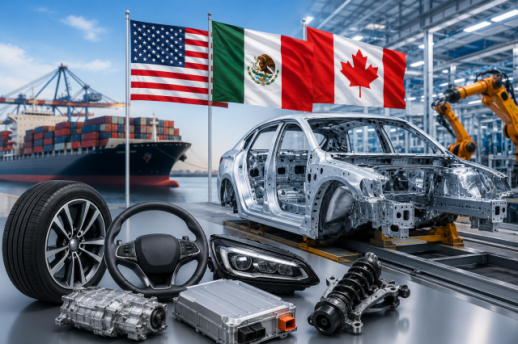 US 'made in America' push rattles Korean auto suppliers ahead of USMCA review SEOUL, May 31 (AJP) - South Korean automakers and parts suppliers are bracing for a contentious review of the United States-Mexico-Canada Agreement (USMCA), as Washington signals it may demand a sharply higher share of US-made components in vehicles sold across North America. The three countries are due to begin a joint review of the pact on July 1, six years after it took effect in 2020. A sunset clause requires them to decide whether to extend the agreement for another 16 years, leave it under annual review, or let it lapse in 2036. The United States and Mexico concluded their first bilateral round of talks late this month, with negotiators focused on narrowing the US trade deficit and shoring up American supply chains. Automotive rules of origin, steel and aluminum, and economic-security concerns dominated the agenda. According to the Wall Street Journal and other outlets, US negotiators are weighing a requirement that at least 50 percent of automotive parts and materials be US-made, and are considering lifting the existing 75 percent North American content threshold for duty-free treatment to about 82 percent. For Korean suppliers that built plants in Mexico to tap lower labor costs, a binding US-content rule would force a costly overhaul of sourcing. Hyundai Mobis supplies parts from its Nuevo León plant to Kia's Pesqueria factory, while SL runs a San Luis Potosí facility capable of producing up to one million headlamp modules a year. The Korea Automotive Technology Institute, in a February report, said the United States holds a structural advantage in the talks as the region's largest market and the top export destination for Canada and Mexico, leaving each carmaker's burden to hinge on its US production footprint and local sourcing. 2026-05-31 17:02:47
 -
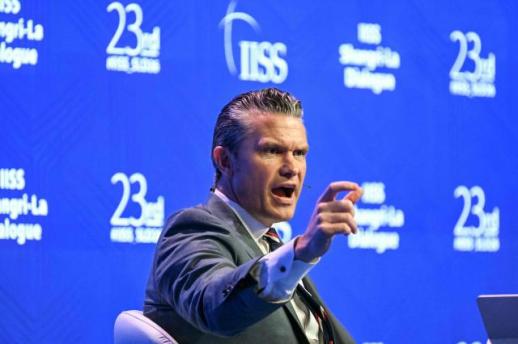 US says Iran blockade holds firm as warship disables Iran-bound vessel SEOUL, May 31 (AJP) - U.S. Defense Secretary Pete Hegseth said that the U.S. naval blockade of Iran remains firmly in place and that American forces stand ready to resume combat operations should ceasefire negotiations collapse. Speaking to reporters in Singapore on the sidelines of the Shangri-La Dialogue security summit Saturday (local time), Hegseth said the matter of the Strait of Hormuz had surfaced repeatedly in his bilateral talks. "The blockade is very much still in place," he said, adding that the waterway would become "a toll-free strait that the entire world can use, which is the way it should be." Hours earlier, U.S. Central Command said its forces had fired a missile at the Gambian-flagged merchant vessel M/V Lian Star, which was steaming through international waters in the Gulf of Oman toward an Iranian port. The command said the crew was warned more than 20 times before the strike disabled the ship. The vessel was knocked out of action and is no longer bound for Iran, military officials said. They did not disclose whether anyone aboard was hurt. It was the fifth commercial ship CENTCOM has disabled since the blockade began about mid-April. Asked whether Washington might permanently pull troops from Middle Eastern bases struck by Iran, Hegseth deferred to the White House, saying such calls rested with President Donald Trump and would hinge on the outcome of the talks. For now, he said, the focus was on staying postured to strike again if needed. On Taiwan, Hegseth said U.S. policy was unchanged even as he acknowledged China's military buildup, reiterating Trump's line that Washington stood in its strongest position yet across the Pacific. Trump has said he discussed arms sales to the island with Chinese leader Xi Jinping but has not approved further transfers. Pressed on whether the United States would deliver Virginia-class submarines to Australia on schedule under the AUKUS pact, due to begin in 2032, Hegseth said he believed it would, despite domestic doubts over whether the boats would meaningfully deter China's navy. 2026-05-31 14:05:37
 -
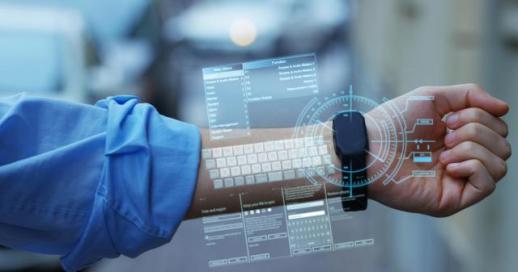 Korea moves to fortify defenses as AI reshapes cyber, wearable battles SEOUL, May 31 (AJP) - Artificial intelligence is pushing deeper into cybersecurity, public infrastructure and wearable devices, redrawing the lines of industrial competition as governments and companies scramble to keep pace. Korea's Ministry of Science and ICT on May 29 unveiled a plan to bolster private-sector information protection against AI-driven cyber threats, warning that high-performance AI models are sharpening attackers' ability to hunt for vulnerabilities and automate strikes faster than conventional defenses can answer. Under the plan, the government will build an emergency response system centered on the presidential Office of National Security and set up a vulnerability management center within the Korea Internet & Security Agency to share flaw and patch data in near real time. It also vowed to strengthen AI-based detection of malicious activity and tighten support for smaller firms. The push extends abroad. Korea, alongside Japan, recently became the first in Asia and the third globally after the United States and Canada to join OpenAI's Trusted Access for Cyber program, securing government access to the firm's most advanced cyber models. "Cutting-edge cyber AI capabilities should not be concentrated in the hands of a few," said Jason Kwon, OpenAI's chief strategy officer, at a Seoul briefing unveiling a parallel "Korea Cyber Action Plan." Generative AI, meanwhile, is steadily becoming a daily fixture. About 38.9 percent of Koreans said they had used generative AI services last year, up sharply from 12.3 percent in 2023 and 24.0 percent in 2024, according to the Korea Information Society Development Institute, though worries over disinformation and copyright abuse have climbed in step. In wearables, the contest is fiercest over smart glasses. Samsung Electronics and Google showcased Gemini-powered eyewear at Google I/O 2026 in May, mounting a joint challenge to Meta, which dominates a market it has held since 2023. Industry watchers say the center of gravity in AI competition is shifting from raw model performance toward security muscle, ecosystems and control of the points where users actually connect. 2026-05-31 10:47:21