

Journalist
Seo Hye-seung
davekim0807@ajupress.com
-
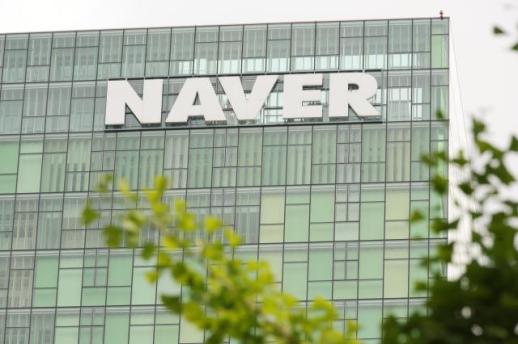 Naver pledges 1 trillion won for creators in AI shift SEOUL, May 28 (AJP) - Naver will pour 1 trillion won ($663 million) into its content creator ecosystem over the next five years, the South Korean internet giant pledged, betting that proprietary data and creator partnerships — not raw model performance — will decide the next phase of the artificial intelligence race. The announced was unveiled at a media round table in central Seoul on Thursday led by Kim Kwang-hyun, Naver's chief data and contents officer, in his first public appearance since taking the role in February. The company, headed by CEO Choi Soo-yeon, said the spending will fund efforts to surface high-quality creators and feed their work into its AI services. "As a CDO, I will build up quality data — the foundation of execution-capable agents — through our creator ecosystem and external partnerships, connect it to AI to deliver differentiated user experiences, and dive more aggressively into the competition," Kim said. As part of the strategy, Naver is launching a fellowship called Naver Mate, which will select about 3,000 top contributors each month from its blog, cafe, Knowledge iN and Premium Content platforms, ranked by how often their work is cited in the company's AI Briefing service. Kim Sang-bum, head of Naver's search platform division, said the company's edge lies in its product-native large language model, a trove of about 10 billion data records, and the operational know-how built up over more than two decades of running its own search ecosystem. A next-generation HyperCLOVA X model will also be deployed shortly, he added. 2026-05-28 11:02:46
 -
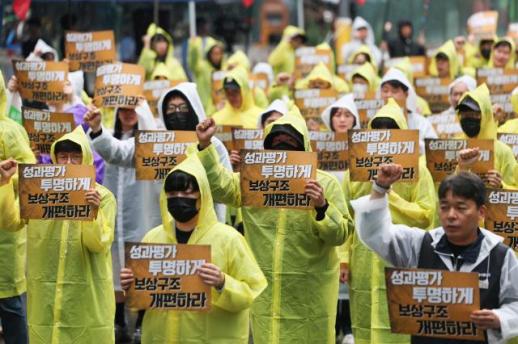 Kakao enters second mediation as labor unrest spreads SEOUL, May 27 (AJP) - Labor and management at Kakao entered a second round of mediation at the Gyeonggi National Labor Relations Commission, with the talks widely seen as a make-or-break moment that could push South Korea's dominant messaging platform into its first-ever headquarters strike. The two sides failed to bridge their differences during a first session on May 18, extending the deadline for a resolution, entering the next round Wednesday. Four Kakao affiliates — Kakao Pay, Kakao Enterprise, DKTechin and XLGames — have already secured the legal right to strike after separate mediation efforts collapsed, and strike ballots held at five affiliates were all approved with votes in favor. The central dispute pits the union's demand for a transparent bonus formula against management's insistence on counting 5 million-won annual grants of restricted stock units (RSUs) as part of performance pay — a classification the union flatly rejects. The union is demanding a formula that ties bonuses to a fixed share of annual operating profit, modeled on a landmark agreement at SK hynix. Kakao headquarters has never gone on strike since the company's founding. The prospect of a walkout has already rattled investors: Kakao shares have fallen about 35 percent from levels around 64,000 won at the start of the year, closing at 40,450 won on Wednesday. The standoff at Kakao is unfolding as labor tensions spread across South Korea's corporate landscape. Samsung Electronics' union has been seeking 15 percent of chip-division operating profit, while Hyundai Motor's union opened 2026 wage talks demanding 30 percent of net profit — a wave of collective action signaling growing worker assertiveness at the country's most prominent conglomerates. 2026-05-27 17:25:40
 -
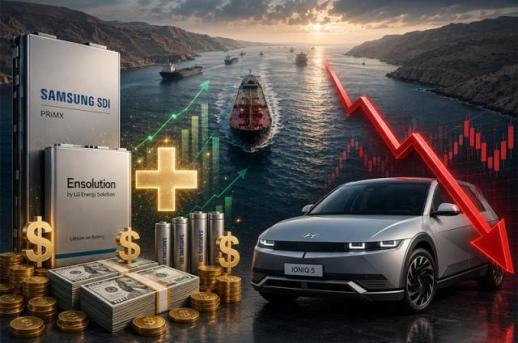 AJP Focus: War-driven metal rally lifts South Korea's battery makers, squeezes carmakers SEOUL, May 27 (AJP) - A war-driven oil shock is reshaping the economics of South Korea's electric vehicle supply chain, lifting prices of lithium, nickel and cobalt to multi-year highs and handing the country's top battery makers a long-awaited tailwind even as carmakers Hyundai Motor and Kia confront fresh cost pressure. Battery-grade lithium traded at US$25.15 per kilogram on May 13, more than triple the $8.10 average of June last year and the highest level since September 2023, according to data from Fastmarkets. Nickel changed hands at $19,017.50 a ton on the London Metal Exchange the same day, up 27.8 percent from December, while cobalt hit $57.83 a pound, the strongest reading since July 2022. The rally reverses a brutal two-year slump in battery metals brought on by an electric-vehicle demand lull and a glut of Chinese supply. It now coincides with two converging forces: surging EV sales in Europe and Asia as drivers flee record-high petrol prices triggered by the Iran war, and a parallel boom in energy-storage demand tied to artificial intelligence data centers. Battery-electric cars accounted for 19.4 percent of the EU market in the first quarter, up from 15.2 percent a year earlier, the European Automobile Manufacturers' Association said. March registrations alone jumped 51 percent on the year to more than 224,000 vehicles across 15 key European markets. Fastmarkets said in its January 2026 battery raw materials update that lithium prices had nearly doubled over the prior two months, driving battery cell costs up by 15 to 20 percent to around $46 to $48 per kilowatt-hour at the start of 2026. Supply has struggled to catch up, with Chinese giant CATL's Jianxiawo lepidolite mine in Jiangxi province idled since last August and Western refiners reluctant to invest. Indonesia and the Democratic Republic of Congo, which together dominate global nickel and cobalt output, have also tightened mining and export quotas. For LG Energy Solution, Samsung SDI and SK On — collectively the only serious non-Chinese force in the global battery market — the timing is fortunate. The three are linked to automakers through pricing contracts that pass raw-material costs through to customers with a lag of about three months, a mechanism that punished earnings during the 2024 to 25 price slide but should now flip into a tailwind. LG Energy Solution said in an April 30 statement that despite increase in shipments of both cylindrical EV and ESS batteries and ongoing cost-reduction efforts, the company posted a quarterly loss, driven by initial ramp-up costs associated with the expansion of ESS production sites. The company added that its ESS business now represents the mid-20 percent range of total revenue, underscoring the pivot from electric-vehicle cells to stationary storage that all three Korean firms are pursuing. "Western governments have little incentive to invest in lithium refining," said Choi Tae-yong, an analyst at DS Investment & Securities. The flip side is darkening for South Korea's carmakers. Batteries account for about 40 percent of the cost of an electric vehicle, and Hyundai Motor Group — which includes Kia — is already navigating fierce Chinese price competition at home and abroad. Hyundai sources roughly 95 percent of parts for its domestically built combustion-engine cars from Korean suppliers, but management is reviewing a broader shift to Chinese components. The group's global parts bill jumped to 84 trillion won last year, up 45 percent from 2021. Chinese batteries already power several South Korean-built models. Hyundai uses CATL cells in the Kona, while Kia equips the Ray, Niro, EV5 and PV5 with batteries from the Chinese supplier. CATL's batteries are about 10 to 20 percent cheaper than those produced here. Domestic market data tell a similar story. About 220,177 EVs were newly registered in Korea last year, with Kia ranking first at 60,609 units, or 27.5 percent of the market, followed by Tesla at 59,893 units and Hyundai at 55,461 units, the Korea Automobile & Mobility Association said. Chinese-made EVs surged 112.4 percent to 74,728 units, capturing a 33.9 percent market share. Whether higher cell prices will be absorbed by automakers or passed on to consumers remains an open question. Battery raw-material costs filtering into retail EV pricing would undercut the industry's long-stated goal of price parity with combustion-engine cars — and could deepen the cost advantage of Chinese rivals built around cheaper lithium iron phosphate, or LFP, chemistries. For now, the war-led surge has handed South Korean battery makers a near-term reprieve after their first simultaneous quarterly loss. For Hyundai and Kia, the road ahead looks rockier. 2026-05-27 15:58:07
 -
 South Korea joins OpenAI's trusted cyber access program SEOUL, May 27 (AJP) - South Korea has become one of the first two countries in Asia, together with Japan, to join OpenAI's Trusted Access for Cyber program, securing government-level access to the U.S. firm's most advanced artificial intelligence models for cybersecurity research and defense. The Ministry of Science and ICT announced Wednesday that Vice Minister Ryu Je-myung met OpenAI Chief Strategy Officer Jason Kwon in Seoul on Tuesday to formalize Seoul's participation in the program, which grants vetted governments and institutions-controlled access to OpenAI's frontier models for defensive cyber work. The Korea Internet & Security Agency will serve as the implementing body, the ministry said, adding that the two sides agreed to continue talks on broader applications of AI in cybersecurity. The arrangement is expected to give Seoul a window into how rapidly advancing AI systems could be weaponized, and how to blunt that threat. "Through this cooperation with OpenAI, Korea has laid the groundwork to get ahead of AI-driven cyber threats," Ryu said, pledging to deepen engagement with global AI companies to sharpen the country's defensive capabilities. The two sides also discussed building a working framework between Seoul's AI Safety Institute and OpenAI for joint safety evaluations and research on increasingly capable models. OpenAI said it would actively review the proposal. Separately, the Korean government is exploring participation in Project Glasswing, a rival coalition led by Anthropic that pairs its unreleased Claude Mythos Preview model with about a dozen launch partners — including Amazon, Apple, Google, Microsoft and Nvidia — and some 40 additional organizations to hunt down software vulnerabilities. No Korean entity has yet joined the initiative. 2026-05-27 10:43:49
 -
 Anthropic opens Seoul office, names veteran tech executive to lead Korea push SEOUL, May 27 (AJP) - Anthropic, the U.S. artificial intelligence company behind the Claude chatbot, is to officially open a Seoul office and named industry veteran Choi Ki-young as its first country manager for South Korea, deepening its push into one of Asia's most lucrative AI markets. Senior Anthropic executives are scheduled to visit Seoul in the coming weeks to formally inaugurate the office and meet with major enterprise clients, the company said Wednesday. Choi joins from Snowflake, where he served as Korea country manager, and brings more than three decades of experience steering global technology firms in the Asia-Pacific region. He previously led Korean operations for Google Cloud, Adobe, Autodesk and Microsoft. "Korea ranks among the world's most mature AI markets in terms of hardware innovation, developer talent and corporate adoption," Choi said. "Domestic companies combine strong technical capabilities with a genuine commitment to responsible AI, and we are building our Korea business for the long term." The Seoul team is to pursue tailored go-to-market strategies and forge partnerships across enterprises, developers and research institutions. According to Anthropic's Economic Index report published in March, Claude usage in South Korea runs at about 3.5 times the level expected for its population size, with particularly strong adoption in technology and creative sectors. Domestic users already include legal tech startup Law&Company, which has built a Claude-powered legal assistant, and SK Telecom, which has deployed the model in customer service operations. Anthropic enters a Korean market where global rivals have moved quickly. OpenAI launched its Korean subsidiary in May 2025 and formally opened a Seoul office last September, naming former Google Korea chief Kim Kyoung-hoon as country manager — its third Asian base after Tokyo and Singapore. Google has been pushing its Gemini models in Korea through existing Google Cloud and Android channels, including a high-profile partnership with Samsung Electronics that has embedded Gemini in flagship Galaxy devices and the Ballie home robot. The rush reflects South Korea's strategic weight in the global AI value chain. The country dominates high-bandwidth memory chip production through Samsung Electronics and SK hynix — critical inputs for AI training infrastructure — and houses some of the world's heaviest enterprise AI adopters in semiconductors, automotive, shipbuilding and consumer electronics, giving foreign model developers both a supply base and a high-value customer pool to court. 2026-05-27 09:46:32
 -
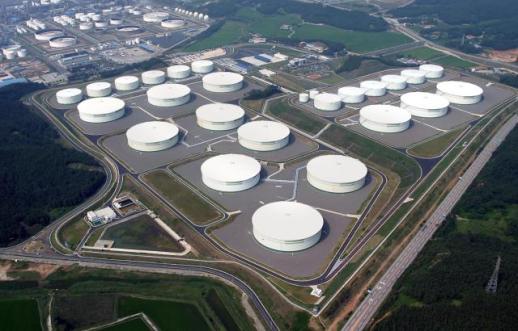 Korea holds off on IEA oil release, eyeing August crunch SEOUL, May 26 (AJP) - South Korea is holding back on releasing its share of the International Energy Agency's record emergency oil stockpile, opting to preserve the buffer for a potentially graver supply crunch in August as the Strait of Hormuz remains effectively shut. With the June 9 deadline for Seoul's pledged contribution just two weeks away, Yang Ki-wook, director general for industrial resources security at the Ministry of Trade, Industry and Resources, told reporters Tuesday at the Sejong government complex that the country sees little immediate need to tap its reserves. The IEA in March coordinated the largest emergency stock release in its 52-year history, with its 32 member states agreeing to put 400 million barrels on the market to blunt the supply shock from the U.S.-Israel-Iran conflict. South Korea's quota stands at 22.46 million barrels, or about 5.6 percent of the total. Officials are betting that the worst is yet to come. Although recent diplomatic overtures between Washington and Tehran have stirred cautious hopes of a ceasefire, a prolonged closure of the Strait of Hormuz could leave Korean refiners scrambling for crude from August onward, when domestic stockpiles are projected to thin sharply. IEA Executive Director Fatih Birol warned that global oil markets could slip into a "red zone" in July or August as inventories drain and summer travel demand swells, with Middle Eastern barrels still largely absent from the market. "Government stockpiles are a tool for the worst-case scenario, so we believe a release should be considered cautiously, keeping the card in hand for what may come," Yang said, adding that domestic refiners have responded positively to the existing swap arrangement, under which the government lends out reserves against verified overseas purchases. Seoul is also reshaping its supply map. Non-Middle Eastern crude is projected to account for 51.5 percent of imports from May through July, up sharply from 30.9 percent a year earlier — a shift Yang called unprecedented and a strategic imperative for the country's resource security. 2026-05-26 16:53:23
 -
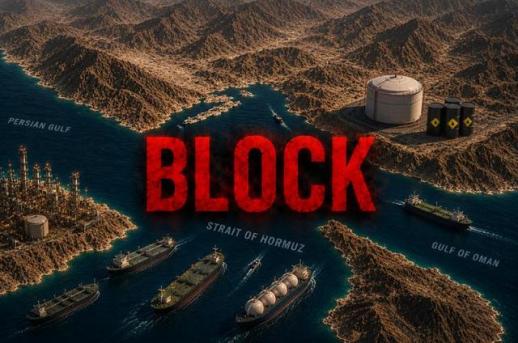 AJP Focus: Asia's energy shock far from over despite Hormuz reopening talks SEOUL, May 26 (AJP) - South Korea and other Asian economies heavily dependent on Gulf energy supplies are bracing for prolonged disruptions even as diplomatic momentum builds toward a potential reopening of the Strait of Hormuz, with analysts warning that supply chains, refining operations and shipping flows could take months to normalize. Iran is expected to allow commercial shipping through the strait about 30 days after a peace agreement with Washington is finalized, Nikkei reported Monday, citing a source familiar with the negotiations. U.S. President Donald Trump said over the weekend that a deal had been "largely negotiated," while Iran's foreign ministry described the arrangement as a memorandum of understanding ahead of broader talks expected within 30 to 60 days. But the situation remains fragile. The diplomatic push intensified after U.S. forces struck missile sites and Islamic Revolutionary Guard Corps vessels in southern Iran on Monday in what Washington described as defensive operations, underscoring the volatility surrounding the conditional ceasefire in place since early April. The Strait of Hormuz has effectively remained closed since March 2. IMF PortWatch data showed only two commercial vessels transited the chokepoint on May 17, compared with a pre-crisis average of roughly 95 ships per day. Brent crude rose 2.43 percent Monday to around $116.73 per barrel, more than 60 percent above prewar levels. For South Korea, where roughly 99 percent of Middle Eastern crude imports normally pass through Hormuz, the gap between a diplomatic breakthrough and a meaningful restoration of energy flows is expected to extend far beyond the tentative 30-day reopening timeline. According to Korea International Trade Association data, South Korea's crude imports fell 22.8 percent on-year in April to about 8.46 million tons, while imports from the Middle East plunged 37.3 percent to 4.49 million tons amid the Hormuz disruption. The Middle East still accounted for the largest share of South Korea's oil imports, but its portion dropped sharply to 53.1 percent from 65.2 percent a year earlier. Imports from Saudi Arabia, Korea's largest supplier, fell 37.6 percent to roughly 2.15 million tons. Iraqi shipments dropped 42.4 percent, while imports from Kuwait nearly collapsed, plunging 98.2 percent. Imports from Qatar were halted entirely. The data underscore how rapidly Asian importers have been forced to redraw supply chains as the Hormuz crisis deepened. The United States, already South Korea's second-largest crude supplier, nearly overtook Saudi Arabia last month. Imports of U.S. crude rose 13.4 percent to about 2.145 million tons, narrowing the gap with Saudi shipments to barely 1,000 tons from more than 1.45 million tons just a month earlier. Seoul has also accelerated diversification toward North America, Oceania and Africa. Imports from Australia surged 89 percent, while Canadian shipments more than tripled. Crude purchases from African producers including Nigeria and Mozambique jumped more than fivefold. North America's share of South Korea's crude imports climbed to 28.3 percent, up 10.3 percentage points from a year earlier. Still, industry analysts caution that reopening the strait would mark only the beginning of a lengthy normalization process. Mine-clearance operations, military escort requirements and a backlog of roughly 1,500 stranded vessels are expected to delay normal shipping flows by another two to three weeks even after transit resumes. "Fully loaded tankers must first pass through, and empty vessels must then enter and drain the stockpiles before oil-producing states can resume output," said Yoon Jae-sung, analyst at Hana Securities. "Given that a voyage to Asia takes four weeks and that 30 to 40 percent of Gulf refining capacity has been damaged — with normalization expected to take at least three months — restoring the supply chain will require considerable time," Yoon said. "Crude oil and gas would take priority, pushing petrochemical products and naphtha further down the queue." Shipping costs have also surged. According to Lloyd's Joint War Committee data, war-risk insurance premiums for very large crude carriers transiting the Gulf have climbed to roughly eight times pre-crisis levels, with single-voyage coverage now costing around $2.5 million per tanker. Six major protection and indemnity insurers, including Gard, Skuld and North Standard, have withdrawn Hormuz transit coverage altogether. South Korean petrochemical firms have partially stabilized operations by increasing naphtha cracking center utilization rates to 85–90 percent of prewar levels through alternative sourcing from Russia, Kazakhstan and the United States. But officials continue warning that liquefied natural gas markets could tighten sharply in the second half as bargaining power shifts back toward suppliers. Compounding concerns, QatarEnergy's force majeure declaration on long-term LNG contracts remains in effect after damage to two production trains at Ras Laffan affected roughly 17 percent of Qatar's LNG exports. Full restoration is expected to take between three and five years. "Unless the war ends on reasonable and viable terms good enough to convince shipowners and insurance companies, it may be extremely difficult for oil prices to return to post-war levels even in the long run," said Chung Tae-hun, associate research fellow at the Korea Energy Economics Institute. "We still face competition for heavy crude supplies outside the Middle East if the conflict becomes entrenched, with China and Japan also aggressively seeking alternative sourcing," Chung added. A diplomatic breakthrough could mark a turning point in the crisis. But for South Korea and much of Asia, the broader energy shock is increasingly shifting from an emergency disruption into a structural adjustment — one likely to leave elevated shipping costs, higher energy premiums and intensified competition for non-Gulf supplies well into 2027. 2026-05-26 15:36:03
 -
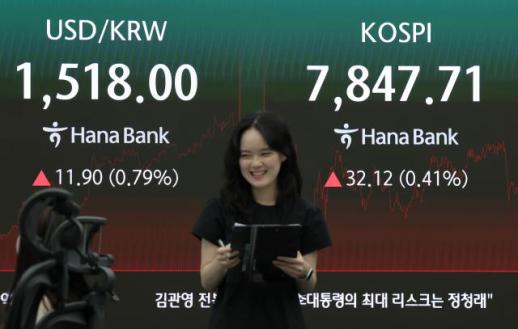 Korea's red-hot rally demands a cooler head SEOUL, May 24 (AJP) - South Korea's stock market has moved to the center of the global financial conversation. The country once defined by the "Korea discount" — that catch-all phrase for chronic undervaluation — is now one of the hottest markets that international investment banks and the financial press are watching. The Financial Times noted recently that the speed of Korea's rally has outpaced even the U.S. Nasdaq's climb during the late-1990s dotcom boom. The benchmark KOSPI has tripled in roughly 18 months, breaking through 7,200 after starting last year near 2,400. That ascent is steeper, by the FT's measure, than the comparable stretch of Nasdaq's bubble-era run. At the heart of the rally sit Samsung Electronics and SK hynix. The artificial intelligence build-out, surging global data center CAPEX, and a step-change in demand for high-bandwidth memory (HBM) have driven both companies to record earnings. Samsung Electronics has gained about 130 percent this year. SK hynix is up close to 170 percent. Their combined market capitalization now exceeds South Korea's gross domestic product — a milestone with few, if any, precedents in the country's economic history. But the hotter the market, the more valuable a cool head becomes. As the FT pointed out, this rally differs from the dotcom episode in one important respect. Nasdaq in 1999 was driven by expectations and multiple expansion, not earnings. Korea's chip rally, by contrast, is being delivered alongside real profit growth. Analysts argue that the global AI infrastructure build is restructuring the memory industry itself. That is why Goldman Sachs, JPMorgan and Citigroup have kept raising their KOSPI targets. Memory, long treated as a textbook cyclical, is increasingly being repriced as a structural growth industry inside the larger AI shift. The problem is balance. Korea's rally is dangerously concentrated. Strip out Samsung and SK hynix and a large share of the market remains in the doldrums. Small- and mid-cap value names are being passed over by liquidity, and the real economy bears little resemblance to the euphoria on the tape. In other words, what we are watching is not a broad-based rise in Korea Inc. so much as a hyper-concentrated rally in AI-linked semiconductors. History rewards remembering. Markets overheat in optimism and then forget risk inside that overheating. Korea is also structurally retail-heavy: the so-called "ant army" of individual investors has been a defining force in this rally, with money once parked in U.S. equities flowing back into Samsung and SK hynix. The worry is that margin debt — "bittu," money borrowed to chase the trade — is growing fast. During Korea's housing mania, people said "this time is different." The conviction that Seoul apartment prices could only rise pulled households into ever-larger loans, and ended in extreme volatility. Stocks are no different. Share prices reflect future cash flows, but markets never move in straight lines. The AI revolution is real; the corrections and drawdowns inside that revolution will be just as real. Foreign flows deserve particular attention. The Korean market is structurally dependent on foreign capital, which provides powerful thrust on the way up but is also the first to leave when risk appetite turns. U.S. interest rate policy, a global growth slowdown, U.S.-China tensions, Taiwan Strait risk and the Middle East — any of these external variables can amplify Korean volatility at short notice. In a market this concentrated in one sector and a handful of names, even a small shock can land outsized. The deeper concern is that the psychology of the market is drifting from investing toward chasing. Once "if I don't buy now I'll be left behind" replaces cold analysis of earnings and industry change, the warning lights come on. The risk is sharpest when retail investors lever up to crowd into a narrow group of stocks. And yet this rally cannot be dismissed as a simple bubble. Korean equities still trade cheaply against U.S. peers. Bloomberg data cited by the FT put the KOSPI's forward price-to-earnings ratio in the 8x range — less than half that of the S&P 500. Nearly half of listed Korean companies still trade below a price-to-book ratio of one. The country has not, in other words, fully escaped its structural discount. What matters from here is direction. For Korea to graduate into a genuinely mature capital market, it cannot ride on two stocks alone. Small- and mid-caps, value names, biotech, robotics, defense, shipbuilding, content and software all need to participate. The market's overall fitness has to improve. That is also why the government's corporate governance reforms and its low-PBR value-up program matter. Done well, they should raise trust in the capital market and strengthen the system as a whole. Above all, what Korea needs now is a sense of balance. The AI revolution is opening a genuine era of industrial transformation, and Korea's semiconductor industry sits at its center. But every market mania casts a shadow. Investors must price risk even when feeling optimistic. Government must stress-test the system even in a bull market. Companies must build long-term competitiveness rather than get drunk on their share price. The world is watching Korea's market. Whether this surge becomes the opening chapter of the country's industrial renaissance — or simply another entry in the ledger of extreme volatility — depends on the choices made from here. 2026-05-24 16:44:42
 -
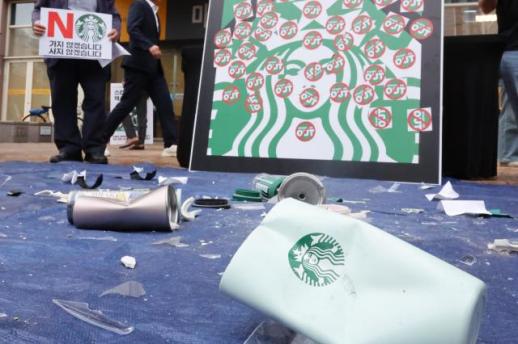 Consumer group urges Starbucks to fully refund prepaid balances SEOUL, May 22 (AJP) - The Korea National Council of Consumer Organizations urged Starbucks Korea to refund prepaid card balances in full and without conditions to customers who no longer wish to use the chain, as a consumer boycott over a controversial marketing campaign deepens. The civic group on Friday also called on regulators and lawmakers to overhaul what it described as an unreasonable refund regime for prepaid stored-value cards. Under Starbucks' current terms, customers must spend at least 60 percent of a charged balance before the remainder can be refunded. That threshold is rooted in the Fair Trade Commission (FTC)'s standard terms for new-type gift certificates and the Electronic Financial Transactions Act, which require users of fixed-amount vouchers to spend at least 60 percent — or 80 percent for vouchers worth 10,000 won ($6.59) or less — before reclaiming the balance. "Starbucks must improve its system so that refunds can be processed without visiting a store, easing the burden on store staff," the council said in a statement, adding that the FTC and the National Assembly should swiftly amend the relevant rules. The backlash erupted after Starbucks Korea launched its "Tank Day" promotion on May 18, the 46th anniversary of the Gwangju Democratization Movement, using slogans including "tap on the desk" — phrases critics say evoked the 1980 military crackdown in Gwangju and the 1987 torture death of student activist Park Jong-chul. The boycott has since spread to other Shinsegae affiliates and prompted a surge in app deletions and prepaid card refunds. Starbucks Korea's cash and cash equivalents stand at about 137.4 billion won, equivalent to roughly 32 percent of its prepaid liabilities — meaning available cash could be exhausted if just one in three customers demanded refunds simultaneously. 2026-05-22 17:22:38
 -
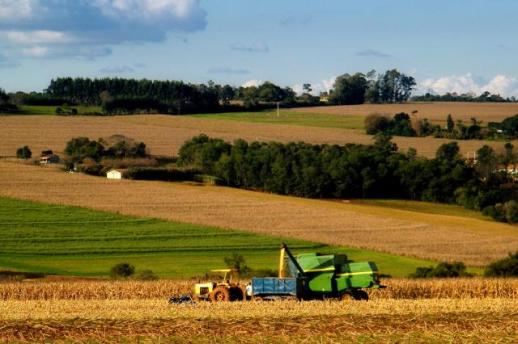 Korean farm income hits record on livestock rebound SEOUL, May 22 (AJP) - South Korean farm households earned an average of 54.67 million won ($36,017) in 2025, a record high driven by a sharp recovery in livestock and crop prices, while fishery households saw their incomes slide on weaker seaweed and abalone markets. According data of last year's farm and fishery household economy released by the Ministry of Data and Statistics on Friday, average annual farm income climbed 8.0 percent from a year earlier to 54.67 million won — the highest level since the ministry began compiling the data. Agricultural income alone surged 22.3 percent to 11.71 million won, powered by an 8.3 percent jump in gross farm receipts that outpaced a 3.4 percent rise in operating costs. Livestock revenue soared 28.5 percent, while crop revenue edged up 1.1 percent. "Farm receipts had temporarily contracted in 2024 due to falling rice and livestock prices, but prices rebounded last year and pushed receipts back into growth," said the Ministry of Agriculture, Food and Rural Affairs, adding that firmer prices for certain fruit crops also lifted the headline figure. Transfer income, which includes government subsidies, rose 9.1 percent to a record 19.89 million won on the back of higher direct payments to farmers and an increase in the maximum monthly basic pension to 342,510 won. By farming type, livestock households led the gains with income jumping 64.0 percent to 88.39 million won, followed by fruit growers and rice farmers, while vegetable producers saw a 3.2 percent decline. Fishery households, by contrast, posted average income of 58.98 million won, down 7.3 percent from a year earlier as what the ministry explained as base effect from 2024's record seaweed prices unwound and abalone prices weakened. Fishery income tumbled 31.6 percent to 19.06 million won, with aquaculture revenue plunging 26.3 percent even as catch-based revenue rose 9.0 percent. Average farm household assets reached 662.85 million won at the end of 2025, up 7.6 percent, while debt rose 6.0 percent to 47.71 million won, reflecting increased borrowing tied to smart farm investments and policy-loan deferrals for disaster-hit producers. 2026-05-22 15:54:16