


Latest by
-
 Korean Privacy Commission Strengthens AI Data Protection Cooperation with Singapore and Hong Kong The Personal Information Protection Commission of South Korea is enhancing cooperation on data protection in the age of artificial intelligence (AI) with regulatory bodies in Singapore and Hong Kong. The initiative aims to jointly address emerging data privacy issues, combat illegal data distribution, and expand collaboration across the Asia region. On June 15, during the 65th Asia-Pacific Privacy Authorities (APPA) Forum held in Hong Kong, the commission announced that it signed memorandums of understanding (MOUs) with the Personal Data Protection Commission of Singapore and the Office of the Privacy Commissioner for Personal Data in Hong Kong. These agreements focus on strengthening data protection in the AI era and enhancing regional cooperation. The significance of this agreement lies in establishing a collaborative framework among regulatory bodies to address data protection challenges arising from advancements in AI technology. As new technology-based services, such as Agentic AI and Physical AI, rapidly proliferate, countries are working to develop data protection principles and standards suitable for the AI environment. Through this agreement, the commission also plans to jointly tackle illegal data distribution. With increasing cases of data breaches, illegal transactions, scams, and voice phishing in a cross-border digital landscape, the commission aims to strengthen cooperation among regulatory bodies. Additionally, the commission intends to participate in a newly established working group on illegal data distribution at the APPA Forum, alongside Singapore and Hong Kong, to expand related cooperation. Furthermore, the commission will collaborate with Singapore to support the enhancement of data protection capabilities among Asian countries. The goal is to serve as a bridge between nations with high data protection standards and emerging countries while leading discussions on global data protection norms. The MOUs also include provisions for sharing AI privacy policies and best practices, exchanging information related to investigations and enforcement, providing data protection training, and promoting joint cooperation projects. Song Kyung-hee, chairperson of the Personal Information Protection Commission, stated, "This agreement with Singapore and Hong Kong will further strengthen the cooperation network among Asian data protection authorities in the AI era. We will continue to work closely with major global data protection authorities to lead discussions on global data protection issues."* This article has been translated by AI. 2026-06-15 18:03:00
 -
 NS Shopping Boosts Homeplus Express Sales Recovery Sales at Homeplus Express, which was sold separately, are showing signs of recovery following the resumption of product supply.Homeplus reported on June 15 that from June 1 to June 11, sales at Express increased by 16% compared to before the resumption of deliveries. Notably, sales of fresh produce rose by over 30%.The recovery in sales is attributed to NS Shopping, a subsidiary of Harim Group, which provided payment guarantees for Homeplus Express products, allowing suppliers to resume deliveries.A Homeplus official stated, "Considering that most major products were received starting June 8, we expect significant sales growth from this week onward."The official also noted that the recent poor performance was due to temporary supply disruptions during the restructuring process, rather than a decline in business competitiveness. They emphasized, "If product supply is normalized, sales in other remaining business segments, such as hypermarkets, can also recover quickly."Meanwhile, Homeplus has initiated the sale process for its headquarters, online, and hypermarket segments. The sale will be conducted through a public bidding process, with Samil PwC serving as the advisor, the same firm that managed the sale of Express.* This article has been translated by AI. 2026-06-15 18:03:00
 -
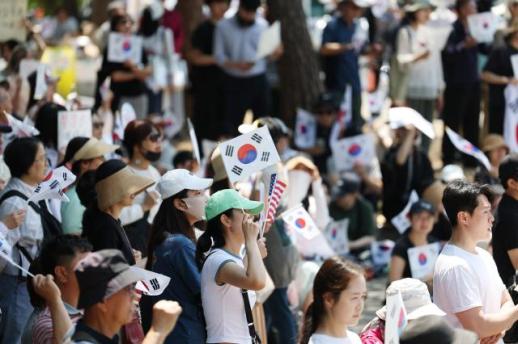 Behind the Jamsil protests: The pro-democracy politics of young Koreans SEOUL, June 15 (AJP) - Unlike their clear-cut elders, young South Koreans are neither right nor left. They are simply pro-democracy, and intolerant when they believe it is under attack — whether through a martial law declaration or a shortage of ballot papers. The generational divide has become increasingly visible in recent months as South Koreans in their 20s and 30s have emerged as a new political force, distancing themselves from the country's deeply entrenched ideological camps while mobilizing around what they see as threats to democratic norms. The latest example came after widespread ballot shortages during the June 3 local elections, an administrative failure that triggered protests led largely by younger citizens and ignited a broader debate over trust in South Korea's electoral institutions. Unlike older generations, whose political identities have long been shaped by Cold War-era divisions between conservatives and progressives, many younger Koreans have shown little loyalty to either camp. Instead, they have increasingly rallied around procedural fairness, transparency and institutional accountability. For more than a week, demonstrators occupied areas around a vote-counting center in Seoul's Jamsil district, demanding accountability from election authorities and, in some cases, calling for a rerun of the election. The protests drew significant participation from people in their 20s and 30s, many of whom organized through online communities rather than traditional civic organizations. But as far-right groups attempted to frame the controversy as evidence of election fraud, many younger protesters deliberately sought to distance themselves from such narratives. On June 11, users of the online platform DC Inside launched a new forum called the "Voting Rights Gallery," saying its purpose was to restore public confidence in elections and protect citizens' right to vote. A similar distinction emerged offline. At a rally near Hongik University Station on Saturday, organizers prohibited all flags except placards calling for a new election. National flags and political banners commonly associated with conservative and far-right protests were banned. About 40 people attended, according to organizers. University students have also sought alternative avenues for civic engagement. One example is "One Vote Record," a website compiling statements from student governments nationwide. According to the platform, 396 statements issued by 215 universities most frequently referenced democracy, voting rights, trust and fairness. Ninety-six percent of the statements mentioned democracy, while 94 percent referred to political participation rights and 87 percent highlighted concerns about trust or fairness. Experts say the movement reflects anxieties over institutional competence rather than belief in systemic election fraud. "The first responsibility is to separate two issues that can too easily become confused: the administrative failure itself, and the much broader claim that the election was fraudulent," said Emily Flore St. Denny, a political scientist at the University of Copenhagen. "A shortage of ballot papers is a serious failure because it affects the equal exercise of voting rights. It deserves a full and independent public investigation. But it should not automatically be allowed to become evidence for fraud unless there is evidence of fraud," she said. Robert Gulotty, a political scientist at the University of Chicago, said political leaders have a responsibility both to improve election administration and to reject unfounded allegations. "Parties and people have a responsibility to hold their own politicians to account when they try to argue that elections are fraudulent when they are not," Gulotty said. Peter Chen, a senior lecturer at the University of Sydney, said governments must focus on building institutional resilience. "Trust and confidence in elections should be a core performance measure," he said, adding that independent electoral bodies, stronger resources and anti-misinformation strategies are essential. The issue has become politically sensitive for President Lee Jae Myung, whose administration has condemned disruptive protest tactics while acknowledging public frustration. On Monday, Lee wrote on X that demonstrators should refrain from violating the rights of others while expressing their views. He cited reports that activities at sports facilities near the Jamsil election site had been disrupted and instructed police to investigate allegations of obstruction and restricted public access. "Freedom of expression and public debate must be protected," Lee said previously. "But actions that cross the line cannot be tolerated." Political analysts warn that authorities' handling of the controversy could have lasting consequences for public trust. "Democracy depends not only on citizens accepting the winners they prefer, but also on accepting losses they dislike," St. Denny said. "When trust in election administration collapses, electoral defeat is no longer interpreted as defeat but as a form of theft." Yet some scholars argue that the intensity of public engagement itself signals democratic resilience rather than decay. "South Koreans still believe in democracy enough to participate massively," said Timothy Koskie, a researcher on trust at the University of Sydney. "They believe in it enough to protest a lot. Consequently, it just isn't accurate to say that Korea's trust in democracy has collapsed." Lawmakers from both the ruling and opposition parties largely agreed that younger voters no longer fit conventional ideological labels. "I think the young people are being very wise in drawing a line between themselves and those who claim election fraud," said Rep. Kwon Chil-seung. "The younger generation has a balanced view of this situation." Rep. Song Ki-heon said many politicians still struggle to understand younger voters. "I feel that there are not many politicians who understand the sentiments of people in their 20s and 30s," he said. For younger South Koreans, democracy itself — not party affiliation — has become the cause worth defending. 2026-06-15 18:00:14
 -
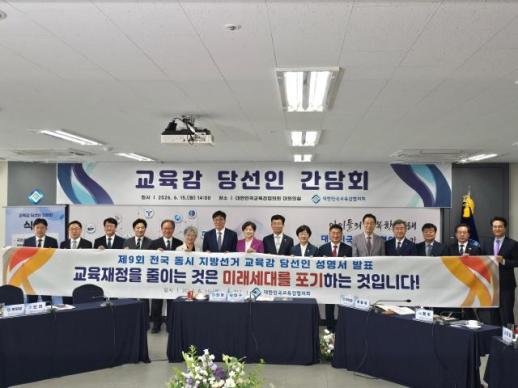 Jeong Geun-sik Elected as Chair of the 11th Korea Education Superintendents Association On June 3, newly elected superintendents from across the country gathered ahead of their official terms to voice their unified opposition to the restructuring of local education finance grants being pursued by financial authorities. The superintendents, regardless of ideological affiliations, unanimously elected Jeong Geun-sik, the Superintendent of Seoul, as the chair of the association, emphasizing, "We cannot accept unilateral budget cuts that disregard on-the-ground data and the unique nature of education." They declared their intent to respond vigorously. On June 15, the newly elected superintendents convened at the Korea Education Superintendents Association office in Sejong to discuss enhancing communication among local education offices and addressing pressing educational issues. Kang Eun-hee, the former chair and Superintendent of Daegu, stated, "Korea's education system is facing unprecedented challenges due to a rapid decline in school-age populations, an increase in small schools, and a digital transformation driven by artificial intelligence. In this crisis, securing stable local education finances, firmly establishing local education autonomy, and restoring teachers' rights while ensuring a safe educational environment are urgent collective tasks that require our wisdom." The superintendents unanimously elected Jeong Geun-sik as the 11th chair of the Korea Education Superintendents Association, representing the voices of 16 local education offices and leading policy negotiations with the central government. As a prominent figure in the capital region, Jeong will be responsible for safeguarding education finances and implementing key educational reforms during the upcoming budget discussions. A key issue discussed during the meeting was the joint statement issued by the superintendents in response to the financial authorities' proposed restructuring of education grants. They criticized the notion that declining student numbers justify budget cuts, stating, "Local education finance grants have been a systematic mechanism ensuring stable funding for public education since the law was enacted in 1971, representing a social commitment by the state to education. Despite the significance of this issue for the future of education, it is being pursued solely by financial authorities without any prior consultation or adequate explanation to the local education offices responsible for actual educational delivery." The superintendents specifically targeted the flawed logic presented by the Ministry of Planning and Finance, which argues for budget reductions based on declining student numbers. They asserted, "The claim that education finances should decrease with fewer students reflects a superficial understanding of the realities in education. Many education costs, including staff salaries and basic operational expenses, are fixed costs incurred at the school and classroom level, not variable costs based on the number of students. Even with a decrease in student numbers, essential resources to maintain classrooms and ensure safe school operations cannot be reduced." Additionally, the superintendents dismissed claims of abundant education finances as misleading, based on distorted figures. They presented evidence that the 2026 budget for the Special Account for Education decreased by approximately 1 trillion won compared to the previous year, with significant cuts of 14.9% in budgets for supporting teaching and learning activities and 22.4% in school facility improvement funds. While new educational responsibilities, such as the introduction of digital textbooks and tailored care infrastructure, are increasing, essential expenses are being cut, worsening the conditions for educational activities. The Korea Education Superintendents Association plans to strengthen its negotiation stance with the central government and related agencies following this meeting and the joint statement. The association stated, "All newly elected superintendents have voiced a unified opposition to the restructuring of education grants from the outset, demonstrating our strong solidarity. We will actively engage in comprehensive negotiations with the National Assembly and financial authorities to prevent the collapse of the public education ecosystem due to unilateral expenditure restructuring during the government's national reform initiatives." Meanwhile, during the meeting, the superintendents agreed to recommend Do Seong-hoon, Superintendent of Incheon, as a permanent director of the School Sports Promotion Association, and to delegate the selection of three vice chairs and one auditor to the new chair, to be ratified at the next general meeting.* This article has been translated by AI. 2026-06-15 18:00:00
 -
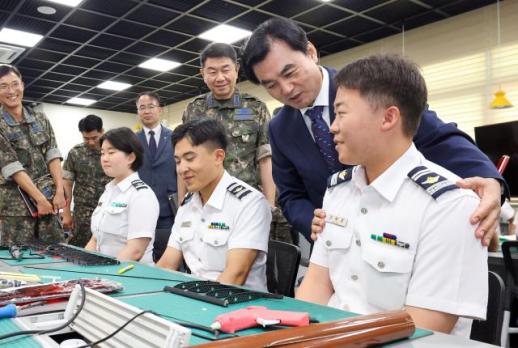 Defense Minister An Gyu-baek Visits Air Force Academy to Discuss Military Academy Integration As the government pushes for the integration of the Army, Navy, and Air Force academies, Defense Minister An Gyu-baek visited the Air Force Academy on June 15 to gather opinions on the merger. He previously visited the Army Academy on May 27 and the Naval Academy on June 10 to discuss the same topic. During his visit, An held a communication meeting with faculty, instructors, and cadets to discuss future plans for training Air Force officers and the establishment of the National Military Academy. Faculty and cadets emphasized the need for an educational system that develops the necessary skills for stable pilot training. They also highlighted the importance of creating an environment where the Air Force's identity and expertise can be fully realized. In response, An expressed agreement with their views, stating, "We will explore various ways to ensure the stable training of excellent pilots within the future National Military Academy system." He further stressed that strengthening the competitiveness of military academies for future elite officer training is not an option but a necessity in light of unprecedented changes in the security environment, such as population decline and advancements in AI and unmanned systems. An outlined his vision for creating a world-class military academy that cultivates defense talent capable of leading a modern, smart military. This includes significant investments in advanced educational facilities and securing top-notch faculty, as well as developing a training environment based on new technologies like AI and drones that integrate the strengths of each military branch. The integration of military academies is part of President Lee Jae-myung's campaign promise and a key national agenda. In an April press conference, An explained plans to select cadets from the Army, Navy, and Air Force together, providing common education in the first two years and specialized training in the last two years based on their chosen service branch. The Ministry of National Defense plans to finalize the establishment of the National Military Academy and initiate legislative amendments soon.* This article has been translated by AI. 2026-06-15 17:57:00
 -
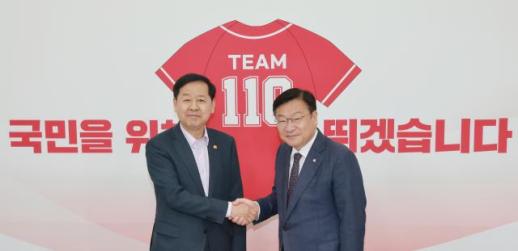 Jung Jeom-sik Meets Deputy Prime Minister Koo Yun-cheol: No Party Lines on Economy Jung Jeom-sik, Floor Leader of the People Power Party, emphasized on June 15 that there should be no division between the ruling and opposition parties or the government when it comes to economic policies and livelihood issues. "We should focus solely on the people and work together," he stated during a meeting with Deputy Prime Minister and Minister of Economy and Finance Koo Yun-cheol at the National Assembly. Jung expressed his willingness to actively cooperate on any legislation or policies that are beneficial to the public, as long as they are in the right direction. He pointed out the difficulties faced by ordinary citizens due to high interest rates, inflation, and currency fluctuations, urging a change in the government's economic policy direction regarding real estate, taxation, and labor issues. In response, Koo acknowledged that while the economy is improving, some citizens are still struggling. He assured that the government would do its utmost to alleviate the hardships faced by these individuals. Koo also promised to communicate and explain the government's economic policies, stating, "If you call me every day, I will come and discuss it every day." During their private meeting, Jung and Koo discussed regional economies. Koo shared plans to develop industries tailored to local characteristics, to which Jung responded that he would actively support such initiatives as long as they are not populist in nature but aimed at regional development.* This article has been translated by AI. 2026-06-15 17:57:00
 -
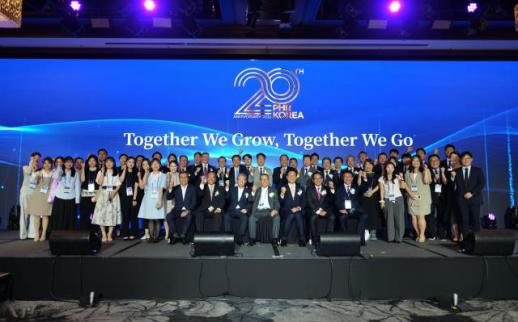 PHR KOREA President Kim Jin-goo Reflects on 20 Years of Growth and Cooperation "The past 20 years have been a time of growth, overcoming numerous challenges such as the global financial crisis and the COVID-19 pandemic," said Kim Jin-goo, President of PHR KOREA, during the company's 20th anniversary celebration on June 11 at JW Marriott Dongdaemun Square Seoul. He expressed gratitude to travel industry partners who have been with the company throughout its journey. PHR KOREA announced on June 15 that it hosted a commemorative event inviting key travel agencies, airlines, and tourism industry officials to celebrate its 20th anniversary. The event was attended by hotel general managers and executives from Ken Hotels and Resorts Holdings, who reflected on their collaborative relationships and shared future visions. "Today's PHR KOREA is possible thanks to the unwavering trust and support from our partners in the travel industry," Kim stated. "The next 20 years will mark a new starting point for creating shared prosperity and values." Kento Sato, President of Ken Hotels and Resorts Holdings, highlighted the importance of the Korean market while discussing the growing trend of tourism exchange between Korea and Japan. He noted, "Last year, 9.5 million Koreans visited Japan, making it the largest market, accounting for 20% of all foreign tourists. Japan is also the top overseas travel destination for Koreans, indicating that both countries are developing a substantial mutual tourism market." The event also featured a presentation on K-Arena Yokohama, a key asset of the group. This music venue, with a capacity of up to 22,000 seats, is becoming a hub for K-pop performances and global artists, fostering cultural exchange between Korea and Japan. Since its establishment in 2006, PHR KOREA has focused on hotel marketing and sales in Japan, Guam, and Saipan. The group currently operates a total of 36 hotels, including 27 in Japan, 8 in Guam and Saipan, and 1 in the United States.* This article has been translated by AI. 2026-06-15 17:54:00
 -
 Naver Expands Live Streaming Ecosystem with Exclusive 2026 World Cup Coverage Naver is accelerating the expansion of its live streaming platform, Chijijik, by leveraging exclusive new media broadcasting rights for the 2026 North America World Cup. The company aims to attract users through this major sporting event and enhance its platform strategy by linking it with Naver Plus membership for shopping and content services. On June 12, Naver reported that the combined peak viewership for the dedicated World Cup broadcast channel and the 'Watch Together' streaming feature during the group stage match between South Korea and the Czech Republic reached 4.82 million. A total of 817 streamers participated in the 'Watch Together' broadcasts. Popular streamer Han Dong-sook's channel recorded a peak viewership of 375,965, while the cumulative live streaming time for all 'Watch Together' broadcasts reached 1,613 hours. This interactive content, which allows streamers and viewers to enjoy the game together, has been praised for attracting a large audience beyond traditional match broadcasts. Naver secured exclusive new media broadcasting rights for the FIFA World Cup in South Korea from 2026 to 2032 from the Central Group. The company obtained the new media rights from JTBC, providing mobile live broadcasts through the Chijijik app and website. This strategy aims to shift sports broadcasting from traditional television to mobile platforms, expanding user engagement. Chijijik, launched by Naver at the end of 2023, initially focused on game streaming but has recently expanded into e-sports, sports, performances, and entertainment. Naver is committed to developing Chijijik into a comprehensive live streaming platform, with the World Cup seen as a significant opportunity to broaden its reach. The broadcasting service is closely linked to the Naver Plus membership. Live broadcasts of overseas matches, excluding those involving South Korea, are available only to members, while high-definition viewing services for South Korean matches are also offered to members. This strategy aims to leverage World Cup content as a membership benefit to attract new subscribers and enhance user retention and loyalty. Naver Plus membership not only offers shopping rewards but also provides access to various content services, including Netflix, Spotify, and Xbox Game Pass. Naver is working to convert users attracted by the World Cup into members, establishing a virtuous cycle that leads to increased shopping and content consumption. The company is utilizing sports content as a means to acquire users and positioning membership as a link to expand the Naver ecosystem. Chijijik is also focusing on differentiation. During the World Cup broadcasts, the platform will provide real-time AI-generated short clips during matches and player highlights immediately after games, enhancing features tailored to mobile users. The 'Watch Together' feature, with participation from 817 streamers, is a key content differentiator for Chijijik. Users can enjoy real-time chat and streamer commentary, offering a viewing experience distinct from traditional TV broadcasts. Naver is rapidly enhancing Chijijik's content competitiveness. On June 8, Jensen Huang, CEO of NVIDIA, conducted a live broadcast from Naver's dedicated Chijijik studio, engaging with fans in real-time. Naver plans to continue expanding its live production infrastructure to enhance content competitiveness through large events and creator-driven content.* This article has been translated by AI. 2026-06-15 17:51:00
 -
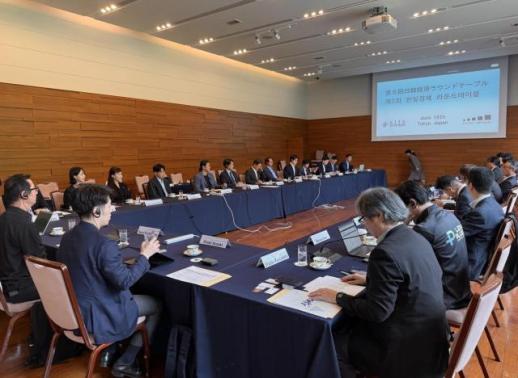 Korea and Japan Hold 5th Economic Roundtable in Tokyo The Korea International Trade Association (KITA) and the Japan Economic Club discussed cooperation in the AI industry among business leaders from both countries. Key topics included power efficiency in data centers and care robots, which both nations can address together. On June 15, KITA and the Japan Economic Club held the 5th Korea-Japan Economic Roundtable at the International House of Japan in Tokyo. The theme of the meeting was "Strengthening Korea-Japan Industrial Cooperation in the Age of Artificial Intelligence." The Korea-Japan Economic Roundtable serves as a cooperative channel established by KITA's Korea-Japan Exchange Special Committee and the Japan Economic Club to enhance exchanges and private cooperation between business leaders from both countries. The meetings alternate between Korea and Japan, starting with the first meeting in Tokyo in May 2024. About 30 business leaders from both countries attended the meeting, including Jang Jae-jin, chairman of Orient Bio; Honma Masahiko, managing partner of Incubate Fund; and Muta Masaaki, president of Transcosmos. From Korea, AI startups such as Furiosa AI, Newbility, Luton Technologies, and Buren Technologies participated to explore collaboration opportunities with Japanese companies like NTT and Kawasaki Heavy Industries. The first session addressed the issue of power efficiency in AI data centers. Jang Jae-jin from Furiosa AI and Katsuhiko Kawazoe, a senior fellow at NTT, presented on the increasing power demand due to AI proliferation and shared strategies for building high-efficiency infrastructure. Industry experts noted that as the burden of electricity costs for AI data centers grows, infrastructure cooperation combining high-performance semiconductors, low-power AI chips, cooling, and power management technologies is emerging as a key area of collaboration between Korean and Japanese companies. The second session focused on the use of physical AI and robotics for elderly care. Kazuhiko Ichikawa, head of healthcare at Kawasaki Heavy Industries, and Kang Gi-hyuk, CEO of Newbility, led the presentations. Participants agreed on the need to expand cooperation in care robots and physical AI technologies to address aging and labor shortages. Acting Chairman Jang Jae-jin stated, "The recent Korea-Japan summit has strengthened the momentum for cooperation between the two countries. The AI industry is a representative area where Korea and Japan can grow together." KITA plans to hold the 6th Korea-Japan Economic Roundtable in Seoul in the second half of the year, based on the agendas discussed at this meeting. The next meeting will review the outcomes of cooperation projects in AI and robotics and discuss specific collaboration plans.* This article has been translated by AI. 2026-06-15 17:51:00
 -
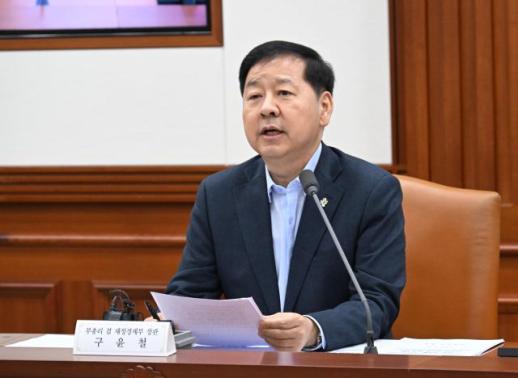 Deputy Prime Minister Koo Yun-cheol Advocates for Use of Surplus Tax Revenue Koo Yun-cheol, Deputy Prime Minister and Minister of Economy and Finance, stated on June 15 that surplus tax revenue should be utilized to prepare for the future and to support those in need to alleviate polarization. During his appearance on the Ministry's YouTube channel, "Policy Talk Show: Bold Briefing," Koo shared his views on current issues, including surplus tax revenue. "While a strong economy can lead to increased tax revenue, tax income can fluctuate," he said. "We must support those in need to ensure they can live well, while also preparing for the future and addressing polarization." He added, "We need to provide startup funds for young people so they can pursue their dreams and start businesses. We will ensure that resources are used effectively for future preparedness and current polarization alleviation." Koo projected that demand for memory semiconductors will increase due to the AI transformation. He noted, "Currently, the demand for memory is driven by data centers, but we may see additional demand for memory semiconductors in areas like physical AI." In response to concerns about a semiconductor bubble and market concentration, Koo acknowledged the high proportion of semiconductors in exports but countered, "Exports of computers are also performing well." He highlighted that other sectors, including ships, general machinery, biotechnology, health, secondary batteries, defense, K-content, and K-food, are also excelling in exports, stating, "Even kimchi is exported in the trillions of won." Finally, Koo emphasized, "The direction of the Ministry of Economy and Finance's economic policy is to move beyond semiconductors. We aim to develop second and third types of semiconductors that can match memory semiconductors."* This article has been translated by AI. 2026-06-15 17:48:00