

Journalist

Kim Doo Il
dikim@ajunews.com
-
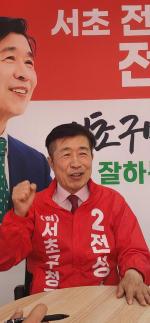 Seong-su Jeon Unveils 'Future Map' for Seocho with Key Urban Development Plans Seong-su Jeon, the People Power Party candidate for Seocho District mayor in the upcoming local elections, unveiled his 'Future Map for Seocho' on May 16, highlighting three key pledges: the underground construction of the Gyeongbu Expressway, the establishment of a global AICT city in Yangjae and Naegok, and the development of a community-centered care system. Jeon stated, "The future competitiveness of Seocho relies on spatial innovation, advanced industries, and improving residents' quality of life," emphasizing that "the starting and ending point of all policies is the residents." The first key pledge focuses on a major spatial transformation through the underground construction of the Gyeongbu Expressway and Banpo Road. By burying the Gyeongbu Expressway from Yangjae IC to Hannam IC, Jeon aims to eliminate the physical barrier that currently divides Seocho and transform the above-ground space into a community-friendly area featuring parks, greenery, and sports facilities. He plans to implement an AI-based Intelligent Transportation System (ITS) using digital twin technology to manage underground traffic in real-time and introduce eco-friendly ventilation and air purification systems to maintain high air quality in the parks and surrounding residential areas. Jeon remarked, "The three-dimensionalization of the Gyeongbu Expressway is not just a civil engineering project but a future project that will change the urban structure of Seocho," promising to create green, cultural, and recreational spaces that reflect residents' opinions. The second key pledge is the creation of a 'Global AICT City' in Yangjae and Naegok. Jeon aims to maximize the impact of the government's designation of the 'Yangjae AI Future Convergence Special Zone' and Seoul's 'Yangjae ICT Specific Development Promotion District' to develop Yangjae into a leading hub for future industries in South Korea. To achieve this, he plans to attract global unicorn companies through various incentives, including easing floor area ratio regulations, and strengthen the research and development ecosystem in collaboration with nearby research institutions and universities. Jeon also intends to cultivate practical talent in partnership with KAIST's AI Graduate School and establish the 'Seocho AICT Fund' to expand investment support for startups at various growth stages. He stated, "I will turn Yangjae and Naegok into not just a business district but a global technology innovation hub, making Seocho the heart of South Korea's AI industry." The third pledge focuses on establishing a 'Seocho-style Community Care' system. Jeon plans to create 'care hubs' that combine private creativity with public resources, allowing seniors and children to receive dignified care within their familiar living environments. By minimizing welfare blind spots through district-based care hubs and expanding smart care services integrated with IT technology, he aims to establish a 'Seocho welfare standard.' Jeon emphasized, "Care is not just welfare; it is a matter of community dignity," vowing to create a Seocho where no one, from children to seniors, is left behind. Additionally, Jeon highlighted the complex development around the Seoul Express Bus Terminal as a major focus. He plans to modernize and integrate the aging bus terminal underground while developing the above-ground area into a mixed-use complex of over 60 stories that combines commercial, residential, office, and tourism functions, forming a new urban axis connected to the Han River. By introducing direct underground access routes and multi-level pedestrian infrastructure, he aims to reduce traffic congestion and enhance accessibility to the Han River, promoting Seocho as a landmark. Jeon concluded, "Seocho is no longer a city that remains stagnant; I will fulfill my promises with the attitude of 'the residents come first.'"* This article has been translated by AI. 2026-05-16 13:16:13
 -
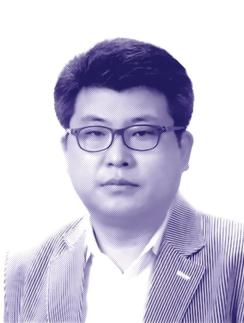 Power Ultimately Tests Humanity History is often said to repeat itself, but more accurately, it is human nature that recurs. Across different eras, human nature remains remarkably consistent. The desires, pride, face-saving, and emotions surrounding power are strikingly similar to those we see today. The story of Yi Seong-gye, the founder of the Joseon Dynasty, and the Lee An-sa family, a powerful local elite in Jeonju during the late Goryeo period, illustrates this point. Regardless of its factual accuracy, the enduring nature of this tale is not solely due to its mythic origins. It encapsulates the age-old political dynamics of power, humanity, jealousy, fear, and survival. According to this narrative, the Lee An-sa family was a significant local force in Jeonju. One day, a conflict arose between this local power and the central authority. At the heart of the dispute was a beautiful courtesan, which sparked issues of pride and emotion. While the story is anecdotal and its veracity cannot be confirmed, its underlying structure is intriguing. It represents not merely a love affair but a struggle for dominance in the region. Central power always claims legitimacy, asserting that it upholds order by royal decree. However, local elites have long held the trust of the people, land, economic resources, and networks. If the power from the center is merely paper authority, then the local elite represents power on the ground. The clash between the two was perhaps inevitable—a confrontation between local elites and central authority. Power, despite the passage of time, remains astonishingly similar. History often moves not by grand ideologies but by human emotions. Pride provokes power, and face-saving escalates conflicts. In the Goryeo period, a rumor that “royal energy flows from the ancestral graves” could lead to the downfall of a family, illustrating this dynamic. While such beliefs may seem absurd today, in an era lacking scientific advancement, geomancy was not merely superstition; it was a framework for understanding the world and a quasi-science explaining political realities. When deciding on a capital or constructing royal tombs, people sought to interpret the will of heaven and the energies of the earth. In such times, the phrase “the king is in my grave” was not just a rumor; it was a political attack and sometimes a weapon threatening survival. When human jealousy and the fear of power intertwine, personal emotions can quickly transform into public violence. Thus, the story of the Lee An-sa family’s grave desecration and their flight becomes even more symbolic. Whether the tale is true or not, it reflects the desperation of a family forced to uproot itself for survival. Relocating ancestral graves is not merely a move; it involves shifting the very foundation of life, memory, and family history. Ultimately, this family, once pushed to the periphery, would find itself at the center of a new dynasty. The oppressed become the powerful, and the periphery becomes the center—a historical irony. What is fascinating is how history tests humanity in this manner. Power often conceals individuals, only to reveal their true nature at critical moments. Desires, character, restraint, and limits that were invisible during ordinary times become starkly apparent at the threshold of power. Today's politics are not much different. During election seasons, politicians' pasts are scrutinized. Long-forgotten remarks, youthful mistakes, and personal conflicts resurface for public judgment. Some claim injustice, while others argue that these are old matters. Both perspectives hold some truth. Everyone has immature phases and makes mistakes. The issue is not the mistakes themselves but what kind of person emerges after those experiences. Power is a test of humanity before it is a test of ability. People do not only read campaign platforms; they observe how candidates respond in crises, how they treat others in conflicts, whether they evade or accept responsibility, and if they can exercise restraint in the face of emotions. A leader's qualities are often revealed more in uncomfortable moments than in grand speeches. Reflecting on this, the criteria by which communities choose their leaders have not changed significantly over time. People in the Goryeo period likely asked, “Can we trust this person with power?” Today’s voters pose a similar question. The reason the Lee An-sa tale endures to this day is rooted in this very conflict of pride and emotion that unfolded in a tavern in Jeonju during the late Goryeo period. * This article has been translated by AI. 2026-05-15 23:58:16
 -
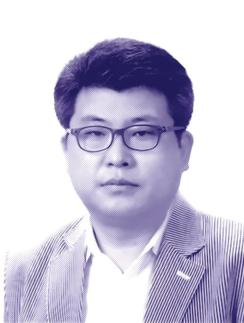 Shifting Public Sentiment in Seoul: Oh Se-hoon's Comeback and Jung Won-oh's Uncertainty The atmosphere in Seoul is changing, similar to the shifts seen in the Yeongnam region. Currently, candidate Jung Won-oh is still leading within the margin of error. Experts explain that within this margin, the results can be considered statistically equivalent. However, those experienced in elections understand that it is not just the current numbers that matter, but the trends. Recent polls show Oh Se-hoon has halved the gap in just a few weeks. The so-called "golden cross" is beginning to emerge in political discussions. Seoul has always been a city that wavers until the end. While it may appear to lean left in national elections, local elections prompt voters to reconsider who can effectively manage the city. Many voters prioritize practical governance over ideology. This makes elections in Seoul particularly challenging and unpredictable. This election is no different. Observations indicate that the Democratic Party's organizational strength is robust. Even in traditionally conservative areas like Seocho and Gangnam, Democratic candidates are actively campaigning, engaging with residents and canvassing neighborhoods. In contrast, the People Power Party appears relatively subdued, making it seem that the Democratic Party has the upper hand. However, there is a peculiar scene: the expressions of the voters. Despite the Democratic candidates' vigorous efforts, the public's response is surprisingly lukewarm, bordering on indifferent. This suggests a sense of detachment, as if voters are saying, "We will wait and see." This sentiment may be linked to the various confusions that have arisen since the inauguration of the Lee Jae-myung administration, including turmoil over real estate policies, controversies surrounding the cancellation of indictments, and excessive political arrogance. The government, less than a year in office, may already be showing signs of fatigue. Nevertheless, the Democratic Party should not be underestimated. The real contest is just beginning. The progressive camp has historically demonstrated remarkable unity when feeling threatened. This has been evident in past elections, particularly in Seoul, where higher voter turnout tends to favor the Democratic Party. The enthusiasm among Democratic supporters on the ground is also significant. Therefore, the biggest risk for Oh Se-hoon’s campaign is complacency. Entering the margin of error signals not victory, but the true battle has begun. However, Oh Se-hoon does have an advantage: his established credibility. Jung Won-oh has yet to be sufficiently vetted by the entire electorate in Seoul. As the election approaches, it remains uncertain what new controversies or variables, referred to as "hidden traps," may emerge. While Jung has administrative experience in Seongdong-gu, questions remain about his readiness to manage a vast city like Seoul. Critics point out that instead of providing clear answers to recent controversies and policy confusions, he often responds evasively during public scrutiny. Voter concerns include issues like the response to heavy snowfall, the Cancun trip controversy, the feasibility of redevelopment and transportation pledges, and budget issues related to smart shelters in Seongdong-gu. Despite these pressing questions, Jung has been criticized for occasionally deflecting with vague responses or political attacks. The Seoul mayoral election is a stage for "verification," not just "image." Voters will closely observe the candidates' attitudes and communication skills until the very end. In contrast, Oh Se-hoon has already served as mayor four times and has experience as a member of the National Assembly, along with two electoral defeats. Politically, he is a well-analyzed figure, with both supporters and detractors already familiar with him. There seems to be little new to uncover. In politics, verification can be a double-edged sword. It can leave scars but also provide stability. In a vast city like Seoul, "familiar competence" can be a surprisingly strong asset. Citizens often prefer to vote for managers rather than revolutionaries. Thus, this Seoul mayoral election is not merely a battle of ideologies. It is a contest of "unity" versus "stability." The Democratic Party will push forward with its organization and enthusiasm, while Oh Se-hoon will counter with his experience and urban management skills. Given the current momentum, the possibility of a golden cross certainly exists. However, the final week of elections in Seoul has historically defied predictions. Therefore, Oh Se-hoon’s campaign must remain vigilant until the end, as Seoul is a city that often changes its mind at the last moment.* This article has been translated by AI. 2026-05-14 13:53:56
 -
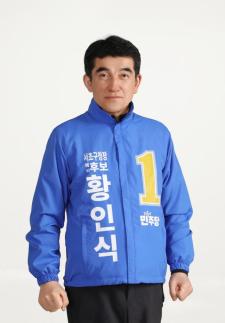 Democratic Party's Hwang In-sik Proposes Ambitious Development Plans for Seocho Hwang In-sik, the Democratic Party candidate for Seocho District mayor, is shaking up local development politics with his proposals for the "demolition and restructuring of the Gangnam Express Bus Terminal overpass" and the "development of Dure Village in Bangbae-dong." By directly addressing longstanding issues that have remained untouched for decades, Hwang's campaign is being seen as a significant factor in the upcoming Seocho District mayoral election. At the opening of his campaign office in Bangbae-dong on May 11, Hwang stated, "For the past 30 years, local governance in Seocho has essentially been a system of appointed mayors by central power. I will rewrite Seocho's future as an administrator who proves my capabilities, not as a proxy for political power." Hwang characterized the issues surrounding the Gangnam Express Bus Terminal overpass and Dure Village as prime examples of long-neglected administrative challenges in Seocho, sharply criticizing the ruling People Power Party. He noted, "The Gangnam Express Bus Terminal overpass, completed 48 years ago, poses both safety concerns and urban disconnection issues. Upon my election, I will initiate discussions on its demolition and restructuring, forming a public-private consultative body involving the Seoul city government, Seocho District, and residents." The overpass currently spans the heart of the Banpo and Jamwon neighborhoods. Hwang's team identifies several key issues: the danger of the overpass's entry and exit points, urban decay beneath the structure, incompatibility with the upscale residential belt in Banpo, disconnection from the Sevit Island and Han River tourism axis, and separation from local commercial areas. As the Banpo area undergoes transformation into a high-end apartment district and tourist zone, concerns have been raised that the outdated overpass system from the 1970s does not align with the city's modern character. Hwang argued, "Concerns about traffic chaos are exaggerated. Research indicates that the rate of speed reduction is not significant and can be managed effectively." This proposal is seen as a declaration to restructure the urban landscape of southern Seoul. Another key promise from Hwang is the development of Dure Village in Bangbae 3-dong. Dure Village, located behind Sangmun High School at the foot of Woomyeonsan Mountain, spans approximately 1,500 pyeong (about 5,000 square meters) and has been home to numerous illegal structures for decades. While the surrounding area has seen the rise of luxury villas and single-family homes, Dure Village remains stuck in time, characterized by dilapidated buildings with slate roofs. Hwang described this situation as "the most embarrassing aspect of Seocho administration," stating, "A beautiful, rectangular 1,500-pyeong public land has been left in a dark state for decades. Previous district mayors have been too afraid to address the illegal structures." Seocho District recently attempted to sell public land with conditions for park development and the removal of illegal buildings, but the auction failed to attract bidders. Hwang pledged, "I will establish optimal utilization plans that include measures for illegal buildings immediately upon taking office. I will hold previous mayors accountable for not fulfilling their sacred duties as district leaders." The real estate industry sees high potential for Dure Village's development. Factors such as proximity to Sangmun High School, access to Woomyeonsan's green space, and connections to the Bangbae reconstruction belt suggest significant business viability. Proposed development models include eco-friendly low-rise residential complexes, luxury terrace villas, cultural and artistic residential towns, and high-end residential belts linked to Woomyeonsan. Hwang, a city administration expert with experience as Seocho District's chief and as a director and spokesperson for the Seoul city government, is viewed as someone who can translate these political promises into actionable administrative initiatives. A real estate expert remarked, "Dure Village and the express bus terminal overpass are issues that Seocho residents have felt for a long time but no one has dared to address. Hwang has brought the most challenging urban problems into the electoral spotlight." A political insider noted, "This election is shaping up not just as a simple party contest but as a reset of Seocho's development politics, which could create significant pressure for the current administration."* This article has been translated by AI. 2026-05-11 16:19:41
 -
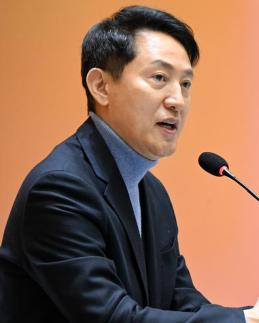 Oh Se-hoon Criticizes Lee Jae-myung's Real Estate Policies Oh Se-hoon, the candidate for Seoul mayor, sharply criticized the current government's real estate policies on May 9, stating, "I will stand with the citizens until the end," alongside district mayor candidates in Seoul. In a statement titled "Standing with Citizens Against Real Estate Tyranny" shared on his social media, Oh remarked, "Seoul is currently a real estate hell where everyone suffers, whether they own a home, are looking to buy, or want to sell," directly targeting Lee Jae-myung's real estate policy. Oh specifically addressed the recent surge in apartment assessed values in Seoul, noting, "The assessed value of multi-family homes in Seoul has risen by 18.6% in just one year, with some areas like Seongdong, Gangnam, Songpa, and Yangcheon nearing a 30% increase." He criticized the government, saying, "It is the administration's policy failures that have driven up housing prices; why should responsible citizens bear that burden?" He also expressed deep concern for those without homes, stating, "There are currently zero rental listings in complexes with thousands of units," and emphasized, "We have entered an era where tenants must interview in front of landlords." He argued that merely increasing the supply of multi-family and multi-household units will not suffice, insisting that new apartment construction must be allowed to alleviate the overall market. Oh took a firm stance against the proposed abolition of the Long-Term Holding Special Deduction (LTHSD), stating, "To label citizens who own a single home they have worked a lifetime to acquire as speculators is a cruel act that undermines the middle class's housing ladder," and called for an immediate halt to such measures. He also criticized loan regulations, stating, "The dual barriers of DSR (Debt Service Ratio) and LTV (Loan-to-Value) effectively mean that only cash-rich individuals can buy homes," and pointed out that redevelopment and reconstruction projects are stalled due to blocked relocation loans, leaving members of associations in limbo. Oh implicitly targeted President Lee Jae-myung and ruling party candidate Jeong Won-o, questioning, "How can a candidate who only seeks to appease the president represent the cries of the citizens?" In conclusion, Oh vowed, "I will protect the hopes of ordinary citizens and youth dreaming of homeownership, the valuable assets of lifelong laborers, and the crumbling housing ladder. I will confront the misguided real estate tyranny head-on." Political analysts interpret this message as a strategic move to seize the real estate issue, a key factor in public sentiment ahead of the June 3 local elections. They note that it particularly targets the anxieties of residents in middle-class neighborhoods and areas undergoing redevelopment and reconstruction.* This article has been translated by AI. 2026-05-09 15:12:25
 -
 Pope Leo XIV to Celebrate Mass at Sagrada Familia for Gaudí's 100th Anniversary The Sagrada Familia in Spain is more than just a cathedral; it represents a century of prayers offered to God and serves as a stone gospel. At the pinnacle of this prayer, the Pope will stand. Pope Leo XIV will officiate a mass for the 'Tower of Jesus Christ' on June 10, commemorating the 100th anniversary of Antoni Gaudí's death at the Sagrada Familia in Barcelona. After 144 years of construction that began in 1882, the church has finally completed its symbolic centerpiece this year. In February, a cross was placed atop the 'Tower of Jesus Christ,' making it the tallest church building in the world at 172.5 meters. Many people associate the year 2026 with the completion of the Sagrada Familia because the church had aimed to finish its main structures by the centenary of Gaudí's death. With the completion of the 'Tower of Jesus Christ' and the central spire this year, the church has reached a significant stage of external completion. This has led to a strong perception among the media, tourism industry, and the public that the church will be completed in 2026. However, work remains on the 'Glory Facade,' which serves as the southern entrance, and four additional spires. This area represents the final judgment of Jesus and the glory of heaven, and the expected final completion date is now projected around 2034. The significance of this mass lies in the completion of the most important vertical axis of the building. The 'Tower of Jesus Christ' is not merely a spire; it symbolizes the connection between the human world and the divine. It is surrounded by towers dedicated to the Virgin Mary and the four Evangelists, with an inscription in Latin on the tower that reads, 'You alone are holy, You alone are Lord, You alone are the Most High.' Gaudí dedicated the last 43 years of his life to this cathedral, even setting up a workshop inside the building where he lived and worked. He remained on the construction site until his last moments. Ironically, after being struck by a tram, he was mistaken for a homeless person and taken to a poor hospital. Despite suggestions to transfer him to a better facility, he reportedly refused, saying, "My place is among the poor." His faith is reflected in his architectural philosophy. Gaudí designed the height of the cathedral to be slightly lower than that of Montjuïc Hill in Barcelona, believing that human creations should not surpass God's nature. As a result, the Sagrada Familia evokes a unique feeling upon first sight. Rather than the cold, imposing nature typical of Gothic cathedrals, it offers a sense of life, akin to entering a living forest. The interior columns branch out like tree trunks, and the ceiling spreads like the branches of a forest. The stained glass windows are arranged with blue hues on the east and red hues on the west, symbolizing the birth and passion of Jesus. In this way, the gospel is expressed through stone, light, and nature. Previous popes have also had a deep connection with this cathedral. Pope John Paul II visited in 1982, and Pope Benedict XVI officiated a mass in 2010, elevating the church to the status of a minor basilica. Last year, Pope Francis declared Gaudí a 'Blessed.' There is speculation within the Spanish Catholic community that Pope Leo XIV may elevate Gaudí to the status of 'Venerable' during this visit. The construction of the Sagrada Familia is not yet complete. However, perhaps what matters most is not whether it is finished. Gaudí once said, "My client (God) is not in a hurry." Amidst the ongoing construction that has lasted 144 years, humanity may be learning just how impatient it truly is.* This article has been translated by AI. 2026-05-08 14:57:01
 -
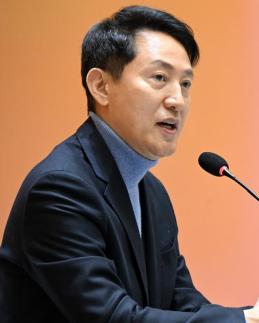 Seoul Mayor Candidate Oh Se-hoon Blames Lee Jae-myung Government, Democrats for Housing Woes Oh Se-hoon, a candidate for Seoul mayor, sharply criticized the Lee Jae-myung government and the Democratic Party’s real estate policies in a Facebook post on Tuesday. Responding to Democratic Party claims that the Seoul city government is to blame for recent instability in home prices and the monthly and long-term rental markets, Oh said, “The cause of this real estate hell is the Lee Jae-myung government and the Democratic Party.” Oh described the party’s approach as a “failed policy centered on suppressing supply and controlling the market.” He argued that Democrats created the conditions behind Seoul’s housing shortage, strains in the jeonse market and a slump in the villa market, then shifted responsibility to others. Political observers said the message went beyond a rebuttal and signaled an intensifying fight over who is responsible for housing conditions, a likely central issue in the Seoul mayoral election. Housing prices and rent are among the most sensitive pocketbook issues for Seoul residents. Oh focused his criticism on supply. He said large-scale cancellations of redevelopment zones during the tenure of former Mayor Park Won-soon are a root cause of today’s shortage. Seoul City under Park pursued a “New Town” and redevelopment exit strategy that lifted designations for many planned redevelopment areas, a move then justified as curbing speculation and protecting residents but, Oh argued, later produced a supply gap. “Redevelopment projects typically take 20 years, but the Democratic Party cut the roots and then asks why the tree won’t grow,” Oh wrote. He said that after returning to office he used the city’s “Rapid Integrated Planning” program to reduce project timelines from 20 years to about 12 years. Seoul City has recently pushed to speed up major reconstruction and redevelopment projects in areas including Apgujeong, Yeouido, Mokdong, Seongsu and Noryangjin, maintaining a supply-expansion stance that contrasts with the strict regulatory approach under the Moon Jae-in government. Critics in the real estate market have long argued that the Moon government’s tough measures distorted the market. They cite heavier taxes on owners of multiple homes, a stronger comprehensive real estate tax, tighter lending rules and the so-called three lease laws as policies that locked up listings and drove up jeonse prices. The three lease laws, implemented in 2020, are often cited as a major shock. With the introduction of a right to renew contracts and caps on rent increases, new jeonse supply fell sharply and apartment jeonse prices in Seoul surged. The government emphasized tenant protection, but critics said the side effect was the “disappearance of jeonse listings.” Oh also linked jeonse fraud to the period of rising home prices and aggressive gap investment under Democratic Party governments. “Gap investment continued as a rollover structure without sufficient capital, and then interest rate hikes and falling home prices overlapped, and jeonse fraud exploded,” he wrote. Large-scale jeonse fraud cases in Incheon’s Michuhol district and other parts of the Seoul metropolitan area have been widely analyzed as involving a mix of factors, including sharply higher villa prices late in the Moon administration, loose jeonse loan structures and inflated appraisals. Oh criticized recent Democratic Party moves to tighten regulations on multi-home owners and to reduce long-term holding deductions for nonresident owners of a single home, calling them policies that would shrink private rental supply. He also opposed expanding land transaction permit zones, saying it would effectively bind all of Seoul in a controlled economy and worsen market anxiety. Some in the industry have complained that prolonged permit requirements have reduced transactions and distorted the market. Oh said the dispute is not simply about prices but about who blocked supply and destabilized the market. “Citizens’ memory that when the Democratic Party takes power, home prices rise and rental crises repeat is no exception this time,” he wrote. * This article has been translated by AI. 2026-05-06 18:08:11
 -
 Seoul mayoral race: Poll lead holds, but undecided voters and turnout loom large Seoul’s political mood is hard to read. Poll numbers are moving, but many voters are holding back. The central dynamic in the race is this: public sentiment appears to be shifting, but many people still hesitate to vote. Recent published polling trends still show a gap, with candidate Jeong Won-o ahead and candidate Oh Se-hoon closing in. But reading the race only through charts is risky. The key is momentum. Oh’s gradual rise matters because small shifts can become the start of a turnaround. Against that backdrop, Jeong’s campaign was hit by a controversy over a promotional post citing a poll. The material was posted without required disclosure items such as the polling firm and survey period, then deleted at what critics called “the speed of light.” The episode left a political impression beyond a simple mistake. A front-runner needs steadiness, not haste, and the incident suggested a campaign in a rush. With similar disputes said to have occurred repeatedly, Jeong’s camp may struggle to avoid criticism of poor oversight. In politics, impatience can be costly. The more a candidate leads, the more composure voters expect. When a small error hardens into doubts about why a campaign is rushing, the contest can shift from numbers to psychology. For Jeong, the immediate need is tighter management, not more messaging. For Oh’s side, the moment creates an opening. Challengers start at a disadvantage, but they can benefit first when the race becomes unstable. If the opponent repeats mistakes, momentum can move without direct attacks. In that sense, elections can reward the side that holds steady when the other side wobbles. The biggest variable, however, may be undecided voters. In conversations with residents, a pattern keeps emerging: distrust of politics, fatigue with the two major parties, and signs of weakening willingness to vote. One resident described themselves as “undecided” while sharply criticizing certain political behavior. Yet when asked whether they would vote, the answer became uncertain. That reflects a slice of Seoul’s mood. This type of distrust-driven undecided voter could be decisive. They do not move easily, but when they do, they can shift the race. The risk is if they do not move at all: turnout falls, and the side with stronger organization gains an advantage. It is a democratic paradox — anger without action — and the article describes it as a warning sign. Intense political clashes and disputes over prosecutors and special prosecutors are also adding to fatigue rather than energizing voters, the article says. Instead of generating momentum through conflict, politics is widening cynicism. A typical result in such moments is a low-turnout election. The race, then, is not only about who leads in support. It is also about who can get more voters to the polls. A front-runner can stumble through complacency, and a challenger can flip the contest by seizing an opening. Meanwhile, undecided voters may delay their decision until the end. For now, the article concludes, sentiment in Seoul may be moving, but whether it turns into votes remains unclear — and the gap could close quickly depending on who bridges it first. * This article has been translated by AI. 2026-05-02 16:21:18
 -
 Seoul’s Han River Bus Tops 70,000 Riders in April as Policy Debate Intensifies The Han River bus has been drawing heavier crowds as the spring outing season gets underway. Data released by the Seoul Metropolitan Government on Tuesday showed April ridership totaled 70,552 from April 1-27, a monthly record. The city projected the figure will exceed 75,000 by the end of the month. Weekend traffic also rose. Ridership over the final weekend of April (April 25-26) reached 10,247, up 15.2% from the first weekend (April 4-5). Seoul said the increase is not only seasonal. In line with the International Garden Expo opening May 1, the city will open a temporary dock at Seoul Forest and add a direct Yeouido-to-Seoul Forest route. The plan is to open to the public a dock previously used only by official vessels and capture more destination-based trips, combining transportation and tourism. The ridership surge has sharpened differences in how politicians assess the program. Jung Won-oh, the Democratic Party’s Seoul mayoral candidate, has taken a negative stance on the Han River bus, saying that if elected he would consider halting operations or, at minimum, scaling it back and shifting it to a tourism-focused service. His comments have raised questions about profitability and efficiency. Mayor Oh Se-hoon, by contrast, has promoted the Han River bus as a platform aimed at both everyday commuting and tourism demand. After skepticism early on, ridership climbed from 62,491 in March to more than 70,000 in April, with cumulative riders surpassing 230,000, the city said. Seoul is also reviewing ways to improve revenue beyond fares, including expanding dockside facilities such as cafes, a chicken pub and convenience stores, along with advertising and events. The city has described the approach as a platform-style transit model intended to attract private demand and reduce the fiscal burden. Park Jin-young, head of Seoul’s Future Han River Headquarters, said the Han River bus “is setting a monthly ridership record and is taking root as a water transit option that meets both everyday transportation and tourism demand.” He added, “Starting in May, we will also open a temporary dock so residents can visit the International Garden Expo at Seoul Forest by taking the Han River bus, improving convenience for citizens.” 2026-04-29 13:06:23
 -
 Seoul to Host Free Palace Walk on May 31; 5,000 Spots Available First Come, First Served A global cultural walking event tracing Seoul’s palaces and traditional streets will be held in the heart of the city. Aju Media Group (Aju Business Daily, ABC and AJP) said on the 29th it will hold the “2026 Seoul Foreign Residents Palace Walk” on May 31 at the Gwanghwamun Square play yard. Registration opened on the 28th. Participation is free, and all participants will receive a summer T-shirt, a hat and a brunch set. The event is open to foreign residents in Korea, international students and tourists, as well as local residents. Organizers said it is designed as a downtown festival where people of different nationalities and generations can walk together through major palaces and other traditional cultural sites. Registration is available through a dedicated application page on the Aju Business Daily website. Applicants are instructed to enter through the main-page banner rather than a direct address. The walk will accept 5,000 participants on a first-come, first-served basis, with no entry fee. In addition to the T-shirt and hat, organizers said participants will receive a brunch set and bottled water. “We prepared it so people can join without 부담, even in light clothing,” the organizer said. The route is about 7 kilometers, looping from Gwanghwamun Square past Gyeongbokgung, Bukchon-ro and Jeongdok Library, then Changdeokgung, Changgyeonggung and Jogyesa, before returning to Gwanghwamun Square. Organizers said the course blends Joseon-era palaces, hanok neighborhoods, a Buddhist temple and modern city scenery, offering a single walk through Seoul’s past and present. In addition to the walk, the event will include cultural performances and K-culture photo zones, organizers said. “Early summer in Seoul is the best season for walking,” the organizer said, adding that participants can expect “a special experience that naturally carries you across time and history” as they follow the palace and downtown route. The organizer said it hopes the event will help share Seoul’s cultural depth with people from around the world. The “Seoul Foreign Residents Palace Walk” is scheduled to start at 9 a.m. Participants can register on site starting at 8 a.m. on the day of the event. * This article has been translated by AI. 2026-04-29 12:18:19