
Journalist

Jeong Bo-un
dkwndl@kyungjeilbo.com
-
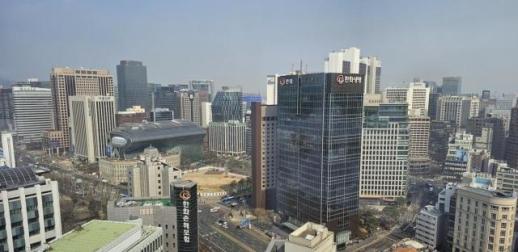 AI boom reshapes South Korea's top 500 companies by sales SEOUL, May 6 (AJP) - South Korea's top 500 companies by sales saw a major reshuffle, with 35 firms newly joining or dropping off the list amid the growing influence of artificial intelligence-related sectors including semiconductors, defense, and batteries. According to a report released Tuesday by corporate tracker CEO Score, electronics giant Samsung Electronics remained No. 1 with 333.61 trillion won (US$230 billion) in sales as of the end of last year, up 10.9 percent from a year earlier and the highest on record. Hyundai Motor ranked second with 186.25 trillion won, followed by its affiliate Kia with 114.14 trillion won. Together, the two surpassed 300 trillion won in combined sales for the first time. Korea Electric Power Corporation was fourth with 97.43 trillion won, leaving the top four unchanged from the previous year. SK hynix moved up two spots to No. 5 after posting 97.15 trillion won in sales, boosted by surging demand for high-bandwidth memory (HBM). CEO Score cited the jump as a clear example of how growth in the AI chip market is reshaping corporate rankings. Defense company Hanwha rose three spots to No. 7 on increased orders, while SK On jumped to No. 9 from No. 60 following mergers among its affiliates. SK Innovation made the biggest leap, climbing 190 places on a sharp increase in dividend income. Sales levels required to make the top 500 also rose, with the minimum threshold climbing by 733 billion won or 5.5 percent, to 1.40 trillion won, while total sales of all 500 companies grew 4.7 percent to 4,305 trillion won. Thirty-five companies newly joined the list, up two from a year earlier. They included firms that grew through mergers and acquisitions, such as Hanwha Hotels & Resorts and Sono International, as well as fast-growing players like Musinsa, a streetwear brand that has become one of South Korea's hottest fashion platforms. Meanwhile, companies in construction, shipping, and aviation sectors dropped off the list. By industry, auto and auto-parts companies made up the largest group with 49 firms, followed by IT and electronics with 39, retailers with 39, services with 38, and petrochemicals and refiners with 37. 2026-05-06 10:55:34
 -
 South Korea expands cooperation with Moldova as economic pact takes effect SEOUL, April 24 (AJP) - An agreement on economic cooperation between South Korea and Moldova took effect on Friday, according to the Ministry of Foreign Affairs. The agreement aims to strengthen bilateral cooperation across various sectors, including science and technology, energy, and transportation, laying the groundwork for a more comprehensive partnership between the two countries. Under the agreement, the two countries will establish a joint committee to review and implement projects, which is also expected to promote mutual exchanges among experts, scientists, and students through international fairs and exhibitions, thereby fostering industrial collaboration and broader professional networks. Bilateral trade stood at just $118 million last year, but both sides see room for growth. South Korea exports automobiles, steel, and cosmetics, while importing wine and agricultural products from Moldova. "We will continue to seek economic cooperation with promising markets to support South Korean companies' global expansion," a ministry official said, adding that the latest agreement would help broaden the country's foothold in emerging markets in Europe. South Korea currently has similar pacts signed or implemented with over 100 countries. 2026-04-24 09:43:17
 -
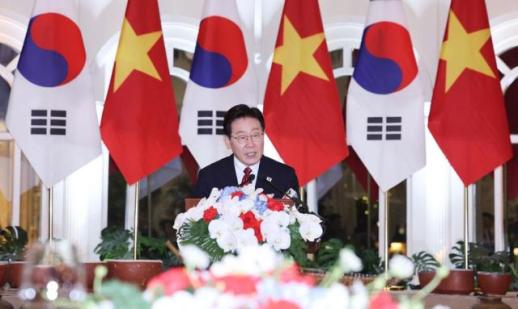 Lee set to meet Vietnamese PM, discuss ways to boost trade SEOUL, April 23 (AJP) - President Lee Jae Myung, on a state visit to Hanoi, is set to hold a series of meetings on Thursday with senior Vietnamese officials including Prime Minister Lu Minh Hung to expand bilateral cooperation. Lee's meeting with Hung comes after his summit the previous day with Vietnamese President Tô Lâm, who also serves as general secretary of the Communist Party. During the meeting, the two leaders agreed to cooperate across various sectors, including nuclear power, infrastructure, artificial intelligence, critical minerals, and energy, reaffirming a goal of increasing bilateral trade from the current $94.6 billion to $150 billion by 2030. Lee is expected to discuss further details with Hung on deepening ties including major urban development projects to enhance Viet Nam's infrastructure such as Hyundai Rotem's railway project in Ho Chi Minh City, which was among the deals signed at the summit. Lee is also scheduled to have a luncheon meeting with Vietnamese National Assembly chairman Tran Thanh Man before attending a forum later in the day with business leaders from both countries to discuss ways to expand trade and investment. Among the attendees for the forum are major business leaders such as Samsung Electronics chairman Lee Jae-yong, SK Group chairman Chey Tae-won, LG Group chairman Koo Kwang-mo, Lotte Corporation chairman Shin Dong-bin, POSCO Holdings chairman Chang In-hwa, and HD Hyundai chairman Chung Ki-sun, among others. Lee returns home on Friday after touring the UNESCO World Heritage site of the Imperial Citadel of Thang Long, the final stop on his itinerary in Viet Nam. 2026-04-23 10:38:17
 -
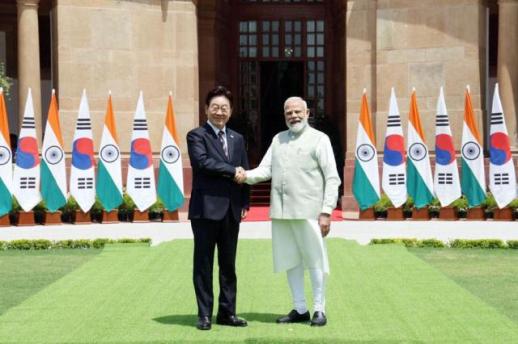 Lee set to deliver speech at business forum in India SEOUL, April 20 (AJP) - President Lee Jae Myung, who is on a state visit to India for a summit with Indian Prime Minister Narendra Modi on Monday, is set to attend a business forum later in the day to promote investment and cooperation between companies in the two countries. Lee is scheduled to deliver opening remarks at the forum, co-hosted by the two countries, where he is expected to emphasize stronger supply-chain cooperation. The forum, being held for the first time in eight years, is seen as a restart of bilateral economic cooperation. About 250 business leaders from South Korean conglomerates are attending including Samsung Electronics chairman Lee Jae-yong, Hyundai Motor Group chairman Chung Eui-sun, LG Group chairman Koo Kwang-mo, and HD Hyundai vice chairman Chung Ki-sun. About 350 participants from India including executives from the Sanmar Group and Essar Group, are also taking part, with discussions expected to accelerate cooperation between companies from the two countries. About two dozen memorandums of understanding (MOUs) in areas including shipbuilding, digital technology, and energy are expected to be signed. These include agreements between the Federation of Korean Industries and the Indian Chamber of Commerce as well as GS E&C's wind repowering project in India and cooperation on Naver's map services. One-on-one meetings in advanced industries, gaming, entertainment, and other areas are also planned to strengthen practical cooperation. 2026-04-20 16:57:52
 -
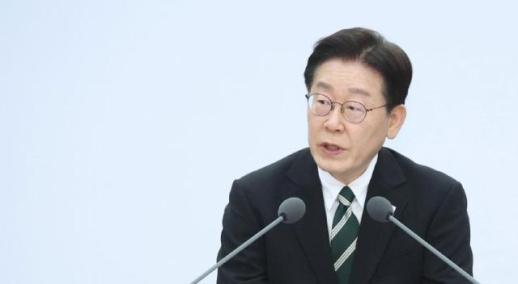 Lee's approval rating slightly dips to 65% but still remains high SEOUL, March 27 (AJP) - President Lee Jae Myung's approval rating fell slightly after reaching its highest level for three consecutive weeks, a poll showed on Friday. Pollster Gallup Korea surveyed 1,000 adults nationwide earlier this week and found that about 65 percent of respondents said Lee was doing well in his job, down 2 percentage points from the previous week. About 24 percent disapproved of his performance, while 10 percent remained undecided. The ruling Democratic Party (DP) remained steady at 46 percent, while the main opposition People Power Party (PPP) tumbled even further to 19 percent, down one percentage point from the previous week. The minor Reform Party and Rebuilding Korea Party garnered 3 percent and 2 percent of support, followed by the left-wing Progressive Party at 1 percent. The survey was conducted via automated phone responses from Tuesday to Thursday. 2026-03-27 17:39:48
 -
 Korea Employers Federation calls AI key to economic recovery SEOUL, February 05 (AJP) - A leading South Korean business group on Thursday called artificial intelligence a critical tool for reviving the economy and urged companies to accelerate innovation alongside labor-market reforms. The Korea Employers Federation (KEF) is hosting the two-day Korea CEO Forum in central Seoul from Feb. 5–6, bringing together executives from major companies to discuss how AI is reshaping industries and workplaces. In opening remarks, KEF Chairman Sohn Kyung-shik said South Korea must sharply improve productivity and competitiveness to overcome economic challenges, describing AI as “the most effective breakthrough.” “The gap in AI readiness is becoming a gap in corporate and national competitiveness,” Sohn said, adding that advances in AI are generating new industries and innovation while driving broad social and economic change. He warned that managing labor-market disruption will be a major task as AI adoption accelerates, calling for solutions that promote corporate innovation, nurture talent and improve workers’ quality of life at the same time. On labor relations, Sohn urged greater cooperation between management and labor based on legal principles and dialogue, saying stable industrial relations are essential for innovation and job security. He also called on the government and National Assembly to quickly clarify implementation measures related to a revised labor union law set to take effect in March, citing concerns among companies about potential confusion. Sohn urged caution over extending the statutory retirement age, saying it could discourage youth hiring and deepen labor-market disparities. Instead, he called for broader discussions on flexible options such as post-retirement reemployment and reform of seniority-based wage systems. He also argued that rigid working-hour rules should be made more flexible to reflect differences across industries and job types. The forum includes sessions on AI-driven industrial transformation. KAIST professor Kim Dae-sik is delivering a keynote on how generative AI and artificial general intelligence could reshape industrial structures and capital-labor relations. Hyun Dong-jin, head of Hyundai Motor Group’s Robotics Lab, is presenting cases of AI and robotics-based business applications, while Kakao Pay CEO Shin Won-geun is discussing stablecoins and changes in digital finance. * This article, published by Aju Business Daily, was translated by AI and edited by AJP. 2026-02-05 16:02:48
 -
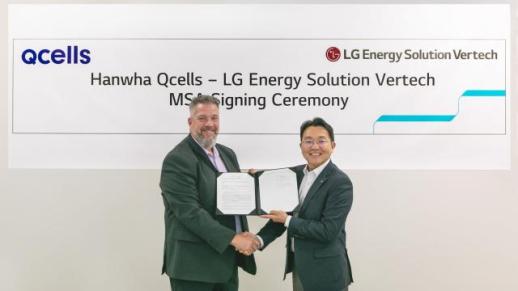 LG Energy Solution, Hanwha Qcells team up to target US energy storage boom SEOUL, February 04 (AJP) - LG Energy Solution (LGES) and Hanwha Qcells have joined hands to strengthen their position in the fast-growing U.S. market for large-scale energy storage systems. Industry sources said Wednesday that Hanwha Qcells plans to procure up to 5 gigawatt-hours of lithium iron phosphate (LFP) batteries from LGES’s plant in Holland, Michigan. The batteries will be deployed in U.S. ESS projects where Hanwha Qcells will oversee engineering, procurement and construction between 2028 and 2030. The arrangement also covers long-term operation and maintenance services, signaling a strategic partnership rather than a one-off supply agreement. The cooperation comes as structural shifts reshape the U.S. power market. Rapid growth in AI-driven data centers and broader electrification are boosting electricity demand, while permitting and transmission constraints slow the addition of new generation capacity. As a result, large-scale storage systems that can balance load fluctuations and support grid stability are emerging as critical infrastructure. Consultancy Wood Mackenzie forecasts nearly 318 GWh of new ESS installations in the United States over the next five years. Hanwha Qcells is emphasizing local sourcing to enhance eligibility for U.S. incentives such as advanced manufacturing and investment tax credits, while strengthening compliance with domestic content requirements. Once its solar manufacturing complex under construction in Georgia — dubbed the Solar Hub — is completed, the company expects to operate a localized production network covering both solar modules and storage solutions. Industry officials describe the partnership as a role-based strategy in which Hanwha Qcells focuses on project development, EPC services and solar supply, while LGES provides U.S.-based battery manufacturing and operational support. LFP batteries are widely viewed as suitable for large-scale ESS due to safety and longer cycle life, making them attractive for grid and data center applications. * This article, published by Aju Business Daily, was translated by AI and edited by AJP. 2026-02-04 11:09:17
 -
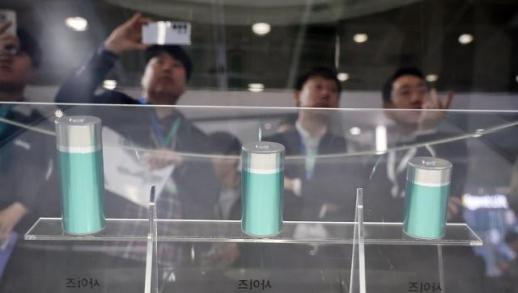 Korea's top battery firms post losses as EV demand slump drags earnings SEOUL, January 28 (AJP) - South Korea’s three major battery makers reported losses in the fourth quarter of 2025 as a prolonged slowdown in global electric-vehicle demand weighed on shipments. SK On posted an operating loss of 441.4 billion won in the October–December period and a full-year operating loss of 931.9 billion won. LG Energy Solution also recorded an operating loss of 122 billion won in the fourth quarter, swinging to a loss from a year earlier. Samsung SDI, which is scheduled to report earnings on Feb. 2, is also expected to post weak results. A securities-firm consensus estimates Samsung SDI’s fourth-quarter operating loss at 358.5 billion won. The losses reflect an extended lull in EV demand, as global automakers scale back production plans or delay investments in new models. Reduced battery shipments have pushed down factory utilization rates, increasing the burden of fixed costs and squeezing margins. Changes to EV subsidy policies, particularly in the United States and Europe, have also weighed on demand. As a result, the battery makers are accelerating efforts to diversify beyond EVs into areas such as energy storage systems and robotics. LG Energy Solution began mass production of long-cell lithium iron phosphate (LFP) batteries for ESS in May at its Holland, Michigan, plant. Samsung SDI continues ESS production in North America through its joint-venture facilities, while SK On plans to start ESS production in the second half of this year at its plant in Georgia. In South Korea, battery makers are also expanding production and investment to respond to government-led bidding for a centralized ESS contract market. In a recent earnings call, SK On said it aims to secure 20 gigawatt-hours of global ESS orders by 2026, primarily in North America, and plans to strengthen LFP battery production capacity to attract new customers. Robotics is also emerging as a medium- to long-term growth area. Industry officials say solid-state batteries, which could significantly improve safety and energy density, are being explored for use in next-generation devices such as humanoid robots. Samsung SDI has begun joint development of robot-specific batteries with Hyundai Motor and Kia, while LG Energy Solution is working with U.S.-based Bear Robotics to expand supplies of cylindrical batteries for robotic applications. * This article, published by Aju Business Daily, was translated by AI and edited by AJP. 2026-01-28 14:46:10
 -
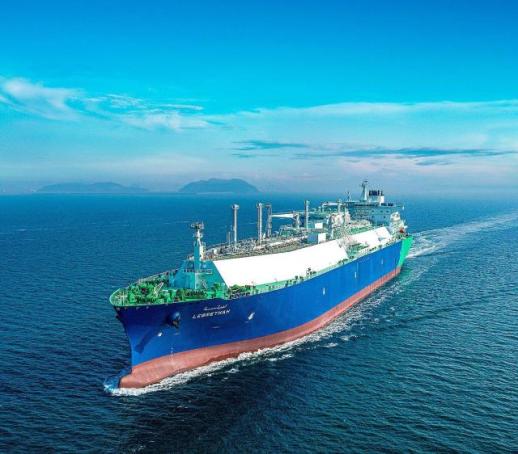 Hanwha Ocean wins $550 million orders for 2 LNG carriers SEOUL, January 21 (AJP) - Hanwha Ocean has secured new liquefied natural gas (LNG) carrier orders, adding to a solid start to the year as the South Korean shipbuilder focuses on high-value vessels. In a regulatory filing on Wednesday, the company said it signed shipbuilding contracts for two LNG carriers with a total value of 738.3 billion won ($550 million). The vessels will be delivered sequentially, though no timetable was disclosed. Including the latest contracts, Hanwha Ocean’s year-to-date order intake stands at five vessels — three very large crude carriers and two LNG carriers — worth about $890 million. That compares with a single VLCC order in January last year. The company said it expects replacement demand for aging vessels to continue over the medium to long term as environmental regulations tighten globally and fuel-efficiency requirements become more stringent. Hanwha Ocean also forecast sustained demand for LNG carriers as the development of LNG export terminals, led by the United States, enters a full-scale phase. * This article, published by Aju Business Daily, was translated by AI and edited by AJP. 2026-01-21 13:45:30
 -
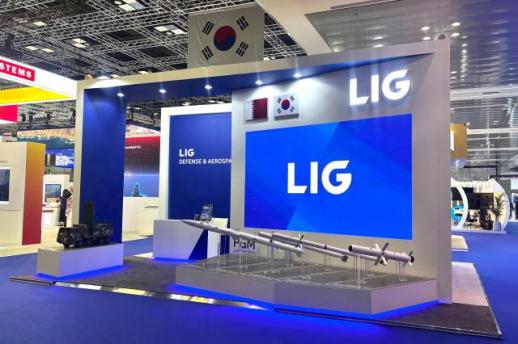 South Korea's LIG Nex1 pitches air defense systems to Middle Eastern customers SEOUL, January 20 (AJP) - South Korean defense contractor LIG Nex1 is making its first appearance at the Middle East’s largest maritime defense exhibition, stepping up efforts to expand its presence in the region. The company said on Tuesday it is participating in the Doha International Maritime Defense Exhibition & Conference (DIMDEX) 2026, which runs from Jan. 19 to 22 in Doha, Qatar, where it is showcasing integrated air-defense and precision-strike solutions tailored to Middle Eastern customers. Held every two years, DIMDEX is the region’s largest maritime defense exhibition and marks its 10th edition this year. At the event, LIG Nex1 is highlighting its “K-air defense network,” a layered air-defense system designed to counter threats across low- to high-altitude ranges. The system includes the Cheongung-II medium-range, medium-altitude interceptor; the L-SAM long-range, high-altitude interceptor; and the Shingung man-portable air-defense system. The company is also presenting precision-strike and surveillance assets for ground and maritime operations, including the Hyungung anti-tank guided weapon, the 2.75-inch guided rocket Bigung, which has passed U.S. fire control testing, and the Counter-Battery Radar-II for counter-artillery missions. LIG Nex1 said this marks its first participation at DIMDEX. The company has expanded its local presence in the Middle East since August and has intensified region-specific marketing and business development efforts. The company has previously secured export contracts for medium-range surface-to-air guided weapons with key Middle Eastern countries, including the United Arab Emirates, Saudi Arabia and Iraq. 2026-01-20 14:41:09