


Latest by
-
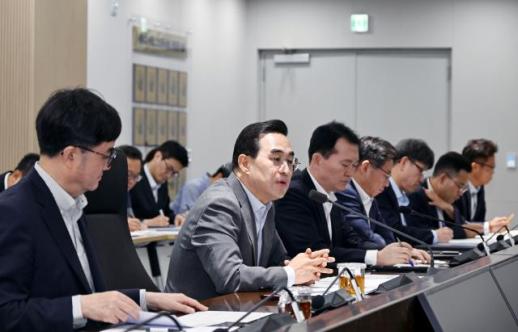 Park Hong-geun: Support for Integrated Care Implementation and Customized Welfare Services Park Hong-geun, Minister of the Ministry of Strategy and Finance, announced plans to improve systems and financial support based on field feedback to ensure the successful implementation of community integrated care. The initiative aims to provide support so that citizens in need of care can continue their daily lives in their own communities by linking medical, health management, and caregiving services. On June 17, after visiting the Smart Healthcare Center in Seongdong-gu, Park held a meeting at the Seongdong District Office with officials from the Ministry of Health and Welfare, local governments, related organizations, and experts to discuss challenges and improvement tasks in the operation of integrated care. The meeting was organized to assess whether the integrated care system, which has been implemented nationwide since March of this year, is functioning smoothly and to identify issues arising from the coordination of medical, health management, and caregiving services. During his visit to the Smart Healthcare Center, Park reviewed the status of health management, medical, and caregiving services for the elderly and people with disabilities, gathering feedback on user satisfaction and additional support needs. "Integrated care is about supporting citizens in need of care to continue their daily lives in their communities," Park said. "It is time to explore various ways to provide customized welfare services that can offer immediate assistance when needed." The subsequent meeting included participation from local governments, the National Health Insurance Service, caregiving service providers, and academic experts, who discussed the initial challenges faced in the field and proposed improvements. Attendees called for support to address the gap in medical and caregiving infrastructure in rural and vulnerable areas, as well as the need for expanded dedicated personnel and infrastructure budgets, and ongoing financial support from the central government. They also suggested long-term improvements, including expanding caregiving finances, clarifying roles between central and local governments, strengthening the role of social solidarity economies, and increasing the participation of caregiving workers. Park emphasized, "We will spare no effort to ensure the successful implementation of the integrated care system, which has just taken its first steps nationwide this year. Based on the voices raised today, we will establish key support directions for 2027 and closely explore improvement measures for the overall operation of the system in collaboration with relevant ministries such as the Ministry of Welfare."* This article has been translated by AI. 2026-06-17 15:04:00
 -
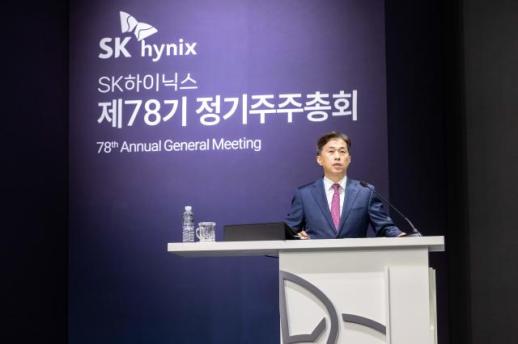 SK hynix confirms U.S. ADR plan, denies 100 trln won shareholder payout SEOUL, June 17 (AJP) - SK hynix confirmed Wednesday that it is actively pursuing a U.S. American Depositary Receipt (ADR) listing to expand its AI-era memory chip capacity, but denied reports that it is preparing a 100 trillion won ($72.5 billion) shareholder reward program to offset concerns about equity dilution. The clarification came after the Korea Economic Daily reported Tuesday that the South Korean chipmaker was preparing a historic fourth-quarter shareholder return package, including a 40 trillion won share buyback, to appease investors worried about dilution from a new U.S. stock issuance. In a regulatory filing, however, SK hynix said it is considering various ways to enhance shareholder value but has not reviewed any specific scale or figures cited in the reports. "We are currently pursuing the ADR listing itself, but we are not in a position to say definitively whether it will take place in July or August," a company official said, adding that the final timetable remains subject to approval by the U.S. Securities and Exchange Commission. The official also dismissed speculation surrounding an unprecedented 100 trillion won payout. "Nothing specific has been finalized. Reports about expanding shareholder returns at year-end reflect the general stance we already announced at our shareholder meeting, so there has been no significant change," the official said. The company first confirmed plans for a U.S. listing during its annual general meeting in March, when management disclosed that it had confidentially filed a Form F-1 with the SEC with the aim of completing the listing in the second half of this year. At the time, Chief Executive Kwak Noh-jung pushed back against mounting retail investor concerns over potential dilution, arguing that the fundraising was strategically necessary to secure more than 100 trillion won in net cash for advanced infrastructure and next-generation AI memory investments. SK hynix has emerged as the biggest beneficiary of the AI-driven memory boom, thanks to its dominance in High Bandwidth Memory chips, where it is estimated to control nearly 60 percent of the global market. The company has become a key supplier to AI chip leader Nvidia, helping propel its market capitalization above 1,600 trillion won this week, compared with about 200 trillion won a year earlier. The stock has been virtually unstoppable this year, trading above 2,512,000 won — more than tenfold its level of 242,000 won a year ago. As of Tuesday, SK hynix was the world's 13th most valuable listed company, just behind Samsung Electronics. The company's surging profitability has also led to hefty employee profit-sharing bonuses, but analysts say management faces a delicate balancing act between rewarding shareholders and funding massive capital expenditure plans. SK hynix is expected to raise about 40 trillion won through the U.S. ADR issuance, with much of the proceeds earmarked for infrastructure investments. That includes the construction of four advanced fabrication plants at the Yongin semiconductor cluster, where projected costs have reportedly ballooned to around 600 trillion won. SK hynix is scheduled to report second-quarter earnings in late July, when executives are expected to provide additional guidance on global financing plans and long-term capital expenditure strategy. 2026-06-17 15:00:18
 -
 Despite War's End, Funding Costs Remain Tight for Banks As expectations rise for an end to the conflict in the Middle East, international oil prices and exchange rates are stabilizing, providing some relief to domestic banks that have been struggling with foreign currency procurement costs. The so-called "war premium" that had inflated oil and dollar prices due to fears of prolonged conflict is dissipating quickly. However, uncertainties surrounding interest rate hikes by the Bank of Japan (BOJ) and the trajectory of U.S. rates suggest that a significant reduction in funding costs may not be imminent. According to the financial sector on June 17, Brent crude oil futures for August delivery closed at $78.96 per barrel, a decline of 5.1% from the previous trading day. This marks the first time in over three months that Brent prices have fallen below $80 per barrel, reflecting a shift in market sentiment regarding war risks. During the height of the conflict, oil prices soared to $120 per barrel, and the strong dollar pushed exchange rates above 1,500 won, exacerbating the foreign currency procurement costs for domestic banks. Rising import costs also strained corporate finances, raising concerns about the credit health of sectors sensitive to energy prices, such as aviation, shipping, and petrochemicals. With the easing of war risks, banks expect to alleviate some of their burdens related to foreign currency liquidity management. A reduction in exchange rate volatility could stabilize foreign currency procurement costs and lessen the repayment pressures on corporate foreign currency loans. However, the financial sector views this situation as a temporary reprieve. The most significant variable remains the normalization of monetary policy by the Bank of Japan. On June 16, the BOJ raised its benchmark interest rate to 1.0%, the highest level in 31 years, effectively signaling the end of an era of ultra-low rates. While the market does not anticipate an immediate large-scale unwinding of yen carry trades, the pace of further rate increases could influence global capital flows. The path of interest rates set by the U.S. Federal Reserve is also a critical factor. Even if Middle Eastern risks diminish, if the U.S. maintains high interest rates longer than expected or if the dollar strengthens again, domestic banks may face deteriorating conditions for foreign currency procurement. A banking industry official stated, "The stabilization of oil prices and exchange rates following the easing of war risks is undoubtedly positive for foreign currency bond issuance costs and liquidity management. However, with the monetary policy variables in the U.S. and Japan still in play, financial institutions are likely to maintain a conservative liquidity management stance for the time being." 2026-06-17 15:00:00
 -
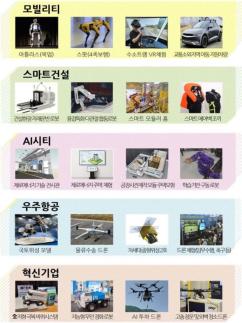 2026 National Land and Transportation Technology Exhibition to Showcase Future Innovations An exhibition showcasing future land transportation technologies, including autonomous driving, urban air mobility (UAM), smart construction, and artificial intelligence (AI) cities, will take place soon. The Ministry of Land, Infrastructure and Transport announced on June 17 that the "2026 National Land and Transportation Technology Exhibition" will be held from June 24 to 26 at COEX in Seoul, specifically in Hall D on the third floor and Conference Room E. This year marks the 15th iteration of the event, themed "Move For Tomorrow." This year's exhibition will be the largest to date, featuring 81 organizations and 409 booths across five major theme zones: mobility, smart construction, AI cities, aerospace, and innovative companies. In the mobility sector, Hyundai Motor Group and Korea Railroad Corporation will showcase technologies related to autonomous driving, high-speed rail, and future rail research and development (R&D). Key exhibits will include the Atlas mock-up, Spot quadruped robot, multifunctional mobile robot Mobed, and vehicles for supporting transportation in underserved areas. In the smart construction sector, Hyundai Construction and Samsung C&T will display AI-based management technologies, robots, and unmanned automated construction and management technologies. Notable exhibits will include construction site material transport robots and smart modular homes. In the AI city sector, Korea Land and Housing Corporation (LH) and Korea Land Information Corporation (LX) will present urban spatial information, smart city technologies, and modular housing. AI cities are autonomous urban models that utilize data collected from urban infrastructure to make real-time decisions through AI analysis. In the aerospace sector, Korean Air and Korea Aerospace Industries (KAI) will exhibit technologies related to UAM, drones, aircraft, and satellite R&D and commercialization. Attendees can expect to see models of national satellites, logistics and delivery drones, and the next-generation medium-sized satellite No. 2. A new theme zone for innovative companies will feature 28 startups and venture firms in the land transportation sector. Innovations such as an all-terrain overcoming wheel system and an AI-based spatial decision-making platform will be showcased. The Ministry has set four main goals for this year's exhibition: expanding experiential displays, increasing public engagement and participation, linking corporate growth and investment, and enhancing technology exchange and cooperation. Notably, the number of independent booths from major domestic companies like Hyundai Motor Group, Korean Air, and KAI has doubled from last year to 33, allowing visitors to experience future land transportation technologies up close. Minister of Land, Infrastructure and Transport Kim Yoon-deok stated, "Technology is only complete when it changes people's lives, not when it remains in the laboratory. We will continue to create an innovative ecosystem where excellent technologies advance from research and development to the market, allowing the public to experience change." An industry insider remarked, "Land transportation technology, including autonomous driving, smart construction, UAM, and AI cities, has significant growth potential across various industries. This event will serve as a platform to confirm both public R&D achievements and the commercialization potential of private innovative technologies."* This article has been translated by AI. 2026-06-17 14:56:00
 -
 Samsung SDS Expands Physical AI Division with New Hire from KT Samsung SDS has established a dedicated organization to expand its Physical Artificial Intelligence (AI) business, hiring Bae Soon-min, the former head of KT's AI Future Lab. This move is seen as a strategy to leverage AI transformation (AX) capabilities gained in manufacturing and extend them into the robotics sector for future growth. According to industry sources on June 17, Samsung SDS recently created the RX Business Team, responsible for its robotics initiatives, and appointed Bae Soon-min as its leader. The RX Business Team is expected to play a key role in driving Samsung SDS's Physical AI strategy. Samsung SDS is expanding its Physical AI business based on its AX experience and cloud infrastructure capabilities. The company aims to enhance services that combine robot operations with data utilization, thereby advancing AI automation in manufacturing and logistics. Lee Jun-hee, CEO of Samsung SDS, stated at this year's regular shareholders' meeting that the company is reviewing new technologies, including Physical AI and stablecoins, for commercialization. He also mentioned plans to apply AI-based automation technologies in the digital logistics sector to strengthen global competitiveness. Bae is a leading AI expert who spearheaded the development of KT's proprietary AI model, 'Mideum.' He joined Samsung SDS after leaving KT, which underwent a major organizational restructuring in March under the leadership of CEO Park Yun-young. Bae has a strong connection to the Samsung group, having worked as a senior researcher at Samsung Techwin in 2015 before serving as the AI leader at Naver Clova and then heading KT's AI Future Lab. With his return to Samsung, he is set to lead AI initiatives within the group once again.* This article has been translated by AI. 2026-06-17 14:56:00
 -
 Electric Vehicle Insurance Loss Ratios Rise to 108%, Raising Concerns for Insurers The loss ratio for electric vehicle insurance surpassed 108% last year, presenting new challenges for insurers. While the number of electric vehicle insurance policies nearly doubled over the past year, the average loss per accident was 1.7 times higher than that of internal combustion vehicles. As the adoption of eco-friendly vehicles accelerates, insurers face increasing financial burdens, yet raising premiums is complicated by cooperative finance policies aimed at easing consumer costs. According to the insurance industry on June 17, the loss ratio for electric vehicle insurance reached 108.4% last year, up 5.3 percentage points from the previous year’s 103.1%. This figure is 21.2 percentage points higher than the loss ratio for internal combustion vehicles, which stands at 87.2%. Typically, a loss ratio around 80% is considered the breakeven point, making these figures significantly concerning. Electric vehicles feature high-voltage batteries, electronic control units, and sensors, which are costly components, leading to longer repair times and higher average losses per accident compared to internal combustion vehicles. Notably, the battery, located under the vehicle, is prone to damage from curbs, speed bumps, and road structures, resulting in frequent replacements. According to the Korea Insurance Development Institute, the average loss per accident for electric vehicles is 3.41 million won, compared to 1.96 million won for internal combustion vehicles, representing a 1.7-fold increase. In cases of fire or explosion, the average loss amounts to 16.68 million won, more than double the 7.26 million won for internal combustion vehicles. Additionally, electric vehicles are analyzed to have a relatively high proportion of personal injury accidents due to their low noise and rapid acceleration. The issue is that as the adoption of electric vehicles expands, insurers' financial burdens are also increasing. The number of electric vehicle insurance policies rose from 269,000 in 2023 to 516,000 last year. During the same period, the loss ratio for electric vehicle insurance climbed from the 90% range to over 100%. The pace of electric vehicle adoption is expected to accelerate further, driven by government policies promoting eco-friendly vehicles and intense competition among automakers. In fact, according to Kaizyu Data Research Institute, the number of new electric vehicle registrations last month reached 32,785, a 50.9% increase compared to the same month last year, which saw 21,727 registrations. Insurers are attempting to mitigate the high loss ratios associated with electric vehicles by adjusting discount rates for special clauses, but they find these measures insufficient. Auto insurance must consider both consumer burdens and policy trends, making it difficult to directly reflect the rising loss ratios in premium rates. Despite the worsening loss ratios in auto insurance, the government has recently introduced discount policies for vehicles participating in the five-day vehicle restriction system, emphasizing consumer benefits. An insurance industry representative stated, “While we can partially reflect the high loss ratios of electric vehicles in premiums, auto insurance is a mandatory product that is heavily influenced by consumer burdens and policy trends. Therefore, it is increasingly challenging to pass on the rising loss ratios directly to consumers, especially as recent cooperative finance and consumer burden alleviation policies have intensified.” 2026-06-17 14:56:00
 -
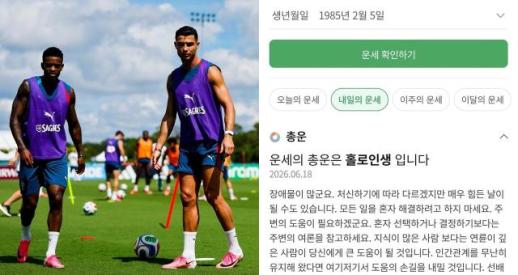 Messi's Hat Trick Sparks Interest in Ronaldo's Upcoming Match Lionel Messi's recent hat trick has set multiple World Cup records, drawing heightened attention to Cristiano Ronaldo ahead of his match against Congo on June 18. As Portugal prepares for the group stage match, fans worldwide are eager to see how Ronaldo performs following Messi's record-breaking achievements, including the most career points and the oldest player to score a hat trick in World Cup history. In South Korean online communities, discussions have even turned to a fortune-telling analysis based on Ronaldo's birth date (February 5, 1985), with varied reactions regarding the match's outcome. The shared fortune included messages like, "Your overall fortune indicates a solitary life," and "It could be a very challenging day; don’t try to solve everything alone. Seeking help from those around you will be beneficial." Some netizens remarked, "This oddly aligns with Portugal's current situation," and "Doesn't this suggest Ronaldo should focus more on teamwork rather than trying to do it all himself?" Currently, the Portuguese national team is regarded as one of the strongest in its history. Ronaldo is joined by several players from top European clubs like Chelsea and Paris Saint-Germain in the attacking lineup. Online reactions include, "It would be strange if they can’t score with this lineup," and "Even if they do score, the pressure of being compared to Messi will be significant." Additionally, past comments from Ronaldo regarding the World Cup have resurfaced. In a previous interview, he stated, "Is it necessary to have the World Cup to define the greatest player in history?" and expressed skepticism about a tournament decided by just six or seven matches, saying, "Winning the World Cup is not my dream." Reactions to these comments include, "It would have been more admirable if he had expressed a desire to win the World Cup," and "That statement is disappointing; it will be referenced every time Messi breaks a record."* This article has been translated by AI. 2026-06-17 14:52:00
 -
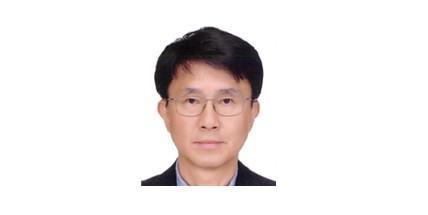 Former trade deputy to spearhead U.S. investment body SEOUL, June 17 (AJP) - Former Deputy Minister for Trade Park Jong-won has been named the inaugural head of the Korea-U.S. Strategic Investment Corporation, a day before the Special Act for Korea-U.S. Strategic Investment Management takes effect to launch the state-backed body tasked with overseeing South Korea’s $350 billion investment commitment to the United States. The Ministry of Economy and Finance and the preparatory committee for the new state entity announced the appointment Wednesday. Park, 57, served as deputy minister for trade at the Ministry of Trade, Industry and Energy until October last year. During his career at the industry ministry, Park held senior posts overseeing middle-market enterprise policy, regional economic policy, automobiles and aerospace, and semiconductors and displays. The new corporation will be responsible for raising, managing and operating funds tied to the $350 billion strategic investment package agreed under a Korea-U.S. memorandum of understanding signed in November last year. The package includes investments in strategic industries and shipbuilding cooperation, as Seoul moves to implement its commitments under the bilateral investment framework. The legal basis for the corporation was established under the Special Act for Korea-U.S. Strategic Investment Management, which passed the National Assembly in March and goes into effect Thursday. The corporation will operate for 20 years from the date of its registration. Its authorized capital is set at 2 trillion won ($1.32 billion), to be paid in cash by the government in annual installments. The special act is the legislative follow-up to months of tariff-driven negotiations that began after Washington imposed a 25 percent reciprocal tariff on South Korean goods in April last year. Seoul later agreed to a framework that lowered the tariff rate to 15 percent in exchange for a $350 billion U.S. investment package, including $150 billion in shipbuilding cooperation. The two countries signed the strategic investment MOU in November, but the tariff threat remained a key source of pressure as Washington pressed Seoul to turn the framework into law. 2026-06-17 14:49:38
 -
 Aurora Shares Rise on Record Earnings Forecast Aurora is experiencing strong gains as the securities industry anticipates record earnings. According to the Korea Exchange, as of 2:26 PM on June 17, Aurora's shares rose by 940 won (5.30%) to 18,690 won compared to the previous trading day. Analysts attribute the improved investor sentiment to expectations of continued earnings growth driven by the expansion of its U.S. operations and improved financial structure. Earlier, NH Investment & Securities released a report forecasting that Aurora's earnings growth and reduced financial burdens could lead to a reevaluation of its valuation. NH Investment & Securities noted that the U.S. market, which accounts for about 75% of Aurora's revenue, continues to grow. The company's U.S. sales reached 224.9 billion won last year, a 25% increase from the previous year, and rose by 28.4% to 74 billion won in the first quarter of this year. Kang Kyung-geun, a researcher at NH Investment & Securities, stated, "The expansion of our proprietary intellectual property brand 'Palm Pals' and the acquisition of the doll brand 'Mary Meyer' are driving growth in our U.S. business." Kang further projected that with favorable exchange rates, strong sales in the U.S., and growth from the global expansion of Palm Pals, Aurora's revenue is expected to reach 410.2 billion won and operating profit 65.8 billion won this year, marking increases of 25.0% and 47.9%, respectively, compared to the previous year, achieving record results. He added, "If the strong earnings momentum continues and the improvement in financial structure through the sale of investment properties materializes, a reevaluation of corporate value is also possible."* This article has been translated by AI. 2026-06-17 14:48:00
 -
 ABL Bio Shares Surge After FDA Fast Track Designation for Cancer Drug Shares of ABL Bio, a biopharmaceutical company focused on dual antibody research and development, have risen sharply following news that the U.S. Food and Drug Administration (FDA) has granted fast track designation to its cancer drug candidate. As of 2:19 PM on June 17, ABL Bio's stock was trading at 109,500 won, up 10.94% or 10,800 won from the previous trading day. The stock even surged to 114,500 won earlier in the session. The company announced that its dual antibody immuno-oncology drug, Zivastomig (ABL111), developed in collaboration with U.S. biotech firm Novabridge Biosciences, received fast track designation from the FDA. On June 9, ABL Bio also disclosed that it had added the FDA as a regulatory authority for its clinical trial plan amendment application. With the FDA fast track designation, ABL Bio can engage closely with the FDA throughout the clinical development process, potentially expediting the review timeline. This news has been interpreted as a boost to investor sentiment. Kim Jun-young, a researcher at Meritz Securities, noted in a company analysis report that "the key investment point is the clinical data momentum of Zivastomig," adding that the cancer drug has emerged as a core value driver for ABL Bio.* This article has been translated by AI. 2026-06-17 14:48:00