
Journalist

Kim Yeon-jae
duswogmlwo77@ajupress.com
-
 BOK chief nominee's hawkish instincts to face Gulf-driven inflation test SEOUL, March 24 (AJP) —The choice of former Bank for International Settlements (BIS) economist Shin Hyun-song as the new central bank chief reflects a “firefighting” role against the Gulf War-driven perfect storm South Korea faces, and according to a former BIS colleague, he is best suited for the job. How far and how fast the Bank of Korea governor nominee will translate his hawkish academic stance into policy is now the market’s central question, as Shin is set to take the helm amid growing inflationary pressure from the Gulf war fallout. President Lee Jae Myung on Sunday has tapped Shin, a former BIS head of research, as the next BOK governor. Shin, according to Agustín Carstens - former general manager of the Bank for International Settlements (BIS) in Seoul to speak at the Asia-Pacific Financial Forum hosted by Aju Media Corp. on Wednesday - “has a mixture of characteristics that is very unique.” He "knows the Korean economy and financial system very well, and is an expert in macroeconomics and finance, including the connections between Korea and the rest of the world", Carstens said, adding that makes him the ideal monetary chief to “assess the shocks that the world and financial system is experiencing and to assess how it would affect the Korean economy very well.” Given his academic track record, Shin is widely viewed as more responsive to shocks than incumbent Rhee Chang-yong, whose policy stance has often been seen as cautious. Critics, including Democratic Party lawmaker An Do-geol, argue that the BOK’s passive signaling under Rhee contributed to a surge in household lending. “With the won hovering near 1,500 and 10-year yields pushing above 3.8 percent, the president appears to have seen a ‘firefighter’ in Shin,” an anonymous finance ministry official said. Markets have already begun pricing in a more hawkish turn. The three-year bond yield spiked to above 3.6 percent and the 10-year yield climbed to 3.8 percent upon the announcement, sharply above the 2.50 percent base rate. Shin’s reputation as a policy hawk dates back to his early work during the global financial crisis. In a Federal Reserve Bank of New York paper, he warned that loose monetary policy fuels balance sheet expansion and asset bubbles, underscoring the need for preemptive tightening. He reinforced that stance in a 2022 interview, arguing that “it is better to overreact with rate hikes than to be timid” when tackling inflation. His framework extends beyond rate policy. In a 2012 NBER paper, Shin highlighted “non-core liabilities” such as certificates of deposit and financial bonds as key sources of systemic risk, calling for tighter monitoring during credit booms. Yet Shin is not a one-dimensional hawk. At the BIS, he has also emphasized policy calibration. In a March 16 briefing on a potential Strait of Hormuz disruption, he suggested central banks may “look through” temporary supply shocks rather than react mechanically with rate hikes. This places Shin at the center of a clear policy tension: a hawk in principle, but pragmatic in execution. His communication philosophy also signals a shift. In a 2017 BIS speech titled “Can central banks talk too much?”, Shin warned that excessive signaling risks trapping policymakers in an “echo chamber,” diminishing the effectiveness of forward guidance. This contrasts with Rhee’s tenure, which featured frequent communication on structural factors such as demographics, supply chains and social dynamics. Despite these nuances, few dispute that Shin will respond proactively to inflation risks. “We expect Shin to favor tightening once excess liquidity and easing financial conditions become evident,” said Kim Jin-wook of Citi, who forecasts two 25-basis-point hikes this year. KB Securities’ Lim Jae-kyun did not fully agree, saying that if the Gulf-driven shock proves temporary and inflation expectations remain anchored near 3 percent, the BOK may refrain from immediate tightening. Beyond traditional monetary policy, the BOK under Shin's watch is expected to accelerate digital agenda. Carstens, described him as a "world-leading expert" in the impact of technological change, including tokenization and artificial Intelligence and was confident Shin would bring "a lot of dynamics, or continue the dynamics, of what the Bank of Korea has started to do in terms of digitizing the financial system and the role of the central bank.” 2026-03-25 10:04:02
 -
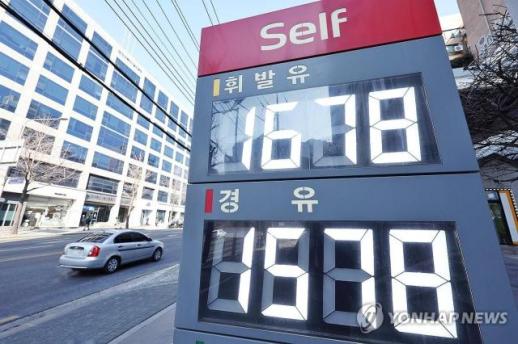 Korea's PPI extends gains for sixth month in Feb; war-driven pressure yet to hit SEOUL, March 24 (AJP) — South Korea’s producer prices rose for a sixth straight month in February, as higher energy and commodity costs lifted input prices across the board, pointing to building import-driven inflation pressure even before the full impact of war-related shocks. The producer price index (PPI) stood at 121.36 (2020=100) in February, up 0.6 percent from a month earlier, according to preliminary data released by the Bank of Korea (BOK) on Tuesday. On a year-on-year basis, the index rose 2.4 percent, the fastest pace since a 2.6 percent gain in July 2024. The increase was led by industrial goods, which rose 0.6 percent on-month. Coal and petroleum products surged 4.0 percent, exerting strong upward pressure on the overall index. Prices climbed sharply for diesel (7.4 percent), naphtha (8.7 percent) and gasoline (5.3 percent), reflecting higher global oil benchmarks. Dubai crude, for instance, rose 3.6 percent in February amid heightened Middle East tensions. Utility costs also picked up. Gas prices for industrial use rose 1.8 percent from a month earlier, pushing up the broader category of electricity, gas and water. A persistently weak won added to cost pressures, lifting import prices even before disruptions to the Strait of Hormuz following attacks on Iran. The domestic supply price index, which tracks inflation in the production pipeline, rose 0.5 percent on-month. Raw material prices increased 0.7 percent, reversing a 0.9 percent drop in January, while intermediate input costs rose 0.6 percent, contributing 0.2 percentage points to final goods prices. Yet the February data likely understate the scale of inflationary pressure ahead. The won-dollar exchange rate closed February at 1,438.4. By Monday, it had surged 5.5 percent to 1,517.6 won, while global oil prices have jumped roughly 50 percent from late February levels, suggesting the bulk of war-driven cost pressure has yet to feed through into producer prices. 2026-03-24 08:49:17
 -
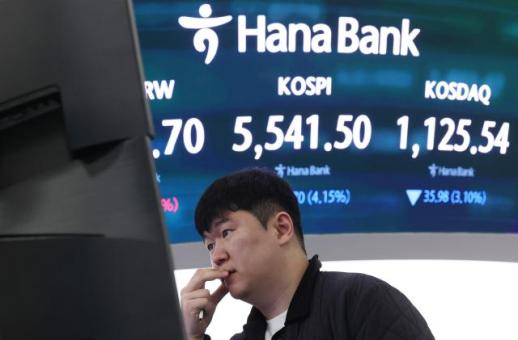 Frenzied retail stock buying triggers Seoul warning on forced liquidation SEOUL, March 23 (AJP) - Leveraged stock buying by retail investors remained feverish on Monday despite 6-percent rout on escalating Gulf war fears, prompting the financial regulator to warn on forced liquidations. The Financial Supervisory Service issued a set of guidelines on Monday aimed at preventing disputes in margin trading, saying recent sharp swings in the domestic stock market had heightened the risk of forced sell-offs for investors using credit financing. “When the domestic stock market has recently shown sharp volatility, the risk of forced liquidation for investors using credit financing has increased, and related disputes and complaints are being steadily filed,” the regulator said. The FSS noted that investors are often swept up in fear of missing out during rallies. As share prices rise, it becomes harder to enter the market with cash alone, pushing some investors to rely on margin loans. When prices then fall sharply, mandatory liquidations are triggered if the collateral ratio drops below 140 percent. Outstanding margin balances surged 21.5 percent in just over two months, rising from 27.4 trillion won ($18.13 billion) at the start of the year to 33.3 trillion won as of March 20. Saying many disputes stem from investor misunderstanding or oversight, the FSS issued several reminders. For complaints that investors did not receive advance notice before forced liquidation, the regulator advised checking whether the brokerage’s phone number had been blocked. Under the Capital Markets Act, brokerages are required to notify clients before carrying out a margin call sale. In cases where investors argued that more shares were sold than necessary to cover the collateral shortfall, the FSS said they must take into account the so-called haircut, or discount rate. Forced liquidations are typically executed at prices discounted by up to 30 percent from the previous day’s close, and the 140 percent collateral ratio should be calculated on that basis. The watchdog also cautioned against relying on intraday price movements when calculating collateral ratios. Even if the ratio appears stable during trading hours, a forced liquidation can still occur if the requirement is not met at the closing price. It also stressed that investors should not treat forced liquidation itself as the reason they failed to make a profit. If a liquidation involves multiple stocks and an investor wants to protect a particular holding, the investor must request a change in liquidation priority in advance through the brokerage. For example, if the default order is A-B-C, the investor may ask that B and C be sold first to preserve stock A. The FSS added that disputes involving overseas stocks are also common, as many investors underestimate how exchange-rate swings and the higher volatility of individual foreign stocks can quickly erode collateral ratios. It also noted that interest-charging methods on margin loans differ by brokerage, and that prolonged delinquency on unsettled receivables may make future credit trading more difficult While the KOSPI ended Monday 6.5 percent lower, retailers bought a net 7 trillion won, matching the selling by foreign and local institutions. 2026-03-23 17:09:52
 -
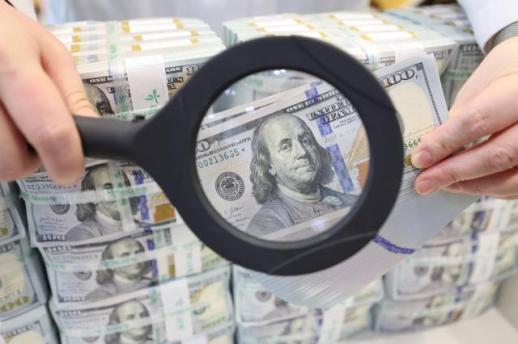 FX deposits fall for second month on overseas investment, import payments SEOUL, March 23 (AJP) - Resident foreign currency deposits in South Korea declined for a second straight month in February, as corporate demand for overseas investments and import settlements weighed on balances. According to data released Monday by the Bank of Korea (BOK), outstanding resident foreign currency deposits at foreign exchange banks stood at $117.53 billion at end-February, down $490 million from a month earlier. The decline follows a sharper $1.4 billion drop in January, extending the downward trend. Resident foreign currency deposits include holdings by domestic residents, local companies, foreigners residing in Korea for more than six months, and foreign corporations operating in the country. By currency, U.S. dollar-denominated deposits fell by $340 million, while Japanese yen deposits declined by $210 million. In contrast, euro deposits rose by $200 million. Corporate deposits — which make up the bulk of total holdings — led the decline, dropping $450 million to $100.23 billion. Individual deposits edged down $40 million to $17.31 billion. By institution, deposits at domestic banks decreased by $280 million, while those at local branches of foreign banks fell by $210 million. The BOK said the decline in dollar deposits was driven by outbound investments and payments for import bills, while the drop in yen deposits reflected settlements of current account transactions. The data suggest the continuation of demand-driven fluctuations seen in recent months. In January, euro deposits had also declined, largely due to corporate payment needs. 2026-03-23 14:50:14
 -
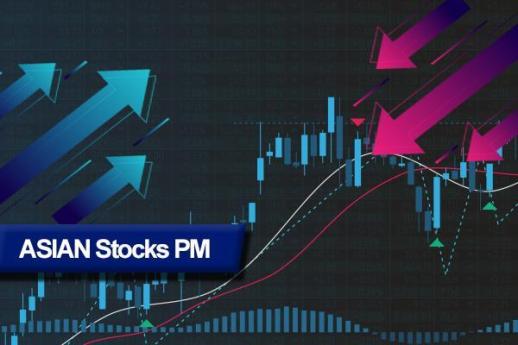 KOSDAQ shines alone; Nikkei suffers "Black Friday" on Gulf crisis, hawkish BOJ SEOUL, March 20 (AJP) — Asian equity markets showed mixed results with limited volatility on Friday, yet a sharp divide emerged between Seoul and Tokyo. While the tech-heavy KOSDAQ rallied by over 1 percent, Japanese stocks suffered a bruising "Black Friday" as monetary tightening fears gripped the Nikkei. The South Korean won showed no signs of recovery amidst the prolonged blockade of the Strait of Hormuz and the U.S. Federal Reserve’s hawkish stance on interest rates. Although the won rose to the 1,480 level during intraday trading, it surrendered all gains to close at 1,500 per dollar, unchanged from the previous session. Signals from the Bank of Japan (BOJ) regarding a potential rate hike on Thursday - right after the rate freeze - also weighed heavily on regional currency markets. With both the Fed and the BOJ maintaining hawkish leanings, as the impact of the Strait of Hormuz blockade on the South Korean economy began to materialize, the yield gap between South Korea’s long-term and short-term bonds narrowed further.The 10-year treasury yield fell 4.3 basis points to 3.736 percent, while the 3-year yield jumped 8.1 basis points to 3.410 percent. The benchmark KOSPI closed at 5,781.20, up 0.31 percent. Despite a mountain of external risks, the index managed a slight gain, led by a rally in alternative energy stocks. Retail investors net purchased 2.23 trillion won ($1.50 billion) and institutional investors bought 403.4 billion won, while foreign investors offloaded 2.67 trillion won in flight to safety and profit-taking moves. Alternative energy stocks, including nuclear and solar power, surged as the Middle East conflict continued to choke petroleum supply chains. Doosan Enerbility, a leader in domestic gas turbines, rose 3.1 percent to 109,600 won ($73.68). SK Innovation also climbed 3.26 percent to 113,900 won after its subsidiary, TerraPower, received a construction permit for an advanced nuclear reactor from the U.S. Nuclear Regulatory Commission (NRC). Daewoo E&C, which declared its entry into the nuclear sector last year, posted the largest gain, soaring 18.18 percent to 19,110 won. Hanwha Solutions, the nation’s top solar module maker, recovered previous losses to close at 51,700 won, up 3.92 percent. In contrast, heavyweights Samsung Electronics and SK Hynix weakened, falling 0.55 percent and 0.6 percent, respectively. The KOSDAQ index experienced a solitary surge, largely driven by the biotech sector ahead of the American Association for Cancer Research (AACR) annual meeting in April. Samchundang Pharm reclaimed the top spot in market capitalization, jumping 14 percent to 112,000 won following its success in developing a biosimilar for Eylea. Peptron, specializing in peptides, also soared 9 percent to 28,500 won. The Nikkei 225 plummeted 3.38 percent to close at 53,372.53. Beyond the Middle East risk and the Fed’s rate freeze, remarks from BOJ Governor Kazuo Ueda acted as a major headwind. Ueda signaled a potential rate hike, noting that "the view to prioritize upside risks to inflation is prevailing." Export-driven stocks, which have long benefited from low rates, took a hit. Market leader Toyota fell 2.32 percent to 3,325 yen ($21.84), and Honda dropped 3.2 percent. Semiconductor-related stocks also suffered, with Advantest and Tokyo Electron falling 4.58 percent and 2.38 percent, respectively. Notably, SoftBank Group Corp. plunged 5.12 percent to 3,558 yen on concerns over rising interest expenses as the "weak yen" era nears its end. Taiwan’s TAIEX edged down 0.43 percent to 33,543.88. While TSMC fell 0.54 percent to 1,840 TWD ($58.12) and Foxconn lost 1 percent, MediaTek rose 1.2 percent to 1,700 TWD, buoyed by its partnership with Nvidia and the success of the Dimensity 9500 chip. In Mainland China, sentiment remained subdued. The Shanghai Composite Index fell 1.24 percent to 3,957.05 on recession fears linked to the Hormuz blockade, while the SZSE Component remained relatively flat, dipping only 0.25 percent to 13,866.20. 2026-03-20 17:13:01
 -
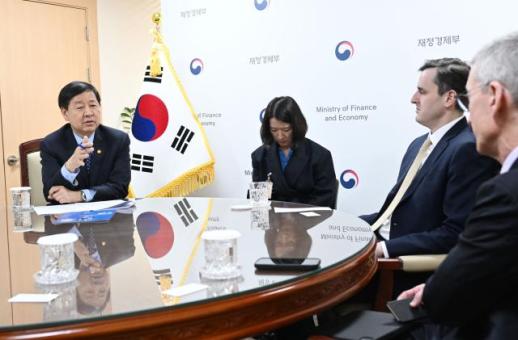 IMF to factor Middle East shock into world economic outlook in April SEOUL, March 20 (AJP) - The International Monetary Fund perceives rising downside risks in the global economy from volatility in energy prices and financial market stemming from Middle East conflict and will factor the negative impact on growth and inflation into its updated economic outlook in April, according to a senior official. Deputy Prime Minister and Minister of Economy and Finance Koo Yun-cheol met visiting Dan Katz, First Deputy Managing Director of the International Monetary Fund (IMF) in Seoul on Thursday and discussed strategic response to escalating global risks, the ministry said in a press release Friday. Katz pointed out that recent military clashes in the Middle East, the blockade of the Strait of Hormuz, and strikes on energy production facilities have significantly heightened volatility in energy prices and financial markets. He warned that these factors are increasingly likely to dampen global economic growth. The IMF official added that a prolonged conflict could severely hamper global expansion and trigger widespread inflation, noting that the IMF intends to closely monitor these projections. These assessments are expected to be reflected in the IMF’s World Economic Outlook (WEO) scheduled for release in April. Koo explained Seoul was deploying "all possible policy means" - enforcing cap on gasoline and fuel prices and fast-tracking supplementary budget - to minimize the fallout on the real economy. Katz commended the South Korean government for its "swift and decisive" response to recent market volatility and its impact on the real economy. He assessed that the South Korean economy has historically demonstrated strong resilience in the face of various domestic and international shocks. Furthermore, the IMF deputy chief expressed gratitude for South Korea’s contributions to capacity-building programs for vulnerable and low-income countries, including its recent funding to the IMF. Koo responded by reaffirming Seoul's commitment to further contributing to capacity-building initiatives in emerging fields, such as AI and digital technology. 2026-03-20 15:43:44
 -
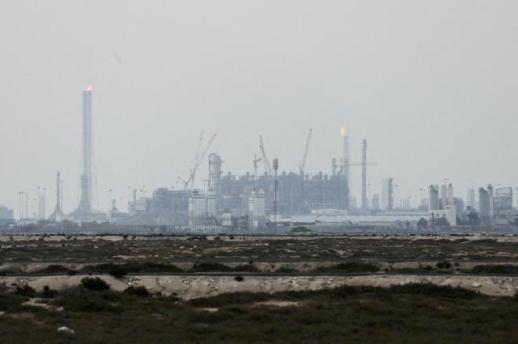 Seoul readies contingency as Qatar LNG force majeure looms SEOUL, March 20 (AJP) - South Korea has prepared a contingency plan for a worst-case scenario in which liquefied natural gas (LNG) imports from Qatar are completely halted as missile strikes on the Gulf state’s key energy infrastructure raise the risk of prolonged supply disruption, according to government officials in Seoul Friday. The move underscores how the escalating Iran war is beginning to hit global energy supply chains directly, with retaliatory attacks now extending beyond oil routes into core LNG production facilities. According to government officials, the contingency plan — drawn up shortly after the outbreak of hostilities — assumes a “zero-import” scenario for Qatari LNG and outlines response measures including stockpile management and alternative sourcing. “We have already secured sufficient volumes to last through the end of this year,” a senior official at the Ministry of Trade, Industry and Energy said. “Even if imports from Qatar fall to zero, there will be no immediate issue in managing domestic supply.” Concerns intensified after Iran launched missile strikes on Qatar’s Ras Laffan industrial complex, the world’s largest LNG export hub, in retaliation for an Israeli attack on Iran’s South Pars gas field earlier this week. QatarEnergy said the strikes damaged facilities accounting for about 17 percent of its LNG export capacity and warned that repairs could take three to five years. The company’s chief executive also signaled the possibility of declaring force majeure on long-term supply contracts for up to five years, potentially affecting key buyers including South Korea. The prospect has rattled global markets, though industry officials in Seoul said a full-scale, long-term force majeure declaration remains unlikely given the massive financial losses it would entail. South Korea imported 6.97 million tons of LNG from Qatar last year, accounting for 14.9 percent of total imports, making it the third-largest supplier after Australia and Malaysia. Dependence on Qatari LNG has been declining as Seoul diversifies its import portfolio. That trend is expected to accelerate. A 2.1 million-ton long-term contract with Qatar is set to expire at the end of this year, reducing the country’s reliance on Qatari LNG to around 8 percent from next year. Officials said the government is pursuing a two-track strategy — securing short-term spot cargoes while identifying medium-term replacement contracts — to prepare for prolonged disruptions of up to five years. South Korea’s LNG system remains heavily centralized, with Korea Gas Corp. importing about 75 percent of total volumes, allowing for coordinated supply management. Strategic reserves, officially set at around nine days of mandatory stockpiles, are currently above required levels. Industry officials said that even if shipments from Qatar are delayed, adjustments can be made within annual delivery plans. The more immediate concern lies in prices. Qatar accounts for roughly one-fifth of global LNG exports, and any sustained disruption could shift the market balance sharply in favor of suppliers, reversing expectations of a looser supply environment in the coming years. The broader energy shock is already building. Oil prices have surged following attacks on Gulf infrastructure, with some projections suggesting crude could climb as high as $150 to $180 per barrel if disruptions persist into April. Such a scenario would likely spill over into LNG markets, increasing power generation costs and putting upward pressure on household gas and electricity prices in South Korea. 2026-03-20 13:57:05
 -
 South Korea's digital payments surge, platform dominance intensifies SEOUL, March 20 (AJP) - Digital payment transactions in South Korea continued their steady upward trajectory last year, with both transaction volume and value rising from a year earlier. Notably, the dominance of tech platforms in simplified payment and remittance services has intensified, with their market share once again surpassing the 50 percent mark. According to data released by the Bank of Korea (BOK) on Friday, the average daily value of Payment Gateway (PG) services reached 1.55 trillion won ($1.04 billion) in 2025, a 9.2 percent increase from the previous year. The daily average number of transactions also climbed 11.8 percent to 33.64 million. PG services, which manage the overall online payment process, include major operators such as Nice Payments, KG Inicis, Toss Payments, and Kakao Pay. By payment method, credit cards accounted for approximately 77 percent of the total daily volume at 26.04 million cases. In terms of value, credit card payments reached 1.17 trillion won, up 12.3 percent year-on-year. Other payment methods, including "pay money" and local currencies, saw a 14.4 percent increase to 4.80 million cases (115.3 billion won). Bank transfers also rose significantly, jumping 20.2 percent to 2.00 million daily transactions. In contrast, the use of virtual accounts—often used for wire transfers—dropped 9.0 percent to 798,000 cases as the rise of simplified payments reduced their necessity. Despite a brief rebound in 2024, the downward trend resumed last year as payment platforms became more deeply integrated into daily life. The use of prepaid electronic payment services, where users charge funds in advance, also grew. Daily transactions rose 8.0 percent to 36.54 million, while the total value increased 11.0 percent to 1.31 trillion won. Payments through non-bank electronic financial business operators, such as Toss Payments and Naver Pay, reached 34.21 million cases, a 7.7 percent increase from 2024. These entities saw a 10.7 percent rise in value to 1.26 trillion won, maintaining a dominant market share within the prepaid sector. Specifically, simplified payments saw the largest growth, with transaction volume and value increasing by 31.1 percent and 27.2 percent, respectively. Simplified remittances also grew, reaching 6.95 million cases and 969.23 billion won. While the daily value of transportation card usage edged up 1.2 percent to 13.85 billion won, the number of transactions fell 7.2 percent to 11.27 million. This decline is attributed to certain operators adjusting their data collection methods in 2025 to exclude "invalid tags," such as transit transfers. Reliance on simplified payment and remittance services—which utilize bio-authentication or simple passwords instead of public certificates—surged to a daily average of 35.57 million transactions (up 14.9 percent) and 1.11 trillion won (up 14.6 percent). The expanding influence of "Electronic Financial Business Operators," led by Toss and Kakao, is particularly striking. Their daily transaction volume surged 24.7 percent to 22.67 million, accounting for 64 percent of the total simplified payment volume. The market share of these online financial platforms remained relatively stable between 49 percent and 50 percent from 2022 to 2024. However, the 4.4 percentage points jump to 54.9 percent in 2025 (by value) represents an unusually rapid acceleration in their market dominance. 2026-03-20 11:55:50
 -
 GULF CRISIS: Price pressures and weak won deepen Korea's policy bind SEOUL, March 19 (AJP) - South Korea’s central bank is facing a growing dilemma as potential war-driven price shocks can collide with a weakening currency, tightening the room for monetary policy maneuver. Like the Federal Reserve, the Bank of Korea is widely expected to hold rates steady next month. But how long it can stay on hold will depend on the duration of the Middle East conflict and the scale of its economic fallout — from renewed inflation to rising financial risks. The disruption of the Strait of Hormuz — a vital route for energy and commodities bound for Asia — has already sent oil, shipping and raw material costs sharply higher, feeding directly into Korea’s import-dependent economy. Financial markets are reacting quickly. The dollar surged back above 1,500 won despite verbal intervention by authorities, while bond yields climbed. The 10-year government bond yield rose to 3.693 percent on Thursday, up 8.7 basis points from the previous session and nearly 25 basis points higher than before the conflict began in late February. Global energy prices have led the shock. Brent crude has jumped to above $111 per barrel, up more than 50 percent from pre-conflict levels, while Dubai crude — Korea’s key benchmark — reached $122.84 as of March 17. The surge is cascading through shipping markets. The Baltic Clean Tanker Index has nearly doubled from the start of the year, while daily charter rates for Very Large Crude Carriers have soared from about $30,000 to over $400,000, sharply raising transportation costs for fuel imports. Airlines are already passing through the burden. Asiana Airlines has nearly tripled fuel surcharges on New York routes, underscoring how quickly energy shocks are feeding into consumer costs. Industrial supply chains are also under strain. Disruptions in oil and gas imports are squeezing the production of key inputs such as naphtha and helium — both critical to refining and semiconductor manufacturing. For Korea, where exports hinge on energy-intensive industries, the implications are immediate. A report by the Korea Institute for Industrial Economics & Trade warned that even a three-week disruption in Hormuz could lift manufacturing costs by 5.4 percent. A prolonged blockade could push oil prices to $160 per barrel and drive liquefied natural gas prices up as much as 140 percent. The shock is also spreading to food and agriculture. Urea nitrogen prices — a key fertilizer component — have surged past $600 per ton from $344 at the start of the year, raising the risk of higher food prices in the coming months. “Escalating attacks in the Middle East are creating a global chokepoint for farmers,” said Alexis Maxwell, an agriculture analyst at Bloomberg Intelligence, warning of potential disruptions to fertilizer production. Korea’s vulnerability is structural. The country imports all of its crude oil and relies on Middle Eastern suppliers — particularly Saudi Arabia, the UAE, Qatar, Kuwait and Iraq — for roughly 70 percent of its supply. Until recently, inflation had remained relatively stable around the Bank of Korea’s 2 percent target, helped by softer oil prices. That dynamic is now shifting. “The simultaneous rise in oil prices and the exchange rate is expected to exert significant upward pressure on import prices,” said Lee Moon-hee, head of the BOK’s inflation statistics team. At the same time, financial risks are re-emerging. Household debt has climbed to about 1,852.7 trillion won, with mortgage-backed loans reaching 1,124 trillion won, even as the benchmark rate has remained at 2.5 percent since May last year. Rising market rates are already tightening borrowing conditions. The upper end of five-year fixed mortgage rates at major banks has exceeded 6 percent, with Suhyup Bank charging as high as 7.11 percent — the highest level in more than three years. The Bank of Korea has expressed concern over widening gaps between market rates and its policy rate. “A spread of over 0.6 percentage points between the three-year treasury yield and the benchmark rate is excessive,” Governor Rhee Chang-yong said earlier this year. That divergence is now complicating policy decisions. Cutting rates to support growth risks fueling inflation and weakening the currency further. Holding rates steady — or tightening — could deepen pressure on debt-laden households and the broader economy. If the conflict drags on, economists warn, South Korea could face a classic supply-driven stagflation shock — where slowing growth meets rising prices. The central bank, in effect, is running out of easy options. 2026-03-19 17:18:02
 -
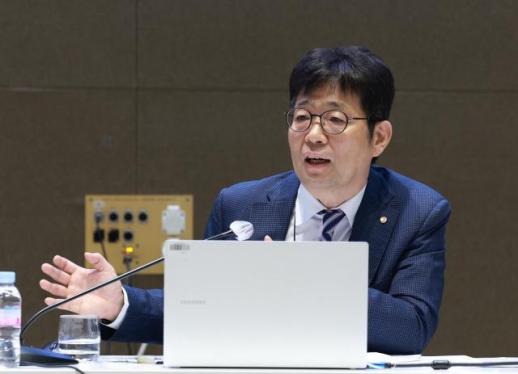 BOK hints at intervention as USD/KRW hits above 1,500 after Fed hold SEOUL, March 19 (AJP) - The Bank of Korea (BOK) vowed to take "stabilization actions" upon signs of volatility in domestic financial markets in renewed interventionist rhetoric Thursday after the local currency's spiral past its de facto defense line of 1,500 versus the U.S. dollar. "Uncertainties in the U.S. Federal Reserve's monetary policy path have escalated," said BOK senior deputy governor Ryoo Sang-dai during an emergency Task Force (TF) meeting addressing the fallouts from the Fed’s FOMC meeting and the ongoing blockade in the Strait of Hormuz. This marks the third emergency session this month since the launch of U.S.-Israel attacks on Iran in late February. The won’s weakness has intensified as hopes for a narrowing interest rate differential faded with the Fed's latest hold. The dollar has shot up to 1,505.9 in early Thursday session in Seoul, up sharply from 1,483.1 previous close. Since the rhetoric, the dollar has eased to 1,499.2 won. Market volatility has been exacerbated by the prolonged conflict in the Middle East. Crude oil prices have surged by over 40 percent in March, fueling inflationary pressures and weighing heavily on the trade-dependent South Korean economy. As of Thursday 9:40 a.m., Brent crude reached $110.6 per barrel, a surge of more than 52 percent compared to February 27, just before the conflict erupted. This comes amid escalating fears of actual disruptions in production and supply, following Israel's bombardment of South Pars, Iran’s largest gas field, and Tehran’s retaliatory strikes against facilities across the region, including in the UAE. "With external risks such as the persistent instability in the Middle East remaining high, the central bank is closely monitoring the situation" and "will take timely stabilization measures" when deemed necessary, he said. 2026-03-19 10:30:02