

Journalist

Kim Yeon-jae
duswogmlwo77@ajupress.com
-
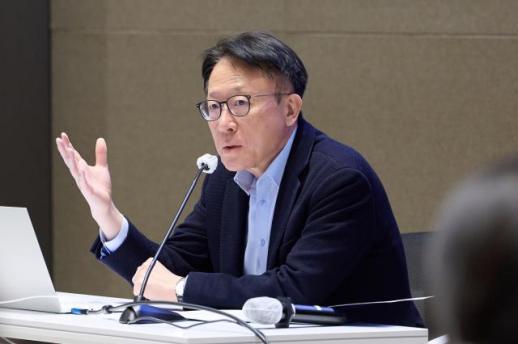 Outgoing BOK dove delivers hawkish swan song amid inflation risks SEOUL, May 11 (AJP) — Inflation has become increasingly worrisome and is likely to dominate upcoming monetary policy discussions at the Bank of Korea, outgoing Monetary Policy Board member Shin Sung-hwan said Monday, in a notable hawkish turn from one of the central bank’s most dovish voices. Shin, whose term ends Tuesday, admitted during a press conference that he had previously favored rate cuts, but said that if he were still to remain on the board, he would now be more concerned about inflation risks. Shin had been the sole dissenter advocating a rate cut when the BOK held its benchmark interest rate steady in January, April, August, October and November last year. “Inflation is always the policy priority,” he said, arguing that central banks should prioritize price stability over growth, particularly when inflation risks drifting above the BOK’s 2 percent target. He warned that if oil prices remain elevated through year-end, secondary inflationary pressures across the broader economy would become unavoidable, making the fight against inflation more difficult than initially expected. Shin identified the surge in global crude prices following the Middle East conflict as the single biggest variable facing policymakers. “We initially expected oil prices to stabilize around $70 per barrel by the end of this year, but under the current situation, it now appears likely to hover closer to $90,” he said. Brent crude climbed as high as $105 a barrel during intraday trading Monday, roughly 50 percent above prewar levels. Since joining the board in May 2022, Shin had been widely viewed as a representative dove within the committee. During his tenure, he issued seven dissenting votes in favor of rate cuts. Even as former Governor Rhee Chang-yong maintained a cautious policy stance, Shin consistently argued for easing to support weak domestic demand and relieve pressure on the real economy. But he said the environment had shifted rapidly in recent months. “Just as the housing market was already making it difficult to lower rates, the Middle East situation deteriorated immediately afterward,” Shin said. “At this point, it is not desirable to add inflationary pressure through a rate cut.” Shin also described “polarization” within the South Korean economy as the most difficult challenge during his tenure. “Economic growth represents the overall performance of the economy, but now we have a situation where a sector accounting for roughly 10 percent of the economy determines the headline figure,” he said, referring to the growing dominance of the semiconductor sector. He warned that disparities across industries have widened to the point where appropriate interest-rate levels differ sharply depending on the sector. In the past, strong growth in leading industries generated broader trickle-down effects across the economy, Shin said, but that transmission mechanism has weakened considerably. As a result, higher interest rates risk placing even greater burdens on already struggling sectors. Regarding the recent rise in government bond yields, Shin said a combination of surging long-term U.S. Treasury yields and mounting inflation expectations had contributed to the move. “Long-term U.S. interest rates reflect concerns over inflation expectations,” he said, adding that similar concerns are also likely influencing the rise in South Korean government bond yields. Shin is not the only BOK official signaling a more hawkish shift. “We need to stop thinking about lowering the benchmark interest rate and begin considering the possibility of raising it,” Ryoo Sang-dai said earlier this month during a press conference at the Asian Development Bank annual meeting in Samarkand, Uzbekistan. Ryoo added that clearer signals regarding the BOK’s future policy direction could emerge during the May monetary policy meeting. Bond prices continued to fall amid a growing atmosphere for an interest rate hike. The yield on the three-year government bonds closed at 3.598 percent, up 2.9 basis points, while the ten-year yield finished at 3.950 percent, up 4.1 basis points. 2026-05-11 17:01:12
 -
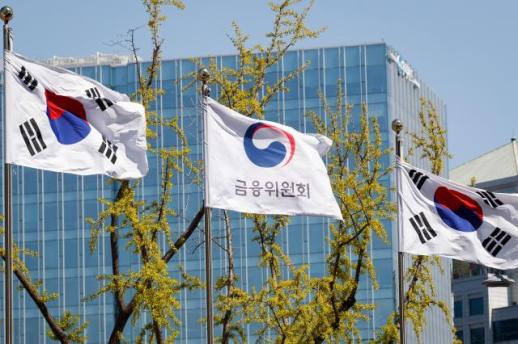 Financial authorities to crack down on misuse of state-supported loans SEOUL, May 11 (AJP) - Financial authorities will step up efforts to prevent some businesses from profiting by lending government-funded money to their subcontractors at excessively high interest rates. The Financial Services Commission (FSC) and the Fair Trade Commission (FTC) said on Monday that they will strengthen monitoring and review processes to crack down on improper business practices and other irregularities. They added that companies found engaging in these practices will be banned from receiving such funds. The move comes after Myeongnyundang, which runs restaurant chain Myeongnyun Jinsa Galbi, allegedly diverted state-supported low-interest funds by lending them to its franchisees at much higher interest rates. According to a joint investigation by the FSC and FTC, Myeongnyundang obtained funds at annual interest rates of 3 to 6 perent from institutions including the state-run Korea Development Bank (KDB), the Industrial Bank of Korea (IBK), and the Korea Credit Guarantee Fund (KODIT). It then lent about 900 billion won (US$613.92 million) to 14 affiliated lenders linked to its major shareholders. These lenders were found to have charged franchisees and prospective small business owners of Myeongnyun Jinsa Galbi annual interest rates of 12 to 18 percent on loans used for expenses such as interior renovations. Authorities also found that some businesses had deliberately split their operations into smaller entities to keep their assets below 10 billion won to avoid regulatory oversight. They also discovered that some franchisees were required to repay loan principal and interest through payments for meat supplies. The FTC has already launched formal procedures against Myeongnyundang for allegedly violating franchise regulations along with a corrective order. Investigators found the restaurant chain pressured franchisees to use certain contractors for interior work and equipment, while omitting or falsely stating key financial details in its documents. It also urged financial institutions including the KDB, IBK, and KODIT to tighten their monitoring and screening of loans made to franchisees and other borrowers. "Desperate small-business owners should never be exploited for someone else's gain," said FSC chairman Lee Eog-weon on social media, vowing to crack down on predatory lending practices targeting franchisees. 2026-05-11 15:16:11
 -
 Korea's inflation may soar to 3.7% if Gulf oil crisis persists: KDI SEOUL, May 11 (AJP) — South Korea's inflation could run as high as 3.7 percent this year under the worst-case scenario of an energy shock from the Middle East crisis, according to state think tank Korea Development Institute on Monday. The KDI, which is due to announce its revised economic outlook on Wednesday, predicted a bump-up of between 1 and 1.6 percentage points from this year’s estimated inflation rate of 2.1 percent. The forecast, however, excludes policy buffers such as fuel tax cuts and gasoline price caps, said Ma Chang-seok, a fellow at the KDI’s Department of Economic Forecasting. Under its “base scenario,” the KDI assumed Dubai crude prices would rise to $100 per barrel in the second quarter before gradually easing to $90 and $87 in the third and fourth quarters, respectively. Under that scenario, higher oil prices would lift this year’s consumer inflation by 1.2 percentage points and next year’s by 0.9 percentage point. Under a more severe “prolonged high oil price scenario,” where Dubai crude remains at around $105 per barrel from the second through fourth quarters, the inflationary impact would widen to 1.6 percentage points this year and 1.8 percentage points next year, raising the possibility that elevated inflation could persist into next year. Conversely, under an “oil price stabilization scenario,” where Dubai crude falls from $95 in the second quarter to $85 and $80 in the third and fourth quarters, respectively, inflationary pressure would ease significantly starting next year, the KDI said. The think tank specifically noted that oil price hikes caused by transportation uncertainty in energy supply routes tend to have a larger impact on consumer inflation than ordinary supply-demand driven increases. If concerns over shipping disruptions intensify, refiners often expand petroleum inventories, amplifying price hikes even under similar market conditions. Accordingly, the KDI warned that cost-push pressure could spread beyond petroleum products to industrial goods and services. While ordinary increases in Dubai crude historically had limited impact on core inflation, a 10 percentage point oil increase driven by transportation uncertainty was estimated to raise the core inflation rate by approximately 0.10 percentage point. “Policy responses such as the maximum oil price system and fuel tax cuts are factors that reduce the ripple effect of rising international oil prices on consumer inflation,” Ma said. “It is necessary to operate price stabilization policies in preparation for the possibility of prolonged high oil prices and unstable inflation expectations.” As of Monday afternoon, both West Texas Intermediate and Brent Crude futures were trading above $100 per barrel after U.S. President Donald Trump responded “Unacceptable” to Iran’s proposal for ending the war, reigniting fears of prolonged conflict and supply disruptions across the Middle East. 2026-05-11 15:08:54
 -
 Chip boom feeds record C/A surplus streak in March, overseas stock invest eases SEOUL, May 08 (AJP) -The black in South Korea's current-account balance stretched to new record high of $37.33 billion in March and $73.78 billion for the first three-month period, both more than quadrupled from a year-ago period in line with double-digit growth in exports that more than offset gain in imports from higher U.S. dollar and energy cost amid a war outbreak in the Middle East. Despite the record surplus and exports surge streak, overwhelming demand for oversea stocks – mostly in Wall Street – by South Koreans posed as structural setback for the recovery in the Korean won. According to Bank of Korea (BOK) data Friday, the March current-account surplus sharply widened from $23.19 billion in February and from $9.58 billion a year earlier, extending the surplus streak to 35 consecutive months. The first-quarter surplus of $73.78 billion compared with $19.49 billion during the same period last year. The goods account posted a record $35.07 billion surplus in March, widening from $23.36 billion in February and $9.69 billion a year earlier, as exports jumped 56.9 percent on-year to $94.32 billion. Imports also increased 17.4 percent to $59.24 billion, accelerating from the 4 percent gain recorded in February. The AI-fueled semiconductor cycle remained the overwhelming engine. Semiconductor exports soared 149.8 percent on a customs-clearance basis in March following a 157.8 percent jump in February, while electric and electronic product exports surged 112.7 percent after rising 104.7 percent a month earlier. Information-technology device exports climbed 78.1 percent. Regional demand strengthened across nearly all major markets. Exports to China rebounded 64.9 percent on-year in March from a 34.2 percent rise in February, while shipments to Southeast Asia accelerated to 68 percent growth from 54.9 percent. Exports to the United States climbed 47.3 percent and exports to the European Union rose 19.3 percent. Petroleum product exports swung to a 69.2 percent gain from a 0.7 percent decline in February as refining margins improved despite Middle East tensions. Chemical exports rebounded 9.1 percent after falling 7.1 percent, while shipbuilding exports extended gains by 11.4 percent. By contrast, machinery and precision instrument exports slipped 0.2 percent and auto parts exports declined 5.3 percent. Imports also accelerated as Korean firms continued expanding AI-related production and facilities. Capital goods imports rose 23.6 percent in March from 16.8 percent in February, while semiconductor imports accelerated to 34.5 percent growth from 19.1 percent. Imports of semiconductor-manufacturing equipment increased 6.7 percent. Raw material imports returned to growth, rising 8.5 percent after declining 1.9 percent in February. Non-energy imports surged 18.7 percent, while energy imports still fell 5.6 percent despite elevated geopolitical tensions surrounding the Strait of Hormuz. The services account remained in deficit for a 46th consecutive month at $1.29 billion, improving from a $1.86 billion shortfall in February. The travel account swung to a $140 million surplus from a $1.26 billion deficit a month earlier as outbound travel demand softened. Primary income surplus widened to $3.58 billion from $2.48 billion on increased dividend income from overseas assets. Still, the historic trade and current-account boom continues to fail to generate meaningful support for the Korean won as capital flows increasingly move in the opposite direction. Korean investors’ appetite for U.S. technology and AI-related equities remained intact, although sharply eased from the previous months amid strong U.S. dollar and capital reshoring incentives. March financial-account data showed foreign portfolio investment liabilities — foreign investment into Korean equities and bonds — plunged by $34.04 billion following an already sharp $11.94 billion decline in February. The outflow was overwhelmingly driven by foreign net selling of Korean stocks, with equity investment liabilities alone sinking $29.33 billion after falling $13.27 billion a month earlier. At the same time, Korean residents continued pouring money into overseas markets. Portfolio investment assets rose another $4 billion in March, although halved from an $8.64 billion increase in February. Overseas equity investment by residents climbed $3.94 billion during the month, slowing from a gain of $10.39 billion. The BOK has maintained that the current-account structure remains fundamentally solid and noted that refined-product exports and still-contained energy imports helped cushion the impact of Middle East tensions through March. Still, officials acknowledged that portfolio flows and global risk sentiment are now exerting greater influence on the won than trade surpluses alone. Whether the record surplus streak will be sustained remains uncertain amid prolonged conflicts in the Middle East that has caused energy shock across manufacturing front. 2026-05-08 11:23:13
 -
 KOSPI hits new heights and ordinary Koreans can only watch in envy SEOUL, May 07 (AJP) - South Korea’s benchmark stock index keeps scaling one record after another, but for many ordinary investors the rally feels increasingly like a private party they cannot afford to enter. After surging 70 percent last year, the KOSPI has already climbed another 77 percent this year, propelled overwhelmingly by a handful of AI-fueled chip giants. The gains have become so concentrated that while paper wealth has exploded, many retail investors holding smaller stocks say they have been left poorer — or locked out entirely by soaring share prices. A research report released Thursday by the Bank of Korea warned that the stock boom is increasingly enriching wealthy households and deepening Korea’s already severe asset polarization, long driven by widening real estate disparities. Individual investors purchased a net 63.6 trillion won ($43.8 billion) worth of stocks between 2020 and 2024, sharply up from just 1.3 trillion won during 2011 - 2019. Yet the gains accrued overwhelmingly to high-income households. The wealthiest 20 percent of households by net assets accounted for 64.5 percent of all stock holdings, the central bank said. When measured by total assets — including real estate, equities and cash — the concentration became even starker, with the top quintile controlling 73.2 percent of household wealth. The return gap was wider still. Between 2020 and 2024, the richest 20 percent earned average annual stock profits of 2 million won, far above the national average of 1.12 million won. For the remaining income quintiles, annual stock-related income remained below 400,000 won. The imbalance has likely intensified further in recent months as shares of Samsung Electronics and SK hynix exploded higher on the back of the artificial intelligence boom. As of Thursday, Samsung Electronics carried a market capitalization of 1,567 trillion won, while SK hynix stood at 1,175 trillion won. Together, the two companies accounted for more than 45 percent of the KOSPI’s total market value of 6,062 trillion won, up sharply from 34 percent at the end of last year. Their share prices have more than doubled this year, with Samsung Electronics climbing above 260,000 won and SK hynix topping 1.6 million won. Of the KOSPI’s roughly 1,000 trillion won increase in market capitalization this year, about 800 trillion won came from the two chipmakers alone. Outside the AI frenzy, however, much of the market continued to follow a sharply “K-shaped” trajectory, with many non-chip stocks declining even as headline indices surged. “I wanted to invest in the two major stocks, but the share prices were already too high, so I bought other stocks that ended up falling instead,” said Park Min-woo, who described himself as belonging to the second or third income quintile. “The barrier to entry for the core stocks has become too high.” Among the top 20 KOSPI-listed companies by market capitalization, only Shinhan Financial Group traded below 100,000 won per share. The rally has also fueled a fresh wave of leveraged speculation. Margin loan balances, which stood at around 16 trillion won at the end of 2024, surpassed 27 trillion won by the end of 2025 and reached 36 trillion won as of Monday. Analysts said the trend reflects both speculative fervor and the growing difficulty retail investors face in accessing the market’s biggest winners. “We must keep in mind that leveraged investments, such as credit loans, are increasing,” a BOK official said. “A simultaneous decline in asset prices and increase in debt burdens could amplify downward pressure on the economy.” As wealth polarization deepens, consumer spending has weakened while dependence on asset accumulation — particularly real estate — has intensified. According to the BOK survey, Korean households spent just 130 won for every 10,000 won earned through stock investments, far below comparable figures of 3.2 percent in the United States and 3.8 percent in Germany. The central bank pointed to property markets as a key driver of the disparity. The share of proceeds from stock and bond sales used for home purchases rose from 4.9 percent in May last year to 8.9 percent in January this year. During the same period, apartment prices in Seoul climbed about 8.7 percent. The trend runs counter to the government’s longstanding hope that rising stock prices would ease speculative pressure on housing. According to the KB Financial Group Research Institute, stock-market profits are increasingly flowing back into real estate, particularly among wealthy investors. The institute pointed to a steady migration of equity wealth into premium residential districts across Seoul and the surrounding metropolitan area. “It is not a new phenomenon for stock market liquidity to move into real estate with a certain time lag,” said Song Seung-hyeon, head of City and Economy. Song warned that as wealthy investors armed with large amounts of “seed money” continue pouring into the housing market, property prices in Seoul and the greater metropolitan area are likely to climb further, widening the asset divide. For decades, the stock market was viewed as a pathway for lower-income households to build wealth and improve living standards. In today’s market, that ladder appears increasingly difficult to climb. 2026-05-07 17:32:32
 -
 Korea's FX reserves rebound in April on eased foreign stock selling and dollar SEOUL, May 7 (AJP) — South Korea’s foreign exchange reserves rebounded in April after a brief contraction a month earlier, as gains in foreign-currency assets fueled by a stronger U.S. dollar helped offset pressure from authorities’ won-defense operations, the central bank said Thursday. According to monthly data from the Bank of Korea (BOK), the country’s foreign exchange reserves stood at $427.88 billion at the end of April, up $4.22 billion from the previous month, when reserves had fallen by $3.97 billion. The figure nevertheless is still short of $428 billion at the end of December. Improved foreign investment flows also helped stabilize the foreign exchange market. Foreign investors, who had net-sold 40.4 trillion won worth of KOSPI shares in March, turned net buyers of 1.2 trillion won in April. Net foreign purchases of Korean bonds also rose to 7.8 trillion won from 5.4 trillion won a month earlier. The BOK noted that the market capitalization of KOSPI shares held by foreign investors surged from about 1,513 trillion won ($1.03 trillion) at the end of March to 2,060 trillion won ($1.41 trillion) by the end of April, reflecting both renewed inflows and a rebound in asset values. The Korean won also recovered against the U.S. dollar, with the exchange rate strengthening from 1,530.1 won per dollar at the end of March to 1,483.3 won at the end of April. South Korea held the world’s 12th-largest foreign exchange reserves as of the end of March. The central bank added that South Korea’s relatively limited gold holdings and the use of currency swap arrangements with the National Pension Service (NPS) helped reduce the need for direct spot-market intervention, limiting the pace of reserve depletion compared with some other countries. Like South Korea, many major economies spent billions of dollars to support their currencies during the initial phase of the Middle East conflict-driven market turmoil. 2026-05-07 07:55:06
 -
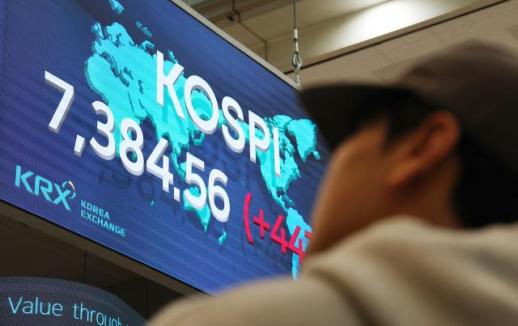 Stocks on unfettered rally, bonds dip as Seoul markets bet on inflation-driven rate hike SEOUL, May 6 (AJP) — The rationale for higher interest rates gained ground in South Korea as inflation, long subdued by lethargic demand, accelerated at the fastest pace in 21 months in April after the blockade of the Strait of Hormuz triggered a surge in imported prices, while the benchmark stock index nearly tripled from a year earlier to touch a new four-digit milestone. According to data released by the Ministry of Data and Statistics (MDAS) on Wednesday, consumer prices rose 2.6 percent year-on-year in April, breaking out of the months-long range around 2 percent. Fuel was the primary driver, as South Korea relies heavily on Middle Eastern crude and gas for energy and manufacturing. Petroleum prices alone soared 21.9 percent from a year earlier and 7.9 percent from the previous month, contributing nearly 1 percentage point to headline inflation. Gasoline prices jumped 21.1 percent year-on-year, while diesel prices surged 30.8 percent. Kerosene prices also climbed 18.7 percent. As fuel prices rose, transportation costs followed suit. International airfares climbed 15.9 percent from a year earlier. The Baltic Dry Index (BDI), a benchmark for global shipping rates, surged more than 27 percent from 2,140 on Feb. 27 — before the conflict escalated — to 2,730 as of May 1. Economic authorities say the impact of the blockade reached the domestic market with a time lag. While vessels that cleared the Strait of Hormuz in February arrived at Korean ports by late March, supply chains began rupturing in April as shipments were cut off. And the pain may only be beginning. “The squeeze from the blockade will be reflected in second-quarter data,” Lee Dong-won, director general of economic statistics at the Bank of Korea (BOK), said during a press briefing on first-quarter GDP growth on April 23. At the time, Lee said the modest 2.2 percent rise in March inflation was temporary. “The impact remained minimal through the first quarter as vessels that passed through the strait before the closure arrived in Korea by late March,” he warned. That warning has now become reality. International oil prices have continued to climb steadily. As of Wednesday afternoon, the three major oil benchmarks — West Texas Intermediate (WTI), Brent and Dubai crude — were all trading above $100 per barrel. Dubai crude, which accounts for about 70 percent of South Korea’s crude imports, has maintained its upward trend even after the United Arab Emirates (UAE) withdrew from OPEC and other members announced production increases. Given the tense tug-of-war between the United States and Iran over control of the strategic chokepoint, oil prices are unlikely to normalize anytime soon. The National Assembly Budget Office (NABO) estimated that South Korea’s economic growth could slow to 1.2 percent from its initial estimate of 2 percent if international oil prices remain above an annual average of $100 per barrel. It also projected inflation to average 2.9 percent, well above the central bank’s 2 percent target. Following stronger-than-expected 1.7 percent GDP growth in the first quarter and a red-hot streak in chip earnings and stocks, major investment banks have sharply raised their forecasts for Korea this year. JPMorgan Chase lifted its growth estimate to 3.0 percent from 2.2 percent, BNP Paribas raised its forecast to 2.7 percent from 2.0 percent and Citigroup increased its projection to 2.9 percent from 2.2 percent. Higher growth and inflation forecasts could further fuel inflation expectations at a time when price pressures are already becoming entrenched. Bond prices hit fresh annual lows on expectations that rates may move higher. The yield on the three-year government bonds retreated to 3.595 percent after hitting annual high of 3.641 percent in the morning while the ten-year yield ended at 3.932 percent after flirting close at 4.00 percent in earlier session, building pressure around the benchmark interest rate, which has stayed unchanged at 2.5 percent since May last year. Pessimists warn that the chip and stock frenzy may be overheating, particularly as leveraged investment accelerates. The KOSPI continued to stun markets, ending Wednesday up 6.45 percent at 7,384.56, outpacing the S&P 500 index’s Tuesday close of 7,259.22. “The prolonged Middle East war could lower South Korea’s economic growth rate by 0.9 percentage point,” Albert Park, chief economist of the Asian Development Bank (ADB), said during a press conference at the ADB annual meeting in Samarkand, Uzbekistan. The ADB nevertheless raised its growth forecast for South Korea to 1.9 percent from 1.7 percent earlier in April. 2026-05-06 16:45:00
 -
 UPDATE: Korea's inflation hits 21-month high, markets rally on *Updated with additional information and market response SEOUL, May 6 (AJP) — South Korea’s inflation accelerated to a 21-month high in April as a monthlong blockade of the Strait of Hormuz drove up imported fuel costs and price pressure from gas pumps to dining tables. According to data released by the Ministry of Data and Statistics (MDAS) on Wednesday, the consumer price index (CPI) rose 0.5 percent from March and 2.6 percent from a year earlier, up from 2.2 percent in March. It was the fastest annual gain since July 2024, when inflation stood at 2.7 percent. The latest data reinforced concerns at the Bank of Korea that inflation could drift toward the 3 percent range if Middle East tensions persist and supply disruptions continue to pressure energy imports. The surge was led largely by petroleum-linked industrial goods. Industrial product prices rose 3.8 percent from a year earlier, accelerating from 2.7 percent in March. Petroleum prices alone soared 21.9 percent on year and 7.9 percent from the previous month, contributing 0.84 percentage point to headline inflation. The increase reflected both the impact of the Middle East war and a low base from last year. Dubai crude averaged $105.7 per barrel in April, compared with $67.7 a year earlier. Domestic gasoline prices rose to 1,986 won per liter from 1,647 won a year earlier, while diesel prices climbed to 1,979 won from 1,513 won. Among individual items, gasoline prices jumped 21.1 percent from a year earlier, while diesel prices surged 30.8 percent. Kerosene prices climbed 18.7 percent. Transportation recorded the steepest increase among major spending categories, rising 9.7 percent from a year earlier and 3.4 percent from March, contributing nearly one percentage point to overall inflation. Rising energy costs also spilled over into travel-related services. International airfare prices climbed 15.9 percent from a year earlier, while overseas package tour prices rose 11.5 percent, reflecting higher transportation and fuel-related costs amid prolonged instability in Middle Eastern shipping routes. Service-sector inflation remained elevated. Personal services prices rose 3.2 percent from a year earlier, with dining-out prices up 2.6 percent and other personal services up 3.5 percent. Agricultural prices continued to stabilize after last year’s weather-driven spikes. Agricultural, livestock and fisheries products fell 0.5 percent from a year earlier, while fresh food prices dropped 6.1 percent. Vegetable prices plunged 12.7 percent, led by declines in onions, radishes and napa cabbage. Still, some food items continued to rise sharply. Rice prices surged 14.4 percent from a year earlier, while pork, eggs and imported beef also posted gains. The Living Necessities Price Index, which tracks frequently purchased goods and services, climbed 2.9 percent on year in April, up from 2.3 percent in March. Excluding food, the index jumped 3.9 percent, underscoring the growing burden of energy-related costs on households. Core inflation remained relatively stable. Both the index excluding food and energy and the index excluding agricultural products and petroleum rose 2.2 percent from a year earlier, unchanged from March, highlighting how heavily the headline figure was driven by oil prices. “With uncertainty remaining due to the Middle East war and increased volatility in global oil prices, the government will make all-out efforts to stabilize prices felt by consumers,” the Ministry of Finance and Economy said in a statement. “We will prioritize petroleum products while closely managing items closely tied to people’s livelihoods through the price task force.” Markets largely shrugged off the ominous inflation data. As of 10:10 a.m. Wednesday, the benchmark KOSPI was up 5.6 percent to break the unchartered 7,300 mark, while the Korean won recovered to pre-war levels around 1,450 against the U.S. dollar. Government bond yields, in contrast, continued to weaken, with the three-year Treasury yield rising 2.6 basis points to 3.641 percent and the 10-year yield climbing 2.3 basis points to 3.955 percent during the morning session - amid Wednesday’s sharp rise in consumer prices, combined with earlier signals from Bank of Korea (BOK) Deputy Governor Ryoo Sang dai regarding a potential interest rate hike. 2026-05-06 09:06:21
 -
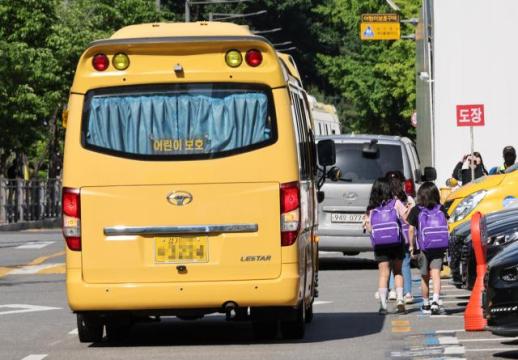 Playgrounds stay empty as Korean children simply have no time to play SEOUL, May 04 (AJP) - As South Korea observes the 104th anniversary of Children’s Day this Tuesday, the festive banners and gift-wrapped toys mask a sobering reality. The holiday, envisioned by pioneer Bang Jeong-hwan as a day to prioritize the "happiness and well-being" of the nation’s youth, has become a poignant reminder of a childhood increasingly spent in the shadows of high-stakes testing and digital screens. Data suggests that for the average South Korean child, the "right to play" is less a lived reality and more a luxury they simply cannot afford. The most striking finding from the National Center for the Rights of the Child’s “2025 Key Statistics for Children” isn't just that children are busy—it’s the profound disconnect between their aspirations and their daily lives. Four out of 10 desired to spend time and play with friends after school, but only two were able to do so as most were carried off to after-school academies and private tutoring. More than half of surveyed students identified after-school academies (hagwons) and tutoring as the main barriers to free play. The pressure begins early in South Korea’s highly competitive education system, where preparation for elite university admissions increasingly starts in elementary school. A 2024 survey by ChildFund Korea found that older elementary students aged 9 to 12 spent an average of 2 hours and 47 minutes a day studying outside school, while younger children aged 6 to 9 studied an additional 2 hours and 17 minutes daily. Although school hours in South Korea are shorter than the OECD average, total study time including private education reaches nearly six hours a day, exceeding the OECD average of five hours. The consequences are increasingly visible. In its report “Child Well-Being in an Unpredictable World,” the Organization for Economic Co-operation and Development ranked South Korea 28th out of 40 countries in children’s physical health and 34th out of 36 countries in mental health. Despite significantly longer study hours than Japan, South Korean students also posted lower scores in reading, mathematics and science in the 2022 PISA assessment. “When private education hours become excessively long, marginal utility inevitably decreases,” said Kim Hyun-chul, a professor at Seoul National University. “It is crucial to maintain proper balance in everything.” Where physical play and social interaction vanish, digital dependence fills the void. In a world where safe play spaces are scarce and time is tighter than ever, smartphones have become the default "playground." A recent survey by the Korean Teachers and Education Workers Union reveals that 70% of upper elementary students are already engaging with generative AI like ChatGPT and Gemini and half of them spending more than two hours on smartphones after school. While technological literacy is vital, researchers warn that this shift is often a survival mechanism. When children are too tired or too busy for the park, they turn to the screen for a quick, low-effort dopamine hit. Globally, however, attitudes toward play are shifting in the opposite direction. The United Nations Children's Fund and the LEGO Group last year established June 11 as the International Day of Play, emphasizing play as essential to healthy child development. The World Health Organization has also stressed that regular physical activity and active play are critical for children’s physical and mental well-being. “Allow them to sleep and exercise sufficiently,” Korean children’s rights pioneer Bang Jeong-hwan wrote in the original Children’s Day proclamation more than a century ago. “Let them go on walks or picnics occasionally.” The words now sound less like celebration and more like a reminder of what many Korean children increasingly lack. 2026-05-04 16:53:07
 -
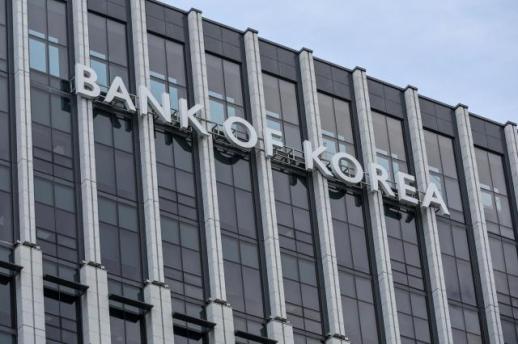 BOK deputy governor flags rate hike possibility, bond yields tick up SEOUL, May 4 (AJP) — Bank of Korea Deputy Governor Ryoo Sang-dai on Sunday signaled that South Korea’s monetary policy may be shifting toward tightening rather than easing, becoming the first monetary board member to publicly lean toward a rate hike amid mounting inflationary pressure tied to Middle East tensions. “Given the external shock and broader economic conditions, my personal view is that monetary policy is moving closer to a hiking cycle than a rate-cut cycle,” Ryoo told reporters during a press conference on the sidelines of the Asian Development Bank annual meeting in Samarkand, Uzbekistan. Ryoo said economic growth is likely to remain broadly in line with this year’s official target of 2.0 percent, while inflation could exceed the central bank’s forecast of 2.2 percent. “Based on these factors, we should move away from easing and begin deliberating tightening,” he said. The deputy governor pointed to the blockade of the Strait of Hormuz as a key inflationary driver, with all three major crude benchmarks — West Texas Intermediate, Brent and Dubai — remaining above $100 per barrel as of Monday. Regarding the Bank of Korea’s so-called “six-month dot plot,” which reflects monetary board members’ policy-rate outlooks over the coming half year, Ryoo said more members may shift toward supporting hikes at the upcoming May 28 policy meeting. In the February dot plot, only one of the three dots allocated to each board member pointed to a quarter-percentage-point hike toward 2.75 percent. “If the current situation is confirmed, there is ample room for the interest-rate path to rise compared to the February dot plot,” Ryoo said. “Probabilistically, the possibility of a rate hike is open.” Inflationary pressure has yet to undermine economic growth. Korea’s economy expanded 1.7 percent in the first quarter, nearly doubled from estimated 0.9 percent, buoyed by strong semiconductor exports and robust artificial intelligence-related investment. Still, Ryoo stressed that uncertainty surrounding the duration and scope of the Middle East conflict makes policy decisions difficult. “We cannot finalize policy when it remains unclear how long the war will continue or how far it may spread,” he said, adding that the central bank would continue monitoring developments ahead of the May meeting. Ryoo disagreed with the Organization for Economic Co-operation and Development's downgrade of Korea’s potential growth rate estimate from 1.7 percent to 1.57 percent next year. “Potential growth does not suddenly fall unless there is a major economic crisis,” he said, adding that the Bank of Korea still estimates the economy’s potential growth rate at slightly below 2.0 percent. On the foreign exchange market, Ryoo acknowledged that the won’s recent trading range around 1,470 to 1,480 per dollar remains historically weak, though he avoided explicitly characterizing current levels as excessive. “The exchange rate is determined by market supply and demand,” he said, adding that authorities would intervene only in cases of excessive volatility or herd behavior. The Korean won opened at 1,472.9 per dollar on Monday, strengthening 10.4 won from the previous session, supported by Ryoo’s remarks and a softer dollar after the Bank of Japan intervened last week to support the yen. Government bonds weakened following the deputy governor’s hawkish comments. The three-year Treasury yield rose 1.3 basis points to 3.608 percent by midday, while the 10-year yield held steady at 3.923 percent. 2026-05-04 14:29:50