

Journalist

Kim Yeon-jae
duswogmlwo77@ajupress.com
-
 Korea's consumer confidence turns negative from energy concerns SEOUL, April 23 (AJP) -South Korea's consumer confidence turned negative for the first time in a year, weighed down by worries over supply-side repercussions on inflation and economic performance from a Gulf-triggered energy shock, data showed Thursday. According to the Bank of Korea (BOK), the consumer sentiment index for April dipped 7.8 points to 99.2, the first time below the 100 threshold in a year. A reading below 100 indicates pessimism outweighs optimism compared with the long-term average. The monthly fall is the steepest since December 2024 amid the shock from a brief martial-law declaration. The drop was broad-based, reflecting a sharp deterioration in both household finances and perceptions of the broader economy. Sub-indices tracking household conditions all weakened. The index for current living standards fell 3 points to 91, while expectations for future living conditions dropped 5 points to 92. Outlooks for household income and spending also declined, each falling 3 points to 98 and 108, respectively. Perceptions of the economy turned decisively dimmer. The index measuring current economic conditions plunged 18 points to 68, while the outlook for future conditions dropped 10 points to 79. Job prospects also deteriorated, with the employment outlook index down 7 points to 82. The data underscore how external shocks are increasingly feeding into domestic sentiment, as households brace for a combination of rising costs and slowing growth. Inflation concerns intensified. The expected inflation rate for the coming year rose to 2.9 percent, up 0.2 percentage point from the previous month, with the anticipation for price rise spiked 4 points to 153 whereas that for income stayed stagnated at 120 to suggest bias for tightening in spending. Consumers pointed overwhelmingly to energy-linked costs as the main driver of price pressures. Petroleum products were cited by 88.8 percent of respondents as the key factor influencing inflation expectations, followed by industrial goods at 33.1 percent and public utilities at 31.4 percent. The surge in energy-related concerns comes amid heightened volatility in global oil markets following disruptions in the Middle East, reinforcing fears of cost-push inflation rippling through the economy. Interest rate expectations also moved higher, with the index climbing 6 points to 115, reflecting growing anticipation that borrowing costs could remain elevated or rise further. The April survey was conducted from April 9 to 16 among 2,262 households nationwide. 2026-04-23 07:36:42
 -
 Polarization deepens as two chip giants dominate KOSPI SEOUL, April 22 (AJP) -South Korea's main bourse is flying to new heights and exports remain resilient despite Gulf shocks, but the momentum is increasingly powered by a single engine — chips. Memory giants Samsung Electronics and SK hynix now account for about 67 percent, or 137.3 trillion won ($XX billion), of total first-quarter operating profits among South Korean companies, according to financial data provider FnGuide. That is more than double last year’s share, when the two firms contributed less than 30 percent of the total. Samsung Electronics alone posted more than 57 trillion won in operating profit for the first quarter, surpassing the combined total of all KOSPI-listed companies during the same period last year. SK hynix, a pure-play memory chipmaker, is also on track for outsized results, with its first-quarter operating profit expected to exceed 40 trillion won in its earnings report due Thursday — nearing its full-year earnings level. Their stellar performances are attributed to both companies securing strong positions in the semiconductor market while achieving sustained growth in high-value chips such as high-bandwidth memory (HBM), used in artificial intelligence (AI)-related infrastructure. The outlook for other major players, however, remains bleak. Hyundai Motor Company, despite steady sales, is expected to see its first-quarter operating profit decline by more than 1 trillion won year-on-year, partly due to a 15 percent reciprocal tariff in the North American market. LG Energy Solution is also projected to remain in the red following the termination of contracts with Ford Motor Company and Freudenberg Battery Power Systems. This imbalance has fueled a rally in the stock market. On Wednesday, the benchmark KOSPI closed at 6,417.93, up 0.46 percent, hitting an all-time high for the second consecutive day. However, the gains have been largely concentrated in the two tech giants. According to the Korea Exchange, as of Wednesday, the combined market capitalization of Samsung Electronics and SK hynix reached approximately 2,140 trillion won. This represents 41 percent of the total KOSPI market cap of 5,200 trillion won ($3.5 trillion). A year earlier, the two companies' combined market cap stood at 1,350 trillion won or around 30 percent of the total. The most significant risk factor is the surge in debt-leveraged trading. According to the Korea Financial Investment Association, the outstanding balance of margin loans reached 34.7 trillion won as of Tuesday, marking another all-time high. The figure has been on a steady upward trajectory since surpassing 30 trillion won on Jan. 29. In response to rising volatility, brokerages have raised margin requirements and banned new transactions in contracts for difference (CFDs) - derivative products that allow investors to settle price differences in cash without owning the underlying asset. Despite these measures, implementation for Samsung Electronics and SK hynix has been slower than for other stocks, raising questions about their effectiveness. Non-bank lending is also increasing. Card loan balances reached nearly 43 trillion won in the first quarter, another record high. Data submitted by the Financial Supervisory Service to the office of Lee Hun-seung of the People Power Party shows that new card loan issuance to high-credit borrowers - those with scores above 800 - exceeded 3 trillion won in the fourth quarter. High-credit borrowers are increasingly turning to high-interest card loans, which can carry rates of around 15 percent, to fund real estate and stock investments, the FSS said. The trend is driven by tighter mortgage lending at commercial banks and efforts to capitalize on the surging KOSPI. While household financial assets have grown significantly from 960 trillion won in 2024 to 1,430 trillion won last year, the KOSPI's volatility remains a concern, as a growing number of investors may struggle to repay their debts. When the KOSPI plunged more than 12 percent on March 4 following the blockade of the Strait of Hormuz, the ratio of forced liquidations to outstanding credit reached 6.5 percent - the highest level since the market shock during the early stages of the coronavirus pandemic in March 2020. 2026-04-22 17:34:19
 -
 Korea's March producer price surge by steepest in nearly four years SEOUL, April 22 (AJP) - South Korea’s producer prices surged at their fastest monthly pace in nearly four years in March, driven by supply-chain disruptions stemming from an energy shock triggered by the outbreak of war in the Middle East, coupled with a global semiconductor shortage, in a prelude to a broader spike in inflation. The Bank of Korea (BOK) reported on Wednesday that the Producer Price Index (PPI) rose 1.6 percent from the previous month, the sharpest increase since June 2022. On an annual basis, the index climbed 4.1 percent, signaling a potential bump-up in consumer inflation after a two- to three-month lagged pass-through. The spike was primarily driven by industrial goods, which rose 3.5 percent on month. Energy-related products bore the brunt of geopolitical volatility following the blockade of the Strait of Hormuz, with coal and petroleum prices skyrocketing 31.9 percent, the highest since December 1997, when the country was in a bailout crisis. Naphtha and diesel prices soared 68.0 percent and 20.8 percent, respectively. Chemical products also felt the heat from rising raw material costs, climbing 6.7 percent as prices for key inputs such as ethylene and xylene jumped significantly. The technology sector added to cost pressures on the manufacturing front. Prices for computers, electronics and optical instruments rose 4.1 percent, led by a staggering 101.4 percent surge in computer memory and an 18.9 percent increase in DRAM prices. Agricultural and fishery prices offered slight reprieve, falling 3.3 percent. Seasonal factors led to sharp declines in the prices of strawberries and onions, which dropped 42.5 percent and 53.4 percent, respectively, partially offsetting the broader industrial gains. The underlying data suggest deepening cost pressures across the supply chain. The domestic supply price index rose 2.3 percent, while the cost of imported raw materials surged 5.1 percent. The total output price index, which includes exports, rose 4.7 percent, bolstered by a 14.6 percent spike in export prices of industrial goods. This was exacerbated by continued weakness in the Korean won, which averaged 1,493.83 against the U.S. dollar in March — the fourth-lowest monthly average on record. The rapid cost buildup presents an immediate challenge for new BOK Governor Shin Hyun-song. During his inauguration on Tuesday, Shin identified stabilizing prices as his top priority, warning that “rising international oil prices are simultaneously exerting upward pressure on inflation and downward pressure on economic growth.” 2026-04-22 07:28:18
 -
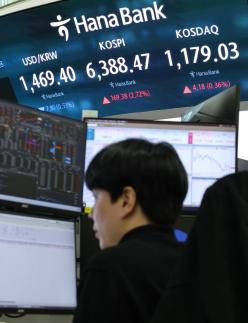 Roller-coaster KOSPI turns into a playground for high-frequency traders SEOUL, April 21 (AJP) — South Korea’s stock market is back on a roller-coaster ride, with sharp swings raising concerns that high-frequency trading (HFT) and weak oversight are amplifying volatility and feeding unfair practices. The KOSPI rally, which had pushed past the 6,000 level, was abruptly halted by the late-February outbreak of war, sending the market into a steep downturn. The index has since rebounded and is again heading toward new highs, underscoring the intensity of recent market swings. Such volatility has drawn in day traders and algorithm-driven players. According to data submitted to the office of Democratic Party lawmaker Kim Seung-won by the financial watchdog earlier this month, more than 2,200 high-frequency trading accounts were registered with the Korea Exchange in February alone. The transaction value from these accounts reached nearly 4,000 trillion won ($2.72 trillion), accounting for approximately 60 percent of total trading value that month. High-frequency trading refers to algorithm-based transactions executed in seconds or milliseconds. While it is credited with providing market liquidity, it is also blamed for amplifying volatility. “Electronic trading platforms can facilitate the growth of HFT firms, with a potential negative impact on the resilience of liquidity,” the International Monetary Fund noted in a recent report. The proportion of HFT in Korea is not unusually high compared with global peers. In the United States, such trading accounts for up to 70 percent of activity on Nasdaq, while Japan’s Nikkei 225 shows a similar level to Korea at 50 to 60 percent. Major European markets also see HFT volumes reaching up to 50 percent. The key difference lies in oversight. In the United States, the Securities and Exchange Commission and Financial Industry Regulatory Authority directly supervise HFT activity. Japan’s Financial Services Agency requires high-speed traders to register directly, a system also adopted in major European markets. In Korea, supervisory authority rests with the exchange itself. Because the Korea Exchange also profits from transaction fees generated by these accounts, critics argue the system is akin to “leaving the fish with the cat.” The Financial Services Commission and Financial Supervisory Service have also faced criticism, as specific regulations governing HFT remain lacking and investigations typically begin only after incidents occur. Meanwhile, suspected cases of unfair trading are on the rise. According to data provided to Rep. Kim by the exchange on Sunday, major domestic brokerage firms issued more than 12,000 regulatory actions against users from January to March this year — the highest level since the fourth quarter of 2021, when excess liquidity fueled a market-wide surge. Among these, 1,299 cases resulted in the most severe sanction — “refusal of entrustment,” or a suspension of trading. On average, about 20 accounts were frozen daily. Most cases involved “spoofing” — placing large orders with no intent to execute — or “wash sales,” in which simultaneous buying and selling creates a false impression of market activity. “It is true that unfair trading tends to be concentrated early in the year when capital flows in,” an official from the Financial Supervisory Service said. “However, the scale and frequency of these cases are unprecedented.” The Korean market has already exhibited significantly higher volatility than other major economies. Following the blockade of the Strait of Hormuz, the Korean stock market plunged about 19 percent over March 3–4, compared with declines of only 3 to 4 percent in Japan’s Nikkei and Taiwan’s TAIEX during the same period. The subsequent recovery was equally sharp. From March 4 to April 20, the KOSPI surged more than 25 percent, while the Nikkei rose about 9 percent. Reflecting this trend, the KOSPI Volatility Index stood at 50.32 as of April 20, more than double its level a year earlier. At the height of the sell-off on March 4, the index spiked to 80. As of Tuesday, the KOSPI closed at a record high of 6,388.47, up 2.72 percent. While the rally has outpaced gains in the Nikkei (0.9 percent) and TAIEX (1.7 percent), the market remains vulnerable to sharper declines in future downturns. 2026-04-21 17:06:53
 -
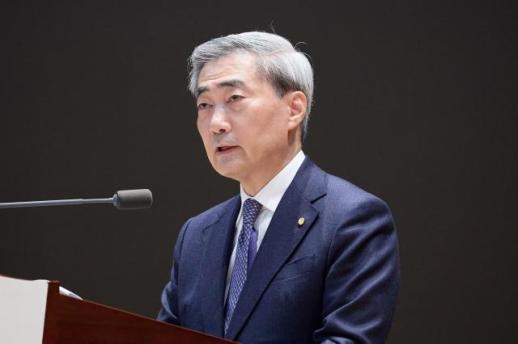 New Bank of Korea chief stresses "discretion" as oil shock weighs prices and growth SEOUL, April 21 (AJP) —New Bank of Korea Governor Shin Hyun-song underlined “discretion” and “flexibility” in steering monetary policy as Middle East-driven supply disruptions stoke inflation while weighing on growth. “Upward pressure on prices and downward pressure on the economy have simultaneously increased due to rising international oil prices following the Middle East conflict,” Shin said in his inauguration address Tuesday, as he began his four-year term. He pledged to enhance the “efficacy” of monetary policy through a reassessment of policy firepower and closer coordination with the government where needed, while also vowing to strengthen communication with markets. “We are going through a seismic transitional phase, with an AI-driven technological shift compounded by geopolitical conflicts,” he said. Domestically, Shin pointed to structural headwinds including demographic decline, widening income disparities, and growth constrained by housing instability and elevated household debt. “In today’s financial markets, the boundaries between banking and non-banking, as well as domestic and international sectors, are rapidly blurring,” he said. “It has become difficult to fully identify and respond to risks using existing frameworks alone.” He called for stronger early-warning systems by making more active use of market price indicators and improving visibility into the non-banking sector — a move seen as targeting regulatory arbitrage, with card loans approaching 43 trillion won ($29.2 billion). On foreign exchange policy, Shin signaled continuity. “Together with the government, we will promote 24-hour foreign exchange market operations and establish an offshore won settlement system,” he said, echoing plans set out by predecessor Rhee Chang-yong, who had pledged to introduce round-the-clock trading by July. On digital finance, Shin said the central bank would expand the use of a central bank digital currency (CBDC). “We will enhance the utility of CBDCs and deposit tokens through the second phase of ‘Project Hangang,’” he said, adding that international cooperation would be key to raising the won’s status in the evolving digital payments ecosystem. Shin also reaffirmed the importance of structural reform — a core theme under Rhee — calling it “an important part of monetary policy operations.” He takes office with the won still under pressure, as the dollar hovers near levels last seen after the global financial crisis. The currency was trading at 1,472.4 per dollar, retreating from around 1,520 won before the two-week truce between the United States and Iran. 2026-04-21 11:03:46
 -
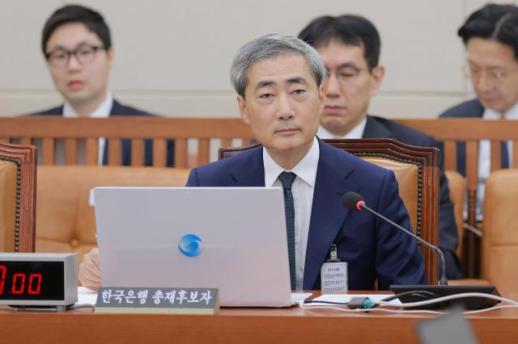 BOK's new chief to start work Tues after last-minute confirmation SEOUL, April 20 (AJP) — South Korea’s incoming central bank chief Shin Hyun-song is set to begin his term Tuesday under a cloud of unresolved personal controversies, after the National Assembly approved his confirmation report Monday following two earlier rejections. Shin marks the first nominee for the Bank of Korea governorship to fail to secure initial approval from the parliamentary Strategy and Finance Committee since confirmation hearings became mandatory in 2014. The former economist at the Bank for International Settlements faced intense scrutiny during his April 15 hearing over a range of personal matters, including family wealth, overseas asset holdings and alleged irregularities involving his children. Lawmakers raised concerns about his family’s substantial foreign-currency assets, an allegedly irregular transfer to Korea University, and questions surrounding his daughter’s failure to report her loss of Korean nationality, along with allegations of maintaining a so-called “paper residence.” “Approximately 93 percent of the nominee’s 4.6 billion won ($3.1 million) in financial assets are held in foreign currencies,” Rep. Park Dae-chul of the opposition People Power Party said, linking the issue to broader pressure on the Korean won from rising overseas investment. Rep. Chun Ha-ram of the Reform Party also pressed Shin over allegations that his daughter applied for residency using a canceled resident registration number after renouncing her Korean nationality. The committee had twice rejected Shin’s confirmation report on April 15 and April 17, citing delays in the submission of supporting documents. While the president can appoint a central bank governor without parliamentary consent, securing the committee’s endorsement is widely seen as critical to establishing political legitimacy at the outset of the term. By contrast, former Governor Lee Ju-yeol — the first to undergo the confirmation process — faced little resistance, with his reappointment smoothly approved in 2018. Shin’s immediate predecessor, Rhee Chang-yong, encountered some criticism over what was described as a “midnight appointment” and his long tenure abroad, but his confirmation proceeded without major controversy. President Lee Jae Myung is expected to electronically sign off Shin’s appointment during his state visit to India during the day to avoid a leadership vacuum at the central bank, as Rhee’s term ends Monday. 2026-04-20 17:09:28
 -
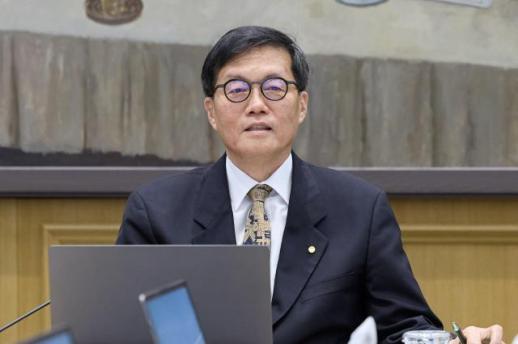 BOK's Rhee swan song: central bank must act as think tank beyond rate tools SEOUL, April 20 (AJP) — Bank of Korea Governor (BOK) Rhee Chang-yong emphasized the central bank’s dual role as a think tank in his swan-song remarks before retiring Monday, even as critics argued the Bank of Korea strayed into non-monetary areas such as housing and education under his watch. In his final speech before stepping down, Rhee reflected on the limits of traditional policy tools after navigating multiple crises over the past four years. “Managing various crises over the past four years, I have realized once again that it is becoming increasingly difficult to achieve stability and growth through monetary and fiscal policies alone,” he said, stressing that deeper socioeconomic reforms are essential for policy effectiveness. He pointed in particular to changes in the foreign exchange market, warning that its structure has shifted in ways that constrain conventional responses. Rhee said the market, once dominated by foreign capital flows, is now increasingly driven by domestic actors such as corporations, individuals and the National Pension Service. “We have entered an era where domestic overseas investment fluctuates based on various factors, including the labor market, tax policies, pension systems and geopolitical risks, rather than just interest rate differentials,” he said. Under such conditions, relying solely on market intervention or interest rate adjustments to manage exchange rates could produce unintended side effects, he warned. Rhee also addressed structural challenges including low birth rates and sluggish growth, making clear that short-term policy measures would be insufficient. Labor and education reforms, he said, remain the only viable medium- to long-term solutions. He reiterated his long-held view that the central bank should expand its role beyond traditional monetary policy. “My belief that we should look beyond the boundaries of monetary and financial policy to become the nation’s top think tank remains the same,” Rhee said, urging continued research into structural issues such as housing, youth employment and elderly poverty. Reflecting on his tenure, Rhee described it as a period of “constantly having to exceed expected boundaries,” shaped by successive global and domestic shocks. Following the inflation surge triggered by the Russia-Ukraine War shortly after he took office, the central bank raised its benchmark rate to 3.5 percent, including two “big step” hikes. Those tightening measures were followed by a series of disruptions, including instability in real estate finance, the collapse of Silicon Valley Bank, rising household debt, surging housing prices in the Seoul metropolitan area and exchange rate volatility driven by Middle East tensions. Rhee cited inflation control as a key achievement. Consumer prices, which peaked at 6.3 percent in July 2022, eased to the high-2 percent range in late 2023 and have remained in the low-to-mid 2 percent range since 2024. He also pointed to the first decline in the household debt-to-GDP ratio in two decades as a meaningful milestone. The ratio, which peaked at 99.2 percent in the third quarter of 2021, has since fallen to the high-80 percent range. Additional achievements included the introduction of Korean-style forward guidance and the publication of more than 20 structural reform reports aimed at improving policy communication. Since 2022, the central bank has regularly issued “BOK Issue Notes” addressing non-monetary topics such as demographic shifts and changes in the global trade order. Internationally, Rhee was appointed as the first head of a non-reserve currency central bank to chair the Committee on the Global Financial System at the Bank for International Settlements. Despite these gains, Rhee acknowledged that financial and foreign exchange markets remain unsettled. The Korean won weakened about 9 percent from 1,367 per dollar in June 2025 to around 1,490 in April 2026, a sharper decline than other major Asian currencies such as the Japanese yen and Chinese yuan, which fell by only 1 to 2 percent over the same period. “It weighs heavily on my heart to leave while the foreign exchange and financial markets have not sufficiently stabilized due to the ongoing conflict in the Middle East,” Rhee said, expressing hope that stability would eventually return based on South Korea’s experience in managing past crises. Since taking office on April 21, 2022, Rhee has been credited with managing crises through timely interest rate adjustments in the early stage of his tenure, and expanding the central bank’s scope through the publication of issue notes. However, he also faces criticism for failing to take bolder monetary action against household debt, - holding benchmark rate still at 2.5 percent for 7 consecutive sessions - which surpassed 1,800 trillion won ($1.21 trillion), and the weakening won toward the end of his term. Shin Hyun-song, former head of the monetary and economic department at the BIS, is expected to succeed Rhee from Tuesday. Shin is clearly distinguished from Rhee by his track record of hawkish stances including preemptive interest rate hikes and balance sheet reductions during past crises such as the U.S. financial crisis and the Russia-Ukraine war, as well as his consistent emphasis on the intrinsic role of central banks. The National Assembly has yet to adopt a confirmation report due to ongoing controversies surrounding Shin’s foreign assets and alleged "paper residence." Whether President Lee Jae Myung will move forward with the appointment later today remains a key focus of attention. The won opened at 1,479.5 per dollar in the Seoul foreign exchange market, up 4 won from the previous session. 2026-04-20 11:53:31
 -
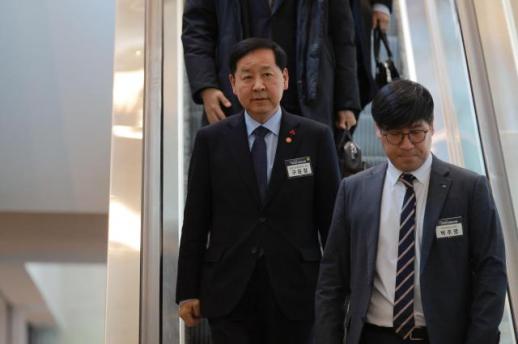 S. Korea, U.S. finance chiefs share concerns over won volatility Seoul, April 19 (AJP) —South Korean and U.S. finance chiefs agreed a volatile exchange rate is undesirable for the interests of the two countries, the Ministry of Finance and Economy said in a statement Monday. Finance Minister Koo Yun-cheol met with U.S. Treasury Secretary Scott Bessent during the G20 Finance Ministers and Central Bank Governors Meeting in Washington, D.C., last Friday to discuss key bilateral issues including the action plan for Seoul's pledge of investments in the U.S., foreign exchange rate, and supply chain disruptions from the Gulf conflict. The primary agenda was the high volatility of the Korean won. "Both ministers agreed that excessive volatility in the Korean won is not desirable, and agreed to continue consultations on foreign exchange market developments," the statement said. Last month, the average daily gap between the appropriate non-deliverable forward (NDF) rate—based on the weekly closing price of the won at 3:30 p.m.—and the actual final quote for one-month NDFs in New York was tallied at 12.2 won. This marks the first time since 2020 that the gap between the appropriate quote and the actual exchange rate has exceeded 10 won. "We shared the view that the volatility of the Korean won has been particularly high and decided to maintain a cooperative relationship to stabilize foreign exchange market trends," Koo separately wrote on his X page, adding that the two leaders also discussed the impact of the U.S.-Israel and Iran conflict on the Korean economy. Another key issue was the ongoing discussion regarding investment in the U.S. following tariff negotiations. South Korea plans to invest a total of $350 billion in the U.S. market over the next 10 years, including a $150 billion investment in the shipbuilding industry. The U.S. had once rolled back tariffs on Korean automobiles from 15 percent to 25 percent, citing delays in legislation by the Korean National Assembly. In response, the National Assembly passed the Special Act on Investment in the U.S. on March 12. Koo explained the Korean government's efforts to implement memorandums of understanding regarding bilateral investments, including the Special Act, to which Bessent responded positively. In the Seoul foreign exchange market on Monday, the won opened at 1,479.5 per dollar. 2026-04-20 10:50:50
 -
 Seoul flags rising downside risks as Middle East war drags on SEOUL, April 17 (AJP) -South Korea’s government on Friday highlighted increased "downside risks" for the economy as the prolonged Middle East conflict fuels inflationary expectation and dampens domestic sentiment. In its monthly “Green Book” report for April, the Ministry of Economy and Finance said “downside risks to the economy are increasing” due to heightened geopolitical uncertainty stemming from the war — toned up from last month’s milder phrasing of “concerns over rising downside risks.” The shift reflects growing concern that the impact of the conflict is beginning to filter through the broader economy. “Exports, led by semiconductors, have remained strong and domestic demand had been on a recovery trend, but the Middle East war is weighing on consumer and business sentiment, while higher global oil prices are adding to inflation and the burden on livelihoods,” the ministry said. Recent data points show early signs of strain. Consumer prices rose 2.2 percent in March from a year earlier, accelerating from 2.0 percent the previous month, driven largely by a sharp rebound in energy costs. Petroleum prices surged 9.9 percent on-year, reversing a decline in February as global oil prices spiked amid the conflict. Sentiment indicators also weakened. The consumer sentiment index fell 5.1 points to 107.0 in March, while business sentiment readings edged lower, pointing to growing caution among households and firms. Consumption data painted a mixed picture. Card spending at discount stores dropped sharply, while growth in department store sales slowed, suggesting softening discretionary demand. Still, overall card spending rose at the fastest pace since September, and domestic car sales rebounded, indicating that a broader consumption downturn has yet to take hold. “We see pockets of weakness across sectors, but it is difficult to conclude that overall consumption has turned down,” a ministry official said. External demand continues to provide a key buffer. Exports jumped 49.2 percent in March from a year earlier, with semiconductors and computers leading gains, underscoring the resilience of Korea’s tech-driven trade sector despite external shocks. The labor market also remained relatively stable, with employment rising by 206,000 in March, marking a second consecutive month of gains above 200,000. Looking ahead, the ministry warned that global conditions remain fragile. “Volatility in international financial markets and energy prices has increased due to the Middle East conflict and tariff measures by major economies, raising concerns over slower trade and growth,” it said. The government said it will maintain an emergency economic response system, closely monitor developments and push for swift execution of supplementary budget measures to cushion the fallout. 2026-04-17 14:05:35
 -
 After Gulf war, Section 301 looms as next hit to Korean economy SEOUL, April 16 (AJP) — As South Korean markets price in a winding down of the Middle East conflict, another front is quietly opening — this time in trade. With the KOSPI hitting fresh highs on easing war concerns, attention is shifting to Washington, where a new round of investigations under Section 301 of the Trade Act is gathering pace, raising the risk of fresh tariffs on key trading partners, including South Korea. Seoul, alongside Japan and China, is among 16 countries targeted in the probe announced March 11 by the Office of the United States Trade Representative. Those same countries have also been repeatedly singled out by U.S. President Donald Trump for offering limited support during the Gulf conflict despite their heavy reliance on the Strait of Hormuz for energy imports — a linkage that is increasingly shaping Washington’s trade posture. The Trump administration is turning to Section 301 as a workaround after a Feb. 20 Supreme Court ruling struck down its reciprocal tariff framework, effectively reviving one of its most powerful trade tools. From war shock to trade pressure The potential fallout of the Section 301 investigation was initially overshadowed by the Gulf crisis. Following the Feb. 28 U.S. strike on Iran and Tehran’s subsequent blockade of the Strait of Hormuz, oil markets were jolted. Dubai crude surged nearly 150 percent, while disruptions to supply chains drove up freight rates and fuel surcharges, feeding directly into the real economy. With the immediate energy shock beginning to ease, analysts say Washington is likely to revert to trade pressure. “Tariffs could be back at previous levels by early July,” U.S. Treasury Secretary Scott Bessent said at a Wall Street Journal event this week, citing ongoing Section 301 investigations into what the U.S. deems “unfair” trade practices, including excess profits and oversupply. South Korea’s persistent trade surplus leaves it structurally exposed. In autos, Hyundai Motor Group captured a record 11.3 percent share of the U.S. market in 2025, ranking fourth behind General Motors, Toyota and Ford. The Trump administration had previously imposed a 25 percent tariff on automobiles, later reduced to 15 percent after Seoul pledged large-scale investment under the “Special Act on Investment in the U.S.” Even so, Hyundai’s first-quarter operating profit fell 32 percent on-year to 2.46 trillion won, reflecting the end of a near tariff-free environment. Semiconductors present another point of friction. U.S. tech firms, particularly in artificial intelligence, rely heavily on chips from Samsung Electronics and SK hynix, while U.S.-based Micron Technology has lagged behind in high-value segments such as high-bandwidth memory. Non-tariff barriers remain a persistent source of tension. For years, Seoul restricted exports of high-precision 1:5,000-scale maps to foreign firms, citing national security concerns and the need to protect domestic platforms such as Naver and Kakao. Conditional approval for exports to Google was only granted in late February. Washington has also flagged issues such as network usage fees as potential barriers. Section 301 as a “permanent tool” Economists say the likelihood of tariffs under Section 301 is high. “The U.S. has been maintaining a temporary 15 percent tariff under Section 122, but that expires in July,” said Kang In-soo, an economics professor at Sookmyung Women’s University. “Raising Section 301 suggests they intend to impose tariffs in some form even after that.” Section 122 allows tariffs of up to 15 percent for 150 days. By contrast, Section 301 offers a more durable legal basis. “Unlike the IEEPA framework used previously, Section 301 is a permanent tool with stronger legal footing,” said Jang Sang-sik of the Korea International Trade Association, reinforcing expectations of a more sustained tariff regime. The Korea Institute for International Economic Policy also warned of broad-based damage, noting the lack of precedent for applying Section 301 measures to a close U.S. ally. Some analysts see geopolitical factors compounding the risk. Seoul remained cautious when Washington called for naval support to secure tanker routes through the Strait of Hormuz, saying no formal request had been received. At the same time, South Korea engaged in a series of diplomatic exchanges with countries such as Brazil and France, while extending $2.5 million in humanitarian aid to Iran and Lebanon. The Center for Strategic and International Studies (CSIS) recently described Section 301 as a “strategic tool,” suggesting it could be used as a form of calibrated retaliation. Still, others caution against over-interpreting the linkage. “Section 301 is grounded in claims of unfair trade practices,” Kang said. “It is unlikely that the U.S. would formally tie tariff measures to Korea’s diplomatic positioning.” For South Korea, the concern is less about whether pressure will come than when. With the won already under strain from prolonged energy shocks and trading above 1,400 per dollar for more than six months, additional tariffs could further weaken the currency and fuel inflation. “If large-scale outward investment continues, it could erode Korea’s capacity to stabilize the exchange rate,” Kang said. As the Gulf conflict moves toward de-escalation, markets may be looking past the next risk. But for Korea’s export-driven economy, the end of one crisis may simply mark the beginning of another. 2026-04-16 17:52:05