

Journalist

Seo Hye Seung, Kim Yeon-jae
duswogmlwo77@ajupress.com
-
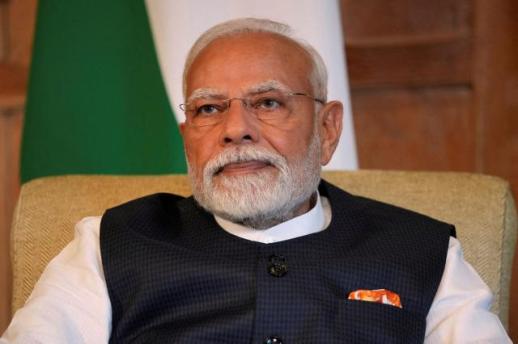 India enters austerity drive as oil, gold imports strain forex reserves SEOUL, May 12 (AJP) — India’s 1.5 billion people are being asked to travel less, farm more efficiently and, most notably, cut back on gold purchases, underscoring the severity of the blow the three-month-long Middle East energy shock is dealing to Asia’s fastest-growing major economy. In a national address on Sunday, Prime Minister Narendra Modi urged citizens to avoid buying gold for the next year, reduce unnecessary overseas travel and curb energy consumption as the government attempts to contain rising dollar demand amid deepening geopolitical turmoil in the Middle East. “Patriotism is not only about the willingness to sacrifice one’s life on the border,” Modi said in a speech in Hyderabad. “In these times, it is about living responsibly and fulfilling our duties to the nation in our daily lives.” The appeal marked one of Modi’s broadest public austerity campaigns since the Covid-19 pandemic, with the government also encouraging remote work arrangements, greater use of public transportation, carpooling and electric vehicles, while calling on farmers to reduce fertilizer consumption and energy use. Markets increasingly view the measures not as a simple conservation campaign, but as a broader macroeconomic stabilization effort aimed at containing foreign exchange pressures caused by soaring crude oil prices and rising imports. The vulnerability stems from India’s structural dependence on imported energy and gold, both priced in U.S. dollars. As the world’s third-largest crude oil importer after the United States and China, India imported about $123 billion worth of crude oil during the 2025 - 2026 fiscal year, making energy the single largest contributor to the country’s import bill. Gold ranked second, with imports reaching approximately $72 billion during the same period, reflecting India’s position as one of the world’s largest gold-consuming nations. The dual surge in oil and gold demand is intensifying pressure on the current account and the rupee at a time when geopolitical tensions are pushing global energy prices sharply higher. Following the collapse of negotiations surrounding the U.S.-Iran conflict and concerns over the security of the Strait of Hormuz, Brent crude prices climbed above $100 per barrel, heightening fears over inflation and widening external imbalances across Asia’s energy-importing economies. The challenge is particularly acute for India because gold functions not merely as a luxury product, but as a quasi-financial asset deeply embedded in household savings, rural wealth preservation, weddings and inheritance practices. When geopolitical uncertainty and inflation fears intensify, Indian households historically increase gold purchases as a safe-haven store of value, further boosting dollar demand and worsening pressure on the rupee. India’s foreign exchange reserves are already showing signs of strain. According to the Reserve Bank of India, reserves stood at $690.69 billion as of May 1, down sharply from $728.5 billion before the escalation of the Iran conflict in late February. While the absolute reserve level remains among the world’s largest, the pace of depletion has unsettled markets. Reserves fell by roughly $37.4 billion in March and another $7.8 billion in April as the central bank reportedly intervened aggressively to support the rupee through dollar-selling operations conducted via state-run banks. The rupee has lost around 10 percent of its value over the past year, with roughly half of that decline occurring since the outbreak of the Iran conflict and the escalation of regional tensions. The International Monetary Fund projects India’s current account deficit could widen to around $84 billion in 2026, reinforcing concerns that sustained energy shocks may further weaken external balances. India has faced similar external vulnerabilities before. During the 2013 “Taper Tantrum,” when emerging markets were rattled by signals of U.S. monetary tightening, New Delhi stabilized markets by sharply raising gold import duties and imposing restrictions on imports to protect the rupee and conserve reserves. Yet the current policy direction also exposes a paradox at the heart of India’s financial strategy. While the government is urging households to cut gold purchases, the central bank itself has steadily expanded its own gold holdings as part of a broader effort to diversify away from dollar-denominated reserve assets amid growing geopolitical fragmentation. India currently holds roughly 880 tons of gold reserves, ranking seventh globally. Gold’s share of the RBI’s foreign exchange reserves rose from 13.9 percent last September to 16.7 percent at the end of March this year. The RBI has also repatriated more than 100 tons of gold from overseas vaults back to domestic storage over the past year, moves widely viewed as part of a broader effort to strengthen sovereign financial resilience in an increasingly uncertain geopolitical environment. India now finds itself operating within a uniquely contradictory structure in which households are buying gold as protection against instability while the central bank simultaneously accumulates gold as a strategic reserve asset. But with private gold imports continuing to drain foreign exchange reserves and widen current account pressures, analysts expect New Delhi’s campaign to curb discretionary imports and conserve dollar reserves to intensify in the months ahead. 2026-05-12 16:43:38
 -
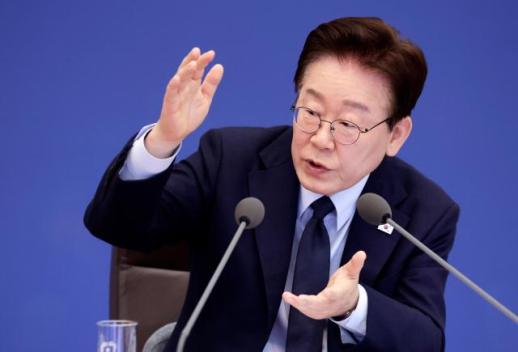 Seoul hints at fiscal expansion for H2 and 2027, sending bond yields to hike-cycle highs SEOUL, May 12 (AJP) — President Lee Jae Myung on Tuesday openly challenged the long-held policy rationale for fiscal tightening to rein in South Korea’s highly leveraged economy, signaling a more expansionary fiscal stance for the second half of this year and 2026 as growth concerns deepen amid prolonged Middle East tensions. “This is a time for investment to bolster growth potential,” Lee said during an emergency cabinet meeting, ordering the government to draft an “aggressive fiscal” strategy in next year’s budget and the supplementary spending plans for the second half. Lee defended proactive government spending, arguing that stimulus coupons distributed last year generated additional consumption of roughly 430,000 won ($310) per recipient, which he said demonstrated that fiscal support can meaningfully revive the economy. He also pushed back against concerns over the country’s debt burden, claiming South Korea’s actual government debt level remained only around 10 percent of gross domestic product. The remark appeared to reference an International Monetary Fund calculation that estimated South Korea’s net debt at 10.3 percent of GDP. However, the IMF figure excludes substantial liabilities such as pension obligations and debt held by state-run enterprises. According to the Ministry of Economy and Finance, South Korea’s broader national debt measure, known as D1 and encompassing both central and local government debt, recently stood at around 49 percent of GDP. Public sector debt, or D3 — which also includes non-financial public institutions — is estimated at roughly 68 percent. Markets interpreted Lee’s comments as a clear signal of fiscal expansion as the government braces for slowing growth and mounting uncertainties from the prolonged conflict in the Middle East. Bond yields, already revisiting levels last seen during the 2023 tightening cycle, rose further on expectations of increased debt issuance tied to fiscal expansion. The benchmark three-year government bond yield climbed 4.6 basis points to 3.644 percent on Tuesday, while the 10-year yield rose 5.2 basis points to 4.002 percent — returning to levels seen in November 2023, when the Bank of Korea’s policy rate stood at 3.5 percent during the height of post-pandemic inflation fighting. Liquidity conditions, however, remain ample. According to the Bank of Korea, the growth rate of broad money supply, or M2, recently expanded about 4.9 percent from a year earlier, relatively elevated compared with other major economies such as the United States and Japan. At the same time, the money multiplier under the revised M2 standard stood at 13.56 as of February, well below levels above 20 seen before the 2008 global financial crisis. The money multiplier — calculated by dividing M2 by the monetary base — measures how effectively central bank liquidity circulates through the economy via deposits and lending. The figures suggest liquidity itself may not be the core problem, but rather weak transmission into actual consumption and investment. Some economists argue that improving the distribution and circulation of capital through structural reforms and targeted policy measures may be more effective than relying solely on debt-financed fiscal expansion. The Bank of Korea is scheduled to release its March money supply data on Wednesday. 2026-05-12 14:27:20
 -
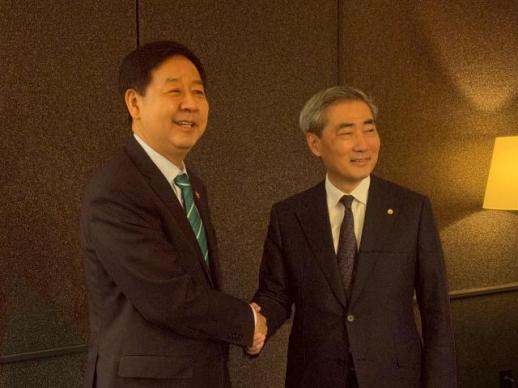 BOK holds BIS board seat for third straight term SEOUL, May 12 (AJP) —New governor Shin Hyun-song of the Bank of Korea has been elected to the Board of Directors of the Bank for International Settlements, extending South Korea’s representation at the top decision-making body of the global central banking community for a third consecutive term. The BOK said Tuesday that Shin officially began his three-year term on Monday after being elected as an elected director during a regular board meeting held at the BIS headquarters in Basel, Switzerland. The term is renewable. The central bank described the appointment as a sign of South Korea’s growing influence in international finance, noting that BOK governors have continuously held seats on the BIS Board since 2019 through successive appointments of former governors Lee Ju-yeol and Rhee Chang-yong. The BIS Board serves as the de facto supreme decision-making body overseeing the institution’s strategy, governance and operational direction. The board meets at least six times annually and supervises key functions including amendments to BIS statutes, membership approvals and appointments of senior executives. Board members also sit ex officio on the Economic Consultative Committee, which helps shape agendas for the BIS Global Economy Meeting, where governors from around 30 major central banks discuss global financial and monetary issues. The 18-member board consists of six ex-officio directors representing the founding member central banks of the United States, United Kingdom, France, Germany, Italy and Belgium, alongside the president of the Federal Reserve Bank of New York. The remaining 11 elected directors are selected by a two-thirds majority vote from among governors of other member central banks. Current elected member countries include Japan, China, India, Canada, Saudi Arabia and South Korea. Shin is widely regarded as one of Asia’s leading international finance experts. Before assuming the governorship of the BOK, he served for 12 years at the BIS as Economic Adviser and head of its Monetary and Economic Department until March this year. The BOK said Shin’s extensive BIS experience, South Korea’s active contribution to global monetary discussions and his international reputation were reflected in the appointment. The appointment also comes as South Korea’s role in global capital markets expands. The country operates one of the world’s largest non-deliverable forward currency markets alongside India, while expectations for long-term foreign capital inflows have strengthened following Korea’s inclusion in the World Government Bond Index. 2026-05-12 10:53:37
 -
 Wall Street bias leaves Korean won lagging despite equity boom SEOUL, May 11 (AJP) - The bias toward Wall Street stocks among South Korean investors has eased, but not nearly enough to offset foreign divestment from Korean equities — a gap that helps explain the won’s stubborn weakness. According to data released by the Bank of Korea (BOK) last Friday, outbound stock investment by residents rose by $4 billion in March, slowing sharply from $13.46 billion in January and $8.64 billion in February. The central bank said a strong dollar and risk aversion likely cooled the overseas buying spree. The U.S. dollar climbed as high as 1,530 won after the outbreak of war in Iran in late February and averaged around 1,490 won in the postwar period. “The rise in the exchange rate weakened the incentive for new outbound investment, and investor caution grew as volatility in the U.S. stock market expanded,” Kim Young-hwan, director of the BOK’s Economic Statistics Department 1, said during a press briefing Friday. But while the pace of outbound investment slowed, domestic investment shrank even more sharply. In March, foreign investors posted a net outflow of $34.4 billion from the Korean market, nearly triple the $11.9 billion outflow in February. The BOK said a global risk-off shift triggered by geopolitical threats, combined with Korea’s “K-shaped” market structure — where nearly half of total market capitalization is concentrated in Samsung Electronics and SK hynix — amplified volatility in Korean equities. The fact that Korean investors continued to buy foreign stocks even amid deepening risk aversion points to their entrenched confidence in overseas markets. A recent study by the Korea Capital Market Institute (KCMI) found that investors in their 20s and 30s, as well as high-net-worth individuals who primarily invest in overseas exchange-traded products, tend to hold stocks much longer than domestic market investors. KCMI said that if the turnover rate of overseas investors is assumed at around 68 — calculated as shares traded divided by listed shares, multiplied by 100 — the combined turnover rate for domestic and overseas markets is roughly twice that level or higher. That suggests trading frequency is far higher in the domestic market, represented by the benchmark KOSPI and tech-heavy KOSDAQ. The result has been greater volatility in the Korean stock market and deeper distrust among long-term investors. Based on closing prices from Jan. 2 to May 11, the KOSPI’s average daily fluctuation was about 2.3 percent, far higher than the Nasdaq’s 1.6 percent, the S&P 500’s 1.1 percent and the Dow Jones Industrial Average’s 0.9 percent. In an “Issue Note” published last week, the BOK also said domestic stock investors tend to treat rallies in the Korean market as short-term valuation gains rather than opportunities for long-term investment. High volatility, the report said, has eroded investor confidence and discouraged patient capital. As overseas preference and foreign capital outflows overlap, the won has struggled to recover. On April 30, when the Bank of Japan intervened to strengthen the yen from 160 to 155 per dollar and the dollar index fell to 98, the Korean won still weakened by 4.3 won to close at 1,476.1 per dollar. Despite reduced concerns over the unwinding of the yen-carry trade, the won market swung sharply as foreign investors sold more than 1 trillion won ($679.35 million) worth of shares on the KOSPI alone. Even on Monday, when the KOSPI surged 4.3 percent to a record high of 7,822.24, the won weakened by 0.7 won to close at 1,472.4 per dollar. The decline reflected another heavy outflow from won-denominated assets, as foreign investors dumped 3.48 trillion won worth of Korean stocks. “As excessive trading in the domestic securities market has hindered investment performance, the perception of overseas markets — especially the U.S. — as long-term investment destinations remains strong,” said Kim Min-ki, a researcher at KCMI. He warned that won weakness will persist unless Korea addresses its chronic problems of market volatility and excessive concentration. 2026-05-11 17:46:46
 -
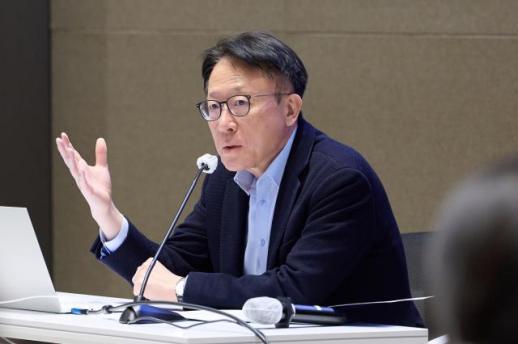 Outgoing BOK dove delivers hawkish swan song amid inflation risks SEOUL, May 11 (AJP) — Inflation has become increasingly worrisome and is likely to dominate upcoming monetary policy discussions at the Bank of Korea, outgoing Monetary Policy Board member Shin Sung-hwan said Monday, in a notable hawkish turn from one of the central bank’s most dovish voices. Shin, whose term ends Tuesday, admitted during a press conference that he had previously favored rate cuts, but said that if he were still to remain on the board, he would now be more concerned about inflation risks. Shin had been the sole dissenter advocating a rate cut when the BOK held its benchmark interest rate steady in January, April, August, October and November last year. “Inflation is always the policy priority,” he said, arguing that central banks should prioritize price stability over growth, particularly when inflation risks drifting above the BOK’s 2 percent target. He warned that if oil prices remain elevated through year-end, secondary inflationary pressures across the broader economy would become unavoidable, making the fight against inflation more difficult than initially expected. Shin identified the surge in global crude prices following the Middle East conflict as the single biggest variable facing policymakers. “We initially expected oil prices to stabilize around $70 per barrel by the end of this year, but under the current situation, it now appears likely to hover closer to $90,” he said. Brent crude climbed as high as $105 a barrel during intraday trading Monday, roughly 50 percent above prewar levels. Since joining the board in May 2022, Shin had been widely viewed as a representative dove within the committee. During his tenure, he issued seven dissenting votes in favor of rate cuts. Even as former Governor Rhee Chang-yong maintained a cautious policy stance, Shin consistently argued for easing to support weak domestic demand and relieve pressure on the real economy. But he said the environment had shifted rapidly in recent months. “Just as the housing market was already making it difficult to lower rates, the Middle East situation deteriorated immediately afterward,” Shin said. “At this point, it is not desirable to add inflationary pressure through a rate cut.” Shin also described “polarization” within the South Korean economy as the most difficult challenge during his tenure. “Economic growth represents the overall performance of the economy, but now we have a situation where a sector accounting for roughly 10 percent of the economy determines the headline figure,” he said, referring to the growing dominance of the semiconductor sector. He warned that disparities across industries have widened to the point where appropriate interest-rate levels differ sharply depending on the sector. In the past, strong growth in leading industries generated broader trickle-down effects across the economy, Shin said, but that transmission mechanism has weakened considerably. As a result, higher interest rates risk placing even greater burdens on already struggling sectors. Regarding the recent rise in government bond yields, Shin said a combination of surging long-term U.S. Treasury yields and mounting inflation expectations had contributed to the move. “Long-term U.S. interest rates reflect concerns over inflation expectations,” he said, adding that similar concerns are also likely influencing the rise in South Korean government bond yields. Shin is not the only BOK official signaling a more hawkish shift. “We need to stop thinking about lowering the benchmark interest rate and begin considering the possibility of raising it,” Ryoo Sang-dai said earlier this month during a press conference at the Asian Development Bank annual meeting in Samarkand, Uzbekistan. Ryoo added that clearer signals regarding the BOK’s future policy direction could emerge during the May monetary policy meeting. Bond prices continued to fall amid a growing atmosphere for an interest rate hike. The yield on the three-year government bonds closed at 3.598 percent, up 2.9 basis points, while the ten-year yield finished at 3.950 percent, up 4.1 basis points. 2026-05-11 17:01:12
 -
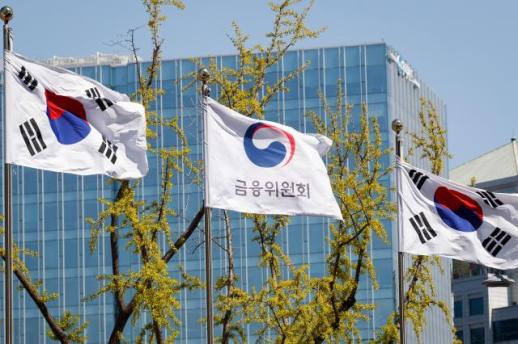 Financial authorities to crack down on misuse of state-supported loans SEOUL, May 11 (AJP) - Financial authorities will step up efforts to prevent some businesses from profiting by lending government-funded money to their subcontractors at excessively high interest rates. The Financial Services Commission (FSC) and the Fair Trade Commission (FTC) said on Monday that they will strengthen monitoring and review processes to crack down on improper business practices and other irregularities. They added that companies found engaging in these practices will be banned from receiving such funds. The move comes after Myeongnyundang, which runs restaurant chain Myeongnyun Jinsa Galbi, allegedly diverted state-supported low-interest funds by lending them to its franchisees at much higher interest rates. According to a joint investigation by the FSC and FTC, Myeongnyundang obtained funds at annual interest rates of 3 to 6 perent from institutions including the state-run Korea Development Bank (KDB), the Industrial Bank of Korea (IBK), and the Korea Credit Guarantee Fund (KODIT). It then lent about 900 billion won (US$613.92 million) to 14 affiliated lenders linked to its major shareholders. These lenders were found to have charged franchisees and prospective small business owners of Myeongnyun Jinsa Galbi annual interest rates of 12 to 18 percent on loans used for expenses such as interior renovations. Authorities also found that some businesses had deliberately split their operations into smaller entities to keep their assets below 10 billion won to avoid regulatory oversight. They also discovered that some franchisees were required to repay loan principal and interest through payments for meat supplies. The FTC has already launched formal procedures against Myeongnyundang for allegedly violating franchise regulations along with a corrective order. Investigators found the restaurant chain pressured franchisees to use certain contractors for interior work and equipment, while omitting or falsely stating key financial details in its documents. It also urged financial institutions including the KDB, IBK, and KODIT to tighten their monitoring and screening of loans made to franchisees and other borrowers. "Desperate small-business owners should never be exploited for someone else's gain," said FSC chairman Lee Eog-weon on social media, vowing to crack down on predatory lending practices targeting franchisees. 2026-05-11 15:16:11
 -
 Korea's inflation may soar to 3.7% if Gulf oil crisis persists: KDI SEOUL, May 11 (AJP) — South Korea's inflation could run as high as 3.7 percent this year under the worst-case scenario of an energy shock from the Middle East crisis, according to state think tank Korea Development Institute on Monday. The KDI, which is due to announce its revised economic outlook on Wednesday, predicted a bump-up of between 1 and 1.6 percentage points from this year’s estimated inflation rate of 2.1 percent. The forecast, however, excludes policy buffers such as fuel tax cuts and gasoline price caps, said Ma Chang-seok, a fellow at the KDI’s Department of Economic Forecasting. Under its “base scenario,” the KDI assumed Dubai crude prices would rise to $100 per barrel in the second quarter before gradually easing to $90 and $87 in the third and fourth quarters, respectively. Under that scenario, higher oil prices would lift this year’s consumer inflation by 1.2 percentage points and next year’s by 0.9 percentage point. Under a more severe “prolonged high oil price scenario,” where Dubai crude remains at around $105 per barrel from the second through fourth quarters, the inflationary impact would widen to 1.6 percentage points this year and 1.8 percentage points next year, raising the possibility that elevated inflation could persist into next year. Conversely, under an “oil price stabilization scenario,” where Dubai crude falls from $95 in the second quarter to $85 and $80 in the third and fourth quarters, respectively, inflationary pressure would ease significantly starting next year, the KDI said. The think tank specifically noted that oil price hikes caused by transportation uncertainty in energy supply routes tend to have a larger impact on consumer inflation than ordinary supply-demand driven increases. If concerns over shipping disruptions intensify, refiners often expand petroleum inventories, amplifying price hikes even under similar market conditions. Accordingly, the KDI warned that cost-push pressure could spread beyond petroleum products to industrial goods and services. While ordinary increases in Dubai crude historically had limited impact on core inflation, a 10 percentage point oil increase driven by transportation uncertainty was estimated to raise the core inflation rate by approximately 0.10 percentage point. “Policy responses such as the maximum oil price system and fuel tax cuts are factors that reduce the ripple effect of rising international oil prices on consumer inflation,” Ma said. “It is necessary to operate price stabilization policies in preparation for the possibility of prolonged high oil prices and unstable inflation expectations.” As of Monday afternoon, both West Texas Intermediate and Brent Crude futures were trading above $100 per barrel after U.S. President Donald Trump responded “Unacceptable” to Iran’s proposal for ending the war, reigniting fears of prolonged conflict and supply disruptions across the Middle East. 2026-05-11 15:08:54
 -
 Chip boom feeds record C/A surplus streak in March, overseas stock invest eases SEOUL, May 08 (AJP) -The black in South Korea's current-account balance stretched to new record high of $37.33 billion in March and $73.78 billion for the first three-month period, both more than quadrupled from a year-ago period in line with double-digit growth in exports that more than offset gain in imports from higher U.S. dollar and energy cost amid a war outbreak in the Middle East. Despite the record surplus and exports surge streak, overwhelming demand for oversea stocks – mostly in Wall Street – by South Koreans posed as structural setback for the recovery in the Korean won. According to Bank of Korea (BOK) data Friday, the March current-account surplus sharply widened from $23.19 billion in February and from $9.58 billion a year earlier, extending the surplus streak to 35 consecutive months. The first-quarter surplus of $73.78 billion compared with $19.49 billion during the same period last year. The goods account posted a record $35.07 billion surplus in March, widening from $23.36 billion in February and $9.69 billion a year earlier, as exports jumped 56.9 percent on-year to $94.32 billion. Imports also increased 17.4 percent to $59.24 billion, accelerating from the 4 percent gain recorded in February. The AI-fueled semiconductor cycle remained the overwhelming engine. Semiconductor exports soared 149.8 percent on a customs-clearance basis in March following a 157.8 percent jump in February, while electric and electronic product exports surged 112.7 percent after rising 104.7 percent a month earlier. Information-technology device exports climbed 78.1 percent. Regional demand strengthened across nearly all major markets. Exports to China rebounded 64.9 percent on-year in March from a 34.2 percent rise in February, while shipments to Southeast Asia accelerated to 68 percent growth from 54.9 percent. Exports to the United States climbed 47.3 percent and exports to the European Union rose 19.3 percent. Petroleum product exports swung to a 69.2 percent gain from a 0.7 percent decline in February as refining margins improved despite Middle East tensions. Chemical exports rebounded 9.1 percent after falling 7.1 percent, while shipbuilding exports extended gains by 11.4 percent. By contrast, machinery and precision instrument exports slipped 0.2 percent and auto parts exports declined 5.3 percent. Imports also accelerated as Korean firms continued expanding AI-related production and facilities. Capital goods imports rose 23.6 percent in March from 16.8 percent in February, while semiconductor imports accelerated to 34.5 percent growth from 19.1 percent. Imports of semiconductor-manufacturing equipment increased 6.7 percent. Raw material imports returned to growth, rising 8.5 percent after declining 1.9 percent in February. Non-energy imports surged 18.7 percent, while energy imports still fell 5.6 percent despite elevated geopolitical tensions surrounding the Strait of Hormuz. The services account remained in deficit for a 46th consecutive month at $1.29 billion, improving from a $1.86 billion shortfall in February. The travel account swung to a $140 million surplus from a $1.26 billion deficit a month earlier as outbound travel demand softened. Primary income surplus widened to $3.58 billion from $2.48 billion on increased dividend income from overseas assets. Still, the historic trade and current-account boom continues to fail to generate meaningful support for the Korean won as capital flows increasingly move in the opposite direction. Korean investors’ appetite for U.S. technology and AI-related equities remained intact, although sharply eased from the previous months amid strong U.S. dollar and capital reshoring incentives. March financial-account data showed foreign portfolio investment liabilities — foreign investment into Korean equities and bonds — plunged by $34.04 billion following an already sharp $11.94 billion decline in February. The outflow was overwhelmingly driven by foreign net selling of Korean stocks, with equity investment liabilities alone sinking $29.33 billion after falling $13.27 billion a month earlier. At the same time, Korean residents continued pouring money into overseas markets. Portfolio investment assets rose another $4 billion in March, although halved from an $8.64 billion increase in February. Overseas equity investment by residents climbed $3.94 billion during the month, slowing from a gain of $10.39 billion. The BOK has maintained that the current-account structure remains fundamentally solid and noted that refined-product exports and still-contained energy imports helped cushion the impact of Middle East tensions through March. Still, officials acknowledged that portfolio flows and global risk sentiment are now exerting greater influence on the won than trade surpluses alone. Whether the record surplus streak will be sustained remains uncertain amid prolonged conflicts in the Middle East that has caused energy shock across manufacturing front. 2026-05-08 11:23:13
 -
 KOSPI hits new heights and ordinary Koreans can only watch in envy SEOUL, May 07 (AJP) - South Korea’s benchmark stock index keeps scaling one record after another, but for many ordinary investors the rally feels increasingly like a private party they cannot afford to enter. After surging 70 percent last year, the KOSPI has already climbed another 77 percent this year, propelled overwhelmingly by a handful of AI-fueled chip giants. The gains have become so concentrated that while paper wealth has exploded, many retail investors holding smaller stocks say they have been left poorer — or locked out entirely by soaring share prices. A research report released Thursday by the Bank of Korea warned that the stock boom is increasingly enriching wealthy households and deepening Korea’s already severe asset polarization, long driven by widening real estate disparities. Individual investors purchased a net 63.6 trillion won ($43.8 billion) worth of stocks between 2020 and 2024, sharply up from just 1.3 trillion won during 2011 - 2019. Yet the gains accrued overwhelmingly to high-income households. The wealthiest 20 percent of households by net assets accounted for 64.5 percent of all stock holdings, the central bank said. When measured by total assets — including real estate, equities and cash — the concentration became even starker, with the top quintile controlling 73.2 percent of household wealth. The return gap was wider still. Between 2020 and 2024, the richest 20 percent earned average annual stock profits of 2 million won, far above the national average of 1.12 million won. For the remaining income quintiles, annual stock-related income remained below 400,000 won. The imbalance has likely intensified further in recent months as shares of Samsung Electronics and SK hynix exploded higher on the back of the artificial intelligence boom. As of Thursday, Samsung Electronics carried a market capitalization of 1,567 trillion won, while SK hynix stood at 1,175 trillion won. Together, the two companies accounted for more than 45 percent of the KOSPI’s total market value of 6,062 trillion won, up sharply from 34 percent at the end of last year. Their share prices have more than doubled this year, with Samsung Electronics climbing above 260,000 won and SK hynix topping 1.6 million won. Of the KOSPI’s roughly 1,000 trillion won increase in market capitalization this year, about 800 trillion won came from the two chipmakers alone. Outside the AI frenzy, however, much of the market continued to follow a sharply “K-shaped” trajectory, with many non-chip stocks declining even as headline indices surged. “I wanted to invest in the two major stocks, but the share prices were already too high, so I bought other stocks that ended up falling instead,” said Park Min-woo, who described himself as belonging to the second or third income quintile. “The barrier to entry for the core stocks has become too high.” Among the top 20 KOSPI-listed companies by market capitalization, only Shinhan Financial Group traded below 100,000 won per share. The rally has also fueled a fresh wave of leveraged speculation. Margin loan balances, which stood at around 16 trillion won at the end of 2024, surpassed 27 trillion won by the end of 2025 and reached 36 trillion won as of Monday. Analysts said the trend reflects both speculative fervor and the growing difficulty retail investors face in accessing the market’s biggest winners. “We must keep in mind that leveraged investments, such as credit loans, are increasing,” a BOK official said. “A simultaneous decline in asset prices and increase in debt burdens could amplify downward pressure on the economy.” As wealth polarization deepens, consumer spending has weakened while dependence on asset accumulation — particularly real estate — has intensified. According to the BOK survey, Korean households spent just 130 won for every 10,000 won earned through stock investments, far below comparable figures of 3.2 percent in the United States and 3.8 percent in Germany. The central bank pointed to property markets as a key driver of the disparity. The share of proceeds from stock and bond sales used for home purchases rose from 4.9 percent in May last year to 8.9 percent in January this year. During the same period, apartment prices in Seoul climbed about 8.7 percent. The trend runs counter to the government’s longstanding hope that rising stock prices would ease speculative pressure on housing. According to the KB Financial Group Research Institute, stock-market profits are increasingly flowing back into real estate, particularly among wealthy investors. The institute pointed to a steady migration of equity wealth into premium residential districts across Seoul and the surrounding metropolitan area. “It is not a new phenomenon for stock market liquidity to move into real estate with a certain time lag,” said Song Seung-hyeon, head of City and Economy. Song warned that as wealthy investors armed with large amounts of “seed money” continue pouring into the housing market, property prices in Seoul and the greater metropolitan area are likely to climb further, widening the asset divide. For decades, the stock market was viewed as a pathway for lower-income households to build wealth and improve living standards. In today’s market, that ladder appears increasingly difficult to climb. 2026-05-07 17:32:32
 -
 Korea's FX reserves rebound in April on eased foreign stock selling and dollar SEOUL, May 7 (AJP) — South Korea’s foreign exchange reserves rebounded in April after a brief contraction a month earlier, as gains in foreign-currency assets fueled by a stronger U.S. dollar helped offset pressure from authorities’ won-defense operations, the central bank said Thursday. According to monthly data from the Bank of Korea (BOK), the country’s foreign exchange reserves stood at $427.88 billion at the end of April, up $4.22 billion from the previous month, when reserves had fallen by $3.97 billion. The figure nevertheless is still short of $428 billion at the end of December. Improved foreign investment flows also helped stabilize the foreign exchange market. Foreign investors, who had net-sold 40.4 trillion won worth of KOSPI shares in March, turned net buyers of 1.2 trillion won in April. Net foreign purchases of Korean bonds also rose to 7.8 trillion won from 5.4 trillion won a month earlier. The BOK noted that the market capitalization of KOSPI shares held by foreign investors surged from about 1,513 trillion won ($1.03 trillion) at the end of March to 2,060 trillion won ($1.41 trillion) by the end of April, reflecting both renewed inflows and a rebound in asset values. The Korean won also recovered against the U.S. dollar, with the exchange rate strengthening from 1,530.1 won per dollar at the end of March to 1,483.3 won at the end of April. South Korea held the world’s 12th-largest foreign exchange reserves as of the end of March. The central bank added that South Korea’s relatively limited gold holdings and the use of currency swap arrangements with the National Pension Service (NPS) helped reduce the need for direct spot-market intervention, limiting the pace of reserve depletion compared with some other countries. Like South Korea, many major economies spent billions of dollars to support their currencies during the initial phase of the Middle East conflict-driven market turmoil. 2026-05-07 07:55:06