
Journalist

By Han Ji-yeon, Chung Hye-hoon
ellenshs@ajunews.com
-
 Short track, snowboard lead Korea's charge as Milan–Cortina Olympics close SEOUL, February 22 (AJP) - The 2026 Milan–Cortina Winter Olympics drew to a close Sunday, ending 17 days of competition that tested a new model of decentralized hosting while offering South Korea renewed confidence in its next generation of winter athletes. The Games, held across northern Italy and officially titled the Milan–Cortina d’Ampezzo Olympics, featured venues spread over hundreds of kilometers, making it the most geographically dispersed Winter Games in history. Events were staged in four major clusters, supported by six athlete villages, with the closing ceremony held separately in Verona. Organizers promoted the format as a sustainability-driven alternative to large-scale construction. While the approach showcased both urban Milan and the Alpine landscape, it diluted the traditional festival atmosphere associated with the Olympics, according to many athletes and officials. Operational challenges emerged early. Several venues were completed only shortly before opening day. Power outages at curling arenas, schedule disruptions caused by heavy snowfall and norovirus cases, and concerns over defective medals added to a sense of early instability. Despite these issues, competition on ice and snow remained the central focus as the Games progressed. Korea Finishes 13th with Improved Medal Tally South Korea, which sent 71 athletes as part of a 130-member delegation, stood 13th in the medal table heading into the final day, with three gold, four silver, and three bronze medals. The result marked an improvement over the Beijing 2022 Games, where Korea collected two golds and finished 14th. Although the team fell short of its target of a top-10 finish, officials noted that both the quality and diversity of medals improved. Short track speed skating and snowboarding emerged as the pillars of Korea’s performance. Kim Gil-li delivered Korea’s strongest individual showing, winning gold in the women’s 1,500 meters and adding another gold in the 3,000-meter relay. Her victory halted teammate Choi Min-jung’s bid for a third consecutive Olympic title in the event and made Kim the only double gold medalist on the Korean team. In men’s competition, Lim Jong-eon claimed bronze in the 1,000 meters and contributed to a silver in the relay, reinforcing his status as a rising leader of the squad. The results reaffirmed short track’s position as Korea’s most reliable Olympic discipline. The biggest surprise came on the slopes. Choi Ga-on, a 17-year-old high school student born in 2008, captured gold in the women’s halfpipe, becoming Korea’s first-ever Olympic champion in a snow event. Competing despite injury, she quickly emerged as one of the breakout stars of the Games. Yoo Seung-eun added a bronze in the women’s big air, further strengthening Korea’s presence in a discipline long considered a weak point. The success of teenage athletes suggested that Korea’s winter sports portfolio is beginning to broaden beyond ice-based events. Norway once again topped the medal table, securing 18 gold medals and confirming its status as the world’s leading winter sports nation. Johannes Klaebo led the charge by sweeping all cross-country skiing events to claim six gold medals, one of the most dominant performances in Winter Olympics history. Korea also achieved notable results beyond competition. Kim Jae-youl, president of the International Skating Union, was elected to the International Olympic Committee’s Executive Board. Former bobsleigh star Won Yun-jong won the IOC Athletes’ Commission election, securing an eight-year term. 2026-02-22 10:45:20
 -
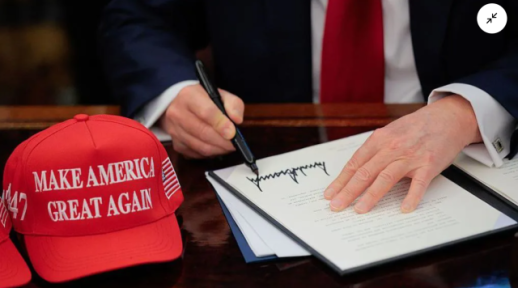 ANALYSIS: Trump raises global tariff to 15% and what it means for Korea SEOUL, February 22 (AJP) -President Donald Trump has moved to raise a blanket U.S. import tariff to 15 percent, up from 10 percent, after the Supreme Court of the United States on Friday struck down much of his second-term tariff regime, renewing trade pressure on surplus-running countries such as South Korea. The new rate, 10 to 15 percent, replaces many duties invalidated by the court and takes effect immediately. It is being imposed under Section 122 of the Trade Act of 1974, a rarely used provision that allows temporary tariffs of up to 15 percent for up to 150 days to address balance-of-payments problems. For Korea, which consistently runs large trade surpluses with the United States, the move signals that Washington’s tariff strategy is entering a new legal phase rather than winding down. On Friday, the Supreme Court ruled that Trump lacked authority to impose sweeping tariffs under the International Emergency Economic Powers Act (IEEPA), rejecting the administration’s argument that the 1977 law implicitly authorized such measures. The ruling dismantled a core pillar of Trump’s second-term trade policy. But the White House responded swiftly. Within hours, the administration reinstated a 10 percent global tariff under Section 122. A day later, Trump said on social media that he intended to raise the rate to the fully permitted 15 percent level. “During the next short number of months, the Trump Administration will determine and issue the new and legally permissible Tariffs,” he wrote, vowing to continue his “extraordinarily successful” trade policy. As of Sunday, the White House had yet to formally update its Friday announcement on the temporary 10 percent surcharge, which was introduced to “address fundamental international payments problems” while complying with the court ruling. Section 122 limits such tariffs to 150 days. Trump has said the administration will use that window to prepare longer-lasting measures under Section 301 of the 1974 Trade Act, which requires formal investigations into alleged unfair trade practices. The rapid shift underscores a clear strategy: rotate legal authorities to preserve tariff leverage despite judicial constraints. Why and where Korea is exposed Korea’s vulnerability lies in its persistent trade surplus with the United States, driven by strong exports of automobiles, electronics, machinery, batteries and industrial components. Under Section 122, tariffs must be applied universally and cannot target specific countries. But the provision is justified on balance-of-payments grounds, making surplus countries politically sensitive in Washington. From the U.S. perspective, Korea fits that profile. A uniform 15 percent surcharge weakens Korean exporters’ price competitiveness and reduces their ability to absorb costs in the U.S. market, especially as competition from Japan, Southeast Asia and Mexico intensifies. Korea’s exposure is underscored by the scale and persistence of its trade surplus with the United States. Korean exports to the U.S. totaled $127.8 billion in 2023 and rose to $138.1 billion in 2024 before easing to $122.9 billion in 2025, when shipments still grew 3.8 percent from a year earlier. Over the same period, Korea recorded trade surpluses of $44.4 billion in 2023, $55.6 billion in 2024 and $47.9 billion in 2025. Although the surplus narrowed last year from its 2024 peak, it remains historically high, reinforcing Washington’s perception of Korea as a structurally surplus-running trading partner and keeping bilateral imbalances firmly in the political spotlight. Short-term impact: manageable In the near term, the impact on Korean exporters may be manageable. Under trade arrangements reached in 2025, many Korean products were already operating under tariff ceilings close to 15 percent, linked to large-scale investment and procurement commitments to the United States. In that sense, the new surcharge partly restores a previous baseline. In addition, goods already covered by national-security tariffs under Section 232 — including steel, aluminum and automobiles — are exempt from stacking, limiting immediate damage in some core sectors. These factors reduce the risk of an abrupt export shock. The greater threat lies beyond the Section 122 window. Once the 150-day limit expires, the administration is expected to pivot to more durable tools, including Section 301 investigations into country- or product-specific practices, expanded use of Section 232 national-security tariffs, and sector probes in semiconductors, pharmaceuticals and advanced manufacturing. Unlike Section 122, these measures can be tailored to specific partners and industries. For Korea, whose export structure is concentrated in politically sensitive sectors, the risk of selective and longer-lasting barriers remains high. The current surcharge may therefore serve as a bridge to more targeted actions. For Korean companies, the main cost is not only the tariff rate, but instability. In less than a week, U.S. policy shifted from court invalidation to a 10 percent emergency tariff, then to a 15 percent surcharge under a different statute, with further changes promised. This volatility creates three immediate problems. First, contract risk rises as exporters are forced to renegotiate prices and delivery terms. Second, investment planning becomes more difficult as assumptions about market access continue to change. Third, compliance costs increase as firms repeatedly adjust to new customs rules and exemptions. In effect, uncertainty itself becomes a non-tariff barrier. The tariff shift also complicates Korea’s $350 billion U.S. investment commitment, negotiated partly in exchange for more stable trade conditions. With the original tariff framework weakened by the court ruling, questions have emerged over how binding the package remains in political and legal terms. Seoul is unlikely to reopen negotiations, given their links to defense, shipbuilding and energy cooperation. But companies may become more cautious in sequencing projects, using implementation speed as leverage in future talks. Washington, meanwhile, may continue to cite investment progress as a benchmark in trade negotiations. Another unresolved issue is whether companies will be able to recover tariffs paid under the invalidated IEEPA regime. The Supreme Court did not require automatic refunds, prompting firms to prepare legal claims. For Korean exporters operating under DDP (delivered duty paid) terms or paying duties through U.S. subsidiaries, prolonged refund procedures could strain cash flow, particularly for smaller firms. Government support for documentation and claims processing is likely to become increasingly important. For now, the Korean government is opting for restraint rather than retaliation. Policy priorities include monitoring exemptions and non-stacking rules under Section 122, quiet engagement with Washington on sector-specific risks, and strengthening support for exporters facing refund and compliance issues. Officials see limited scope for immediate countermeasures and are focusing instead on risk management. For Korea, the short-term impact may be contained. But with a large and persistent surplus and heavy exposure in strategic industries, the medium-term risks remain firmly in place. 2026-02-22 09:32:55
 -
 OPINION: $10 Trillion "Trump Effect" Boomerang - a turning point for US-led trade order “Wherever law ends, tyranny begins.” — John Locke The U.S. Supreme Court’s decision on February 20, 2026, will be remembered less as a trade ruling than as a constitutional moment. In a 6–3 judgment, the Court struck down President Donald J. Trump’s sweeping global tariffs imposed under the International Emergency Economic Powers Act (IEEPA), concluding that the statute did not authorize the president to levy what were, in substance, taxes. The legal reasoning was straightforward. While IEEPA allows the executive to “regulate” imports during national emergencies, it does not explicitly delegate the power to impose tariffs. Under the Constitution, the authority to tax and to regulate foreign commerce rests primarily with Congress. For measures of vast economic and political consequence, the Court held, clear congressional authorization is required. This was not a ruling about the merits of protectionism or free trade. It was a ruling about the architecture of power. Since returning to office, Mr. Trump has elevated tariffs from a policy instrument into a governing philosophy. Trade deficits, fentanyl trafficking, national security and industrial revival were all invoked to justify rapid and expansive tariff actions. Tariffs became less a technical tool of trade policy than a lever of negotiation, pressure and political messaging. But when emergency authority becomes a standing method of economic governance, the line between regulation and unilateral taxation begins to blur. That line, the Court has now insisted, still matters. From Judicial Defeat to Regulatory Retaliation Within hours of the ruling, the administration pivoted. Mr. Trump announced a new 10 percent global tariff under Section 122 of the Trade Act of 1974 — a provision that allows temporary duties, capped at 15 percent and limited to 150 days, in response to balance-of-payments concerns. Other statutory pathways — Sections 232 and 301 among them — remain available. At the same time, the White House moved aggressively to sustain and expand the suspension of duty-free “de minimis” treatment for small imports, especially postal shipments. Millions of low-value parcels that once entered the United States with minimal friction are now being subjected to new duties and administrative controls. The response was telling. When courts narrowed the main channel of authority, pressure was redirected to secondary routes. If sweeping emergency tariffs were legally vulnerable, granular regulations and temporary statutes would carry the burden. It was not a retreat. It was a rerouting. In effect, legal frustration in Washington was being translated into regulatory pressure on global trade flows. Leverage With a Deadline The Section 122 tariff is economically blunt but strategically precise. It establishes a baseline cost of market access and compresses negotiations into a single metric. Yet it is inherently temporary. With a statutory time limit of 150 days, the measure functions as leverage with an expiration date. It forces either congressional engagement, further legal maneuvering or negotiated outcomes. Markets understand the difference between temporary pressure and durable architecture. The former generates volatility. The latter sustains confidence. The new framework delivers the first, not the second. Predictability Under Strain For decades, the United States anchored the global trade system not only through market size and military power, but through predictability. Rules, procedures and institutional continuity functioned as a form of geopolitical capital. Even when policies shifted, the system retained coherence. When tariffs are perceived as instruments of executive discretion rather than products of statutory process, that predictability erodes. Trading partners and multinational firms begin to treat U.S. trade policy not as a rules-based framework, but as a variable contingent on political cycles. Negotiations tilt toward short-term transactions rather than durable arrangements. Order gives way, gradually, to bargaining. The growing use of small-parcel regulation and temporary tariffs reflects this transformation. Trade governance is becoming more reactive, more tactical and more closely tied to domestic political dynamics. The $10 Trillion Narrative The White House has celebrated what it calls “The Trump Effect.” Officials cite $9.6 trillion in announced domestic and foreign investments since Mr. Trump’s return to office — a sweeping list of sovereign pledges, corporate expansions and industrial commitments. The number is politically potent. But its composition invites scrutiny. Some announcements reflect projects conceived under previous administrations. Others are conditional, long-term or partially overlapping with existing commitments. Many depend on regulatory stability and legal continuity. More fundamentally, investment totals alone do not settle the institutional question. If capital inflows are secured through tariff leverage or implicit pressure tied to market access, then the mechanism by which investment is obtained matters as much as the headline figure. When trade governance shifts from rule-based multilateralism to leader-centered dealmaking, the character of American economic leadership changes with it. Investment attracted by leverage is inherently more fragile than investment secured by institutional trust. Vulnerability Through Scale Scale, paradoxically, heightens vulnerability. The larger the fiscal and economic stakes — whether measured in projected tariff revenue or in trillions of dollars of investment — the more essential the legal foundation becomes. The Court’s ruling also leaves open complex questions about the disposition of already-collected tariff revenues, raising the prospect of prolonged litigation and further uncertainty. The risk is not that tariffs will disappear. They will not. The risk is that executive power, unmoored from clear legislative boundaries, introduces structural volatility into the system — volatility that markets eventually price in through higher risk premiums, shifting supply chains and cautious capital allocation. When authority is continuously rerouted rather than consolidated through legislation, uncertainty becomes embedded. From Policy to Power Struggle From the vantage point of international order, the expansion of tariff politics does not necessarily signal the collapse of multilateralism. It signals something subtler: the gradual erosion of institutional trust. When statutory limits are repeatedly stretched, U.S. trade policy begins to resemble a sequence of tactical maneuvers rather than a stable framework of rules. Allies notice. So do adversaries. Trade partners are now compelled to factor not only geopolitics and economics into their decisions, but also the evolving relationship between the White House and the judiciary. Domestic institutional conflict is becoming a global economic variable. A Turning Point, Not an End The Supreme Court’s ruling marks a turning point not because it ends tariff activism, but because it reasserts the boundary between power and law. Trade policy will continue to evolve. But whether it evolves within constitutional guardrails will determine the durability of American leadership. The administration’s rapid shift to temporary tariffs and expanded parcel controls suggests that legal limits will be met less with accommodation than with circumvention. The world is watching how the United States responds. It can treat the overreach as the excess of a single presidency — an episodic disruption in an otherwise stable system. Or it can use this moment to restore the constitutional discipline that has long underwritten its economic credibility. *The author is the managing editor of AJP 2026-02-21 09:59:06
 -
 OPINION: When a Chat App starts making decisions for you Not long ago, choosing a restaurant in Seoul required some effort. You searched on Naver. You skimmed blog reviews. You checked ratings on Kakao Map. You compared prices. You asked friends on KakaoTalk. Sometimes, you still had to make a phone call. Soon, it may take one sentence. “Find me a quiet wine bar in Gangnam.” Within seconds, a list appears on the screen. Photos, location, price range and user ratings are displayed. For restaurants linked to KakaoTalk’s reservation system, a “Book Now” button follows immediately. One tap, and the table is secured. No browser. No switching apps. No comparison sites. Everything happens inside a chat window. This is powered by Kakao’s new “Kanana in KakaoTalk” service, which integrates generative AI with Kakao Map, Kakao Pay and Kakao Booking. Users can search, compare, reserve and pay without leaving the messenger app. Somewhere between typing and tapping, the decision disappears. Korea did not drift into this future. It rushed toward it. For decades, the country treated connectivity as basic infrastructure. High-speed internet, universal smartphones and mobile payments spread faster than in most advanced economies. Artificial intelligence is simply the next layer. By 2025, more than 20 million Koreans were using generative AI services every month. Many paid for premium subscriptions. Many used AI tools daily at work and at home — for writing, research, translation and scheduling. In Korea, AI is no longer a novelty. It is becoming part of everyday utilities, like messaging or banking. You notice it only when it fails. What makes this moment different is not speed. It is delegation. In the early days of the internet, information became abundant, but judgment still belonged to users. People compared sources, checked credibility and made their own choices. AI compresses that process. It summarizes reviews. Ranks options. Suggests “best” choices. And now, through agent-style services, it completes transactions. It does not just recommend a restaurant. It books it. It does not just compare prices. It pays for you. Convenience turns into commitment. This shift is spreading across professional life. Law firms use AI to draft contracts and summarize rulings. Banks rely on algorithms for investment memos and risk analysis. Hospitals use AI tools for image reading and literature searches. Marketing teams generate copy and campaign plans automatically. At first, this feels efficient. Reports appear in minutes. Presentations are produced instantly. Productivity rises. Then a subtle change occurs. Employees stop writing first drafts. They edit machine drafts. They stop framing problems from scratch. They begin from what the AI suggests. The system’s first answer becomes the default. Businesses are adapting quickly. A new industry is emerging around a simple question: How do you appear in AI answers? Companies now analyze how often their brands are mentioned in ChatGPT, Gemini or Perplexity responses. Marketing strategies are shifting from search engine optimization to “answer optimization.” The old goal was to rank high on Google. The new goal is to be cited by chatbots. Visibility is no longer earned only from readers. It is negotiated with algorithms. For ordinary users, the consequences are less visible. Consider navigation apps. When GPS first appeared, it eliminated wrong turns. Over time, many people lost the ability to navigate familiar routes without it. The same pattern is emerging with AI. When every comparison is automated, people stop comparing. When every answer is summarized, people stop reading. When every decision is packaged, people stop questioning. Judgment weakens quietly. This is not mainly about machines becoming smarter. It is about humans becoming more dependent. The danger is not that AI makes errors. It does. The danger is that users accept them without scrutiny. Societies usually adapt to new technologies in two stages. First, they celebrate efficiency. Later, they confront dependence. Korea is entering the second stage. The question is no longer whether AI works. It clearly does. The question is whether people still understand the systems they rely on — and whether they are prepared to challenge them. That requires habits - clearly labeling AI-generated work, verifying sources and data, keeping final responsibility with humans. Teaching students to question AI outputs, not just use them. These are not technical issues. They are social and civic ones. Artificial intelligence accelerates everything. It shortens the distance between intention and action. But speed without direction leads nowhere — faster. Today, millions of Koreans move from message to purchase, from question to decision, without pausing. It feels like progress. In many ways, it is. But progress that replaces thinking with convenience comes at a cost. In the age of AI agents, the most important skill may not be prompting or coding. It may be the simple habit of thinking — before tapping “Confirm.” *The author is the managing editor of AJP 2026-02-18 11:36:16
 -
 A long ride back to Seoul as holiday winds down SEOUL, February 17 (AJP) -Heavy traffic clogged major highways across South Korea on Tuesday as millions of holiday travelers began returning to Seoul as the long Lunar New Year holiday ends on Wednesday. According to the Korea Expressway Corp., travel times to Seoul as of noon had lengthened sharply, with trips from Busan taking up to 10 hours, Ulsan 9 hours and 40 minutes, Daegu 9 hours, Mokpo 9 hours and 20 minutes, Gwangju 8 hours and 50 minutes, and Daejeon 4 hours and 40 minutes. Return trips were running two to three hours longer than estimates made earlier in the morning. Southbound traffic from Seoul was comparatively lighter but still slowed, with travel times of about 7 hours to Busan, 6 hours and 40 minutes to Ulsan, 6 hours to Daegu, 4 hours and 40 minutes to Mokpo, 4 hours and 30 minutes to Gwangju, 3 hours and 10 minutes to Gangneung, and 3 hours and 10 minutes to Daejeon. Major bottlenecks were reported on the Gyeongbu Expressway toward Seoul, including sections near Yangsan Junction, Geumho Junction, Daejeon–Jukam Service Area, Cheongju, and Cheonan–Anseong, where traffic moved at a crawl. Congestion was also seen in the Busan-bound lanes near Singal Junction, Manghyang Service Area, and parts of Daejeon. On the Seohaean Expressway, slowdowns were reported in multiple stretches toward both Seoul and Mokpo, while the Jungbu Naeryuk Expressway also experienced heavy congestion on northbound sections. The expressway operator forecast that about 6.15 million vehicles would be on the roads nationwide on Tuesday, more than 1 million higher than the previous day. An estimated 470,000 vehicles were expected to travel from regional areas to the capital region, while about 440,000 were heading in the opposite direction. Traffic congestion on return routes was projected to peak between 3 p.m. and 4 p.m. and ease gradually from around 3 a.m. to 4 a.m. the following day. Outbound traffic was expected to be heaviest between 1 p.m. and 2 p.m., with conditions improving after 8 p.m. 2026-02-17 14:04:50
 -
 Hedge funds pile into Asia as memory boom powers Korean rally SEOUL, February 17 (AJP) -Global funds are ramping up bets on Asian equities, led by tech-heavy South Korea and Japan, as a historic shortage in memory chips fuels one of the strongest regional rallies in decades. According to a client note from Goldman Sachs, hedge funds bought a record amount of Asian stocks in the week to Friday, targeting both developed and emerging markets. Inflows were concentrated in Korea, Taiwan and China, while India saw modest selling. Exposure to Asian equities reached its highest level since at least 2016. The surge came despite renewed global volatility driven by concerns over massive investment in artificial intelligence and its impact on corporate earnings. While major world indices fell sharply on Friday, Asian markets remained resilient. Japan’s Nikkei and Taiwan’s benchmark index each gained about 5 percent last week, while South Korea’s KOSPI jumped more than 8 percent. The S&P 500 was down 0.19% so far this year, while the Nasdaq has fallen 2.77%, according to data from the Financial Supervisory Service (FSS). The KOSPI has emerged as one of the world’s strongest-performing equity markets in 2026. The benchmark is up 30.68 percent year to date, far outpacing the Nikkei 225's 13.12 percent, Taiwan’s 16.03 percent, and the MSCI Emerging Markets Index's 11.83 percent. The KOSPI has more than doubled since the end of 2024, driven largely by surging semiconductor stocks. Samsung Electronics and SK hynix have rallied about 51 percent and 35 percent, respectively, this year as they are expected to continue with red-hot earning streak fueled by AI boon. Compared with the beginning of 2025, SK hynix's stock is 5 times more expensive and Samsung Electronics' more than tripled. Once-in-Four-Decades Memory Shortage A key driver behind Korea’s rally is what semiconductor research firm SemiAnalysis describes as a “once-in-four-decades” memory shortage. In a recent report, SemiAnalysis said memory prices are doubling again and that the current supercycle is larger and longer than previous booms, driven by structural supply constraints and explosive AI-related demand. Unlike past cycles, today’s memory industry is no longer able to expand supply rapidly. Physical limits have slowed DRAM scaling, making further cost reductions increasingly difficult and expensive. At the same time, building new fabs requires multi-billion-dollar investments and multi-year timelines. As a result, bit output per wafer is no longer rising fast enough to offset demand growth. Supply growth is being constrained not only by capital discipline, but by physics and process complexity, the report said. As each new generation of accelerators requires substantially more DRAM and high-bandwidth memory, creating a persistent supply-demand mismatch that is expected to last through at least 2027, it predicted. Samsung Electronics and SK hynix together control much of the global supplies of DRAM and high-bandwidth memory powering AI accelerators and hyperscale data centers. SK hynix leads the market for high-bandwidth memory used in AI accelerators, while Samsung remains a key supplier of advanced DRAM nodes. Overall, overseas investors have sold a net 13.5 trillion won worth of KOSPI shares so far this year and 10.0 trillion won in February alone, according to FSS data. Still, multinational investment banks are bullish on further gains. Goldman Sachs raised the KOSPI target to 6,400, or 20 percent upside. 2026-02-17 13:10:55
 -
 Kbank up for retail subscription Fri ahead of March 5 IPO, 30% discounted vs online peer SEOUL, February 17 (AJP) -Kbank, South Korea’s first online-only lender, will open retail subscriptions from Friday to Monday ahead of its March 5 debut on the main board, seeking to capitalize on a strong rally in the KOSPI with a relatively conservative valuation as the first Korean IPO for 2026. The lender has set its offering price at 8,300 won ($5.75), the bottom of its indicative range of 8,300 to 9,500 won, following institutional bookbuilding earlier this month. Kbank will begin trading on March 5 in its third attempt to go public, after withdrawing previous listings in 2022 and 2024 over valuation concerns. Institutional demand forecasting was conducted from Feb. 4 to 10, drawing participation from 2,007 investors and posting a competition ratio of 198.5 to 1. Total orders reached about 58 trillion won. Despite the strong headline demand, many institutions reportedly bid at or below the lower end of the range. Based on the final price, the total offering size stands at about 498 billion won, with post-listing market capitalization estimated at roughly 3.37 trillion won. At the offer price, Kbank is valued at around 1.38 times price-to-book (PBR), positioning it at a discount to both its online peer and major traditional lenders. Rival KakaoBank closed last trading session on Friday at 27,400 won, trading at a PBR of 1.94. Meanwhile, banking sector heavyweight KB Financial Group ended at 167,900 won with a PBR of 1.02. The valuation gap suggests potential room for rerating if Kbank narrows the spread with KakaoBank by demonstrating sustained earnings growth and improved business diversification. “Kbank’s pricing is not excessive in a rising banking sector,” said a Seoul-based IPO analyst. “But the market is still demanding a risk premium.” Overhang and Lock-up Concerns A key investor downside is the scale of potential selling pressure after listing. About 35.34 percent of outstanding shares, worth roughly 1.1 trillion won at the offer price, will be freely tradable on debut. Nearly half of the offering consists of shares sold by existing investors, reflecting strong exit demand. In addition, only 12.4 percent of participating institutions agreed to lock-up periods, raising the likelihood of near-term supply pressure. Kbank’s earnings structure is another focal point for investors. As of end-2025, about 30 percent of its fee income was generated through partnerships linked to Upbit, South Korea’s largest digital asset platform. The partnership agreement is set to expire in October 2026, making renewal negotiations a major earnings variable. Founded in 2016, Kbank had 15.53 million customers as of end-2025. It posted net profit of 128.1 billion won in 2024 and 103.4 billion won in the first three quarters of 2025. Management expects the IPO to strengthen capital buffers and expand lending capacity. Once listed, about 725 billion won from past capital injections will be newly recognized in equity calculations, translating into close to 1 trillion won in effective capital expansion. This is expected to support more than 10 trillion won in additional loan capacity. Growth priorities include loans to self-employed workers and small and medium-sized enterprises, expansion of Banking-as-a-Service (BaaS) partnerships, and development of digital asset-related services, including stablecoin-linked payment and remittance infrastructure. “We appreciate investors who share our long-term vision,” said Chief Executive Officer Choi Woo-hyung. “After listing, we will continue to grow alongside customers and shareholders while delivering differentiated value.” Retail subscriptions will be conducted on Feb. 20 and 23 for up to 30 percent of the total offering, or about 18 million shares. Investors can participate through lead managers NH Investment & Securities and Samsung Securities, as well as co-underwriter Shinhan Securities. 2026-02-17 09:48:57
 -
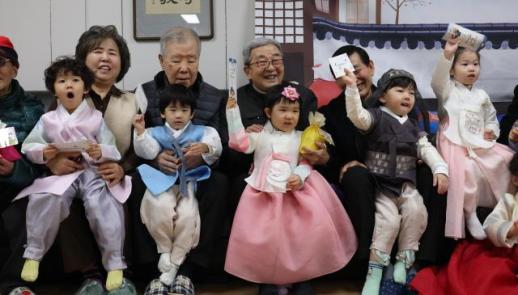 Koreans begin early home-bound rush ahead of Lunar New Year holiday SEOUL, February 13 (AJP) -South Koreans began heading home in large numbers on Friday, getting an early start on travel ahead of the Lunar New Year holiday, which this year forms a five-day break including the weekend. Train stations, bus terminals and airports across the country grew steadily busier from the morning, as travelers carrying gift boxes, luggage and large suitcases made their way to hometowns for the nation’s most important traditional holiday. At Seoul Station, crowds filled KTX platforms as passengers queued for high-speed trains bound for major cities such as Daejeon, Gwangju, Daegu and Busan. Many long-distance tickets for Friday morning departures were already sold out. In Suwon Station, commuters and families lined up early with bundles of gifts and oversized carriers, while Daejeon Complex Terminal saw a growing flow of travelers gathering with packages and travel bags, creating a festive atmosphere. At Incheon’s intercity bus terminal, passengers waited for departures while drinking coffee or having quick meals, their faces showing anticipation. Gwangju Songjeong KTX Station also saw heavy traffic, with most morning trains from Seoul sold out. On one platform, a woman in her 60s rushed forward to embrace her granddaughter as train doors opened, drawing smiles from nearby travelers. Similar scenes unfolded nationwide. In Cheongju, families hurried through terminals holding children’s hands, while in Ulsan and Daegu, parents waited to welcome returning sons and daughters. Busan Station was crowded with homebound travelers, return visitors and soldiers on holiday leave. The Lunar New Year, or Seollal, is traditionally a time for families to reunite, honor ancestors and share meals. Many Koreans travel long distances to their ancestral homes to perform ancestral rites, exchange greetings and spend time with relatives. The annual homecoming, known as gwiseong, remains one of the largest seasonal migrations in the country, even as younger generations increasingly combine family visits with leisure travel. “I was worried about getting a ticket, but leaving a day early helped,” said Kim Seung-hee, 42, who was traveling to Gwangju. “I’m excited to eat homemade food with my family.” Markets were also busy, as shoppers prepared for holiday rituals and family gatherings. At traditional markets in Daejeon, customers bought fish, fruit and ceremonial food ingredients, while bargaining over rising prices. Major airports saw heavy traffic as travelers mixed homecoming trips with vacations. At Incheon International Airport, long lines formed at check-in counters, while Gimhae and Jeju airports were crowded with both family visitors and tourists. Jeju Island was expected to receive about 43,000 visitors on Friday, according to the local tourism association. Some ferry services in the West Sea faced temporary delays due to morning fog, though most routes in southern coastal areas operated normally. Highway traffic remained manageable in the morning, similar to a typical Friday. Korea Expressway Corp. estimated total vehicle volume at about 5.54 million nationwide for the day. Traffic toward provincial areas was expected to peak between 5 p.m. and 6 p.m., easing after 10 p.m., while congestion toward Seoul was forecast to clear later in the evening. “With the relatively short holiday, more people are leaving earlier than usual,” an expressway official said. “We expect congestion to build sooner in the afternoon.” As the holiday approaches, transportation hubs are expected to grow even busier over the weekend, marking the full start of the annual Lunar New Year homecoming tradition. 2026-02-13 13:11:13
 -
 Seoul bourse ranks 8th in global market cap rank, up 2 notches from Dec SEOUL, February 08 (AJP) - South Korea’s stock market has climbed to eighth place globally by valuation upon sustaining double-digit gains into the new year on the back of strong momentum in semiconductor and tech shares. According to the Korea Exchange, the combined market capitalization of the KOSPI, KOSDAQ and KONEX stood at 4,799.36 trillion won ($3.6 trillion) at Friday’s close, slightly edging Taiwan’s total of 4,798.68 trillion won as well as Germany. The World Federation of Exchanges rank placed South Korea at the 10th worldwide as of December last year, trailing the United States, China, the European Union, Japan, Hong Kong, India, Canada, Taiwan and Germany. The Seoul bourse moved up by two notches on frenzied buying in chip stocks upon record earnings confirming a semiconductor supercycle. The benchmark KOSPI, hosting memory giants Samsung Electronics and SK hynix has surged about 21 percent as of Friday, marking the strongest performance among major global indices. The tech-heavy KOSDAQ has gained nearly 17 percent, ranking third worldwide in year-to-date returns. Germany’s DAX index and Taiwan’s weighted index so far in the year gained 0.94 percent and 9.73 percent, respectively. Despite last week's correction, analysts are still buoyant about upward momentum. NH Investment & Securities perceives the KOSPI has yet to reach the peak of its current cycle, raising its 12-month target to 7,300 from 5,500. JPMorgan also raised target to 7,500 from 6,000. 2026-02-08 18:50:53
 -
 LGES buys battery JV in Canada as Ottawa weighs industrial offsets in submarine bid SEOUL, February 08 (AJP) -LG Energy Solution (LGES) has agreed to acquire its partner’s entire stake in a major Canadian battery plant for a symbolic $100, underscoring how slowing electric vehicle demand, shifting industrial policy and geopolitics are reshaping North America’s manufacturing landscape. In a regulatory filing on Friday, the South Korean battery maker said it would purchase the 49 percent stake held by Stellantis in their joint venture, NextStar Energy Inc., ending the partnership formed in 2022 to build Canada’s first large-scale EV battery plant in Windsor, Ontario. Stellantis however will remain as a customer. Under the agreement, LGES will take full ownership of the venture by June 30, 2026, acquiring shares for $100 that Stellantis had originally bought for $980 million. LG has committed $1.46 billion to the project and said its investment will continue as planned. The price reflects the deteriorating outlook for EV demand in North America, where automakers have scaled back expansion plans amid weaker sales and the rollback of U.S. consumer tax incentives. LGES said the ownership change would allow it to realign the facility toward a broader customer base, including energy storage systems (ESS), as automakers cut battery orders. Company officials in Seoul said the move reflects a strategic shift away from reliance on a single carmaker and toward fast-growing demand from data centers and renewable energy projects. One production line at the Windsor plant has already been converted for ESS manufacturing, with LG targeting utilization of more than 70 percent by year-end. The facility’s full capacity stands at about 49.5 gigawatt-hours annually. The pivot follows the cancellation of a $6.5 billion EV-related supply deal with Ford Motor late last year and mirrors similar conversions at LGES’ U.S. plants in Michigan. The restructuring comes as Canada intensifies efforts to protect its auto sector and attract non-U.S. investment, amid trade tensions with Washington and uncertainty over the future of North American supply chains. Prime Minister Mark Carney’s government has rolled out incentives tied to domestic production and revived EV purchase subsidies to stabilize the industry after major cutbacks by automakers. Last year, U.S. President Donald Trump imposed 25 percent tariffs on Canadian vehicles and parts, dealing a major blow to exports and accelerating streamlining of Canadian operations by carmakers including Stellantis which has moved production of its Jeep Compass model from Ontario to Illinois. Canadian officials now say the ability of foreign partners to deliver broader industrial benefits — beyond a single project — is becoming central to Ottawa’s investment strategy. The battery plant deal is also being watched closely in Seoul and Berlin, as Canada evaluates bids for its multibillion-dollar Canadian Patrol Submarine Project (CPSP). Stephen Fuhr, Canada’s special envoy for defense procurement, said during a recent visit to South Korea that automotive and advanced manufacturing cooperation would weigh heavily in the final decision. “If there are areas where we can cooperate in sectors like automobiles, we are looking to pursue broader partnerships that go beyond defense,” Fuhr said after touring facilities operated by Hanwha Ocean. Analysts observe LGES' deeper commitment to Canadian manufacturing may strengthen South Korea’s case by reinforcing long-term industrial ties at a time when Ottawa is seeking to reduce dependence on U.S.-based supply chains. For LGES, full control of NextStar offers operational freedom and access to generous Canadian production subsidies. For Ottawa, it preserves a flagship manufacturing asset while reinforcing its pitch for foreign partners willing to invest across multiple sectors. 2026-02-08 08:02:18