
Journalist

Sung Nak-in
ellenshs@ajunews.com
-
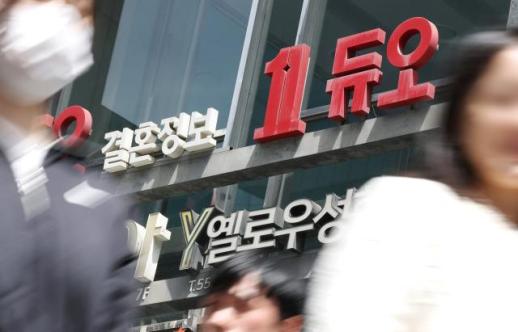 Duo Data Leak Exposes 430,000 Matchmaking Profiles, Raising Questions About Trust Marriage has long carried an element of transaction, even when it is wrapped in the language of love. The film “Materialists” captured that idea with a blunt line from a couple manager who builds matches by salary, looks, education and age: “Love is a variable, and marriage is a calculation.” That logic depends on collecting ever more personal information. But the more complete the calculation becomes, the more exposed people can be. A data breach at Duo, South Korea’s largest matchmaking company, laid bare that risk when sensitive personal information on 430,000 members was leaked. The leaked material went far beyond names and contact details. It included height, weight, blood type and religion, as well as marital history, family relationships, workplace, financial capacity and health status — a profile that can describe a person’s life in numbers. The breach also raised questions about how such data was handled. Of the 430,000 affected, 300,000 were members whose contracts had already ended and whose data should have been destroyed, the article said. Instead, the information was kept and ultimately fell into hackers’ hands. The company’s response drew additional criticism. The article said Duo failed to meet a requirement to report the breach within 72 hours after recognizing it, and victims learned of the leak later through news reports. South Korea’s Personal Information Protection Commission imposed an administrative fine of about 1.2 billion won. Spread across the victims, that amounts to about 2,800 won per person — less than the price of a cup of coffee, the article noted. The article said the penalty reflects limits in the current system, including rules tied to revenue and reductions based on company size. But it argued the larger issue is why people disclose so much while expecting so little protection in return. Unlike breaches involving platforms or telecom companies, the article said, the information entrusted to matchmaking firms is not just a record of consumer behavior. It can shape a person’s social standing and identity, and once exposed it can become an irreversible vulnerability. A scene in the film poses a simple question: “Why do people insist on getting married?” The answer is equally direct: “Because they’re lonely. And because they need hope.” The article said what people are buying is not a set of conditions but relief from anxiety — reassurance that their choice is not wrong. Matchmaking companies sell that reassurance and, in exchange, accumulate vast power through data. In a market where marriage is treated as a deal, the article argued, trust should be the most valuable asset. Instead, it said, trust is treated as cheap, and the costs of that complacency fall most heavily on individuals. * This article has been translated by AI. 2026-04-25 06:45:26
 -
 AI Layoffs Hit the Workers Who Built the Systems, Raising Fears for Entry-Level Jobs 미국 실리콘밸리발 감원은 단순한 경기 대응형 구조조정이 아니라, 노동의 정의가 바뀌는 구조적 전환의 신호로 읽힌다. 특히 AI를 구축하고 학습시키던 인력이 자신들이 만든 기술에 의해 밀려나는 역설이 현실화하고 있다. 메타(Meta)는 인력의 10%를 감축하면서도 AI 인프라에 연간 1,350억 달러를 투입하고 있다. 마이크로소프트도 대규모 조기퇴직을 단행했다. 겉으로는 비용 절감이지만, 핵심은 인건비를 줄여 AI라는 자본재에 재투자하는 ‘노동의 자본 대체’가 고착화되는 흐름이라는 지적이 나온다. 감원의 중심은 단순 노무직이 아니라 ‘중간층 지식노동’이다. 마크 저커버그 메타 CEO는 “과거 대규모 팀이 필요했던 프로젝트를 이제는 뛰어난 소수가 해낼 수 있다”고 말했다. AI가 팀 규모와 인력 구조를 바꾸고 있다는 취지다. 문제는 전통적인 ‘신입-중급-시니어’로 이어지던 숙련의 사다리가 흔들린다는 점이다. 신입은 기초 코딩, 데이터 정리, 문서 초안 작성 같은 기본 업무를 통해 조직을 배우고 중급으로 성장해 왔다. 그러나 생성형 AI가 이 ‘기초 업무’ 영역을 빠르게 대체하면서, 사다리의 첫 칸이 사라지고 있다. AI를 학습시키고 데이터를 정제하며 모델을 개선하던 주니어 인력이 오히려 가장 먼저 대체 가능한 존재가 되는 역설도 제기된다. 기술이 인간의 기초 노동을 바탕으로 발전했지만, 그 과정에서 인재가 성장할 기회가 줄어든다는 것이다. 이런 ‘진입의 부재’는 청년 실업 문제를 넘어 조직 내부의 중간층 약화와 인적 병목을 낳을 수 있다는 우려로 이어진다. 기업들이 주니어 역할을 줄이고 시니어 중심의 고효율 구조를 지향하면, 시간이 갈수록 조직은 유입이 끊겨 노쇠화될 수 있다는 분석이다. 새로운 감각과 혁신을 가져올 젊은 인력이 줄어들면 조직의 역동성과 시장 대응력도 떨어질 수 있다. 경험의 단절도 문제로 꼽힌다. 숙련된 전문가는 반복적인 실무 축적을 통해 성장하지만, 주니어 직무가 AI로 대체되면 미래의 시니어가 될 인력이 역량을 쌓을 ‘훈련의 장’이 줄어든다. 그 결과 5년 뒤의 중간급 인력, 10년 뒤의 리더가 부족해지는 ‘인재 공급망 단절’이 예고된다는 지적이다. 이 변화는 한국에서도 통계로 나타나고 있다. 2026년 3월 기준 청년 취업자는 41개월 연속 감소했다. 전문·과학기술 서비스업과 정보통신업의 일자리 감소분 중 약 89%가 2030 세대에 집중됐다. AI가 전체 일자리를 줄이기 전에 “신입이 진입할 통로”부터 막히고 있다는 주장도 나온다. 변호사, 회계사, 개발자 등 자동화의 안전지대로 여겨졌던 전문직도 예외가 아니라는 것이다. 계약서 검토나 리서치 등 주니어 단계 업무가 AI로 대체되면서, 신입이 실무를 배우며 전문가로 성장할 기회가 줄어들고 있다는 문제 제기가 이어진다. 대응 역시 재점검이 필요하다는 목소리가 있다. 지금까지는 ‘AI 교육 확대’에 초점이 맞춰졌지만, 현장의 문제는 청년들이 AI를 몰라서가 아니라 AI 시대에 발을 붙일 첫 일자리가 부족하다는 데 있다는 것이다. 정책은 교육 확대를 넘어 ‘기회 구조의 재설계’로 옮겨가야 한다는 제안이 나온다. AI 도입으로 생산성이 높아진 기업들이 이익의 일부를 신입 채용과 실무 인턴십 유지에 재투자하도록, 세제 혜택을 포함한 ‘청년 첫 직무 보장제’를 사회적 논의에 올려야 한다는 주장이다. 기업과 정부가 단순 실행 위주의 직무에서 벗어나, AI 결과물을 검증하고 문제를 정의하는 ‘AI-보완형 주니어 직무’를 새로 설계해야 한다는 제안도 있다. 신입이 기술에 종속되지 않고 기술을 활용하는 역량을 키울 수 있도록 하자는 취지다. 또 실무 경험이 중요한 전문직을 중심으로 AI와 인간이 협업하며 전문성을 승계하는 ‘디지털 도제제도’ 도입 필요성도 제기된다. 시니어가 주니어를 멘토링하는 과정에서 발생하는 비용을 국가가 보전할 때, 끊어진 숙련의 사다리를 다시 잇는 데 도움이 될 수 있다는 주장이다. AI 시대의 위험은 기술이 인간을 앞서는 데만 있지 않다는 지적이 나온다. 미래 세대가 노동시장에 진입할 길을 잃으면, AI는 생산성을 높이는 동시에 청년의 기회를 줄이는 ‘세대 간 불평등’의 요인이 될 수 있다는 우려다. 청년에게 위로를 건네기보다, 새로운 형태의 진입 경로를 만드는 데 역량을 집중해야 한다는 주장으로 글은 마무리된다. * This article has been translated by AI. 2026-04-24 11:06:27
 -
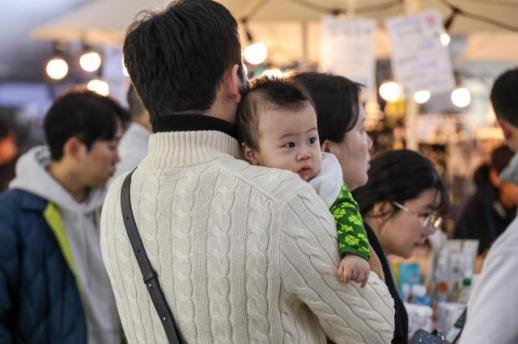 Korea's birth rate crawls near 1 in February on record births in the month SEOUL, April 22 (AJP) -South Korea's fertility rate edged closer to the 1.0 threshold in February as births grew at a record pace, lifting the monthly tally to its highest level in seven years. According to the Ministry of Data and Statistics Wednesday, the number of births reached 22,898 in February, up 2,747, or 13.6 percent, from a year earlier — marking the highest February figure in seven years since 2019. The increase was the third-largest on record in absolute terms for February and the fastest growth rate since data collection began in 1981. The data extend a sustained recovery trend, with births rising for 20 consecutive months since July 2024. The total fertility rate — the average number of children a woman is expected to have over her lifetime — rose to 0.93 in February, up 0.10 from a year earlier. Adjusted for February’s shorter calendar, officials said the figure represents a relatively strong reading. A breakdown by age shows the rebound was led decisively by women in their 30s, the core childbearing cohort. The birth rate for women aged 30–34 climbed to 86.1 per 1,000, up 9.1 from a year earlier, while that for those aged 35–39 rose to 61.5, up 9.2 — the largest gains across age groups. Among younger cohorts, the rate for women aged 25–29 edged up 1.6 to 23.9, while births among those aged 40 and above rose modestly by 0.7 to 5.1. The rate for women aged 24 and under, however, slipped 0.2 to 2.2. By birth order, first-born children accounted for 63.0 percent of total births, up 1.2 percentage points from a year earlier, while the shares of second-born and third-or-higher երեխան declined by 0.5 and 0.6 percentage points, respectively. Despite the rise in births, South Korea’s population continued to shrink, as deaths outpaced births. The number of deaths stood at 29,172 in February, down 3.5 percent on-year, partly due to milder and drier weather conditions compared to last year. Still, the country recorded a natural population decline of 6,275 during the month. Marriage figures — a leading indicator of future births — showed a temporary pullback. The number of marriages fell 4.2 percent on-year to 18,557 in February, snapping a 22-month streak of increases since April 2024. Officials attributed the decline largely to fewer working days due to the Lunar New Year holiday, noting that on a comparable basis, marriages would have likely increased. Divorces also declined sharply, falling 15.6 percent on-year to 6,197 — the lowest February figure since 1997. Authorities cited both a longer-term downtrend and fewer administrative working days during the holiday period. The latest data follow a strong start to the year. In January, births rose 11.7 percent on-year to 26,916, pushing the monthly fertility rate to 0.99 — its highest level since monthly tracking began in 2024. The recent gains are partly attributed to demographic effects, including the so-called “second echo boom,” as those born in the early 1990s enter peak marriage and childbearing years, as well as a backlog of delayed marriages following the COVID-19 pandemic. 2026-04-22 16:51:04
 -
 Why South Korea Sees the Global South as a Supply-Chain Lifeline, Not an ‘Alternative Market’ “Alternative market” is the label often attached to the Global South. But it no longer fits. India and Vietnam are no longer just low-cost production bases meant to replace China. With U.S.-China tensions, war in the Middle East and U.S. tariff pressure colliding, the Global South is increasingly where South Korea must operate to keep its economy resilient. In India, the shift is already visible in the numbers. POSCO’s planned 10 trillion won steel mill with JSW is hard to view as a routine investment. With China shaking markets through pricing, the move reflects a choice to absorb demand through local production and change the structure of competition. HD Hyundai’s push for shipyard cooperation, and Samsung and Hyundai Motor’s expansion in manufacturing and mobility, point in the same direction. With AI and digital technology added to the mix, India is becoming less a destination for entry and more a place to co-design industry — where India’s scale meets South Korea’s speed. Vietnam matters in a different way. President Lee Jae-myung, in Hanoi, stressed that “the relationship between the two countries is truly special,” a message rooted in years of accumulated ties beyond headline figures. South Korea is Vietnam’s largest investor and is already deeply embedded as a production base. The question is what comes next. The message of building supply chains together through nuclear power, infrastructure and science and technology cooperation is directionally sound, but it remains closer to “potential.” For Vietnam to move beyond assembly into a supply-chain pillar combining energy and technology, South Korea will also need to change how it approaches the partnership. That is where the limits of South Korea’s strategy show. The country has not fully moved beyond the model of “make well and export.” But the world no longer works that way. The United States is using tariffs to restrict market access, China is disrupting order through pricing, and the Middle East remains a variable that can halt supplies at any time. In that structure, South Korea cannot endure on its own. The core of a Global South strategy, then, is not market expansion but shared risk management. Cooperation with India on naphtha and LNG, and talks with Vietnam on a nuclear-power supply chain, can be starting points. But if they remain one-off efforts, their value diminishes. What is needed is a framework that links energy, industry and finance. Japan built pathways long ago through official development assistance and policy finance, and China has combined infrastructure and resources to shape the playing field. South Korea is still at a stage of relying on the capabilities of individual companies. The Global South should be treated not as a place to “enter,” but as a partner for joint design. Beyond a simple exchange — South Korea providing technology and speed, and local partners providing markets and resources — the goal should be a structure in which both sides produce together and consume together. That is how they can better withstand U.S. tariff risks and Middle East supply instability. The Global South is no longer an option. From where South Korea stands now, it is already a direction that cannot be reversed. The question is not how fast South Korea gets there, but what kind of relationship it builds once it does. * This article has been translated by AI. 2026-04-22 16:07:29
 -
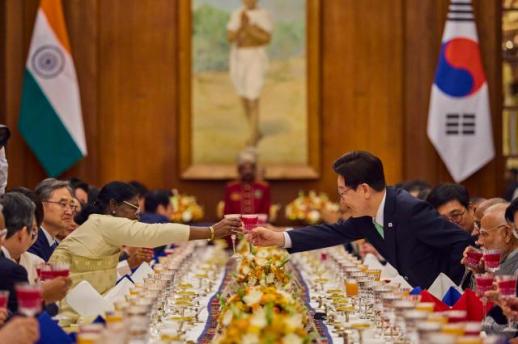 Korea Inc. doubles down on Global South push for energy and trade security SEOUL, April 21 (AJP) - South Korea has coupled state diplomacy with corporate investment in a Global South strategy anchored on India and Vietnam, aiming to secure new growth engines while hedging against rising protectionism in Western markets and energy shocks from the Gulf, underscored by the two-month conflict in the Middle East. The six-day trip by President Lee Jae Myung from April 19 to 24 was accompanied by a 200-strong business delegation including the owner-chairmen of Samsung, Hyundai Motor Group, SK and LG, marking a coordinated push to deepen ties with key emerging partners while reducing exposure to Middle Eastern energy disruptions. In New Delhi, Lee met Prime Minister Narendra Modi and attended a bilateral business forum attended by about 600 executives, where the two sides signed around 20 memorandums of understanding spanning steel, shipbuilding, energy and digital infrastructure. Steelmakers POSCO and JSW Group on Monday signed a final agreement to advance a long-delayed joint venture steel mill project in Odisha, targeting completion by 2031 with an annual crude steel capacity of 6 million tons, as India — the world’s most populous country — posts steel demand growth of around 10 percent. Seoul’s pivot comes as Asia’s heavy reliance on Middle Eastern oil and gas has been laid bare by disruptions to shipments through the Strait of Hormuz, a critical chokepoint that has been effectively crippled for nearly two months. “Seeking diversification of energy supply chains is also a shared task that our two countries must solve together,” Lee said in an interview with Indian media, framing energy security as a central pillar of the trip. Industry officials say the dual stop reflects a deliberate division of roles, with India positioned as a large-scale consumer market and potential energy partner, and Vietnam as a key manufacturing base as companies accelerate supply-chain diversification away from China. India, with a population of about 1.5 billion and annual growth near 7 percent, is increasingly viewed not only as a demand engine but also as a platform for industrial and energy cooperation, including refining capacity and next-generation energy technologies. Vietnam, meanwhile, has already emerged as a core production hub for Korean firms, with Samsung producing more than half of its global smartphone output there while expanding into higher-value areas such as semiconductor packaging. Major conglomerates are aligning closely with the government’s strategy. Samsung Electronics is exploring expanded cooperation with Reliance Group beyond telecommunications into semiconductors, artificial intelligence and potentially energy-linked projects. Hyundai Motor Group is seeking to make India its second-largest market after the United States by 2030, while stepping up investment in electric vehicle production and infrastructure. SK Group is reviewing partnerships in hydrogen and carbon capture, and LG Group is expanding manufacturing and consumer electronics operations across both countries. Companies are also pursuing projects tied to renewable energy, smart grids and next-generation technologies such as small modular reactors, reflecting a broader shift in which energy security is increasingly embedded in industrial strategy. Korean firms, however, face stiff competition from Japan, which has built a stronger and longer-standing investment presence in both India and Vietnam. While India and Vietnam cannot fully replace South Korea’s dependence on Middle Eastern energy in the near term, officials and industry executives see them as critical to building more resilient supply chains and securing future growth. The visit signals a broader shift in Korea’s economic approach, as the government and corporations move beyond cost-driven globalization toward a model that prioritizes diversification, resilience and strategic partnerships in an increasingly fragmented global economy. 2026-04-21 07:44:32
 -
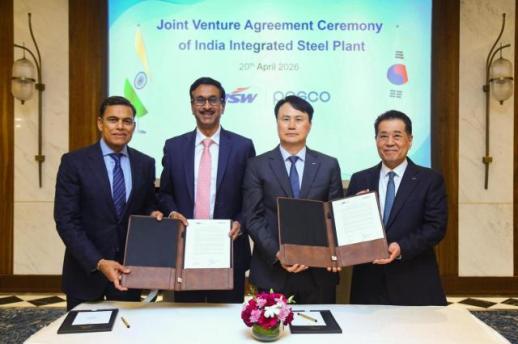 Korea's Posco and India's JSW to build $7.3 billion steel plant in Odisha SEOUL, April 20 (AJP) -South Korean steel giant Posco Group is launching a joint venture with India’s JSW Steel to build an integrated steel plant in eastern India at a combined cost of 10.7 trillion won ($7.3 billion), putting a long-delayed project in one of the world’s fastest-growing steel markets firmly on track. The South Korean steelmaker said Monday the two companies signed a final agreement in India under a 50:50 partnership structure, with Posco committing about 5.36 trillion won for its share of the project. The plant will be built in Odisha and is targeted for completion in 2031. The planned facility will be a full-process integrated steel mill with 6 million tons of annual crude steel capacity, equipped with ironmaking, steelmaking, hot-rolling, cold-rolling and galvanizing lines capable of producing high-value premium steel products. The partnership will be executed through Saffron Resources Private Limited, a wholly owned subsidiary of JSW Steel. Posco said the site was chosen for its proximity to iron ore resources and for access to logistics and power infrastructure. The deal marks a decisive step in Posco’s long pursuit of an upstream steelmaking foothold in India, a market it has eyed since 2004 but where repeated attempts were stalled by difficulties including partner selection and land acquisition. The company said the latest agreement moves the project into full execution after a memorandum of understanding signed in 2024 and a heads of agreement reached last year. Posco is betting that India’s rapid economic growth, urbanization and manufacturing expansion will continue to drive robust steel demand, particularly in higher-margin segments such as automotive and appliance steel. The company noted that steel consumption growth in India has exceeded 10 percent annually for several years, supporting rising demand for value-added products. The two companies are also reviewing ways to build a lower-carbon production system by combining Posco’s low-carbon steelmaking and smart factory technologies with JSW’s renewable energy infrastructure. Part of the electricity supply for the mill could come from renewable sources, in line with India’s green steel classification framework, POSCO said. The project fits into Posco’s broader strategy of building localized production networks to cope with rising protectionism and shifting global supply chains. Alongside the India investment, the group has also pursued equity participation in a steel plant in Louisiana and cooperation with Cleveland-Cliffs in the United States. At home, it said it is focusing on moving further up the value chain and on applying AI and robotics to intelligent factory operations, as well as developing Korean-style hydrogen-based steelmaking. “Through this joint investment, we will combine Posco’s innovative steel technology with JSW Group’s strong local competitiveness,” Posco CEO Lee Hee-geun said. “We will also strive to create future value, and contribute to the industrial development and economic growth of both countries.” JSW Steel CEO Jayant Acharya said the partnership would strengthen India’s steel ecosystem and reinforce the country’s industrial value chain. 2026-04-20 20:37:21
 -
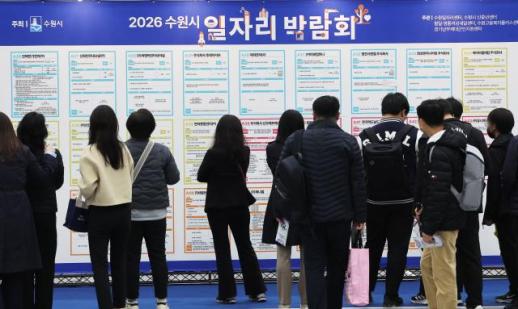 A quarter of the unemployed in South Korea are under 30 as jobless tops 1 million SEOUL, April 19 (AJP)-One in four unemployed South Koreans are young people under 30, as the country’s total jobless climbed back above 1 million for the first time in five years, pointing to a structural cliff at the entry level in the labor market. According to data released Sunday by Statistics Korea via KOSIS, the number of unemployed averaged 1.029 million in the January–March quarter, up 49,000 from a year earlier. It marked the first time since 2021 that first-quarter unemployment has exceeded 1 million, extending a three-year upward trend. The headline figure masks a sharper deterioration among younger workers. A total of 272,000 people aged 15 to 29 were unemployed in the first quarter, accounting for 26.4 percent of the total. Youth unemployment rose by 10,000 from a year earlier, marking a second consecutive annual increase. The youth unemployment rate climbed to 7.4 percent, up 0.6 percentage point on-year and the highest level for a first quarter since 2021, when the pandemic pushed it to 9.9 percent. Behind the rise lies a structural shift in hiring. Companies are increasingly favoring experienced workers, while large-scale open recruitment has given way to rolling, position-based hiring — a transition that has prolonged job searches for new entrants and recent graduates. Employment data underscore the strain. The number of employed young people fell by 156,000 on-year to 3.423 million in the first quarter, extending a decline to a 14th consecutive quarter. It marks the smallest youth employment level since comparable records began in 1980. While demographics are part of the story, they do not fully explain the drop. The youth population declined by 2.0 percent over the same period, but employment fell by 4.4 percent — more than twice as fast. That gap is reflected in the employment rate. The youth employment rate dropped to 43.5 percent, down 1.0 percentage point from a year earlier and the lowest for a first quarter in five years. In contrast, employment among those in their 30s continues to strengthen, suggesting delayed — rather than foregone — labor market entry. The employment rate for people in their 30s rose to 80.7 percent, the highest on record for a first quarter. A rise in applicants preparing for civil service exams also contributed, as individuals actively seeking work are classified as unemployed rather than economically inactive. The data point to a labor market increasingly defined by transition frictions, where young people cycle longer between inactivity, job search and employment before securing stable positions. The government is expected to roll out a package of youth employment measures later this month, including programs to strengthen job readiness, expand work experience opportunities and support re-entry into the labor market. 2026-04-19 15:30:27
 -
 Han Kang leads Korea's book market for a decade SEOUL, April 19 (AJP) -South Korean author Han Kang, the country’s first Nobel laureate in literature, is not just a literary heavyweight but the defining commercial force in South Korea’s book market over the past decade with her bestsellers "The Vegetarian" and "Human Acts", data showed. According to data released Sunday by Kyobo Book Centre ahead of World Book and Copyright Day on April 23, the two novels ranked first and second, respectively, in cumulative sales between April 17, 2016, and April 16, 2026, based on combined online and offline figures. Originally published in 2007, "The Vegetarian" gained global recognition after Han became the first Korean writer to win the Man Booker International Prize in 2016. The win triggered a surge in domestic readership, with the novel topping weekly bestseller charts for 12 consecutive weeks and becoming the best-selling book of that year. Nearly a decade later, Han’s readership saw a renewed surge following her receipt of the Nobel Prize in Literature in 2024 — the first for a Korean author. This second wave was led by "Human Acts", her 2014 novel centered on the Gwangju Uprising, which ranked as the country’s annual bestseller in both 2024 and 2025. A Kyobo official noted that while "The Vegetarian" leads in cumulative sales due to its earlier post-Booker boost, "Human Acts" has outpaced it in more recent years. Han’s presence extended further down the list. Her 2021 novel "We Do Not Part", which deals with the Jeju 4·3 Incident, ranked eighth over the decade, supported by major international recognition including France’s Prix Médicis étranger in 2023 and the U.S. National Book Critics Circle Award this year. Of the top 10 bestsellers, six were Korean novels, underscoring sustained domestic demand for locally grounded fiction. Other titles in the ranking include Kim Ho-yeon’s "The Uncanny Convenience Store", Lee Mi-ye’s "DallerGut Dream Department Store", and Yang Gui-ja’s "Contradiction", which placed fifth through seventh. Nonfiction titles also featured prominently. The self-help book "Say No’s Teachings" ranked third, followed by Lee Ki-joo’s essay collection "The Temperature of Language" in fourth. Kim Soo-hyun’s "I Decided to Live as Me" came in ninth, while "Winnie-the-Pooh: Happy Things Happen Every Day" rounded out the top 10. Meanwhile, overall reading habits in South Korea continue to decline. According to the Ministry of Culture, Sports and Tourism’s national reading survey, the proportion of adults who read at least one general book per year — excluding textbooks, exam materials, magazines and comics — fell from 67.4 percent in 2015 to 38.5 percent last year. 2026-04-19 15:14:54
 -
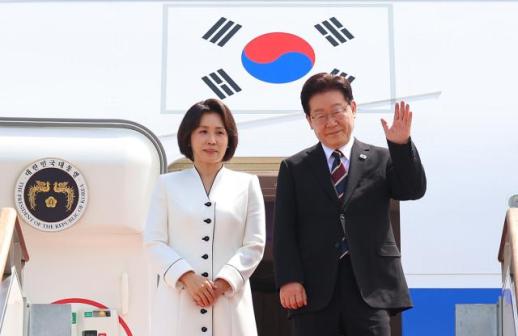 South Korea's India–Vietnam state visit targets security, energy recalibration SEOUL, April 19 (AJP)-South Korean President Lee Jae Myung departed Sunday for a five-night, six-day state visit to India and Vietnam, a trip that goes beyond ceremonial diplomacy to probe whether Seoul can turn its “Global South” pivot into a workable economic and strategic hedge in an increasingly fractured world. The back-to-back visits — Lee’s first to India and the first state-level engagement with Vietnam’s new leadership — come at a moment when global supply chains are being reshaped by conflict in the Middle East and intensifying great-power rivalry. Lee’s itinerary follows the familiar arc of state visits: summit talks, business forums, and agreements spanning artificial intelligence, defense, shipbuilding and energy. In New Delhi, he is set to meet Prime Minister Narendra Modi , with both sides expected to accelerate an upgrade of the Korea–India CEPA and set a target of $50 billion in bilateral trade by 2030. In Hanoi, meetings with Communist Party chief To Lam and other senior officials will aim to deepen an already dense manufacturing and investment relationship, with a longer-term goal of pushing trade to $150 billion. Yet the meaning of the trip lies less in the schedule than in its sequencing. This is the first state visit to India in eight years and one of the fastest such trips by a new Korean administration — a signal that Seoul is moving early to reposition itself. The prolonged conflict around the Strait of Hormuz has exposed South Korea’s structural vulnerability: an export-driven economy dependent on imported energy and maritime logistics. Energy security and supply-chain coordination are explicitly on the agenda, with Seoul seeking closer alignment with both India and Vietnam on logistics resilience and critical minerals. India is central to that recalibration. Both countries arrive at the summit with a shared exposure to Middle East energy. South Korea sources roughly 70 to 75 percent of its crude from the Gulf, with almost all shipments transiting the Strait of Hormuz, leaving it acutely sensitive to any disruption in the narrow waterway and forced to explore more diverse sourcing. India, while also heavily reliant, imports a lower 55 to 65 percent from the region and has diversified part of its supply to Russia, the United States and West Africa. An area where the two are expected to seek active partnership is next-generation energy — pairing India’s vast renewable resource base with South Korea’s industrial and nuclear engineering strengths. New Delhi’s scale in solar and wind offers low-cost power for future demand, while Seoul brings grid technology, storage solutions and emerging small modular reactor (SMR) capabilities to stabilize intermittency and provide reliable baseload. The combination points to a complementary model: India as a production hub for clean energy and hydrogen, and Korea as a technology and systems integrator, with cooperation likely to center on hybrid energy systems, hydrogen supply chains and industrial decarbonization. With a population of 1.4 billion, rapid growth near 7 percent, and ambitions to become a manufacturing alternative to China, New Delhi offers both scale and strategic industrial base for Korean Inc. Vietnam, on the other hand, is not a future bet but a present anchor. It remains South Korea’s most deeply embedded production base in Southeast Asia, and the emphasis on early engagement with Hanoi’s new leadership reflects a priority on continuity. What is evolving is the scope of the relationship — from labor-intensive manufacturing toward infrastructure, energy and strategic resources — signaling a shift from factory floor to broader economic partnership. The dual visit points to a wider recalibration in Seoul’s external strategy. The language of the “Global South” is less about alignment than diversification — an attempt to spread risk across geographies at a time when concentration has become a liability. 2026-04-19 13:08:46
 -
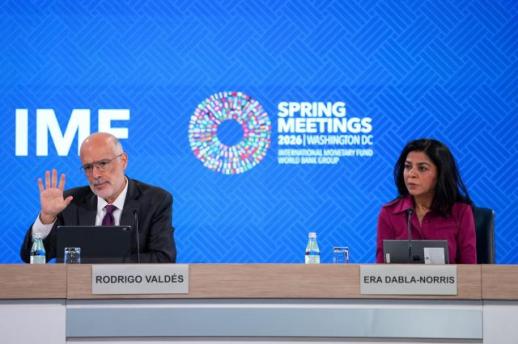 Korea's debt ratio to surpass advanced non-reserve peers next year, IMF warns SEOUL, April 19 (AJP)-South Korea’s government debt burden is set to cross a key threshold next year, overtaking the average of advanced economies without reserve currencies, as fiscal expansion continues to outpace economic growth, according to the latest assessment by the International Monetary Fund. The IMF projected in its April Fiscal Monitor that Korea’s general government debt-to-GDP ratio will rise from 54.4 percent this year to 56.6 percent in 2027, exceeding the 55.0 percent average for a group of 11 advanced non-reserve-currency economies that includes the Czech Republic, Denmark and Sweden. The crossover marks a symbolic shift for a country long viewed as fiscally conservative among advanced economies, highlighting how quickly its debt trajectory has steepened since the pandemic. The broader trend reflects a structural imbalance: debt is rising significantly faster than the economy. Between 2020 and 2025, Korea’s nominal GDP expanded at an annual average of 5.3 percent, while central and local government debt (D1) grew at 9.0 percent — roughly 1.7 times faster. That divergence is now feeding directly into the debt ratio, a key gauge of fiscal sustainability. The IMF expects Korea’s debt ratio to rise by 8.7 percentage points over the next five years, reaching 63.1 percent by 2031. That marks the steepest increase among the 11 comparator economies and the second-fastest pace after Hong Kong. In contrast, several peers — including Norway, Iceland and New Zealand — are projected to reduce their debt burdens over the same period. The IMF flagged Korea, alongside Belgium, as one of the countries facing “significant increases” in debt levels, underscoring mounting concerns over medium-term fiscal dynamics. At around the mid-50 percent range, Korea’s debt ratio still remains well below that of Group of Seven economies, where averages typically run between 120 percent and 130 percent of GDP. But unlike the United States or Japan, Korea does not issue a global reserve currency — a distinction that limits its flexibility during external shocks. Non-reserve currency economies tend to face sharper capital outflows and exchange rate volatility in times of stress, requiring stricter fiscal discipline. This structural constraint makes the pace of debt accumulation more consequential than the level itself. The IMF’s latest report also points to a worsening global fiscal backdrop. It warned that government balance sheets are facing structural deterioration amid higher borrowing costs and geopolitical shocks, including spillovers from the Middle East conflict. Globally, public debt is projected to exceed 100 percent of GDP by 2029, driven by persistent spending pressures and rising interest burdens. Key risks include war-related fiscal outlays, protectionism, shifts in sovereign bond markets and demographic aging — all factors that could further strain public finances. Against this backdrop, the IMF urged governments to adopt clearer medium-term fiscal frameworks while reallocating spending toward growth-enhancing investments. It also recommended targeted and temporary support measures to cushion households from energy price shocks, rather than broad-based subsidies. Seoul has signaled alignment with such guidance, emphasizing selective support for vulnerable groups and a restructuring of rigid expenditures to free up resources for strategic sectors such as artificial intelligence and future industries. 2026-04-19 12:37:03