

Journalist

Ryu Yuna
ellenshs@ajupress.com
-
 AJP Focus: Samsung's bonus war and the price of AI prosperity "Money often costs too much." Ralph Waldo Emerson wrote that line in the 19th century, but it reads today almost like a warning for the age of artificial intelligence. The real cost of the AI boom is no longer measured only in capital expenditures, GPU prices or trillion-dollar market valuations. It is increasingly measured in resentment, polarization, labor conflict and the quiet erosion of social cohesion — socially, politically, psychologically. South Korea's recent labor showdown at Samsung Electronics exposed that reality more sharply than perhaps any other event in Asia so far. What appeared on the surface to be a dispute over bonuses inside the world's largest memory-chip maker was in fact something far larger: a collision between industrial-era labor systems and the new economics of AI wealth. Under a provisional agreement reached after marathon negotiations, Samsung semiconductor employees stand to receive stock-based bonuses approaching 600 million won this year if profit targets are met. The framework allocates 10.5 percent of agreed business performance to a new special semiconductor incentive pool with effectively no upper ceiling — mirroring, and in some respects exceeding, the uncapped compensation model introduced by rival SK hynix. The numbers themselves explain why the dispute became a national issue. The AI boom is producing concentrations of profit unprecedented in modern industrial history. Nvidia on Wednesday posted quarterly net income of $58.3 billion as AI demand exploded globally, with CEO Jensen Huang describing demand as "parabolic." The problem is that modern democratic societies were never designed to absorb wealth concentration occurring at this speed. And that is where the costs begin. The first cost is individual and psychological. At the center of the Samsung conflict was not merely money, but the perception of fairness. The union argued that semiconductor workers who helped restore Samsung's competitiveness in the AI memory race deserved transparent participation in the profits they generated. Workers increasingly rejected opaque bonus formulas whose standards appeared to shift year by year, subject to management discretion. In the AI era, employees no longer want merely stable salaries. They want ownership of upside. From the workers' perspective, that demand is rational. Semiconductor profits can now surge by tens of trillions of won within a single cycle. When AI transforms a company into a strategic global bottleneck, employees inevitably begin asking why their compensation systems still resemble those of the manufacturing era. First-quarter profit from chip operations at Samsung Electronics and SK hynix combined reached $63 billion, with operating margins topping 70 percent. The same phenomenon creates a second cost: social fragmentation. According to National Tax Service data for 2024, the average annual salary of Korean workers stood at around 45 million won. But the median — the point at which half of workers earn less — was only 34.17 million won, or roughly 2.85 million won a month before tax. In practical terms, nearly half of Korean workers take home less than 3 million won a month before tax. That reality inevitably deepens feelings of relative deprivation when semiconductor employees are potentially pocketing bonus payouts worth double-digit multiples of an ordinary annual salary in a single cycle. Estimates that Samsung memory-chip employees could theoretically receive more than 2.6 billion won in cumulative bonuses over three years under the union's preferred formula triggers immediate public sensitivity. Even if such projections rely on optimistic assumptions about sustained AI demand, the psychological effect is already real. To many ordinary Koreans struggling with inflation, housing costs and stagnant wages, the dispute increasingly resembled not a labor negotiation but a symbol of how unevenly the gains of the AI revolution are being distributed. That perception matters politically. Because the third cost is institutional and democratic. The administration of President Lee Jae-myung understood that a strike involving tens of thousands of semiconductor workers at a company responsible for roughly one-fifth of Korea's exports could rapidly evolve into a national crisis. A prolonged disruption at Samsung would not merely have delayed memory-chip shipments. It could have affected AI server production, hyperscaler expansion plans, semiconductor pricing and broader investor confidence across Asia. That is why the government treated the dispute not as a routine wage conflict but as a matter of national strategic stability — and notably, it chose to manage that crisis democratically rather than coercively. The National Labor Relations Commission exhausted the formal mediation procedures required under Korean labor law. When talks stalled, Labor Minister Kim Young-hoon personally stepped in for nonbinding negotiations, seeking voluntary compromise rather than imposing state authority. In many countries, governments confronting strategic industrial unrest instinctively choose either suppression or populist escalation. Korea attempted something more difficult: preserving labor rights while preventing economic self-destruction. The labor ministry repeatedly emphasized dialogue "until the very end," in hopes of establishing a democratic precedent for managing AI-era labor conflict through institutional legitimacy rather than raw confrontation. The symbolism mattered — because the fourth cost is economic and structural. Once SK hynix removed bonus caps, compensation expectations spread rapidly across corporate Korea. Unions at Hyundai Motor Company demanded bonuses tied to 30 percent of net profit. Workers at LG Uplus pushed for operating-profit-linked pay. Unions across Kakao affiliates approved simultaneous strike votes in what could become the company's first group-wide walkout. Large conglomerates possess pricing power, strategic leverage and global market dominance. Smaller firms do not. Samsung alone operates through hundreds of suppliers and tens of thousands of subcontracted workers who are entirely outside the semiconductor bonus framework. Smaller manufacturers, suppliers and nonunion workers watch from the outside as AI profits accumulate within a narrow circle of strategic firms and organized labor. That widens Korea's already severe labor-market dualism. Samsung and SK hynix may stand at the summit, but the mountain beneath them was collectively built — through decades of state-backed tax incentives, national talent cultivation, university research, supplier ecosystems and the cooperation of equipment, materials and logistics firms across the broader economy. Which brings us to the final cost: the erosion of the old social contract itself. Korean conglomerates historically functioned not merely as employers but as quasi-familial institutions, promising stability in exchange for loyalty. Compensation systems emphasized organizational harmony and relative equality over radical differentiation. The AI economy destabilizes that model at its foundation. In Silicon Valley, superstar engineers increasingly resemble elite athletes, their compensation reflecting strategic scarcity. American firms aggressively deploy stock options, equity incentives and individualized rewards to compete for AI talent. Korea's labor culture still largely belongs to the industrial era. That mismatch is becoming unsustainable. Industrial-era labor laws were designed around fixed factories, predictable productivity and long employment cycles. AI economies behave differently. Profits surge unevenly. Strategic talent shifts rapidly. Compensation increasingly depends on intangible contribution rather than standardized hierarchy. The labor market itself is growing more fluid, asymmetric and psychologically transactional. Rigid compensation systems cannot survive indefinitely under such conditions. But neither can purely winner-take-all systems imported wholesale from Silicon Valley. The United States offers extraordinary upside — and extraordinary instability: layoffs, collapsing valuations, brutal volatility. Korea's collective model emerged partly to guard against precisely that insecurity. The challenge now is not choosing between American-style capitalism and old industrial paternalism. It is finding a new equilibrium capable of preserving legitimacy. Korea must build compensation systems transparent enough to feel fair, flexible enough to reward strategic talent and broad enough to prevent AI prosperity from deepening social fracture. The Samsung negotiations, for all their tension, offered at least one encouraging sign: the system bent without breaking. The government resisted both anti-labor crackdowns and populist escalation. Institutional mediation processes were exhausted before they were abandoned. Management eventually acknowledged that AI-era competition is now fought not only through technology but through compensation structures. And unions ultimately chose negotiated compromise over industrial paralysis. That democratic process may ultimately matter more than the size of the bonuses themselves. Because the defining question of the AI era is no longer whether extraordinary wealth will be created. The real question is how much social, political and human cost societies are willing to pay for it. 2026-05-21 11:35:42
 -
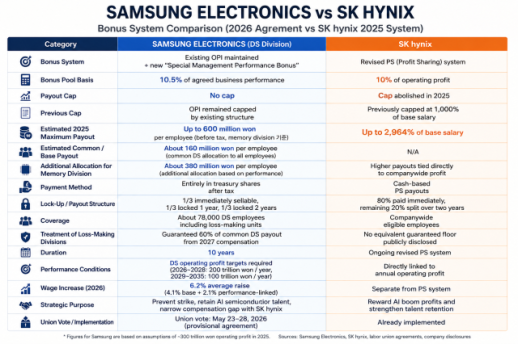 AJP Watch: Samsung closes pay gap with SK hynix in landmark semiconductor labor accord SEOUL, May 21 (AJP) -Samsung Electronics employees in its memory-chip division could receive performance bonuses of up to 600 million won ($440,000) this year under a landmark labor agreement that mirrors — and in some cases surpasses — rival SK hynix’s uncapped AI-era reward system that has transformed compensation expectations across Korea’s semiconductor industry. The provisional wage deal reached late Wednesday ties Samsung’s new special semiconductor bonus pool to 10.5 percent of agreed business performance, slightly above SK hynix’s 10 percent profit-sharing formula, as the world’s largest memory-chip maker moved to close a widening compensation gap exposed by the AI boom. The agreement, reached after marathon government-mediated negotiations, will be put to a union vote from May 22 to 27. If approved, it would settle this year’s wage dispute and cancel a planned general strike that had threatened to disrupt global AI chip supply chains. At the center of the breakthrough is a newly created “special management performance bonus” for Samsung’s Device Solutions (DS) semiconductor division. The union withdrew its steadfast demand on scrapping the existing OPI (Overall Performance Incentive) system, with management offering to introduce an additional long-term payout structure with no upper limit on bonuses. The framework bears strong resemblance to SK hynix’s revised PS (Profit Sharing) system, which scrapped the previous payout cap of 1,000 percent of base salary and allocates 10 percent of operating profit for employee rewards. Under that scheme, SK hynix employees are expected to receive bonuses equivalent to as much as 2,964 percent of monthly base salary based on 2025 performance. Samsung’s plan could generate even larger payouts if projected earnings materialize. According to the provisional agreement, the special bonus fund will be based on 10.5 percent of mutually agreed business performance metrics. If operating profit is used as the benchmark and Samsung Electronics posts around 300 trillion won in annual operating profit this year as forecast, roughly 31.5 trillion won could be set aside for DS performance compensation. Forty percent of that pool would be distributed equally across the DS division’s roughly 78,000 employees regardless of business unit performance, while the remaining 60 percent would be allocated based on divisional results. Under the formula, all DS employees — including workers in loss-making non-memory businesses — could receive around 160 million won per person from the common allocation alone. Memory division employees would receive an additional estimated 380 million won on average, while workers in common organizational units would receive about 270 million won more under the agreed distribution ratio. Combined with traditional OPI payouts, memory-chip employees earning annual salaries of around 100 million won could receive total bonuses approaching 600 million won before tax this year. Unlike traditional cash bonuses, the new special incentive will be paid entirely in Samsung treasury shares after taxes. One-third of the shares can be sold immediately, while the remaining two-thirds will be locked up for one year and two years respectively. The stock-based structure appears aimed at both strengthening long-term employee retention and aligning compensation with shareholder value as Samsung races to regain technological leadership in AI memory chips such as HBM4. The agreement also introduces a support mechanism for underperforming units. Loss-making divisions that fail to qualify for conventional OPI payments would still receive payouts equivalent to 60 percent of the common DS rate beginning with 2027 compensation. The special semiconductor incentive system will remain in place for 10 years, though payouts are contingent on ambitious profit conditions. Samsung’s DS division must achieve annual operating profit of 200 trillion won from 2026 through 2028, followed by 100 trillion won annually from 2029 through 2035. The deal also includes an average wage increase of 6.2 percent this year, composed of a 4.1 percent base pay increase and a 2.1 percent performance-linked raise. Additional agreements include expanded childbirth support payments, improved employee housing loan programs and about 6 million won worth of Samsung shares for employees in the DX division and CSS business team. The breakthrough came after days of tense negotiations involving the labor ministry and the National Labor Relations Commission, as the government sought to prevent a strike involving tens of thousands of semiconductor workers at a company whose exports account for roughly one fifth of South Korea’s outbound shipments. The dispute had increasingly reflected broader shifts underway in Korea’s semiconductor industry, where booming AI demand and soaring profits at SK hynix intensified pressure on Samsung workers demanding compensation structures closer to Silicon Valley-style performance sharing. For Samsung, the agreement represents not only an effort to avert labor disruption but also a strategic acknowledgment that the competition for semiconductor talent in the AI era is increasingly being fought through pay structures as much as through technology. 2026-05-21 06:07:14
 -
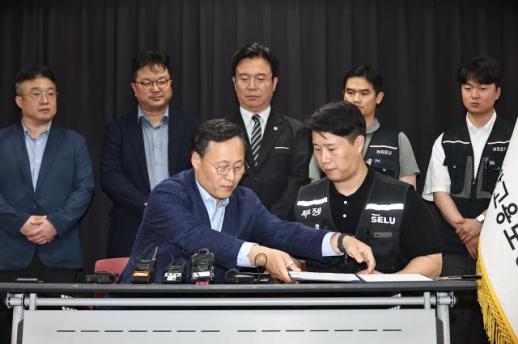
 Samsung Live: Strike suspended, union puts the agreement to vote until May 27 SUWON, May 20 (AJP) -Samsung Electronics narrowly avoided a closely watched 18-day general strike late Wednesday after marathon last-minute negotiations led by Labor Minister Kim Young-hoon produced a tentative wage agreement between management and the company’s largest labor union. The deal halted what could have become the biggest labor disruption in the history of the world’s largest memory chipmaker, which accounts for nearly 40 percent of the global DRAM market and roughly one-fifth of South Korea’s exports. The agreement came after weeks of escalating tensions over bonus structures, compensation for employees in loss-making divisions and the removal of caps on performance-based incentives. The National Samsung Electronics Union (NSEU) announced that the planned strike scheduled for May 21 through June 7 would be suspended pending a vote by union members on the tentative deal. Under “Protest Directive No. 3” issued Wednesday night, the union said all strike actions previously declared under its earlier directive would be put on hold “until further notice.” Union members will vote on the tentative 2026 wage agreement from 2 p.m. Thursday through 10 a.m. May 27. Details were not revealed, but the sticking point would involve compensation for loss-making divisions of Samsung Electronics. The breakthrough followed more than six hours of direct mediation by Labor Minister Kim at the Gyeonggi Regional Labor Office in Suwon, after earlier series of government-led post-adjustment talks at the National Labor Relations Commission had collapsed over disputes involving compensation for workers in deficit-running business divisions. Earlier in the day, union chief Choi Seung-ho had declared negotiations deadlocked and vowed to proceed with the strike as planned. Samsung Electronics had also sharply criticized the union in an internal statement, accusing it of demanding “socially unacceptable” compensation for loss-making units even after the company had already accepted most proposals on incentive structures. But signs of a late reversal emerged after Samsung quietly deleted the internal statement from its employee bulletin board while negotiations resumed under Kim’s direct supervision. Vice Labor Minister Kwon Chang-joon later joined the talks around 8:15 p.m., fueling expectations of a dramatic settlement only hours before the planned walkout. At a late-night joint press briefing following the agreement, union and management representatives appeared together holding hands in a rare public show of reconciliation after months of confrontation. “We sincerely apologize for causing concern internally,” Choi said, bowing deeply before reporters. “We have decided to suspend the joint struggle after reaching a tentative agreement through autonomous negotiations led by the labor minister.” Choi thanked union members for their support throughout the months-long dispute and said the union would focus on stabilizing labor-management relations while preparing for the membership vote. “We will do our best to become a mature labor union that can proudly present results,” he said. Yeo Myung-gu, Samsung Electronics vice president and head of the People Team, also apologized to employees for the prolonged negotiations. “We are grateful to employees, the government and the union for helping bring these talks to a conclusion,” Yeo said. “This agreement will become the starting point for a new culture of coexistence between labor and management. We will faithfully implement the terms of the agreement and do our utmost for mutual growth.” Labor Minister Kim framed the settlement as a victory for dialogue over confrontation. “We never let go of the thread of dialogue because we believe in democracy and the power of conversation,” Kim said. “Samsung is a national company supported by the Korean people. I hope this agreement will be faithfully implemented so the company can overcome these growing pains in a manner worthy of Korea’s No. 1 company.” Kim also thanked National Labor Relations Commission Chairman Park Soo-geun for helping narrow differences between the two sides on key issues. Industry officials had warned that a prolonged strike involving as many as 50,000 unionized workers could severely disrupt semiconductor production and inflict economic damage estimated at up to 100 trillion won ($72 billion). 2026-05-20 23:04:18
 -
 Korea's Lee ratchets up rhetoric on Israel, labor unrest and corporate ethics SEOUL, May 20 (AJP) -South Korean President Lee Jae Myung delivered an unusually combative series of remarks Wednesday, lashing out at Israel over its seizure of aid vessels carrying South Korean activists, warning Samsung Electronics labor unions not to “cross the line” ahead of a major strike, and condemning fashion platform Musinsa for what he called the mockery of South Korea’s democracy movement in a controversial advertisement. The remarks, made during a Cabinet meeting and emergency economic review session at the presidential office, reflected Lee’s increasingly direct and emotionally charged governing style as his administration grapples simultaneously with geopolitical tensions, labor unrest and cultural controversies. The president's sharpest comments were directed at Israel following the interception of humanitarian aid vessels headed toward the Gaza Strip carrying South Korean activists. According to civic groups and government briefings, Israeli forces intercepted the vessel Lina Al Nabulsi early Wednesday near Gaza waters. The ship reportedly carried South Korean activist Kim Ah-hyun and Korean American activist Jonathan Victor Lee. Another vessel, the Kyriakos X, carrying South Korean activist Kim Dong-hyeon, had been seized two days earlier. After receiving a briefing from Vice Foreign Minister Kim Jin-ah and National Security Adviser Wi Sung-lac, Lee openly questioned the legal basis for the operation. “What is the legal justification for the seizure? Is that Israeli territorial water?” Lee asked during the meeting, according to participants. “If Gaza is not Israeli territory, shouldn’t we protest this?” When Wi explained that Israel exercises military control over Gaza and regulates access to the area, Lee pressed further, asking whether that amounted to “illegal invasion under international law.” He described Israel’s actions as “too extreme and too inhumane,” adding that South Korea had “been patient for too long.” The president also referenced the arrest warrant issued by the International Criminal Court against Israeli Prime Minister Benjamin Netanyahu. “Wasn’t an arrest warrant issued because he was recognized as a war criminal?” Lee asked. After aides clarified that the ICC had issued a warrant but had not formally declared Netanyahu a war criminal, Lee replied, “Then he is a war-crime suspect.” The ICC issued arrest warrants for Netanyahu and other Israeli officials in 2024 over allegations tied to the Gaza conflict, including war crimes and crimes against humanity. Lee also suggested South Korea should independently examine whether to align itself with countries that have signaled willingness to enforce the ICC warrant should Netanyahu enter their territory. The remarks immediately triggered backlash from conservative opposition figures, who accused Lee of recklessness in handling a highly sensitive international conflict. People Power Party floor leader Song Eon-seok criticized the president for approaching “an extremely complex international dispute through a simplistic domestic political lens of good versus evil.” Reform Party leader Lee Jun-seok urged the president to “exercise restraint,” warning that “a single remark from a president can determine a nation’s fate.” He was equally unabashed on the looming strike at Samsung Electronics, where the company’s largest labor union plans an unprecedented walkout beginning Thursday after wage negotiations collapsed. Without directly siding with management, Lee cautioned the union against overstepping its mandate. “The right to collective action exists to protect socially vulnerable workers,” Lee said. “It is not a form of force granted for a small number of individuals to pursue only their own interests.” He emphasized that corporations involve multiple stakeholders, including investors who bear financial risks and workers entitled to fair compensation. “No one should unilaterally cross the line,” Lee warned. The remarks came as Samsung faces the prospect of a prolonged strike involving tens of thousands of workers, many tied to the semiconductor division that has powered the company’s surge during the global AI boom. The administration has been under mounting pressure to prevent labor disruptions at one of South Korea’s most strategically important companies, amid concerns over broader economic fallout and supply-chain instability. Lee separately criticized online fashion platform Musinsa over a resurfaced 2019 advertising controversy involving the late democracy activist Park Jong-chul. The controversy centered on an advertisement for quick-drying socks that used the phrase, “I hit the desk and it dried instantly,” a parody of the infamous phrase “I hit the desk and he died with a gasp,” used by authorities to cover up Park’s torture death during military rule. Park’s death in 1987 became a catalyst for South Korea’s June Democracy Movement. Lee condemned the advertisement in a social media post earlier Wednesday, writing: “This mocked and insulted Park Jong-chul’s torture death and the June Democratic Uprising that followed. Money may be evil, but how can people behave like this?” Musinsa issued another public apology Wednesday, saying it deeply regretted the campaign and acknowledging that “the wounds caused by the reckless judgment and lack of internal process remain serious even after seven years.” The company said its executives had personally apologized to the Park Jong-chul Memorial Foundation in 2019 and had since implemented historical education programs for employees and stricter content review procedures. Shinsegae Group and Starbucks Korea also faced public backlash over marketing campaigns linked to the Gwangju Uprising, widely regarded as one of the defining moments in South Korea’s modern democratic history. Critics accused some campaigns of trivializing or commercializing the symbolism of the May 18 movement through insensitive branding and promotional imagery, reigniting long-running tensions in South Korea over how corporations invoke historical memory for marketing purposes. 2026-05-20 21:55:27
 -
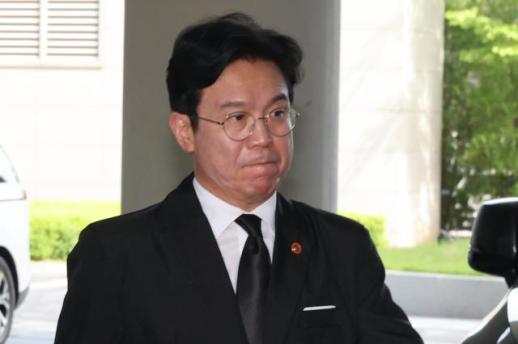 Samsung Live: Labor minister steps onto the mound to save talks and stop strike SEOUL, May 20 (AJP) -With a nationwide strike at Samsung Electronics just hours away, South Korean Labor Minister Kim Young-hoon on Wednesday personally stepped into wage negotiations after government-mediated arbitration collapsed, underscoring mounting fears in Seoul that a prolonged walkout could destabilize the semiconductor industry at the center of the global AI boom. The Ministry of Employment and Labor said Kim would directly oversee renewed talks between Samsung management and the union beginning at 4 p.m. at the Gyeonggi Regional Labor Office, in what officials described as an extraordinary attempt to keep dialogue alive after the National Labor Relations Commission failed to broker a compromise. The minister-led negotiations differ from the commission’s formal post-mediation process and are not intended to produce a legally binding settlement. Instead, the government is seeking to pressure both sides back into voluntary negotiations as concerns grow that the planned 18-day strike could disrupt chip production, exports and investor confidence by flagging an extraordinary authority to disallow a strike in an industrial site should it cause serious damage to national economy. Samsung and the union participated in a second round of post-mediation talks from May 18 but failed to narrow differences over key issues including the distribution formula for performance-based bonuses across business divisions. The labor commission proposed a compromise package balancing both sides’ positions. While the union accepted the proposal, Samsung management withheld a final decision, prompting the commission to declare the mediation unsuccessful. The collapse of negotiations intensified speculation that the government could invoke emergency arbitration powers, a rarely used authority allowing Seoul to suspend strikes and force compulsory mediation in industries deemed critical to the national economy. Labor Ministry spokesperson Hong Kyung-eui said the government would continue supporting labor-management talks “without being bound by formalities” but cautioned that it was “premature” to comment specifically on the possible invocation of emergency arbitration powers. 2026-05-20 16:22:11
 -
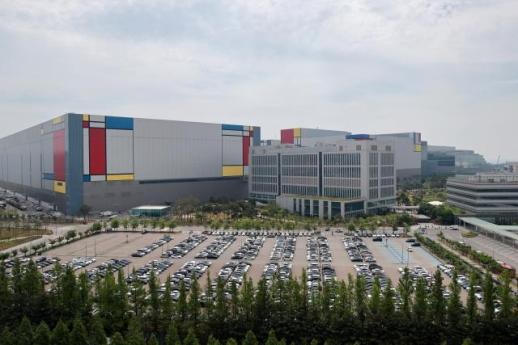 Samsung Live: Seoul presses management and union not to give up on talks SEOUL, May 20 (AJP) -The South Korean government pressured the management and union of Samsung Electronics not to give up talks to avert a general strike starting Thursday that could rattle the core chip sector sustaining Asia’s fourth-largest economy and one of the world’s hottest stock markets against Gulf war shocks. The presidential office Wednesday expressed “deep regret” after three days of government-mediated wage talks collapsed in Sejong City, while the Ministry of Employment and Labor vowed to use “every possible method” to keep both sides engaged ahead of the union’s planned 18-day walkout from May 21 through June 7. The strike would mark the most serious labor disruption in Samsung Electronics’ history and comes at a particularly sensitive moment for the global semiconductor industry as artificial intelligence-driven demand fuels a worldwide race for advanced memory chips. Samsung Electronics, which accounted for 36 percent of the global DRAM market and 22 percent of the high-bandwidth memory market as of the end of 2025, plays a central role in the AI supply chain powering data centers and next-generation computing systems. At the heart of the dispute is the union’s demand that Samsung allocate 15 percent of annual operating profit to bonuses, scrap the current cap equivalent to 50 percent of annual salary and institutionalize the revised compensation structure as a permanent rule. Samsung rejected the demands, arguing that the proposal would undermine performance-based pay by forcing the company to compensate even loss-making divisions at levels it described as “socially difficult to justify.” “There should be no strike under any circumstances,” Samsung said in a statement, while adding that it remained open to further dialogue to avoid production disruptions. Union leaders accused management of dragging out decisions until the mediation deadline expired despite meaningful progress during the talks. “The union participated sincerely throughout the three days of talks and did its best to find common ground,” said Choi Seung-ho, head of the Samsung Electronics chapter of the National Samsung Group Union. “We accepted the mediation proposal presented by the National Labor Relations Commission, but management failed to make a decision in time.” The labor ministry declined to comment on whether it could invoke emergency arbitration powers, a rarely used mechanism that allows the government to suspend strikes for up to 30 days in industries deemed critical to the national economy. Industry estimates cited by government officials suggest that an 18-day strike could inflict direct and indirect economic losses of up to 100 trillion won ($72 billion). Prime Minister Kim Min-seok earlier publicly warned about the possibility of “100 trillion won in damage” if semiconductor production suffers prolonged disruptions. A recent Bank of Korea report delivered to the presidential office reportedly estimated that a prolonged strike combined with the time required to fully restore semiconductor production lines afterward could shave 0.5 percentage point off South Korea’s annual economic growth while causing roughly 30 trillion won in semiconductor output losses. Samsung has also warned of serious operational risks unique to semiconductor manufacturing. The company said cleanroom systems require uninterrupted temperature and humidity control while wafers can become unusable if they fail to move through fabrication processes within strict time limits. A local court earlier this week partially sided with Samsung by ordering the union to maintain minimum staffing levels necessary for safety, facility protection and quality control during any industrial action. The ruling also barred union leaders from blocking access to production facilities. Suppliers have urged the union to reconsider the strike, warning that disruptions to chip production could quickly spread to equipment suppliers, subcontractors and nearby commercial districts. The dispute has additionally exposed tensions within the union itself. Some members from Samsung’s DX division filed injunction requests accusing union leadership of bypassing normal voting procedures and focusing excessively on semiconductor-related bonus demands while failing to adequately represent other business divisions. Legal controversy surrounding the strike is also expected to intensify. South Korea’s Supreme Court has previously ruled that Samsung’s excess-profit incentives are not ordinary wages but post-performance distributions tied to management results, raising broader questions over whether strikes centered on profit-sharing disputes fall within the traditional scope of collective bargaining. 2026-05-20 14:26:36
 -
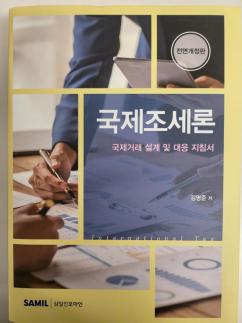 AJP Review: A guide to international taxation in AI age SEOUL, May 20 (AJP) -The world of international taxation has never been simple. But in the age of artificial intelligence and digital commerce, it has become extraordinarily complex. As multinational corporations move capital, data, and services across borders at unprecedented speed, governments around the world are entering an increasingly sophisticated struggle to defend their tax sovereignty. International cooperation aimed at preventing tax avoidance has tightened dramatically, while businesses face mounting pressure to navigate the narrow space between legitimate tax planning and aggressive regulatory scrutiny. Into this rapidly shifting landscape comes a book that seeks to map the entire terrain. Kim Myung-jun, the former Commissioner of the Seoul Regional Tax Office, has published a fully revised edition of International Taxation, a comprehensive work widely regarded as one of Korea’s leading practical guides to the field. The new edition arrives roughly five years after the first publication in 2021 and reflects the profound transformation now reshaping the global tax order. The author is not merely an academic theorist. He is a career tax official who spent decades at the center of Korea’s international tax administration system. After entering public service through Korea’s highly competitive civil service examination, he served in a series of influential positions, including Tax Attaché to Korea’s Mission to the OECD, Director of the International Tax Investigation Bureau at the Seoul Regional Tax Office, Director of the National Tax Service Investigation Bureau, and ultimately Commissioner of the Seoul Regional Tax Office. Coming from someone with deep hands in tax investigations, the book offers a deep insight to tax system. Since retiring from public office, Kim has continued his scholarly and professional work in the field of international taxation. He earned a doctorate from University of Seoul Graduate School of Taxation with research focused on the interpretation and application of the Principal Purpose Test (PPT) and the substance-over-form doctrine under the OECD’s Multilateral Instrument framework designed to prevent Base Erosion and Profit Shifting (BEPS). He has published numerous academic papers through the Korea International Fiscal Association and was awarded the association’s 2025 International Tax Academic Prize for his study on value-added tax obligations in international B2B service transactions. Today, he serves as Senior Adviser and Director of the International Tax and Investment Center at Bae, Kim & Lee LLC, one of Korea’s leading law firms. Yet the significance of International Taxation lies not simply in the résumé of its author, but in the breadth of its intellectual ambition. This revised edition moves well beyond a conventional explanation of tax statutes. It addresses the sweeping transformation of the global tax system in the era of AI and digital commerce, including BEPS 2.0 reforms, the Global Minimum Tax regime, cross-border tax avoidance, and the increasingly contentious struggle over taxation rights in the digital economy. Particularly notable is the book’s treatment of some of the most difficult and controversial concepts in international tax law, including treaty shopping, beneficial ownership, and the Principal Purpose Test. Drawing extensively on OECD standards, international case law, and practical enforcement experience, Kim explains these subjects with unusual clarity and precision. For practitioners, the book functions not merely as a reference volume, but as something closer to a strategic field manual. International taxation has long been regarded as one of the most difficult disciplines in modern law and finance. Kim attempts to reduce that complexity through an unusually reader-friendly structure that includes approximately 190 transaction flow charts, practical case studies, and carefully sourced references to OECD and United Nations Model Tax Convention commentaries. The result is a work that enables readers not only to understand abstract legal doctrines, but also to follow the underlying logic of cross-border transactions and international tax disputes. More importantly, the book approaches taxation not as an isolated legal problem, but as a central component of the emerging global economic order. The rise of AI-driven platforms and digital services has effectively blurred the traditional meaning of national borders. A multinational company may maintain servers in one country, manage data in another, and generate consumer revenue in dozens more simultaneously. Tax systems designed for the industrial age struggle to adapt to such realities. As a consequence, governments are racing to construct new taxation frameworks. The OECD-led Global Minimum Tax initiative represents one of the most ambitious attempts in modern history to coordinate international tax policy and limit aggressive tax avoidance by multinational corporations. For businesses, however, the environment has become increasingly difficult. Regulatory systems overlap, legal interpretations diverge, and compliance risks continue to grow. This is precisely where Kim’s book finds its importance. Because the author understands both the perspective of the taxpayer and the logic of the tax authority, the book maintains a rare balance between enforcement and compliance, between public interest and private strategy. The revised edition also separates transfer pricing taxation into an independent future volume. Kim has indicated that a more advanced and specialized work on transfer pricing will be published separately, a development already attracting considerable interest among tax professionals. The structure of the book reflects the broad scope of modern international taxation. Part One, “General Theory of International Taxation,” examines the foundations of international tax systems, global tax avoidance, tax administration, international tax audits, and the allocation of taxation rights between states. Part Two, “Tax Treaty Theory,” addresses treaty interpretation, residency determination, treaty abuse, beneficial ownership, permanent establishments, double taxation relief, mutual agreement procedures, and tax information exchange. Part Three, “Domestic Source Income Theory,” analyzes taxation issues involving non-residents and foreign corporations, including business income, dividends, royalties, interest income, and personal service income. Part Four, “Prevention of International Tax Avoidance,” explores anti-avoidance frameworks such as GAAR, SAARs, thin capitalization rules, Controlled Foreign Corporation regulations, hybrid mismatch arrangements, BEPS 2.0 reforms, global minimum taxation, offshore tax evasion, and the emerging challenges posed by AI-era commerce. Ultimately, International Taxation is far more than a technical handbook for accountants and tax attorneys. It is, in many respects, a guide to understanding how power, capital, sovereignty, and technology intersect in the twenty-first century. Today, capital flows across borders instantly. Data moves globally. AI systems operate beyond traditional jurisdictional boundaries. Yet taxation authority remains fundamentally national. The tension between those realities is becoming one of the defining economic and political struggles of our age. In that sense, this book speaks not only to tax professionals, government investigators, lawyers, and policymakers, but to anyone seeking to understand the deeper architecture of the emerging global economy. Its greatest strength may lie in the fact that it never reduces taxation to mere technical maneuvering. International taxation is ultimately about fairness, sovereignty, economic strategy, and the moral structure of global capitalism itself. As artificial intelligence reshapes commerce and human life alike, international taxation can no longer remain a niche concern reserved for specialists alone. In an era of increasingly fierce global tax competition, International Taxation stands out as a sophisticated compass — a work capable of helping readers navigate one of the most complicated frontiers of modern economic life. ■ About the author: Kim Myung-jun is widely regarded as one of South Korea’s leading experts in international taxation and cross-border tax investigations. After entering public service through Korea’s national civil service examination system, he spent more than three decades within the National Tax Service, building a career at the highest levels of tax administration and international fiscal policy. Over the course of his career, Kim held several key positions, including Tax Attaché to Korea’s delegation at the OECD, Director of the International Tax Investigation Bureau at the Seoul Regional Tax Office, Director of the National Tax Service Investigation Bureau, and ultimately Commissioner of the Seoul Regional Tax Office. He became particularly well known for his expertise in multinational corporate taxation, international tax enforcement, and cross-border transaction investigations. Few officials in Korea have possessed such extensive firsthand experience in both the design and execution of international tax investigations. Following his retirement from government service, Kim transitioned into academic research and professional advisory work. At University of Seoul Graduate School of Taxation, he completed doctoral research focused on BEPS-related international tax reforms, treaty interpretation, and substance-over-form principles in international tax law. He has since published numerous scholarly articles addressing BEPS, tax treaty interpretation, value-added taxation in international digital commerce, and anti-avoidance frameworks. His recent study on VAT obligations in international B2B service transactions earned him the 2025 International Tax Academic Prize awarded by the Korea International Fiscal Association. Today, Kim serves as Senior Adviser and Director of the International Tax and Investment Center at Bae, Kim & Lee LLC, where he continues to advise corporations, investors, and institutions on international tax strategy and global regulatory developments. More than anything else, Kim belongs to a rare generation of officials who experienced firsthand the transformation of taxation from a largely domestic administrative function into one of the defining geopolitical and economic battlegrounds of the modern world. For that reason, International Taxation reads not merely as a professional textbook, but as the intellectual culmination of a lifetime spent at the front lines of global tax policy and enforcement. 2026-05-20 12:40:52
 -
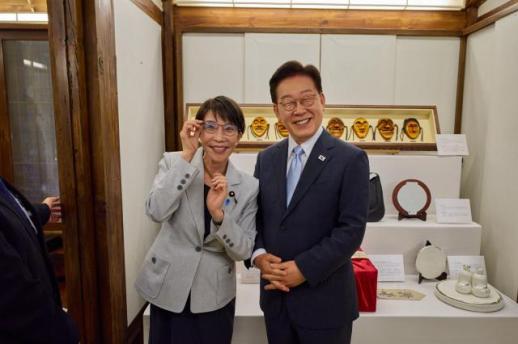 ASIA DEEP INSIGHT: Korea-Japan shuttle diplomacy evolving to civilian-led partnership Andong in May 2026 was not merely a provincial Korean city. It became a symbolic stage in the diplomatic history of Northeast Asia. Under the evening winds of Hahoe Village and the cascading sparks of the traditional Seonyu Julbulnori fire ritual, President Lee Jae-myung and Prime Minister Sanae Takaichi sent a message to the world that extended far beyond the formalities of another summit meeting. It was, in essence, a declaration that relations between South Korea and Japan are beginning to move beyond an era defined primarily by historical grievance and emotional confrontation toward one shaped by strategic coexistence and shared prosperity. The summit revolved around five central themes: institutionalizing cooperation in supply chains and energy security; firmly establishing shuttle diplomacy; expanding collaboration in artificial intelligence and advanced technologies; deepening civilian-led exchanges in culture and tourism; and managing historical disputes while building a future-oriented partnership. What made this meeting particularly consequential was the international context in which it unfolded. The Middle East remains unstable. Risks surrounding the Strait of Hormuz continue to threaten global energy markets. Strategic rivalry between the United States and China is intensifying. Russia, China, and North Korea are drawing closer together. In such a world, Seoul and Tokyo can no longer afford to conduct diplomacy through the lens of historical emotion alone. The era now emerging is one of overlapping crises, where energy, supply chains, finance, technology, and security are inseparably intertwined. When President Lee spoke of “a peaceful Korean Peninsula with no need to fight,” and Prime Minister Takaichi emphasized “the free and secure navigation of the Strait of Hormuz,” these were not rhetorical flourishes. They reflected a sober recognition that Northeast Asia and the broader Indo-Pacific are entering a period of profound instability. The world today is moving into three simultaneous conflicts. The first is military conflict. The wars in Ukraine and the Middle East have already entered prolonged phases. The second is technological conflict. Competition over artificial intelligence, semiconductors, quantum computing, and space technology has evolved into a new form of industrial Cold War between Washington and Beijing. The third is the conflict over supply chains. LNG, crude oil, rare earth minerals, food security, and battery materials are no longer simply economic concerns; they have become pillars of national survival. In such an environment, South Korea and Japan are too deeply interconnected economically to remain trapped in perpetual confrontation. South Korea possesses strengths in memory semiconductors, batteries, shipbuilding, and advanced manufacturing. Japan remains dominant in materials, components, precision engineering, and foundational industrial technologies. The two nations compete fiercely, yet they are also profoundly interdependent. Serious disruption in one economy would inevitably reverberate through the other. One of the most significant aspects of this summit was the discussion of LNG and crude oil swap arrangements. This was not merely a conversation about energy transactions. It represented the early architecture of a Korea–Japan energy security framework. Japan possesses one of the world’s most sophisticated LNG storage and strategic reserve systems. South Korea maintains globally competitive refining, petrochemical, and shipbuilding infrastructure. If the two countries institutionalize emergency energy-sharing and joint reserve mechanisms, they could substantially mitigate shocks arising from instability in the Middle East. More importantly, the summit hinted at the emergence of a broader Asian supply-chain order. Prime Minister Takaichi’s proposal to deepen resource cooperation with other Asian nations was strategically significant. Implicit within it was the vision of a wider economic-security network linking South Korea, Japan, ASEAN, India, and Australia. At the same time, the geopolitical environment is changing rapidly. American leadership is no longer as stable or predictable as it once was. The second administration of President Donald Trump has embraced an unapologetically transactional form of nationalism. China continues to expand both its economic and military reach. Russia is deepening strategic coordination with Beijing, while North Korea accelerates its nuclear and missile capabilities. Under these circumstances, sustained hostility between Seoul and Tokyo would become a strategic burden for both sides. In this sense, the summit in Andong was diplomacy driven less by idealism than by survival. Previous Korea–Japan summits were often consumed by emotional confrontation over historical memory. This summit, by contrast, was conducted in the language of energy security, supply chains, artificial intelligence, and regional stability. That distinction matters. Equally significant was the summit’s emphasis on regional diplomacy. For decades, Korea–Japan diplomacy revolved almost exclusively around Seoul and Tokyo. This time, however, the diplomatic stage expanded to Andong and Nara, the hometowns of the two leaders. That was more than symbolism. It suggested a transition from capital-centered diplomacy toward diplomacy rooted in local culture, regional identity, and everyday human exchange. Annual people-to-people exchanges between the two countries have already reached approximately 13 million visits. Younger generations increasingly view the neighboring country not primarily as a historical adversary, but as a space of travel, culture, employment, entrepreneurship, and creativity. K-pop and Japanese animation, Korean dramas and Japanese hot-spring culture, Korean digital platforms and Japanese craftsmanship are more likely to converge than collide. That is why Korea–Japan relations must now evolve beyond state-centered diplomacy into a civilian-led community of economy, culture, and tourism. The possibilities are extensive: a Northeast Asian tourism belt connecting Busan, Fukuoka, Osaka, and Jeju; joint AI startup funds; youth entrepreneurship exchanges; Korea–Japan semiconductor graduate institutes; and even cooperative space-development projects. Europe overcame centuries of war to build the European Union. Northeast Asia may not replicate that model directly, but it can begin with practical economic and cultural cooperation. President Lee’s emphasis on artificial intelligence cooperation was particularly important. AI is not simply another industry. It is a foundational technology that will shape the future balance of civilization itself. The United States dominates platforms and capital. China commands scale and manufacturing capacity. South Korea and Japan, by combining technology, manufacturing precision, culture, and content, could help construct an alternative Northeast Asian model for the AI age. Korean semiconductor expertise paired with Japanese materials and equipment technologies could become globally competitive at the highest level. Moreover, the AI era will require new forms of cooperation in digital ethics, privacy protection, and transnational cybercrime prevention. The summit’s discussion of coordinated responses to cross-border scam crimes reflected the beginning of that transition. Yet formidable obstacles remain. Historical disputes continue to represent the most volatile fault line in Korea–Japan relations. The issues of wartime labor, the comfort women tragedy, and the Dokdo/Takeshima territorial dispute could easily resurface. Historical revisionism within segments of the Japanese right also remains a serious concern. At the same time, anti-Japanese sentiment is still periodically exploited within South Korean domestic politics. But the time has come for both countries to move from the politics of resentment to the politics of survival. This does not mean forgetting history. On the contrary, genuine remembrance requires the wisdom to build a future beyond endless hostility. The Confucian principle of yeokjisaji — placing oneself in the position of the other — and the broader East Asian diplomatic tradition of qiú tóng cún yì (“seeking common ground while preserving differences”) offer a more sustainable path forward. South Korea, too, must engage in honest self-reflection. Conservatives have sometimes minimized historical grievances in the name of security cooperation, while progressives have at times instrumentalized anti-Japanese sentiment for domestic political purposes. A more mature balance is now required. Historical issues must be addressed with principle, but not transformed into endless cycles of emotional mobilization. Economic and technological cooperation must be approached as questions of long-term national survival. Youth exchanges should be elevated to the level of national strategy. Local governments and private enterprises must deepen practical collaboration. Shared frameworks for AI governance, digital ethics, and data protection should be institutionalized. Most importantly, genuine reconciliation cannot be achieved solely through summit diplomacy. It must emerge gradually through the daily experiences of ordinary citizens — through tourism, food, sports, art, scholarship, and friendship. Over time, such exchanges become the strongest foundations for peace. There is also a deeper dimension that deserves attention. The future of Korea–Japan relations cannot be sustained by economics and security alone. It must also engage the spiritual and civilizational traditions of both nations. Japan possesses the tradition of Shinto. Unlike Christianity or Buddhism, Shinto is not centered upon a single canonical scripture. Rather, its worldview has been shaped through texts such as the Kojiki, the Nihon Shoki, and ancient ritual prayers known as norito. Through these traditions, Japanese civilization cultivated a profound respect for nature, ancestry, and communal harmony. Korea, meanwhile, preserves the philosophical legacy of the Cheonbu-gyeong. Its vision of harmony between heaven, earth, and humanity has deeply influenced Korean ideas of communal ethics and the spirit of Hongik Ingan — the ideal of benefiting humanity broadly. The spiritual traditions of the two nations are not identical. Yet both ask fundamentally similar questions: How should human beings live in harmony with nature? How should communities coexist without destroying one another? Historically, Korea and Japan were never connected solely through conflict. The exchanges between Baekje and ancient Japan, the transmission of Buddhism and Chinese characters, architectural influences, ceramics, music, industrial knowledge, and modern cultural interactions all testify to centuries of mutual influence. The challenge today is not to erase history, but to confront it honestly while refusing to remain imprisoned by it. Japan must rediscover the Shinto tradition’s respect for nature and communal balance in modern form. Korea must reinterpret the harmonizing philosophy of the Cheonbu-gyeong and the spirit of Hongik Ingan for the AI era. On that foundation, the two countries can cooperate in semiconductors, artificial intelligence, energy security, tourism, youth exchange, and regional diplomacy. That is why the summit in Andong carried significance far beyond protocol. It posed a larger civilizational question: can Korea and Japan move from the emotional burdens of the past toward the shared construction of a future? The sparks of Andong’s traditional Julbulnori fire ritual scatter briefly across the river before reconnecting in streams of light. In many ways, that image captures the history of Korea and Japan themselves. The two nations have often drifted apart through conflict and pain, yet geography, history, economics, and culture continue to draw them back together. The transformations reshaping the world are now too immense for either country to remain trapped in inherited antagonisms. In the age of AI revolution, supply-chain warfare, energy insecurity, and intensifying great-power rivalry, Seoul and Tokyo face a historic choice: remain prisoners of the past, or become co-architects of a shared future. The summit in Andong did not fully answer that question. But it began, cautiously yet unmistakably, to move in that direction. Shuttle diplomacy must now become more than a diplomatic mechanism. It must evolve into a platform for Northeast Asian coexistence and shared prosperity. And at the center of that transformation must stand not governments alone, but citizens; not ideology, but future generations; not resentment, but the long work of civilization itself. *The author is a senior columnist of AJP 2026-05-20 09:18:12
 -
 Starbucks Korea removes controversial campaign after CEO sacked SEOUL, May 19 (AJP) -Starbucks Korea apologized and Shinsegae Group, the retailer that owns the largest coffee chain in South Korea, quickly dismissed its chief executive Monday after facing fierce public backlash and condemnation from President Lee Jae Myung over a controversial “Tank Day” marketing campaign launched on the anniversary of South Korea’s May 18 pro-democracy uprising. The coffee chain had promoted discounted “Tank” tumblers through an online event featuring the slogan “Tak!” — expressions critics said invoked traumatic memories of military dictatorship and state violence. The word “tank” was widely interpreted as referencing armored vehicles deployed by martial law troops during the 1980 Gwangju Democratic Uprising, while “tak” recalled the infamous phrase tied to the 1987 torture death of student activist Park Jong-chol. The backlash spread rapidly across social media and civic groups, with accusations that the campaign mocked Korea’s democracy movement and reflected a “shallow understanding of history, with some vowing to launch a boycott of Starbucks Korea. Lee also denounced the campaign in a post on X, calling it “the inhumane behavior of profiteers who deny the values of the Republic of Korea, fundamental human rights and democracy.” He questioned how such an event could be held on a day commemorating those killed during the country’s democratic struggle and demanded accountability. The May 18 Democratic Uprising, known in Korea as the 5·18 Democratization Movement, began in the southwestern city of Gwangju in 1980 after citizens protested against the military regime of Chun Doo Hwan. Troops sent to suppress the demonstrations opened fire on civilians, leaving hundreds dead or missing. The uprising later became a defining symbol of South Korea’s democratization movement and remains one of the country’s most politically and emotionally significant historical events. The campaign’s “Tak!” slogan also evoked the military government’s notorious attempt to cover up Park Jong-chol’s torture death in 1987. Authorities at the time falsely claimed Park died after investigators hit a desk with a “tak” sound, causing him to collapse — a statement that became emblematic of authoritarian deception and brutality. Shinsegae Group Chairman Chung Yong-jin ordered what the company described as its “strongest possible disciplinary action,” removing Starbucks Korea CEO Son Jung-hyun and another executive involved in planning the campaign. Starbucks Korea suspended the promotion and issued multiple public apologies. 2026-05-19 07:29:53
 -
 AJP Eye: Samsung strike crisis lays bare Korea's dependence on one company SEOUL, May 18 (AJP) -A rare coalition of voices — the government, opposition politicians and even the central bank — has united this week to try to head off a walkout at the world's largest memory chipmaker, underscoring the outsized weight of Samsung Electronics - responsible for roughly one-fifth of South Korea's exports and the benchmark KOSPI index. What began as a labor dispute over bonuses has rapidly become a national economic and political flashpoint, exposing how deeply the country's economy, financial markets and policy stability remain tied to the fortunes of a single corporate giant. Samsung Electronics labor and management resumed talks Monday — a second round of post-mediation negotiations at the Central Labor Relations Commission in Sejong — with three days left before the union's planned 18-day general strike, set to begin May 21. Negotiators remained deadlocked in the backdrop of heavy pressure. "It's a parallel line," commission chairman Park Soo-geun told reporters repeatedly outside the mediation room when asked whether any progress had been made. No compromise proposal had been drafted as of late afternoon. The marathon negotiations, which began at 10 a.m. Monday and were scheduled to continue Tuesday, are widely viewed as the final realistic opportunity to avert the first prolonged large-scale strike in Samsung's semiconductor division. At the heart of the standoff is the union's demand to abolish the existing 50 percent cap on performance bonuses and lock in a formula allocating 15 percent of operating profit to bonus pools. Management has countered with a three-year proposal that would preserve the current Overall Performance Incentive framework while setting aside additional profit-sharing funds only if the Device Solutions division's operating profit surpasses 200 trillion won ($145 billion). An emergency report recently submitted by the Bank of Korea to the presidential office warned that an 18-day strike followed by a prolonged production recovery could shave as much as 0.5 percentage point off South Korea's economic growth this year. The central bank estimated semiconductor production losses at around 30 trillion won if memory chip lines suffer a full shutdown and require three additional weeks to normalize — effectively erasing roughly 15 trillion won in GDP value-added from an economy forecast to grow about 2.5 percent this year. The central bank reportedly modeled multiple scenarios based on shutdown rates, supply chain disruptions and global chip pricing. The concern reflects the uniquely fragile structure of chip fabrication. Unlike conventional manufacturing, semiconductor production flows continuously around the clock, with wafers moving through tightly synchronized processes measured in seconds. Even small delays can ripple across entire facilities. Industry watchers estimate Samsung's memory operations alone could lose nearly 900 billion won per day if wafers miss designated processing windows and must be discarded. Samsung controls more than 40 percent of the global DRAM market, meaning any disruption would reverberate across global electronics supply chains and could trigger sharp price increases in memory chips used in smartphones, AI servers and personal computers. The government's increasingly direct intervention illustrates the scale of concern. Prime Minister Kim Min-seok warned over the weekend that the upcoming talks represented "effectively the last chance" to prevent a strike, while officials openly raised the possibility of invoking emergency arbitration powers — a rarely used measure that can suspend strikes deemed harmful to the national economy. President Lee Jae Myung added further pressure Monday in a lengthy social media post, acknowledging that labor rights are constitutionally protected but arguing they may be limited "for public welfare" so long as their essential substance is not violated. "In a free democratic and capitalist market economy like South Korea, labor must be respected as much as business, and management rights must be respected as much as labor rights," Lee wrote. His remarks were widely interpreted as a warning that the administration remains prepared to escalate intervention if negotiations collapse. The political establishment, business groups and shareholder activists have since joined the pressure campaign. Six major business lobbies — including the Korea Enterprises Federation and the Korea Chamber of Commerce and Industry — issued a joint statement urging the union to stand down and calling on the government to invoke emergency arbitration immediately if a walkout proceeds. A retail shareholder advocacy group warned separately that institutionalizing fixed profit-sharing formulas could infringe on shareholder property rights and conflict with corporate capital principles. The union fired back, accusing the government of acting as Samsung's spokesperson rather than an impartial mediator. The National Samsung Electronics Union argued that official warnings about "months-long paralysis" overstated operational realities, noting that semiconductor facilities routinely undergo temporary shutdowns and maintenance without catastrophic consequences. Adding another dimension to the confrontation, a Suwon court on Monday partially granted Samsung's injunction request to prohibit illegal strike actions. The court barred the union from occupying production and research facilities and ordered workers responsible for critical safety, drainage, ventilation and wafer protection to maintain normal staffing throughout any strike — effectively ensuring roughly 7,000 essential employees remain on site and reducing the likelihood of a complete plant shutdown. Still, industry experts warned that even without a full shutdown, prolonged labor disruption could severely damage productivity, delay equipment maintenance and disrupt high-value process calibration. "Even slight imbalances in one section of the semiconductor flow can trigger a domino effect across upstream and downstream processes," one industry executive said. The confrontation has also become a broader symbol of South Korea's economic concentration risk. For decades, Samsung Electronics has functioned not merely as a corporation but as a pillar of national growth — driving exports, tax revenue, pension returns and market sentiment. That central role has grown more pronounced during the global AI boom, with Samsung and rival SK hynix powering much of Korea's recent stock market rally. A prolonged disruption now threatens not only chip exports but also currency stability, investor confidence and broader perceptions of Korea's economic resilience. As the clock ticks toward a potential disruption in global chip supplies, South Korea this week finds itself confronting an uncomfortable reality: a labor dispute inside Samsung Electronics has become a stress test for the limits of the country’s entire economic model. 2026-05-18 18:35:07