
Journalist

Jeong Hae-hun
ewigjung@ajunews.com
-
 South Korea Supreme Court Upholds Acquittal of Lim Jeong-hyeok in Baekhyeon-dong Case Attorney Lim Jeong-hyeok, a former high prosecutors’ office chief accused of taking money in exchange for seeking to blunt an investigation into alleged corruption in the Baekhyeon-dong development case, has been cleared in a final ruling. According to legal officials on the 22nd, the Supreme Court’s Second Division (Justice Cheon Dae-yeop presiding) on March 12 upheld an appeals court decision acquitting Lim of violating the Attorney-at-Law Act. Lim was indicted after prosecutors said he received 100 million won in June 2023 from Jeong Ba-ul, chairman of Asia Developer and a private developer in the Baekhyeon-dong project. Prosecutors alleged the money was intended for cultivating ties with and lobbying public officials in connection with the corruption probe. The Baekhyeon-dong case centers on allegations that Seongnam city granted preferential treatment to a private developer, including raising land-use zoning by four levels at once and approving construction of apartments with a retaining wall. A trial court found Lim guilty and sentenced him to two years in prison, suspended for three years, and ordered forfeiture of 100 million won. The court said Lim’s alleged act of personally meeting senior officials at the Supreme Prosecutors’ Office to seek a noncustodial investigation for Jeong amounted to improper private contact by a former senior prosecutor turned attorney, and that taking a large sum in return for such a request fell outside permissible legal work. The appeals court overturned that ruling and acquitted Lim, rejecting the credibility of testimony by Lee Dong-gyu, former chairman of KH Real Estate Development, which had been central to the trial court’s conviction. The appeals court said Lee had a motive and likelihood to make false statements, citing indications he tried to align his account with investigators’ direction to claim cooperation and seek favorable consideration in his own case. It also noted that confirmed legal fees Jeong paid to more than 10 lawyers exceeded 2.8 billion won. Given Lim’s background as an attorney who had held senior prosecutorial posts and the public attention on Jeong’s case at the time, the court said it could not conclude that agreeing to a 900 million won success fee and receiving 100 million won as an initial retainer was so excessive that it could not be considered payment for normal legal representation. Lee’s own case was finalized at the Supreme Court in December 2024, when he received a three-year prison term and forfeiture of about 1.3 billion won. Another attorney, Gwak Jeong-gi, a former police superintendent indicted on similar allegations of taking money in return for seeking to blunt an investigation, was sentenced on appeal in December last year to two years and six months in prison, suspended for four years, and forfeiture of 50 million won. He has appealed.* This article has been translated by AI. 2026-04-21 14:37:20
 -
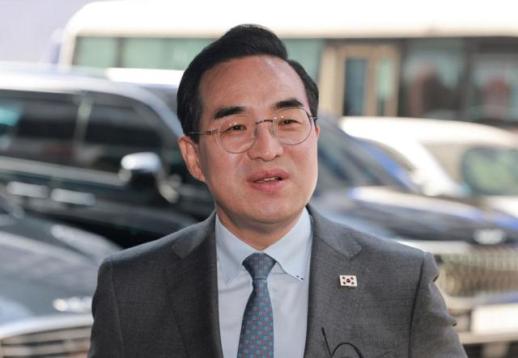 New nominees tapped to lead Budget and Oceans ministries SEOUL, March 2 - Nominees to fill two vacant ministerial posts were tapped as part of a minor cabinet reshuffle, Cheong Wa Dae said on Monday. In a press briefing in Seoul, Lee Kyu-yeon, the presidential senior secretary for public relations and communications, said that President Lee Jae Myung, currently on a trip to Singapore and the Philippines, has named veteran lawmaker Park Hong-keun and senior official Hwang Jong-woo to head the Ministry of Planning and Budget and the Ministry of Oceans and Fisheries, respectively. The secretary said Park, a four-term lawmaker who previously served as the ruling Democratic Party (DP)'s floor leader and held other key positions helping to draw up the blueprint for the administration and other state affairs, is "the right person" to lead the inaugural ministerial post. If Park is appointed after a confirmation hearing at the National Assembly, he will become the first budget minister to fill the post that has remained vacant since the previous nominee Lee Hye-hoon, a former lawmaker of the conservative People Power Party (PPP). She was tapped by the president in a surprise move late last year but was forced to resign about a month later amid allegations including tantrums toward subordinates, anger management issues, and suspicious real estate dealings. As for Hwang, the secretary said the senior official, who previously held major posts at the Oceans Ministry and hails from Busan, would be well-suited to push ahead with the country's ambitious project to expand its Arctic shipping routes. Once appointed, he will replace former Oceans Minister Jeon Jae-soo, who stepped down in December last year amid allegations of accepting bribes from the powerful religious sect Unification Church, also known as the Moonies. 2026-03-02 17:27:09
 -
 Presidential chief of staff leaves for UAE to discuss AI and defense cooperation SEOUL, February 24 (AJP) - Presidential chief of staff Kang Hoon-sik left for the United Arab Emirates (UAE) on Tuesday to discuss cooperation in economic and defense sectors, artificial intelligence (AI) and other areas with the Middle Eastern country. In a Facebook post, Kang said he was embarking on a three-day trip for working-level consultations to discuss follow-up measures after President Lee Jae Myung's state visit to the UAE in November last year. Kang also said the trip serves as a return visit following Khaldoon Khalifa Al Mubarak, managing director of Abu Dhabi's Executive Affairs Authority, traveled to South Korea last month. Kang's trip also comes just months after his previous visit to the UAE, during which he met with Al Mubarak and prepared for Lee's summit with UAE President Mohammed bin Zayed Al Nahyan. At the time, the two leaders discussed opening a high-level dialogue channel and expanding cooperation on AI, while also exploring ways to jointly enter the global nuclear power market by leveraging experience gained from the construction of a nuclear power plant in Barakah, the Arab world's first commercial facility of its kind. 2026-02-24 15:38:56
 -
 South Korean citizens proposed for Nobel Peace Prize for defending democracy SEOUL, February 19 (AJP) - South Korean citizens have been proposed for the Nobel Peace Prize for defending democracy by stopping former disgraced President Yoon Suk Yeol's martial law debacle in 2024. A group of professors led by Kim Eui-young at Seoul National University submitted a recommendation to the Norwegian Nobel Committee last month, proposing the citizens collectively as a candidate for the Nobel Peace Prize. The group includes Pablo Oñate, a professor at the University of Valencia and former president of the International Political Science Association (IPSA); David Farrell, a professor at the University College Dublin and former president of the European Political Science Association (EPSA); and Azul Aguiar, a professor at the University of Guadalajara and president of the Latin American Political Science Association. Sharing the news on X, formerly Twitter, earlier this week, Lee said, "get it done." He added, "It was possible because this is , a great nation of great people that will stand as a model in human history." The committee, which oversees the annual prize, accepted nominations by the end of last month, with its shortlisted candidates to be announced in early March. The final winner will be decided in October. On Dec. 3 last year, marking the first anniversary of Yoon's botched declaration of martial law, Lee said in an address to the nation that South Koreans deserved the prize. He added that such a recognition would be a "major turning point" for countries shaken by conflict and division, while demonstrating the strength of democracy and promoting peace. 2026-02-19 11:20:59
 -
 Lee congratulates Japan's PM on landslide election win SEOUL, February 9 (AJP) - President Lee Jae-myung on Monday congratulated Japanese Prime Minister Sanae Takaichi on her party's landslide victory in a snap election the previous day. In a post on X, formerly Twitter, Lee said he "sincerely congratulates" the ruling Liberal Democratic Party (LDP)-led coalition on securing a majority in Japan's House of Representatives. Wishing for Japan's continued development under Takaichi's leadership, he recalled his summit with her in Nara in January marked a "strong step forward" toward another 60 years of bilateral relations. Lee expressed hope for continued "broader and deeper cooperation" between the two neighbors, saying he will look forward to welcoming Takaichi in Seoul soon for the next round of shuttle diplomacy. According to public broadcaster NHK, the LDP secured 316 of 465 seats in the Diet, up 128 from its previous 198, surpassing the two-thirds threshold of 310 needed to propose constitutional amendments. The island country's first female prime minister had called the election just four months after becoming party leader in a bid to further consolidate her power. 2026-02-09 15:20:18
 -
 Lee honors war veterans, others with Lunar New Year gifts SEOUL, February 4 (AJP) - President Lee Jae Myung has extended Lunar New Year greetings through gifts to war veterans, the underprivileged, and other vulnerable groups, with the country's biggest holiday just around the corner, Cheong Wa Dae said on Wednesday. The gift package contains a bowl-and-spoon set and ingredients for hearty meals consisting of grains, vegetables, and other local staples selected from across the country, as part of efforts to promote regional development and national unity. More specifically, it features rice from Daegu; other grains from Buan, North Jeolla Province, Yeongwol, Gangwon Province, and Jeju Island; soy sauce from Yangpyeong, Gyeonggi Province; and mushrooms from Cheongyang, South Chungcheong Province. Recipients include prominent figures who have contributed to the country's development, war heroes and their families who sacrificed their lives for the country, and victims who fought for democracy. The gifts reflect Lee's hope that warm, home-cooked meals will bring calm and consolation to recipients' daily lives. In a message, Lee said, "I hope the whole family can sit together around a warm table," adding, "I will work even harder so that tomorrow will be better than today and help you feel real change in your lives." 2026-02-04 15:34:31
 -
 Constitution Day to be national holiday again SEOUL, February 3 (AJP) - Constitution Day on July 17 will become a national holiday again this year, Cheong Wa Dae said on Tuesday. The Cabinet meeting chaired by President Lee Jae Myung decided to restore Constitution Day as a national holiday to raise public awareness of the spirit of the Constitution. The day, which commemorates July 17, 1948, when the Constitution was promulgated, had been observed as one of major national holidays along with March 1 Independence Movement Day, Liberation Day, and National Foundation Day, until it was struck from the list in 2008. Likewise, Hanguel Day was also reinstated in 2012 after being eliminated in 1991. 2026-02-03 17:23:07
 -
 South Korea says Trump tariff remarks tied to delay in U.S.-investment bill Cheong Wa Dae said it views President Donald Trump’s remarks about raising tariffs as stemming from U.S. dissatisfaction over delays in passing a “special act for strategic investment management” with the United States, and said it will explain to Washington that parliamentary procedures are required. Kim Yong Bum, Cheong Wa Dae’s senior presidential secretary for policy, told a briefing at Chunchugwan on Monday that Trump’s comments could be interpreted as frustration that implementation of a tariff agreement has been slowed because the bill has not been processed quickly in the National Assembly. Kim said the U.S. side wants investment projects based on a strategic investment memorandum of understanding to begin soon, adding that there has been communication that once the law passes and procedures move quickly, the two sides could discuss the projects. He said the government will more fully explain in February that legislation is needed and will detail to the U.S. side the efforts being made with the National Assembly. Kim again stressed that National Assembly ratification is not required for the investment agreement, saying there was no disagreement between South Korea and the United States on that point when the deal was reached. On President Lee Jae Myung’s decision to end a temporary suspension of heavier capital gains taxes for owners of multiple homes, Kim said the measure will expire as previously announced, calling it a principle for how the administration will operate going forward. He said the government is reviewing whether to allow a set period for transactions to be completed after contracts are signed on May 9. A Cheong Wa Dae official said the suspension will end, but the government will closely monitor market conditions and design detailed measures to avoid unreasonable outcomes as the heavier tax rates take effect. Lee wrote on X on Thursday that “even a single home can be different depending on circumstances,” and said that if tax rules must be adjusted, it may be fair to treat nonresidential and residential homes differently. He added that he is not considering any extension of the multi-home capital gains tax exemption set to expire May 9. Lee also wrote that not only multiple homes but also a single nonresidential home used for investment or speculation can look undeserving of tax breaks simply for being held long term, and said the long-term holding deduction can discourage listings and encourage speculation. He added that he is not changing the tax system immediately, but said the issues are worth debating. If the suspension is not extended, in designated regulated areas, owners of two homes would face an additional 20 percentage points in tax rates and owners of three homes an additional 30 percentage points, and they would no longer be eligible for the long-term holding deduction. The basic tax rates were introduced under the Moon Jae In administration in 2021, but were suspended through an enforcement decree revision when the Yoon Suk Yeol administration took office on May 9, 2022, and the suspension has been extended annually.* This article has been translated by AI. 2026-01-28 18:57:00
 -
 Lee Jae Myung urges expanded defense, energy cooperation with Qatar in meeting with emir’s envoy President Lee Jae Myung asked Qatar to expand cooperation with South Korea in areas including defense, the defense industry and energy, his office said Tuesday. Cheong Wa Dae spokesperson Kim Nam Jun said in a written briefing that Lee met in the morning with Mohammed bin Abdulaziz Al-Khulaifi, a special envoy of Qatar’s emir. Lee said the envoy’s swift visit after last week’s phone call with Emir Sheikh Tamim bin Hamad Al Thani showed “the two countries’ firm commitment to cooperation.” He said he hoped the visit would further strengthen “mutually beneficial cooperation” in strategic fields including defense and the defense industry, investment and energy. Al-Khulaifi said he came to personally convey the emir’s “special trust” in South Korea and his will to deepen cooperation. He added he would work to carry out the two leaders’ shared commitment to advancing South Korea-Qatar relations. Lee noted the two countries have maintained diplomatic ties for more than 50 years and have upgraded their relationship to a “comprehensive strategic partnership.” He said he hoped they would remain true friends who help each other in difficult times and contribute together to regional and international peace amid a complex global situation. Lee also asked the envoy to pass along his hope to hold a candid discussion in Seoul with the emir on ways to develop bilateral ties. In a phone call on Jan. 20, Lee told the emir the two countries should continue expanding cooperation across a range of fields. The emir said South Korea, Qatar’s “comprehensive strategic partner,” has made major contributions to Qatar’s national development, based on Qatar’s trust in and expectations for South Korea. * This article has been translated by AI. 2026-01-28 17:45:00
 -
 Lee to visit memorial altar to pay respects to late PM SEOUL, January 27 (AJP) - President Lee Jae Myung plans to pay his condolences to the late former Prime Minister Lee Hae-chan, Cheong Wa Dae said on Tuesday. According to senior presidential aide Cho Jung-sik, Lee is scheduled to visit a memorial altar at Seoul National University Hospital in central Seoul later in the day, after wrapping up his official duties for the day. The seven-term lawmaker collapsed during his business trip to Viet Nam last Saturday and died of cardiac arrest at a hospital in Ho Chi Minh City the following day. Mourning his death, the president earlier said, "South Korea has lost a great teacher in the history of democracy." 2026-01-27 15:44:48