

Journalist

Oh Joo-Seok
farbrother@ajunews.com
-
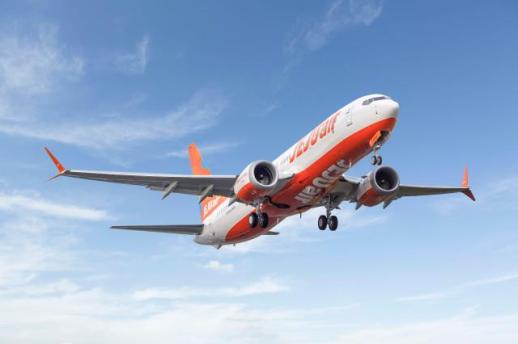 Jeju Air Celebrates 20th Anniversary as Top Low-Cost Carrier Jeju Air, South Korea's low-cost carrier (LCC), marked its 20th anniversary on June 5. The airline has been credited with popularizing air travel in the country by maintaining cost competitiveness and operational efficiency through its single aircraft type strategy. Jeju Air began operations on June 5, 2006, with flights between Gimpo and Jeju. It quickly expanded to include routes from Gimpo to Busan and from Busan to Jeju, establishing itself in the domestic LCC market. In 2009, the airline entered the international market by launching flights from Incheon to Osaka, subsequently expanding its routes to Japan, China, and Southeast Asia. The airline's passenger transport numbers have steadily increased. From 2006 to 2025, Jeju Air recorded an average annual passenger growth rate of 22.7%. It has maintained the top position in annual passenger numbers among domestic LCCs for 20 consecutive years. In its first year, Jeju Air transported 250,000 passengers, surpassing 10 million in 2017. By July 2023, it became the first domestic LCC to exceed a cumulative total of 100 million passengers, reaching 137.55 million by the end of last month. The airline's growth is attributed to its single aircraft type strategy. Since introducing the Boeing 737-800NG in 2008, Jeju Air has maintained a uniform fleet. Recently, it has accelerated the modernization of its fleet by expanding the introduction of the next-generation Boeing 737-8, aiming to enhance cost competitiveness through more fuel-efficient aircraft. Currently, Jeju Air operates 44 passenger aircraft. From 2023 to May, it acquired 12 Boeing 737-8s while also retiring and selling older aircraft. The airline is also focused on optimizing route operations, implementing a flexible route strategy that adapts to demand changes, particularly for medium- and short-haul flights to Japan, China, and Southeast Asia. A Jeju Air official stated, "Over the past 20 years, we have grown by securing cost competitiveness and operational efficiency based on our single aircraft type operation." Meanwhile, Jeju Air continues to perform well despite challenges in the aviation industry due to global oil prices. According to the Ministry of Land, Infrastructure and Transport's aviation information portal, Jeju Air transported 1,127,370 passengers in April, a 20.3% increase from 936,899 during the same period last year. The overall load factor was 91.9%, 2.4 percentage points higher than the average load factor of 89.5% for LCCs.* This article has been translated by AI. 2026-06-05 17:30:00
 -
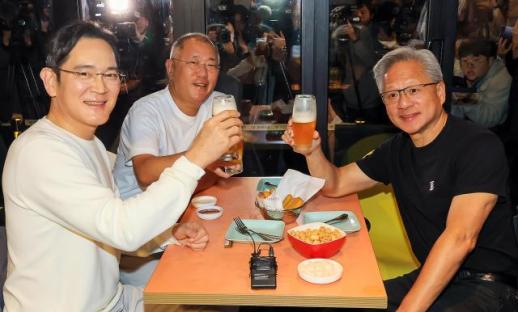 Jensen Huang and Chung Eui-sun Prepare for Second Meeting on Autonomous Vehicles and Robotics Jensen Huang, CEO of NVIDIA, is visiting South Korea, and Hyundai Motor Group is closely monitoring the situation as they anticipate a second meeting with Huang. Most of Hyundai's future business ventures, including autonomous vehicles, humanoid robots, and artificial intelligence (AI), are closely linked to NVIDIA's technology, which could have significant implications if a meeting occurs. According to industry sources, Chung Eui-sun, Chairman of Hyundai Motor Group, is not expected to attend the upcoming meeting with Huang, which will include SK Group Chairman Chey Tae-won, LG Group Chairman Koo Kwang-mo, and Naver Chairman Lee Hae-jin at a barbecue restaurant near Hongdae in Seoul on June 5. However, industry insiders predict that Huang will likely meet with Chung at Hyundai's headquarters in Yangjae after visiting the AI research center and robotics lab at Seoul National University on June 8. If this meeting takes place, it would mark the second encounter since their initial meeting last year. The relationship between Chung and Huang dates back to the APEC summit last year when Huang visited South Korea. During that visit, he solidified their partnership over a meal of chicken and beer at Kkanbu Chicken in Samsung-dong, Seoul, alongside Lee Jae-yong. Since the so-called "Kkanbu meeting," industry experts have noted that collaboration between Hyundai Motor Group and NVIDIA has accelerated. This partnership led to Hyundai receiving 50,000 Blackwell GPUs, which are AI accelerators. Hyundai is leveraging Blackwell to drive innovations in autonomous vehicles, AI data centers, and robotics. Among Hyundai's future projects, autonomous driving technology is the most closely tied to NVIDIA. The company is developing a universal platform capable of supporting autonomous driving from Level 2+ to Level 4, based on NVIDIA's Drive Hyperion platform. To facilitate this, Hyundai appointed Park Min-woo, a former NVIDIA executive, as the head of its AVP division. Last month, the company also hired Lee Hee-seok, another former NVIDIA employee, to expedite the commercialization of autonomous driving technology. Hyundai's robotics initiatives are also expected to benefit directly from this collaboration. Its subsidiary, Boston Dynamics, is equipping its humanoid robot, Atlas, with NVIDIA's Jetson Thor, a dedicated AI computing platform for robots. The two companies are also developing a robotics foundation model that enables robots to understand and mimic human language and actions without programming. A Hyundai representative stated, "We are closely watching the news of Jensen Huang's visit to South Korea," but added, "It has not yet been decided whether a meeting between the two chairmen will take place."* This article has been translated by AI. 2026-06-05 14:33:00
 -
 ZEEKER Launches 7X Mid-Size Electric SUV in South Korea ZEEKER, a premium electric vehicle brand from China, has officially entered the South Korean market with the launch of its mid-size electric sports utility vehicle (SUV) 7X. On June 5, ZEEKER Korea announced that the 7X is now on display and available for pre-order at nine showrooms across the country, including in Seoul. The 7X is a facelift model making its debut outside of China. Designed as a pure five-seater electric SUV, it is built on Geely Automobile Group's dedicated electric vehicle platform (SEA). Initially unveiled in 2024, the model has gained popularity, surpassing 400,000 global sales within just 37 days of its release. Despite its mid-size SUV dimensions, the 7X offers ample interior space, measuring 4,800 mm in length, 1,920 mm in width, 1,650 mm in height, and a wheelbase of 2,900 mm. The trunk capacity reaches 539 liters. The domestic lineup includes three trims: Pro, Max, and Ultra. The Pro trim features a 75 kWh lithium iron phosphate (LFP) battery, while the Max and Ultra trims are equipped with a 100 kWh nickel-cobalt-manganese (NCM) battery. Both the Pro and Max trims utilize a rear-wheel drive (RWD) single motor, delivering a maximum output of 421 horsepower. According to the Ministry of Environment's certification, the driving range on a single charge is 375 km for the Pro trim and 483 km for the Max trim. The Ultra trim features an all-wheel drive (AWD) system with two electric motors, producing a peak output of 645 horsepower and maximum torque of 72.4 kg·m. It can accelerate from 0 to 100 km/h in just 3.9 seconds, with a driving range of 440 km on a single charge. The 7X incorporates an 800V high-voltage system, supporting ultra-fast charging of up to 360 kW globally. Charging from 10% to 80% takes approximately 13 minutes for the Pro trim and about 16 minutes for the Max and Ultra trims. ZEEKER Korea plans to expand its showrooms to 14 by the end of the year and will operate 11 service centers nationwide, including one in Jeju. A ZEEKER Korea representative stated, "The ZEEKER 7X is set to redefine the standard for luxury family SUVs, enhancing the quality of life for family members beyond just a means of transportation." ZEEKER is the second Chinese electric vehicle brand to enter South Korea, following BYD. Earlier this month, it officially launched its first brand gallery in Daechi-dong, Gangnam-gu, Seoul, marking its entry into the South Korean market. ZEEKER Korea is expected to expand its lineup with various models following the launch of the 7X.* This article has been translated by AI. 2026-06-05 11:00:00
 -
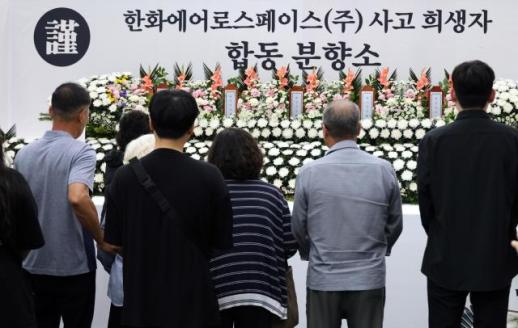 Hanwha Aerospace Opens Memorial for Victims of Daejeon Explosion Hanwha Aerospace announced on June 5 that it has established a memorial service for the five victims of the Daejeon explosion at ten locations nationwide. The memorials will be open from 9 a.m. to 6 p.m. daily until June 25. Locations include the Hanwha Building in Janggyo-dong, Seoul, as well as facilities in Changwon (Sites 1, 2, and 3), Asan, Daejeon, the Daejeon R&D Center, Boeun, Yeosu, and the Pangyo R&D Center. A Hanwha Aerospace representative expressed condolences, stating, "We extend our deepest sympathies to the families of the victims and have created this memorial space for all employees to pray for the souls of the deceased." In the wake of the incident, Hanwha Aerospace has suspended production lines, excluding essential processes, and has initiated special safety inspections and training. Following the explosion, Hanwha Group and Hanwha Aerospace released a statement expressing their sorrow, saying, "We are heartbroken and saddened by the loss of our five valued employees. We offer our deepest condolences and heartfelt sympathies to the families of the deceased."* This article has been translated by AI. 2026-06-05 10:12:00
 -
 Woojin Industrial Systems to Ship Upgraded LA Metro Trains by Year-End Woojin Industrial Systems, a South Korean railway company, is making significant progress on its project to upgrade aging trains for the Los Angeles Metro. The first batch of upgraded trains is set to be shipped to the United States by the end of this year. On June 5, Woojin Industrial Systems announced that it will ship the initial set of upgraded LA Metro A650 trains, a project commissioned by the Los Angeles County Metropolitan Transportation Authority (LACMTA). This project involves a comprehensive upgrade of the A650 trains, which have been in service for over 30 years. Woojin secured the contract, valued at approximately $220 million, in May 2024. The company has established a dual production system linking South Korea and the U.S. to manage the LA Metro upgrade project. The first four upgraded train sets will undergo test operations at the Chungbuk Osong Railway Comprehensive Test Center before being shipped to the U.S. later this year. The remaining 33 train sets will be upgraded at a newly completed facility in Carson, California. Key components such as propulsion control systems, train control monitoring systems, heating and cooling systems, and passenger information displays will be replaced. The upgraded trains are expected to begin operations in time for the opening of the 2028 LA Olympics. Woojin plans to leverage its local production capabilities to pursue additional contracts in the U.S. A Woojin representative stated, "This upgrade project is a large-scale initiative that involves a complete overhaul of the train's exterior and interior, as well as the propulsion control and auxiliary power systems, and train control systems. We aim to use this project as a stepping stone to accelerate our entry into overseas markets." According to the Financial Supervisory Service's electronic disclosure system, Woojin Industrial Systems reported a revenue of 556.4 billion won last year, a 2.1% increase from 544.8 billion won the previous year. Operating profit was recorded at 48.1 billion won. 2026-06-05 09:18:00
 -
 Kolon Mobility Group Acquires AutoHub Selca to Enter Auto Auction Business Kolon Mobility Group, a domestic importer of vehicles, is entering the auto auction business. On June 4, Kolon Mobility Group announced that it has acquired a 100% stake in AutoHub Selca, a company specializing in auto auctions. AutoHub Selca operates a large auction house in Anseong, Gyeonggi Province. With this acquisition, Kolon Mobility Group aims to complete an integrated value chain covering the entire lifecycle of vehicles, from new car purchases to resale. The company will also strengthen its procurement channels for its used car platform, '702 Certified Used Cars.' Industry experts believe that this value chain development will serve as a significant opportunity to enhance various business areas, including rental cars, vehicle repairs, and warranty extensions. Kolon Mobility Group has declared its goal to achieve a corporate value of 1 trillion won by next year through business model diversification. Choi Hyun-seok, CEO of Kolon Mobility Group, stated, "The acquisition of AutoHub Selca is a strategic decision to fundamentally enhance the competitiveness of the 702 Certified Used Cars business and to set a new standard in South Korea's used car market." According to the Ministry of Land, Infrastructure and Transport, the domestic used car market is expected to reach approximately 2.42 million units annually by the end of 2024, surpassing the new car market, which stands at around 1.67 million units. 2026-06-04 18:24:00
 -
 Thermal Management Emerges as Key Factor in Electric Vehicle Market The thermal management system, which affects the driving range and charging speed of electric vehicles, is emerging as a new opportunity for the automotive parts industry. As the transition to electrification accelerates, competition to dominate the thermal management parts market is intensifying. According to industry sources, Hyundai Wia has signed a supply contract for a thermal management system for the PBV (Purpose Built Vehicle) PV7, set to be launched by Kia next year. This expands the supply of thermal management systems from the previously supplied PV5 to the new model. Hyundai Wia is positioning thermal management systems, a core component of electrification, as a future growth driver and is fostering related industries. Earlier this year at CES 2026 in Las Vegas, the company unveiled an Integrated Thermal Management System (ITMS), a cooling module, and a slim heating, ventilation, and air conditioning (HVAC) system. As the growth potential of internal combustion engine vehicles slows, Hyundai Wia is ramping up its thermal management parts business. A company representative stated, "We are increasing investments to maintain profitability in our existing internal combustion engine business while developing thermal management systems as a future growth engine. We plan to expand our supply range in line with global automakers' electrification model expansion plans." Typically, electric vehicles require more stringent temperature management than internal combustion engine vehicles, as the battery and motor must operate at optimal temperatures to maintain stable driving ranges. The electrification model is expected to gradually expand in the domestic automotive market. The Hyundai Motor Group aims to establish a lineup of 31 electric vehicles by 2030 as part of its electrification strategy. Notably, next year will see the launch of the first long-range electric vehicle (EREV) model, which will offer a driving range of over 600 miles (approximately 965 km), increasing the importance of the thermal management system. Hanon Systems, a leading player in the domestic thermal management market, is directly benefiting from the electrification of the mobility industry. The company supplies battery thermal management systems for electric vehicles (EVs), hybrid vehicles (HEVs), plug-in hybrid vehicles (PHEVs), and hydrogen fuel cell vehicles (FCEVs) to global automakers. According to financial information firm FnGuide, Hanon Systems is projected to see its operating profit consensus for the second quarter of this year reach 109.1 billion won, a 69.7% increase compared to 64.3 billion won in the same period last year. Industry experts believe that as electric vehicle technology advances, the importance of supporting thermal and energy management technologies will grow. Professor Kim Pil-soo of Daelim University’s Future Mobility Department stated, "The higher the performance of electric vehicles, the more the level of thermal management technology determines performance and efficiency. As the adoption of electrified vehicles expands, the related market growth trend will continue." 2026-06-04 18:03:00
 -
 Hanwha Aerospace Halts Production Lines for Safety Checks Following Fatal Explosion Hanwha Aerospace has suspended production across its facilities nationwide and initiated a comprehensive safety inspection following an explosion at its Daejeon plant that resulted in five fatalities. Starting June 4, Hanwha Aerospace announced it would halt operations at all production lines, except for essential processes, to conduct special safety inspections and training. The inspections will take place over two days, concluding on June 5. The affected sites include the Daejeon, Chungbuk Boeun, and Jeonnam Yeosu plants, which produce propellants and detonators, as well as the Changwon plants 1, 2, and 3, which manufacture K9 self-propelled howitzers, armored vehicles, and aircraft engines. The inspections will also cover the Daejeon, Pangyo, and Asan research and development campuses, totaling nine facilities nationwide. This marks the first time since the establishment of the integrated corporation in 2023 that Hanwha Aerospace has simultaneously halted production across all its sites. The company stated that it prioritized ensuring a safe working environment over production continuity to prevent risks similar to those that led to the recent Daejeon incident. Industry insiders interpret this production halt as a response to the safety management controversies that have arisen following the accident. According to Hanwha Aerospace's 2025 Sustainability Management Report, the safety and health investment budget for 2024 was 3.5 billion won, representing only 0.03% of total sales (11.24 trillion won). This figure is a 51.4% decrease from the 7.2 billion won allocated for safety in 2023. Hanwha Aerospace will conduct a comprehensive review of fire and explosion hazards, major accident risks, unsafe conditions and facilities, risk assessment results, and domestic and international accident cases at each facility. The company will reassess machinery, working environments, and structural conditions, as well as verify the implementation of improvement measures and recurrence prevention strategies based on risk assessments conducted over the past three years. Particularly at the Daejeon, Boeun, and Yeosu plants, which handle explosives, the inspections will focus on the use of personal protective equipment, grounding systems, humidity and temperature control, tool management, and the condition of safety equipment. The facilities will also review the management of storage and disposal of explosives and conduct emergency response training based on hypothetical scenarios. Additionally, Hanwha Aerospace is considering expanding automation in the production and handling processes of propellants to achieve zero safety incidents in the long term, even for processes deemed to have lower risk. On June 4 and 5, special safety training will be provided to employees, sharing similar accident cases from both domestic and international contexts, educating on the right to stop work in urgent situations, and revising emergency response plans for each organization. A Hanwha Aerospace official stated, "This integrated safety inspection is being conducted to reassess the origins of the accident." Meanwhile, in light of the recent incident, Hanwha Group has decided to conduct thorough environmental and safety inspections at its petrochemical subsidiaries, including Hanwha, Hanwha Solutions, Hanwha TotalEnergies, Hanwha Impact, and YNCC, across domestic and international operations.* This article has been translated by AI. 2026-06-04 09:51:00
 -
 Hyundai Glovis Strengthens European Market Presence with Logistics Hub in Amsterdam Hyundai Glovis is establishing a large-scale supply chain hub at the Port of Amsterdam to target the European finished vehicle logistics market. The company aims to enhance its competitiveness in Europe by creating an integrated logistics system that encompasses vehicle storage, quality inspection, and inland transportation. According to industry sources on June 4, Hyundai Glovis recently signed an agreement with the Port of Amsterdam Authority to build a European finished vehicle supply chain hub. The signing ceremony was attended by Lee Kyu-bok, CEO of Hyundai Glovis, and Koen Overtoom, CEO of the Port of Amsterdam Authority. Under the agreement, Hyundai Glovis will develop a dedicated logistics base on a 480,000-square-meter site at the Port of Amsterdam. The facility will include berths capable of accommodating up to three car carriers simultaneously, a yard that can store over 20,000 vehicles, and quality inspection facilities before delivery. Plans also include utilizing rail connections for transportation. The terminal is set to begin operations in January 2027, managed by Hyundai Glovis Europe (GEU). This marks the first time Hyundai Glovis has secured a dedicated port facility for finished vehicle logistics in Europe. Hyundai Glovis plans to offer a one-stop logistics service connecting the port and inland areas. Vehicles imported into Europe will undergo unloading, storage, and quality checks before being delivered to dealers across the continent. Similarly, vehicles produced locally in Europe will be transported inland to the Port of Amsterdam for storage and shipping. The logistics hub at the Port of Amsterdam is expected to become a global export gateway for finished vehicles. According to the European Automobile Manufacturers Association (ACEA) and Eurostat, the volume of vehicle exports and imports in Europe is projected to rise from 10 million units in 2025 to 11.4 million in 2028 and 12.4 million by 2030. Notably, Germany and the Benelux countries account for approximately 28% of total demand in Europe. Hyundai Glovis is expanding its global automotive logistics network by establishing dedicated terminals at Pyeongtaek Port and a finished vehicle yard at the Port of Philadelphia in the United States. Lee Sang-jin, head of Hyundai Glovis Europe, stated, "We plan to develop Amsterdam into a European finished vehicle supply chain hub encompassing vehicle storage, quality inspection, delivery, and inland transportation. We will provide our clients with more stable and efficient integrated logistics services." Meanwhile, Hyundai Glovis reported that its distribution segment revenue for the first quarter of this year reached 3.87 trillion won, a 10.3% increase compared to the same period last year. Industry analysts attribute this improvement to increased demand for parts transportation due to the expansion of semi-knocked down (CKD) production by domestic automakers.* This article has been translated by AI. 2026-06-04 08:51:00
 -
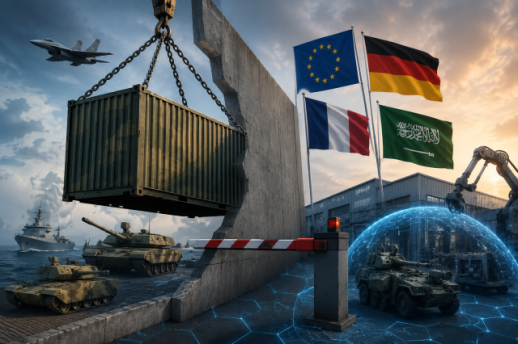 Global Protectionism Challenges K-Defense Exports Amid Local Production Demands As countries accelerate their defense self-sufficiency, the export formula for K-Defense is facing significant challenges. The environment has become increasingly difficult, where quick delivery and price competitiveness alone may not guarantee large contracts. Experts suggest that securing new competitive advantages, such as local production and technology transfer, is essential. Price and Localization Leave K-Defense Vulnerable to 'Buy European' Policies According to industry sources, Hanwha Aerospace recently failed to secure a contract for Romania's next-generation infantry fighting vehicle (IFV) project. The Romanian Ministry of Defense announced on May 29 that it had selected Germany's Rheinmetall as the final contractor through the European Security Action (SAFE) program. This project, aimed at replacing the aging infantry fighting vehicles currently in use by the Romanian military, has a total budget of €3.337 billion (approximately 5.9 trillion won). Hanwha Aerospace and Rheinmetall were in competition for the final contractor selection. In terms of competitiveness, Hanwha Aerospace was not at a disadvantage. It proposed supplying 298 AS21 Redback vehicles for €2.8 billion, while Rheinmetall offered 232 KF41 Lynx vehicles for €2.59 billion. On a per-unit basis, the Redback (approximately €9.35 million) was cheaper than the Lynx (€11.16 million). Hanwha Aerospace also met the Romanian government's requirement for 'complete localization,' proposing to increase local production from 80% to 90% in the long term. In contrast, Rheinmetall reportedly proposed a localization rate of around 40%. Despite this, the Romanian government chose Rheinmetall. Industry analysts note that the European Union's policy to foster domestic defense industries may have influenced this decision. The growing 'Buy European' sentiment is raising the barriers for foreign companies seeking contracts. In the Middle East, the trend of prioritizing domestic production is also intensifying. For instance, Saudi Arabia has committed to procuring over 50% of its defense spending through domestic defense companies as part of its Vision 2030 initiative. As a result, local production and industrial cooperation are becoming key factors in major projects pursued by domestic defense firms, including Hanwha Aerospace's K9 self-propelled howitzer and Redback, Hyundai Rotem's K2 tank, and LIG Nex1's L-SAM. K-Defense Must Revise Export Strategy The increasing demands for local production and technology transfer in Europe and the Middle East stem from a heightened awareness of defense self-sufficiency following the Russia-Ukraine war. Initially, European countries relied on South Korean weapons due to a lack of production capacity. Quick delivery and reasonable pricing enabled K-Defense to penetrate the European market. However, as the war has prolonged, European nations have recognized the importance of expanding production facilities and establishing joint procurement systems, diminishing the 'gap-filler' role that South Korean defense had previously enjoyed. Choi Gi-il, a professor at Sangji University, stated, "Just a few years ago, European defense companies lacked sufficient production capacity, allowing K-Defense to fill the gaps. However, with Germany and France rapidly recovering their production capabilities, the competitive landscape is changing." Germany, a leading defense power in Europe, is increasing its total defense spending to €108.2 billion (approximately 170 trillion won) this year to enhance its domestic defense production capabilities. France is also expanding its defense investments and production capacity. Experts argue that K-Defense needs to find new breakthroughs to succeed in Europe and the Middle East, emphasizing the need for enhanced local cooperation and cross-industry collaborations. Nam Myung-ryul, head of the K-Defense Center at Korea University, remarked, "We must go beyond merely selling weapons to establishing local production facilities and proposing industrial cooperation models. A package cooperation strategy that links defense with industries where Korea has strengths, such as energy, artificial intelligence, and information and communication technology, is essential." 2026-06-02 16:12:00