

Journalist

Oh Joo-Seok
farbrother@ajunews.com
-
 Zero Subsidies for Mid-Sized Electric Trucks Despite Demand This year, the newly established subsidy for mid-sized electric trucks has yet to disburse any funds. While manufacturers exist and there is clear demand for purchases, mid-sized electric trucks are rarely seen on the roads. With half the year gone, widespread adoption remains elusive. The government introduced a subsidy for mid-sized and larger electric trucks in January 2026, as part of its "2026 Electric Vehicle Supply Project Subsidy Management Guidelines." It allocated up to 40 million won for electric cargo trucks weighing between 1.5 and 5 tons, and up to 60 million won for trucks over 5 tons. This expansion of support, previously focused on 1-ton electric trucks, has garnered significant interest from the freight industry. However, the program has struggled to gain traction in the market. Tata Daewoo, which has entered the mid-sized electric truck market, reports difficulties in selling its 'Gisen' model. Even with government subsidies, the trucks are about 100 million won more expensive than internal combustion engine vehicles. The price of a Gisen truck ranges from 180 million to 200 million won. Despite using lithium iron phosphate (LFP) batteries to reduce costs, industry insiders have noted that selling these trucks often results in losses. The Ministry of Climate, Energy, and Environment, which established the mid-sized electric truck subsidy, is also in a difficult position. No vehicles have yet passed the certification process required for subsidy eligibility. The ministry explained that the evaluation process for manufacturers is taking longer than expected. As a result, there is a disconnect between policy and market realities. The government has created subsidies, but the vehicles are not ready, and while manufacturers have introduced trucks, consumers are hesitant to purchase. Although mid-sized trucks attract less attention than passenger cars, they are widely used in daily life. Most cleaning vehicles, moving trucks, and convenience store delivery vehicles in urban areas are mid-sized trucks. A significant number of vehicles also operate between logistics centers, factories, and ports. Given their repetitive routes, electrifying these vehicles could have a substantial impact. Mid-sized cargo trucks typically have longer operating distances and higher fuel consumption compared to passenger cars, making them effective for reducing emissions. Industry experts estimate that one mid-sized electric truck can have the carbon reduction effect equivalent to dozens of internal combustion engine passenger cars. Additionally, operating these trucks incurs lower fuel costs and minimal expenses for replacing consumables like engine oil. The longer they are in operation, the more economically viable they become. The widespread adoption of mid-sized electric trucks is no longer a matter of choice. The government aims to reduce greenhouse gas emissions by 40% from 2018 levels by 2030, as part of its Nationally Determined Contributions (NDC). The introduction of the mid-sized electric truck subsidy reflects the understanding that achieving carbon neutrality cannot rely solely on the electrification of passenger vehicles. Reducing emissions in the transportation sector is essential to meet these goals. However, transportation operators purchasing vehicles must prioritize economic viability over carbon considerations. While there is acknowledgment of the need to transition to electric vehicles, voices in the field express difficulty in making purchasing decisions due to vehicle prices, charging infrastructure, and maintenance costs. It is crucial to remember that trucks are ultimately a means of livelihood. The government also needs to reflect on its approach. What is needed now is to ensure that the system can operate at the same pace as the market. Lowering price accessibility is vital for expanding mid-sized commercial vehicles, but current government policies focused on protecting domestic industries have resulted in dissatisfaction for both consumers and manufacturers. In this context, the "zero subsidies for mid-sized electric trucks" is not just a number. It serves as a symbolic report card illustrating the significant gap between carbon neutrality policies and industrial realities. Achieving carbon neutrality cannot be accomplished through declarations alone.* This article has been translated by AI. 2026-06-02 05:03:00
 -
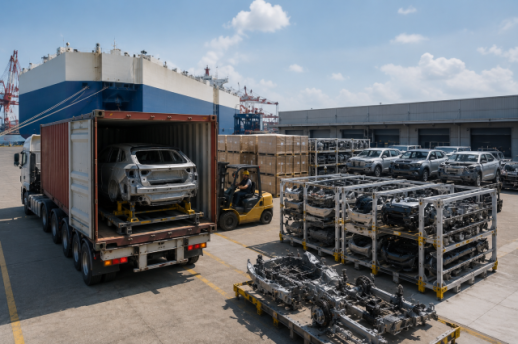 Hyundai Begins Electric Vehicle Production at Thailand CKD Plant, Accelerating Emerging Market Strategy 현대자동차그룹이 반조립제품(CKD) 생산 거점을 확대하고 있다. 완성차 수출 대신 현지 조립 생산을 통한 신흥시장 공략에 속도를 내는 모습이다. On June 1, industry sources reported that Hyundai Motor's Thailand subsidiary (HMTH) completed the establishment of its CKD facility in Samut Prakan Province last month and has officially begun mass production. The plant will primarily produce electric models, including the Ioniq series, with an annual production capacity of 5,000 units and a sales target of 3,000 units for this year. Thailand, a major automotive production hub in Southeast Asia, has an annual vehicle production volume of approximately 1.4 to 1.5 million units. The local government is promoting the transition to electric vehicles through subsidies and tax incentives, intensifying competition among global automakers to establish production bases in the region. Hyundai established its CKD production system two years after receiving approval from the Thailand Board of Investment (BOI) for an investment of about 1 billion baht (approximately $40 million) in 2024. CKD, or Completely Knocked Down, involves sending key components to local facilities for assembly instead of exporting finished vehicles. This approach reduces initial investment burdens and fosters positive relations with local governments, serving as a 'foothold' for entering emerging markets. Previously, Hyundai entered the Vietnamese market in 2011 through a partnership with the Thanh Cong Group using the CKD method, later establishing Hyundai Thanh Cong Manufacturing Vietnam (HTMV) in 2017 to increase its local market share. By the end of the year, a CKD facility will also be completed in Saudi Arabia, the largest market in the Middle East. Additionally, Hyundai operates CKD plants in over 15 countries, including Kazakhstan, Egypt, Pakistan, and Malaysia, enhancing its influence in Asia and the Middle East. A Hyundai official stated, "The Southeast Asian market is heavily influenced by Japanese brands, and recently, Chinese companies have intensified their presence, increasing the need for local joint CKD operations." Other domestic automakers are also focusing on expanding their CKD operations. Kia held a ceremony last year to inaugurate a CKD joint plant in Kostanay, Kazakhstan, and began production of the Sorento. KG Mobility plans to establish new CKD plants in Vietnam and Saudi Arabia this year. The expansion of CKD production is also contributing to growth in logistics. Hyundai Glovis reported a 10.3% increase in its distribution revenue for the first quarter of this year, totaling 3.87 trillion won compared to the same period last year. Industry analysts believe that the increased demand for parts transportation due to the expansion of CKD production by domestic automakers has contributed to this improvement. Moon Hak-hoon, a professor at Osan University’s Department of Future Automotive Engineering, noted, "CKD allows companies to avoid tariff burdens while expanding their market through local production, indicating a growing demand for CKD plants in emerging automotive markets."* This article has been translated by AI. 2026-06-01 18:03:00
 -
 Hanwha Aerospace CEO Apologizes After Explosion Kills Five Workers An explosion at Hanwha Aerospace's Daejeon facility on June 1 resulted in the deaths of five workers. CEO Son Jae-il expressed his condolences to the victims' families and the public during a press briefing, promising to investigate the cause of the accident and prevent future occurrences. During two joint briefings held that afternoon, Son stated, "We failed to protect the lives of our workers in a place that should be safe," and added, "As the representative, I feel a heavy sense of responsibility," bowing his head in remorse. The incident reportedly occurred in a cleaning area for rocket propellants at the Daejeon facility. Among the deceased, two were contract workers in their 20s, while the other three were full-time employees aged 30 and 50. It remains unclear if they were working in the same area at the time of the explosion. Gajae Woong, the head of the Daejeon facility, commented at the fire scene, "We believed the process was not highly dangerous, so we are surprised by this unexpected accident." He further explained, "Since water is used in the cleaning process, we are investigating the potential for a chemical reaction." The company stated it is fully committed to managing the aftermath of the incident and supporting the victims' families. Gajae Woong noted, "We are in continuous contact with the families to discuss support measures." The Hanwha Aerospace labor union has called for a thorough investigation into the incident. Heo Rok, the union's chairman, expressed his sorrow, stating, "Despite previous similar accidents in 2018 and 2019 that claimed many workers' lives, another tragedy has occurred before we could even forget the last one." He further asserted, "The recurrence of similar accidents in the same location is something that could have been foreseen. This incident is a result of neglecting and tolerating unsafe conditions." * This article has been translated by AI. 2026-06-01 17:57:00
 -
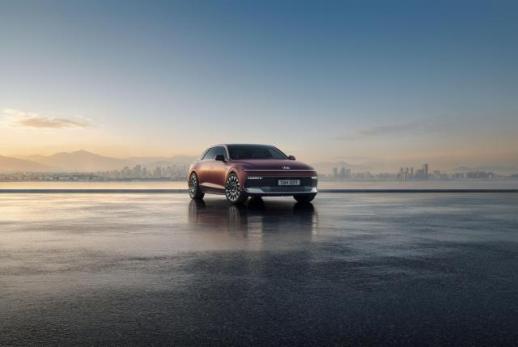 Hyundai Motor Reports 325,473 Global Sales in May, Down 7.7% Year-on-Year Hyundai Motor Company reported a slight decline in global sales last month due to supply chain disruptions affecting its partners. The company announced on June 1 that it sold a total of 325,473 vehicles worldwide in May, including 45,364 units in South Korea and 280,109 units overseas. This marks a 7.7% decrease compared to the same period last year. In the domestic market, sales fell by 23.1% year-on-year, totaling 45,364 units. The recently launched Grandeur, which began pre-orders last month, contributed significantly with 5,183 units sold. Hyundai unveiled the facelifted model, 'The New Grandeur,' at the end of April. Following the Grandeur, the Avante and Sonata sold 4,526 and 4,118 units, respectively, bringing the total sedan sales to 14,876 units. In the recreational vehicle (RV) segment, sales included 2,862 units of the Santa Fe, 2,575 units of the Ioniq 5, and 2,183 units of the Tucson, totaling 15,799 units. Commercial vehicle sales included 4,270 units of the Porter and 1,912 units of the Staria, amounting to 6,312 units. Medium and large buses and trucks recorded 2,216 units. Last month, Hyundai also launched the 2027 models of 'The New Mighty,' 'The New Pavis,' 'The Exient,' and 'The New Exient Hydrogen Electric Truck.' Genesis sold a total of 6,161 units, including 2,220 units of the G80, 1,798 units of the GV70, and 1,547 units of the GV80. Sales in overseas markets totaled 280,109 units, a 4.6% decrease compared to the same month last year. A Hyundai official stated, "The impact of reduced production due to supply chain disruptions from our partners is continuing this month, limiting the supply of key models. However, as deliveries of The New Grandeur ramp up this month, we expect sales performance to gradually recover."* This article has been translated by AI. 2026-06-01 16:48:00
 -
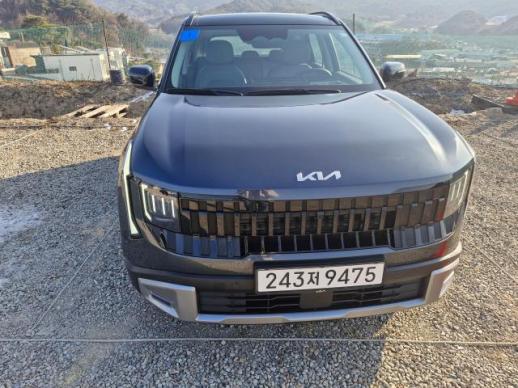 Kia Reports 277,715 Global Sales in May, Marking Three Consecutive Months of Growth Kia continued its strong performance in the global market last month, achieving three consecutive months of year-over-year sales growth. The company announced on June 1 that it sold a total of 277,715 vehicles globally in May, including 44,713 units in South Korea, 232,781 units overseas, and 221 special vehicles. This represents a 2.7% increase compared to the same period last year. While domestic sales fell by 0.6%, overseas sales rose by 3.4%, driving overall performance. The best-selling vehicle globally in May was the Sportage, with 52,293 units sold. The Seltos and K4 also showed solid performance, selling 29,208 and 21,488 units, respectively. In the domestic market, the Sorento topped sales with 7,836 units sold, followed by the Sportage (4,760 units), Carnival (4,543 units), and Seltos (3,169 units). Passenger cars sold included 3,419 units of the Ray, 2,237 units of the K5, and 2,234 units of the Morning, totaling 10,979 units. Recreational vehicles (RVs), including the Sorento, Sportage, and Carnival, accounted for 28,683 units sold. Commercial vehicles totaled 5,051 units, with 2,644 units of the Bongo III and 2,303 units of the PV5. In the overseas market, the Sportage was the top seller with 47,533 units sold. The Seltos and K4 also exceeded 20,000 units each. A Kia representative stated, "In the U.S., our sales strategy for hybrid SUVs and in Europe, our focus on popular electric vehicle lineups, have proven effective. We will continue to maintain sales momentum through region-specific strategies." 2026-06-01 16:21:00
 -
 AI Command in Action: LIG D&A Unveils Intelligent USV Demonstration Unmanned vessels operating under artificial intelligence (AI) command are becoming a reality. LIG Defense & Aerospace (LIG D&A) announced on June 1 that it held an "Intelligent Command and Control Demonstration for Unmanned Surface Vessels (USV)" on May 27 at Korea Maritime University in Busan, showcasing the operational capabilities of AI-based multi-purpose unmanned systems. The demonstration focused on the technology that integrates different types of unmanned systems under a single satellite communication system. The AI-based command and control system operated unmanned vessels, illustrating the future of warfare. Four vessels were deployed in the waters near Korea Maritime University, including the Haegum III, Haegum V, and two small multi-purpose unmanned surface vessels, Haegum S. Each fleet demonstrated scenarios for anti-surface and anti-submarine warfare. In the anti-surface scenario, the operation simulated an enemy vessel breaching the Northern Limit Line (NLL), executing plans from initial strategy development to warning shots, engagement fire, and unmanned vessel collision attacks. The anti-submarine scenario involved detecting enemy submarines, deploying sonobuoys, operating towed array sonar (TASS), launching Shark torpedoes, and confirming sinkings, all executed through the AI-based command and control system. LIG D&A explained that implementing this system could reduce the time from detection to decision-making and engagement to one-tenth of the current duration. Due to the nature of unmanned systems, continuous operations for 24 hours are also possible. In the future, LIG D&A plans to establish an open platform that can integrate various unmanned systems, while pursuing a strategy of "Open Platform, Closed Core" for independent learning and operation of defense data. Lee Seung-yong, CTO of LIG D&A, stated, "Integrating unmanned platforms and commanding the battlefield situation in real-time through AI is key to future defense competitiveness. We will continue to expand the integrated platform and promote early product commercialization to facilitate global package solution exports." A representative from Palantir remarked, "Our collaboration with LIG D&A has accelerated AI integration, and this demonstration showcases the achievements both companies have made in a short period." Meanwhile, as AI emerges as a cornerstone of future warfare, domestic defense companies equipped with big tech capabilities are also emerging. In South Korea, major firms like LIG D&A and Hanwha Systems, along with startups like MakinaRocks and Human Technology, are leading the development of domestic AI defense platforms.* This article has been translated by AI. 2026-06-01 11:30:00
 -
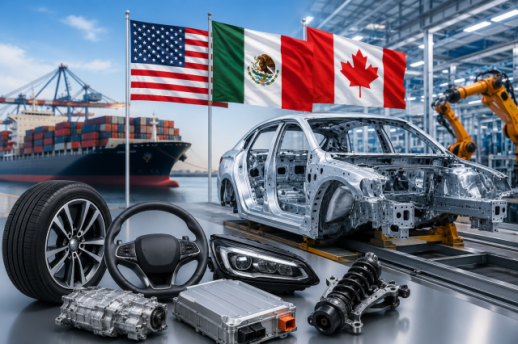 USMCA Negotiations Loom as U.S. Proposes 50% Domestic Content Rule for Auto Parts As the decision on whether to extend the United States-Mexico-Canada Agreement (USMCA) approaches in a month, the domestic automotive industry is on high alert. Reports indicate that the U.S. has proposed increasing the domestic content requirement for auto parts and materials to over 50%, raising concerns among companies operating in Mexico. According to industry sources, the U.S. and Mexico-Canada are currently conducting a joint review ahead of the USMCA extension decision scheduled for July 1. The USMCA, which took effect in July 2020, includes a sunset clause that mandates a review every six years to determine whether to maintain the agreement. During recent bilateral talks between the U.S. and Mexico, key issues included reducing the trade deficit with Mexico and strengthening U.S. supply chains. Discussions also covered significant topics such as auto origin regulations, steel and aluminum tariffs, and economic security. According to reports from outlets like The Wall Street Journal, the U.S. negotiating team is considering raising the domestic content requirement for auto parts and materials to over 50%. Additionally, they proposed increasing the threshold for tariff-free benefits from 75% to 82% for parts sourced from the U.S., Mexico, and Canada. This proposal reflects the initial stance of the Trump administration and may change during negotiations. Domestic automakers and parts suppliers are closely monitoring the USMCA negotiations. If the domestic content requirement is enforced, companies like Hyundai Mobis, SL, and Sambo Motors, which operate production bases in Mexico, will likely need to overhaul their supply chains. An industry representative expressed concern, stating, "We have established production bases in Mexico based on relatively low labor costs, and we are worried. If the domestic content requirement is strengthened, we will need to explore partnerships with U.S. suppliers and expand local production." Hyundai Mobis, for instance, supplies parts to Kia's plant in Pesquería, Mexico, from its facility in Nuevo León. SL has established a new plant in San Luis Potosí, capable of producing up to 1 million headlamp modules annually. Automakers receiving parts are also expected to be affected. Global manufacturers, including Hyundai, Kia, Toyota, and Nissan, are concerned about potential cost increases due to stricter origin regulations. There are also worries that the profitability of some lower-cost models could decline. Industry experts believe there is a strong possibility that U.S. demands will be reflected in the negotiations. The Korea Automotive Technology Institute analyzed in a report published in February that the U.S. holds a structural advantage in negotiations, being the largest market among the three countries and the top exporter of automobiles to Canada and Mexico. The institute projected, "If the U.S. government strengthens origin regulations as desired, the burden on automakers will vary based on production scale and the proportion of U.S.-sourced parts." 2026-05-31 16:03:00
 -
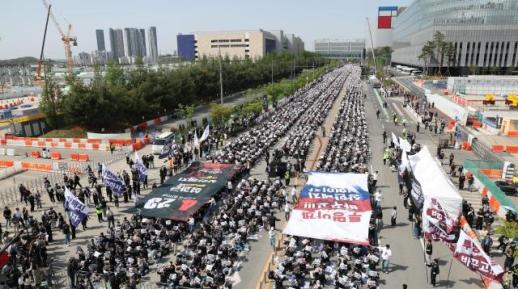 Growing Concerns Over Profit-Sharing Bonuses Amid Labor Demands The Korea Employers Federation warned on May 31 that demands from large corporate labor unions for profit-sharing could infringe on management rights. This warning comes as the Samsung Electronics Union pushes for performance bonuses linked to operating profits, reflecting a growing trend among labor groups. In a special recommendation regarding labor unions' demands for profit distribution, the federation stated, "Labor unions are seeking to formalize a system that allocates a certain percentage of operating profits to their members. This differs from existing performance bonus systems, as it directly demands a share of corporate profits." Previously, the Samsung Electronics Union had announced plans for a general strike to demand performance bonuses tied to this year's operating profits. Although the two sides reached a temporary agreement just before the planned strike, calls for expanded performance bonuses linked to corporate results have continued, particularly among large companies. The federation emphasized that corporate profits are essential resources for investment, employment, research and development (R&D), and improving financial structures, all of which are vital for a company's sustainability and future competitiveness. It also noted that the unions' proactive demands for profit sharing could restrict shareholders' rights, pointing out that it is rare to find global companies that distribute a predetermined percentage of profits to workers in advance agreements. The federation explained that it has prepared recommendations to help companies operate performance bonus systems rationally. It stressed that bonuses based on operating profits and other management performance metrics should not be classified as wages. "The Supreme Court has consistently ruled that performance distributions, which vary based on management results, are not closely related to the provision of labor and are significantly influenced by factors beyond the control of workers," the federation stated. The federation argued that establishing criteria for profit distribution is a matter of management discretion and should not be subject to collective bargaining. It clarified that mandatory subjects for collective bargaining under labor law are limited to working conditions such as wages, working hours, welfare, and dismissals. The federation concluded that companies have no legal obligation to comply with labor unions' profit distribution demands and warned that strikes aimed primarily at profit distribution could be deemed unlawful. Furthermore, it emphasized that performance bonus systems should be operated based on the principles of corporate sustainability and performance-oriented practices.* This article has been translated by AI. 2026-05-31 12:06:00
 -
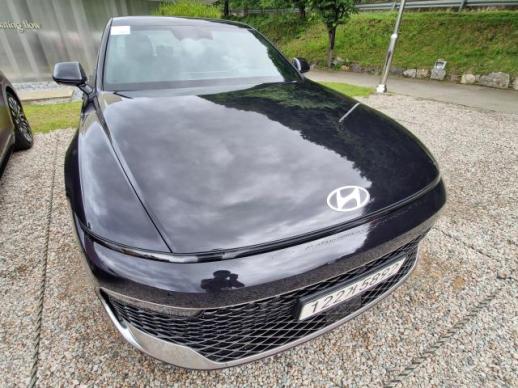 Test Drive: The New Grandeur, a Symbol of Success Hyundai's Grandeur, long regarded as a symbol of success, has returned with a facelift model after approximately three years and five months. This update marks a significant shift towards a software-defined vehicle (SDV). On May 28, I took a round trip of about 140 kilometers from the Godeok Business Valley in Gangdong-gu, Seoul, to Floating Flow in Chuncheon, Gangwon Province, with a passenger in the New Grandeur. The most striking feature from the driver's seat was the 17-inch display that filled the center of the dashboard. The interface has been simplified compared to previous models, replacing complicated buttons with an intuitive layout that mimics the experience of using smart devices. The traditional instrument cluster has been virtually eliminated, replaced by a box-shaped monitor that naturally comes into view beyond the steering wheel. A 'multi-function switch' that integrates turn signal and wiper functions has been added to either side of the steering wheel. The electronic gear shift lever has been moved to the right side of the steering wheel for easier shifting without taking hands off the wheel. As I exited the parking lot, I was pleasantly surprised by the expansive forward visibility. Although it is a sedan, it felt almost like an SUV in terms of openness. The larger side mirrors and the low dashboard design contributed to this improved sightline. In the urban section of Seoul, the quietness was impressive. Even at low speeds, road vibrations and external noise were minimal. The vehicle's body movements were also well-controlled. At the turnaround point, I experienced the true capabilities of the New Grandeur. The Smartstream 2.5-liter gasoline engine provided a natural and consistent response, as expected from a naturally aspirated engine. Switching to sport mode transformed the vehicle's character. Acceleration response became sharper, and the exhaust sound was more pronounced. The engine's RPM and the sound transmitted into the cabin felt more dynamic compared to the previous Grandeur. On the highway and through curves, the driving stability was particularly notable. The steering response was relatively immediate in cornering situations. The lane-keeping assist system operated reliably, helping to maintain the vehicle's center. Hyundai has implemented optimizations such as a cowl crossbar structure, enhanced front strut rigidity, and hydraulic rebound stoppers in the New Grandeur. These measures aim to reduce road impacts and improve ride comfort. A key feature of this model is the transformation of the vehicle's software experience. Hyundai has introduced its first next-generation infotainment platform, Pleos Connect. I tested the generative AI-based voice assistant, Gleo AI, within the vehicle. When I asked, "Play the latest news," it provided updates on domestic political news. It also responded immediately to the command, "Turn off the air conditioning." Gleo AI is based on a large language model (LLM) system. It supports not only basic vehicle control but also knowledge searches, schedule recommendations, and natural conversation capabilities. Hyundai developed Pleos Connect based on the Android Automotive Operating System (AAOS) and is working to expand the in-car app ecosystem. Currently, 11 third-party apps, including video and music streaming and gaming, are available. A Hyundai representative stated, "As we aim for an open ecosystem, the current apps are just the beginning," adding that the goal is to add more than ten new apps by the end of the year. The Smart Vision Roof, a first for Hyundai, also caught attention. It features polymer-dispersed liquid crystal (PDLC) film that allows for adjustable transparency of the roof. The market response to the New Grandeur has been enthusiastic, with over 10,000 units contracted on the first day of its launch. 2026-05-31 09:03:00
 -
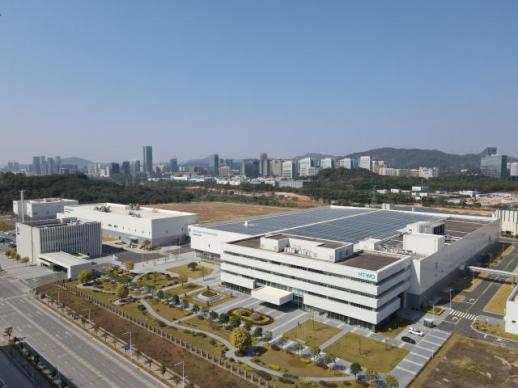 Hyundai's HTWO Guangzhou Selected as Leading Company in China's Hydrogen Industry Hyundai Motor Group's HTWO Guangzhou has been designated as a leading company in the hydrogen industry chain by the Guangzhou Municipal Bureau of Industry and Information Technology. This recognition marks Hyundai's formal integration into China's key hydrogen ecosystem, which is expected to accelerate the expansion of its local hydrogen business. Attention is now focused on whether the company can turn around its fortunes in the struggling Chinese automotive market through its hydrogen initiatives. On May 28, Hyundai Motor Group announced that HTWO Guangzhou, its first overseas hydrogen fuel cell system production base, was selected as a "leading company in the hydrogen energy sector" in the first phase of the strategic industrial cluster initiative. Guangzhou is promoting policies to nurture leading companies in 14 strategic industries, including new energy, smart connected vehicles, artificial intelligence (AI), semiconductors, aerospace, and biotechnology. HTWO Guangzhou is the only foreign-invested company among the 96 firms recognized as leading companies in the industrial chain. These companies are tasked with strengthening the industrial supply chain and fostering ecosystem development. With this designation, HTWO Guangzhou is expected to participate in the development of China's hydrogen industry supply chain, build regional industrial ecosystems, expand core technology cooperation, and enhance global exchanges. Recently, China has accelerated its efforts to develop the hydrogen industry, aiming for carbon neutrality and a transition to green energy. In September 2020, during the 75th United Nations General Assembly, China set goals to peak carbon emissions by 2030 and achieve carbon neutrality by 2060. Specifically, the country implemented policies to deploy 35,000 hydrogen fuel cell vehicles (including commercial vehicles) by last year. Guangdong Province, where Guangzhou is located, ranked first among pilot regions with over 7,000 vehicles deployed during this period. HTWO Guangzhou has sold more than 900 hydrogen fuel cell vehicles (commercial) this year. It ranks third among over 60 fuel cell system companies in the Chinese market and first among foreign-invested firms. Choi Doo-ha, CEO of HTWO Guangzhou, stated, "This selection as a leading company in the industrial chain recognizes our contributions to the development of Guangzhou's hydrogen industry and the establishment of a collaborative ecosystem. We plan to expand our participation in the comprehensive hydrogen energy application pilot projects scheduled to begin in the second half of the year and strengthen cooperation with local governments and partners." Meanwhile, Hyundai Motor Group is leading the global hydrogen industry as a co-chair of the Hydrogen Council CEO Summit, which comprises over 100 member companies worldwide. The company is at the forefront of the global hydrogen vehicle market with the launch of models like the all-new Nexo, Xcient hydrogen fuel cell truck, and hydrogen-powered tactical vehicles. Domestically, it is pursuing a project to establish a hydrogen hub in Saemangeum, North Jeolla Province, with a total investment of 8.9 trillion won.* This article has been translated by AI. 2026-05-28 13:36:00