

Journalist

Oh Joo-Seok
farbrother@ajunews.com
-
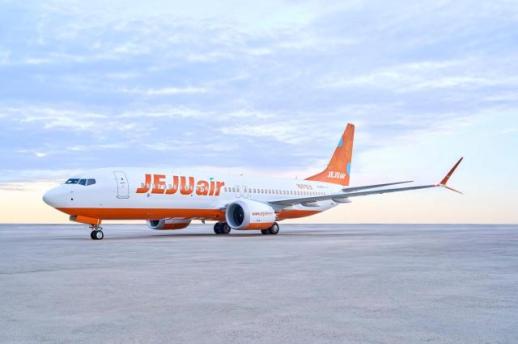 Jeju Air Reports 644 Billion Won Operating Profit Amid High Oil Prices Jeju Air has reported a second consecutive quarter of profit despite the pressures of rising international oil prices and exchange rates. The airline attributed its performance rebound to improved fuel efficiency through fleet modernization and a recovery in passenger demand. On May 8, Jeju Air announced that it achieved a revenue of 498.2 billion won and an operating profit of 64.4 billion won in the first quarter of this year. This represents a 36.5% increase in revenue compared to the same period last year, while the operating profit turned around from a loss of 35.7 billion won. The net profit for the period was recorded at 12.2 billion won. Following an operating profit of 18.6 billion won in the fourth quarter of last year, Jeju Air has maintained profitability for two consecutive quarters. This performance is seen as commendable given the challenges faced by most airlines due to high fuel prices and fluctuating exchange rates. The airline cited improvements in its revenue structure through fleet modernization and an increase in passenger demand as key factors behind its improved results. In the first quarter, Jeju Air added two next-generation B737-8 aircraft to its fleet. It also returned two leased B737-800 aircraft that were over 20 years old in November last year and February this year, and sold two older aircraft in March and April. As a result, fuel costs for the airline decreased by approximately 16% compared to the previous year. In addition to the 10 B737-8 aircraft currently in its fleet, Jeju Air plans to introduce five more by the end of the year. The number of passengers in the first quarter totaled 3,311,358, making it the leading low-cost carrier in South Korea. The load factor during this period was 91.9%, surpassing the national airline average of 88.8%. Jeju Air aims to continue its trend of improved performance through efficient route management. To address the uncertainties posed by increased volatility in fuel prices and exchange rates, as well as intensified competition, the airline plans to focus on sound management strategies. A company representative stated, "We will gradually improve our revenue structure based on fleet modernization and efficient route operations."* This article has been translated by AI. 2026-05-08 17:52:20
 -
 Test Drive: Lexus RX450h+ Offers Flexible Electric and Hybrid Driving The first impression of the Lexus RX450h+ is its striking copper-toned exterior. The bronze color subtly shifts in the sunlight, exuding a sense of luxury that stands out in any setting. During the May holiday, I tested the RX450h+ in Seoul and the Boryeong area of South Chungcheong Province. This vehicle is notable for being a plug-in hybrid (PHEV) and part of the increasingly popular sport utility vehicle (SUV) segment. Activating the EV mode on the console, I noticed the driving range displayed on the dashboard, based on internal combustion, remained at 790 km. Even after driving through downtown Seoul, this number barely decreased. It was only when I thought, "I’m driving through Seoul for free," that I saw the electric driving range drop from 24 km to 15 km on the left side of the dashboard. The RX450h+ allows drivers to switch seamlessly between electric and hybrid modes based on their needs. Notably, when driving in hybrid mode, the electric vehicle battery charges automatically, allowing for a dual benefit. On May 1, while traveling from Seoul to Boryeong for a business trip, the benefits of EV mode became evident. The vehicle operated almost entirely on the electric motor, with minimal engine engagement. The smooth ride in low-speed urban areas felt akin to that of an electric sedan. The RX450h+ is equipped with an 18.1 kWh high-capacity lithium-ion battery, enabling approximately 56 km of driving in electric mode when fully charged. For drivers who frequently commute or travel within urban areas, the option to charge at a parking facility makes it a practical choice for electric driving. Once on the West Coast Highway, the vehicle's character shifted again. Engaging hybrid mode activated the 2.5-liter inline four-cylinder gasoline engine, delivering a refreshing acceleration. The engine and electric motor worked together seamlessly to increase speed. During heavy traffic between Hwaseong and Pyeongtaek, I experienced the effectiveness of the driver assistance systems. The Dynamic Radar Cruise Control (DRCC) maintained a stable distance from the vehicle ahead, even in slow-moving traffic. In fact, even in stop-and-go traffic at around 30 km/h, the vehicle responded smoothly without abrupt acceleration or deceleration. When traveling over 100 km/h, if the car in front suddenly slowed down, the RX450h+ naturally adjusted its speed. This feature significantly reduced fatigue during long drives. The interior focuses on Lexus's signature comfort. The driver's seat incorporates the Tazuna concept, inspired by horseback riding, enhancing the connection between the driver and the vehicle. It feels more like a refined, eco-friendly vehicle than an aggressive sports car, showcasing a new direction for Lexus in the era of electrification. 2026-05-08 16:34:58
 -
 Kumho Tire Reports 42.9% Increase in Operating Profit Amid Electric Tire Expansion Kumho Tire & Technology reported a significant increase in revenue, driven by the expansion of its electric tire supply. Despite tariffs and high oil prices, the company continued to see strong performance in the global replacement tire market. On May 8, Kumho Tire announced that its consolidated revenue for the first quarter of 2026 reached 5.31 trillion won, with an operating profit of 506.9 billion won. This marks a 7% increase in revenue and a 42.9% increase in operating profit compared to the same period last year. The tire segment alone saw revenue rise by 9.3% to 2.56 trillion won, with operating profit increasing by 31.1% to 437.5 billion won. The operating profit margin stood at 17.1%. Kumho Tire attributed its success to the increased supply of new car tires for electric and hybrid vehicles, along with a rise in replacement tire sales in key markets such as Europe, South Korea, and China. In the first quarter of this year, the proportion of sales for high-inch tires (18 inches and above) in the passenger and light truck tire segment rose to 49.1%, up 2 percentage points from the previous year. The share of electric vehicle tires in the new car tire sales for passenger and light trucks increased to 29.6%, a rise of 6.6 percentage points compared to the same period last year. Kumho Tire is also supplying new car tires for internal combustion and electric vehicles to global premium automakers such as Mercedes-Benz, BMW, and Ford. The company has established itself as a quality competitor by supplying new car tires for over 300 models across more than 50 brands, including Porsche, in the global automotive market. The sales of Hanon Systems, a subsidiary of Kumho Tire since 2025, reached 2.75 trillion won in the first quarter of 2026, reflecting a 5% increase from the previous year, while operating profit surged by 361.1% to 97.2 billion won. Kumho Tire expects its global production volume to continue to rise. This year, expansions at its production facilities, including the plant in Tennessee, are set to be completed. The company aims to achieve a 51% share of high-inch tires and over 33% for electric vehicle tires in its new car tire sales, while also accelerating partnerships with premium brands. A Kumho Tire representative stated, "The passenger tire line at the Tennessee plant will be completed in the first half of the year, while the commercial truck tire line will be finished in the second half, with initial production expected to begin. An additional 5% of overall production, or about 5.5 million tires, is anticipated to be produced annually."* This article has been translated by AI. 2026-05-08 15:51:27
 -
 Hyundai Motor Group Appoints Choi Jun-young as Head of Labor Policy Hyundai Motor Group has appointed Choi Jun-young, president of Kia, as the head of its labor policy division. On May 8, the group announced several executive appointments aimed at strengthening labor and production operations. Choi will oversee the policy development department, which is tasked with responding to the rapidly changing labor environment, including the implementation of the Yellow Envelope Law (amendments to Articles 2 and 3 of the Labor Union Act). Choi is recognized for his on-site leadership and exceptional stakeholder coordination skills. Hyundai Motor Group expects him to contribute to labor stability and the establishment of advanced labor relations. Jeong Sang-bin, who previously led the policy development department, has been appointed to oversee labor relations policy at Hyundai Mobis. Jeong will leverage his expertise in labor matters as the company navigates disagreements with labor over the sale of its lamp and bumper business. Song Min-soo has been appointed to manage Kia's domestic production and labor operations. He will focus on maintaining a stable production system and driving production innovation as the Chief Safety Officer (CSO). A Hyundai Motor Group official stated, "Today's announcement reflects our commitment to stable labor relations and efficient production operations, considering experience and expertise in these appointments." 2026-05-08 12:11:39
 -
 Test Drive: 2027 Hyundai Mighty Offers SUV-Like Comfort On May 7, the 2027 New Mighty, a mid-sized cargo truck, maneuvered through the parking lot at Incheon Port. The first noticeable feature inside the vehicle was its upgraded passenger car-like interior. Despite the rough terrain and sea breeze outside, the cabin was surprisingly quiet. The windshield glass and direct glazing method significantly reduced external noise. Handong-wook, a researcher from Hyundai's Mighty development team, explained, "Unlike the previous model, which used rubber to attach the windshield, this new Mighty integrates the glass with the body like a passenger vehicle, improving wind noise, sound insulation, and corrosion resistance." Sitting in the driver's seat, I felt a gentle jolt as the air seat absorbed shocks, reducing strain on my back. The interior featured a 12.3-inch digital cluster and a wide digital display, creating an SUV-level environment. Controls for driver assistance were conveniently placed within easy reach, reflecting thoughtful design for long-haul drivers. The driving performance has also improved. Hyundai introduced an advanced eco-roll feature and an electronic brake control system (EBS) to the Mighty, reducing unnecessary power engagement during long drives and enhancing fuel efficiency. On the same day, Hyundai held an Experience Day at Incheon Sang Sang Platform, unveiling the 2027 New Mighty, New Pavis, 2027 New Xcient, and the New Xcient hydrogen electric truck. The updated New Mighty and New Pavis feature a design inspired by Hyundai's 'H' logo and cube mesh details, presenting a more futuristic and robust appearance compared to previous commercial vehicles. The newly introduced mid-sized cargo truck Pavis focuses on practicality. While the Mighty caters to small businesses and everyday logistics, the Pavis targets logistics corporations and specialized cleaning vehicle markets. The transmission has been upgraded from a six-speed to a nine-speed automatic, optimizing power performance and fuel efficiency for various driving conditions. Hyundai has also prioritized enhancing safety features for both the Mighty and Pavis, expanding the front collision avoidance assist (FCA) to detect pedestrians and cyclists, addressing safety in urban delivery environments where foot and bike traffic is common. An automatic neutral switch feature has been added to improve efficiency during city driving. Hyundai's focus on improving overall competitiveness in driving performance, safety, convenience, and quality is evident in these updated models. The company aims to enhance the perception of trucks as partners in daily work rather than mere tools. Lee Cheol-min, head of Hyundai's domestic marketing division, stated, "The direction of change for the Mighty and Pavis can be summed up as 'stronger and more modern.' We have reinforced the fundamentals to ensure stability even on rough roads and heavy loads." 2026-05-07 22:07:31
 -
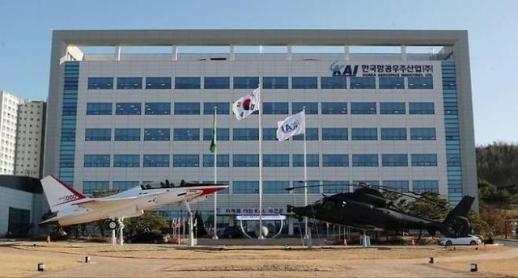 KAI Reports Record Sales of 1.09 Trillion Won in Q1, Driven by Aircraft Exports Korea Aerospace Industries (KAI) achieved record sales of 1.09 trillion won in the first quarter of 2026, fueled by increased aircraft exports. The growth in domestic system development and overseas aircraft sales is expected to continue. KAI reported on May 6 that its consolidated revenue for Q1 reached 1.09 trillion won, with operating profit at 671 billion won and net profit at 413 billion won. These figures represent increases of 56.3% in revenue, 43.4% in operating profit, and 41.7% in net profit compared to the same period last year. This strong performance is attributed to stable domestic operations, expansion in international markets, and future project developments. The rollout of the KF-21 fighter jet in March, along with ongoing domestic projects like the Marine Attack Helicopter (MAH) and Mine Countermeasure Helicopter (MCH), contributed significantly to the revenue growth, alongside deliveries of the Light Armed Helicopter (LAH) and FA-50GF. Notably, aircraft exports surged by 79.5% year-on-year, reaching 307.1 billion won, marking the highest growth in sales. Sales from the delivery of two T-50i aircraft to Indonesia, along with contracts for the FA-50M in Malaysia and FA-50PL in Poland, reflected stable growth in international operations. Revenue from aircraft parts also rose by 11.6% to 222.8 billion won, driven by a recovery in the commercial aircraft market. The satellite sector, identified as a future growth area, contributed 10.4 billion won to the overall revenue. KAI's order backlog has also increased, with domestic and international projects like communication equipment upgrades and FA-50PH PBL contracts growing by 29.4% year-on-year to 309.3 billion won. With the KF-21's integration into the Air Force and additional deliveries of the LAH expected in the second half of the year, KAI anticipates achieving record sales. A KAI official stated, "If the additional deliveries of the KF-21 and LAH proceed smoothly, we can expect record sales this year."* This article has been translated by AI. 2026-05-07 21:43:36
 -
 Hyundai Motor Launches Updated Mighty, Pavise and Xcient Trucks, Including Hydrogen Model Hyundai Motor Co. on Wednesday launched three updated commercial truck lines, including a refreshed hydrogen fuel cell model, as it seeks to bolster its position in South Korea’s sluggish freight-truck market. The automaker said it released the 2027 “The New Mighty” and “The New Pavise,” along with the 2027 “Xcient” and “The New Xcient Hydrogen Fuel Cell Truck.” Hyundai said the design updates create a shared family look across the Xcient, Pavise and Mighty lineup, reinforcing a tougher brand identity. Hyundai introduced the Mighty in 2015 and the Pavise in 2019, and is now rolling out the latest facelifted versions. The company said it significantly improved product competitiveness, citing a passenger-car-like driver’s seat and advanced driver-assistance systems. The launches come as the domestic freight-truck market has recently weakened. According to the Ministry of Land, Infrastructure and Transport’s vehicle registration data, South Korea had 3,695,232 freight trucks last year, down 0.6% from 3,716,743 the year before. The decline appears to reflect a combination of a logistics slowdown and fewer drivers. Hyundai said it has released a facelifted Xcient hydrogen fuel cell truck for the first time in four years, aiming to move closer to leading the market for eco-friendly commercial vehicles. Hydrogen trucks, suited for medium- and long-distance hauling, emit almost no carbon dioxide while driving and are seen as a key option for cleaner logistics. Under guidelines from the U.N. Intergovernmental Panel on Climate Change, hydrogen vehicles were assessed as delivering about a 13,000-metric-ton carbon reduction effect compared with diesel commercial trucks over a cumulative 20 million kilometers of driving, the company said. Analysts also say competition in the commercial-vehicle market is shifting toward low-emission models. As South Korea expands its Nationally Determined Contribution targets, domestic commercial-vehicle brands have been rolling out electric- and hydrogen-based freight trucks. Tata Daewoo Mobility has launched the midsize electric truck “Gixen,” and MAN Truck & Bus Korea has said it plans to introduce an electric truck in the country. “Mighty, Pavise and Xcient, which support Korea’s logistics and construction sites, have evolved into tougher and smarter vehicles by actively reflecting customer feedback,” a Hyundai official said. “We will continue innovating as a reliable partner that helps customers succeed in their commercial-vehicle business.”* This article has been translated by AI. 2026-05-07 10:04:58
 -
 Trump Weighs 25% Tariff on EU Cars, Opening U.S. Market Fight for Korean and Japanese Brands The U.S. auto market is on edge as Washington signals it may impose a 25% tariff on passenger and commercial vehicles from Europe. With European car prices likely to rise in the United States, industry watchers say Korean and Japanese automakers could try to capture any opening. Industry officials said Tuesday that President Donald Trump is reviewing a 25% tariff on European-made passenger cars. Last year, the United States and the European Union agreed to cut tariffs on some items, including autos, from 25% to about 15%. Trump, however, warned on May 1 that tariffs could be raised, citing issues such as the EU’s implementation of the trade agreement. The industry expects Korean and Japanese brands to benefit because they face a relatively lower tariff burden. In the U.S. market, a tariff structure of about 15% remains in place for Korean and Japanese brands, according to the report. German automakers such as BMW operate plants in the United States, but some models, including sedans, are still exported from Europe. European brands in the U.S. market are generally seen as concentrated in luxury sedans and SUVs aimed at middle-income buyers, along with Volkswagen’s midpriced and lower-priced models. If higher tariffs are reflected in sticker prices, price resistance is expected to grow, especially for lower-priced models. Korean and Japanese brands are expected to target that segment. According to market research firm Wards Intelligence, Hyundai Motor Co. and Kia sold a combined 1,836,172 vehicles in the United States last year, taking an 11.3% share to rank fourth. They trailed General Motors with 2,841,328 vehicles (17.5%), Toyota with 2,518,071 (15.5%) and Ford with 2,133,892 (13.1%). Among European brands, BMW sold 388,897 vehicles, placing it in the top 10. Analysts said a tariff increase on European cars could lead to Korean and Japanese brands splitting some of the market share previously held by European automakers. Korea and Japan both have strengths in hybrids. According to the Korea Automobile & Mobility Association’s U.S. electrified-vehicle sales data, Hyundai and Kia sold a combined 64,742 hybrids in the U.S. market in the first quarter, up 63.7% from a year earlier. That ranked third behind Toyota (281,699) and Honda (95,612). Their electrification strategies differ, however. Hyundai Motor Group is rapidly expanding its electric-vehicle lineup alongside hybrids, while Japanese EVs have struggled to gain broad popularity in global markets, the report said. Recent U.S. sales trends have been mixed for the two. Last month, Hyundai and Kia sold 159,216 vehicles in the United States, down 2.1% from a year earlier. Toyota sold 222,378, down 4.6%. Hyundai is offering incentives of up to $10,000 (14.55 million won) on the Ioniq 9 in the U.S. market. Kia has also moved aggressively, including cutting prices on the EV6. Moon Hak-hoon, a professor in the Department of Future Automobiles at Osan University, said, “The U.S. market has a strong preference for premium brands, so the impact on European brands could be limited.” He added, “But if there is some opening in the midpriced and lower-priced market, Korean and Japanese brands have plenty of room to target it.”* This article has been translated by AI. 2026-05-06 18:04:16
 -
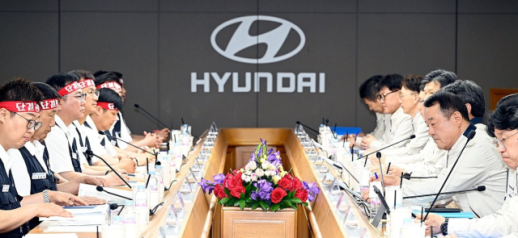 Hyundai Motor union seeks bonus equal to 30% of net profit as wage talks begin Hyundai Motor Co. labor and management opened this year’s wage negotiations with an initial meeting at the company’s Ulsan plant. Yonhap reported on the 6th that about 60 people attended, including Hyundai Motor CEO Choi Young-il, Korean Metal Workers’ Union Chairman Park Sang-man and Lee Jong-cheol, head of the union’s Hyundai Motor branch. The two sides exchanged greetings and discussed the direction and schedule for this year’s talks. The union has already sent management its demands, including a 149,600 won increase in monthly base pay (excluding seniority-based step increases) and a performance bonus equal to 30% of last year’s net profit. It also called for guarantees on jobs and working conditions related to artificial intelligence. Other demands include adopting a full monthly salary system, raising bonuses from 750% to 800%, shortening working hours without increasing work intensity, extending the retirement age in line with the start of National Pension benefits (up to 65), and hiring additional workers. A tough bargaining process is expected again this year. Last year’s talks ended after the union staged three partial strikes. The agreement included a 100,000 won increase in monthly base pay (including step increases), a performance bonus of 450% plus 15.8 million won, 30 shares of stock and 200,000 won in traditional market gift certificates. * This article has been translated by AI. 2026-05-06 11:43:46
 -
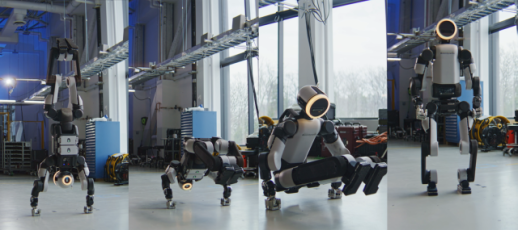 Hyundai-owned Boston Dynamics upgrades Atlas humanoid ahead of U.S. plant rollout Hyundai Motor Co.’s humanoid robot Atlas, slated for deployment at the automaker’s U.S. production facilities, has demonstrated advanced gymnastics moves, fueling expectations it could handle more demanding manufacturing work. Boston Dynamics on May 5 (U.S. local time) posted a video on its YouTube channel showing Atlas performing a series of gymnastics positions. In the 43-second short, Atlas moves into a handstand and then holds its body nearly horizontal while supporting itself only on its hands. Around the 19-second mark, Atlas performs an “L-sit,” forming an L shape while balancing on its hands. It holds the position for about five seconds before flipping up to stand upright. The company said the routine goes beyond simple balance or repeated motions, requiring precise, simultaneous control of the upper body, core and arm joints. It also reflects improved ability to hold steady positions, separate from previously shown aerial flips. The demonstration drew favorable reactions ahead of full-scale training planned at U.S. production sites, with viewers noting the difficulty of the moves even for humans. Comments on YouTube included: “The gymnastics moves are really cool,” “Getting ready for the next Olympics,” and “I really like that it’s almost silent.” Boston Dynamics said the video shows Atlas can carry heavy objects, move them and work from irregular postures on a factory floor. Observers pointed to the robot’s ability to support its full body weight steadily on a very small contact area—both hands—as a sign it has reached an advanced technical stage. Boston Dynamics said the routine used a reinforcement learning-based whole-body control system. The video also shows “001” engraved on the side of Atlas’ torso, identifying it as the first development model. The development model includes autonomous learning capability and flexibility designed to adapt to a wide range of work environments. Hyundai Motor Group plans to deploy the Atlas development model first at Hyundai Motor Group Metaplant America, or HMGMA, and conduct process-by-process verification. A Hyundai Motor official said earlier videos focused on logistics tasks or flip-style movements, while the latest clip highlights precise control of the body in static positions. The official described it as a demonstration of high-difficulty work capability ahead of planned deployment at U.S. plants in 2028.* This article has been translated by AI. 2026-05-06 11:15:15