
Journalist

Oh Joo-seok
farbrother@ajunews.com
-
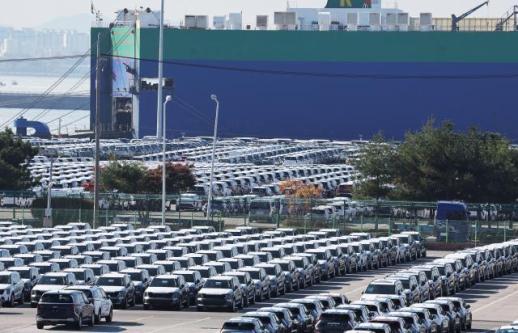 South Korea reaches 76 million vehicles in 50 years of auto exports SEOUL, May 12 (AJP) - South Korea has exported more than 76 million vehicles over the past 50 years since entering overseas markets, the Korea Automobile & Mobility Association said on Tuesday. The cumulative number of exports reached 76.55 million vehicles as of last month, a milestone that comes nearly half a century after Hyundai Motor first exported its domestically made Pony passenger car to Ecuador in June 1976. The country first hit the 10 million mark in vehicle shipments in 1999, then surpassed 50 million in 2015, 60 million in 2019, and 70 million in 2023, adding roughly 10 million units every three to four years. At this pace, industry watchers say cumulative exports could cross the 80 million mark as early as next year. According to a study by a Hyundai-affiliated research institute, the global auto market is expected to continue growing this year despite overall market saturation, with sales projected at around 87.93 million units. While growth is slowing in mature markets like the U.S. and Europe, emerging markets such as India are picking up the slack. "South Korea's auto export achievements have kept pace with the country's economic growth," said KAMA chairman Jeong Dae-jin. "Staying competitive in the global market will require a strong domestic production base and greater investment in research and development for next-generation vehicles," he added. 2026-05-12 09:53:29
 -
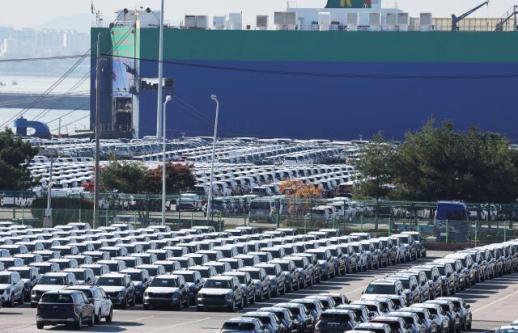 Korean Automakers Reach 76 Million Exports After 50 Years in Global Markets Korea's automotive industry has achieved a significant milestone, reaching a cumulative export total of 76 million vehicles after 50 years in international markets. This accomplishment reaffirms the industry's vital role in the nation's economic growth. According to the Korea Automobile Mobility Industry Association (KAMA), as of last month, a total of 76,548,569 vehicles have been exported. This record comes 50 years after Hyundai Motor Company exported its first domestic passenger car, the Pony, to Ecuador in June 1976. Korean automobile exports surpassed the 10 million mark for the first time in 1999, with 11,073,814 vehicles shipped. The rise of Hyundai and Kia as top-tier global automotive brands has significantly elevated the status of the Korean automotive industry. Since then, exports have increased by approximately 10 million units every three to four years, with figures of 51,098,839 in 2015, 61,093,781 in 2019, and 70,087,640 in 2023. Industry insiders suggest that if the current trend continues, cumulative exports could exceed 80 million next year. As competition intensifies in the global market, the automotive sector continues to expand. A recent report from HMG Strategy Institute forecasts that the global automotive market will grow by 0.2% year-on-year to approximately 87.93 million units. While growth in advanced markets like the U.S. and Western Europe is expected to slow, emerging markets such as India are anticipated to gain momentum. The domestic automotive production sector also reached a historic milestone this year. Cumulative production, which totaled 129,110,000 vehicles last year, surpassed 130 million with an additional 1,387,043 units produced from January to April this year. On the same day, KAMA and the Korea Automobile Industry Cooperative (KAICA) held the 23rd annual Automotive Day ceremony in Seocho-gu, Seoul, honoring 36 individuals for their contributions to the development of the automotive industry. The highest honor, the Gold Tower Industrial Medal, was awarded to Jae-hoon Chang, Vice Chairman of Hyundai Motor Group. The Silver Tower Industrial Medal went to Sang-sik Ham, CEO of MR Infra Auto, while the Bronze Tower Industrial Medal was awarded to Ki-young Hwang, CEO of KG Mobility. This year's awards focused on individuals who have strengthened the competitiveness of future vehicles through initiatives such as attracting domestic production of eco-friendly cars, technological development, innovations in AI, software, and autonomous driving technologies, advancements in smart manufacturing, building a future vehicle industry ecosystem, and exploring new markets through cooperative efforts. Jung Dae-jin, President of KAMA, stated, "The 50 years of automotive exports reflect the history of South Korea's economic growth. To maintain our lead in the global future vehicle competition, we need to secure domestic production bases and expand research and development and investment through public-private cooperation."* This article has been translated by AI. 2026-05-12 08:33:27
 -
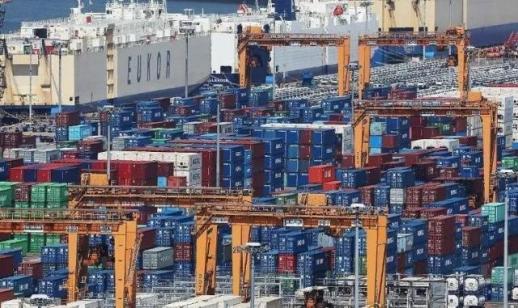 Korean Tire Companies Face EU Anti-Dumping Duties Amid Rising Costs Domestic tire manufacturers have reported solid first-quarter results despite rising global raw material costs. The increase in sales of high-inch tires has been driven by a surge in global demand for electric vehicles and sports utility vehicles (SUVs). However, the European Union's announcement of anti-dumping duties on Chinese tires could lead to increased volatility in second-quarter results. According to industry sources on May 11, the three major South Korean tire companies—Hankook Tire & Technology, Kumho Tire, and Nexen Tire—saw improvements in their financial performance for the first quarter. Hankook Tire's operating profit in its tire division reached 437.5 billion won, a 31.1% increase compared to the same period last year. Kumho Tire and Nexen Tire reported operating profits of 147 billion won and 54.2 billion won, respectively, marking increases of 0.3% and 33.1% year-on-year. The three tire manufacturers achieved relatively stable results, bolstered by increased sales of electric, high-inch, and replacement tires. Analysts attribute this improvement to a strategy focused on expanding premium product sales amid a market shift toward SUVs and electric vehicles. In fact, for the first quarter, the sales proportion of high-inch tires (18 inches and above) was 49.1% for Hankook Tire, 45.1% for Kumho Tire, and 40% for Nexen Tire. Despite the first-quarter gains, trade risks for the tire companies are escalating. The EU recently announced it would impose anti-dumping duties of up to 50% on passenger and light truck tires produced in China, effective June 16. Kumho Tire and Nexen Tire have been notified of anti-dumping duty rates of 29.9%. When combined with the existing EU import duty of 4.5%, the actual burden could reach as high as 34.4%. In contrast, Hankook Tire will face a relatively lower anti-dumping duty rate of 3.4%, resulting in a total tariff of 7.9%. Kumho Tire and Nexen Tire plan to seek a reduction in their duty rates through appeals before the tariffs take effect. An industry insider noted, "The remaining companies, excluding Hankook Tire, have been subjected to an average duty rate. We are exploring ways to mitigate tariff impacts, including increasing local production and filing appeals." Approximately 40% of the total sales for the three domestic tire companies come from the European market. Notably, about 50% of Kumho Tire's sales in Europe are produced locally in China, while Nexen Tire sources around 15% of its European tires from China. In addition to the anti-dumping duties, raw material prices for tires in China are also on the rise. According to data from the Chinese raw materials data firm Sunsear, the price of styrene-butadiene rubber reached 16,041 yuan per ton as of May 10, up 22.2% from 13,125 yuan on March 9. As a result, the three domestic tire manufacturers are considering strategies to gradually increase their domestic and European production volumes while boosting the export share of their domestic output. Industry analysts predict that the combination of tariff burdens and rising costs could lead to greater variability in corporate performance in the second quarter. According to financial information provider FnGuide, Kumho Tire's second-quarter operating profit consensus is projected at 145.6 billion won, a 16.9% decrease from 175.2 billion won in the same period last year. Conversely, Hankook Tire's operating profit is expected to rise to 549.3 billion won, a 58.5% increase year-on-year, while Nexen Tire's operating profit is projected to reach 48.3 billion won, an approximate 13% increase. 2026-05-12 05:23:19
 -
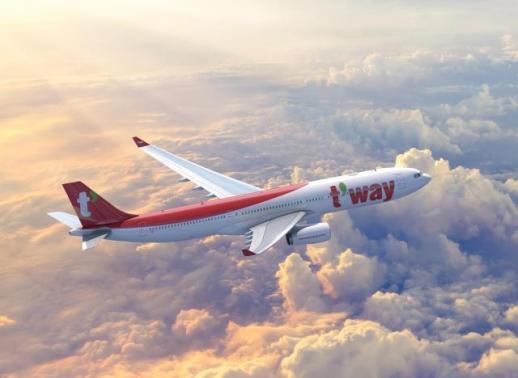 T'way Air Returns to Profit After Two Years, Boosted by Winter Travel and Cargo Business T'way Air has successfully returned to profitability for the first time in two years, driven by increased passenger numbers and a robust cargo transport business. On May 11, T'way Air announced that its operating profit for the first quarter reached 19.9 billion won, marking a return to the black after eight quarters. Revenue totaled 612.2 billion won, a 37% increase compared to the same period last year. The airline's improved performance is attributed to a surge in travel demand during the winter peak season and the stabilization of its route operations. The number of passengers in the first quarter surpassed 3.13 million, reflecting a 17% increase year-on-year. Notably, international passenger numbers rose by over 23% to 2,188,463. Analysts suggest that the airline's strategy of expanding new routes and diversifying its offerings, which began last year, is yielding positive results. Passenger load factors for both domestic and international routes exceeded 90%. T'way Air's cargo transport business is also experiencing steady growth. In the first quarter of 2026, cargo volume reached approximately 9,000 tons, a 130% increase compared to the first quarter of 2024, effectively tripling the scale of the operation. Following its acquisition by the Sonot Trinity Group, T'way Air has thoroughly reviewed its route operations structure. The airline has restructured its operations to focus on efficiency, contributing to the improved performance in the first quarter. Recently, T'way Air held a shareholders' meeting where it announced a name change to Trinity Air. Full operations under the new name will commence once approval from relevant domestic and international authorities is secured. A T'way Air official stated, "We plan to enhance operational efficiency with the introduction of new A330-900NEO aircraft in the second half of the year. We will continue to drive performance through efficient operations in passenger and cargo transport and stabilization of medium- to long-haul routes."* This article has been translated by AI. 2026-05-12 03:39:24
 -
 Hummer EV SUV Launches in South Korea with Advanced Features The Hummer EV SUV, a large electric off-road vehicle, has officially launched in South Korea. Manufactured in the United States, the Hummer EV SUV is equipped with advanced driving assistance systems, including Super Cruise, which is a hallmark of General Motors. General Motors (GM) announced on May 11 that its electric sports utility vehicle (SUV) and pickup truck brand GMC has introduced the Hummer EV SUV to the domestic market. The Hummer EV SUV, GMC's flagship electric sports utility vehicle, is designed for both urban daily use and outdoor off-road lifestyles. Built on GM's latest electric vehicle platform, this flagship model incorporates innovative technologies such as Crab Walk and Super Cruise, while maintaining the rugged identity of the traditional internal combustion engine Hummer. A key feature of the Hummer EV SUV is its electronic four-wheel steering system. This allows all four wheels to steer together, reducing the turning radius for smoother and more precise maneuvers in tight urban spaces and on off-road trails. The Crab Walk feature enables the rear wheels to turn at the same angle as the front wheels at low speeds, enhancing maneuverability on rugged terrain. The Hummer EV SUV also features GM's advanced driver assistance system, Super Cruise. Currently available on approximately 23,000 kilometers of highways and major roads in South Korea, Super Cruise allows drivers to take their hands off the steering wheel while keeping their eyes on the road (Eyes On), enabling hands-free driving. It detects traffic flow, maintains safe distances between vehicles, and can automatically change lanes, offering a new level of driving experience. Additional safety and driver assistance features are also widely implemented. The Hummer EV SUV offers five driving modes: Off-Road, Terrain, Tow & Haul, Normal, and My Mode. Drivers can select vehicle settings based on road conditions and driving purposes, enjoying an optimized driving experience for each environment. Detailed information and pre-order guidance for the Hummer EV SUV can be found on the official GMC website and at showrooms nationwide. Additionally, a 'virtual showroom' service is available on the official website, allowing customers to conveniently explore the vehicle anytime, anywhere. A representative from Korea GM stated, "Following the official launch in the country, we will begin delivering vehicles to customers starting at the end of this month after receiving pre-orders." 2026-05-11 10:21:23
 -
 Innocean Achieves Record Operating Profit in Q1 Driven by Film and World Cup Boost Innocean, the advertising affiliate of Hyundai Motor Group, reported its highest operating profit for the first quarter. Despite a contraction in the overall advertising market, the company saw growth driven by its expansion into the overseas film market and the World Cup. On May 11, Innocean announced that its first-quarter revenue reached 250.1 billion won, with an operating profit of 39.8 billion won and a net profit of 39.6 billion won. This represents increases of 7.7% in revenue, 33.3% in operating profit, and 134.5% in net profit compared to the same period last year. The company described these results as an 'earnings surprise,' significantly exceeding market expectations. This achievement was attributed to improved management of selling and administrative expenses through AI-driven process innovations and diversification of its global portfolio. The rise in first-quarter performance was largely due to the expansion of non-affiliated advertisers. Domestic revenue increased by 7.8% year-on-year to 50.3 billion won, while overseas revenue, particularly in North America and Europe, grew by 7.7% to 199.8 billion won. Innocean's U.S. media subsidiary, Canvas Worldwide, recently handled media execution for the science fiction film 'Project Hail Mary,' which was released globally. As Innocean continues to strengthen its capabilities in global sports marketing, it anticipates direct benefits from the upcoming 2026 North America World Cup marketing efforts starting in the second quarter. An Innocean representative stated, "As film and World Cup advertising commissions are fully accounted for, operating profit has significantly increased. This year, with many major events like the World Cup, we expect improved performance in the second half." In Europe, the company has maintained its growth trajectory through the expansion of digital services. Notably, it significantly increased the Genesis web service area from two countries to seven, contributing to strong performance. Innocean is also focusing on the rapidly growing emerging market of India, where the advertising market was valued at $13.8 billion (approximately 20.4 trillion won) last year. Growth is expected to continue at 8% this year and 9.7% next year. The company is successfully executing sports marketing linked to the Cricket World Cup and has recently established a new office in the Bengaluru area to enhance its local business capabilities. Shin Seung-ho, Innocean's Chief Financial Officer, stated, "The North American entertainment business and sports marketing are repeatable growth engines. We plan to continue expanding high-value businesses by region and industry to enhance profitability and corporate value."* This article has been translated by AI. 2026-05-11 09:08:18
 -
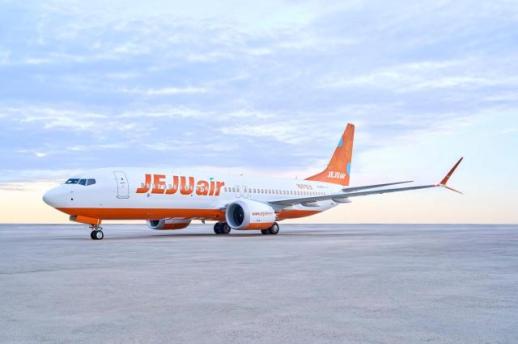 Jeju Air Reports 644 Billion Won Operating Profit Amid High Oil Prices Jeju Air has reported a second consecutive quarter of profit despite the pressures of rising international oil prices and exchange rates. The airline attributed its performance rebound to improved fuel efficiency through fleet modernization and a recovery in passenger demand. On May 8, Jeju Air announced that it achieved a revenue of 498.2 billion won and an operating profit of 64.4 billion won in the first quarter of this year. This represents a 36.5% increase in revenue compared to the same period last year, while the operating profit turned around from a loss of 35.7 billion won. The net profit for the period was recorded at 12.2 billion won. Following an operating profit of 18.6 billion won in the fourth quarter of last year, Jeju Air has maintained profitability for two consecutive quarters. This performance is seen as commendable given the challenges faced by most airlines due to high fuel prices and fluctuating exchange rates. The airline cited improvements in its revenue structure through fleet modernization and an increase in passenger demand as key factors behind its improved results. In the first quarter, Jeju Air added two next-generation B737-8 aircraft to its fleet. It also returned two leased B737-800 aircraft that were over 20 years old in November last year and February this year, and sold two older aircraft in March and April. As a result, fuel costs for the airline decreased by approximately 16% compared to the previous year. In addition to the 10 B737-8 aircraft currently in its fleet, Jeju Air plans to introduce five more by the end of the year. The number of passengers in the first quarter totaled 3,311,358, making it the leading low-cost carrier in South Korea. The load factor during this period was 91.9%, surpassing the national airline average of 88.8%. Jeju Air aims to continue its trend of improved performance through efficient route management. To address the uncertainties posed by increased volatility in fuel prices and exchange rates, as well as intensified competition, the airline plans to focus on sound management strategies. A company representative stated, "We will gradually improve our revenue structure based on fleet modernization and efficient route operations."* This article has been translated by AI. 2026-05-08 17:52:20
 -
 Test Drive: Lexus RX450h+ Offers Flexible Electric and Hybrid Driving The first impression of the Lexus RX450h+ is its striking copper-toned exterior. The bronze color subtly shifts in the sunlight, exuding a sense of luxury that stands out in any setting. During the May holiday, I tested the RX450h+ in Seoul and the Boryeong area of South Chungcheong Province. This vehicle is notable for being a plug-in hybrid (PHEV) and part of the increasingly popular sport utility vehicle (SUV) segment. Activating the EV mode on the console, I noticed the driving range displayed on the dashboard, based on internal combustion, remained at 790 km. Even after driving through downtown Seoul, this number barely decreased. It was only when I thought, "I’m driving through Seoul for free," that I saw the electric driving range drop from 24 km to 15 km on the left side of the dashboard. The RX450h+ allows drivers to switch seamlessly between electric and hybrid modes based on their needs. Notably, when driving in hybrid mode, the electric vehicle battery charges automatically, allowing for a dual benefit. On May 1, while traveling from Seoul to Boryeong for a business trip, the benefits of EV mode became evident. The vehicle operated almost entirely on the electric motor, with minimal engine engagement. The smooth ride in low-speed urban areas felt akin to that of an electric sedan. The RX450h+ is equipped with an 18.1 kWh high-capacity lithium-ion battery, enabling approximately 56 km of driving in electric mode when fully charged. For drivers who frequently commute or travel within urban areas, the option to charge at a parking facility makes it a practical choice for electric driving. Once on the West Coast Highway, the vehicle's character shifted again. Engaging hybrid mode activated the 2.5-liter inline four-cylinder gasoline engine, delivering a refreshing acceleration. The engine and electric motor worked together seamlessly to increase speed. During heavy traffic between Hwaseong and Pyeongtaek, I experienced the effectiveness of the driver assistance systems. The Dynamic Radar Cruise Control (DRCC) maintained a stable distance from the vehicle ahead, even in slow-moving traffic. In fact, even in stop-and-go traffic at around 30 km/h, the vehicle responded smoothly without abrupt acceleration or deceleration. When traveling over 100 km/h, if the car in front suddenly slowed down, the RX450h+ naturally adjusted its speed. This feature significantly reduced fatigue during long drives. The interior focuses on Lexus's signature comfort. The driver's seat incorporates the Tazuna concept, inspired by horseback riding, enhancing the connection between the driver and the vehicle. It feels more like a refined, eco-friendly vehicle than an aggressive sports car, showcasing a new direction for Lexus in the era of electrification. 2026-05-08 16:34:58
 -
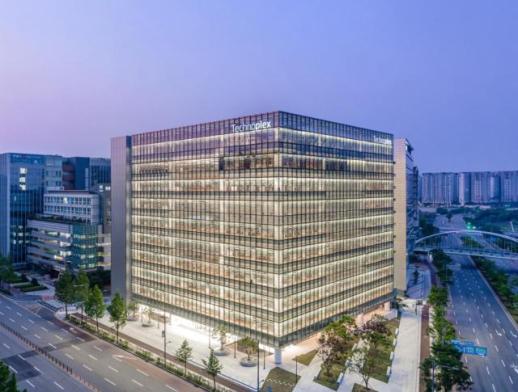 Kumho Tire Reports 42.9% Increase in Operating Profit Amid Electric Tire Expansion Kumho Tire & Technology reported a significant increase in revenue, driven by the expansion of its electric tire supply. Despite tariffs and high oil prices, the company continued to see strong performance in the global replacement tire market. On May 8, Kumho Tire announced that its consolidated revenue for the first quarter of 2026 reached 5.31 trillion won, with an operating profit of 506.9 billion won. This marks a 7% increase in revenue and a 42.9% increase in operating profit compared to the same period last year. The tire segment alone saw revenue rise by 9.3% to 2.56 trillion won, with operating profit increasing by 31.1% to 437.5 billion won. The operating profit margin stood at 17.1%. Kumho Tire attributed its success to the increased supply of new car tires for electric and hybrid vehicles, along with a rise in replacement tire sales in key markets such as Europe, South Korea, and China. In the first quarter of this year, the proportion of sales for high-inch tires (18 inches and above) in the passenger and light truck tire segment rose to 49.1%, up 2 percentage points from the previous year. The share of electric vehicle tires in the new car tire sales for passenger and light trucks increased to 29.6%, a rise of 6.6 percentage points compared to the same period last year. Kumho Tire is also supplying new car tires for internal combustion and electric vehicles to global premium automakers such as Mercedes-Benz, BMW, and Ford. The company has established itself as a quality competitor by supplying new car tires for over 300 models across more than 50 brands, including Porsche, in the global automotive market. The sales of Hanon Systems, a subsidiary of Kumho Tire since 2025, reached 2.75 trillion won in the first quarter of 2026, reflecting a 5% increase from the previous year, while operating profit surged by 361.1% to 97.2 billion won. Kumho Tire expects its global production volume to continue to rise. This year, expansions at its production facilities, including the plant in Tennessee, are set to be completed. The company aims to achieve a 51% share of high-inch tires and over 33% for electric vehicle tires in its new car tire sales, while also accelerating partnerships with premium brands. A Kumho Tire representative stated, "The passenger tire line at the Tennessee plant will be completed in the first half of the year, while the commercial truck tire line will be finished in the second half, with initial production expected to begin. An additional 5% of overall production, or about 5.5 million tires, is anticipated to be produced annually."* This article has been translated by AI. 2026-05-08 15:51:27
 -
 Hyundai Motor Group Appoints Choi Jun-young as Head of Labor Policy Hyundai Motor Group has appointed Choi Jun-young, president of Kia, as the head of its labor policy division. On May 8, the group announced several executive appointments aimed at strengthening labor and production operations. Choi will oversee the policy development department, which is tasked with responding to the rapidly changing labor environment, including the implementation of the Yellow Envelope Law (amendments to Articles 2 and 3 of the Labor Union Act). Choi is recognized for his on-site leadership and exceptional stakeholder coordination skills. Hyundai Motor Group expects him to contribute to labor stability and the establishment of advanced labor relations. Jeong Sang-bin, who previously led the policy development department, has been appointed to oversee labor relations policy at Hyundai Mobis. Jeong will leverage his expertise in labor matters as the company navigates disagreements with labor over the sale of its lamp and bumper business. Song Min-soo has been appointed to manage Kia's domestic production and labor operations. He will focus on maintaining a stable production system and driving production innovation as the Chief Safety Officer (CSO). A Hyundai Motor Group official stated, "Today's announcement reflects our commitment to stable labor relations and efficient production operations, considering experience and expertise in these appointments." 2026-05-08 12:11:39