
Journalist

Oh Joo-seok
farbrother@ajunews.com
-
 Nexen Tire Q1 Operating Profit Rises 33.1% to 54.2 Billion Won on Record Sales Nexen Tire said it posted record quarterly revenue despite slowing global demand, helped by stronger sales in Europe and the United States and a higher share of higher-margin products. In an earnings filing on April 29, the company said first-quarter operating profit rose 33.1% from a year earlier to 54.2 billion won. Revenue increased 8.7% to 838.3 billion won, the highest quarterly figure on record, it said. Net profit was estimated at 61.9 billion won, up 55.3% from a year earlier. Nexen Tire said solid sales in major markets including Europe and the U.S. lifted both revenue and operating profit. It said the sales mix shifted further toward higher-value products, including premium original equipment tires and tires for SUVs and electric vehicles. Tires of 18 inches and larger accounted for 40% of revenue, it said. The company also cited management efficiency efforts as improving overall profitability. During the first quarter, Nexen Tire launched its high-performance N'Fera Sport and all-weather N'Blue 4Season 2 in the domestic market after rolling them out in Europe and the U.S., targeting premium demand. In Latin America and the Asia-Pacific region, it introduced the N'Blue S, a high-efficiency summer tire, and said it is working with local distributors to strengthen retail competitiveness. It said it is seeing strong growth in key strategic markets such as Australia and Japan as it seeks to diversify its global sales structure. With external uncertainty expected to persist in the second quarter, Nexen Tire said it plans to continue efforts to strengthen its mid- to long-term growth foundation. "Despite an uncertain business environment, we delivered solid results," a company official said. "We will respond flexibly to market changes while continuing to strengthen product competitiveness and operational efficiency to sustain sound growth."* This article has been translated by AI. 2026-04-29 17:34:11
 -
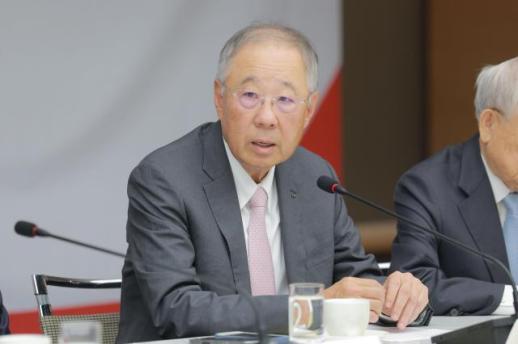 FKI Chairman Ryu Jin Says Two-Thirds of Top 10 Groups’ New Hires Will Be Entry-Level Ryu Jin, chairman of the Federation of Korean Industries, said on the 29th that he would help address youth employment as young people struggle to find jobs. Speaking at the 2026 Korea Shared Growth Job Fair, Ryu said the country’s 10 largest business groups plan to hire a total of 52,000 people this year, up 2,500 from last year. He said about two-thirds of those hires will be entry-level young workers. In congratulatory remarks, Ryu said it is time for the government and companies to act as “one team” to craft solutions for youth employment. “The global job market is being shaken by the AI revolution and industrial restructuring,” he said, adding that new hiring has already fallen sharply in some fields. He said conditions at home are also difficult. “Recent employment indicators show total employment increased, but youth employment fell by about 140,000,” he said, adding that young people’s perceived job conditions remain worsening. Ryu called the joint response by the government and the business community an appropriate step. He said the job fair is the largest ever, with seven business groups, seven government agencies, 15 conglomerate groups and 700 companies taking part, calling it a venue that offers young people practical opportunities. He also pointed to shifting corporate views, saying a survey of the top 500 companies found more than 70% said hiring should be expanded regardless of economic conditions. “The business community will work with the government to build a foundation where young people can pursue their dreams,” Ryu said. “We will keep working to the end for a Korea where young people can smile.”* This article has been translated by AI. 2026-04-29 17:21:00
 -
 GM Korea Union Seeks 30 Million Won Bonus, 149,600-Won Monthly Base Pay Raise The GM Korea branch of the Korean Metal Workers' Union said Tuesday it has finalized its 2026 wage and labor contract demands, calling for a performance bonus of about 30 million won per union member and a 149,600-won increase in monthly base pay. The union said it confirmed the proposal through a recent meeting of interim delegates. It said the bonus was calculated by allocating 15% of 10% of GM Korea's total sales last year, which it put at 12.6 trillion won, to about 6,300 union members and others. In special demands aimed at future growth prospects and job security, the union included assigning production of follow-up models, future vehicles and next-generation engines. It also called for investing more than 50% of retained earnings in South Korea, restoring domestic market share to 10% and diversifying export markets. The proposal also includes launching the Buick Envista in South Korea, a model the company currently produces domestically and exports entirely. The union said it plans to discuss with management measures to ensure and strengthen the sustainability of the service technology center and high-tech center, as well as issues involving nonregular workers.* This article has been translated by AI. 2026-04-29 16:39:51
 -
 South Korea Lawmakers Push Strategic Export Finance Fund to Boost Arms Sales South Korea’s National Assembly began accelerating debate on legislation aimed at closing a financing gap that has hindered defense exports, as competition in large export projects increasingly hinges on bundled financial support. The Assembly’s Fiscal and Economic Planning Committee held a public hearing April 29 at the main Assembly building to discuss the need for the proposed Strategic Export Finance Support Act. The bill, introduced by Democratic Party lawmakers Han Jeong-ae and Ahn Do-geol and others, would establish a Strategic Export Finance Fund to build a system for timely financing in export projects where competition between countries is intense. Speakers said the global defense market has shifted beyond price competition to “financial package” competition, with buyers often demanding technology transfer, offset deals and investment as part of contract terms — burdens difficult for companies to shoulder alone. Korea’s defense firms, despite favorable conditions tied to the Middle East and the Russia-Ukraine war, have struggled to secure policy financing. Data released from the Export-Import Bank of Korea showed defense industry lending accounted for just 4.7% last year, compared with ships at 19.3%, construction plants at 11.1%, autos at 9.9% and electronics at 9.9%. To supplement limited lending, the bill calls for creating the fund through contributions from exporters that receive support such as buyer’s credit. Companies would pay about 1% of the disbursed amount, or up to 5% if linked to export industry cooperation, to help backfill financing shortfalls. Kwon Heon-cheol, a professor of defense economics at Korea National Defense University, said fast-growing defense exports face heavy burdens including offset deals. “Large-scale exports require buyer’s credit and guarantees to be combined, so national-level financial support is needed,” he said. Park Chang-gyun, a research fellow at the Korea Capital Market Institute, said existing policy finance has limits in spreading risk across individual firms, making a separate fund necessary for a stable supply of support. The hearing also cited recent defense exports to Poland as an example of constraints. In a $44 billion project, the Export-Import Bank of Korea and the Korea Trade Insurance Corp. provided about $15 billion, but later faced limited additional capacity, affecting the bidding competitiveness of major Korean defense companies. Some participants urged revisions to avoid overlap with a separate bill introduced by the National Defense Committee to create a defense industry development and export promotion fund. Attorney Park In-yong of law firm Yulchon said he agreed with the purpose of the export finance bill but called for clarifying the relationship and scope of the bills to prevent double charges. Industry representatives also warned that contributions of up to 5% could be burdensome. Ahn Sang-nam, head of the defense promotion division at the Korea Defense Industry Association, said requiring an additional 5% payment on supported amounts could create a double cost burden that small and partner firms may struggle to bear. He urged lowering the contribution rate from 5% to 1% to strengthen competitiveness across the defense supply chain. The Fiscal and Economic Planning Committee is set to hold a full meeting April 30 to decide whether to send the bill to a plenary session. If passed, officials plan to pursue institutional steps with a goal of establishing the fund in September. Committee Chair Lim I-ja said there are concerns that exporters’ burdens could be excessive during the fund-raising process and said the bill needs improvements, including addressing potential overlap with policy finance and fairness issues in profit distribution.* This article has been translated by AI. 2026-04-29 16:34:55
 -
 Hyundai Mobis to Launch Limited Auror x Monami Car Care Special Edition Hyundai Mobis is teaming up with Monami, a widely recognized Korean stationery brand, to pitch a new take on car life through its in-house car care brand Auror. The company said Tuesday it will begin limited sales next month of an “Auror × Monami edition” through online and offline channels, adding Monami collaboration goods to Auror’s interior kit. Hyundai Mobis said the partnership is part of a marketing push to position car care items as lifestyle products and broaden customer touchpoints. Auror is Hyundai Mobis’ own vehicle care brand, featuring practical components and a modern design. The name, which the company said means “fragrance, promise and hope” in Spanish, reflects its aim to add a pleasant scent to vehicles while delivering reliable quality. Hyundai Mobis said it chose Monami to lower barriers to entry for Auror by partnering with a familiar household brand and building broader appeal. The two companies share a simple black-and-white design sensibility and used the key message, “When you need a memo in your car,” to link vehicle care with everyday life. The Auror interior kit includes a cleaner for interior use, a dedicated towel, and a limited-edition pen case and writing set reflecting Monami’s identity. The product will be sold through the official Hyundai Mobis online store. It will also be available during May at Monami’s Starfield Suwon store and its Seongsu store. Hyundai Mobis has recently stepped up accessories marketing centered on its online B2C channels, expanding brand exposure and content promotion online and connecting that effort to offline distribution to diversify brand experiences. “The auto accessories market is evolving beyond function toward a lifestyle focus that combines design and storytelling,” a Hyundai Mobis official said.* This article has been translated by AI. 2026-04-29 11:03:18
 -
 Genesis Magma Racing Finishes Surprise Hypercar Debut at 2026 WEC Imola 6 Hours Genesis said Tuesday that its Genesis Magma Racing team successfully finished its first top-class Hypercar entry at the season-opening 2026 FIA World Endurance Championship (WEC) Imola 6 Hours. Unlike most motorsports, which typically last one to two hours and reward the fastest finish, WEC races emphasize durability, with events commonly run over six hours and sometimes eight or 24 hours. Over races that can last up to 24 hours, cars must withstand heavy loads from high-revving engines, brakes that heat up under repeated stopping, and thermal management demands on hybrid motors and batteries. Each car is shared by three drivers, with six drivers rotating across the team, as they manage changing weather, tire wear and other variables while battling for position. Genesis Magma Racing entered its first event with a mix of veterans and newcomers: Andre Lotterer, Pipo Derani, Daniel Juncadella, Mathys Jaubert, Mathieu Jaminet and Paul-Loup Chatin. Midrace, Lotterer moved up to 11th before pitting. Jaubert then took over and made a clean pass on an Aston Martin. After Derani got in as the third driver, the team briefly climbed as high as ninth. Ferrari driver Nicklas Nielsen, who was chasing Jaubert, expressed surprise over team radio, saying, “I don’t understand why that car is faster than us in the corners.” After six hours, the team’s two hypercars averaged 177.97 kph and 176.23 kph around the 4.909-kilometer Imola circuit, finishing 15th and 17th. Cyril Abiteboul, head of Hyundai Motorsport and team principal of Genesis Magma Racing, said the new entrant focused less on the absolute result and more on reliability and execution. “The most important thing we confirmed this weekend is the solid foundation and potential of our team,” he said. Genesis Magma Racing is scheduled to race next month at the season’s second round, the Spa-Francorchamps 6 Hours in Belgium.* This article has been translated by AI. 2026-04-29 09:12:15
 -
 Korean Air Chosen to Lead SkyTeam Safety, Security and Quality Advisory Group Korean Air will help steer safety policy for SkyTeam, the global airline alliance. Korean Air said Tuesday it was elected chair airline of SkyTeam’s Safety, Security and Quality advisory group, known as SSQ. Bennett Allen Walsh, head of Korean Air’s Aviation Safety and Security Office, will serve a two-year term as an SSQ committee chair. The SSQ chair airline advises SkyTeam member carriers on safety, security and quality policies, as members work to raise industry standards worldwide. Korean Air said it will work with the SkyTeam board to advance key safety agenda items and share best practices among member airlines to strengthen cooperation. It plans to focus on reinforcing international standards for the in-flight use of portable battery packs, an issue that has drawn global attention, and on standardizing the SkyTeam emergency response plan, which defines airlines’ procedures, organization and roles during emergencies. A Korean Air official said the role will help solidify the carrier’s standing within SkyTeam and broaden cooperation among member airlines, strengthening its global competitiveness.* This article has been translated by AI. 2026-04-29 08:49:57
 -
 Chaebi, Hyundai Motor launch EV charging subscription with 299 won-per-kWh discount Chaebi, a South Korean operator of fast EV charging infrastructure, said April 29 it has partnered with Hyundai Motor to roll out a Hyundai-only EV charging subscription plan. The plan, aimed at buyers of new Hyundai vehicles, offers a discounted rate of 299 won per kWh at Chaebi chargers and partner roaming stations. It also includes a 10% discount on Chaebi credit purchases of 10,000 won or more and discount coupons for “Chaebi Wash,” a premium hand car-wash service at Chaebi Stay. Customers can sign up through the subscription menu in the My Page section of the Chaebi app. The company said the benefits are designed to apply to all new-car buyers this year, regardless of delivery timing. With monthly fees of 19,900 won or 9,900 won, subscribers can use Chaebi’s ultra-fast and fast charging network nationwide at reduced rates for the remainder of 26. At Chaebi Stay, charging discounts, credit discounts and premium hand-wash benefits are offered as a package. “This cooperation is a starting point for Hyundai Motor and Chaebi to write a new standard for the EV charging experience together,” Chaebi CEO Choi Young-hoon said.* This article has been translated by AI. 2026-04-29 08:39:59
 -
 Kumho Tire Q1 Operating Profit Rises 0.3% to 147 Billion Won Kumho Tire said Monday its first-quarter operating profit rose 0.3% from a year earlier to 147 billion won on a consolidated basis. Revenue fell 3.2% to 1.1678 trillion won, while net profit increased 0.4% to 103.4 billion won. The company said quarterly revenue topped 1.1 trillion won, supported by strong supplies of original equipment tires for new vehicles in North America and Europe and solid sales of higher-margin replacement tires. It has kept quarterly revenue above 1 trillion won for 10 straight quarters since the fourth quarter of 2023. In the first quarter, tires 18 inches and larger accounted for 45.1% of sales. EV tires made up 20.6% of global original equipment revenue, the company said. Kumho Tire has set targets for this year of 5.1 trillion won in revenue, a 47% share for 18-inch-and-larger tires, and a 30% share for EV tire supplies. The company said it plans to build a global production network linking Korea, Europe and North America by expanding plants in Hampyeong and constructing a factory in Europe, aiming to grow its market presence and improve profitability.* This article has been translated by AI. 2026-04-28 17:33:16
 -
 Kia Modernizes South Korea’s Military Trucks, Expands Exports Military trucks remain the South Korean military’s workhorse for moving troops and supplies. Many reservists remember riding in the troop carriers commonly known as “Yukgong” or “Dudonban.” As battlefield systems modernize, so do the trucks — now designed for combat use and equipped with features once unthinkable in the field, including navigation. Kia says the vehicles are also finding buyers abroad, including in Europe and the Middle East. ◆Military trucks as infantry transport During battalion-level and larger exercises, 2.5-ton K511 trucks — widely called Yukgong trucks — are a familiar sight filling parade grounds. Troops typically board assigned vehicles after orders are issued. About 10 to 20 soldiers ride in the back, holding their rifles close between their legs. Depending on the mission, they may ride in a “four-direction security” posture, aiming outward. Military trucks are central to infantry movement and logistics, carrying both personnel and the supplies needed for operations. K511 trucks assigned to rapid-response units carry platoon-level troops along with equipment such as ammunition. The trucks long used by troops carry little visible branding, but most are produced by Kia, which also supplies the military with vehicles including the Retona command vehicle, ambulances for medical evacuation and armored reconnaissance vehicles. Kia has produced standard vehicles for the South Korean military since being designated a defense contractor in 1973. After establishing a special-vehicle research center in 1985, it built a standard platform by producing models including the 2.5-ton Yukgong truck and 5-ton trucks. Kia’s special business division said deliveries of military special-purpose vehicles totaled 6,122 units in 2024 and 5,789 in 2025. In the first quarter of this year, deliveries rose to 1,129 units, up 36% from 830 a year earlier. Based on performance proven at home, the vehicles are exported to about 30 countries, including Poland. ◆From familiar trucks to next-generation vehicles Older military trucks were difficult to operate, with no power steering and drivers forced to muscle the wheel. Newer models have changed sharply, adding power steering, navigation and driver-assistance systems to improve operating conditions. The K511 Yukgong truck and the Retona are also being replaced over time. The shift began with the light tactical vehicle, the KLTV (K151). Mass-produced in 2017, the K151 was newly developed on Kia’s Mohave platform and is intended to replace command vehicles such as the Retona and reconnaissance vehicles over the long term. The K151 uses a 3-liter diesel engine rated at 225 horsepower and an eight-speed automatic transmission, allowing speeds up to 130 kph. In 2023, it secured a 400 billion won export contract with Poland, a deal cited as evidence of South Korea’s competitiveness in military vehicles. A next-generation medium standard vehicle, the KMTV, intended to replace the Yukgong truck over the long term, began deliveries to the South Korean military in the second half of last year. Developed on Hyundai Motor Co.’s Pavise truck, it includes navigation, front and rear cameras and an around-view monitor — features comparable to commercial trucks. With a 280-horsepower diesel engine and an eight-speed automatic transmission, it can operate on 60% grades and in water up to 1 meter deep. Kia is also pointing to electrification and unmanned systems as the next step. The company has recently showcased a hydrogen ATV concept vehicle, “Black Veil,” at defense exhibitions in South Korea and overseas. Using a hydrogen fuel cell, it produces less noise and heat and can travel farther than internal-combustion vehicles, Kia says. It has been assessed as suitable for situations requiring rapid movement in high-risk areas. A Kia official said the company is presenting a range of special-purpose vehicles applying its technology, “from medium trucks to pickups,” and added, “We will build customized special-mission vehicles the military needs and present a future vision for military mobility.”* This article has been translated by AI. 2026-04-28 16:45:45