
Journalist

Oh Jooseok
farbrother@ajunews.com
-
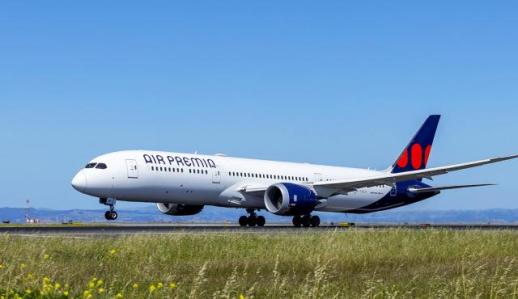 Air Premia pilots move closer to strike, file mediation request in Seoul Air Premia pilots have begun steps that could lead to a strike. According to the aviation industry on Monday, the Air Premia pilots union filed a mediation request with the Seoul Regional Labor Relations Commission. The move followed a strike-authorization vote held Jan. 29, which passed with 83.8% support (62 votes), and came after final talks with management broke down Monday morning. The union has sought better pay, saying wages have been frozen for years. The union was initially reported to have demanded an 8.3% increase in total wages. It later revised its proposal, seeking raises only for first officers at pay grade step 4 or below and retroactive application of increases since October 2024, but management rejected it. The union will make a final decision on whether to strike after a 14-day mediation process. Shin Dong Hun, head of the Air Premia pilots union, said consumer prices rose 24% over the past five years, cutting real wages. “The 8.3% we proposed is about one-third of the inflation rate,” he said, adding that management is focused on cutting costs despite what he described as significant union concessions. The risk of strikes has been rising across the airline industry this year. Earlier, the Air Busan pilots union sought mediation with the Busan Regional Labor Relations Commission after wage talks for 2025 broke down. The union demanded a 13% increase, citing pay levels at Jin Air, which is set to be merged, while management offered 3.7%, leaving the sides far apart. Pay gaps between airlines have emerged as a key issue in mediation requests. According to the Financial Supervisory Service’s electronic disclosure system, Air Busan employees’ average pay through June last year was 36 million won, or 81.8% of Jin Air’s 44 million won. Airlines’ reluctance to raise wages comes amid a weak business environment, with a strong exchange rate, fuel-cost burdens and intensifying competition weighing on profitability. The industry believes most carriers, except full-service carrier Korean Air, posted operating losses last year. An Air Premia official disputed the union’s claim of a wage freeze, saying annual pay has risen steadily since 2023 as pay steps were adjusted. The official also said pilots’ pay increases have outpaced those of other employees even as the union prepares for a strike. 2026-02-03 14:42:21
 -
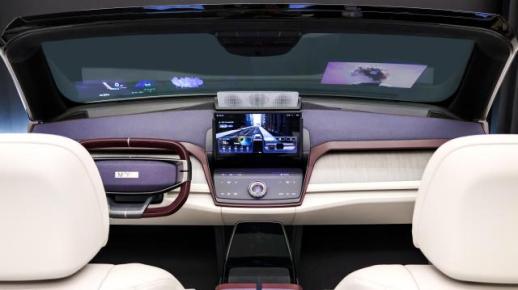 Hyundai Mobis Targets 2029 Mass Production of Holographic Windshield Display With European Partners Hyundai Mobis said Tuesday it is teaming up with global industry leaders to pursue mass production of a holographic windshield display by 2029. The South Korean auto parts maker said it has launched a “Quad Alliance” with three European specialists: German optics company Zeiss, German adhesive tape maker Tesa and French automotive glass company Saint-Gobain Sekurit. The holographic windshield display, or HWD, uses a vehicle’s front windshield as a large display without a separate physical screen, allowing drivers to check driving information while keeping their eyes forward. Hyundai Mobis began developing the HWD through an exclusive collaboration with Zeiss in 2024. It said it will expand that partnership ecosystem starting this year, aiming to commercialize the technology by 2029. Hyundai Mobis will oversee the overall system, including designing and producing the projector that casts images. Zeiss will design the hologram-based optical element film to improve clarity and visibility. Tesa will handle mass replication of the high-function film, and Sekurit will manage the precision process of bonding the film to windshield glass. Hyundai Mobis said the partnership creates a one-stop supply chain spanning technology design, parts production and assembly. The companies are targeting light transmittance of at least 92% — comparable to clear glass — and brightness of more than 10,000 nits, about twice that of outdoor LED billboards, to keep images clear even in bright daytime conditions. Hyundai Mobis said it plans to use the optical characteristics of the film so the driver cannot see the front passenger’s HWD screen. That would allow passengers to watch video, play games and use other infotainment features while driving. Jung Soo Kyung, head of Hyundai Mobis’ Electronics Business Unit, said the company will provide customers with differentiated value through “a core technology that opens the future of in-vehicle displays.” She said Hyundai Mobis will work closely with global partners through mass production to strengthen competitiveness and reinforce its image as a leader in innovative technology in the global market.* This article has been translated by AI. 2026-02-03 11:12:00
 -
 Hyundai Motor Breaks Ground on Immersive Safety Experience Center at Ulsan Plant Hyundai Motor has broken ground on an immersive safety experience center to be built at its Ulsan plant. The automaker said Wednesday it held a groundbreaking ceremony Tuesday at the Ulsan plant with about 200 labor and management representatives in attendance, including Choi Young Il, head of domestic production and chief safety and health officer; Jung Won Dae, vice president in charge of production support; and union leaders Lee Jong Cheol and Lee Chang Min. Set to open in the second half of this year, the H-Safety Experience Center will be a safety media facility covering 280 pyeong on the Ulsan plant site. It will be open to employees, partner-company workers and members of the public. Hyundai Motor said the center will offer training content using augmented reality, holograms and special effects. It also plans, for the first time among safety experience centers in South Korea, to recreate the Ulsan plant’s real production sites and hazardous situations using projection-mapping technology. Visitors will move through six zones — a welcome zone, safety zone, traffic safety zone, accident experience zone, risk assessment zone and emotional safety zone — to take part in training built around real-world accident cases. In the safety zone, visitors will be able to experience a smoke-filled fire scene using special effects. In the accident experience zone, they can watch a life-size forklift collision simulation. After it opens, Hyundai Motor plans to provide immersive safety training to about 20,000 people a year. “The H-Safety Experience Center is a symbolic place that shows Hyundai Motor’s commitment to top-level safety,” a company official said. “We expect it to help everyone build lasting safety awareness by using a range of new technologies.” 2026-01-29 08:51:00
 -
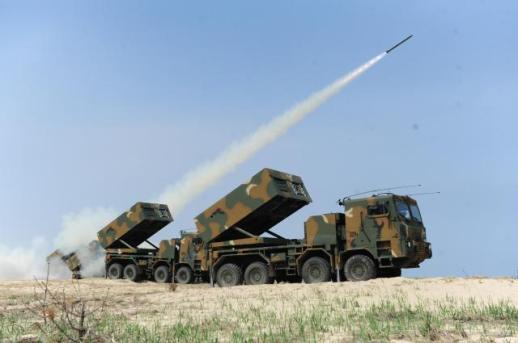 Hanwha Aerospace seeks Chunmoo rocket launcher deal in Norway SEOUL, January 29 (AJP) - Hanwha Aerospace is emerging as a key contender to supply multiple rocket launchers to Norway, as the Nordic country moves ahead with a roughly $2 billion long-range artillery procurement. Norway’s parliament has given final approval to a plan to acquire a long-range artillery system, local media reported on Wednesday. The proposed deal is estimated to include 16 Chunmoo multiple rocket launchers along with related equipment. Industry officials said Norway is likely to favor Hanwha Aerospace as the development of new multiple rocket systems in Europe could take years, while Hanwha is seen as capable of delivering the systems more quickly. Hanwha recently established a local production facility in Poland for Chunmoo guided missiles and plans to begin deliveries as early as 2030. The Chunmoo system can be equipped with missiles with a range of up to 500 kilometers and is regarded as faster to deploy than competing systems. A win in Norway would mark Hanwha’s further expansion in Europe, following its entry into the Polish market late last year. * This article, published by Aju Business Daily, was translated by AI and edited by AJP. 2026-01-29 08:40:28
 -
Hanwha Aerospace Seen as Front-Runner for Norway’s Chunmoo Rocket Deal Hanwha Aerospace is widely being cited as a leading contender to supply Norway’s multiple rocket launcher program, with analysts pointing to fast delivery and strong performance as key advantages. According to local media reports on Thursday, Norway’s parliament gave final approval to a US$2 billion plan to procure a long-range artillery system. The export contract is believed to include 16 Chunmoo launchers and related equipment. Industry watchers say Norway is likely to choose Hanwha Aerospace, as developing new multiple rocket systems in Europe can take considerable time, while Hanwha is seen as able to deliver more quickly. Hanwha Aerospace recently set up a local production facility in Poland for Chunmoo guided missiles and is expected to begin deliveries as early as 2030. The Chunmoo’s range can be extended to up to 500 kilometers (311 miles), and the company is viewed as faster than rivals in delivering systems, giving it an edge in the competition. If Hanwha wins the project, it would follow its entry into Poland late last year with a move into the Norwegian market.* This article has been translated by AI. 2026-01-29 08:21:32
-
 Korean GM Workers Rally Against Mass Layoffs at Sejong Logistics Contractor "Direct and subcontract workers have united. Bring out the real boss now." Direct employees and subcontract workers at Korean GM rallied together over mass layoffs involving subcontract workers at the company’s Sejong logistics center. On Jan. 28, about 300 members of the Korean Confederation of Trade Unions and the Korean GM branch of the Korean Metal Workers’ Union held a joint rally outside the west gate of Korean GM’s Bupyeong plant, demanding that the company immediately reverse what they called unfair dismissals of Sejong logistics subcontract workers. Despite temperatures of minus 3 degrees Celsius, protesters chanted, "Bring out the real boss now." About 50 laid-off workers from Woojin Logistics, a Sejong logistics center contractor, wore closure notices on their backs to protest the dismissals. The union said Korean GM "preemptively fired subcontract workers with bargaining power" ahead of the March implementation of revisions to Articles 2 and 3 of the Trade Union Act, known as the Yellow Envelope Act. Woojin Logistics workers formed a union in June last year, citing low pay and forced overtime, the union said. Korean GM later terminated its contract with Woojin Logistics, and 120 workers were laid off effective Jan. 1 this year. Park Ok Ju, head of the KCTU’s North Chungcheong regional headquarters, said Korean GM promised to resolve the issue through talks while saying it would ensure employment succession, but then carried out layoffs. She also criticized what she described as shifting blame to striking workers after consumer complaints emerged over parts supply disruptions. The Sejong logistics union expressed regret that months of protests have disrupted parts supplies. About 1.5 million Chevrolet vehicles are registered in South Korea, raising concerns that a prolonged dispute could increase inconvenience for drivers. Sun Ji Hyun, co-chair of a joint committee supporting the GM parts logistics union, said workers understood the impact on consumers and felt sorry, but argued that ignoring what she called injustice because of inconvenience would make it impossible to correct wrongdoing by GM’s capital. Direct employees said they would also support efforts to resolve the dispute. The union claimed the Sejong layoffs, along with Korean GM’s plan to close nine company-run service centers in South Korea, signals restructuring. It said it has filed for an injunction with the Incheon District Court to block the closures. Ahn Gyu Baek, head of the Korean GM union branch, said a special labor-management meeting was held the previous day to seek withdrawal of the service-center closure plan. He warned that if both the service-center issue and the Sejong parts logistics dispute are not resolved, labor-management relations this year will head toward a breakdown. The union said it delivered a request for negotiations to Korean GM headquarters, urging the parent company to take responsibility for resolving the dispute. It also said it plans to hold a performance on Jan. 29 at the Chevrolet Daejeon Center with vehicle owners to oppose the service-center closures. Kim Gi Yeon, secretary-general of the KCTU’s North Chungcheong regional headquarters, said Korean GM is taking steps in advance to undermine the intent of the Yellow Envelope Act revisions. He said the moves appear to reflect the possibility of downsizing or withdrawal from South Korea ahead of the completion of a 2028 agreement between global GM and the Korea Development Bank.* This article has been translated by AI. 2026-01-28 18:03:00
 -
 Korean Air invests in drone startup to boost unmanned aircraft capabilities SEOUL, January 26 (AJP) - Korean Air has made a strategic investment in drone specialist Pablo Air, aiming to secure core unmanned-aircraft technologies and expand its presence beyond its traditional aviation business. The two companies signed a strategic equity investment agreement on Jan. 23 at Korean Air’s Seosomun office in central Seoul, according to Korean Air, Monday. Pablo Air specializes in swarm artificial intelligence technology, which allows multiple drones to operate as a coordinated group, similar to birds flying in formation. Pablo Air has demonstrated its technological competitiveness by becoming the first company in South Korea to reach Stage 4 of a five-stage “swarm coordination” technology framework, according to Korean Air. Korean Air said the deal forms part of its mid- to long-term growth strategy in aerospace, which it has identified as a key future business area. The company plans to apply Pablo Air’s swarm AI autonomous-flight algorithms, integrated control platform, and small- and medium-sized drone development capabilities to its own medium- and large-sized unmanned aircraft, expanding its footprint in the defense sector. The partnership goes beyond financial backing and is intended to support Pablo Air’s stable growth by combining the infrastructure of a large corporation with the agility of a technology venture, Korean Air said. The two sides plan to conduct joint research and development on swarm flight, explore new business models, and share unmanned-aircraft technologies and business expertise. “This investment is a strategic choice to secure future competitiveness in a rapidly changing industrial environment and part of our efforts to build a healthy industrial ecosystem,” a Korean Air official said. “We will continue to pursue technological innovation and shared growth by strengthening cooperation with capable small and venture companies.” Korean Air operates a dedicated unmanned-aircraft business unit and develops drones domestically. It said it has produced multiple systems now in use by the South Korean military and local governments, including medium-altitude surveillance and reconnaissance drones, low-observable unmanned wingmen, division-level reconnaissance drones, multipurpose unmanned helicopters and vertical takeoff-and-landing unmanned aircraft. * This article, published by Aju Business Daily, was translated by AI and edited by AJP. 2026-01-26 09:10:09
 -
 South Korea's Jin Air posts first annual loss in 3 years, hit by weak won SEOUL, January 19 (AJP) - South Korean low-cost carrier Jin Air returned to the red last year for the first time in three years, pressured by a weak won and intensifying competition in the airline industry. The company said on Monday that its standalone revenue fell 5.5 percent from a year earlier to 1.38 trillion won ($1 billion), based on preliminary results. Profitability swung to a loss for the first time since 2022, when the COVID-19 pandemic severely disrupted travel. Jin Air posted an operating loss of 16.3 billion won last year, compared with an operating profit of 163.1 billion won in 2024. The airline had recorded operating profits for 10 consecutive quarters from the fourth quarter of 2022 through the first quarter of last year, but slipped into an operating loss in the second quarter due mainly to the won's weakness. Its annual net result also turned negative, with a net loss of 8.8 billion won, reversing a net profit of 95.7 billion won a year earlier. Despite the headwinds, the carrier said it launched new routes, including Incheon-Ishigaki in April and Jeju-Taipei in October, and worked to improve operating efficiency in an effort to cushion the impact on earnings. * This article, published by Aju Business Daily, was translated by AI and edited by AJP. 2026-01-19 17:15:24
 -
 Hyundai Motor's Palisade named North America's top utility vehicle of the year SEOUL, January 15 (AJP) - Hyundai Motor said on Thursday that its Palisade sport utility vehicle has been named this year's North American Utility Vehicle of the Year, citing the model’s upgraded hybrid system and strong appeal in the U.S. market. Finalists in the 2026 utility category included the Hyundai Palisade, Lucid Gravity and Nissan Leaf. Hyundai said the Palisade emerged as the winner following close competition. Judges cited the Palisade’s next-generation hybrid system, which improves both performance and fuel efficiency, as well as its spacious interior designed to meet North American consumer preferences, the company said. The Palisade’s new hybrid system features a transmission with two integrated motors and can be paired with multiple engine configurations, allowing performance and fuel economy to be optimized by vehicle type, Hyundai said. Electrification-focused technologies also enhance driving performance, ride comfort and the in-vehicle experience. Jeff Gilbert, chairman of the award jury, said the Palisade “sets the standard for a 21st-century family vehicle,” pointing to its interior space, driving dynamics and range of technologies. The North American Car of the Year awards, established in 1994, are among the auto industry’s most closely watched honors. 2026-01-15 10:37:57
 -
 CES 2026 : Boston Dynamics' Atlas wins CNET's top robot honor at CES 2026 SEOUL, January 09 (AJP) - Hyundai Motor Group said Thursday that Atlas, a humanoid robot developed by its robotics company Boston Dynamics, won CNET’s Best Robot award in the Best of CES 2026 honors. Atlas is central to Hyundai Motor Group’s AI robotics strategy unveiled in Las Vegas. The next-generation, electric Atlas development model, shown for the first time at CES 2026, was designed for high efficiency in real manufacturing settings, with autonomous learning and flexibility to handle varied work environments, the group said. CNET cited Atlas’ natural, humanlike walking ability and refined design in naming it Best Robot at CES 2026. The outlet said the robot supports the group’s vision of human-centered AI robotics through next-generation machines built to collaborate with people. “Atlas was easily the best of the many humanoid robots we saw at CES 2026,” CNET said. “The prototype demonstrated on the show floor left a strong impression with its natural gait, and the product version, closer to mass production, has completed preparations to be deployed at Hyundai Motor Group manufacturing plants starting this year.” Hyundai Motor Group plans to deploy Atlas first in 2028 at Hyundai Motor Group Metaplant America, or HMGMA, in Savannah, Georgia. It will begin with processes where safety and quality gains have been verified, such as parts sequencing, and then expand use in stages. By 2030, the group plans to broaden Atlas’ role to various parts-assembly processes and more complex work, including repetitive tasks and handling heavy loads, to improve worker safety and accelerate smart-factory innovation. After performance verification, it plans to expand deployment across the group’s global production sites. Developed for industrial use, Atlas is a general-purpose humanoid robot designed to integrate smoothly with existing factory equipment. It can lift up to 50 kilograms (110 pounds) and perform delicate tasks, and it is designed to be waterproof and washable for easier maintenance. The robot is built to operate reliably from minus 20 degrees Celsius to 40 degrees Celsius (minus 4 to 104 degrees Fahrenheit). It also includes advanced rotary joints and sensors for autonomous movement and work in complex industrial environments, and it can quickly adapt to new tasks through AI-based learning. With a fully rotating joint structure offering 56 degrees of freedom and a human-size hand equipped with tactile sensors, it can autonomously handle high-difficulty tasks. Robert Playter, CEO of Boston Dynamics, said, “Atlas is the best robot we have developed, and this award means the team’s efforts are bearing fruit as we work to bring the world’s top humanoid to market.” * This article, published by Aju Business Daily, was translated by AI and edited by AJP. 2026-01-09 15:56:10