
Journalist

SHIN JIA
fromjia@ajunews.com
-
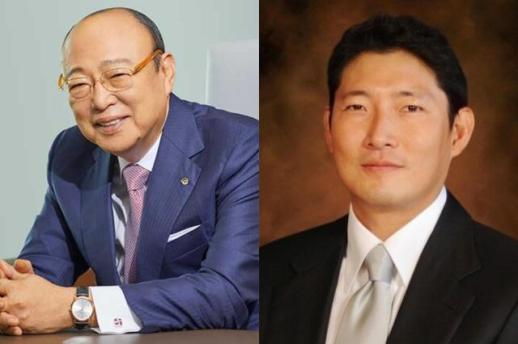 Hanwha Jumps to No. 5 in Korea Conglomerate Rankings; Hyosung Rises on Power Gear Boom Hanwha Group and Hyosung Group have expanded rapidly, reshaping South Korea’s top-30 conglomerate rankings, which have typically seen limited movement. According to the Fair Trade Commission’s disclosure on large business groups released on the 29th, Hanwha rose to fifth from seventh. Hyosung also moved up, to 28th from 31st. Hanwha’s total assets increased by about 24 trillion won, to 149.6 trillion won this year from 125.7 trillion won last year, overtaking Lotte Group and POSCO Group. The rise was attributed to combined growth across defense, shipbuilding and energy businesses. In defense, expanded orders at Hanwha Aerospace were a key driver. As of the end of 2025, its backlog for ground-defense systems stood at 37 trillion won, and its annual operating profit topped 3 trillion won. In shipbuilding, Hanwha Ocean’s turnaround stood out. It posted operating profit of 441.1 billion won in the first quarter of 2026, up more than 70% from a year earlier. Analysts cited a strategy focused on high-value LNG carrier orders and increased investment aimed at entering the U.S. naval maintenance and repair (MRO) market as factors behind the asset gains. Energy and infrastructure also contributed. Hanwha Solutions expanded its foothold in the North American solar market, supported by operations at its U.S. “Solar Hub.” Hyosung’s rise was largely attributed to improved performance at Hyosung Heavy Industries, which helped drive growth as its total order backlog exceeded 15 trillion won. The company benefited from a transformer boom tied to rising global demand to replace aging power infrastructure. In the United States, demand for grid upgrades has surged, and supplies of extra-high-voltage transformers have not kept pace. With shortages strengthening pricing power, profitability has been assessed as improving sharply. The spread of artificial intelligence data centers was also cited as a factor. As global big tech companies expand data center construction, demand for large-scale power supply equipment has increased, lifting demand for Hyosung Heavy Industries’ power solutions. A business community official said the top-30 rankings usually do not shift much, but this round of changes was heavily influenced by strong conditions in energy, defense and shipbuilding. The official added that defense-related demand has also been significant due to the prolonged Iran war.* This article has been translated by AI. 2026-04-29 16:56:41
 -
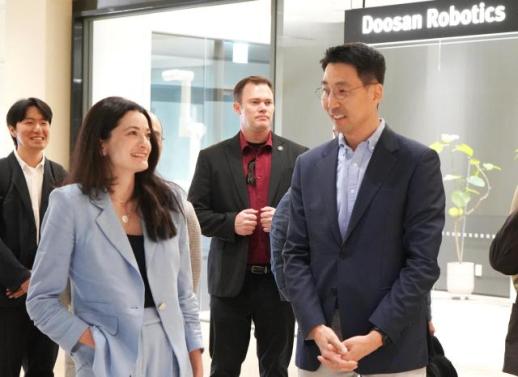 Nvidia Executive Visits Doosan Robotics to Discuss Industrial Humanoid Commercialization Doosan Robotics and Nvidia are teaming up to prepare for the next phase of humanoid robotics. Doosan Group said on the 29th that Madison Hwang, Nvidia’s senior director for Omniverse and robotics product marketing, visited the Doosan Robotics Innovation Center in Bundang-gu, Seongnam, and met with Doosan Robotics CEO Kim Min-pyo to discuss technical cooperation between the two companies. The visit was arranged to explore how Nvidia’s AI and robotics ecosystem could be applied to Doosan Robotics’ intelligent robot solutions and industrial humanoids now under development. At the center of the talks is linking Doosan Robotics’ robot-dedicated execution software, the “Agentic Robot O/S,” with Nvidia’s AI and robotics simulation and training infrastructure. The companies said they aim to build a robot execution platform that can be deployed in real industrial workplaces. Doosan Robotics described the Agentic Robot O/S as software that uses AI to understand a work environment, optimize routes and support safe, precise operations. To advance the operating system, the company said it is reviewing steps including building a robot-to-AI interface, developing standard robot-control protocols, connecting specialized task models and applying technical guardrails for safety control, with plans to flesh out those efforts through cooperation with Nvidia. Doosan Robotics said it plans to roll out an intelligent robot solution based on the Agentic Robot O/S in 2027, followed by an industrial humanoid product in 2028. It also said it is pursuing a plan to present the results of the collaboration with Nvidia at major global exhibitions such as CES in 2027. “The success of physical AI depends not only on how smart the AI model is, but also on the stability of the execution platform that runs it in the field without error,” Kim said. “Based on today’s discussions, we will combine Doosan’s hardware manufacturing capabilities with Nvidia’s software ecosystem to push commercialization of intelligent robot solutions and industrial humanoids.”* This article has been translated by AI. 2026-04-29 15:52:49
 -
 EcoPro BM Q1 Operating Profit Jumps 823% as ESS Cathode Sales Rise EcoPro BM said in a regulatory filing on Tuesday that it posted first-quarter consolidated revenue of 605.4 billion won and operating profit of 20.9 billion won. Revenue fell 3.9% from a year earlier, while operating profit surged 822.6%. The company attributed the results to increased cathode material supply for electric vehicles in Europe and rising global demand for energy storage systems driven by the spread of AI infrastructure. Sales of cathode materials for ESS used to provide stable power for data centers rose 140% from a year earlier. As AI-related semiconductor production facilities expand and more large-scale data centers are built, shipments for power applications such as power tools increased 44% from a year earlier. Kim Jang-woo, EcoPro BM’s CEO, said the company will continue to expand supplies of high value-added cathode materials in line with the spread of AI and a recovery in the electric vehicle market. “Through the successful mass production at our Hungary plant, we will establish ourselves as a key player in the European supply chain and maintain a steady growth trajectory,” Kim said.* This article has been translated by AI. 2026-04-29 15:44:43
 -
 SeAH Besteel Holdings Q1 2026 Operating Profit Jumps to 30.7 Billion Won SeAH Besteel Holdings said it posted first-quarter 2026 consolidated revenue of 967.6 billion won and operating profit of 30.7 billion won, according to a regulatory filing. That was up 7.5% and 69.8%, respectively, from a year earlier. From the previous quarter, revenue rose 12.3% and operating profit jumped 247.1% as sales volumes recovered after the year-end slow season and selling prices increased on higher raw material costs. Its subsidiaries also showed broadly improving results. SeAH Aerospace & Defense Materials reported quarter-on-quarter gains of 14.0% in revenue and 58.0% in operating profit, citing expanding global aircraft demand and growth in the defense market. SeAH Besteel said revenue rose 6.0% and operating profit increased 106.2% from a year earlier, even as low-priced imports from China increased. It said sales volumes grew on demand recovery in sectors including eco-friendly vehicles, infrastructure and defense. From the previous quarter, revenue increased 13.8% and operating profit surged 3212.1% on a sales rebound and higher selling prices. SeAH Changwon Specialty Steel said revenue increased 3.9% and operating profit rose 13.3% from a year earlier as demand grew with expanded investment in semiconductor equipment, boosting sales of stainless steel wire rod and bar steel. From the previous quarter, revenue rose 11.2% and operating profit increased 186.3%, helped by recovering volumes and a larger share of high value-added products. Looking ahead, SeAH Besteel Holdings said it plans to expand sales of high value-added products and focus on developing new markets, centered on high-growth industries such as eco-friendly vehicles, semiconductors and nuclear power. It also said it will respond actively to anti-dumping issues involving Chinese special steel and bar steel products to curb low-priced imports and support a recovery in the domestic market. The company said it will also strengthen strategic synergies between its domestic subsidiaries and its U.S. special alloy production unit, SeAH Superalloy Technologies, to improve global supply-chain competitiveness in materials for aviation, space and defense. SeAH Besteel Holdings said, "We plan to accelerate completion of our global supply-chain portfolio centered on our U.S. base, which is scheduled to begin commercial production in the second half of 2026."* This article has been translated by AI. 2026-04-29 15:25:54
 -
 Ecopro posts 602 billion won Q1 operating profit, up 42-fold Ecopro said in a regulatory filing on the 29th that it posted first-quarter 2026 consolidated revenue of 822.0 billion won and operating profit of 60.2 billion won. Revenue rose about 2% from a year earlier, while operating profit jumped 42-fold from 1.4 billion won. The company attributed the results to a rebound at its secondary-battery affiliates, the consolidation of the GEN (Green Eco Nickel) smelter in Indonesia, and higher metal prices. It said lithium hydroxide prices climbed about 80%, to $18.5 per kilogram from $10.3, helping lift selling prices. By unit, Ecopro BM reported revenue of 605.4 billion won and operating profit of 20.9 billion won, as profitability improved. The company cited expanded cathode-material supplies for electric vehicles in Europe and rising demand for energy storage systems as AI infrastructure spreads. Ecopro Materials posted revenue of 166.5 billion won and operating profit of 15.7 billion won, extending a second straight quarter of profit after returning to the black. It credited the GEN consolidation and increased sales of precursors for ESS use. Ecopro HN reported revenue of 34.7 billion won and operating profit of 5.0 billion won, reflecting stronger demand for chemical filters tied to expanded semiconductor equipment investment and more orders for environmental facilities. Other subsidiaries, including Ecopro Innovation and Ecopro CNG, also showed steady performance, the company said. Ecopro said it is accelerating overseas expansion. Following its move into Morowali (IMIP) in Indonesia, it is pursuing the IGIP (International Green Industrial Park) project. Its BNSI nickel smelter, with annual capacity of 66,000 tons, is targeting mass production next year. For Europe, the company said its Hungary cathode-material plant is set to begin mass production in the second quarter, aiming to secure local customers and diversify sales. A company official said Ecopro maintained profitability on “balanced growth across all business divisions,” adding that “from the second quarter, when higher metal prices are reflected, the pace of earnings improvement will accelerate further.” CEO Song Ho-jun said “preemptive investments, including process innovation and the Indonesia smelting business, are translating into results,” and added that once the Hungary plant ramps up and the IGIP project moves into full swing, the company’s global competitiveness will strengthen further.* This article has been translated by AI. 2026-04-29 15:25:06
 -
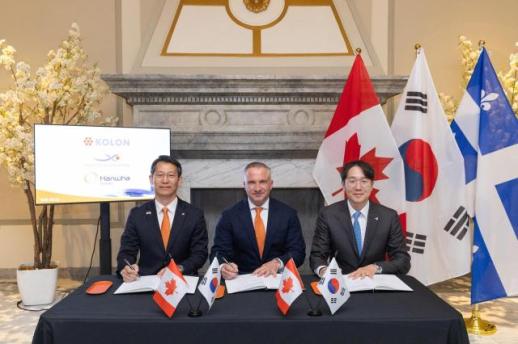 Kolon Spaceworks Expands North America Defense Push With Canada Submarine Teaming Deal Kolon Spaceworks said it is stepping up its push into the North American defense market through cooperation with Hanwha Ocean and Canadian firm Spartec. The company said it signed a teaming agreement, or TA, with Hanwha Ocean and Spartec at ‘CPSP Partners Day’ held April 28 (local time) in Montreal to strengthen competitiveness for Canada’s next-generation submarine program, known as CPSP. Kolon Spaceworks said the agreement establishes a cooperation framework with a local partner that has manufacturing capabilities and helps secure localization capacity needed to carry out the project. Under the CPSP effort, Kolon Spaceworks said it will work with Spartec, a Canadian composites company, to expand in North America based on its own technology. Spartec is headquartered in Erin, Ontario, and has more than 40 years of experience producing composite parts for the automotive, industrial and defense sectors, the company said. Kolon Spaceworks said it plans to use the agreement to find additional local partners and broaden cooperation with institutions, strengthening its mid- to long-term business base in the North American defense market. CEO Ahn Sang-hyun said the deal will reinforce the company’s cooperation network with Canadian partners and contribute to improving competitiveness across Canada’s defense industry. He said Kolon Spaceworks aims to have its core technologies, proven through domestic submarine projects, recognized in global markets and to expand cooperation into aviation and space.* This article has been translated by AI. 2026-04-29 13:39:21
 -
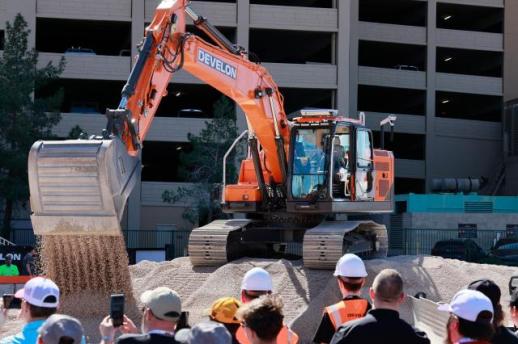 HD Hyundai Site Solution Deploys Unmanned Autonomous Excavator to Job Site for First Time HD Hyundai Site Solution, the intermediate holding company for HD Hyundai’s construction machinery business, has deployed an unmanned autonomous excavator to an active construction site for the first time. The company said Tuesday it delivered the excavator, developed with AI-based autonomy firm Gravis Robotics, to a site operated by European construction company KIBAG. The machine is a 22-ton, mid-size excavator from HD Construction Equipment fitted with the “Real X” solution, combining HD Hyundai Site Solution’s smart platform with Gravis’ AI technology. It is set to work at a construction site in Tuggen, Switzerland, carrying out civil engineering work autonomously on a project measuring 3 meters (10 feet) deep, 12 meters (39 feet) wide and 1 kilometer (0.6 miles) long. The company said the Real X-equipped excavator can operate toward preset targets without being affected by operator fatigue or lapses in concentration, delivering average productivity of about 120% compared with manned operation. The delivery follows an “autonomous construction equipment cooperation project” between HD Hyundai Site Solution and Gravis Robotics. The two companies have continued technical collaboration since signing an MOU at BAUMA 2025 in Germany on demonstrations of autonomous construction equipment. HD Hyundai Site Solution said it plans to expand global partnerships and gradually increase deployments of unmanned autonomous construction equipment, building on earlier European demonstrations and the Swiss site supply. “This project is a first step in implementing unmanned autonomous construction equipment technology at a real job site,” said Kim Pan-young, an executive director at HD Hyundai Site Solution. He said it would help improve safety and productivity and serve as a turning point that brings forward the future of the global construction machinery industry.* This article has been translated by AI. 2026-04-29 10:56:50
 -
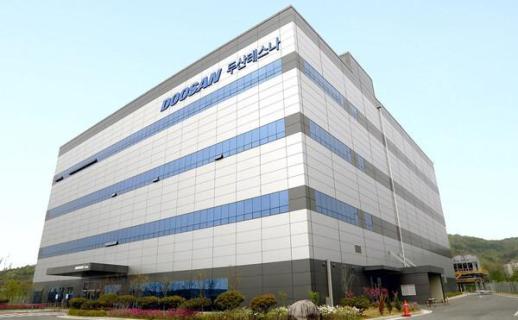 Doosan Tesna Expands Semiconductor Test Capacity, Restarts Pyeongtaek Plant 2 Project Doosan Tesna is making a large investment to expand its semiconductor testing infrastructure. According to industry sources on the 29th, the company disclosed that it decided to acquire about 190.9 billion won worth of tangible assets, including semiconductor test equipment, from Teradyne (TERADYNE (ASIA) Pte.,LTD) and SEMES, among others. Doosan Tesna said it will bring in the equipment in stages through the end of this year and continue expanding its semiconductor testing capacity. The company also increased a previously disclosed equipment investment plan of about 171.4 billion won, announced in October last year. Citing rising product demand, it raised the planned amount to about 205.3 billion won. Counterparties include Advantest Corporation and SEMES, among others. In addition, Doosan Tesna disclosed it will fully resume investment in a new facility for its second plant in Pyeongtaek, after adjusting the start date in line with market conditions. The investment totals about 230.3 billion won, with completion targeted for November 2027. A Doosan Tesna official said the asset purchases and plant construction are “proactive steps to secure a foundation for future growth,” adding they are expected to play an important role in boosting revenue and operating profit over the mid to long term.* This article has been translated by AI. 2026-04-29 08:42:04
 -
 SK Inc. to Invest 400 Billion Won to Raise Stake in SK Ecoplant, Boost Chip and AI Push SK Inc. is moving to strengthen its competitiveness in semiconductor and AI infrastructure by increasing its stake in SK Ecoplant. SK Inc. said in a regulatory filing on the 28th that its board approved an investment of about 400 billion won to buy SK Ecoplant common shares and convertible preferred shares held by financial investors. The company said the move is aimed at linking SK Ecoplant’s growth potential in the semiconductor value chain to SK Inc.’s corporate value and maximizing shareholder value. If SK Inc. purchases the common shares and part of the convertible preferred shares, its stake in SK Ecoplant will rise to 71.2% from 66.7%. Also on the 28th, SK Ecoplant began procedures, including calling an extraordinary shareholders meeting, to buy the remaining convertible preferred shares worth about 650 billion won. SK Inc. said the decision builds on SK Ecoplant’s business reshuffling led by SK Inc., centered on semiconductor and AI infrastructure. SK Ecoplant has expanded its business model beyond its established EPC business for semiconductor production facilities — engineering, procurement and construction — into the AI data center sector. The company said it aims to strengthen its position as a supplier of AI infrastructure solutions. SK Ecoplant’s results reflected the shift. On a consolidated basis, 2025 revenue rose 40% to 12.1916 trillion won from 8.7346 trillion won in 2024, and operating profit jumped 40% to 315.9 billion won from 226.1 billion won a year earlier. SK Inc. said the investment will expand its stake in SK Ecoplant, a key unlisted portfolio company, and accelerate value-up efforts to enhance shareholder value. An SK Inc. official said the company, as SK Group’s holding firm, will continue to actively rebalance its portfolio around semiconductors, AI infrastructure and energy solutions to raise corporate value.* This article has been translated by AI. 2026-04-28 17:12:18
 -
 Lotte Fine Chemical Q1 2026 Operating Profit Jumps 73.9% to 32.7 Billion Won Lotte Fine Chemical reported preliminary first-quarter 2026 results on the 28th, posting revenue of 510.7 billion won and operating profit of 32.7 billion won. Revenue rose 14.6% from a year earlier, while operating profit jumped 73.9%. The company cited stronger earnings from higher sales of TMAC (tetramethylammonium chloride aqueous solution), a raw material used in semiconductor developer solutions, amid a boom in the chip market. It also pointed to higher international prices for ECH (epichlorohydrin), a feedstock for epoxy resins, and increased sales from expanded capacity for Heros, a cellulose-based paint additive. Lotte Fine Chemical said profitability is expected to improve further in the second quarter as it steps up eco-friendly businesses. The company has entered the ammonia marine-fuel supply (bunkering) market and said it succeeded in commercializing the business on April 23, positioning itself as a leading company in clean ammonia. It is also preparing to break ground on a new plant for higher value-added products. Handuck Chemical, a Lotte chemical affiliate that produces TMAH (tetramethylammonium hydroxide) used in semiconductor developer solutions, plans to start construction of a new plant in Pyeongtaek in the second quarter. TMAC is a key raw material for developer solutions used in semiconductor circuit etching processes, and Lotte Fine Chemical said it has the world’s No. 1 TMAC production capacity. Chief Executive Jeong Seung-won said, "In the first quarter, profitability improved sharply due to factors including increased sales of TMAC, a raw material for semiconductor developer solutions, amid a boom in the semiconductor market." He added, "This year will be one in which we deliver visible results in the ammonia marine-fuel business and core semiconductor materials businesses we have been pursuing to strengthen eco-friendly and higher value-added operations."* This article has been translated by AI. 2026-04-28 17:00:21