
Journalist

SHIN JIA
fromjia@ajunews.com
-
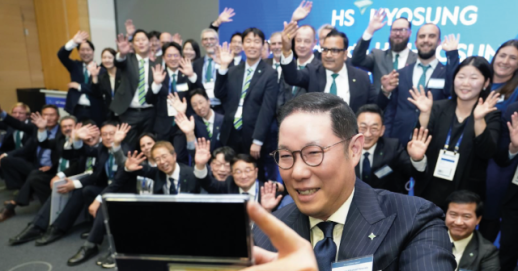 HS Hyosung Vice Chairman Cho Hyun-sang Hosts K-Culture Event at Techtextil 2026 in Germany HS Hyosung Advanced Materials took part in Techtextil 2026, billed as the world’s largest industrial materials exhibition, held in Frankfurt, Germany, from April 21 to 24 local time. The company said April 24 that global partnerships were further strengthened through “HS Hyosung Night,” hosted by Vice Chairman Cho Hyun-sang. HS Hyosung held the event on the evening of April 22, the exhibition’s second day, inviting about 130 guests including representatives from global companies such as Autoliv, ZF and Continental, as well as Lim Sang-beom, South Korea’s ambassador to Germany. The company said the gathering was designed to reinforce ties with key partners and share HS Hyosung Advanced Materials’ future vision. It said Cho listened directly to partners’ views and discussed practical cooperation while reviewing the company’s global network. The venue featured a fusion Korean traditional music performance, a hanbok experience and Korean food including bulgogi and gimbap, the company said. “K-culture is a special way to share Korea’s style, and that experience will help elevate HS Hyosung Advanced Materials’ global partnerships,” Cho said in a statement. He said the company would aim to create differentiated value in the global materials market as “a sincere partner” that goes beyond technology to build emotional connection. Cho added that amid heightened geopolitical uncertainty, the company would continue to practice the HS Hyosung spirit of moving forward with partners under the slogan “Value, and Together.” At the exhibition, HS Hyosung Advanced Materials showcased its full lineup of advanced fiber materials, from so-called super fibers such as carbon fiber and aramid to tire cord, airbags, seat belts and car mats. It also presented recycled polyester tire cord and a range of advanced recycling solutions, the company said, underscoring its position as an ESG-focused management leader. * This article has been translated by AI. 2026-04-24 14:40:23
 -
 Hyundai Steel Q1 Operating Profit Falls 63.7% to 15.7 Billion Won Hyundai Steel said in a regulatory filing on Thursday that its first-quarter operating profit fell 63.7% from the previous quarter to 15.7 billion won ($11.3 million), while revenue rose 4.6% to 5.7397 trillion won on higher product sales volume. The company attributed the profit drop to a weaker won and higher raw material prices. It said operating profit is expected to gradually rebound from the second quarter as fewer low-priced imported products enter the domestic market, improving supply and demand, and as price increases for key products take effect. Hyundai Steel also said increases in borrowings and its debt ratio were temporary, citing investment spending for future growth, including capital contributions to its U.S. steel mill. Despite a challenging business environment, the company said it will prioritize profitability improvement this year and focus on securing new demand. It said it aims to win new orders and move early in the power infrastructure sector at home and abroad, respond to growing demand for energy storage systems, and build a response system for all transmission-tower products, including structural steel and heavy plate, in line with a government-led domestic power-grid infrastructure buildout. The company said it is expanding orders for steel used in transmission towers. Hyundai Steel said it is mass-producing low-carbon steel sheet that cuts carbon emissions by 20% and plans to lead the low-carbon market by pursuing additional steel-grade certifications to expand global sales. A Hyundai Steel official said the company will seek to capture new demand in the power infrastructure industry, actively respond to demand for low-carbon steel through an electric-arc furnace and blast-furnace hybrid process, and improve profitability.* This article has been translated by AI. 2026-04-24 14:21:12
 -
 HD Hyundai Marine Solution Q1 Operating Profit Rises 12.5% to 93.4 Billion Won HD Hyundai Marine Solution, HD Hyundai’s marine-industry solutions unit, said Thursday it posted first-quarter revenue of 574.6 billion won and operating profit of 93.4 billion won. Revenue rose 18.3% from a year earlier and operating profit increased 12.5%. The company said growth in its core aftermarket parts and services business, along with higher sales from its bunkering business, drove the gains. Aftermarket revenue climbed 21.4% from a year earlier, led by sales tied to large engines and its mid-sized HiMSEN engines, the company said. It also cited new orders, including a maintenance contract for power-generation facilities for Ecuador’s state power company. Its digital solutions business also extended steady growth, with revenue up 33.3% year over year on a broader product lineup, including an integrated control system (ECS) applied to Anduril’s unmanned surface vessel, it said. Revenue in the eco-friendly solutions business fell due to a base effect from large-scale retrofit work in the year-earlier period, the company said. An HD Hyundai Marine Solution official said the company plans to further strengthen competitiveness in high value-added aftermarket businesses such as engines, and to expand its eco-friendly and digital businesses to upgrade its portfolio. The official said the opening of a logistics hub in Singapore will help improve global supply-chain efficiency and strengthen customer responsiveness.* This article has been translated by AI. 2026-04-24 14:20:02
 -
 Dongkuk Steel Group posts 21.4 billion won Q1 operating profit, returns to black Dongkuk Steel said it posted first-quarter 2026 revenue of 857.2 billion won, operating profit of 21.4 billion won and net profit of 6.2 billion won on a separate K-IFRS basis. In a regulatory filing on Thursday, the company said revenue rose 5.2% from the previous quarter, operating profit jumped 2,886.2%, and net income swung to a profit. From a year earlier, revenue increased 18.1%, operating profit rose 403.9%, and net profit climbed 153.3%. Dongkuk Steel said the earnings improvement reflected its strategy to expand exports globally. It said higher export volumes led to increased production and sales of long steel products. The company said it plans to adjust the share of export sales flexibly this year in response to shifts in domestic demand. Dongkuk CM reported first-quarter 2026 revenue of 494.4 billion won, operating profit of 11.2 billion won and net profit of 10.3 billion won on a separate K-IFRS basis. Revenue rose 7.4% from the previous quarter, and both operating profit and net profit returned to the black. From a year earlier, revenue fell 6.1% and operating profit declined 25.9%, while net profit increased 6.1%. Dongkuk CM, which has a high share of exports, said it returned to profit by improving earnings through price increases and cost controls despite worsening market conditions, high tariffs and stronger protectionism. It said it realized gains by reducing sales of low-margin products and expanding production and sales of premium materials such as Luxteel and Appsteel. Separately, the government this month approved provisional anti-dumping duties of up to 33.67% on galvanized and color steel sheets from China. The move is expected to curb inflows of low-priced Chinese products and increase the use of high-quality domestically made steel for construction materials. The decision follows anti-dumping duties on heavy plate and hot-rolled products and is significant for completing a broader protection framework across the domestic steel value chain, including upstream and downstream processes. 2026-04-24 13:55:13
 -
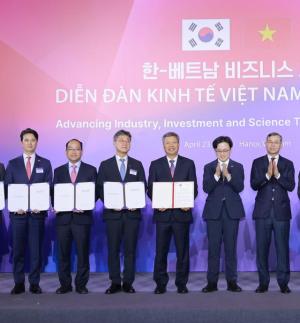 SK Signs Two MOUs With Vietnam to Support AI Ecosystem and Infrastructure SK is moving to cooperate with Vietnam on building an AI industry ecosystem and core AI infrastructure. SK said April 24 that it signed two memorandums of understanding a day earlier in Hanoi at the Korea-Vietnam Business Forum — one with the government of Nghe An province and another with Vietnam’s National Innovation Center (NIC) — to support the creation of an AI ecosystem. The signing ceremony was attended by Kim Jung-kwan, South Korea’s minister of trade, industry and energy, and Ngo Van Tuan, Vietnam’s finance minister. SK participants included Chey Tae-won, chairman of SK Group and the Korea Chamber of Commerce and Industry; Choo Hyung-wook, CEO of SK Innovation; and Ryu Young-sang, CEO of SK Telecom. Vietnamese attendees included Nguyen Khac Than, party secretary of Nghe An province; Vo Trong Hai, chairman of the Nghe An People’s Committee; and Vu Quoc Huy, director of the NIC. SK said the cooperation is intended to support Vietnam’s national AI strategy, with SK positioned as a key partner. The company said it expects the effort to lay groundwork for its first overseas expansion of a “Korean-style AI full-stack” model, linking AI data center construction and stable power supply to AI model development and testing and the spread of industry-specific AI services. SK Innovation and SK Telecom signed an MOU with the Nghe An provincial government to cooperate on building an AI data center and related infrastructure. SK said the plan is centered on linking the project to SK Innovation’s Quynh Lap LNG power project, including power supply and the development of dedicated generation sources. SK Telecom said it will review development, construction and operation of an AI data center based on that foundation and seek to secure global demand. The Quynh Lap LNG project is a large-scale energy infrastructure development that includes a 1,500-megawatt combined-cycle gas power plant, an LNG terminal and a dedicated port, with completion targeted for 2030. The companies also signed a separate MOU with the NIC to cooperate broadly on building an AI ecosystem, including AI data center construction, energy infrastructure development and establishing a policy foundation. SK Telecom will handle technology cooperation and attracting investment, while SK Innovation will provide energy solutions. SK described the effort as an overseas expansion of its “AI full-stack provider” strategy, integrating a value chain spanning semiconductors, data centers, power and energy, and AI services. Ahead of the forum, Chey said at a business meeting that “AI will play a key role in Vietnam’s sustained growth,” adding that SK has capabilities across the AI ecosystem — from energy and semiconductors to AI models and application services — and “will make a tangible contribution to the development of Vietnam’s AI industry.” An SK official said the group has maintained cooperation with Vietnam since the 1990s, starting with oil development under the late Chairman Chey Jong-hyun, and expanding into areas including energy, information and communications, investment and social contributions. The official said SK will use the AI cooperation to further strengthen ties as a key partner in Vietnam’s national AI strategy.* This article has been translated by AI. 2026-04-24 10:05:48
 -
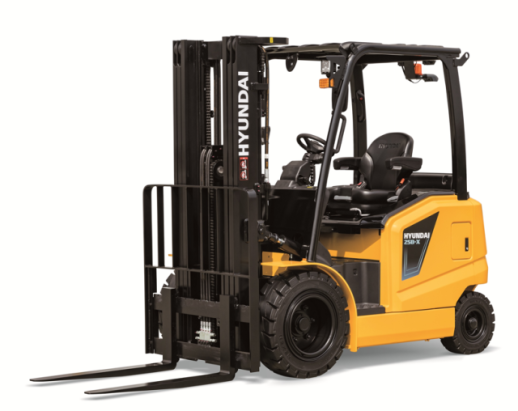 HD Hyundai Site Solutions Wins S-Mark Safety Certification for 17 Electric Forklifts HD Hyundai Site Solutions said it has strengthened safety standards for its electric forklifts. The company said April 24 it recently received the S-Mark safety certification from the Korea Occupational Safety and Health Agency for 17 small electric forklift models rated at 3.5 tons or less, and plans to expand the number of certified models. The S-Mark is an official certification issued by the agency, a government-designated occupational safety body, after a comprehensive review of product safety and the manufacturer’s quality management capabilities. To qualify, companies must pass technical document reviews based on ISO and agency standards, on-site audits and product testing, requiring safety and reliability to be verified from design through production. Customers who buy certified models are eligible for government subsidies and policy financing support, and may receive purchase recommendations for domestic public institutions, the company said. With electric forklifts now accounting for about 60% of South Korea’s forklift market, demand for eco-friendly, low-noise equipment is rising, particularly at logistics centers and in urban work settings, driving electrification. HD Hyundai Site Solutions sells about 1,500 electric forklifts a year in South Korea and said it aims to raise market share by emphasizing safety and quality following the certification. “This safety certification recognizes both product safety and our quality management system,” a company official said. “We will continue to expand certified models to provide safer, more reliable products.”* This article has been translated by AI. 2026-04-24 10:03:16
 -
 Hyosung Heavy Industries signs Vietnam power grid MOU, plans $50 million motor plant Hyosung Heavy Industries is moving to expand its business in Vietnam by pursuing both power grid cooperation and a new production base. The company said it signed a memorandum of understanding with Vietnam Electricity on April 23 at the Korea-Vietnam Business Forum at the JW Marriott Hotel Hanoi. The MOU covers power asset management, grid stabilization and strengthening technical capabilities. Vietnam’s power demand is rising quickly amid economic growth, industrialization and the spread of data centers and advanced industries. Ensuring grid stability has also emerged as a key task as renewable energy expands. Under its eighth Power Development Plan, or PDP8, the Vietnamese government plans to raise power generation capacity to 221 gigawatts by 2030 and invest about $136 billion. Hyosung Heavy Industries said cooperation will focus on three areas: a pilot application of its AI-based power asset management solution, ARMOUR+; expanded adoption of STATCOM systems, or static synchronous compensators; and support for education and training to strengthen the design and manufacturing capabilities of EVN subsidiary Dong Anh Electrical Equipment Manufacturing Co., or EEMC. Also on April 23, Hyosung Heavy Industries signed an MOU with an investment promotion center under Vietnam’s Ministry of Finance to build a high-voltage motor plant. Under the agreement, the company plans to invest about $50 million to build a production base on the site of its Vina Electric plant in Dong Nai province, targeting annual revenue of $100 million. It aims to begin mass production in February 2027 and install facilities to produce 25,000-kilowatt-class high-voltage motors. High-voltage motors operate at more than 1,000 volts and are used in large industrial facilities such as power plants and industrial complexes. Demand has been expanding for uses including data center cooling systems and equipment linked to renewable energy. Market research firm Omdia forecasts the global high-voltage motor market will grow more than 5% annually to about $6.5 billion by 2028. Hyosung Heavy Industries said that after establishing a low-voltage motor production base in 2015, the new high-voltage motor plant will broaden its motor business portfolio. It plans to become the first foreign company to carry out the entire high-voltage motor production process in Vietnam. Hyosung has invested about $4 billion in Vietnam since entering the country in 2008, building six production bases and employing more than 10,000 local workers. The company said sales by its local units account for about 1% of Vietnam’s total exports, contributing to the country’s economic growth and the expansion of global supply chains. Hyosung Chairman Cho Hyun-joon said, “This agreement is meaningful in that it expands our business foundation in Vietnam into the heavy industries sector,” adding, “We will grow together with Vietnam as a global partner.”* This article has been translated by AI. 2026-04-24 10:01:10
 -
 Samsung Heavy Industries Signs U.S. MOUs to Enter Global Data Infrastructure Market Samsung Heavy Industries said it has laid the groundwork to enter the global data infrastructure market with a floating data center, or FDC. The company said it attended Data Center World (DCW 2026), held April 20-23 (local time) in Washington, and secured a foothold for global market entry for its in-house developed FDC. An FDC is a model that builds data centers at sea as demand surges with the spread of artificial intelligence. It is drawing attention as an alternative that can address land acquisition, power supply and cooling efficiency constraints. At the event, Samsung Heavy said it obtained approval in principle for a 50-megawatt FDC concept design from U.S. classification society ABS and U.K.-based Lloyd’s Register. The certified design is based on a standardized shipyard construction process that integrates design, fabrication and equipment installation, which the company said can shorten delivery times compared with land-based data centers. It can also be fitted with an in-house power generation system, reducing reliance on onshore electricity, it said. Samsung Heavy said it also expanded cooperation with global companies during the event. It is pursuing collaboration with electrification and automation firm ABB to develop an FDC power system, and signed a memorandum of understanding with U.S. data center developer Musterian to develop an FDC in the United States. The company said it plans to use the certifications as a starting point to push commercialization by linking power-system development with U.S. permitting and partnerships for local operations. Choi Won-young, chairman of Samsung Heavy’s workers’ council, attended the event, highlighting labor-management participation. “The council will actively take part in the growth of new businesses such as the FDC,” Choi said. Ahn, the technology development chief, called the FDC “a new business model that expands shipbuilding technology into the digital infrastructure industry.” He said it would “set a new standard in the global data market” when combined with eco-friendly energy.* This article has been translated by AI. 2026-04-24 10:00:19
 -
 POSCO Expands Tactile Exhibits Using Steel-Based 'PosArt' for Visitors With Visual Impairments POSCO Group is combining steel technology with art and giving to expand access for visitors, including people with visual impairments. Industry officials said April 23 that the group is producing tactile exhibits using PosArt to help people with disabilities and other underserved visitors experience museum displays. PosArt is POSCO Group's premium color steel sheet made by applying high-resolution inkjet printing to specialized steel. Using 3D layering that builds ink in stacked layers, it delivers image quality more than four times sharper than conventional color steel sheets, the company said. In February, the POSCO 1% Sharing Foundation produced tactile exhibits using PosArt and donated them to the National Museum of Korea. The foundation said applying PosArt to artworks allows delicate raised textures, enabling visitors with visual impairments to feel details by hand. POSCO Humans, a POSCO Group social enterprise and a standard workplace for people with disabilities, handled production to help link steel technology with art and support a broader culture of giving. The donated items fall into three categories: a large feature wall at the entrance to the calligraphy and painting gallery; a tactile table that lets visitors explore representative calligraphy and paintings with their fingertips; and four showcases designed to store artifacts safely. Separately, POSCO Art Museum is running exhibitions where visitors can experience PosArt. The shows, titled 'Spirits of Water' and 'Recorders of Nature,' examine the value of the Korean Peninsula's disappearing natural ecosystems as artistic records and run through May 3. The exhibitions include a hands-on area featuring PosArt works made with POSCO Group's steel technology, allowing visitors with visual limitations to explore the shapes of fish, insects and plants through touch.* This article has been translated by AI. 2026-04-24 05:03:21
 -
 OCI Holdings Q1 Operating Profit Falls 77.7% to 10.8 Billion Won OCI Holdings said in a regulatory filing on the 23rd that it posted first-quarter consolidated revenue of 892.4 billion won, operating profit of 10.8 billion won and net profit of 8.8 billion won. Revenue fell about 77% from a year earlier. The company said it has continued a recovery trend after returning to the black in the fourth quarter of last year. The company said higher sales at key units helped drive the profit, excluding Malaysia-based OCI TerraSus, which underwent legal restructuring in the first quarter. The units cited were OCI Enterprises, a U.S. solar holding company; OCI SE, which operates the Saemangeum combined heat and power plant; and operating company OCI. OCI Energy, a unit of OCI Enterprises, contributed to the operating profit increase as remaining proceeds from the sale of the Sun Roper project last year were recognized as revenue, the company said. OCI Energy is pursuing the sale of a large-scale 500-megawatt project. If related procedures are completed within the second quarter, the company said, it expects to recognize new revenue and profit. Chairman Lee Woo-hyun said silicon-based technology is increasingly seen as extending beyond terrestrial and space applications into next-generation semiconductors and data infrastructure. “OCI Holdings will take this trend as an opportunity for future new businesses and will continue to enhance product competitiveness so we can meet customers’ next-generation technology shifts, including silicon photonics,” he said. In the fourth quarter of last year, OCI Holdings reported revenue of 810.6 billion won, operating profit of 27.3 billion won and net profit of 26.6 billion won.* This article has been translated by AI. 2026-04-23 22:15:17