

Journalist

Kim Hye In
haileykim0516@ajunews.com
-
 Vietnam and South Korea Enhance Cooperation Against Transnational Crime Vietnam's Ministry of Public Security and South Korea's National Police Agency have signed a memorandum of understanding (MOU) to enhance the operation of their communication teams, marking a significant step forward in law enforcement cooperation between the two countries. Both sides acknowledged the positive development of their collaboration and expressed their commitment to maintaining security, order, crime prevention, and the protection of their citizens. According to Vietnam's official government newspaper on June 3, a high-level delegation from the Ministry of Public Security, led by Deputy Minister Le Quoc Hung, visited South Korea from May 25 to 29 to hold discussions with the National Police Agency and the Coast Guard. During the visit, the two nations conducted a deputy-ministerial level police cooperation meeting. They reviewed the effectiveness of existing cooperation mechanisms, including responses to transnational crime, specialized training, and capacity-building initiatives for the Vietnamese police. Deputy Minister Hung and the Vietnamese delegation also visited the Chungjeongno Police Station in Seoul to observe on-site operations. A key outcome of the meeting was the signing of an MOU to elevate the operation of the 'Communication Team.' This agreement establishes additional channels for operational collaboration and information exchange between the law enforcement agencies of South Korea and Vietnam. Both sides emphasized the importance of a direct communication system in addressing cross-border crime and cyber and financial crimes, which are rapidly spreading. This system is expected to facilitate the identification of fugitives, arrests, repatriation, and the protection of citizens. Acting National Police Agency Commissioner Yoo Jae-sung stated, "The cooperation between our two sides has developed positively. I particularly commend the achievements in elevating the operation of the communication team, preparing for the deputy-ministerial police cooperation meeting, and the fourth cultural and sports exchange program." He emphasized that South Korea will continue to collaborate with the Ministry of Public Security in responding to transnational crime, apprehending and repatriating fugitives, and protecting citizens. Deputy Minister Hung remarked, "Both sides should strengthen delegation exchanges and continue to expand cooperation in responding to transnational crime. I hope South Korea will continue to support the Vietnamese police in enhancing law enforcement capabilities in areas such as cybersecurity, transnational crime investigations, data management, and human resources training." Maritime and surface law enforcement cooperation is also being pursued concurrently. The Ministry of Public Security of Vietnam highly appreciates the support from the South Korean Coast Guard in training and equipment transfer for surface law enforcement. Acting Coast Guard Commissioner Jang In-sik expressed satisfaction that two patrol vessels, which completed their missions in South Korea, will continue to operate effectively in Vietnam. He noted that since the signing of the MOU in 2023, the cooperation between the two sides has yielded significant results, including the successful implementation of training programs for Vietnamese water traffic police and technical inspections of the transferred vessels. He also expressed a desire to participate in the Vietnamese language training program organized by the Ministry of Public Security. Deputy Minister Hung requested continued support for training and equipment transfers for law enforcement in inland and coastal areas. He also called for enhanced cooperation to ensure maritime security and safety in the East Sea, based on international law, particularly the 1982 United Nations Convention on the Law of the Sea, and to support peace, stability, and freedom of navigation.* This article has been translated by AI. 2026-06-04 10:06:00
 -
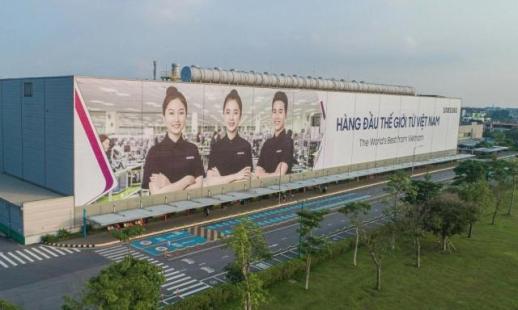 Samsung Begins Direct Purchase of Renewable Energy at Vietnam Factory Samsung Thai Nguyen (SEVT) and the TTC Duc Hue 2 solar power plant have marked the first instance of a Direct Power Purchase Agreement (DPPA) in Vietnam. As the system allowing large-scale consumers to directly contract with power producers through the national grid officially begins, interest is growing in the potential expansion of renewable energy trading and its cost structure. This has sparked both positive feedback, with calls to "continue supporting investments," and questions about who will bear the transmission costs, drawing public attention. On June 1, local media outlet VnExpress reported that the National Power System and Market Operation Organization (NSMO) announced that Samsung Thai Nguyen and the TTC Duc Hue 2 solar power plant had completed the necessary technical and legal procedures and officially commenced operations under the DPPA system. In this agreement, Samsung Thai Nguyen acts as the power buyer, while TTC Duc Hue 2 serves as the power seller. This marks the first instance of direct trading between renewable energy producers and large electricity consumers since the implementation of Decree 57/2025 in early March of last year. With this contract, Samsung's production facility is expected to receive approximately 70GWh of renewable energy annually, equivalent to the electricity consumption of about 17,000 households in Vietnam. This is also anticipated to reduce carbon dioxide emissions by approximately 46,000 tons each year. The TTC Duc Hue 2 solar power plant, located in Tay Ninh Province, is invested in by TTC Duc Hue-Long An Power Joint Stock Company. It has a designed capacity of 49MWp and began commercial operations on May 19. The plant is equipped with a battery energy storage system (BESS) and has been participating in Vietnam's competitive wholesale electricity market since early this month. The DPPA system has been a policy that foreign direct investment (FDI) companies in Vietnam have requested for early implementation. These companies have previously expressed expectations that the system would enhance competition in the energy sector. Five years ago, Samsung was among the companies that indicated interest during policy discussions. A survey by the Ministry of Industry and Trade at the end of 2023 revealed that about 20 large corporations expressed intentions to directly purchase nearly 1,000MW of electricity, with 24 renewable energy projects totaling 1,773MW indicating interest in selling. Additionally, 17 projects totaling 2,836MW are under consideration for participation. Samsung is the largest foreign investor in Vietnam, with accumulated registered capital amounting to tens of billions of dollars. In recent years, the company has aimed to increase the share of clean energy used in its global production facilities, and this contract is part of its commitment to reducing carbon emissions. ◆ Online Reactions: Support for Clean Energy Expansion vs. Questions on Transmission Costs Following the announcement, various reactions emerged online. One user expressed support for Samsung's continued investment in Vietnam. However, questions were raised regarding the use of the national grid and who would bear the transmission costs. One commenter asked, "If power is traded through the national grid, who pays for the transmission costs?" Another user noted, "Electricity is produced in Tay Ninh and consumed in Thai Nguyen, so how will it be transmitted without using the EVN grid?" They further questioned, "Ultimately, transmission must go through EVN, and infrastructure rental costs are high; has it become cheaper now?" Another user remarked, "I have a 5x15m rooftop, so if they install solar equipment, I will pay for the electricity," indicating hopes for the expansion of residential solar energy. Additionally, there were calls for more models like this to promote green power production and lower energy costs through direct connections. Meanwhile, the launch of the DPPA signifies a significant step in realizing direct trading between renewable energy producers and large electricity consumers within a regulated framework. At the same time, public interest in the use of the national grid and the cost burden structure is also increasing.* This article has been translated by AI. 2026-06-03 12:24:00
 -
 Hai Phong Delegation Initiates Green Industry Cooperation in Seoul Vietnam's Hai Phong has officially launched its collaboration with South Korean companies in green and advanced industries. The city is prioritizing its green industrial zone strategy and the introduction of a carbon management system while exploring ways to expand investments and strengthen strategic partnerships with Megazone and SKC Group. Attracting high-quality foreign direct investment (FDI) focused on low-carbon transition is a key objective of this initiative. On June 1, a delegation led by Doan Trung, Chairman of the Hai Phong People's Committee, attended a forum in Seoul titled "Developing Green Industrial Zones: Opportunities for Hai Phong," which focused on cooperation in green production value chains and investment promotion. In his opening remarks, Chairman Trung emphasized that "Hai Phong is a key growth driver in northern Vietnam." He highlighted the establishment of three economic zones: the Dinh Vu-Cat Hai Economic Zone, the Southern Hai Phong Coastal Economic Zone, and a specialized economic zone, along with one free trade zone, covering a total area of 48,740 hectares. Additionally, he noted that 46 industrial parks have been developed over approximately 13,000 hectares, currently hosting around 1,500 FDI companies and more than 360,000 workers. Trung explained that as global production standards become increasingly stringent, Hai Phong is proactively leveraging green development as a strategic lever to swiftly transition to a low-emission economic model. He stated, "The green industrial zone model is not just a solution to address climate change; it is a key card that will provide a decisive competitive advantage in attracting high-quality FDI." The forum extensively discussed challenges facing South Korean manufacturing supply chains, carbon data management technologies for green industrial zones, and examples of green transitions within industrial parks. Jeong Man-ki, Chairman of the Korea Industrial Alliance Forum (KIAF), remarked, "Korean industrial parks have led the development of high-value-added industries such as automotive, electronics, and home appliances. In the context of green transition, industrial parks and companies have adapted to environmental and market standards." He expressed hope for enhanced cooperation and a stronger shift toward eco-friendly production between companies in Korea and Vietnam, particularly in Hai Phong. Pham Van Tep, head of the Hai Phong Economic Zone Authority, stated that the city's green industrial zone strategy is based on four pillars: data transparency and emissions management, renewable energy independence, smart and circular water resource management, and specialized policy mechanisms. He also presented a vision to establish 83 industrial parks focused on advanced, green, and clean energy industries by 2030. Hai Phong has made it a priority to implement carbon emissions management and measurement systems within its industrial parks and is ready to collaborate directly with solution providers possessing verified technologies and expertise. The city plans to pilot digital platforms and carbon data governance and aims to standardize ESG (Environmental, Social, and Governance) indices as mandatory criteria for evaluating next-generation industrial parks. On the same day, a business meeting in Gwacheon led to more specific cooperation plans. During a meeting with Megazone, Trung emphasized Hai Phong's potential and investment incentives, actively promoting investments centered on advanced and core technologies. He invited Megazone executives to visit Hai Phong, suggesting, "Let’s further specify our cooperation projects." Megazone, established in 1998, is a South Korean company with subsidiaries in AI, security, education, and fintech, and has been active in the Vietnamese market for over a decade. Jang Ji-hwang, CEO of Megazone, praised Hai Phong's rapid development and technology-oriented policies, stating that the city possesses significant potential and advantages as a target market for high-tech industry development. He expressed hope for closer collaboration leading to practical and effective activities. During discussions with SKC Group, existing investments and future cooperation expansion were addressed. Trung pointed out that SKC's production and business areas align perfectly with Hai Phong's focus on advanced technology, renewable energy, and eco-friendly development. He requested support for expanding investments and innovative activities, emphasizing the need to elevate their partnership to a strategic level. He also assured that the city would actively work to resolve challenges in ongoing projects and accelerate progress. Kim Jong-woo, CEO of SKC, explained that SKC, a subsidiary of SK Group, continues to make strategic investments in new materials and renewable energy in Vietnam and is currently advancing related projects in the Hai Phong DEEP C industrial park. He noted, "Hai Phong's infrastructure, transportation, and investment attraction policies create very favorable conditions for enhancing competitiveness, and I hope our cooperation and investments will expand further in the future."* This article has been translated by AI. 2026-06-02 14:03:00
 -
 Vietnam Real Estate Faces Survival Competition as Prices Stabilize Investor expectations in Vietnam's real estate market are noticeably declining. The strategy of holding properties in hopes of price appreciation is no longer effective, leading to an urgent need for cash recovery and liquidity. Consequently, the market is transitioning from a rapid growth phase to one characterized by adjustment and selectivity. On June 1, local media outlets, including Vietnam Finance, reported that the Ministry of Construction's housing and real estate market report for the first quarter of 2026 indicates that new apartment prices remain high. In Hanoi, the average price is approximately 12.8 million VND (about $736) per square meter, surpassing Ho Chi Minh City's average of about 11.2 million VND (approximately $644). The LUMIÈRE Hanoi Seasons Garden, located on Nguyen Chai Street, is expected to have selling prices ranging from 12 to 18 million VND per square meter. LUMIÈRE is a luxury residential brand developed by Masterise Homes. However, since late last year, there have been increasing instances where properties in some suburban projects in Hanoi are not selling even after significant price reductions of several hundred million VND. A resident of the Ha Dong area, identified as Mr. A, listed his two-bedroom apartment in the Thuong Khu area for sale at the beginning of this year but has yet to find a buyer. "Previously, apartment prices were rising almost every month, leading many to believe that buying would soon yield profits," he said. "However, buyers have become much more cautious, and the speed of transactions has slowed significantly compared to before." He noted that he has already reduced his asking price by about 300 million VND (approximately $1,725) but the apartment remains unsold. In another project in western Hanoi, studio apartments that were once priced around 3.1 billion VND are now listed between 2.5 and 2.6 billion VND. Investor B commented, "Investor sentiment has completely changed. Previously, many thought prices would continue to rise, so they were willing to hold onto properties for a few more months. Now, the primary goal is to sell and secure cash." Experts suggest that the price surges of 2024-2025 and the supply shortage had previously stimulated investor sentiment, but now the financial burden has increased significantly. Investors who have relied on leverage for an extended period are facing heavy monthly interest costs, while price increases are insufficient to cover these expenses. Pham Duc Toan, CEO of EZ Property, commented on the current market trend, stating, "Investors who entered the market at these high prices are facing considerable cash flow pressures." Some investors in eastern Hanoi are even listing properties below their original costs or foregoing premiums altogether. The changes in the market are also evident in the flow of funds. Cao Thi Thanh Huong, Deputy Director of Savills Vietnam, explained, "Currently, bank credit is increasingly prioritizing projects that meet actual housing demand, particularly in the mid-range housing sector." This indicates a shift in bank funding toward projects that cater to genuine demand and affordable housing. She added, "Foreign investors still highly value the potential of the Vietnamese housing market, but they are now more selective, focusing on projects with clear legal status and substantial development capabilities." This trend reflects a growing emphasis on legal transparency and development capacity in foreign investments. Can Van Luc, chief economist at BIDV, characterized the current situation as a phase of 'competitive corporate capabilities.' He noted that only businesses with legal clarity, compliance, and appropriate product offerings will have an advantage in attracting investment in the future. Nguyen An Khe, chairman of G6 Group, also assessed that the market has officially entered an adjustment cycle. He stated, "Prices surged too quickly in 2024-2025, exceeding the market's absorption capacity, and now speculative demand is rapidly declining, leading to a more segmented market." * This article has been translated by AI. 2026-06-01 16:00:00
 -
 Vietnamese Securities Firms Profit from Expanding Loan Business Vietnamese securities firms, despite not being banks, have expanded their lending operations, achieving a record revenue of 112 trillion dong (approximately $6.44 billion) in the first quarter. As traditional revenue sources such as proprietary trading and brokerage have slowed, loans now account for 36% of total revenue. However, a warning has been issued that a margin balance of 415 trillion dong (23.86 trillion won) could pose a burden during market adjustments. According to a report by VnExpress on May 31, the revenue generated from lending activities surpassed 112 trillion dong, marking an all-time high. The proportion of loan revenue, which typically ranged from 28% to 30%, increased to 36% this quarter. Securities firms have various revenue sources, including brokerage, margin lending, proprietary trading, investment banking, and underwriting. However, they have actively expanded their lending divisions in recent years. The VN-Index surpassed 1,900 points this year but experienced significant volatility, dropping over 200 points in March alone. Consequently, the reliance on proprietary trading revenue, which is highly dependent on market conditions, has decreased for two consecutive quarters, leading to a lower overall contribution to revenue. The brokerage sector has also been affected by intense competition and declining fees. ◆ Loan Balance Reaches 420 Trillion Dong... Margin at 415 Trillion Dong As of March 31, the total loan balance for clients exceeded 420 trillion dong, with 415 trillion dong allocated for margin trading, an increase of approximately 9 trillion dong compared to the end of last year, marking a record high. By company, TCBS, SSI, VPBankS, VPS, and HSC each provided over $1 billion to investors. Their loan balances are comparable to those of some banks, including PGBank and Saigonbank. Nguyen Te Minh An, head of the investment banking division at VN-Index, cited excess capital as a reason for the expansion of loans. He explained, "In the past two years, companies have issued stocks in amounts exceeding the market's absorption capacity." He added that many securities firms are opting to expand their loan balances instead of competing fiercely in the brokerage sector or relying heavily on proprietary trading, which is subject to market volatility. In the past year, the total capital of securities firms has increased by 70 trillion dong. Major companies like TCBS, SSI, VPBank, VPS, and Vietcap have secured additional funds ranging from hundreds of billions to trillions of dong. This is due to the State Securities Commission's regulation limiting the debt ratio to a maximum of 200% of equity. Min also predicted that the expansion of loans would continue in upcoming quarters, stating, "Once the market upgrade decision takes effect in September, we will also expand funding to foreign investors." Tran Quoc Tuan, head of the second branch of Mirae Asset Securities, noted that the margin balances of major securities firms have not yet reached regulatory limits, and the overall loan ratio in the market remains below 200%, indicating that it is not at a level to cause extreme shocks to the index. However, Tuan cautioned that the current margin balance exceeding 415 trillion dong could lead to widespread forced selling if it coincides with a significant market correction, suggesting that sharp declines may occur more frequently. Nevertheless, Nguyen Ha Hai, CEO of VPBank Securities, stated, "The current demand for margin from investors is very high," indicating sustained interest in the stock market. 2026-05-31 23:36:00
 -
 Vietnamese Court Sentences Korean National for Visa Fraud Scheme A Vietnamese court has handed down severe sentences in connection with a series of fraud cases involving promises of employment and visa issuance in South Korea. The confirmed amount of money embezzled, using E7 and E8-2 seasonal work visas as bait, totals approximately 319 billion dong (about $18 million). On May 29, local media reported that the People's Court of Ho Chi Minh City sentenced A, the former CEO of Nam Han International Translation Services Co., to 20 years in prison for fraud and property embezzlement, ordering full restitution to the victims. Investigations revealed that 209 complaints had been filed against the South Korean company, with 130 individuals identified as victims. The confirmed embezzled amount was over 236 billion dong, while the total payments made, based on receipts and invoices, reached approximately 379 billion dong. According to the indictment, A established a company in Binh Thuan in 2016 but did not have the necessary permits for overseas employment recruitment or worker dispatch. Nevertheless, A promoted an E7 visa employment program through social media, claiming to provide comprehensive support for document submission, language and skills training, and visa applications. Applicants were instructed to pay up to 22 million dong in three installments. However, health checks, vocational training, and dispatch procedures were never carried out, and some victims received only 5 million dong (about $280) in refunds. After showing a computer screen with a visa image and demanding the remaining balance, A informed victims of their departure dates, but there were no tickets or documents at the airport, and the company had closed. A admitted to using the embezzled funds for personal purposes, despite knowing the operations were unauthorized. Additionally, on May 27, the People's Court of Can Tho sentenced B to 16 years in prison for defrauding 222 individuals using the E8-2 seasonal work visa scheme. B, who acquired South Korean nationality and operated under the name 'Lee Yu-bin,' exploited his status as a Korean national to build trust with victims. Among Vietnamese victims, the claim that a Korean national was directly facilitating the recruitment was a significant factor in the advertisements, contributing to the scale of the fraud. The court ordered nine intermediaries to return the money they received to the victims, and B was required to repay some directly to the victims. From August 2023 to March 2024, B promoted the E8-2 visa, claiming it could yield over 2 million won per month, with additional earnings of about 50 million dong for overtime, without requiring proof of family relationships. B collected a total of over 57 billion dong through nine intermediaries, charging each victim a deposit of 20 to 60 million dong. Afterward, B claimed that the boss had fled, failing to fulfill the promised procedures. The case came to light after complaints from the intermediaries. The court found insufficient evidence to prove conspiracy among the intermediaries, deeming the decision not to prosecute them appropriate. Furthermore, the People's Court of Nghe An sentenced C to 14 years in prison for embezzling 26 billion dong under the guise of facilitating employment and seasonal work in South Korea. C downloaded images of travel packages and flight tickets from the internet, altered the information, and presented them to victims as visa exemption certificates and flight details, charging 300,000 dong per case. C continued this fraudulent activity against multiple victims from May 2023 to October 2024. The court considered partial victim recovery, requests for leniency from victims, and the fact that C committed the crimes while pregnant, but determined that a severe penalty was unavoidable. All three cases revealed a common scheme of advertising unauthorized guarantees of employment in South Korea, using false documents, visa images, and even the claim of being a South Korean national to build trust with victims before demanding final payments just before departure.* This article has been translated by AI. 2026-05-31 22:45:00
 -
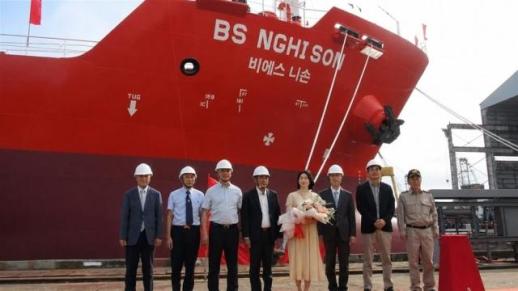 Vietnam's Parung Shipyard Expands High-Value Ship Production with South Korea Vietnam's Parung Shipyard has delivered a 13,000 DWT (deadweight tonnage) tanker and chemical ship while simultaneously commencing construction on a new vessel, continuing its trend of securing high-value ship orders. The shipyard's collaboration with South Korean owner Yentec is also expanding, strengthening its position in the international market. On May 29, local time, Vietnamese media reported that Parung delivered the 13,000 DWT tanker and chemical ship BS NGHI SON (series number 13K-YN04) to Yentec and held a steel cutting ceremony for the new vessel 13K-YN08 at the same event. This occasion highlighted Parung's consistent production system for the 13,000 DWT series. The delivered BS NGHI SON is a 13,000 DWT tanker and chemical ship designed by South Korea's Far East Ship Design (FESDEC) and certified by Korean Register (KR). The vessel measures 128.6 meters in length, 20.4 meters in width, and 11.5 meters in depth, with a design draft of 8.7 meters. This Handysize-class vessel is widely used for transporting oil and chemical products on international routes. The company stated that after completing construction, sea trials, and technical inspections, the ship met all contractual quality, safety, and technical standards before delivery to the owner. The steel cutting for the 13K-YN08 marks the first step in the new construction project, transitioning into the production phase. The simultaneous delivery of BS NGHI SON and the commencement of 13K-YN08 clearly demonstrate the uninterrupted production of the 13,000 DWT series. The vessel was received by South Korean company Yentec, which has been a key partner for Parung in various collaborations. Earlier, on April 22, Parung signed a construction contract and a memorandum of understanding (MOU) with Yentec for ten 6,500 DWT tanker and chemical ships. These vessels will feature a double-hull structure and are planned to be approximately 109.45 meters long, 18.2 meters wide, with a design draft of 6.8 meters and a cruising speed of 13.5 knots. The project will adhere to Korean Register (KR) standards and will be implemented over several years. Parung is a subsidiary of Vietnam's state-owned shipbuilding group SBIC. The company began its operations as a marine vessel repair facility, with its first new construction product being a 4,200-ton floating dock, followed by a 6,300 DWT cargo ship. It has since expanded its range to include bulk carriers from 6,500 to 20,000 DWT and 34,000 DWT vessels. With nearly 50 years of operation, the company has built a workforce of around 950 and has accumulated thousands of repair records while broadening its collaboration with foreign owners from countries such as Russia, Germany, South Korea, and Greece. Tanker and chemical ships must meet stringent standards for hazardous material transport, fire prevention, environmental protection, and operational safety. A company representative explained that the delivery of BS NGHI SON and the start of 13K-YN08 construction are results of close collaboration among the owner, partners, and in-house technical teams. Looking ahead, Parung plans to focus on new construction and repair projects, enhancing production management, process control, and quality and safety management to actively respond to the needs of domestic and international customers. The delivery of the 13,000 DWT vessel and multiple construction contracts for 6,500 DWT ships exemplify Parung's solidifying foundation in the tanker and chemical ship sector.* This article has been translated by AI. 2026-05-31 14:39:00
 -
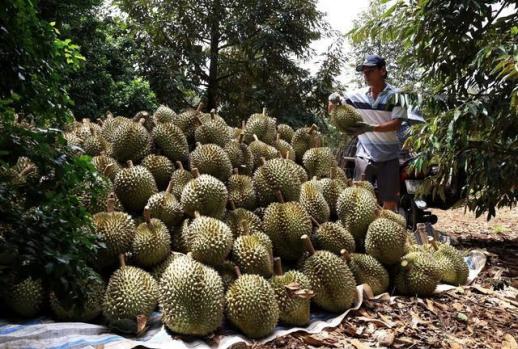 Vietnam's Durian Exports to South Korea Surge Amid Inspection Challenges Vietnam's durian exports are rapidly increasing, particularly in the South Korean market, showing a clear growth trend. However, in the Mekong Delta, the largest production area, delays in residue testing are causing both price drops and shipping disruptions. While export figures continue to rise, a lack of inspection infrastructure remains a significant constraint. According to various Vietnamese media reports on May 30, customs data shows that from January to April, durian exports reached $293 million (approximately 442 billion won), a 60% increase compared to the same period last year. Of this, exports to China accounted for $257 million (about 388 billion won), marking a 142.7% increase, while South Korea recorded a 201.5% growth, entering the top 10 markets. ◆ South Korean Market Sees 201.5% Surge, Frozen Products Offer a Breakthrough The South Korean market demonstrated the most significant growth rate. However, the export value remains just over $1 million, indicating that the absolute scale is still small. Nguyen Duy Phuc, Secretary-General of the Vietnam Fruit and Vegetable Association, stated, "Vietnam has not yet been able to export fresh durians to South Korea; currently, we are only exporting frozen whole fruit or separated flesh." He noted that the recent export growth rate to South Korea had even reached 500%, attributing this to the expanding demand from the Vietnamese community, students, and workers in Korea. Additionally, the perception of durian as a unique fruit in South Korea contributes to its growth. South Korea has strict food safety standards, including the Pesticide Residue Management System (PLS). As a result, frozen durians are being used as an alternative to reduce the risk of spoilage during logistics. Nguyen emphasized, "South Korea has high purchasing power and long winters, presenting opportunities not only for durians but for all Vietnamese agricultural products." ◆ Dong Thap Province, a Major Production Area, Struggles with Inspection Shortages However, the situation in production areas contrasts sharply with export statistics. Dong Thap Province, located in the Mekong Delta and a key cultivation area producing hundreds of thousands of tons of durians annually, is facing challenges in shipping due to a lack of facilities for testing cadmium and Aflatoxin O residues. According to the Dong Thap Department of Agriculture and Rural Development, the area dedicated to durian cultivation spans 32,100 hectares, with an expected production of about 111,221 tons in May and June. Despite this, the price of the Ri6 variety has recently dropped to around 30,000 dong per kilogram, a 46% decrease compared to after the 2026 Lunar New Year. Although durian exports exceeded $221 million in the first quarter, local farmers and purchasing companies are struggling to prepare export documents on time due to inspection delays. The Dong Thap Durian Association has received complaints that some inspection centers have refused to accept samples or have extended processing times. ◆ Limited Certified Laboratories and Canceled Approvals There are only 12 cadmium testing laboratories and 8 Aflatoxin O testing laboratories recognized by China in Vietnam. In the Mekong Delta, there are 8 certified facilities, but only 5 can conduct cadmium testing. Nguyen Khanh Ngoc, Deputy Director of the Can Tho Technical Standards and Quality Center, stated that the center currently only performs Aflatoxin O testing, as cadmium testing has been suspended due to the cancellation of approval by Chinese authorities. He mentioned that a supplementary application was submitted in December 2025, and they are awaiting re-approval, adding, "If operational, we have the capacity to process 50 to 60 containers a day, which would greatly benefit the region." The Regional Center No. 5 for Agricultural and Fishery Quality in Ca Mau has laboratories capable of testing both substances but has not yet resumed operations. Reasons cited include the review of new regulations, distance from production areas, and a lack of concentrated cultivation areas for exports. According to the Crop Protection Bureau under the Ministry of Agriculture and Rural Development, as of early May, 16 out of 21 cadmium testing laboratories and 19 out of 22 Aflatoxin O laboratories were operational, while the rest were temporarily suspended. Deputy Director Nguyen Quang Hieu emphasized, "Export companies must conduct food safety and cadmium testing before loading containers." Meanwhile, netizens have expressed strong dissatisfaction with the recurring lack of inspection infrastructure. One user remarked, "It's unfortunate that no one is held accountable in these articles, and the expression 'we will do it' is repeated without any real intention to solve the problem." Another user pointed out, "With such a large production area lacking testing facilities, equipment is stalled due to a shortage of technicians and processing technology." Some argued, "The failure of state management to keep pace with industrial growth has resulted in a need for a clear management system to determine who is responsible for what."* This article has been translated by AI. 2026-05-31 14:21:00
 -
 Vietnam Strengthens Tourism Cooperation with South Korea, Expands 10-Year Multiple Visa South Korea is reaffirming its commitment to Vietnam as a key strategic market for tourism in 2026, accelerating efforts to attract visitors. The expansion of the 10-year multiple-entry visa, focused support for MICE (Meetings, Incentives, Conferences, and Exhibitions), and large-scale roadshows are set to enhance tourism exchanges between the two countries. According to various Vietnamese media outlets, including Bao Dau Tu (Investment News), the Korea Tourism Organization (KTO) office in Vietnam announced that the South Korean government has expanded the eligibility for the 10-year multiple-entry visa (C-3-91) since the end of March. This new eligibility includes residents of Hanoi, Da Nang, and Ho Chi Minh City, as well as individuals with travel histories to OECD countries, employees of major South Korean investment firms, and executives and their families from large Vietnamese companies. Park Eun-jung, head of the KTO Vietnam office, stated, "The South Korean government is working to facilitate visits from Vietnamese tourists, and expanding the 10-year multiple-entry visa for residents of major cities is a prime example of this effort." The impact of the visa relaxation is already evident in the numbers. According to KTO, over 167,000 Vietnamese visited South Korea from January to March 2026, marking a 29.6% increase compared to the same period last year. As of April, the growth rate continued at over 10%. Notably, the MICE sector saw a significant increase, supporting 12,888 visitors through April, up 64.4% from 7,838 during the same period last year. In this context, KTO held the '2026 Korea Travel Roadshow' in Da Nang on May 20 and in Ho Chi Minh City on May 22. The events featured participation from 22 South Korean organizations and companies, along with over 100 Vietnamese travel agencies, facilitating B2B consultations and discussions on new product development. BenThanh Tourist hosted a workshop in Da Nang titled "Discover Your Own Korea" to expand MICE demand in the central region. The company reported operating MICE groups of up to 200 people through its Da Nang and Hue branches in the past year and the first quarter of this year. Product strategies are also diversifying. KTO is supporting marketing costs for specialized programs related to K-culture, sports, study tours, charter flights, and heritage-linked products, covering 50% to 80% of expenses, along with experience support ranging from 500,000 to 1,200,000 VND (approximately $21 to $52) per person. The 'All-in-K' campaign, which involves collaboration between South Korean airlines, banks, and online travel platforms, will be rolled out gradually starting at the end of May. Da Nang is emerging as a major gateway for tourism exchanges between Vietnam and South Korea. From January to April this year, 823,000 South Korean tourists visited Da Nang, accounting for 21.75% of all foreign visitors. Currently, direct flights operate from four cities: Incheon, Busan, Daegu, and Cheongju, with 13 airlines servicing these routes. However, there are concerns that rising operational costs may lead to reduced flight frequencies on some routes. Cultural exchange projects are also being pursued. The 'K-Vietnam Valley' being developed in Bonghwa, Gyeongbuk, is based on the historical story of Ly Long Tuong, a descendant of the Vietnamese royal family who fled to Korea in the 13th century. This project is being promoted as a symbolic initiative to attract Vietnamese tourists this year. Park Eun-jung emphasized, "Vietnam is one of the most important markets for South Korean tourism. Through this roadshow, we aim to strengthen connections between businesses in both countries and continue to provide substantial support." The strategy combines visa relaxation, MICE support, and cultural projects to sustain the growth of Vietnamese tourists visiting South Korea.* This article has been translated by AI. 2026-05-28 14:46:00
 -
 Hai Phong City in Vietnam Expands Cooperation with South Korea for Innovation and Circular Agriculture Hai Phong City in Vietnam, home to numerous South Korean companies including LG Electronics, is advancing its goal of becoming a global innovation city through enhanced scientific and technological cooperation with South Korea. The city is working on a strategic partnership with the Korea Institute of Science and Technology (KIST), hosting Techfest Hai Phong 2026, and implementing a circular agriculture technology transfer project, all aimed at achieving its goal of entering the "Top 200 Global Innovation Cities" by 2030. On May 26, local media including Bao Dau Tu reported that the Hai Phong Department of Science and Technology held a meeting to discuss the implementation of a memorandum of understanding (MOU) signed with KIST. The meeting introduced Techfest Hai Phong 2026 and officially launched the 2026 Startup Innovation Talent Discovery Competition. The collaboration will focus on six key areas: infrastructure, talent, networking, commercialization, research, and investment. A key infrastructure project is the establishment of the "KIST-Hai Phong Tech Hub." Plans for its establishment and operational regulations are expected to be finalized by August, with an official launch set for December. In the area of technology commercialization, an in-depth survey will connect KIST's technology supply database with local business needs, and a matching forum will be held during Techfest 2026 for South Korean tech companies and local businesses to meet directly. Joint research initiatives will also be undertaken. In November, a survey will assess the technology needs of key companies and the status of marine bio and pharmaceutical resources, with plans to select one pilot joint research project to commence in December. Nguyen Cao Tang, director of the Hai Phong Department of Science and Technology, stated, "This is a concrete action to implement the central government's Resolution No. 57 and the national startup innovation strategy. Science and technology and innovation are key conditions that determine long-term competitiveness." Hai Phong has maintained double-digit economic growth for 11 consecutive years, with an economic scale reaching $29.4 billion (approximately 44 trillion won). The city has also set a target of 13-14% average annual growth in gross regional domestic product (GRDP) from 2026 to 2030. According to a recent StartupBlink report, Hai Phong ranks 765th among the world's top 1,000 startup ecosystems and 23rd in Southeast Asia, establishing itself as one of Vietnam's four major cities. KIST has expressed a strong commitment to expanding cooperation. KIST President Oh Sang-rok remarked, "This MOU is not just a document but a technology partnership based on trust," emphasizing their intention to develop Hai Phong into an innovation hub for northern Vietnam and Southeast Asia. During the event, agreements for technology transfer projects and business cooperation between South Korean and Vietnamese companies were also signed. KOICA Project Underway Meanwhile, in the Leu Khiem area of Hai Phong, the Korea International Cooperation Agency (KOICA) is actively promoting the IBS project. The Songja Investment Development Cooperative is collaborating with EcoHopia and KIST to introduce a circular agriculture and environmental treatment model utilizing organic waste and aquatic plants. Do Thi Thuy Ha, representative of the cooperative, noted, "Of the approximately 3,300 tons of household waste generated daily, 70-80% is organic material," stressing the urgent need to enhance processing capacity through technological modernization. Kim Won-bae, representative of EcoHopia, stated, "We aim to transfer technology to Vietnam and strengthen self-reliance capabilities." Techfest Hai Phong 2026 is scheduled for August 4-5 at Vietnam Maritime University, featuring 120-150 technology booths and delegations from six countries. The event will cover strategic technologies such as semiconductors, quantum technology, AI, IoT, and robotics. A startup competition focused on Smart City Operations will also take place, with Hai Phong promising tax incentives and sandbox applications in the semiconductor and AI sectors. In addition, Hai Phong is leveraging its collaboration with KIST to simultaneously promote technology transfer, talent development, and the expansion of international networks, accelerating its strategy to establish itself as a key gateway for South Korean technology and an innovation hub in Southeast Asia.* This article has been translated by AI. 2026-05-28 10:36:00