

Journalist

Han Young-hoon
han@ajunews.com
-
 Israel Expands Offensive in Southern Lebanon Amid Ceasefire Extension Israel is expanding its military offensive in southern Lebanon. Although a ceasefire has been extended, ground operations are moving northward, raising the possibility of strikes in Beirut. The United States has proposed a new de-escalation plan, but the risk of escalation on the ground is increasing. On June 1, Israeli Prime Minister Benjamin Netanyahu announced that he had instructed the military to expand ground operations in Lebanon. The Israel Defense Forces (IDF) reported that they have taken control of Bofort Fortress and the surrounding ridges, as well as the Wadi al-Saluki area. Bofort Fortress is a high ground overlooking southern Lebanon and northern Israel. This marks the first time Israeli forces have regained control of the area since their withdrawal from southern Lebanon in 2000. Capture of Bofort Fortress; Advancing Toward Nabatiyah… Expanding Southern Front Israel claims that this advance is a response to attacks from Hezbollah. Reuters reported that Hezbollah launched one of its most intense assaults on northern Israel since the ceasefire in April. As a result, schools have been closed and movement restrictions have been imposed. The IDF believes Hezbollah is using low-cost suicide drones to bypass air defenses and inflict casualties on Israeli forces. Israeli ground operations are moving further north. According to Reuters, the IDF has advanced about 10 kilometers toward the Zahrani River after entering the Litani River area. Netanyahu stated, "We will deepen and widen our control over areas previously held by Hezbollah." The IDF has also issued evacuation warnings to residents south of the Zahrani River. Another area under consideration for further entry is Nabatiyah. The Jerusalem Post reported that the IDF is conducting military operations around Nabatiyah, a key Hezbollah stronghold located about 20 kilometers from the Israel-Lebanon border. If ground troops reach this area, it would represent the deepest incursion into Lebanon during the current conflict. Potential Strikes on Beirut… U.S. Attempts to Prevent Escalation with New Proposal Airstrikes are also intensifying. Lebanese security sources and state media reported that the IDF conducted over 40 airstrikes across southern Lebanon on the same day. Reports indicate that eight people were killed in an attack on the village of Deir al-Zahrani the previous night. According to Lebanese government figures, the death toll in the current conflict has surpassed 3,370. Israel has reported 24 soldiers and four civilians killed during the same period. There are concerns that the scope of airstrikes may extend to Beirut. Beirut is the political and economic center of Lebanon, housing government institutions and financial and commercial functions. If strikes reach this area, tensions could escalate beyond the southern border conflict to encompass all of Lebanon. The Jerusalem Post reported that Israeli officials have requested U.S. permission to strike within Beirut. The outlet noted that with no progress in U.S.-Iran negotiations and Israel-Lebanon discussions, Israeli officials are hoping for a favorable response from the U.S. The U.S. is focusing more on establishing a resolution than on permitting strikes. According to Reuters, U.S. Secretary of State Marco Rubio presented a new de-escalation plan to Lebanese President Joseph Aoun and Netanyahu, proposing that if Hezbollah halts all attacks, Israel would refrain from escalating in Beirut. However, coordination is proving difficult. President Aoun has attempted to push the proposal forward, but Nabih Berri, the Speaker of the Lebanese Parliament, stated that while he could guarantee Hezbollah's compliance with the ceasefire, "Israel must stop firing first." The U.S. does not view this as a sufficient willingness to accept the proposal, believing that as long as Hezbollah continues its attacks, it will be challenging to prevent further Israeli responses. International concern is also growing. France has called for an emergency meeting of the United Nations Security Council due to Israel's expanded military operations in Lebanon. The British Foreign Secretary has demanded a halt to Israel's operations in Lebanon, while the German Foreign Minister expressed "serious concerns" regarding the southern advance. 2026-06-01 15:54:00
 -
 U.S. Proposes Plan to Ease Israel-Lebanon Tensions Amid Ongoing Conflict The United States has introduced a new mediation plan aimed at reducing tensions between Israel and Lebanon. The proposal centers on Hezbollah ceasing its attacks on Israel, while Israel refrains from expanding military operations into Beirut. However, Israel's directive for additional incursions into Lebanon leaves the prospects for an agreement uncertain. According to Reuters, U.S. Secretary of State Marco Rubio spoke separately with Lebanese President Joseph Aoun and Israeli Prime Minister Benjamin Netanyahu. A U.S. official stated that Rubio outlined a phased approach to de-escalation. The first phase of the U.S. plan calls for Hezbollah to stop its attacks and for Israel to avoid escalating the conflict in Beirut. The U.S. believes these measures could lead to a gradual reduction in tensions and a halt to hostilities. A key variable for Lebanon is Hezbollah. President Aoun is reportedly seeking an agreement based on the U.S. proposal. Nabih Berri, the Speaker of the Lebanese Parliament, noted that while Hezbollah could be compelled to adhere to a ceasefire, he emphasized that Israel must first cease its attacks. Israel continues to apply military pressure. Prime Minister Netanyahu instructed troops to advance further into Lebanon during recent clashes with Hezbollah. The Israeli military has announced its control over the Bofort Fortress and strategic ridges in southern Lebanon.* This article has been translated by AI. 2026-06-01 14:15:00
 -
 U.S. and Iran Exchange Military Strikes Amid Ceasefire Negotiations U.S. and Iranian forces are engaged in military exchanges even as ceasefire negotiations continue. The U.S. military has attacked Iranian radar and drone control facilities, while Iran claims it targeted the bases used by the U.S. for these airstrikes. Although a ceasefire is in place, limited military confrontations persist outside the negotiation table. According to Reuters and U.S. Central Command, American forces conducted airstrikes on radar and drone control facilities in southern Iran, specifically in Goruk and Qeshm Island, on May 30 and 31. Central Command stated that these actions were defensive measures in response to Iran's aggressive actions, including the downing of a U.S. MQ-1 drone operating in international airspace. U.S. fighter jets also destroyed two suicide drones that posed a threat to Iranian air defense systems and ground control stations. No injuries were reported on the U.S. side. On June 1, the Islamic Revolutionary Guard Corps (IRGC) announced that the U.S. targeted an airbase in southern Iran used for the recent airstrikes, although it did not specify which base was attacked. Kuwait's state news agency KUNA reported the same day that Kuwait's air defense systems intercepted missile and drone attacks. The U.S. maintains a significant military presence in Kuwait, but Kuwaiti authorities did not provide details on the attackers, targets, or any damage incurred. Since the ceasefire took effect in April, sporadic clashes have continued between the U.S. and Iran. Reuters reported that both sides engaged in similar military exchanges on May 28. Negotiations have yet to narrow the issues at stake. The U.S. is pressuring Iran to limit its nuclear program and to resume navigation through the Strait of Hormuz. In contrast, Iran demands the lifting of sanctions and the return of frozen oil revenues held in foreign banks.* This article has been translated by AI. 2026-06-01 14:00:00
 -
 U.S. Pharma Giants Rapidly Acquire Chinese Drug Candidates Amid Security Concerns U.S. pharmaceutical companies are rapidly acquiring Chinese drug candidates to fill revenue gaps caused by patent expirations. As competition intensifies for securing pipelines, particularly for cancer treatments, what was once viewed as a technology exchange is now sparking security debates within the United States. On June 1, the Financial Times reported that U.S. lawmakers and investors are beginning to see the growing dependence on Chinese biotech as a security risk. The report highlighted Pfizer's recent agreement with China's Innovent Biologics for a cancer drug development deal worth up to $10.5 billion. According to Reuters, the contract involves 12 early-stage cancer drug candidates. Pfizer will pay Innovent an upfront fee of $650 million, with the remaining payments tied to milestones in development, approval, and commercialization. The push by major U.S. pharmaceutical firms to seek Chinese drug assets is driven by looming patent expirations. Reuters noted that U.S. companies could face a revenue gap of up to $200 billion around 2030. Chinese biotech firms are rapidly expanding their pipeline of next-generation therapies, including antibody-drug conjugates (ADCs) and multi-specific antibodies, making them attractive targets for global firms. The scale of these transactions has also increased. Citing data from PharmCube, Reuters reported that the value of overseas technology transfer agreements from Chinese biotech firms reached $137.7 billion in 2025, nearly ten times the amount in 2021. U.S. companies have also seen a surge in transactions with China, with 14 technology transfer agreements in the first half of 2025, valued at up to $18.3 billion, compared to just two agreements during the same period the previous year. However, this trend is evolving beyond cost-saving measures and drug development strategies into a security debate. The Financial Times noted concerns among U.S. lawmakers that reliance on Chinese biotech could pose strategic vulnerabilities similar to dependence on rare earth materials. John Moolenaar, chair of the U.S. House China Task Force, has reportedly urged the Treasury Department to include biotech in the list of sectors subject to investment restrictions. The U.S. International Trade Commission (ITC) is also examining the impact of Chinese government support for related industries on U.S. companies. Nonetheless, there are arguments that increased regulation could delay drug development. While limiting access to Chinese drug candidates may protect U.S. biotech firms, it could also hinder the strengthening of pipelines for major pharmaceutical companies.* This article has been translated by AI. 2026-06-01 13:39:00
 -
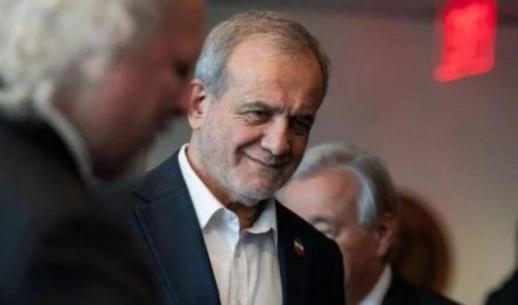 Iran Denies Resignation Rumors of President Masoud Fazelshakian The Iranian presidential office has denied rumors regarding the resignation of President Masoud Fazelshakian, dismissing the reports from some foreign media as a "media game." On May 31, local time, Mehdi Tabatabai, the deputy head of communications for the Iranian presidential office, stated on X that the reports of Fazelshakian stepping down were "false." He criticized a specific foreign outlet for continuing to stir political unrest. "President Fazelshakian will not step back from serving the Iranian people," Tabatabai said, emphasizing that Iran will not retreat from the path of unity and solidarity. He claimed that there are forces attempting to undermine Iran's national unity, adding, "Such winds will be taken back to the grave." The presidential office views these claims as external attempts to highlight internal divisions. This controversy arises amid ongoing tensions from the Middle East conflict and stalled negotiations between the U.S. and Iran. Anadolu Agency reported that the U.S. and Israel began airstrikes against Iran in late February, prompting Iran to respond with attacks targeting Israel and U.S. allies in the Gulf region. A ceasefire was established on April 8 through mediation by Pakistan, but subsequent negotiations have not led to a permanent agreement.* This article has been translated by AI. 2026-06-01 08:27:00
 -
 AI Semiconductor Stocks Surge Amid Bubble Debate AI semiconductor stocks are experiencing unprecedented growth, intensifying discussions about a potential market bubble. The surge in demand for high-bandwidth memory (HBM) has driven up stock prices and performance forecasts. However, concerns are rising that a slowdown in AI investments by major tech companies could highlight risks in the market cycle. According to Bloomberg News on May 31, the Philadelphia Semiconductor Index has risen 69% over the past two months. If this trend continues through the end of the quarter, it is expected to record its largest quarterly increase ever. Approximately 80% of the S&P 500's 11% gain this year has come from just 10 tech stocks, seven of which are chip-related, with Micron and NVIDIA being the most significant contributors. Memory companies are at the center of this bullish trend. The demand for HBM used in AI data centers has simultaneously boosted prices and performance expectations. Micron's stock price has more than tripled this year, while SK Hynix and Samsung Electronics have seen increases of 260% and 165%, respectively. Bloomberg reported that the market capitalizations of all three companies have surpassed $1 trillion. Optimism is fueled by the belief that HBM is transforming the supply structure of the memory market. HBM is more challenging to manufacture and has a higher defect rate than standard products, requiring more processing resources for the same production capacity, leading to prolonged shortages. This supply-demand pressure has resulted in upward revisions of profit estimates. According to Bloomberg's projections, Micron's net income is expected to rise from $8.5 billion in 2025 to $66.8 billion in 2026, with an anticipated increase to around $120 billion by 2027, surpassing Amazon's projected net income. However, caution is also evident. Memory products are typically cyclical, meaning that a decline in demand or an increase in supply can lead to falling prices and rising inventory burdens. Micron reported a net income of $8.7 billion in 2022 due to increased electronics purchases during the pandemic, but faced a $5.8 billion loss in 2023 due to severe oversupply. Valuation concerns are fueling the bubble debate. Based on projected earnings for the next 12 months, Micron and SanDisk are trading at about 10 times earnings. However, this figure assumes that the current surge in profits will continue. Historically, Micron has traded at 46 times earnings, while SanDisk has traded at 58 times. The price-to-earnings ratio of the Philadelphia Semiconductor Index is approximately 71, the highest level since the 2008 financial crisis. The sustainability of this rally hinges on spending by AI data centers. The four major cloud and platform companies—Amazon, Meta, Alphabet, and Microsoft—are expected to invest up to $725 billion in capital expenditures by 2026, primarily for AI infrastructure development. However, some companies are increasing their debt to finance this spending. If the pace of expenditure slows, both the performance outlook and stock prices of chip companies could be adversely affected. 2026-06-01 07:54:00
 -
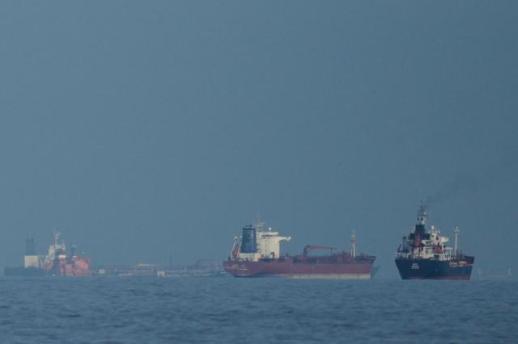 U.S. Supports Limited Shipping Through Strait of Hormuz Amid Iranian Threats The United States has reportedly facilitated the movement of some commercial vessels through the Strait of Hormuz despite ongoing navigation restrictions. This support comes as ships communicate with U.S. military forces to avoid potential Iranian attacks. The situation reflects limited operations rather than a return to normal navigation. According to a report by Investing Live citing the New York Times, the U.S. Central Command coordinated the movement of approximately 70 commercial vessels in the Strait over the past three weeks, averaging about three vessels per day. These ships reportedly turned off their Automatic Identification System (AIS) devices to evade detection by Iran, adjusting their routes closer to the coast of Oman rather than near Iranian shores. The New York Times, referencing U.S. officials and shipping analysts, noted that approaching the Iranian coast without permission poses a significant risk of drone or missile attacks. Consequently, it appears that the vessels adjusted their paths in coordination with U.S. military communications. The U.S. military has not characterized this operation as an official escort mission. Captain Tim Hawkins, a spokesperson for U.S. Central Command, stated, "We are communicating and coordinating to ensure that commercial vessels can transit the strait 'freely and safely.'" This indicates that U.S. naval ships are not directly escorting the vessels. The New York Times also reported that prior to the U.S.-Israel attacks on Iran at the end of February, more than 100 vessels used this maritime route daily.* This article has been translated by AI. 2026-06-01 07:42:00
 -
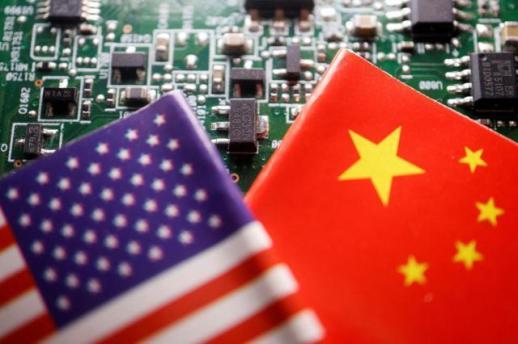 U.S. Blocks Chinese Firms from Purchasing AI Chips via Foreign Subsidiaries The U.S. Department of Commerce has moved to block Chinese companies from acquiring advanced artificial intelligence (AI) chips through their foreign subsidiaries. This action aims to prevent circumvention of restrictions via third-country entities, such as those in Malaysia. The focus of U.S. semiconductor regulations is expanding from mainland China to include overseas bypass routes. On May 31, Reuters reported that the U.S. Department of Commerce posted guidelines on its website stating that export licensing requirements for advanced AI chips will now apply to foreign subsidiaries of companies based in China. This includes cutting-edge products like NVIDIA's Rubin-Blackwell processors and AMD's MI350x. The new measure is designed to close loopholes that allow Chinese AI firms to import high-performance semiconductors from the U.S. through third-country subsidiaries. According to Reuters, these companies may have sourced U.S. products from regions like Malaysia. An industry insider familiar with supply chains estimated that hundreds of thousands of units could have been exported in this manner over the past year. Under the new guidelines, companies headquartered in China must obtain U.S. government approval when importing advanced semiconductors through their foreign subsidiaries. However, the regulations do not require immediate cessation of use or maintenance for existing data center equipment. Instead, the focus is on preventing additional exports and new acquisitions.* This article has been translated by AI. 2026-06-01 07:09:00
 -
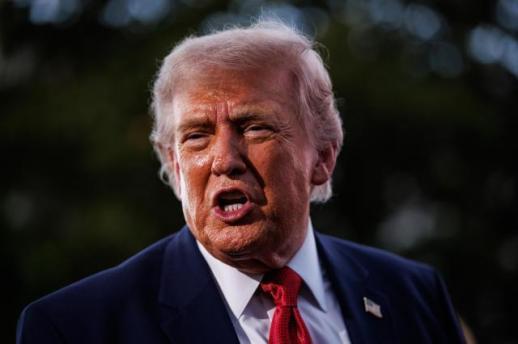 Trump Calls Departure of Government Lawyers a 'Good Thing' Amid Staffing Concerns President Donald Trump has described the departure of government lawyers as a "good thing." His comments came in response to a New York Times report raising concerns about staffing shortages among legal professionals in the federal government. In a post on Truth Social on May 31, Trump referenced the Times' article titled "Trump Administration Sees Notable Exodus of Legal Talent." According to the report, more than 10,000 federal lawyers have left the government since Trump took office, with some agencies reportedly facing shortages of attorneys to handle lawsuits and administrative tasks. Trump criticized the departed individuals, labeling them as "radical left deep state lunatics" and claimed, "They have weaponized the government and destroyed America." He also stated that many of those who left were not voluntary departures but were fired. He asserted, "The people who came in during the Obama-Biden era should never have represented America in the first place," emphasizing the need for someone who can "Make America Great Again." These remarks highlight differing perspectives on the issue of lawyer departures. While the Times views the reduction of legal professionals as a threat to administrative and litigation capabilities, Trump interprets it as a success in streamlining the bureaucratic structure. This clash reflects the ongoing debate between concerns over staffing shortages and Trump's approach to personnel changes.* This article has been translated by AI. 2026-06-01 06:57:00
 -
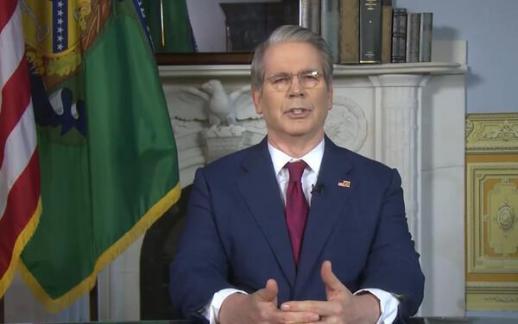 U.S. Treasury Secretary Vows Continued Pressure on Iran Amid Negotiations Scott Besant, the U.S. Treasury Secretary, has reaffirmed a tough stance in negotiations with Iran. While discussions about a ceasefire and peace continue, the U.S. maintains that key conditions revolve around Iran's nuclear program and the navigation of the Strait of Hormuz. On June 1, Besant appeared on Fox News' "Sunday Morning Futures" to explain President Donald Trump's policy toward Iran. According to Fox News, he referenced the economic pressure operation known as "Economic Fury" and the unstable ceasefire situation. Besant stated that even if an agreement is reached, President Trump will use military and economic means to ensure Iran's compliance. This suggests a focus on enforcing compliance after any potential agreement rather than merely achieving a deal. The U.S. demands are centered on issues related to nuclear capabilities and the Strait of Hormuz. Reports indicate that discussions include normalizing navigation through the Strait, removing mines, and managing stockpiles of highly enriched uranium. President Trump has repeatedly stated that he will not allow Iran to possess nuclear weapons. Economic sanctions are also being utilized as leverage in the negotiations. Besant previously disclosed in an interview with Fox Business that the U.S. has seized approximately $1 billion in virtual assets linked to Iran. He also pointed to local military payroll issues, high inflation, and internet blackouts as signs that the regime is facing financial pressure. However, discussions are still ongoing. Reports suggest that President Trump has requested additional modifications to the existing negotiation framework. While the U.S. and Iran are discussing extending the ceasefire and addressing nuclear issues and navigation through the Strait, the final approval and acceptance by Iran remain uncertain.* This article has been translated by AI. 2026-06-01 06:42:00